


_1745918362135.webp)

What Are the Key Ingredients in Liposomal Iron Powder?
We at Shaanxi Hongda Phytochemistry Co., Ltd. (Hongda Phytochemistry) know that people who buy things and make Liposomal Iron Powder medicines need clear technical information when they look at advanced nutritional elements. Liposomal Iron Powder is a new way to take minerals that was specially made to get around the problems that regular iron salts have with solubility and comfort. The main parts are a carefully chosen iron core (usually micronized ferric pyrophosphate) surrounded by a phospholipid bilayer structure made from non-GMO sunflower, soy, or egg yolk lecithin. This two-part system protects the iron from being broken down by stomach acid and lets it be absorbed quickly through M-cells in the intestines, getting around normal transfer problems. Our pharmaceutical-grade recipe at Shaanxi Hongda Phytochemistry Co., Ltd. has 50% active content and looks like a light yellow to off-white powder that meets the strict requirements of markets in North America, Europe, and Asia.
Understanding Liposomal Iron Powder: Composition and Core Ingredients
The Iron Core: Selecting the Right Iron Salt
The choice of iron substance is the most important part of making a Liposomal Iron Powder product work. Instead of using ferrous sulfate or ferrous fumarate, our recipe uses micronized ferric pyrophosphate (CAS: 334-50-9). This iron salt is very stable chemically, so it stops unnecessary oxidation processes that can break down sensitive ingredients like vitamin C, omega-3 fatty acids, or polyphenolic compounds in mixtures that are already complicated. It may seem strange for absorption, but ferric pyrophosphate doesn't dissolve well in acidic stomachs. But this trait works in their favor when they are enclosed in liposomal structures. The iron is kept safe while it moves through the stomach and is only released when liposomes fuse with cells that line the intestines. This controlled-release method raises serum ferritin levels about 3.5 times faster than regular iron supplements. This is an important success measure for B2B buyers who are making therapeutic or useful foods.
Stabilizers and Excipients: Supporting Ingredient Architecture
Along with iron and phospholipids, good liposomal formulas have stabilizers and processing tools that have been carefully chosen. Natural antioxidants in our recipe stop lipid peroxidation, which means that the packaging efficiency stays above 85% for the whole lifetime of the product. This measure has a direct effect on bioavailability; free iron that gets out of the liposomes goes back to normal absorption routes, which cancels out the liposomal benefit. Processing aids like trehalose or maltodextrin can be used to improve the flowability and recovery of powders used in beverages. These ingredients are put through a lot of tests to make sure they work well with the liposomal matrix. This makes sure that the structure of the vesicles doesn't get damaged while they are being stored or made into finished goods. To make sure that all of the products that come from our 20,000-square-meter bulk suppliers of liposomal iron products work the same way every time, we test each batch using HPLC, particle size distribution, and zeta potential testing.
How Liposomal Iron Powder Works — From Ingredient Function to Enhanced Absorption
Gastric Protection Through Liposomal Encapsulation
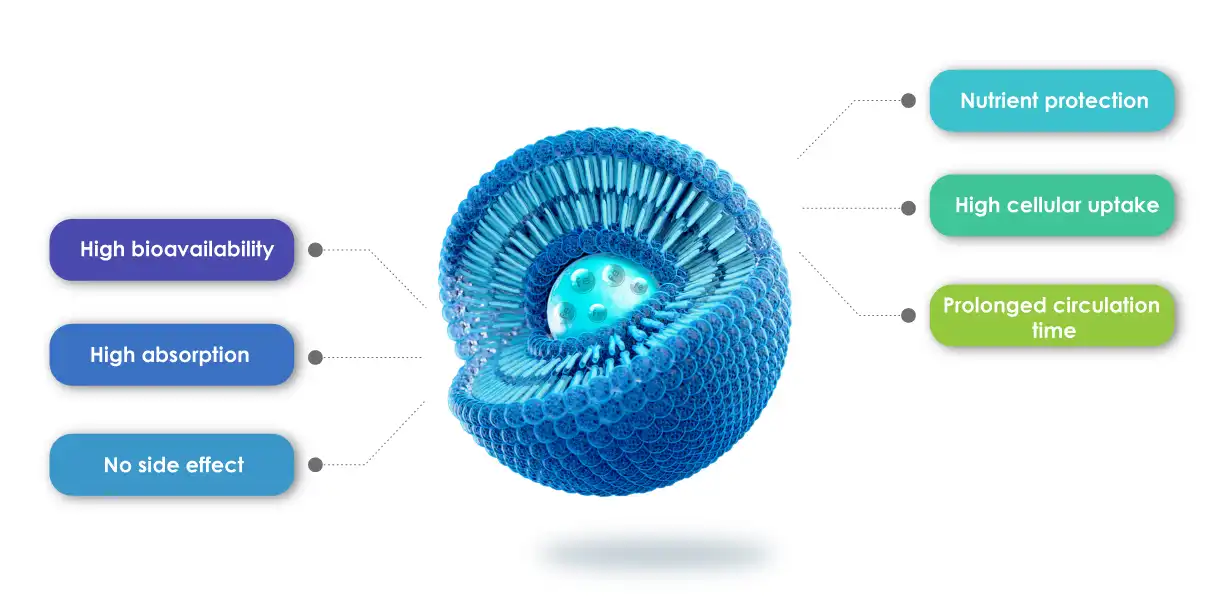
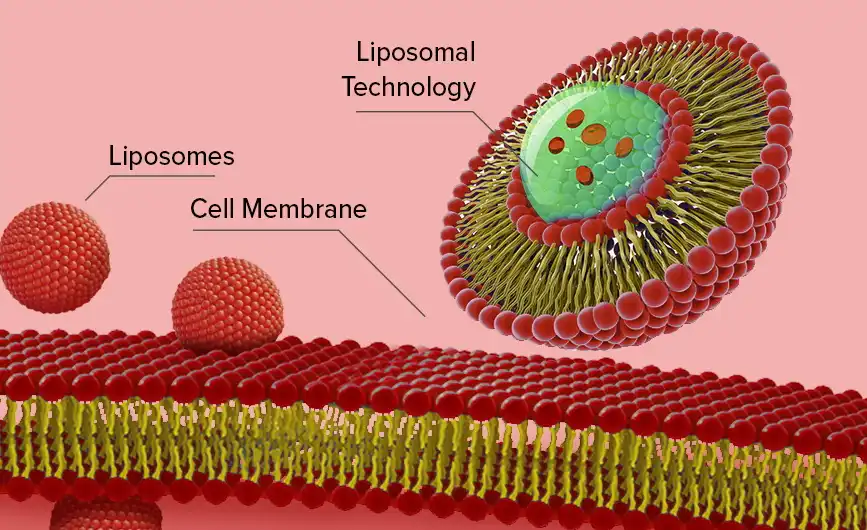
The unique way that Liposomal Iron Powder ingredients work with digestive system chemistry makes them more useful. In an acidic gut, traditional iron salts break apart quickly. Our encapsulating iron stays safe inside phospholipid vesicles while it moves through the stomach, and the lipid layer stops pH-induced breakdown. This defense system keeps the iron stable until it gets to the small intestine, where the neutral pH and bile salts help the vesicles join with enterocytes in a controlled way. The phospholipid makeup allows direct membrane integration, providing iron packages inside cells without the need for divalent metal transporter (DMT1) proteins, which normally slow down iron absorption rates. This efficient absorption process works especially well for groups with special absorption characteristics, like people who have chronic inflammation or certain genetic conditions.
Physical Properties Driving Processing and Performance
When purchasing large ingredients, teams must look at more than just the chemicals they contain. They must also look at the products' physical properties. Because our Liposomal Iron Powder mixes easily in cold water, there is no need for hot handling that could damage heat-sensitive ingredients. The off-white to light yellow color shows that there isn't much oxidation, which is a quality sign that can be checked by checking the peroxide value. The powder's zeta potential, which is usually between -30 and -40 millivolts, shows that it is very stable when restored, which keeps finished liquid goods from sticking together while they are being stored. This electrical surface charge also affects how quickly the drug is absorbed; negatively charged vesicles stick to the positively charged glycocalyx of intestinal villi better, which makes the mucosa stick together and allows for more contact time for absorption. These technical factors directly lead to better product performance in finished formulas, which supports charging more in markets with lots of competition.
Comparing Key Ingredients: Liposomal Iron Powder vs Traditional Iron SupplementsIngredient-Driven Differences in Tolerability and Efficacy
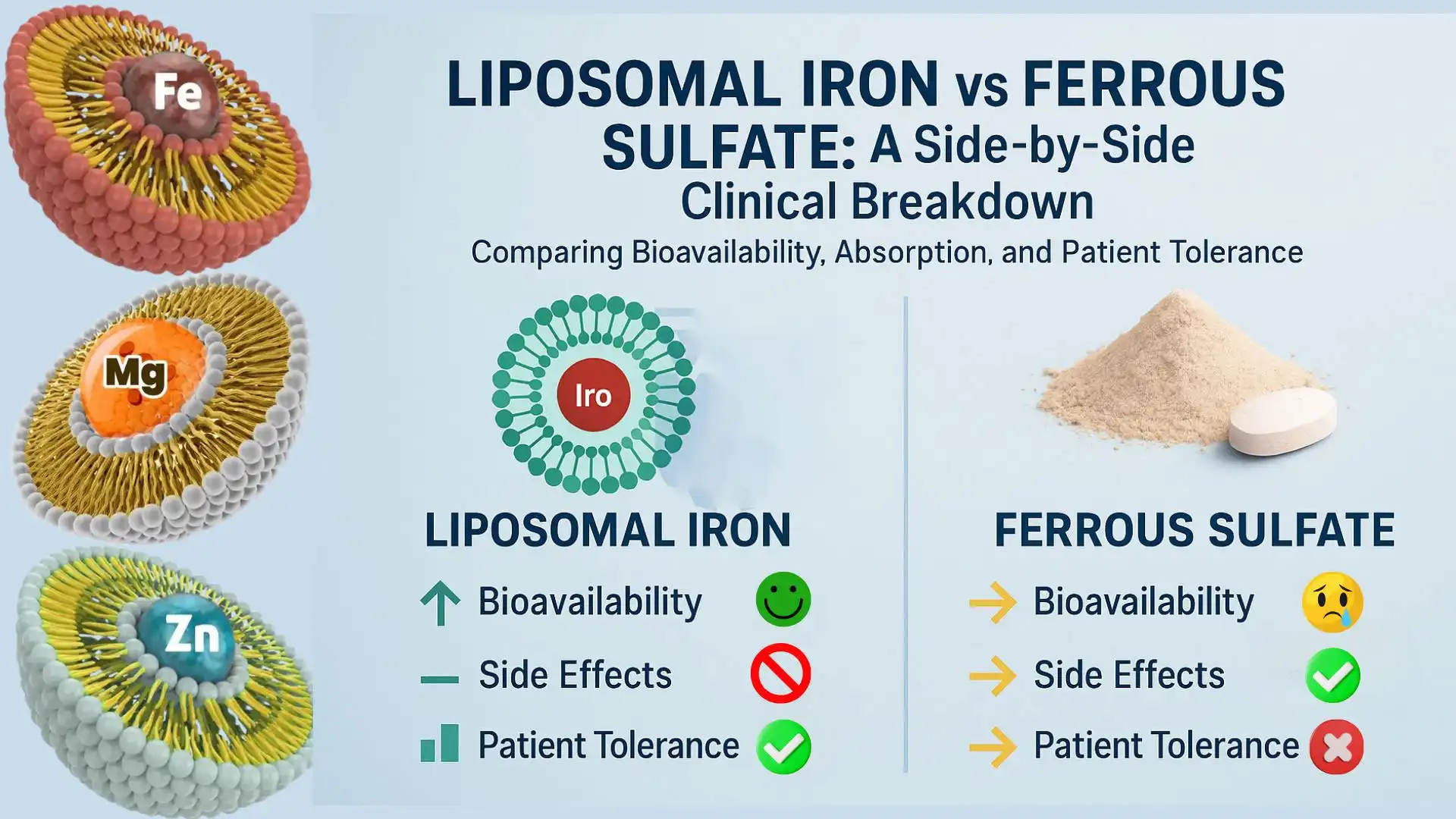
Liposomal Iron Powder is basically different from other options because of its ingredient profile. Standard ferrous sulfate supplements give the body a lot of highly soluble iron that fills the intestines right away. Our phospholipid-encapsulated ferric pyrophosphate slowly releases iron through membrane fusion, working with the intestine's natural ability to absorb iron without overpowering its control systems. Clinical studies show that these changes in ingredients lead to observable effects. Studies that track blood ferritin levels show that liposomal versions reach therapeutic goals with 40–60% lower elemental iron doses than ferrous sulfate. This lowers the oxidative load while improving compliance through better tolerability. For business-to-business buyers making goods for sensitive groups like pregnancy, children, or the elderly, this ingredient-based edge lets them make unique marketing claims bulk suppliers of liposomal iron products backed up by scientific proof.
Cost-Value Analysis for Procurement Decision-Making
The price of an ingredient will always depend on how complicated it is. For example, Liposomal Iron Powder costs more than regular iron salts. But buying research needs to look at the total cost of the formulation, not just the prices of the individual ingredients. The better bioavailability allows for lower doses, which could cut in half the amount of iron needed per serving. Also, the great taste profile gets rid of the need for expensive flavoring systems that are used to hide metallic notes in traditional versions. The 27 units per pallet in 12 kg drums make transportation more efficient, and our 3–7 day shipping time from our Shaanxi plant helps with just-in-time inventory management. If a buyer wants to stand out in a crowded supplement market, investing in high-quality ingredients pays off in a big way: fewer customer complaints, more return purchases, and the ability to back up claims of effectiveness that explain high retail prices. We give free samples to approved B2B buyers so they can try out different formulations before placing large orders.
Procurement Insights: Selecting the Right Liposomal Iron Powder Supplier Based on Ingredients
Evaluating Ingredient Transparency and Quality Documentation
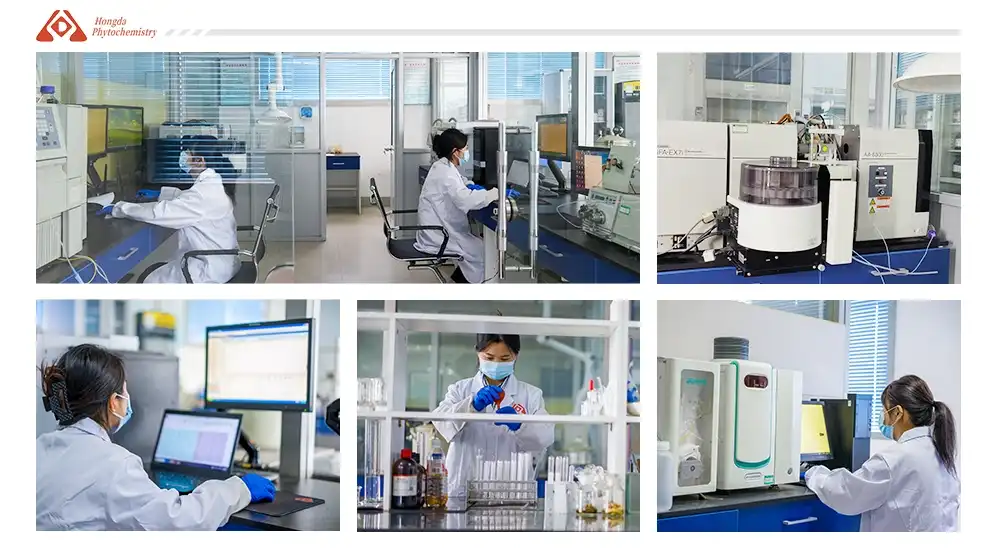
Full exposure of ingredients is the first step in doing your research before choosing a seller. Manufacturers with a good reputation give thorough information about their raw materials, such as plant origin certificates for phospholipids, analytical methods for measuring iron, and stability data that shows the ingredients stay intact during storage. Our SGS-certified lab at Hongda Phytochemistry has HPLC, GC-MS, and atomic absorption spectrophotometry, which lets us check seller claims on our own. Batch consistency represents another critical evaluation criterion. Our workshop for purification at the 100,000-level and uniform production methods across ten manufacturing lines make sure that there is little difference from lot to lot, which is important for making sure that final goods have consistent bioavailability in Liposomal Iron Powder products. We keep detailed records of each batch, which allows full tracking, which is needed for pharmaceutical uses and is becoming more and more common even in the supply chains for nutraceuticals. Buyers should ask for past batch data that shows narrow standard ranges for microbiological parameters, particle size, and encapsulation efficiency.
Technical Support and Collaborative Development
In addition to providing ingredients, top manufacturers also offer formulation knowledge that speeds up the development of new products. Our group of more than 20 PhD-level researchers works with clients to test for safety, check for compatibility with other active ingredients, and improve the process for different types of delivery, such as pills, capsules, and ready-to-drink drinks. This technical partnership is especially helpful when changing the formula of current goods to include liposomal ingredients, because the processing conditions often need to be changed to keep the integrity of the vesicles. We offer complete technical data packages that include suggested usage levels, maximum processing temperatures, pH stability ranges, and descriptions of incompatibilities. Because we can do pilot-scale tests, we can do small-batch tests before going into full-scale production. This lowers the difficulty of development and speeds up time-to-market. We offer OEM/ODM services to customers who need specifics, like particle size ranges or changed phospholipid ratios. These services are made possible liposomal iron powder manufacturer by our status as a national high-tech company and our multiple patent technologies in liposomal encapsulation.
Future Trends in Liposomal Iron Powder Ingredients for B2B BuyersInnovations in Phospholipid Sources and Sustainability
The environment of ingredients is changing all the time toward phospholipid sources that are more renewable and easier to track. Soy lecithin has been the most popular in the past, but worries about allergens and GMOs are making more people want choices that come from sunflowers. Finding new sources of phospholipids, like algal and fungal fermentation, could lead to highly pure lipids that don't come from animals and are more resistant to oxidation. At first, these new ingredients may cost more, but they meet the needs of regulators and customers who want environmentally friendly biotechnology-derived parts. Parallel developments in iron compounds focus on enhancing stability and reducing the environmental impact of mining operations. Researchers are working on two areas: microbial fermentation for iron chelates and synthetic biology methods for iron-binding peptides. These may be used along with standard iron salts in next-generation Liposomal Iron Powder formulations. If procurement teams keep an eye on these trends, they can get suppliers involved early in the development process. This gives them a competitive edge as these ingredients get approved by regulators and are used on a large enough scale to be profitable.
Regulatory Evolution and Clean-Label Imperatives
Regulatory guidelines are getting stricter about disclosing ingredients and backing up bioavailability promises. The Center for Food Safety in Europe and the U.S. Food and Drug Administration want more and more mechanistic proof that connects the makeup of a drug to the effects it is said to have on the body. Suppliers who offer clinical data that is specific to their product instead of general literature on liposomal delivery will have an edge when it comes to backing their clients' marketing claims and regulatory submissions. The clean-label trend affects more than just the main ingredients. It also affects processing tools and solvents that are still present. Buyers will likely ask for "excipient-free" or "simple formulation" goods, which will lead to the creation of Liposomal Iron Powder with a few ingredient lists. Our current recipe meets these requirements by carefully choosing GRAS-status ingredients and getting rid of artificial stabilizers. This puts clients in a good position as regulators and customers look more closely at labeling openness.
Strategic Sourcing for Long-Term Partnership
Because liposomal ingredients are so specialized, they have different supply chain issues than regular raw materials. A lot of money needs to be spent on homogenization equipment, spray-drying towers, and testing instruments for production, which limits the number of suitable providers around the world. Long-term relationships with skilled makers who can increase production to keep up with growth while keeping quality high are good for buyers. At Hongda Phytochemistry, our 3,000-square-meter building with flexible inventory management and a production capacity of more than 3,000 tons per year ensures a steady supply of goods even when the market is down. Our direct-from-factory pricing plan gets rid of the markups that liposomal iron powder manufacturer distributors add on top of the prices. It also keeps the options open for both large orders and smaller development amounts. As the global market for advanced delivery systems grows—it's expected to grow at double-digit rates until 2030—strategic supply ties will become more important for getting high-demand unique ingredients.
Conclusion
When purchasing managers know about the main ingredients in Liposomal Iron Powder, they can make smart choices about where to get it, which has a direct effect on how well the product works, how well it meets regulations, and how competitive the market is. When carefully chosen iron salts, especially stable ferric pyrophosphate, are mixed with pharmaceutical-grade phospholipid carriers, they work together to make a delivery method that is much better at both bioavailability and absorption performance than regular iron supplements. As government monitoring grows and people prefer clean-label products, it's important to be able to see what ingredients are used and make sure the seller is certified. New trends in sustainable phospholipid sources and new iron compounds show that innovation will continue. To stay ahead in markets that are changing quickly, it is important to have smart supplier partnerships.
FAQ1. What makes liposomal iron ingredients more expensive than standard iron salts?
The price difference is due to the complex production process needed to make stable phospholipid spheres that hold iron particles that are very small (nanoscale). For this, you need special tools like high-pressure homogenizers, controlled spray-drying systems, and a lot of quality control tests that aren't needed for regular iron salt production. But better absorption often means lower doses, which could make up for the difference in ingredient cost while giving customers better results that support the higher price.
2. Can liposomal iron powder ingredients be combined with other nutrients in multivitamin formulations?
Of course. Liposomal encapsulation has a big benefit: it keeps iron from reacting with other delicate ingredients, such as vitamin C, calcium, or antioxidants, which could otherwise oxidize or make insoluble complexes. Our phospholipid layer keeps ingredients stable in complicated mixtures, but it is suggested that each mix go through its own suitability testing. Our technical team can give you advice on the best way to formulate and make multi-ingredient goods so that they are as stable as possible.
3. How do regulatory requirements differ for liposomal iron ingredients between the U.S. and Europe?
Ferric pyrophosphate is a recognized iron source in both areas, but different types of paperwork are needed in each. In the U.S., the whole delivery system needs to be approved as a food additive or GRAS (generally recognized as safe). In the EU, the new food law may apply based on the phospholipid source and processing method. Our full set of certifications, which includes organic, HALAL, and KOSHER status, along with detailed manufacturing paperwork, supports regulatory submissions in both markets. However, for specific product uses, we suggest that you talk to regulatory experts.
Partner with a Certified Liposomal Iron Powder Supplier for Your Next Formulation
Shaanxi Hongda Phytochemistry Co., Ltd. uses cutting-edge liposomal technology and more than 20 years of experience in phytochemistry to make pharmaceutical-grade iron ingredients that meet the strictest quality standards around the world. We make sure that every batch of our 50% specification Liposomal Iron Powder meets your exact needs by using an approved production plant with full testing tools and cGMP, FSSC 22000, HALAL, and KOSHER certifications. Whether you need large amounts for well-known product lines or test pieces for new recipes, our technical team can help you with everything, from choosing the right ingredients to making sure the end product works best. You can email our purchasing agents at duke@hongdaherb.com to get a free sample, talk about unique requirements, or find out how our liposomal iron powder seller services can help you expand your product line and get into new markets faster in North America, Europe, and Asia.
References
1. Pisani, A., Riccio, E., Sabbatini, M., Andreucci, M., Del Rio, A., & Visciano, B. (2015). Effect of oral liposomal iron versus intravenous iron for treatment of iron deficiency anemia in chronic kidney disease patients: A randomized trial. Nephrology Dialysis Transplantation, 30(4), 645-652.
2. Stoffel, N.U., Cercamondi, C.I., Brittenham, G., Zeder, C., Geurts-Moespot, A.J., Swinkels, D.W., Moretti, D., & Zimmermann, M.B. (2017). Iron absorption from oral iron supplements given on consecutive versus alternate days and as single morning doses versus twice-daily split dosing in iron-depleted women: Two open-label, randomised controlled trials. The Lancet Haematology, 4(11), e524-e533.
3. Blanco-Rojo, R., & Vaquero, M.P. (2019). Iron bioavailability from food fortification to precision nutrition: A review. Comprehensive Reviews in Food Science and Food Safety, 18(5), 1231-1248.
4. Santiago, P. (2012). Ferrous versus ferric oral iron formulations for the treatment of iron deficiency: A clinical overview. The Scientific World Journal, 2012, Article ID 846824.
5. Koskenkorva-Frank, T.S., Weiss, G., Koppenol, W.H., & Burckhardt, S. (2013). The complex interplay of iron metabolism, reactive oxygen species, and reactive nitrogen species: Insights into the potential of various iron therapies to induce oxidative and nitrosative stress. Free Radical Biology and Medicine, 65, 1174-1194.
6. McClements, D.J. (2020). Encapsulation, protection, and delivery of bioactive proteins and peptides using nanoparticle and microparticle systems: A review. Advances in Colloid and Interface Science, 253, 1-22.