

_1745918362135.webp)

What Safety Considerations Are Needed When Using Silymarin Powder?
When you use a plant product to make a medicine, food, or makeup, you need to do more than just make sure it works. Whether a product is really ready to sell depends on how safe it is at every stage of the production process. Many people believe that silymarin powder is a safe plant ingredient. However, the safety of any given batch depends on how it was grown, made, and checked for contamination. As a part of Shaanxi Hongda Phytochemistry Co., Ltd., Hongda Phytochemistry makes sure that the whole process of making silymarin powder is safe. They grow the plants without using pesticides and check them in a lab that meets SGS standards. It tells formulators and sourcing teams about the most important safety issues to think about when they buy and use a lot of silymarin powder. It also gives customers a useful list they can look over before they decide to buy.
Why Does Safety Start With Sourcing?
Long before any testing gear is used, decisions are made about how safe Silymarin powder is when it is being created. If milk thistle is growing in areas that aren't regulated, mixed with man-made chemicals, or picked from seed stock that hasn't been checked out, it comes with an extra risk that can't be fully removed by treating it later. When looking for companies that sell silymarin powder, people should pay close attention to how the powder is made and how the raw materials are grown. This is because contamination that is stopped where it starts is always more reliable than contamination that is found after the fact. [2][4] Cutting corners at this point in the supply chain rarely shows up until much later on. Every safety measure that comes after responsible sourcing is built on top of that.
Pesticide-Free Cultivation Practices
It is much less likely that chemical residue will get into the finished silymarin powder if milk thistle is grown without using synthetic herbicides or pesticides. At the very beginning of the supply chain, organic farming methods are meant to stop this from happening.[4]
Non-GMO Seed Verification
The plant's natural compound profile will stay the same as long as you use non-GMO seed stock that has been checked out. It also helps with the "clean label" image that many supplement brands now demand from suppliers of raw materials before they agree to buy from them.[4]
Controlled Growing Environments
Professional agronomists can keep a closer eye on things like irrigation water, soil quality, and other environmental factors that could bring harmful substances into the milk thistle crop before harvest even begins when they are in charge of cultivation bases.
Traceability From Field to Powder
A written chain of custody links each batch of silymarin powder to the exact plant and crop that made it. This way, buyers can quickly find and fix any quality problems without having to guess at a source they don't know or wait weeks for an answer.[5]
Contamination Screening That Protects Every Batch
Though the plants are grown with care, they still need to be checked out in a lab before any silymarin powder can be sent out. A botanical extract can become contaminated more than once during the growing, drying, and processing steps. This is the reason why strict testing rules are just as important as the ways of growing that came before them. Instead of random or rare spot checks, a trustworthy silymarin powder provider will check each batch against standards that are known all over the world.[2][3][4] People who buy something can be sure that what they get is the same as what was written down. An easy way to avoid one of the biggest risks in the supply chain is to not do this step or to believe a provider before seeing proof.
If you're evaluating silymarin powder suppliers or need batch-specific testing documents before placing an order, Hongda Phytochemistry can provide Certificates of Analysis, laboratory reports, and product samples for your review. Contact our technical team at duke@hongdaherb.com to discuss your sourcing requirements and request the documentation needed for your quality evaluation.
|
Test Category
|
What Is Screened
|
Purpose
|
|---|---|---|
|
Heavy Metals
|
Lead, mercury, cadmium, arsenic
|
Confirms compliance with international safety limits
|
|
Pesticide Residues
|
500+ pesticide compounds
|
Verifies clean, chemical-free cultivation
|
|
Microbiological Panel
|
E. coli, Salmonella, yeast/mold, total plate count
|
Ensures the powder is free of harmful pathogens
|
|
Residual Solvents
|
Extraction solvent traces (GC analysis)
|
Confirms solvents are removed to safe levels
|
|
Moisture Content
|
Water activity levels
|
Prevents microbial growth during storage
|
Heavy Metal Testing Thresholds
Because plants can take in metals from the ground and water, atomic absorption spectrophotometry should be used to make sure that the amounts of lead, mercury, cadmium, and arsenic in Silymarin Powder stay below the limits set by international regulatory bodies.
Microbial Safety Panels
By checking for pathogenic organisms and total microbial load, downstream manufacturers can't put contaminated silymarin powder raw materials into production lines for food, supplements, or cosmetics. This protects the integrity of the products and consumer trust.
Residual Solvent Screening
Gas chromatography tests show that any solvents used in the extraction process have been lowered to levels that are safe according to ICH Q3C guidelines. This is an important safety checkpoint for both pharmaceutical-grade uses and export paperwork.
Moisture Control to Prevent Spoilage
Mold and bacteria can't grow if the moisture level stays within a certain range while the food is being stored and moved. This keeps the finished silymarin powder safe and makes it last longer while it's being shipped across foreign borders.
|
ITEMS
|
SPECIFICATION
|
RESULT
|
|
Silymarin Content
|
≥80% (UV)
|
80.60%
|
|
Odor & Taste
|
Characteristic
|
Complies
|
|
Moisture
|
≤5.0%
|
3.20%
|
|
Ash
|
≤5.0%
|
3.60%
|
|
Particle Size
|
100% pass 80 mesh
|
Complies
|
|
Heavy Metals
|
≤10 ppm
|
Complies
|
|
Lead (Pb)
|
≤2 ppm
|
<2 ppm
|
|
Arsenic (As)
|
≤2 ppm
|
<2 ppm
|
|
Cadmium (Cd)
|
≤1 ppm
|
<1 ppm
|
|
Mercury (Hg)
|
≤0.1 ppm
|
<0.1 ppm
|
|
Total Plate Count
|
≤1,000 cfu/g
|
<100 cfu/g
|
|
Yeast & Mold
|
≤100 cfu/g
|
<10 cfu/g
|
|
E. coli
|
Negative
|
Negative
|
|
Salmonella
|
Negative
|
Negative
|
Dosage, Safety, and Responsibility Use Guidelines
A big part of how safe the finished product is for people to use is how safe the raw materials are, which are also important. A standard amount of 200 mg to 500 mg of extract per day is used to make silymarin powder. [1][6] Following dosing guidelines that are based on evidence can help make sure that the product is balanced and labeled correctly. When people are making new products to help the liver or fight free radicals, they should test them at different concentration levels before deciding on a final formula. That's because the right serving size depends on how much silybin is in the batch being used.
Recommended Intake Ranges
Dosing guidelines in the industry say that people should take between 200 mg and 500 mg of standardized silymarin extract every day. However, the right amount will depend on the dosage grade used in the final product and the people who will be using it.
Matching Concentration to Application
If you choose a silybin concentration that fits with the placement of your product, like a general health vitamin or a higher-potency offering, you can avoid versions that are either too weak or too strong for your target audience.
Avoiding Over-Concentration in Formulations
Formulators should carefully figure out dose sizes based on the silybin percentage of the silymarin powder batch that is being used. Assuming that all sources have the same concentration can lead to label claims that aren't backed up by evidence.
Guidance for Vulnerable Populations
As is normal in the supplement business and what the government expects, products meant for pregnant women, children, or people who already have health problems should always have warning labels telling people to talk to a doctor before using them.
Certification as a Safety Benchmark
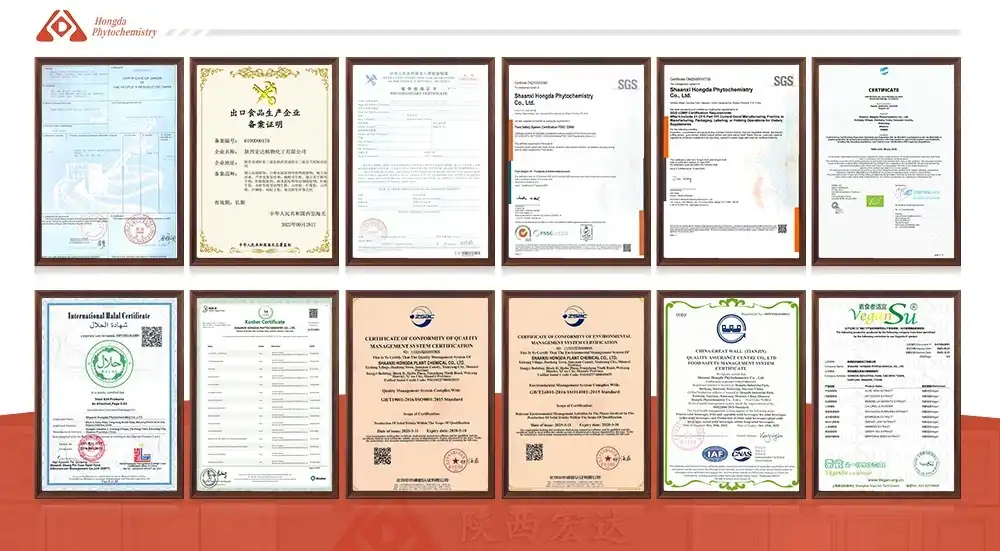
Third-party approvals add an extra level of safety checking that comes from a different source than the testing done by the seller itself. When looking for a supplier of silymarin powder (silymarin powder manufacturer), buyers should use certification as a safety checklist instead of a marketing tool, since each credential shows a different set of quality control and manufacturing standards that have been checked by outside auditors. Certifications are also a quick and easy way for procurement teams to make sure that new vendors are following the rules before they start testing data specific to each batch. The following table lists the certifications that buyers of silymarin powder need to know about to make sure they are safe.
| Certification | Safety Assurance Provided |
|---|---|
| cGMP | Validated manufacturing hygiene and process controls |
| FSSC22000 / ISO22000 | Recognized food safety management system compliance |
| ORGANIC (EU/NOP) | Verified pesticide-free, non-GMO cultivation |
| ISO9001 | Consistent quality management across every batch |
| Halal / Kosher | Independently audited dietary compliance standards |
cGMP Manufacturing Safety Standards
If a facility has cGMP approval, it means that it follows current good manufacturing practices. These cover everything from keeping tools clean to teaching staff in ways that lower the risk of cross-contamination.
Food Safety Management Systems
FSSC22000 and ISO22000 approvals show that a supplier's whole food safety management system, not just a few test results, meets standards that are accepted by authorities and big stores around the world.
Organic and Pesticide-Free Verification
Both EU and NOP organic certifications separately prove that man-made herbicides were not used in the production of silymarin powder. This gives buyers extra peace of mind beyond what the seller says.
Halal and Kosher Compliance Assurance
These certifications add another level of inspection, making sure that the ways the food is processed meet certain religious dietary standards that some markets need in order to approve the product and keep it in stores for a long time.
Choosing a Safety-Compliant Silymarin Powder Supplier
In the end, choosing a supplier who makes testing and documentation an important part of the manufacturing process rather than an afterthought is what makes the product safe. The Shaanxi Hongda Phytochemistry Co., Ltd. company was founded in 2001 and has a 20,000-square-meter building with more than ten modern production lines and an SGS-standard laboratory with more than twenty professor-level researchers working in it. The company uses high-performance liquid chromatographs, gas chromatographs, and atomic absorption spectrophotometers to check each batch before it is shipped. Hongda is a wholesale supplier of silymarin powder to markets around the world. They use this testing infrastructure and a growing list of certifications to give buyers documented confidence in every order, whether it's a trial shipment or a long-term contract for regular deliveries.
Requesting Batch-Specific COAs
Every package should come with a Certificate of Analysis that is special to that batch, not a general form. This way, buyers can be sure that the testing results are accurate for the material they got, rather than using an old document from a previous sale.
Evaluating Laboratory Infrastructure
Suppliers who have their own SGS-certified labs and advanced testing tools can find safety problems faster and more accurately than those who only use testing services from outside sources, which take longer to complete.
Reviewing Wholesale Supply Reliability
When there is a lot of demand, a reliable bulk silymarin powder provider makes sure they have enough stock and space in their building to meet regular orders without rushing through testing without sacrificing quality.
Why Hongda Sets the Safety Standard?
Hongda silymarin powder factory gives international buyers the proof they need to confidently meet their own safety and regulatory requirements, even in the most closely watched markets. These proofs include cGMP, FSSC 22000, ISO 9001, ISO 22000, halal, kosher, and EU/NOP organic status.
Conclusion
Safety when using silymarin powder begins with responsible cultivation, continues through rigorous contamination screening, and is confirmed by internationally recognized certifications. Hongda Phytochemistry integrates each of these safeguards into its production process, giving buyers a dependable, well-documented ingredient for their formulations across supplement, food, and cosmetic categories. Reach out today to request testing documentation and see how our safety standards support your next product.
FAQ1. What contamination tests should Silymarin powder undergo before shipment?
Heavy metals, pesticide residues, microbial panels, residual solvents, and moisture content should all be tested and documented on every single batch.
2. How can I confirm a silymarin powder batch is pesticide-free?
Request a Certificate of Analysis with pesticide residue screening results, ideally supported by valid organic certification documentation.
3. What is a typical safe dosage range for silymarin powder formulations?
Most formulations use 200mg to 500mg of standardized extract per day, depending on the exact concentration grade used in the batch.
4. Is Hongda a certified silymarin powder supplier?
Yes, Hongda holds cGMP, FSSC22000, ISO9001, ISO22000, and EU/NOP organic certifications, among others.
Source Safety-Verified Silymarin Powder Today | HONGDA
Don't compromise on safety when sourcing botanical extracts for your formulations. Hongda Phytochemistry, a trusted silymarin powder supplier for wholesale buyers worldwide, provides fully documented, contamination-tested, and internationally certified Silymarin Powder for supplement, food, and cosmetic applications across global markets. Contact our team today at duke@hongdaherb.com to request a Certificate of Analysis, a working sample, and pricing details tailored to your project's specific needs.
References
1. Phytotherapy Research — safety and tolerability studies on standardized silymarin extract supplementation.
2. World Health Organization guidance on heavy metal contamination thresholds in botanical raw materials.
3. International Council for Harmonisation (ICH) Q3C guideline on residual solvent safety limits.
4. United States Pharmacopeia (USP) monograph standards for milk thistle extract identity and purity.
5. Global Food Safety Initiative (GFSI) benchmarking requirements referenced in FSSC22000 certification.
6. European Food Safety Authority (EFSA) safety assessments for botanical supplement ingredients.