


_1745918362135.webp)

Why Choose Liposomal Silymarin Powder vs Standard Silymarin Powder?
When you look at liposomal silymarin powder against regular milk thistle extracts and advanced delivery methods, the latter is clearly the better choice for better absorption and healing effectiveness. Silymarin has been a popular botanical ingredient in nutritional and health products for years, but its poor water solubility can limit formulation efficacy. Hongda Phytochemistry is the name of Shaanxi Hongda Phytochemistry Co., Ltd. The company focuses on the development of sophisticated plant-based ingredients and liposomal delivery methods. Hongda supplies high-quality liposomal silymarin powder solutions with advanced encapsulation technology for supplement makers, functional food companies, and product developers who want better ingredient stability, more flexible formulation options, and better delivery performance.
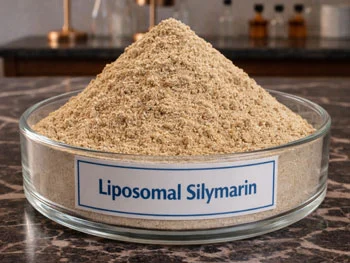
Understanding Silymarin and Its Role in Modern Supplement Formulation
The Natural Characteristics of Silymarin Extract
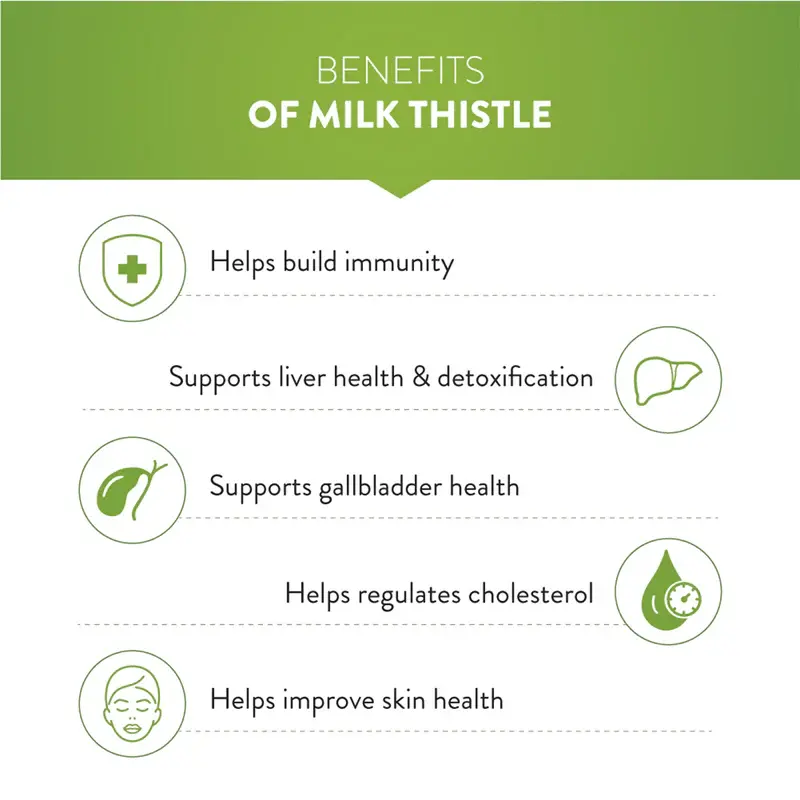
Silymarin is a compound of flavonolignans derived from milk thistle (Silybum marianum). Its active constituents include silybin, silydianin, and silychristin, which are responsible for its antioxidant effects, making it a popular ingredient for liver support and health compositions.
But the natural limitation of typical silymarin extract is poor water solubility. As absorption efficiency is highly correlated with solubility and formulation design, typical silymarin medicines may have variable bioavailability following oral administration.
This presents problems for supplement manufacturers to develop products that require consistent performance of ingredients, design effective dosing, and provide high customer value.
Why Standard Silymarin Has Formulation Challenges
The standard silymarin powder is often used in capsules, tablets, and functional blends. However, its hydrophobicity can limit dispersion in water-based systems and decrease absorption efficiency.
Such restrictions drive firms to investigate advanced delivery technologies that can:
- Better distribution of ingredients
- Protect active ingredients through processing
- Better formula consistency support
- Premium product positioning development
Liposomal delivery technique offers an efficient solution to these issues.
How Liposomal Technology Improves Silymarin Performance
The Science Behind Liposome Encapsulation
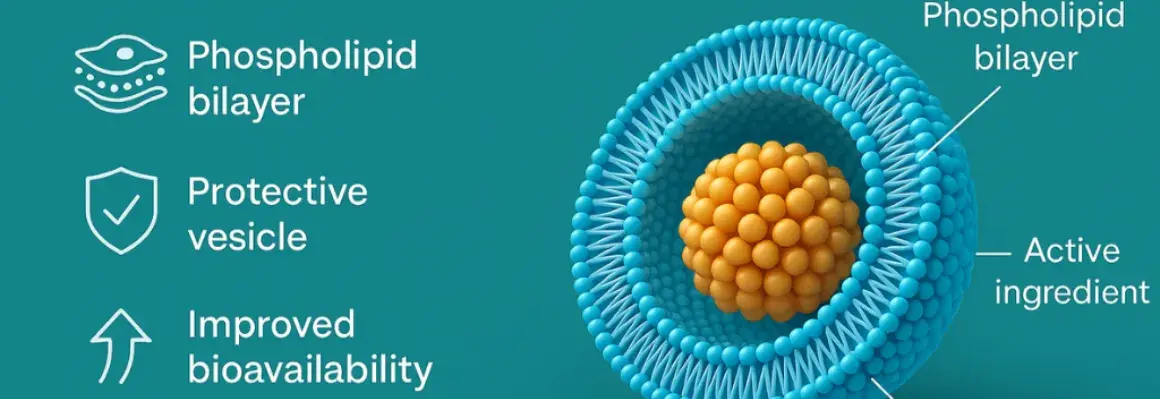
Liposomes are small delivery systems consisting of layers of phospholipids that look like natural cell membranes. Such structures can encapsulate active substances and increase biocompatibility.
During manufacture, silymarin molecules are enclosed in phospholipid carriers through a regulated procedure. This protective structure helps to maintain component stability and aids in improving delivery over standard extracts.
The conversion of liquid liposomal systems into a stable powder form offers additional advantages for the liposomal silymarin powder, such as easier transportation, longer storage potential, and larger application options.
Key Advantages of Liposomal Delivery Systems
Compared with standard silymarin extract, liposomal technology offers several formulation benefits:
Improved dispersion:
Phospholipid carriers help distribute silymarin more evenly in different product matrices.
Enhanced protection:
The lipid structure helps protect sensitive botanical compounds during manufacturing and storage.
Better formulation flexibility:
Powder-based liposomal ingredients can be used in capsules, tablets, powders, beverages, and other wellness products.
Premium product differentiation:
Advanced delivery systems allow brands to create innovative products with stronger market positioning.
Comparing Liposomal Silymarin Powder with Standard Silymarin Powder
Differences in Absorption and Bioavailability
The key difference resides in delivery efficiency between conventional silymarin and liposomal silymarin. Traditional silymarin uses conventional absorption mechanisms. Whereas, the liposomal systems are phospholipid structures that enhance interaction with biological milieus.
“Studies on liposomal botanical ingredients have shown that bioavailability can be greatly improved over traditional extracts by using encapsulation technologies. Real performance is dependent on formulation approaches, phospholipid choices, particle properties, and testing conditions.
This indicates that liposomal silymarin powder can be a more advanced option for product producers for developing high-performance supplements.
Differences in Stability and Product Development
Stability is another important factor for manufacturers.
Standard silymarin powders may face challenges related to:
Poor water compatibility
- Ingredient degradation during processing
- Limited application options
Liposomal formulations provide additional protection through encapsulation technology, helping maintain ingredient integrity during production and storage. This makes liposomal silymarin powder suitable for brands developing premium supplements that require consistent quality and innovative delivery formats.
Manufacturing Quality Standards for Liposomal Silymarin Powder
Hongda’s Quality Control Approach
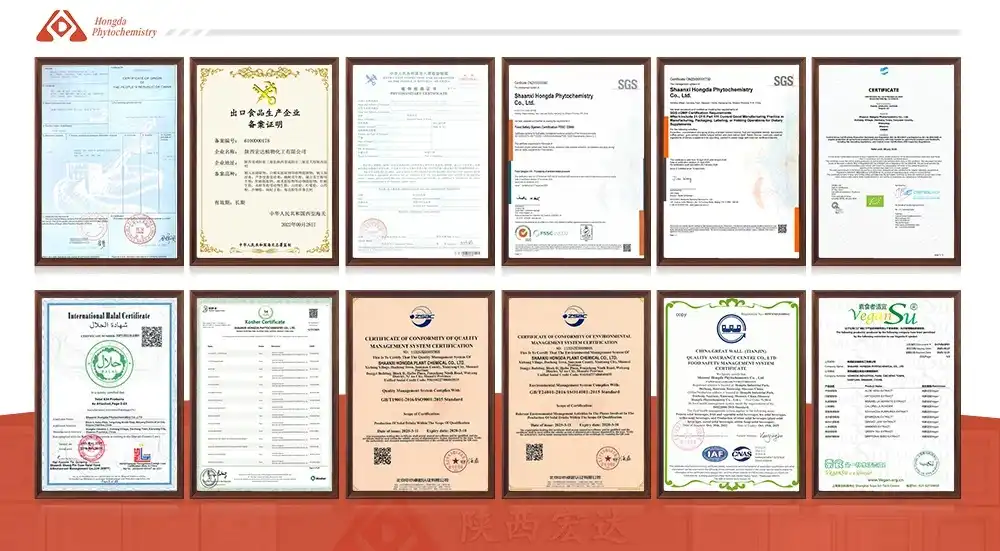
Reliable ingredient manufacturing requires strict quality management throughout the production process. Hongda Phytochemistry applies controlled manufacturing procedures to ensure product consistency and quality.
Quality evaluation may include:
- Particle size analysis
- Active ingredient testing
- Encapsulation efficiency testing
- Microbiological analysis
- Stability evaluation
Each production batch undergoes quality checks to support reliable supply for global customers.
Certifications and Documentation Support
For international supplement and nutrition brands, documentation is essential during product development and market approval.
Hongda supports customers with technical documents such as:
- Certificate of Analysis (COA)
- Product specifications
- Quality testing reports
- Manufacturing documentation
These resources help brands simplify supplier evaluation and accelerate product development processes.
Applications of Liposomal Silymarin Powder in Wellness Products
Dietary Supplements
Liposomal silymarin powder can be incorporated into various supplement formats, including:
- Capsules
- Tablets
- Powder sachets
- Nutritional blends
Its improved formulation characteristics make it suitable for brands seeking differentiated botanical supplements.
Functional Foods and Beverages
Because liposomal systems improve ingredient compatibility, they provide opportunities for functional food developers to create innovative products such as:
- Wellness drinks
- Nutritional powders
- Daily health formulas
Beauty and Antioxidant Formulations
Silymarin’s antioxidant properties also create opportunities in beauty-from-within products and antioxidant-focused formulations.Brands can combine liposomal technology with modern wellness trends to develop products targeting consumers interested in advanced nutrition solutions.
Why Manufacturers Choose Liposomal Silymarin Powder for Premium Products
Supporting Market Differentiation
The supplement industry is becoming increasingly competitive. Consumers are looking for products supported by advanced technology and recognizable ingredient benefits.
Using liposomal silymarin powder allows brands to differentiate products through:
- Advanced delivery technology
- Improved formulation concepts
- Premium ingredient positioning
Flexible OEM and Private Label Support
For companies developing new products, supplier flexibility is important.
Hongda provides support for:
- Custom formulation development
- Bulk ingredient supply
- OEM and private label projects
- Technical consultation
This allows supplement brands to move from concept development to commercial production more efficiently.
Global Supply and Regulatory Support
Meeting International Market Requirements
Global supplement markets require consistent quality, safety documentation, and manufacturing transparency. Hongda follows internationally recognized quality management practices to support customers entering different markets.
Important considerations include:
- Raw material traceability
- Quality testing procedures
- Production consistency
- Documentation availability
Supporting Long-Term Partnerships
A reliable ingredient supplier provides more than raw materials. Manufacturers need technical support, stable supply, and responsive communication. Hongda Phytochemistry works with global partners to provide dependable liposomal ingredient solutions for long-term product development.
Scientific Development and Future Potential
Growing Interest in Advanced Delivery Technologies
Liposomal technology is still at the beginning of its use in the development of nutritious ingredients since it presents new possibilities to improve classic botanical extracts.
Compared to conventional delivery techniques, liposomal systems offer advantages in:
- SAFETY OF INGREDIENTS
- Innovation of products
- Flexibility of formulation
The increased public interest in science-backed wellness goods is projected to lead to a wider use of enhanced delivery technologies.
Conclusion
Standard silymarin or liposomal silymarin powder – which one to choose? This option is based on the product aims, the formulation needs and the market positioning. Standard silymarin remains a beneficial botanical ingredient, but with liposomal technology, there are additional benefits in delivery performance, stability and product creativity.
Hongda Phytochemistry can provide professional manufacturing capacity, quality control system, and tailored solutions for brands looking for sophisticated nutrition additives. Liposomal silymarin powder is a convenient choice for next-generation wellness product development with dependable production assistance and cutting-edge liposomal technology.
Contact HONGDA for Premium Liposomal Silymarin Powder Solutions
Shaanxi Hongda Phytochemistry Co., Ltd. stands as a trusted liposomal silymarin powder manufacturer with over two decades of experience in botanical extract innovation. Our advanced manufacturing capabilities, comprehensive quality systems, and global supply chain infrastructure position us as the preferred partner for procurement professionals seeking premium hepatoprotective ingredients. Contact our technical team at duke@hongdaherb.com to discuss your specific liposomal silymarin powder requirements and discover how our enhanced delivery systems can elevate your product formulations.
References
1. Abenavoli, L., Capasso, R., Milic, N., & Capasso, F. (2010). Milk thistle in liver diseases: past, present, future. Phytotherapy Research, 24(10), 1423-1432.
2. Biedermann, D., Vavříková, E., Cvak, L., & Křen, V. (2014). Chemistry of silybin. Natural Product Reports, 31(9), 1138-1157.
3. Javed, S., Kohli, K., & Ali, M. (2011). Reassessing bioavailability of silymarin. Alternative Medicine Review, 16(3), 239-249.
4. Loguercio, C., & Festi, D. (2011). Silybin and the liver: from basic research to clinical practice. World Journal of Gastroenterology, 17(18), 2288-2301.
5. Piazzini, V., Monteforte, E., Luceri, C., Bigagli, E., Bilia, A. R., & Bergonzi, M. C. (2019). Nanoemulsion formulations for improving oral bioavailability of natural compounds. Current Pharmaceutical Design, 25(9), 987-1001.
6. Wen, Z., Dumas, T. E., Schrieber, S. J., Hawke, R. L., Fried, M. W., & Smith, P. C. (2008). Pharmacokinetics and metabolic profile of free, conjugated, and total silymarin flavonolignans in human plasma after oral administration of milk thistle extract. Drug Metabolism and Disposition, 36(1), 65-72.