


_1745918362135.webp)

How Is Sildenafil Powder Tested for Impurities and Degradation?
When pharmaceutical manufacturers source Sildenafil Powder from suppliers, one critical concern keeps them awake at night: contamination risks that could jeopardize product safety, regulatory compliance, and brand reputation. A single batch containing excessive impurities or degradation products can trigger costly recalls, regulatory warnings, and loss of consumer trust. Understanding how Sildenafil Powder is rigorously tested for impurities and degradation becomes essential for any buyer committed to delivering safe, effective medications. Hongda Phytochemistry and Shaanxi Hongda Phytochemistry Co., Ltd. employ comprehensive analytical testing protocols that ensure every batch of Sildenafil Powder meets the most stringent international pharmaceutical standards, protecting your business from quality-related risks.
Understanding Sildenafil Powder Quality Requirements
Sildenafil Powder, recognized internationally by its CAS number 139755-83-2 and molecular formula C22H30N6O4S, represents a critical active pharmaceutical ingredient in treating erectile dysfunction and pulmonary arterial hypertension. The pharmaceutical industry demands that Sildenafil bulk powder maintains exceptional purity levels, typically achieving 98% or higher specifications to ensure therapeutic efficacy and patient safety. Quality assurance for Sildenafil raw powder begins with understanding that impurities can arise from multiple sources throughout the manufacturing lifecycle. Process-related impurities originate during chemical synthesis, often including unreacted starting materials, intermediate compounds, or by-products from side reactions. Degradation products form when environmental factors such as heat, light, moisture, or oxidative conditions compromise the molecular stability of Sildenafil powder bulk during storage or transportation. Regulatory agencies worldwide, including the FDA, European Medicines Agency, and International Conference on Harmonisation, have established strict guidelines defining acceptable impurity thresholds to protect public health. The molecular weight of 474.58 g/mol for pure Sildenafil Powder provides a precise target for analytical verification, while its characteristic white powder appearance offers initial visual quality indicators. Manufacturing facilities must implement comprehensive testing strategies that identify and quantify all potential impurities before any Sildenafil bulk powder reaches commercial distribution channels. The complexity of testing requirements reflects the pharmaceutical industry's commitment to preventing substandard medications from entering global supply chains, where patients depend on consistent therapeutic performance. At Shaanxi Hongda Phytochemistry Co., Ltd., our SGS-standardized laboratory infrastructure ensures that every batch of Sildenafil raw powder undergoes exhaustive evaluation against international pharmacopeial standards, providing buyers with documented evidence of compliance and quality assurance.
Primary Impurity Categories in Sildenafil Powder
Pharmaceutical analysis has identified four major impurity types that commonly appear in Sildenafil Powder formulations, each designated with specific nomenclature for regulatory tracking and quality control purposes. Impurity A typically represents synthesis intermediates that failed to complete the chemical transformation into the final Sildenafil bulk powder structure, remaining as residual compounds within the finished material. Impurity B, specifically identified as Sildenafil N-oxide in European Pharmacopeia monographs, forms as the primary oxidative degradation product when Sildenafil raw powder encounters oxidizing agents or atmospheric oxygen under unfavorable storage conditions. This N-oxide derivative demonstrates significantly reduced phosphodiesterase type 5 inhibitory activity compared to pure Sildenafil Powder, potentially compromising therapeutic effectiveness in finished pharmaceutical products. Impurity C encompasses various structural analogs and synthesis by-products, while Impurity D includes N-desmethyl sildenafil and other demethylated derivatives that form through specific degradation pathways.
International Conference on Harmonisation guidelines establish quantitative thresholds for each impurity category based on maximum daily dose calculations, requiring reporting when levels exceed 0.05% for drugs administered at doses below 2 grams daily. Qualification thresholds, representing limits requiring toxicological evaluation, increase progressively from 0.15% for low-dose medications to 1.0% for high-dose formulations, creating a risk-based framework for impurity assessment. Sildenafil powder bulk manufacturers must demonstrate through validated analytical methods that all impurities remain below these regulatory limits throughout the product's shelf life under specified storage conditions. Hongda Phytochemistry's commitment to quality means that our Sildenafil bulk powder consistently achieves impurity levels well below regulatory thresholds, often approaching detection limits through optimized synthesis and purification processes developed over 20 years of pharmaceutical manufacturing experience.
High-Performance Liquid Chromatography Testing Methods
High-Performance Liquid Chromatography stands as the gold standard analytical technique for detecting and quantifying impurities in Sildenafil Powder, offering unparalleled sensitivity, specificity, and reproducibility for pharmaceutical quality control applications. HPLC methodology separates individual chemical components within Sildenafil bulk powder samples based on their differential interactions with a stationary phase column and mobile phase solvent system, allowing precise identification and quantification of the active pharmaceutical ingredient alongside any co-existing impurities or degradation products. The typical HPLC configuration for Sildenafil raw powder analysis employs a reverse-phase C18 column with dimensions of 150 × 4.6 mm packed with 5-10 micrometer particles, providing optimal resolution between Sildenafil Powder and its related substances. Mobile phase compositions frequently utilize buffered systems combining ammonium acetate at pH 7.0 with acetonitrile in carefully controlled ratios, maintaining consistent chromatographic conditions that ensure reliable retention times and peak separation across multiple analytical runs.
UV detection at 240 nanometers wavelength provides maximum absorption for Sildenafil Powder's chromophoric structure, enabling detection limits as low as 0.01% for minor impurities while maintaining linearity across concentration ranges spanning three orders of magnitude. Flow rates typically maintained at 1.0 milliliter per minute balance analysis time against resolution requirements, completing comprehensive impurity profiles within 20-30 minutes per sample injection. Shaanxi Hongda Phytochemistry Co., Ltd. operates multiple HPLC systems within our SGS-standardized laboratory, each calibrated and validated according to international pharmacopeial requirements for method specificity, accuracy, precision, linearity, range, and robustness. Our analytical scientists have developed proprietary HPLC methods optimized specifically for Sildenafil bulk powder that achieve superior separation of all known impurities, including closely related structural analogs that challenge conventional analytical approaches. Method validation protocols demonstrate that our HPLC procedures accurately quantify Sildenafil powder bulk purity levels with relative standard deviations below 2.0% for replicate measurements, meeting regulatory expectations for analytical precision. Limit of detection values achieved through our optimized methods reach 0.005% for most impurities, while limit of quantitation thresholds maintain 0.015% or lower, ensuring comprehensive detection of trace contaminants that might escape less sensitive analytical techniques. Recovery studies consistently demonstrate 98-102% accuracy across the analytical range, confirming that our methods neither overestimate nor underestimate impurity levels in Sildenafil raw powder samples submitted for testing.
Gas Chromatography for Volatile Impurities
Gas Chromatography provides complementary analytical capabilities for detecting volatile organic impurities and residual solvents that might remain in Sildenafil Powder following synthesis and purification operations, addressing quality concerns that HPLC methods cannot adequately assess. Residual solvents represent a specific impurity class requiring dedicated testing protocols because these volatile compounds, while potentially present at low concentrations, can pose toxicity risks or contribute to stability problems during Sildenafil bulk powder storage. Common synthesis solvents including methanol, ethanol, acetonitrile, dichloromethane, and toluene must be quantified and compared against International Conference on Harmonisation Class 2 and Class 3 solvent limits, which establish concentration thresholds based on toxicological risk assessments and acceptable daily exposure calculations. GC analysis for Sildenafil raw powder typically employs capillary columns with appropriate stationary phases selected for optimal separation of expected solvent residues, combined with flame ionization detection or mass spectrometry for sensitive and specific compound identification. Headspace sampling techniques enable efficient extraction of volatile components from solid Sildenafil powder bulk without complex sample preparation, improving analytical throughput while maintaining excellent sensitivity for regulatory compliance testing. Our laboratory at Shaanxi Hongda Phytochemistry Co., Ltd. maintains validated GC methods for all potential process solvents, ensuring that every batch of Sildenafil Powder undergoes comprehensive residual solvent analysis before release for distribution to pharmaceutical manufacturers worldwide. Typical detection limits for our GC methods achieve sensitivity below 10 parts per million for most organic solvents, well below regulatory limits that generally range from 50 to 5000 ppm depending on solvent toxicity classification, providing substantial safety margins that protect end-user pharmaceutical operations from compliance risks.

Stress Testing and Forced Degradation Studies
Stress testing, also termed forced degradation studies, represents an essential component of Sildenafil Powder quality evaluation that deliberately exposes samples to harsh environmental conditions designed to induce chemical breakdown and reveal potential degradation pathways that might occur during manufacturing, storage, or distribution. These accelerated stability studies provide critical insights into the intrinsic stability characteristics of Sildenafil bulk powder, identifying which environmental factors pose the greatest risks to maintaining product quality throughout its intended shelf life under recommended storage conditions. Regulatory agencies require stress testing data to demonstrate that analytical methods possess adequate stability-indicating properties, meaning they can reliably detect and quantify degradation products that might form over time, distinguishing these breakdown compounds from the intact Sildenafil raw powder active pharmaceutical ingredient. Typical stress conditions include exposure to hydrolytic environments across a pH range from strongly acidic to strongly alkaline solutions, oxidative challenge using hydrogen peroxide or other oxidizing agents, photolytic degradation under intense UV and visible light, and thermal stress at elevated temperatures reaching 60-80 degrees Celsius.
Research studies have consistently demonstrated that Sildenafil Powder exhibits particular vulnerability to oxidative stress conditions, where significant conversion to Sildenafil N-oxide (Impurity B) occurs rapidly when samples contact oxidizing agents or atmospheric oxygen in the presence of moisture. Alkaline hydrolysis also produces substantial degradation, while acidic conditions, neutral aqueous environments, photolytic exposure, and dry heat generally induce minimal chemical changes, suggesting that pH control and oxidation prevention represent critical factors for maintaining Sildenafil powder bulk stability during storage and handling. Hongda Phytochemistry conducts comprehensive forced degradation studies on every new batch of Sildenafil raw powder, generating degradation profiles that confirm our analytical methods can detect and quantify all potential breakdown products that might appear during the product's commercial lifetime. Mass balance calculations comparing the sum of intact Sildenafil Powder plus all identified degradation products against initial potency typically achieve closure near 99.5%, demonstrating complete accountability for all chemical species present and confirming the stability-indicating nature of our analytical procedures.
Identifying Degradation Products Through Advanced Techniques
Structural characterization of unknown degradation products discovered during stress testing requires sophisticated analytical approaches combining high-resolution mass spectrometry, nuclear magnetic resonance spectroscopy, and infrared spectroscopy to elucidate molecular structures and understand degradation mechanisms affecting Sildenafil bulk powder under adverse conditions. Liquid chromatography-mass spectrometry systems provide accurate molecular weight determinations for degradation compounds separated from parent Sildenafil Powder through HPLC analysis, often revealing whether breakdown involves oxidation, hydrolysis, demethylation, or other chemical transformation processes. High-resolution electrospray ionization mass spectrometry achieves mass accuracy within 5 parts per million, enabling confident molecular formula assignments that narrow structural possibilities for unknown impurities detected in Sildenafil raw powder samples. One-dimensional and two-dimensional NMR techniques including proton, carbon-13, COSY, HSQC, and HMBC experiments provide detailed information about molecular connectivity and functional group environments, allowing complete structural elucidation of isolated degradation products.
Preparative HPLC separation enables collection of sufficient quantities of individual degradation compounds for comprehensive spectroscopic analysis, overcoming the challenge that these species often represent only minor components in stressed Sildenafil powder bulk samples. Our research collaborations with university professor-level experts at Shaanxi Hongda Phytochemistry Co., Ltd. have characterized multiple degradation pathways for Sildenafil Powder, providing deep understanding of stability-limiting factors that inform optimized storage recommendations and formulation strategies for pharmaceutical manufacturers utilizing our material in finished dosage forms. This expertise, developed through more than 20 years of active pharmaceutical ingredient research and development, positions Hongda Phytochemistry as a trusted technical partner capable of supporting customers' formulation optimization efforts with evidence-based stability guidance specific to Sildenafil raw powder handling and processing requirements.
Physical and Chemical Testing Protocols
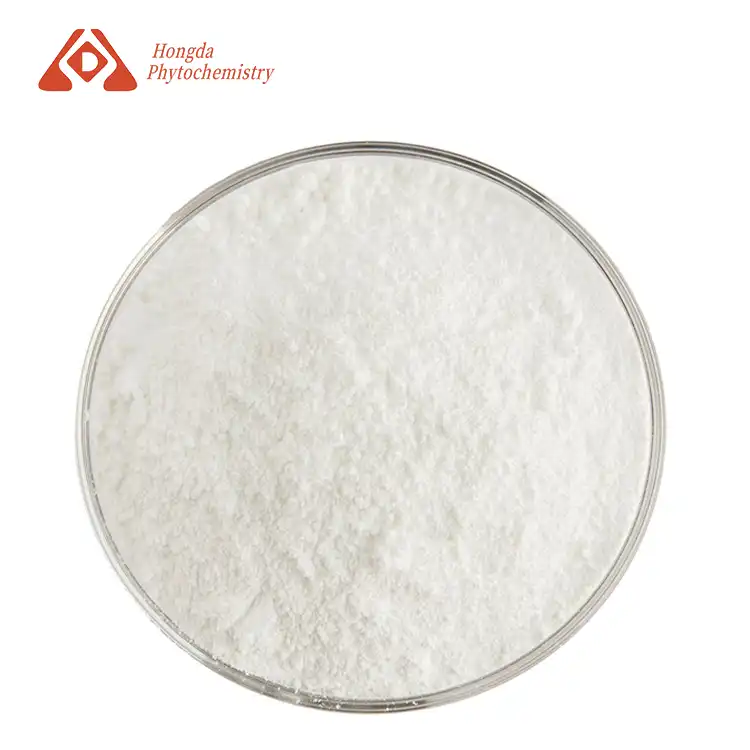
Comprehensive quality assurance for Sildenafil Powder extends beyond chromatographic impurity analysis to encompass a broad array of physical and chemical tests that collectively ensure material identity, purity, potency, and compliance with pharmaceutical specifications established in official compendia and regulatory submissions. Physical testing begins with visual examination confirming that Sildenafil bulk powder exhibits the expected white powder appearance, free from discoloration, clumping, or visible contaminants that might indicate manufacturing problems or storage issues. Odor assessment, while subjective, provides additional quality indicators as pure Sildenafil raw powder should remain essentially odorless without musty, chemical, or unusual smells suggesting microbial contamination, solvent residues, or decomposition. Bulk density measurements determine the mass per unit volume for Sildenafil powder bulk, influencing downstream processing characteristics including flowability during capsule filling operations, compression behavior in tablet manufacture, and volumetric dosing accuracy in liquid formulations requiring dissolved active pharmaceutical ingredient.
Particle size distribution analysis through laser diffraction or microscopic techniques characterizes the physical dimensions of individual Sildenafil Powder particles, affecting dissolution rate, bioavailability, content uniformity in low-dose formulations, and processing behavior during pharmaceutical manufacturing operations. Chemical testing encompasses moisture content determination through Karl Fischer titration or loss on drying procedures, maintaining specifications typically below 0.5% to prevent hydrolytic degradation and ensure accurate potency calculations. Ash content testing reveals inorganic impurities or residual catalysts from synthesis operations, while sulfated ash procedures provide alternative measures for non-volatile residues remaining after high-temperature incineration of Sildenafil bulk powder samples. At Hongda Phytochemistry, our comprehensive testing protocols evaluate all these parameters systematically, generating complete analytical profiles that provide pharmaceutical buyers with confidence that our Sildenafil raw powder meets or exceeds quality expectations for reliable finished product manufacturing.
Heavy Metal and Microbiological Testing
Safety testing for potential toxic contaminants represents a non-negotiable requirement for pharmaceutical-grade Sildenafil Powder, protecting patients from harmful substances that might contaminate raw materials through environmental exposure, processing equipment, or raw material sourcing. Heavy metal analysis using atomic absorption spectrophotometry or inductively coupled plasma techniques quantifies lead, mercury, arsenic, cadmium, and other toxic elements, comparing measured concentrations against regulatory limits typically maintaining total heavy metal content below 10-20 parts per million. Shaanxi Hongda Phytochemistry Co., Ltd. operates state-of-the-art atomic absorption spectrophotometry systems within our SGS-standardized laboratory, achieving detection limits in the parts per billion range that provide substantial safety margins below regulatory thresholds for heavy metal contamination in Sildenafil bulk powder destined for human pharmaceutical applications.
Microbiological testing ensures that Sildenafil raw powder remains free from viable bacteria, fungi, molds, and specific objectionable organisms including Escherichia coli, Salmonella species, Staphylococcus aureus, and Pseudomonas aeruginosa that could compromise product safety or reduce shelf life through microbial proliferation. Total aerobic microbial count typically must not exceed 1000 colony-forming units per gram, while total yeast and mold counts maintain limits of 100 colony-forming units per gram for non-sterile oral pharmaceutical ingredients. Our 100,000-level purification workshops and systematic environmental monitoring programs at Hongda Phytochemistry ensure that Sildenafil Powder manufacturing occurs under controlled conditions that prevent microbial contamination, supported by routine bioburden testing that verifies microbial specifications before batch release. Third-party verification through SGS and Eurofins laboratories provides independent confirmation of our internal heavy metal and microbiological testing results, adding credibility and regulatory confidence to quality documentation accompanying every shipment of Sildenafil powder bulk to customers worldwide.
Spectroscopic Identity and Potency Verification
UV-Visible spectrophotometry provides rapid, cost-effective methods for confirming Sildenafil Powder identity and quantifying active pharmaceutical ingredient concentration through measurement of characteristic light absorption patterns unique to the compound's molecular structure. Sildenafil bulk powder exhibits maximum UV absorbance near 292 nanometers in acidic methanol solutions, creating a distinctive spectral fingerprint that allows confident identification while excluding structurally dissimilar compounds that might represent substitution or adulteration. Quantitative analysis through UV spectrophotometry applies Beer's law relationships correlating absorbance intensity with Sildenafil raw powder concentration, enabling potency determinations with accuracy comparable to HPLC methods when samples contain minimal interfering substances. Infrared spectroscopy offers complementary identification capabilities by measuring molecular vibrations associated with specific functional groups within the Sildenafil Powder structure, generating characteristic absorption patterns that serve as definitive identity confirmation independent of chemical name or supplier representation.
Our quality control laboratory at Shaanxi Hongda Phytochemistry Co., Ltd. maintains extensive reference spectral libraries for Sildenafil bulk powder and potential impurities, enabling rapid comparison of production batches against authenticated standards to detect any variations suggesting quality problems or identity discrepancies. Fourier-transform infrared spectroscopy provides enhanced sensitivity and resolution compared to dispersive instruments, detecting subtle spectral differences that might indicate polymorphic variations, hydrate formation, or presence of excipients in Sildenafil raw powder samples submitted for analysis. Polarimetry measurements determine specific optical rotation values for chiral pharmaceutical compounds, though Sildenafil Powder contains no stereogenic centers and thus exhibits no optical activity, eliminating polarimetry as a critical test for this particular active pharmaceutical ingredient while remaining valuable for many other pharmaceutical materials in our product portfolio.
Thermal Analysis and Stability Assessment
Differential scanning calorimetry and thermogravimetric analysis provide valuable insights into thermal properties and stability characteristics of Sildenafil Powder through precise measurement of heat flow and mass changes occurring as samples undergo controlled temperature programs. Melting point determination for Sildenafil bulk powder typically identifies characteristic melting behavior near 188-192 degrees Celsius, offering an additional physical constant useful for identity confirmation and purity estimation since impurities generally depress melting temperatures and broaden transition ranges. DSC thermograms reveal not only melting transitions but also potential polymorphic transformations, dehydration events, or decomposition reactions that might impact Sildenafil raw powder stability during storage or processing into finished pharmaceutical dosage forms. Thermogravimetric analysis quantifies mass loss as a function of temperature, differentiating moisture content from other volatile components and identifying onset temperatures for thermal decomposition that inform safe processing temperature limits for Sildenafil powder bulk during manufacturing operations.
Isothermal stress testing maintains Sildenafil Powder at elevated temperatures for extended periods, generating degradation kinetics data that enable Arrhenius modeling and shelf-life predictions for material stored under recommended conditions. Hongda Phytochemistry conducts comprehensive stability programs maintaining Sildenafil bulk powder samples at 25 degrees Celsius with 60% relative humidity for long-term stability assessment, supplemented by accelerated stability at 40 degrees Celsius with 75% relative humidity to reveal potential degradation trends within abbreviated timeframes. Our stability data consistently demonstrate that Sildenafil raw powder remains stable for minimum 36 months when stored in closed containers under dry, cool conditions away from light sources, providing pharmaceutical manufacturers with confidence in extended shelf life that supports efficient inventory management and reduces waste from expiration-related product disposal.
Documentation, Traceability, and Regulatory Compliance
Comprehensive documentation systems at Shaanxi Hongda Phytochemistry Co., Ltd. ensure complete traceability for every batch of Sildenafil Powder from raw material sourcing through final product testing, creating audit trails that satisfy regulatory inspection requirements and support pharmaceutical customers' quality assurance programs. Certificates of Analysis accompany each shipment, documenting test results for all specification parameters including identity confirmation, potency assay, impurity quantification, heavy metal content, microbial quality, residual solvents, and physical characteristics, certified by quality unit supervisors and bearing official company seals authenticating the information provided. Batch manufacturing records maintained in our document control system provide detailed histories of synthesis operations, purification steps, in-process testing results, and deviation investigations for each production lot of Sildenafil bulk powder, enabling retrospective review if quality questions arise during pharmaceutical manufacturing or regulatory audits conducted by health authorities.
Material Safety Data Sheets supply comprehensive safety information for Sildenafil raw powder handling, including hazard classifications, exposure limits, protective equipment recommendations, spill response procedures, and safe disposal methods required for workplace safety compliance in pharmaceutical manufacturing facilities worldwide. Our quality management system maintains FDA registration, cGMP certification, FSSC22000 food safety recognition, ISO9001 quality management accreditation, and ISO22000 food safety management certification alongside HALAL, KOSHER, and ORGANIC certifications serving specialized market segments, demonstrating Hongda Phytochemistry's commitment to meeting diverse regulatory requirements across global pharmaceutical markets. Third-party testing through SGS and Eurofins provides independent verification of key quality parameters, generating reports from internationally recognized laboratories that regulatory agencies view as objective quality evidence free from potential bias inherent in manufacturer's internal testing data.

Method Validation and Quality System Compliance
Analytical method validation represents a fundamental requirement ensuring that testing procedures applied to Sildenafil Powder reliably generate accurate, precise, and reproducible results suitable for regulatory decision-making about batch release, stability assessment, and specification compliance. Validation protocols at Shaanxi Hongda Phytochemistry Co., Ltd. systematically evaluate method performance across multiple parameters including specificity demonstrating separation of Sildenafil bulk powder from all known impurities and degradation products, linearity confirming proportional response across relevant concentration ranges, accuracy through recovery studies comparing measured versus known concentrations, precision assessed through replicate measurements within single runs and across multiple days, and robustness testing evaluating sensitivity to deliberate variations in analytical conditions. Limit of detection and limit of quantitation determinations establish minimum concentrations where methods reliably detect or accurately quantify impurities in Sildenafil raw powder samples, ensuring adequate sensitivity for specification testing against regulatory thresholds.
System suitability testing performed before each analytical sequence verifies that chromatographic performance meets predetermined acceptance criteria for resolution, tailing factors, theoretical plates, and relative standard deviation of replicate standard injections, ensuring reliable results before committing valuable Sildenafil powder bulk samples to analysis. Our quality system maintains controlled document procedures, change control processes, deviation investigation protocols, corrective and preventive action systems, internal audit programs, and management review processes conforming to current Good Manufacturing Practice expectations for pharmaceutical active pharmaceutical ingredient manufacturing facilities. More than 150 trained technical personnel at Hongda Phytochemistry, including 20+ professor-level scientists in our research and development team, contribute specialized expertise ensuring that testing methods and quality systems remain current with evolving regulatory expectations and industry best practices for Sildenafil Powder quality assurance.
Conclusion
The rigorous testing protocols applied to Sildenafil Powder at Hongda Phytochemistry encompass sophisticated analytical techniques including HPLC impurity profiling, GC residual solvent analysis, stress testing, spectroscopic identity confirmation, heavy metal quantification, and microbiological evaluation that collectively ensure pharmaceutical-grade quality meeting international regulatory standards. These comprehensive quality assurance measures protect pharmaceutical manufacturers and their patients from risks associated with contaminated, degraded, or subpotent active pharmaceutical ingredients. Shaanxi Hongda Phytochemistry Co., Ltd. stands as a trusted China Sildenafil Powder factory, China Sildenafil Powder supplier, and China Sildenafil Powder manufacturer offering China Sildenafil Powder wholesale with proven batch-to-batch consistency verified through three years of manufacturing history. Our Sildenafil Powder for sale provides High Quality Sildenafil Powder at competitive Sildenafil Powder price backed by comprehensive technical support and regulatory documentation.
As a leading manufacturer established in 2001 with over 20 years of pharmaceutical expertise, our 20,000 square meter facility operates more than 10 modern production lines producing 3,000 tons annually under cGMP, FDA, ISO9001, ISO22000, FSSC22000, HALAL, KOSHER, and ORGANIC certifications. Our SGS-standardized laboratory equipped with HPLC, GC, UV spectrophotometry, atomic absorption spectrophotometry, and other advanced analytical instruments ensures every batch undergoes exhaustive testing before release. Ready to secure pharmaceutical-grade Sildenafil Powder with documented quality assurance and regulatory compliance? Contact our technical team at duke@hongdaherb.com to discuss your requirements, request certificates of analysis, and discover how Hongda Phytochemistry's commitment to excellence can support your formulation development and manufacturing success.
References
1. Veronin MA, Nutan MT, Dodla UKR. Quantification of active pharmaceutical ingredient and impurities in sildenafil citrate obtained from the Internet. Therapeutic Advances in Drug Safety. 2014;5(5):180-189.
2. Daraghmeh N, Al-Omari MM, Badwan AA, Jaber AM. Determination of sildenafil citrate and related substances in the commercial products and tablet dosage form using HPLC. Journal of Pharmaceutical and Biomedical Analysis. 2001;25(3-4):483-492.
3. Abdel-Kader MS, Soliman GA. Eco-friendly stability-indicating RP-HPTLC method for sildenafil analysis, characterization and biological evaluation of its oxidized stress degradation product. Scientific Reports. 2021;11:15309.
4. International Conference on Harmonisation of Technical Requirements for Registration of Pharmaceuticals for Human Use. ICH Harmonised Tripartite Guideline: Impurities in New Drug Products Q3B(R2). 2006.
5. Nagaraju V, Sreenath D, Rao JT, Rao RN. Separation and determination of synthetic impurities of sildenafil by reversed-phase high-performance liquid chromatography. Analytical Sciences. 2003;19(7):1007-1011.