



_1745918362135.webp)

How pure is the Tadalafil Powder you should source for manufacture?
When pharmaceutical manufacturers evaluate tadalafil powder, purity is usually the first specification they ask about, but it should not be the only one. However, even a batch with a high assay value might still be problematic if the impurity profile, residual solvents, moisture level, identity tests, or batch documentation does not fulfill the standards of the intended formulation and market. Thus, for purchasers comparing API providers, the concern is not only if tadalafil is “98%” or “99%” pure, but also whether the material regularly matches a stated criterion backed by trustworthy analytical evidence. Shaanxi Hongda Phytochemistry Co., Ltd. is a supplier of Tadalafil Powder to customers in the chemical and industrial sectors. Their product specifications and analytical data may be used to assist in your assessment of Tadalafil Powder.
What Purity Level Should Manufacturers Expect From Tadalafil Powder?
The proper purity goal will rely on the specification applied to the drug substance, the market for which it is designed, and the quality needs of the producer. The key to this difference is that there is no general regulation that any commercial tadalafil raw material must simply be “at least 98% pure” under every single pharmacopeial or regulatory framework.
For example, the current USP Tadalafil monograph states that tadalafil contains not less than 97.5% and not more than 102.5% of tadalafil, measured on the dry basis. This is not the same as suggesting that USP sets a worldwide “98% minimum” for all tadalafil provided across the globe. Manufacturers must constantly refer to the current monograph and appropriate regulatory requirements for the market where the final medicine will be registered.
So for commercial sourcing, a 98% requirement may be useful, but the statistic requires context. Whether a supplier claims 98% tadalafil, the buyer should ask how that is determined, whether it is stated on an as-is or dried basis, which analytical technique is utilized, etc. What does the specification say regarding related substances? A higher assay result from a supplier does not always mean that the source is superior if the supplier's analytical process, impurity controls, or batch consistency are inadequately documented.
This is particularly true when the API will be part of a certified manufacturing process. Changing the supplier may change the particle properties, moisture, polymorphic form, or impurity profile, even if the headline test looks the same. This is why pharmaceutical procurement teams usually have to assess the whole specification for the medication ingredient, not only choose material based on one percentage.
Why Assay Alone Does Not Define API Quality?
The assay gives the manufacturer information on the amount of tadalafil present based on the analytical technique used. It does not specify the other substances in the material, nor does it indicate that the material will react in the same manner throughout formulation and processing.
For example, two batches both may have a tadalafil test of 98%. If one batch has a different residual-solvent profile, or greater moisture, or a different distribution of process-related contaminants, then the two materials may not be similar from a manufacturing-control standpoint. The difference may be significant in developing the formulation, stability studies, process validation, or regulatory evaluation.
This is why a supplier validation procedure should take into account assay as well as identity, related chemicals, residual solvents, elemental contaminants, water or loss on drying, and any other criteria specified in the approved specification. ICH Quality guideline considers contaminants, specifications, analytical techniques, validation information, and batch analysis as related components of drug-substance quality documentation, not as standalone pieces of information.
For purchasers this transforms the inquiry from “What’s your highest purity?” to “Can you prove that every batch is within a controlled and justified specification? That question is significantly more relevant when choosing an API vendor.
How to Read a Tadalafil Assay Result?
Always interpret a tadalafil test in relation to the technique used to achieve it. HPLC is often employed for assay and related-substance testing because chromatographic analysis can extract tadalafil from other components and give a quantitative result. But just because there is an HPLC result doesn’t mean the technique is appropriate, verified, or consistent with the buyer’s desired specification.
Therefore, manufacturers should seek the relevant analytical technique or method summary, acceptance criteria, representative chromatograms (when applicable), and batch-specific data. If the item is to be used in a regulated pharmaceutical application, the buyer should additionally evaluate whether the supplier can provide method transfer, validation questions, reference standards, and other technical documents necessary for supplier certification.
The product information of Hongda on tadalafil powder is provided as follows: material: tadalafil; CAS: 171596-29-5; molecular formula: C22H19N3O4; product specification: 98%. These fundamental identifiers are good beginning points, but a professional qualifying procedure should look at the full COA and accompanying quality records for the exact batch of tadalafil powder being acquired.

Which Impurities Should Buyers Examine Before Approval?
A high assay value does not exclude the requirement for impurity control. Impurities resulting from the synthesis or purification process and degradation products might form during processing or storage. Residual solvents may also result from poor solvent-removal measures during manufacture.
ICH Q3A is concerned with impurities in novel drug substances and offers a framework for reporting, detecting, and qualifying impurities based on the quantities and characteristics of the drug substance. Therefore, the relevant limitations are substance, dosage, specification, and regulatory environment, particularly not a single universal impurity % applicable to every API.
Therefore, for the tadalafil powder purchaser, the supplier’s related-substances profile is more informative than a simple remark like “high purity." The COA should show the relevant impurity findings against established acceptability standards. If the buyer is creating a regulated product, more information may be needed to determine the identification and qualification status of important contaminants.
Residual solvents are a special issue. The control strategy for residual solvents in pharmaceutical products is given in ICH Q3C, including the use of permissible daily exposure principles for solvents with relevant toxicological data. A provider should be able to describe the method by which residual solvents are tested and the criteria by which the findings are judged against the relevant standard.
Also include elemental impurities when relevant to the production process and regulatory requirements. Manufacturers should assess the real elemental-impurity standard and analytical technique relevant to their product and process, rather than an arbitrary “heavy metals below 10 ppm” declaration as a blanket quality claim.
How Physical Properties Can Affect Tadalafil Formulation?
The chemical assay is simply a fraction of the raw material profile. Physical qualities may impact the performance of tadalafil throughout the blending, granulation, compression, milling, storage, and dissolution testing processes.
Tadalafil is extremely insoluble in watery media. The most current FDA chemical evaluation identifies the tadalafil API as virtually insoluble in water and notes poor aqueous solubility over the physiological pH range. The evaluation also covers tadalafil as a poor-solubility pharmacological ingredient and considers it in the light of BCS factors.
This makes physical characterization important for formulation development. Depending on the dosage form and manufacturing method, all these factors, particle-size distribution, shape, bulk density, flow behavior, and crystalline properties, may become essential. Therefore, a buyer should not assume that two powders with the same test would inevitably provide the same formulation performance.
This is why producers, who buy tadalafil powder in commercial lots, have to specify which physical properties are relevant to their particular process. A direct compression formulation may have different material needs than a wet granulation or other particle engineering technique. The provider should be prepared to explain the parameters available but not make unsubstantiated assertions that any certain particle size would inherently provide better clinical performance.
What Documentation Should Come With Each Tadalafil Powder Batch?
Pharmaceutical procurement: the paperwork is part of the product. If the material is not accompanied by sufficient batch records and analytical data, the buyer may have extra work to do even if the powder itself looks to fulfill the required assay.
A batch-specific Certificate of Analysis should indicate the product, batch or lot number, test parameters, analytical findings, acceptance criteria and appropriate testing techniques. The document should also allow the stated findings to be associated with the actual material provided. Batch traceability is especially critical if many purchases of the same API are made during a long production run.
The supplier may additionally need to submit specifications for tadalafil powder, analytical techniques, validation information, stability-related data, production information, safety documents, and other regulatory support files, depending on the buyer’s quality system and regulatory demands. The Common Technical Document structure developed by ICH explicitly includes specifications, analytical processes, validation information, batch analyses, and specification justification as parts of drug-substance quality documentation.
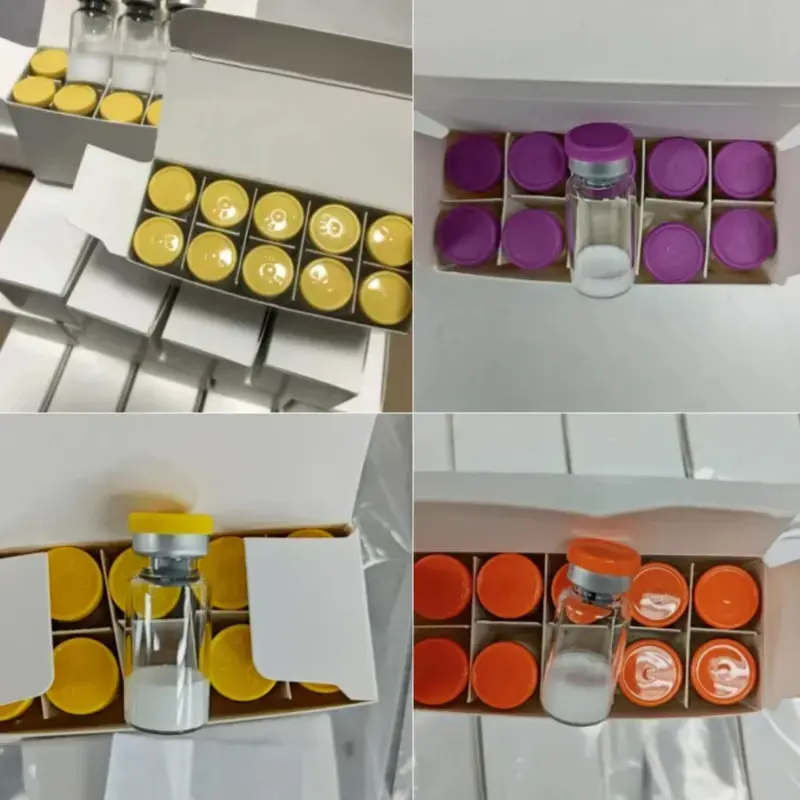
Hongda’s public material on tadalafil shows the product is backed by two independent labs and a GMP-standard workshop. The product sites also provide packaging alternatives such as 1-kilogram aluminum foil bags and 25 kg drums. But for new supplier qualifications, buyers should ask for documentation on the current batches, rather than relying on information on a website.
How Should Manufacturers Compare Two Tadalafil Powder Suppliers?
Suppose Supplier A offers tadalafil at 98% and Supplier B also offers tadalafil at 98%. Choosing between them based only on price or the headline purity number would leave out several factors that can directly affect manufacturing risk.
The first comparison should be the specification itself. Buyers should determine whether both suppliers use comparable assay bases and whether the acceptance criteria for related substances, residual solvents, moisture, and other critical parameters are equivalent. The second comparison should be analytical capability. A supplier that can provide clear methods, batch chromatograms where appropriate, validated testing information, and traceable reference standards gives the buyer more useful evidence than a supplier that only provides a one-line purity statement.
The third issue is batch consistency. Pharmaceutical manufacturers are not purchasing one isolated laboratory sample; they are normally trying to establish a dependable supply over multiple production cycles. Historical batch data, deviation records where appropriate, change-control procedures, and retained samples can therefore be valuable during qualification.
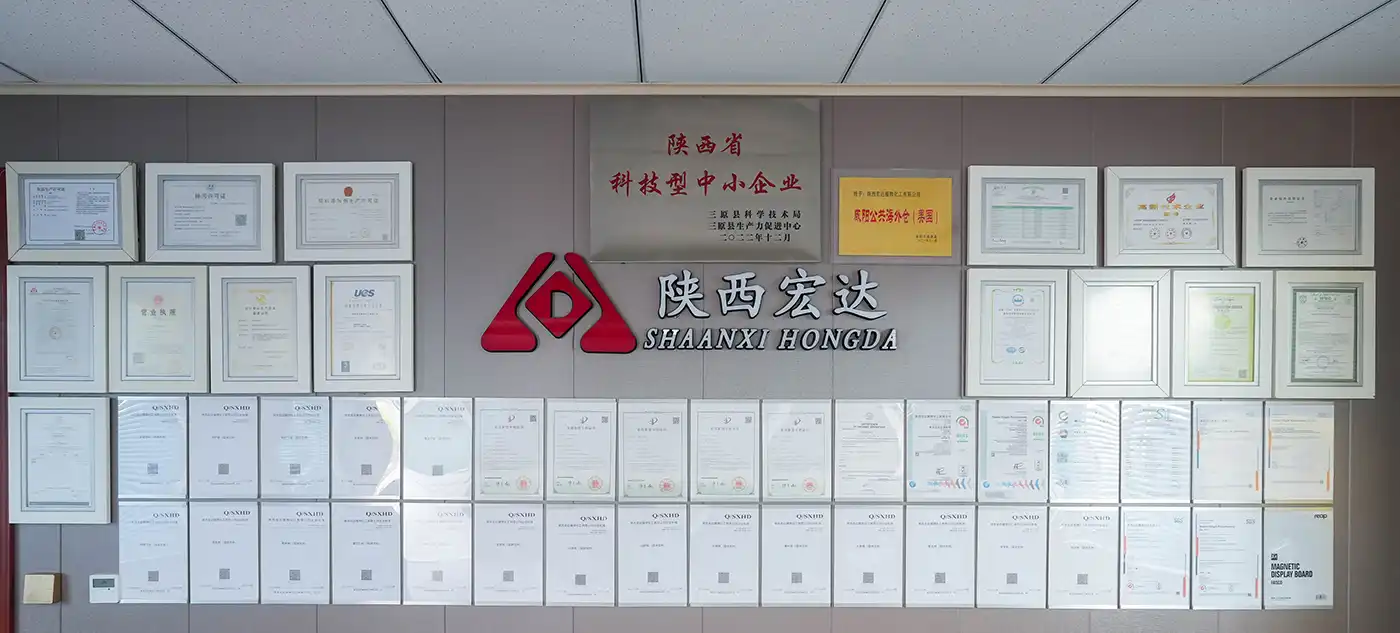
The fourth consideration is regulatory support. A supplier may have manufacturing certifications, but the buyer should understand exactly what each certification covers and whether the documents are current. GMP-related credentials, ISO certifications, FDA registration, and other registrations or certifications should not be treated as interchangeable forms of regulatory approval.
Hongda's current tadalafil product information lists GMP-related credentials, FDA registration, ISO-related certifications, and HALAL and KOSHER among its stated certifications and quality credentials. Buyers should still verify the current certificate scope, validity, issuing organization, and applicability to the specific production site during qualification.
What Manufacturing Capacity Matters for Long-Term API Supply?
Purity becomes much less useful as a purchasing metric if the supplier cannot maintain consistent supply. A pharmaceutical manufacturer may spend months qualifying an API source, only to encounter problems later if production capacity, inventory management, packaging, or lead times are not reliable.
For long-term sourcing, buyers should therefore evaluate whether the supplier can support the required annual volume without changing the agreed specification. They should also ask how production batches are identified, how retained samples are managed, how changes to raw materials or processes are controlled, and what happens if a batch does not meet specifications.
Hongda's current tadalafil bulk information describes a 3,000 m² temperature-controlled warehouse, DDP/DAP shipping options, and a stated 98% on-time delivery rate. These operational details are relevant because API sourcing involves more than laboratory quality. The supplier must also be able to protect the material after release and maintain traceability through storage and transportation.
Packaging should be evaluated in the same way. Tadalafil powder should remain protected from conditions that could compromise its quality during storage and transit. The buyer's own stability and handling requirements should determine the appropriate packaging configuration rather than selecting packaging solely according to the lowest shipping cost.
When Is 98% Tadalafil Powder a Reasonable Purchasing Specification?
A 98% tadalafil specification can be a reasonable commercial specification when it is supported by an appropriate analytical method and when it satisfies the specification established for the intended application. It should not, however, be presented as a universal definition of pharmaceutical-grade tadalafil.
This distinction is important because pharmaceutical quality is specification-driven. A material can have a high assay while failing another critical test, and a material close to the lower assay limit may still comply with an applicable monograph if all other requirements are met. The buyer's goal should therefore be to source material that consistently meets the agreed specification rather than simply chasing the highest percentage advertised by a supplier.
For manufacturers evaluating Hongda, the company's published Tadalafil Powder specification is 98%, while its bulk product information also advertises higher-purity material on a separate product page. Because specifications can differ by product grade and application, buyers should confirm the exact grade, specification, test basis, and documentation before placing a commercial order.
The most useful purchasing conversation is therefore specific. Ask for the current specification, a recent COA, impurity profile, residual-solvent data, identity results, physical-property information relevant to the formulation, packaging details, batch traceability information, and the quality documentation required by your regulatory pathway. This gives the procurement and quality teams enough information to determine whether the material is actually suitable for their manufacturing process.
Why Supplier Transparency Matters More Than a Single Purity Number?
A trustworthy API supplier should be able to explain where its purity figure comes from and what sits behind it. If a supplier claims 98%, 99%, or 99.5% purity but cannot provide a meaningful specification or batch-level analytical evidence, the higher number has limited purchasing value.
Transparency is particularly important when a buyer is preparing for an audit or regulatory submission. The supplier's production records, analytical procedures, batch results, change-control practices, and traceability system may all become relevant during qualification.
Hongda Phytochemistry's product information provides a useful starting point for this assessment because the company publishes tadalafil's basic chemical identity, specification, testing information, packaging, and manufacturing details rather than presenting the product only as a generic “high-purity” ingredient. For a serious pharmaceutical buyer, however, website information should be followed by direct technical-document review and supplier qualification.
Ultimately, the right tadalafil powder is not necessarily the material with the largest purity number printed on a quotation. It is the material whose assay, impurity profile, physical characteristics, documentation, manufacturing controls, and batch consistency are appropriate for the finished product and regulatory market being developed.
Conclusion
Sourcing pharmaceutical-grade Tadalafil powder with a verified and appropriately justified assay is essential for manufacturers developing products containing tadalafil. However, purity should never be evaluated as an isolated percentage. The more important question is whether the API consistently meets an appropriate drug-substance specification and whether the supplier can demonstrate that performance through reliable analytical testing, impurity control, documentation, traceability, and batch-to-batch consistency.
For manufacturers, a 98% specification can be acceptable when it matches the applicable product specification and is supported by suitable testing. At the same time, a supplier should not imply that 98% is a universal minimum under every pharmacopoeia or regulatory system. USP's published tadalafil monograph, for example, specifies 97.5% to 102.5% on the dried basis. This illustrates why buyers should review the actual standard and analytical basis rather than relying on simplified marketing claims.
Shaanxi Hongda Phytochemistry Co., Ltd. provides tadalafil powder with published product specifications, analytical information, GMP-related manufacturing capabilities, and supporting documentation for bulk buyers. Its current tadalafil product information identifies the API as tadalafil with CAS 171596-29-5 and a 98% specification, while its bulk product information also describes higher-purity options and additional quality-control capabilities.
Whether you are evaluating a China tadalafil powder manufacturer, comparing tadalafil powder suppliers, or qualifying a new API source for pharmaceutical production, the most useful purchasing decision comes from reviewing the complete quality package rather than comparing purity percentages alone. Hongda Phytochemistry can support this evaluation with product specifications, batch documentation, analytical information, packaging options, and supply capabilities, allowing manufacturers to determine whether the available tadalafil powder matches their formulation, quality, and procurement requirements. Contact us today at duke@hongdaherb.com to discuss your requirements.
References
1. United States Pharmacopeia. "Tadalafil Monograph." USP-NF Standards, Pharmaceutical Compendium.
2. European Pharmacopoeia Commission. "Quality Standards for Active Pharmaceutical Ingredients." European Directorate for the Quality of Medicines & Healthcare.
3. International Conference on Harmonization. ICH Q3A: Impurities in New Drug Substances. "ICH Harmonized Tripartite Guideline.
4. World Health Organization. "Quality Assurance of Pharmaceuticals: A Compendium of Guidelines and Related Materials. "WHO Technical Report Series.
5. Food and Drug Administration. "Current Good Manufacturing Practice for Finished Pharmaceuticals." Code of Federal Regulations Title 21.


_1752046380392.webp)