


_1745918362135.webp)

| Iron Source | Elemental Iron | Oxidative Stability | Lipid Oxidation Risk | Sensory Profile |
|---|---|---|---|---|
| Ferrous Fumarate | 32.5–33% | High | Low | Mild, low metallic |
| Ferrous Sulfate | ~20% | Moderate | High | Strong metallic, astringent |
| Ferrous Gluconate | ~12% | Moderate–High | Low | Mild but low iron density |
| Ferrous Bisglycinate | ~20% | High | Very Low | Excellent, near-neutral |
| Ferric Pyrophosphate | ~25% | Very High | Very Low | Neutral — but lower bioavailability |
How Stable Is Ferrous Fumarate Powder in Supplement Formulas?
June 18, 2026
Stability isn't just a shelf-life number — it's the difference between an iron supplement that delivers its labeled dose at month 24 and one that doesn't. Hongda Phytochemistry, operating as Shaanxi Hongda Phytochemistry Co., Ltd., has spent over two decades producing pharmaceutical-grade ferrous fumarate powder engineered specifically for formulation reliability. This guide examines the oxidative, thermal, and processing stability of ferrous fumarate—and why those properties matter to every manufacturer putting iron into a capsule, tablet, or powder blend.
Why Does Ferrous Fumarate Powder Resist Oxidation Better Than Most Iron Salts?
The Chemistry Behind the Stability Advantage
The main stability threat for any ferrous iron source is oxidation, which changes the bioavailable ferrous ion (Fe²⁺) into the poorly absorbed ferric form (Fe³⁺). This oxidation doesn't just reduce potency; in the presence of lipids, it can trigger rancidity cascades that degrade fat-soluble vitamins and shorten the overall shelf life of a finished product. What makes ferrous fumarate powder structurally advantageous in this regard is the coordination of the iron atom within the fumarate ligand. The fumarate anion creates an electron environment around the iron center that meaningfully slows the oxidation kinetics compared to simple inorganic iron salts like ferrous sulfate, where the iron is far more exposed. [1][2] In formulation stability studies, fumarate salts have shown significantly lower degradation rates in oxidative environments—a finding confirmed in pharmaceutical patent literature comparing fumarate against hydrochloride and free-base forms under accelerated conditions. For supplement manufacturers, this benefit translates into longer formulation windows, a reduced need for antioxidant co-excipients, and more predictable label-claim compliance over the product's shelf life.
Oxidative Stability vs. Ferrous Sulfate in Food Fortification
When iron is added to food matrices — particularly those containing polyunsaturated fats, oil-containing powders, or fat-soluble vitamins — the choice of iron source has a measurable impact on product quality. Ferrous sulfate is inexpensive but is among the most pro-oxidant iron sources available, accelerating lipid oxidation, promoting iodine sublimation in double-fortified salts, and causing off-colors and metallic off-notes in reconstituted beverages and milk powder blends. Ferrous Fumarate Powder consistently performs better in these food matrices, producing less lipid oxidation and better preserving co-fortified vitamins like A and C. Shaanxi Hongda's manufacturing process further controls oxidative load by producing the powder under controlled humidity and temperature in 100,000-level purification workshops — an environment specifically designed to prevent in-process oxidation before the product even reaches the customer's blending line. These concerns are especially relevant given that iron is a fundamental essential nutrient in human physiology and global iron deficiency remains one of the most widespread micronutrient issues worldwide. [3][4]
Storage Stability: What the 24-Month Shelf Life Actually Means?
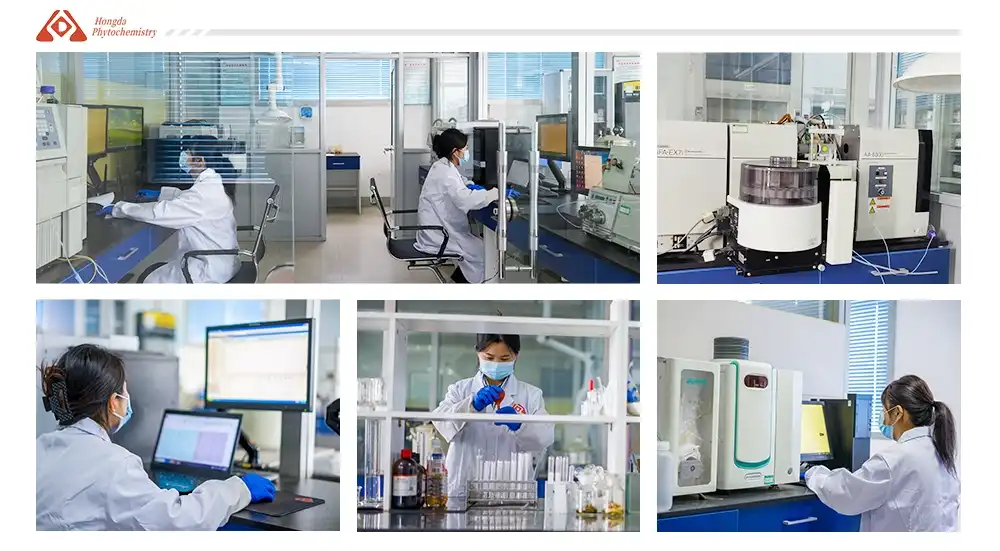
A shelf life claim on a raw material is only as good as the quality system behind it. Hongda's Ferrous Fumarate Powder carries a verified 24-month shelf life under cool, dry storage conditions—standard warehouse environments that most ingredient buyers can meet without specialized infrastructure. This figure is backed by real stability data generated in Hongda's SGS-standardized laboratory, where each batch is tested for iron content, moisture, heavy metals, and microbiological parameters before shipment. The laboratory's equipment — including high-performance liquid chromatographs, atomic absorption spectrophotometers, and automatic titrators — provides the analytical resolution to detect iron oxidation at trace levels. [5][6] The finished product stored in Hongda's dedicated Zone E warehouse (reserved specifically for vitamins and amino acid products) is maintained under controlled conditions with professional sterilization protocols, ensuring that the product shipped today meets the same specifications as the product that was manufactured three months ago.
For technical support, formulation guidance, or sample requests, you can directly contact Hongda's technical team at duke@hongdaherb.com to discuss product specifications and stability requirements.
Surviving the Manufacturing Line — Thermal and Mechanical Stability
Tablet Compression and Capsule Filling Performance
The journey from raw material to finished supplement dosage form is physically demanding. High-speed rotary tablet presses apply strong compression forces to powder blends and create local heat, while capsule-filling equipment depends on consistent particle-flow characteristics to achieve accurate fill weights. Ferrous fumarate powder from Shaanxi Hongda has a homogeneous particle size distribution—100% through 100 mesh—ensuring reliable flow on automated equipment without bridging or segregation. Hongda also offers a Direct Compression (DC) grade specifically engineered for high-speed tableting that eliminates the wet granulation step many iron formulations require, reducing both production time and energy input. The DC grade's particle morphology is designed to maintain blending uniformity with common excipients, including microcrystalline cellulose, dicalcium phosphate, and various lubricants, preventing the "color spotting" and active ingredient segregation that inferior iron powders cause on production lines.
Thermal Stability During Granulation and Drying
For manufacturers using wet granulation or spray-drying processes, ingredient thermal stability is a critical selection criterion. Ferrous Fumarate Powder is thermally stable at standard granulation temperatures (typically 40–80°C), maintaining its Fe²⁺ content and crystalline structure through standard drying operations. This is in contrast to some iron chelates that can partially hydrolyze during wet granulation, releasing free iron that then accelerates oxidation of co-formulated vitamins. The fumarate coordination chemistry is robust enough to survive most standard processing operations without significant iron speciation change—a key reason why it appears in stability-demanding formulations, including prenatal vitamins, where co-formulated vitamin C and B-complex vitamins impose additional oxidative stress on the iron component. Hongda's production team operates across 10+ modern production lines with over 150 workshop technicians trained to maintain the precise humidity and temperature controls that preserve the powder's physical and chemical properties right up to packaging.
Vitamin C (ascorbic acid) is frequently co-formulated with iron supplements because it measurably enhances non-heme iron absorption — but it also introduces an oxidative compatibility challenge, since ascorbic acid can reduce Fe³⁺ back to Fe²⁺ at rates that vary with moisture and temperature, generating hydrogen peroxide as a byproduct. In a formulation already containing ferrous iron, managing this redox chemistry is important for stability. Ferrous fumarate powder performs well in vitamin C-iron combinations, particularly in dry solid dosage forms, where the low water activity limits the reaction kinetics. Encapsulated and granulated formats further extend compatibility by creating a physical barrier between the iron and the ascorbic acid until the product is consumed. Hongda's technical team, supported by 20+ R&D personnel in two dedicated research institutions, regularly advises customers on excipient selection and formulation design for complex multi-nutrient combinations involving their iron ingredients—including both ferrous fumarate and their chelated iron range.
Behavior in Liquid and Powder Sachet Formats
Liquid supplements and powder-for-reconstitution formats present more demanding stability environments than solid dosage forms, primarily because higher water activity accelerates iron oxidation and vitamin degradation, a challenge that experienced ferrous fumarate suppliers must consider when developing ingredient solutions. In these formats, ferrous fumarate powder behaves more predictably than ferrous sulfate, which tends to produce gray discoloration and metallic flavor in reconstituted beverages, particularly those fortified with milk or chocolate matrices. Ferrous fumarate maintains better color stability in aqueous systems and generates significantly less lipid oxidation in oil-containing beverage powders. For home fortification applications—powder sachets designed to be added to infant food or porridge—ferrous fumarate is specifically recognized by the WHO and FAO as an appropriate iron form, valued for its combination of decent bioavailability and manageable organoleptic impact in starchy food vehicles.
How Hongda's Manufacturing System Protects Stability From Day One?
Production Controls That Start Before the Blend
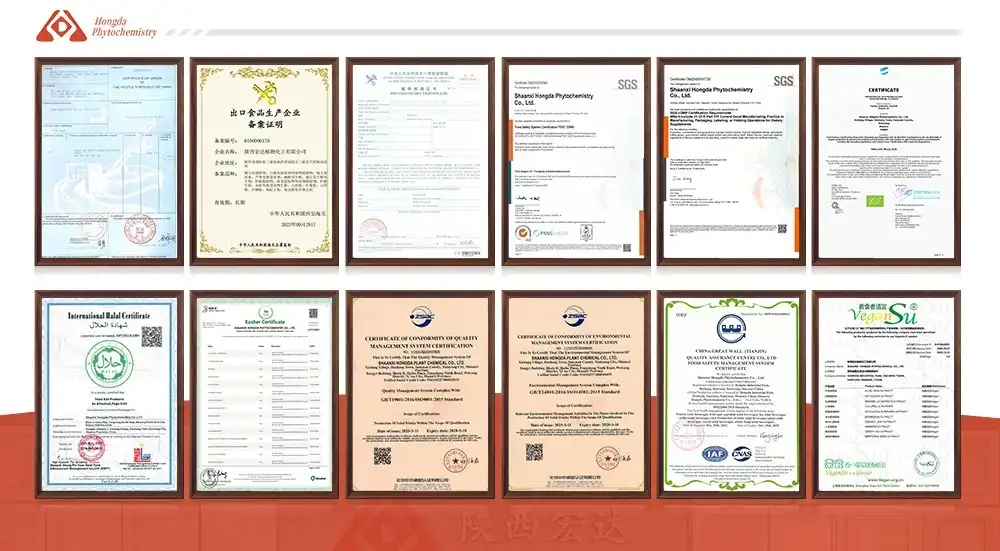
Ingredient stability in a finished supplement is only partly determined by formulation design — it begins at the raw material level, in the production environment where the active ingredient is first made. Shaanxi Hongda Phytochemistry Co., Ltd. operates its Ferrous Fumarate Powder production in 100,000-level purification workshops, a cleanroom classification that controls both airborne particulate and microbial contamination. The factory spans 20,000 square meters with more than 10 production lines, each supported by over 150 trained workshop technicians operating under documented GMP protocols. Newly acquired in 2025, Hongda's cGMP and FSSC 22000 certifications provide independent third-party verification of these controls—meaning buyers don't have to take the supplier's word for it. As a verified ferrous fumarate supplier exporting to more than 40 countries, Hongda's processes have been audited against the most demanding international standards.
SGS Laboratory Testing: Every Batch, Every Parameter
Hongda's SGS-standardized laboratory, co-established with university professors and staffed by more than 20 specialist researchers and analysts, runs a full battery of tests on every batch before shipment. For ferrous fumarate powder, the testing includes iron content assay by ICP-OES, loss on drying, heavy metal screening (lead ≤ 0.004%, arsenic ≤ 0.0004%), sulfate content, particle size distribution, and microbiological parameters. The lab is equipped with high-performance liquid chromatographs, gas chromatographs, atomic absorption spectrophotometers, polarimeters, automatic titrators, and melting point meters—an analytical portfolio that goes well beyond what most raw material suppliers provide. Customers receive a full COA with every shipment, and Hongda supports free samples with COA documentation for formulation development and regulatory dossier preparation. As a manufacturer that also produces ferrous bisglycinate manufacturer-grade chelated iron, Hongda applies the same testing rigor across its complete iron ingredient portfolio.
Product Specification
|
Test Parameter
|
Specification
|
Test Method
|
Relevance to Stability
|
|---|---|---|---|
|
Assay (Fe content)
|
≥ 93.0% (USP); ≥ 99% (Hongda grade)
|
Titration / ICP-OES
|
Confirms active iron loading per dose
|
|
Loss on Drying
|
≤ 1.5%
|
USP <731>
|
Moisture drives oxidation and caking
|
|
Lead (Pb)
|
≤ 0.004%
|
ICP-MS
|
Heavy metal absence confirms purity
|
|
Arsenic (As)
|
≤ 0.0004%
|
Titration
|
Safety and regulatory compliance
|
|
Sulfate (SO₄²⁻)
|
≤ 0.2%
|
Titration
|
Purity—flags ferrous sulfate contamination
|
|
Particle Size (Mesh)
|
100% through 100 mesh
|
Visual / Sieve
|
Uniform blending and dose consistency
|
|
Microbiological
|
Per USP / EU standards
|
Standard plate count
|
Safe for oral supplement manufacturing
|
Warehouse and Logistics Conditions That Preserve Incoming Quality
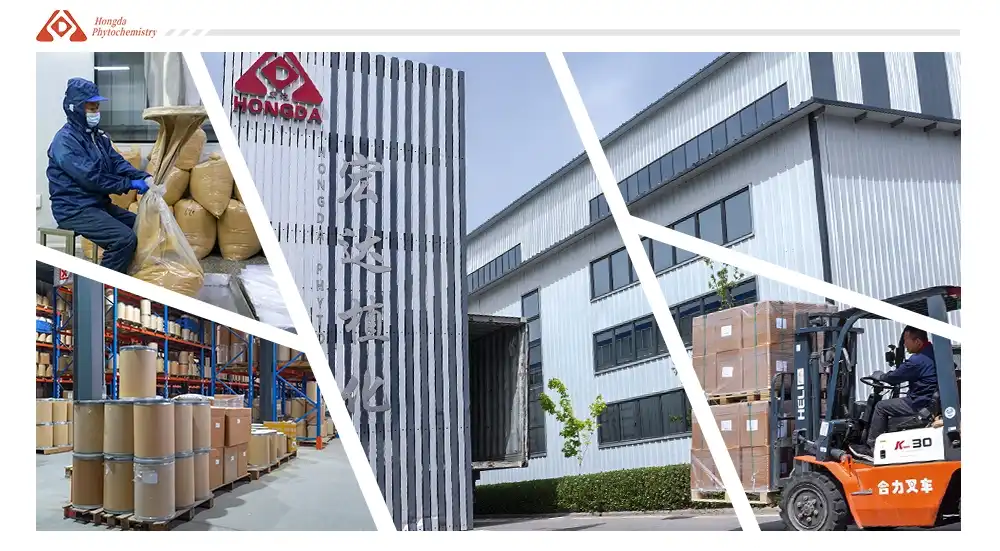
Even a perfectly manufactured batch of ferrous fumarate powder from a ferrous bisglycinate manufacturer can degrade if stored or shipped improperly. Hongda's 3,000 m² warehouse operates six dedicated storage zones: Zone E is reserved exclusively for vitamins and amino acid products, including ferrous fumarate, and is maintained under conditions designed for this ingredient category. All zones are subject to regular professional sterilization. The standard packing format is 25 kg/drum (27 drums per tray), with double-layer packaging designed to prevent moisture ingress and light exposure during transit. For European customers, Hongda maintains warehouse stock in Europe specifically to reduce lead times and allow import without the uncertainties of long ocean freight schedules. Lead time from order confirmation runs 3–7 working days for standard orders, with long-term supply contracts available for customers seeking supply security.
Conclusion
The stability of ferrous fumarate powder in supplement formulas isn't an accident—it's a product of chemistry, manufacturing discipline, and rigorous quality control. Its fumarate coordination slows oxidation, its low moisture specification limits in-formula degradation, and its consistent particle size ensures reliable processing performance. When that ingredient comes from a facility like Shaanxi Hongda Phytochemistry Co., Ltd.—with 24 years of iron supplement manufacturing behind it, 100,000-level purification workshops, cGMP and FSSC22000 certification, and SGS-verified batch testing—you're not just buying a powder. You're buying a formulation asset you can depend on.
FAQ
1. What is the shelf life of ferrous fumarate powder, and how should it be stored?
Hongda's Ferrous Fumarate Powder carries a 24-month shelf life when stored cool, dry, and away from direct sunlight. Standard 25 kg drums with double-layer packaging protect against moisture ingress during transit and storage.
2. Does ferrous fumarate powder oxidize during tablet compression or granulation?
Ferrous fumarate is thermally stable at standard granulation temperatures (40–80°C) and resists iron speciation change during normal tableting operations. Hongda's DC grade is specifically engineered for direct compression, eliminating wet granulation for most formulations.
3. Is ferrous fumarate compatible with vitamin C in supplement blends?
Yes, particularly in dry solid dosage forms where low water activity limits the iron-ascorbate redox reaction. Encapsulated or granulated formats provide additional compatibility for more complex multi-nutrient formulations.
4. What stability documentation can Hongda provide to support regulatory submissions?
Hongda provides a full batch COA covering assay, moisture, heavy metals, particle size, and microbiological parameters.
Get Technical Support and Samples From a Proven Iron Ingredient Supplier | HONGDA
Whether you're developing a new ferrous fumarate powder iron supplement, troubleshooting stability in an existing formula, or looking to qualify a more reliable ferrous fumarate source, Shaanxi Hongda Phytochemistry Co., Ltd. has the technical expertise, the certified manufacturing infrastructure, and the global supply capability to support your project at every stage. Free samples, full COAs, and market-specific compliance packages are available on request. Don't leave formulation stability to chance—connect with Hongda today. Talk to Our Team: duke@hongdaherb.com.
References
1. Dinan, L. (2001). Phytoecdysteroids: Biological aspects. Phytochemistry, 57(3), 325–339.
2. Lafont, R., & Dinan, L. (2003). Practical uses for ecdysteroids in mammals including humans: An update. Journal of Insect Science, 3(1), 7.
3. Syrov, V. N. (2000). Comparative experimental investigation of the anabolic activity of phytoecdysteroids and steranabols. Pharmaceutical Chemistry Journal, 34(4), 193–197.
4. Isenmann, E., Ambrosio, G., Joseph, J. F., Mazzarino, M., de la Torre, X., Zimmer, P., Kazlauskas, R., Goebel, C., Botrè, F., Diel, P., & Parr, M. K. (2019). Ecdysteroids as non-conventional anabolic agent: Performance enhancement by ecdysterone supplementation in humans. Archives of Toxicology, 93(7), 1807–1816.
5. Wilborn, C. D., Taylor, L. W., Poole, C. N., Foster, C. A., Willoughby, D. S., & Kreider, R. B. (2006). Effects of ecdysterone supplementation on resistance training adaptations: A randomized controlled trial. International Journal of Sport Nutrition and Exercise Metabolism, 16(4), 483–493.
6. Bathori, M., Pongracz, Z., & Toth, N. (2008). Ecdysteroids and anabolic effects: A review of experimental evidence and applications. Acta Physiologica Hungarica, 95(2), 189–197.