



_1745918362135.webp)

How Can OEM Liposomal Coenzyme Q10 Powder Boost Your Product Line?
Launching a new supplement line often comes down to one question: does your formula actually stand out, or does it look like everything else on the shelf? OEM liposomal coenzyme q10 powder gives brands a way to differentiate with a science-backed delivery format rather than just a new label design, and Hongda Phytochemistry has positioned itself as a strong partner for this kind of project. Shaanxi Hongda Phytochemistry Co., Ltd., the company supplies liposomal coenzyme Q10 powder built on phospholipid encapsulation technology that improves absorption over standard CoQ10, giving OEM partners a genuine performance story to build a product line around. This article looks at how an OEM partnership around this ingredient can shape a stronger product lineup, from formulation flexibility to market positioning and supply reliability.
Expanding Your Product Line With a Premium Ingredient Story
Differentiating From Standard CoQ10 Products
Most CoQ10 products sold today use standard ubiquinone or ubiquinol powders; therefore, the store shelves are filled with very similar goods. Brands can create a new SKU around OEM liposomal coenzyme q10 powder and market a truly different delivery mechanism that overcomes the well-known absorption limitations of standard CoQ10, giving sales and marketing teams a real story to tell, not just another “now with better ingredients” claim. This differentiation is most crucial in crowded categories such as heart health, where consumers scrolling through dozens of near-identical listings are looking for a reason to choose one product over another, and “liposomal” is now a recognizable signal of quality formulation, not just marketing speak. [1][2][4]
Targeting Premium Price Points
Liposomal versions are often positioned as premium, and consumers studying CoQ10 are becoming more aware of the bioavailability concerns with previous formats. [3] A product that includes liposomal coenzyme q10 powder allows marketers to charge a premium price based on formulation technology, not packaging, which can boost margins on a new product line without having to develop an entirely new category of ingredients. It is an efficient way for private label brands in particular to move upmarket: the underlying ingredient cost increase is modest compared to conventional CoQ10, but the retail price uplift that liposomal positioning supports can be substantial, especially in markets where consumers already pay a premium for “enhanced absorption” or “next-generation” supplement claims.
Cross-Category Product Development
OEM partners can employ liposomal coenzyme q10 powder in more than just capsules or tablets, as the powder disperses effectively in water. A single sourcing relationship can service multiple product categories like a capsule line, a powder sachet line, and even a beverage or shot format, decreasing the complexity of managing several unrelated suppliers for what is essentially one core active ingredient. This type of cross-category flexibility is especially valuable for brands that want to run a “hero ingredient” campaign. The same liposomal CoQ10 technology story can be told across a capsule for daily use, a sachet for travel, and a functional drink for active lifestyles, all reinforcing brand recognition with common formulation messaging.
Building a Multi-SKU Heart Health or Energy Range
CoQ10 fits naturally into heart health, energy, and healthy aging categories, all of which benefit from multi-SKU ranges (capsules, chewables, drink mixes) that share a common positioning story. OEM liposomal coenzyme q10 powder can serve as the anchor ingredient across this kind of range, giving brand teams a consistent technical narrative to use across packaging, website copy, and retail education materials. A well-planned multi-SKU range also creates natural cross-sell opportunities at retail and online, where a customer who starts with a capsule product may later add a drink mix for travel days or a chewable for a family member who dislikes swallowing pills, all while reinforcing the same underlying liposomal CoQ10 message.
| Product Format | OEM Opportunity With Liposomal CoQ10 |
|---|---|
| Capsules/Softgels | Smaller capsule size for same functional dose |
| Powder Sachets | Easy single-serve, travel-friendly format |
| Beverages/Shots | New category access not possible with standard CoQ10 |
| Chewables | Reduced bitterness vs. raw CoQ10 |
How the OEM Development Process Works
Initial Consultation and Specification Matching
The OEM process typically starts with a conversation about target dose, format, and any positioning claims the brand wants to make. At this stage, working with a liposomal coenzyme q10 powder manufacturer that already has documented specifications, purity data, and structural verification on hand speeds up decision-making considerably compared with starting from scratch on a custom formula. Brands that come into this conversation with a clear sense of their target retail price, intended sales channel, and any regulatory claims they hope to make can usually move from initial inquiry to a working specification sheet within a short timeframe, since most of the underlying technical groundwork has already been validated by the manufacturer's own lab.
Sample Testing and Formulation Trials
Before committing to a production run, most brands request samples of liposomal coenzyme Q10 powder to test in their own formulation, whether that's a capsule fill trial, a beverage stability test, or a taste evaluation for a chewable. This stage is where potential issues, such as flow characteristics or interactions with other actives, get identified early, saving time and cost later in the process. It is also the point where brands often discover unexpected synergies, for example, finding that the liposomal powder blends more smoothly into a beverage base than an older oil-based CoQ10 ingredient did, which can shorten the overall formulation timeline considerably.
Custom Packaging and Branding Options
OEM partnerships often extend beyond the raw ingredient to include packaging formats, labeling compliance support, and sometimes finished-product co-packing. For brands sourcing liposomal coenzyme q10 powder, having a manufacturer that can advise on packaging formats appropriate for a hygroscopic, liposomal powder, such as vacuum-sealed bags or drums, helps avoid product quality issues after the ingredient leaves the factory. This guidance is especially useful for smaller brands that may not have in-house packaging engineering resources, since improper storage or transit packaging is one of the most common causes of ingredient degradation before it ever reaches the formulation line.
Scaling From Pilot Batch to Full Production
A successful OEM relationship should be able to scale smoothly from an initial pilot batch to recurring production orders. This is where the production capacity of the underlying Coenzyme Q10 powder factory matters: a facility with multiple production lines and substantial annual output capacity can accommodate a brand's growth without forcing a supplier change just as a product line starts gaining traction. Switching suppliers mid-growth can be disruptive, often requiring renewed stability testing, updated documentation, and sometimes even reformulation if the new ingredient's specifications differ slightly, so choosing a manufacturer with room to scale from day one is a strategic decision, not just a cost consideration.
If you're ready to start an OEM conversation around liposomal coenzyme q10 powder, including discussing specifications, sample requests, or packaging options, the Hongda Phytochemistry team is available directly at duke@hongdaherb.com to walk through your product line goals.
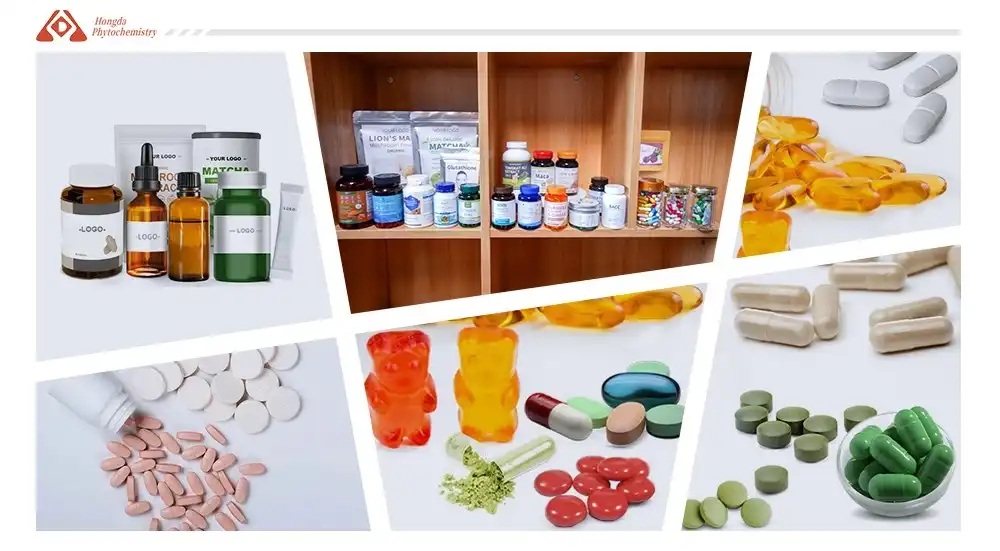
Manufacturing Capacity and Quality Assurance Behind the Ingredient
Production Infrastructure
Hongda Phytochemistry operates from a facility covering roughly 20,000 square meters, with more than ten modern production lines and 100,000-level purification workshops. For OEM buyers, this scale matters because it reflects the difference between a liposomal coenzyme q10 powder manufacturer that can support a single trial order and one equipped to handle recurring contracts as a product line grows across multiple markets. Facilities of this size also typically maintain redundancy across production lines, which means a single equipment maintenance cycle is far less likely to disrupt an OEM partner's supply schedule compared with smaller, single-line operations.
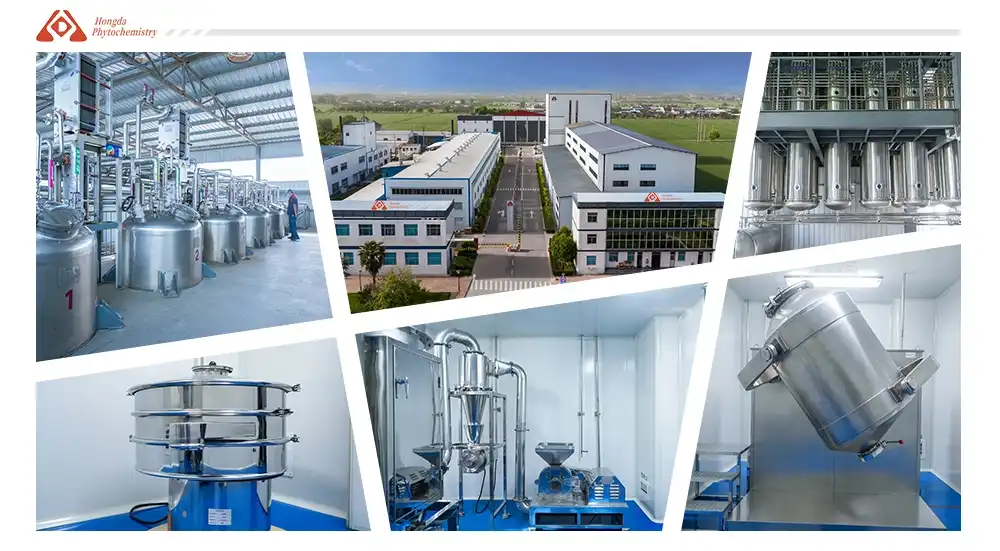
In-House Testing and Documentation
With an SGS-standardized laboratory built alongside university researchers, equipped with HPLC systems, gas chromatographs, and other analytical instruments, every batch of liposomal coenzyme Q10 powder can be verified for purity, heavy metals, and microbial safety before it ships. [5] For OEM partners, this means the documentation needed for retailer compliance or import clearance is typically available without additional third-party testing delays. This is particularly valuable for brands entering retail channels with strict vendor qualification processes, where a missing or incomplete Certificate of Analysis can delay a product launch by weeks.
International Certifications
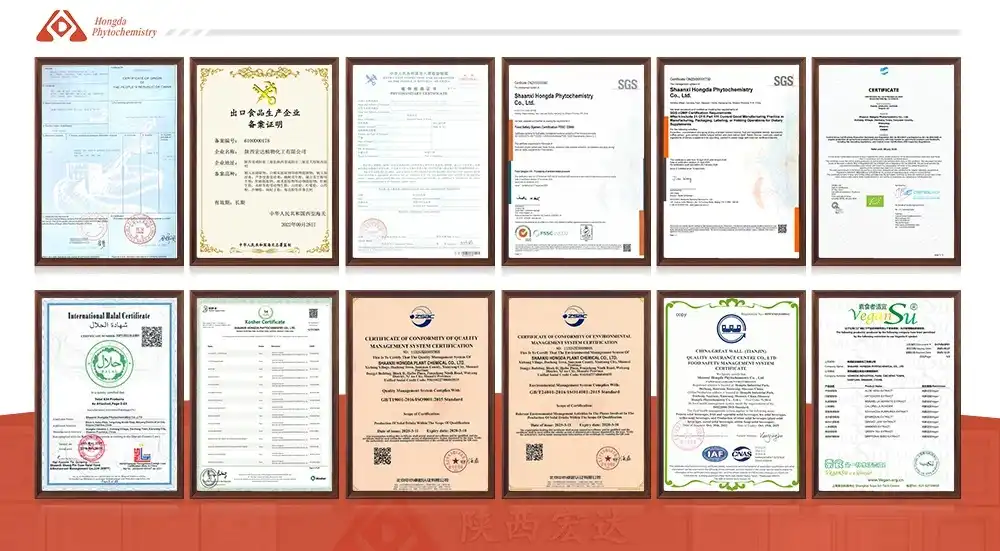
If a brand wants to sell in several regions, a Coenzyme Q10 powder factory with certifications appropriate to the target market is a must. Hongda has obtained cGMP, FSSC22000, ISO9001, ISO22000, Halal, Kosher, FDA registration, and organic certification (EU and NOP). [6] The documentation requirements that most OEM brands will have to deal with when they stretch their territory from one local market into North America or Europe. Because much of the certification is already in place, a brand that launches initially in one country and then expands globally usually doesn’t need to requalify its primary ingredient supplier, taking away one of the more time-intensive processes in cross-border expansion.
Inventory and Order Reliability
The warehouse is 3,000 square meters and is equipped with dedicated and sterilized storage areas to guarantee consistent inventory availability for liposomal coenzyme Q10 powder. This is particularly important for OEM brands, who need to know when to expect their next order so that their shelves don’t sit empty for a long time, which can kill the momentum of a new product line. For businesses running paid advertising or influencer campaigns related to a launch window, an unexpected stockout may be costly not just in missed sales but in wasted marketing spend, making supply reliability a discreetly crucial part of any OEM review.
Strategic Considerations for Brands Evaluating OEM PartnersMinimum Order Quantities and Growth Planning
New product lines often start small, and brands should look for a liposomal coenzyme q10 powder manufacturer offering flexible order sizes, with the ability to scale into larger volumes and potential discounts as order sizes increase. This flexibility allows a brand to test market response before committing to large inventory positions. Early-stage brands in particular benefit from a tiered pricing structure that rewards growth without requiring an unrealistic first order, since this lowers the financial barrier to entry while still giving the manufacturer visibility into a brand's long-term potential.
Lead Times and Launch Timeline Planning
Standard production turnaround in the three-to-seven working-day range, combined with both air and sea freight options, gives OEM brands realistic windows for planning product launches, restocks, and seasonal promotions around their liposomal coenzyme Q10 powder supply. Brands planning launches around seasonal demand spikes, such as New Year wellness campaigns, can work backward from these lead times to set realistic marketing and inventory schedules, avoiding the common mistake of announcing a launch date before confirming ingredient availability.
Long-Term Supplier Relationship Value
An OEM relationship built around a single core ingredient like liposomal coenzyme q10 powder can often expand naturally into other liposomal minerals or antioxidants from the same manufacturer's catalog, simplifying procurement as a brand's product line diversifies into adjacent categories like liposomal iron, glutathione, or vitamin C. Over time, this kind of consolidated sourcing relationship can also lead to better pricing terms and priority production scheduling, since the manufacturer has visibility into a brand's full ingredient roadmap rather than treating each order as an isolated transaction.
|
Consideration
|
Why It Matters for OEM Brands
|
|---|---|
|
Flexible MOQs
|
Test market response before scaling inventory
|
|
Lead Time (3–7 days)
|
Supports launch and restock planning
|
|
Broad Certifications
|
Reduces re-qualification across export markets
|
|
Expandable Catalog
|
Easier to add adjacent liposomal ingredients later
|
Conclusion
OEM liposomal coenzyme Q10 powder gives brands a practical way to differentiate a product line through formulation technology rather than packaging alone, while opening up new formats like beverages and sachets that standard CoQ10 cannot support. Hongda Phytochemistry's production scale, certifications, and flexible order sizes make it a capable partner for brands at any stage of building out a heart health or energy-focused range.
Frequently Asked QuestionsQ1: What makes OEM liposomal coenzyme q10 powder different from standard CoQ10 ingredients?
A: Its phospholipid encapsulation improves absorption and water dispersibility compared to conventional CoQ10 powder.
Q2: Can this ingredient be used in beverage formats?
A: Yes, its microemulsion-forming properties make it suitable for drinks and powder mixes, unlike standard CoQ10.
Q3: What is the typical OEM development process like?
A: It generally involves consultation, sample testing, packaging discussion, and then scaling to full production.
Q4: What certifications matter for international OEM sales?
A: cGMP, ISO9001, ISO22000, FDA registration, and EU/NOP organic certification support most major export markets.
Q5: Can order sizes scale as my product line grows?
A: Yes, order sizes are flexible, with options to scale up as demand for your product line increases.
Start Your OEM Liposomal CoQ10 Project Today | HONGDA
If you're ready to build a differentiated product line around a science-backed delivery format, Hongda Phytochemistry offers OEM liposomal coenzyme q10 powder backed by a fully equipped Coenzyme Q10 powder factory, broad international certifications, and flexible order sizes for brands at any stage. From initial samples to full-scale production, our team can support your formulation and packaging decisions. Contact us at duke@hongdaherb.com to discuss your product line goals, request samples, and start planning your next launch with a partner built for global compliance.
References
1. Bhagavan, H. N., & Chopra, R. K. (2006). Coenzyme Q10: absorption, tissue uptake, metabolism, and pharmacokinetics. Free Radical Research.
2. Zaki, N. M. (2016). Strategies for oral delivery and mitochondrial targeting of CoQ10. Drug Delivery.
3. Lopez-Lluch, G., et al. (2010). Bioavailability of coenzyme Q10 supplements depends on carrier formulation. Mitochondrion.
4. Pravst, I., Zmitek, K., & Zmitek, J. (2010). Coenzyme Q10 contents in foods and fortification strategies. Critical Reviews in Food Science and Nutrition.
5. Failla, M. L., et al. (2014). Bioavailability of ubiquinone compounds: a systematic review. PLOS ONE.
6. Garrido-Maraver, J., et al. (2014). Coenzyme Q10 therapy. Molecular Syndromology.
_1751535186455.webp)