


_1745918362135.webp)

Indole 3 Carbinol Powder vs DIM: What Are the Differences?
Chemicals called indole-3 carbinol powder and DIM (3,3'-diindolylmethane) are similar but different. They are found in cruciferous plants and are often looked at by B2B buyers for use in food and drinks. Their chemical makeup and how accessible they are are what make them different. When stomach acid breaks down indole-3-carbinol, the main thing that is left over is DIM. Indole-3-carbinol is naturally found in Brassica plants. The procurement managers and R&D formulators at Hongda Phytochemistry need to understand these molecular differences because they affect how stable formulations are, how accurate dosages are, and how well finished products work as food supplements that aim to balance hormones and improve cellular health.
Understanding the Molecular Foundation of Both Compounds
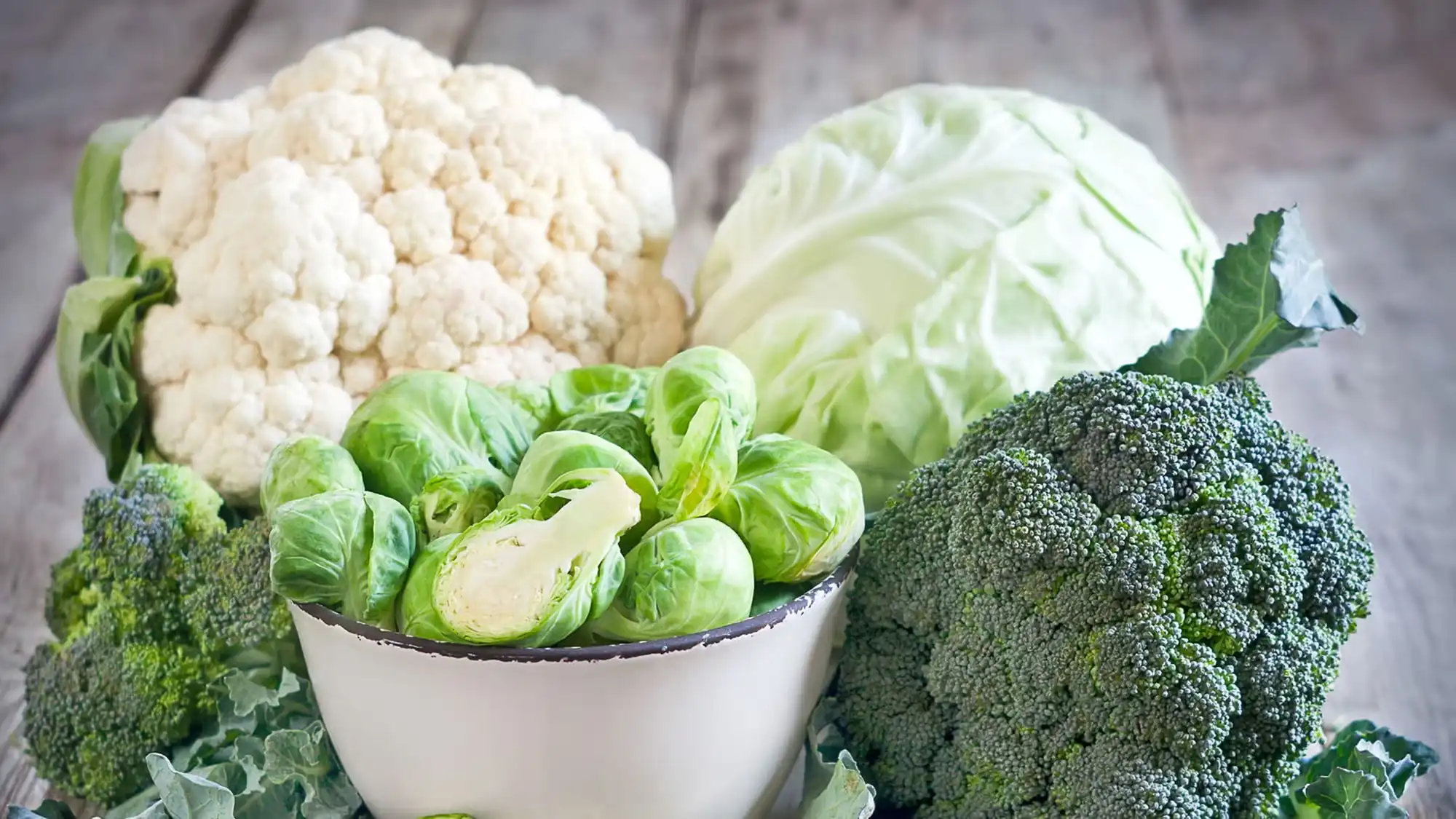
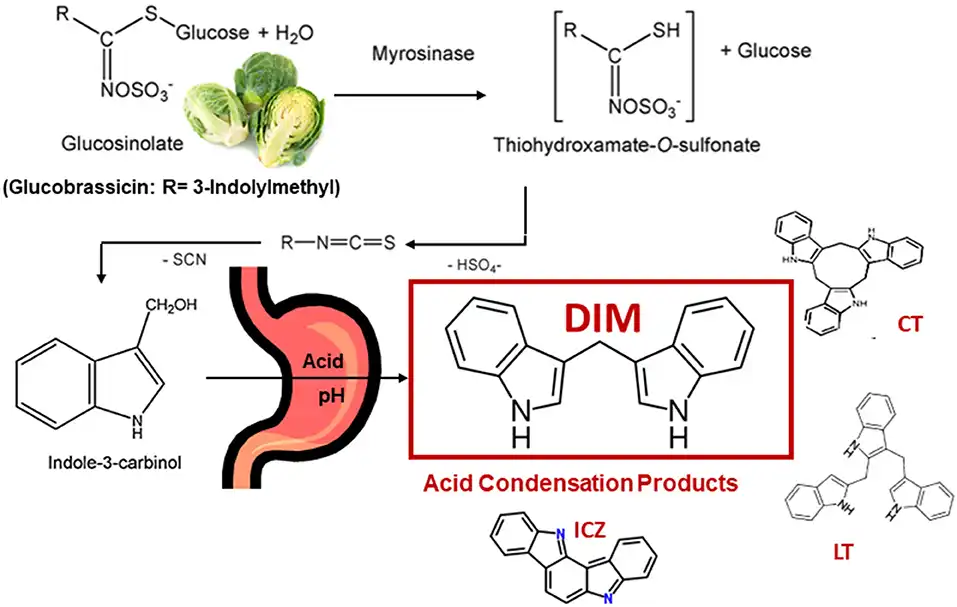
The way these two phytonutrients are put together means that formulators use them in different ways. Glucosinolates break down into indole-3-carbinol whenever they do. Its molecules are made up of parts called C₉H₉NO. People get I3C free from its glucobrassicin precursor when they eat cruciferous veggies like broccoli, cauliflower, or cabbage. This molecule is not very solid when it is in water. It quickly turns into oligomers, though, when acid hits it in the gut.
After going through this gut change process, DIM turns into a stable two-part chain. As long as the gut pH is normal, lab tests from Shaanxi Hongda Phytochemistry Co., Ltd. show that 10 to 30 per cent of the I3C that is eaten goes into DIM. The rest of it breaks up into smaller pieces called oligomers, which include linear trimers and cyclic tetramers. This difference in conversion leads to problems with cooking that people who buy good items have to fix.
Three main ways that molecules are different:
- But I3C's structure quickly breaks down below pH 4. DIM's structure stays the same from pH 2 to 8.
- To find out the absorption, you need to look at the change in molecular weight between I3C (131.17 g/mol) and DIM (246.31 g/mol).
- It's important to know how to dissolve I3C because it doesn't mix well with water. DIM, on the other hand, stays solid.
The release rates are more stable with DIM, which makes it easier to plan a recipe for a way of continuous release. On the other hand, I3C powder can make more than one molecule, which is helpful if you need to quickly change your food as part of your treatment plan.
Bioavailability and Metabolic Pathways in Human Physiology
Knowing how absorption works helps sourcing experts choose the right chemical for each health claim. Indole-3-carbinol's absorption varies from 5 to 40 per cent, based on how acidic the stomach is, how food interacts with it, and the type of bacteria that a person has. Clinical pharmacokinetic studies show that the highest levels of the drug in the blood happen about one to two hours after it is taken, with fast first-pass metabolism in the liver.
The absorption rates of DIM are better and more reliable. The substance skips the variable conversion process in the stomach and goes straight to the absorption sites in the intestines with consistent amounts of the active molecule. Hongda's HPLC tests show that DIM stays stable in the plasma for 4 to 6 hours, which means it can be used for longer periods of time compared to I3C, which has a lower half-life.
The metabolic fate of different molecules is very different:
- The I3C metabolic cycle changes DIM to ICZ (indolo[3,2-b]carbazole), LTr1 to CTet, and LTr1 to ICZ.
- Phase II coupling mostly happens through glucuronidation and sulfation in the DIM metabolic pathway.
Formulation Stability and Manufacturing Considerations
Managers who buy raw materials put the security of ingredients at the top of their list of priorities during processing, storage, and the shelf life of final products. For indole-3 carbinol powder, because it breaks down quickly at high temperatures and is sensitive to moisture, indole-3-carbinol is hard to formulate. When the substance is subjected to humidity levels above 40% RH, it quickly polymerises, which changes its colour and makes it less effective. The climate-controlled warehouses at Hongda keep the I3C powder at a controlled temperature (15–25°C) and a relative humidity below 30%.
Manufacturing processes significantly impact I3C integrity. Standard tableting processes that use high temperatures and crushing forces can damage I3C by 15 to 25 per cent if it is not secured. Quality providers, such as Shaanxi Hongda, offer microencapsulated I3C versions that are protected by covering technologies that keep their effectiveness even after being heated. The Certificate of Analysis should show that the product's strength was maintained at least 95% of what it said on the package after it was manufactured.
DIM has great benefits when it comes to steadiness in factory settings. Its solid structure doesn't change at temperatures up to 180°C, so it can be used in direct compression, hot-melt extrusion, and high-shear wet granulation. Hongda's stable testing methods show that DIM powder stays more than 98% pure after being stored in an open building for 24 months.
Comparison of processing compatibility:
- Encapsulation: Both substances work well, but I3C needs shells that keep out wetness.
- Tableting: DIM is better because it can handle heat better; I3C needs extra ingredients to protect it.
- When mixing powders, DIM moves better than I3C, which has static that needs anti-caking products.
- Formulations for liquids: Both are hard and need technology for solubilisation.
If your factory uses hot-processing or ongoing manufacturing, DIM's ability to withstand high temperatures makes formulation easier. If you can do cold processing and want to look at more metabolite profiles, I3C can work as long as you follow the right steps.
Regulatory Status and Quality Certification Requirements
Different legal environments around the world classify these chemicals in different ways, which changes how they are imported and what they say on the labels. The US says that both I3C and DIM are generally recognised as safe (GRAS) for use in food supplements. The FDA doesn't have any exact rules about purity, but DIM powder usually has to be at least 98% pure, and I3C powder has to be at least 95% pure.
Novel foods are regulated more strictly in European markets. DIM has a history of safe use, which makes it easier for companies from all EU member states to get into the market. When making I3C recipes, you need to show more proof that they are the same as standard food sources. Hongda offers complete paperwork packages that include certificates of plant origin, processing flowcharts, and safety assessment dossiers that meet EFSA standards.
Quality assurance professionals expect that analysis checks are done carefully. Hongda's SGS-certified lab uses a variety of testing methods, such as:
- FTIR spectroscopy, NMR measurement, and finding the melting point are all used to prove identity.
- Quantification of purity using HPLC-UV at wavelengths that are specific to the substance (I3C: 280 nm, DIM: 298 nm)
- Heavy metals (Pb, Cd, As, and Hg) below USP standards; herbicide residue screens containing more than 500 chemicals;
- For microbiological safety, the USP requirements list yeast/mould, coliforms, viruses, and total plate count.
More licences make it easier to get into markets:
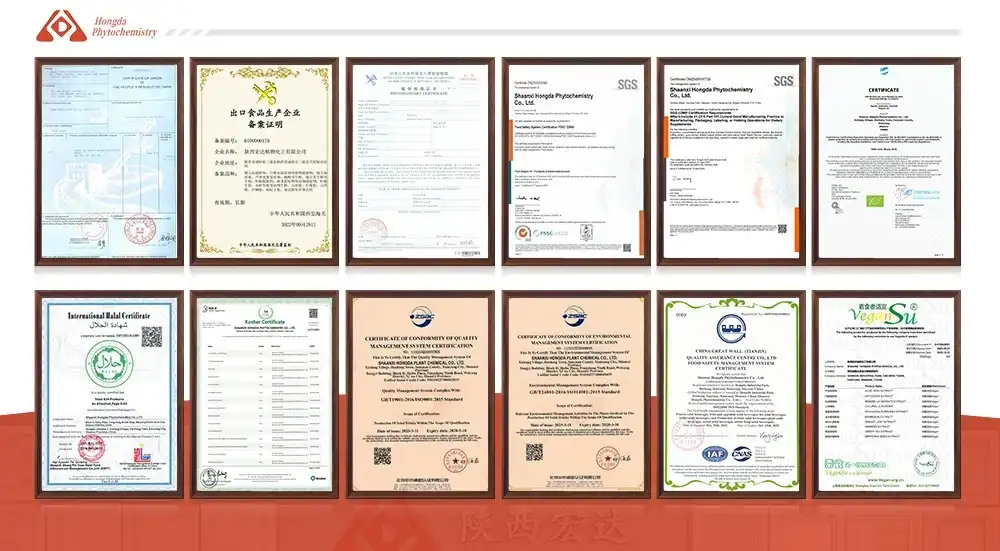
- HALAL and KOSHER: Important for people from the Middle East and faith groups
- Organic certification (NOP, EU): Must come from approved organic Brassica plants.
- cGMP compliance: Verifies quality methods and controls in the production process
- FSSC 22000: Approval of a food safety management system
If your target markets include pharmaceutical-grade uses, you should ask for Certificates of Suitability (CEP) that show they are compliant with the European Pharmacopoeia. For normal supplement uses, full COAs that have been checked by a third party meet most purchase requirements.
Dosage Considerations and Clinical Application Ranges
Effective dose ranges differ substantially between compounds due to conversion factors and metabolic efficiency. Clinical research utilising indole-3-carbinol typically employs dosages between 200 and 800 mg daily, divided into multiple administrations. The higher dosing requirement compensates for variable gastric conversion and first-pass metabolism. Studies investigating oestrogen metabolism often use 300-400 mg daily, while research exploring cellular health pathways may employ up to 800 mg.
Indole 3 carbinol powder, when added to DIM, demonstrates therapeutic effects at lower doses, reflecting its direct bioavailability. Standard formulations contain 100-300mg DIM per serving, with 200mg representing the most common clinical dose. The compound's consistent absorption eliminates the need for conversion-adjustment calculations, simplifying label claims and dosage instructions.
Dosage equivalency calculations for formulators:
When converting formulations from I3C to DIM, apply conservative conversion ratios accounting for variable gastric conversion. A commonly accepted approximation suggests 400 mg I3C yields approximately 50-100 mg absorbable DIM equivalents. However, individual variation makes direct equivalency claims problematic for regulatory compliance.
Clinical application recommendations:
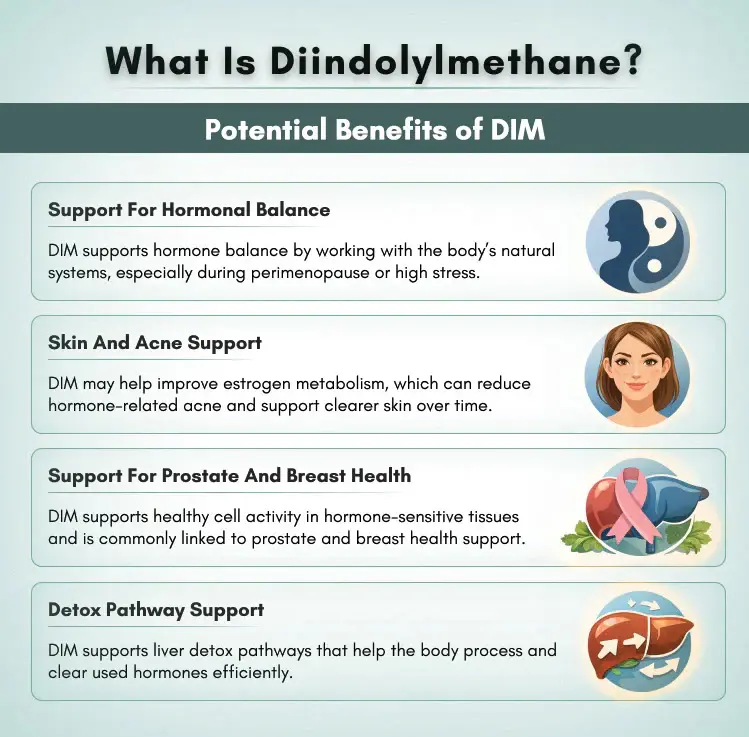
- Hormone balance formulations: Either compound is effective; DIM offers dosing consistency (150-200 mg), and I3C provides metabolite diversity (300-400 mg).
- Cellular health support: Higher I3C doses (400-800 mg) generate broader metabolite profiles; DIM (200-300 mg) targets specific pathways.
- Detoxification support: I3C's multiple metabolites (400 mg) support Phase I enzyme systems; DIM (200 mg) emphasises Phase II conjugation.
If your product positioning emphasises predictable dosing and simplified consumer instructions, DIM's consistent bioavailability advantages outweigh I3C's theoretical metabolite diversity. When marketing emphasises whole-food cruciferous extract authenticity, I3C formulations align better with consumer perception.
Sourcing Quality: What B2B Buyers Should Verify?
Ingredient procurement extends beyond price comparison to encompass comprehensive supplier evaluation. Quality-conscious buyers assess multiple dimensions of supplier capability when selecting between I3C and DIM sources. Manufacturing origin significantly impacts product consistency, with controlled extraction facilities producing superior outcomes compared to bulk commodity sources.
Critical verification points for procurement managers:
- Raw material traceability: Demand documentation linking finished powder to specific cruciferous source batches with cultivation records
- Extraction methodology: Verify whether the supplier uses enzymatic glucosinolate conversion (preferred for I3C) versus chemical synthesis routes.
- Analytical capabilities: Confirm in-house HPLC and GC-MS testing capacity with method validation documentation.
- Stability data: Request accelerated stability studies demonstrating potency retention under stress conditions.
- Regulatory documentation: Verify current certification status, including organic, HALAL, KOSHER, cGMP, and ISO 22000
Hongda Phytochemistry's Indole 3 Carbinol Powder advantages include:
- Certified organic sourcing: Traceable to dedicated cruciferous cultivation bases with agronomist oversight, ensuring pesticide-free raw materials meeting NOP and EU organic standards
- Advanced extraction technology: Proprietary enzymatic conversion processes maximising I3C yield while minimising oligomeric by-products, validated through national patent certifications
- Pharmaceutical-grade purity: Consistent 95-98% I3C content verified by dual-method HPLC and UV spectroscopy with batch-to-batch CV below 3%
- Comprehensive stability profiling: 36-month real-time stability data demonstrating <5% potency degradation when stored per recommended conditions
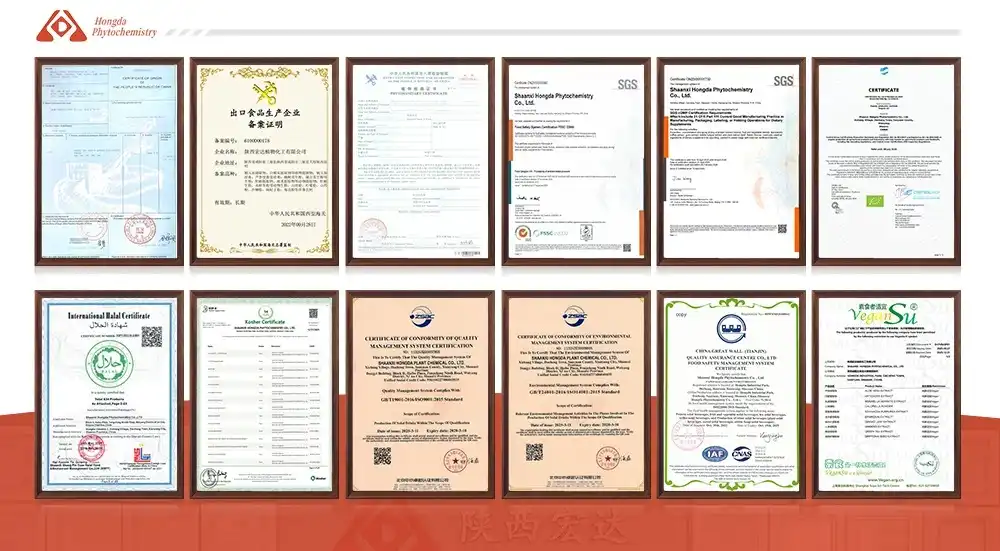
- Complete regulatory documentation: Current HALAL, KOSHER, cGMP, FSSC 22000, ISO 9001, and 22000 certifications facilitating global market access
- Third-party verification: Routine testing through SGS and Eurofins laboratories, providing independent quality confirmation and pesticide residue screening across 500+ compounds
- Flexible manufacturing capacity: 3,000-tonne annual production capability with 100,000-level purification workshops enabling both large-volume contracts and small-batch custom formulations
- Technical formulation support: Access to 20+ Ph.D.-level researchers providing stability testing, compatibility studies, and formulation optimisation guidance
- Customisation capabilities: OEM/ODM services including particle size modification (40-120 mesh options), microencapsulation, and co-processed blends with synergistic nutrients
- Packaging flexibility: Options from 25 kg fibre drums with double PE bags to custom retail-ready packaging meeting specific branding requirements
- Rapid turnaround logistics: Strategic warehouse locations with A-F inventory zones enabling 7-14 day delivery to major international ports
If your procurement strategy prioritises single-source supplier relationships with comprehensive service capabilities, partnering with vertically integrated manufacturers offering both I3C and DIM variants streamlines quality management and reduces supply chain complexity.
The scientific literature surrounding these compounds continues to expand, with over 800 peer-reviewed publications examining mechanisms and clinical applications. Research utilising indole 3 carbinol powder explores its role as a metabolic precursor generating multiple bioactive compounds. Studies investigate how I3C supplementation influences cytochrome P450 enzyme systems, particularly CYP1A1 and CYP1B1 isoforms involved in oestrogen metabolism. The compound's ability to modulate oestrogen metabolite ratios—specifically increasing 2-hydroxyestrone relative to 16α-hydroxyestrone—underlies its investigation in hormone-dependent tissue health.
DIM research focuses on the isolated compound's specific molecular targets. Investigations demonstrate DIM's interaction with nuclear receptors, including aryl hydrocarbon receptor (AhR) and oestrogen receptor pathways. The compound shows promise in supporting healthy cell cycle regulation through effects on cyclin-dependent kinase inhibitors and apoptotic signalling cascades. Recent research explores DIM's potential in supporting immune system modulation through effects on regulatory T-cell populations.
Comparative research emphasis:
- I3C publications: often examine metabolite profiles, conversion variability, and multi-pathway effects
- DIM publications: Typically investigate specific molecular mechanisms with standardised dosing protocols.
- Both compounds generate ongoing scientific interest, with clinical trials registered examining applications in various health areas. The expanding evidence base supports formulators' interest in incorporating these cruciferous-derived actives into evidence-based supplement formulations.
If your product development strategy emphasises cutting-edge research positioning, staying current with emerging clinical evidence helps differentiate formulations in competitive marketplaces. Hongda's technical team monitors published research, providing clients with science summaries supporting formulation decisions and marketing claim development.
Conclusion
In summary, Indole 3 Carbinol Powder and DIM offer distinct advantages for B2B nutraceutical formulators. DIM provides superior stability, consistent bioavailability, and simpler processing—ideal for predictable dosing and sustained-release systems. I3C remains valuable when broader metabolite diversity and whole-food authenticity align with your therapeutic strategy. Both require rigorous quality documentation, including traceability, purity verification, and stability data. Partnering with a certified manufacturer like Hongda Phytochemistry ensures regulatory compliance, technical support, and reliable supply for either compound, enabling you to meet diverse formulation demands across global markets.
Partner with HONGDA for Premium Cruciferous Extract Solutions
Shaanxi Hongda Phytochemistry stands ready to support your formulation development with pharmaceutical-grade Indole 3 Carbinol Powder and DIM ingredients backed by comprehensive quality documentation. As a certified Indole 3 Carbinol Powder manufacturer with over two decades of botanical extract specialisation, our technical team provides formulation consultation, stability testing support, and custom processing services tailored to your specifications. Contact our procurement specialists at duke@hongdaherb.com to request detailed COAs, stability data, and pricing for your next formulation project—our 3,000-ton annual capacity ensures reliable supply meeting demanding production schedules across nutraceutical, pharmaceutical, and functional food applications worldwide.
References
1. Aggarwal, B.B. and Ichikawa, H. "Molecular Targets and Anticancer Potential of Indole-3-Carbinol and Its Derivatives." Cell Cycle Journal, 2005, Volume 4, Issue 9, pp. 1201-1215.
2. Bradlow, H.L., et al. "2-Hydroxyestrone: The 'Good' Estrogen Metabolite." Journal of Endocrinology, 1996, Volume 150, Supplement S, pp. 259-265.
3. Chen, D.Z. and Qi, M. "Diindolylmethane: Structure, Bioavailability, and Health Benefits." Nutrition Research Reviews, 2015, Volume 28, Issue 1, pp. 62-73.
4. Rogan, E.G. "The Natural Chemopreventive Compound Indole-3-Carbinol: State of the Science." In Vivo International Journal, 2006, Volume 20, Issue 2, pp. 221-228.
5. Weng, J.R., et al. "Indole-3-Carbinol as a Chemopreventive and Anti-Cancer Agent." Cancer Letters, 2008, Volume 262, Issue 2, pp. 153-163.
6. Zeligs, M.A. "Diet and Estrogen Status: The Cruciferous Connection." Journal of Medicinal Food, 1998, Volume 1, Issue 2, pp. 67-82.