



_1745918362135.webp)

Liposomal Berberine Powder vs Standard Berberine: Which Wins?
When comparing these two delivery systems, liposomal berberine powder emerges as the clear winner for B2B applications demanding superior bioavailability and enhanced therapeutic outcomes. The phospholipid encapsulation technology used in liposomal formulations protects berberine from gastrointestinal degradation and bypasses the P-glycoprotein efflux pump, achieving absorption rates up to 20-30 times higher than standard berberine hydrochloride. Shaanxi Hongda Phytochemistry Co., Ltd. produces pharmaceutical-grade liposomal berberine powder with an encapsulation rate exceeding 90% and particle sizes precisely controlled within 80-150 nm, addressing the core industry challenge of low oral bioavailability that limits standard berberine's clinical effectiveness.
Introduction
Since its discovery, berberine has become an important part of many metabolic health products, cardiovascular support pills, and glucose control products. The chemical is highly sought after in the global nutraceutical market because it can trigger AMPK pathways and change cholesterol metabolism. The people who buy things for companies that make dietary supplements, functional foods, and contract formulators have to make a tough choice: they have to pick between regular berberine hydrochloride and improved liposomal delivery systems.
This comparison is more than just a list of technical specs. Choosing between normal and liposomal berberine has a direct effect on how the product is positioned, how much the customer needs to take, how well they follow the directions, and eventually how the brand stands out in supplement categories that are already very crowded. Hongda Phytochemistry has invested in high-pressure homogenization coating technology to solve the solubility problem that has kept berberine from being used in medicine, even though studies have shown promise for decades. Traditional berberine is only 1% bioavailable when taken by mouth because it doesn't mix well with water, is broken down quickly in the first pass, and is actively flushed out of the body by the intestines.
When procurement teams know about these changes in formulation, they can choose ingredients that will help them meet the goals of product creation, meet legal standards, and meet the needs of the target market. The study below gives buyers of ingredients evidence-based advice on how to make choices about where to get berberine.
Understanding Berberine: Standard vs LiposomalThe Bioavailability Challenge of Standard Berberine
Standard berberine hydrochloride is still widely used, even though it is not very well absorbed. The compound's quaternary ammonium structure makes it not very lipophilic, which means it doesn't move easily across digestive walls. Clinical pharmacokinetic tests show that only 0.5 to 0.68% of berberine taken by mouth gets into the body's blood. The P-glycoprotein efflux transporter actively moves berberine back into the gut lumen, and cytochrome P450 enzymes quickly break down the small amount that gets into enterocytes.
Because of these hurdles to absorption, big doses are needed to reach therapeutic plasma concentrations. For example, 500 mg should be taken three times a day. Berberine hydrochloride has a strong yellow colour and a bitter taste that makes it hard to formulate in market goods, especially functional drinks and chewable forms.
How Liposomal Encapsulation Transforms Berberine Delivery
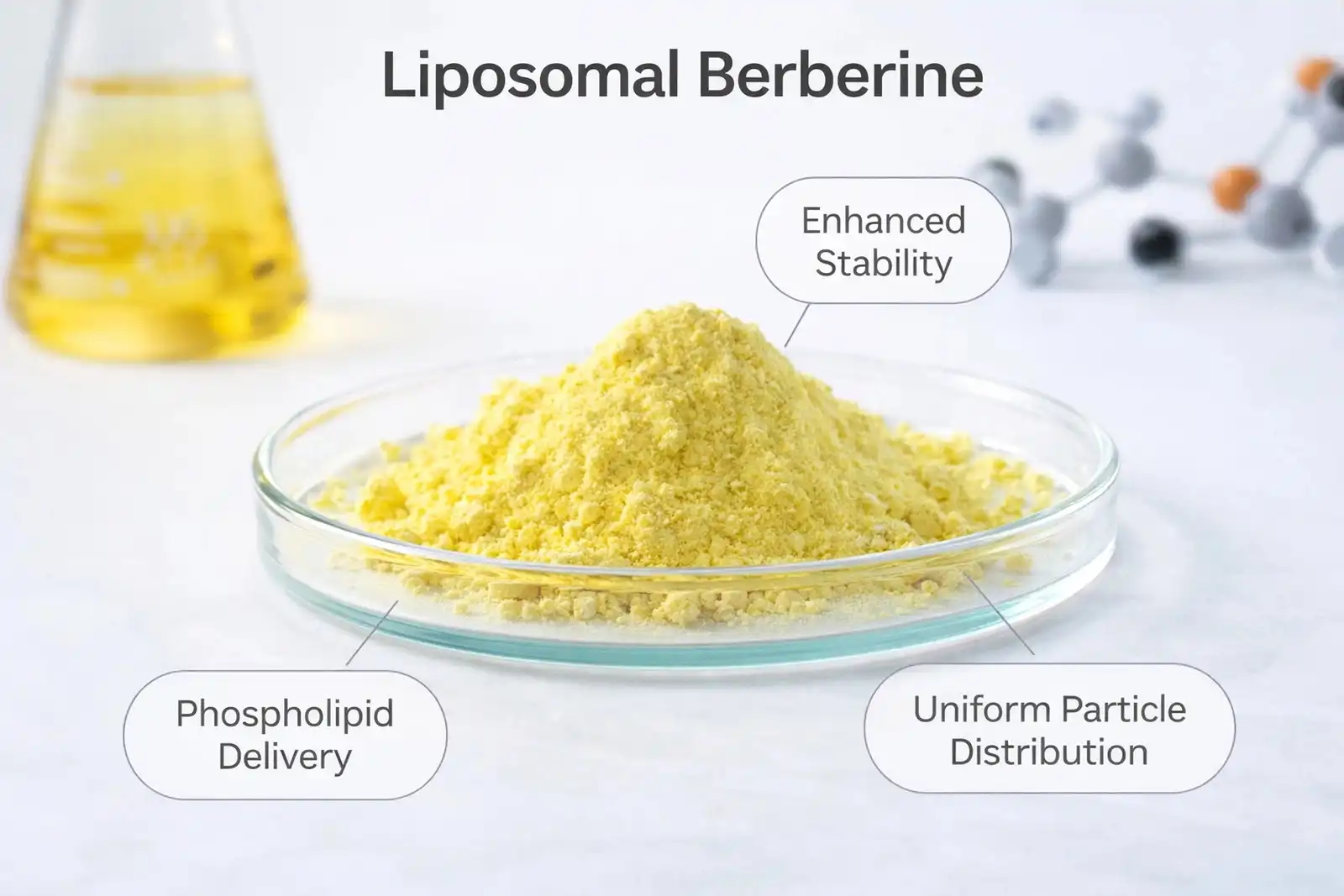
Liposomal berberine powder is a basic way to change the composition that gets around problems with absorption at the molecular level. The method wraps berberine molecules in circular phospholipid bilayers that are 80 to 300 nanometres across. These nanoparticles are mostly made of phosphatidylcholine that comes from non-GMO sunflower lecithin and are shaped like the cell membranes in our bodies.
The phospholipid shell is very important for three main reasons. It keeps stomach acid and intestinal enzymes from breaking down liposomal berberine powder too quickly. The liposome can pass through intestinal epithelial cells by endocytosis or direct membrane fusion because its outside is lipophilic. The encapsulation hides liposomal berberine powder from P-glycoprotein detection, which stops active efflux that normally limits uptake.
Dynamic light scattering (DLS) analysis and zeta potential readings are used by Shaanxi Hongda Phytochemistry to check the particle size distribution and colloidal stability, respectively. Products keep an encapsulation efficiency above 90%, which means that more than nine-tenths of the berberine content stays safe inside the liposomes even after being stored and going through the digestive system. Because of this precise production, pharmacokinetic patterns and treatment reactions that depend on dose can be predicted.
Comparative studies of absorption show that liposomal delivery makes liposomal berberine powder 10–30 times more bioavailable than normal hydrochloride forms. The better absorption means that treatment effects can be seen at doses as low as 150–200 mg per day of liposomal berberine powder, which is three to six times less than what is needed for standard formulations, while still meeting or beating clinical results.
Key Performance Comparison: Effectiveness and Safety
Therapeutic Performance at Reduced Dosages
Because liposomal formulations make berberine more bioavailable, they directly lead to better clinical results in all of its known therapeutic uses. In metabolic health uses, liposomal delivery makes AMPK activation more constant in peripheral tissues. This helps skeletal muscle take in glucose and lowers glucose production in the liver. Formulation designers say that products with 150–200 mg of liposomal berberine have metabolic affects that are similar to taking 1500 mg of normal berberine hydrochloride every day.
Liposomal transport allows for prolonged plasma concentrations that are good for cardiovascular uses. The encapsulated form helps the breakdown of lipids by keeping healthy levels of berberine, which lowers the expression of PCSK9 and raises the activity of LDL receptors. The compound's effects on adipocyte differentiation and fat burning are used in weight control formulas. Liposomal delivery makes dose-response relationships more reliable.
The phospholipid part of liposomal products helps the metabolism in more ways than just delivering berberine. Phosphatidylcholine helps the liver work, keeps cell membranes intact, and moves lipids around. Together, these two substances make berberine's liver-protecting benefits stronger. This mix works especially well for formulas that aim to treat metabolic syndrome, where both glucose and lipid imbalances need to be fixed at the same time.
Improved Tolerability Profile
One big difference between normal and liposomal berberine versions is how well they are digested. When taken in appropriate amounts, standard berberine hydrochloride can cause stomach problems like cramps, loose stools, and stomach pain. These reactions happen because berberine interacts directly with the intestinal barrier and kills microbes in the gut when it is present in large amounts.
Liposomal encapsulation solves these problems with tolerance in two ways. The phospholipid layer keeps the mucosal surface from coming into direct touch with berberine while it moves through the intestines, so there is no localized irritation. Because of the hugely better absorption efficiency, therapeutic benefits can be achieved with lower total amounts. This is because the intestinal berberine load that causes digestive reactions is lower. Formulators say that liposomal berberine-containing products have higher rates of customer compliance and lower rates of product discontinuation compared to standard berberine-containing products of the same type.
In Hongda Phytochemistry's production process, liposomal berberine powder is added, and phospholipids from sunflowers are used, which are non-GMO and soy-free. This addresses worries about allergens and provides a clean label. The low-temperature centrifugal freeze-drying method keeps the purity of the liposomes without using synthetic stabilizers or preservatives. This means that the product stays stable for 24 months when stored normally.
Market Solutions and Procurement Considerations
Delivery Format Analysis for B2B Applications
There are different ways to give berberine ingredients, and each has its own benefits for different product uses. When it comes to high-dose capsules, where cost per milligram is the most important factor, standard berberine hydrochloride powder is still the most cost-effective choice. The yellow crystalline powder is easy to spread out in packaging tools and can be easily pressed together to make tablets. However, because it is not bioavailable well, it needs to be taken in minimum amounts of 400 to 500 mg per dose. This makes it hard to use in forms with limited space, like softgels or single-serve beverage sachets.
Berberine hydrochloride granules have better flow properties for automatic capsule filling processes, which cuts down on production line downtime and improves the consistency of fill weight. During the milling process, flow agents or moisture barriers may be used. To make sure that the excipients meet clean-label standards for premium product marketing, they must be checked.
Liposomal berberine powder is the most flexible form. The dry powder form can be put into pills, tablets, and powdered drink mixes, but it still has the absorption benefits of liposomal delivery. The phospholipid encapsulation partly hides berberine's typical bitter taste. This makes it possible to formulate functional drinks, meal replacement powders, and chewable forms that weren't possible with regular berberine before.
Waters' HPLC study showed that the powder form from Shaanxi Hongda keeps an encapsulation rate of more than 90% after lyophilization. The 95% through 80-mesh particle size range makes sure that mixtures of multiple ingredients are mixed evenly and that breakdown rates are the same from batch to batch. This uniform is very important for OEM makers who work with many brand clients who have strict requirements.
Certification Standards and Compliance Requirements
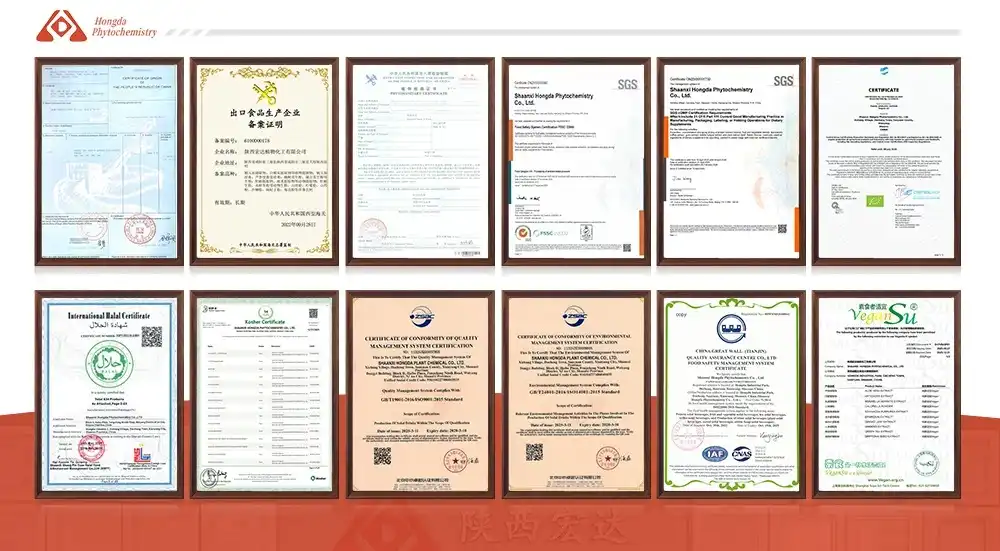
Certifications of quality are must-haves for ingredient providers that work with controlled markets. When purchasing goods, teams look at sellers' full lists of certifications that show controls over production, methods for tracking products, and safety rules for finished goods. Shaanxi Hongda Phytochemistry Co., Ltd. has ISO 22000, FSSC 22000, cGMP, HALAL, KOSHER, and USDA Organic certifications. These provide the proof needed for dietary supplement NDI reports, EU Novel Food applications, and registrations for foreign markets.
The company's lab can do ICP-MS heavy metal testing for lead, arsenic, cadmium, and mercury, pesticide residue screening for more than 200 chemicals, liposomal berberine powder, and microbial testing using AOAC methods. There are full Certificates of Analysis for each production batch that show identity (HPLC/UV), purity, contaminant screening, and stable markers. This level of analytical accuracy backs up the FDA's Food Safety Modernization Act and EU Regulation 178/2002 standards for traceability.
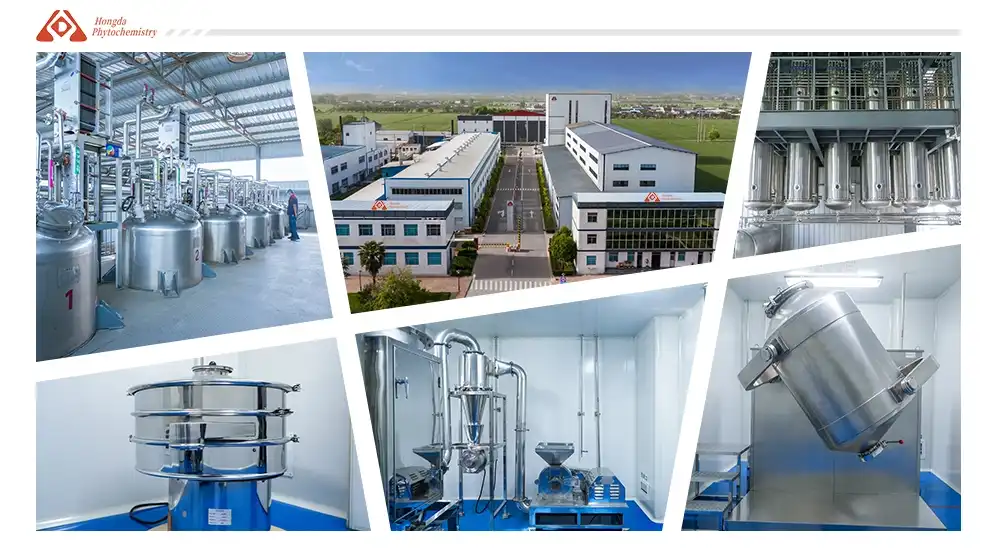
Different types of encapsulation are made on separate production lines at the plant. This keeps standard and liposomal goods from getting contaminated with each other. The purification workshops at the 100,000-level meet cleanroom standards for pharmaceutical-grade plant extracts. This meets the quality standards of luxury brands that are aimed at practitioner channels and clinical uses.
Supplier Evaluation Framework for Procurement Teams
When choosing a berberine provider, you need to do more than just compare prices. Professionals in procurement should look at a number of important skill factors. The size and ability of manufacturing show if providers can keep up with business growth without supply problems. Hongda Phytochemistry can produce 3,000 tonnes of phytochemicals every year and keeps 5 tonnes of stock in stores in Xi'an and the US. This makes sure that there is always a supply, even when demand is high or there are problems with foreign shipping.
Strategic sellers are different from transactional vendors because they offer technical help, such as with liposomal berberine powder. The company has an SGS-standardized lab with more than 20 PhD-level experts who help with formulation, stability testing, and custom particle size optimization. This model for technical partnerships works well when creating new ways to send medicines or changing formulations to fit certain legal markets.
Customization gives brands the freedom to make their goods stand out by using their own unique specs. Shaanxi Hongda provides liposomal products with berberine contents ranging from 10% to 90%. They also offer particle size changes for different uses and custom phospholipid sources to meet allergy or sourcing tastes. OEM/ODM services include all stages of product creation, from the original formulation to the final packaging. This lets brands release unique goods even if they don't have their own R&D departments.
The price of liposomal berberine is usually three to five times the price of regular berberine hydrochloride per kilogram. The cost difference in end product formulas is smaller, though, because improved bioavailability lets doses be lowered. A high-end supplement with 200 mg of liposomal berberine might have the same material costs as a regular recipe with 500 mg of berberine hydrochloride, but it might support more medicinal claims and be easier for people to tolerate.
Conclusion
Liposomal berberine powder is better than regular berberine hydrochloride in the areas that matter most to people who make decisions about B2B purchases: bioavailability, treatment effectiveness, dose efficiency, tolerability, and formulation flexibility. The phospholipid encapsulation method gets rid of the main absorption problems that have kept berberine from being used in medicine, even though studies have shown promise for decades. The people who buy things for supplement makers, functional food developers, and contract formulators can get a competitive edge by using advanced delivery systems that set their products apart in crowded metabolic health categories, help them position themselves as premium, and give customers better results. Established companies like Shaanxi Hongda Phytochemistry offer certification standards, analytical tools, and technical support that make it easy to make decisions about where to get botanical ingredients that are in line with long-term brand development plans and changing market demands for botanical ingredients that have been scientifically proven to work and are bioavailability-optimized.
FAQ
1. What is the typical shelf stability of liposomal berberine powder compared to standard forms?
When liposomal berberine powder is made correctly, it is very stable and keeps its effectiveness and capsule integrity for 24 months when stored at room temperature (below 25°C, away from light and moisture). Certified producers use a process called freeze-drying to get rid of water that would otherwise speed up the breakdown of phospholipids. Because it is solid, standard berberine hydrochloride has a shelf life that is about the same as or slightly longer than that of berberine hydrochloride (up to 36 months). Both types need to be kept away from heat and moisture.
2. How do wholesale pricing structures compare between liposomal and standard berberine for bulk orders?
Liposomal berberine powder usually costs three to five times more per kilogram than regular berberine hydrochloride. This is because it is harder to make and costs more for the phospholipids that are used. But the higher bioavailability means that 60–75% less of the drug is needed, which brings down the price difference in final product formulas. Long-term supply deals and savings for buying in bulk can help improve the economics of procurement even more.
3. Can liposomal berberine be combined with other metabolic support ingredients in formulations?
Liposomal berberine works very well with chemicals that work well with it, like chromium picolinate, alpha-lipoic acid, cinnamon extract, and gymnema sylvestre. The phospholipid coating keeps berberine from directly interacting with other plant parts, which lowers the chances of deterioration. Formulators should try the stability of certain combos to make sure they will work together for the whole shelf life.
Partner with a Leading Liposomal Berberine Powder Manufacturer
To improve your metabolic health product line, you should start by finding a liposomal berberine powder provider with a lot of experience who knows both the science behind improved solubility and the business needs of successful supplement brands. Pharmaceutical-grade production standards are combined with HONGDA's ability to make changes to meet specific needs. The company has a number of certificates, such as ISO 22000, FSSC 22000, cGMP, HALAL, and KOSHER, which allow it to sell its products all over the world. Our non-GMO sunflower phospholipid formulations, with particle sizes carefully controlled between 80 and 150 nm and encapsulation efficiency of 90% or more, provide the technical performance needed for premium marketing strategies.
Connect with our technical team at duke@hongdaherb.com to talk about your unique recipe needs, get full product specs, or set up testing samples of our pharmaceutical-grade liposomal berberine powder. We keep a 5-ton collection on hand and can fill orders within 48 hours, so your production plans won't be affected by shortages. Shaanxi Hongda Phytochemistry can help you find the right phospholipids, berberine concentration, or standard or custom particle sizes. They can also work with you to create a manufacturing partnership and provide the analytical documentation and regulatory support that will turn ingredient sourcing from a transaction into a strategic competitive advantage.
References
1. Chen, W., et al. "Bioavailability Study of Berberine and the Enhancing Effects of TPGS on Intestinal Absorption in Rats." AAPS PharmSciTech 12.2 (2011): 705-711.
2. Liu, Y.T., et al. "Extensively Hydrolyzed and Metabolized in Intestinal Microsomes: Implications for Oral Bioavailability." Drug Metabolism and Disposition 44.11 (2016): 1784-1795.
3. Feng, X., et al. "Berberine in Cardiovascular and Metabolic Diseases: From Mechanisms to Therapeutics." Theranostics 9.7 (2019): 1923-1951.
4. Zou, K., et al. "Advances in the Study of Berberine and Its Derivatives: A Focus on Anti-inflammatory and Anti-tumor Effects in the Digestive System." Acta Pharmacologica Sinica 38.2 (2017): 157-167.
5. Kumar, A., et al. "Current Knowledge and Pharmacological Profile of Berberine: An Update." European Journal of Pharmacology 761 (2015): 288-297.
6. Spinozzi, S., et al. "Berberine and Its Metabolites: Relationship between Physicochemical Properties and Plasma Exposure after Administration to Human Subjects." Journal of Natural Products 77.4 (2014): 766-772.


_1754906006438.jpg)