


_1745918362135.webp)

What Is Liraglutide API Powder Used For in Drug Development?
Liraglutide has become one of the most closely watched molecules in metabolic medicine, and the active pharmaceutical ingredient behind it is the starting point for every tablet, pen, or injectable formulation that reaches a patient. Hongda Phytochemistry, operating as Shaanxi Hongda Phytochemistry Co., Ltd., has spent over two decades building the kind of integrated R&D, synthesis, and quality-testing infrastructure that pharmaceutical formulators look for when they need a reliable partner for Liraglutide API powder. Founded in 2001, the company runs a roughly 20,000-square-meter production campus with more than ten modern lines and 100,000-level purification workshops, backed by national patent technologies and a "National High-tech Development Enterprise" title. For drug developers evaluating where their next GLP-1 API batch should come from, that combination of scale, documentation, and consistency is precisely what reduces risk in early formulation work. This article walks through what Liraglutide API powder actually does inside the drug development pipeline, how it is evaluated, and what separates a dependable supplier from one that simply lists a product page.
Understanding Liraglutide API Powder and Its Role in GLP-1 Drug Development
An engineered synthetic peptide analogue of human glucagon-like peptide-1 (GLP-1), Liraglutide API Powder has been designed to withstand the fast enzymatic degradation that reduces the original hormone's half-life to only a few minutes. [1] Formulators depend on this raw material as the basis for long-acting glycemic and weight-management medicines since the acylated peptide backbone extends its activity throughout the day. A powder's quality subtly affects everything downstream, but it's crucial at the upstream stage of active pharmaceutical ingredient (API) synthesis, purification, and verification against pharmacopeial standards before any vial, capsule, or pen makes it to a clinical trial. The impurity profile, particle properties, and batch consistency of the starting material are passed on to the final dosage form by the drug development; it's not just a peptide.
What GLP-1 Receptor Agonism Mean for Formulators?
Liraglutide attaches specifically to GLP-1 receptors that are abundant in the intestines, the hypothalamus, and pancreatic beta cells, where it regulates hunger. [5]The molecule is at the core of both diabetes and weight-management pipelines because it slows stomach emptying, controls excess glucagon output, and initiates glucose-dependent insulin release. The amino acid sequences of liraglutide and endogenous GLP-1 are very similar (97% identity), making it an acylated GLP-1 receptor agonist for humans. [1] Purity and structural fidelity are non-negotiable parameters for an API, as formulation scientists need an API that reliably replicates this receptor-binding behavior in every batch.
Why Peptide Sequence Fidelity Is Nonnegotiable?
Altering receptor affinity or introducing immunogenic fragments can occur with as little as one misfolded or truncated peptide chain in a batch of Liraglutide API powder. Since GLP-1 analogues are far more susceptible to synthesis drift than small-molecule APIs, reputable producers ensure sequence integrity by doing HPLC and mass spectrometry on each lot, not just intermittent samples. [1][4]
From Raw Peptide to Dosage Form
Once the API clears identity and purity testing, formulators move into pre-formulation studies—solubility mapping, pH stability windows, and excipient compatibility—before any pen injector or oral delivery system is finalized. The raw powder's particle size distribution and moisture content directly influence how predictably it dissolves and how stable the eventual formulation will be on the shelf.
The Growing Pipeline Behind Liraglutide-Class Molecules
Current FDA-approved GLP-1 receptor agonists are developed as analogues of either exendin-4 or native GLP-1, with liraglutide, semaglutide, albiglutide, and dulaglutide representing the GLP-1-based branch of the class. [2] This expanding family means demand for well-characterized GLP-1 peptide APIs, including liraglutide API powder, continues to grow as more developers explore next-generation analogs, combination peptides, and biosimilar pathways built on the same underlying chemistry.
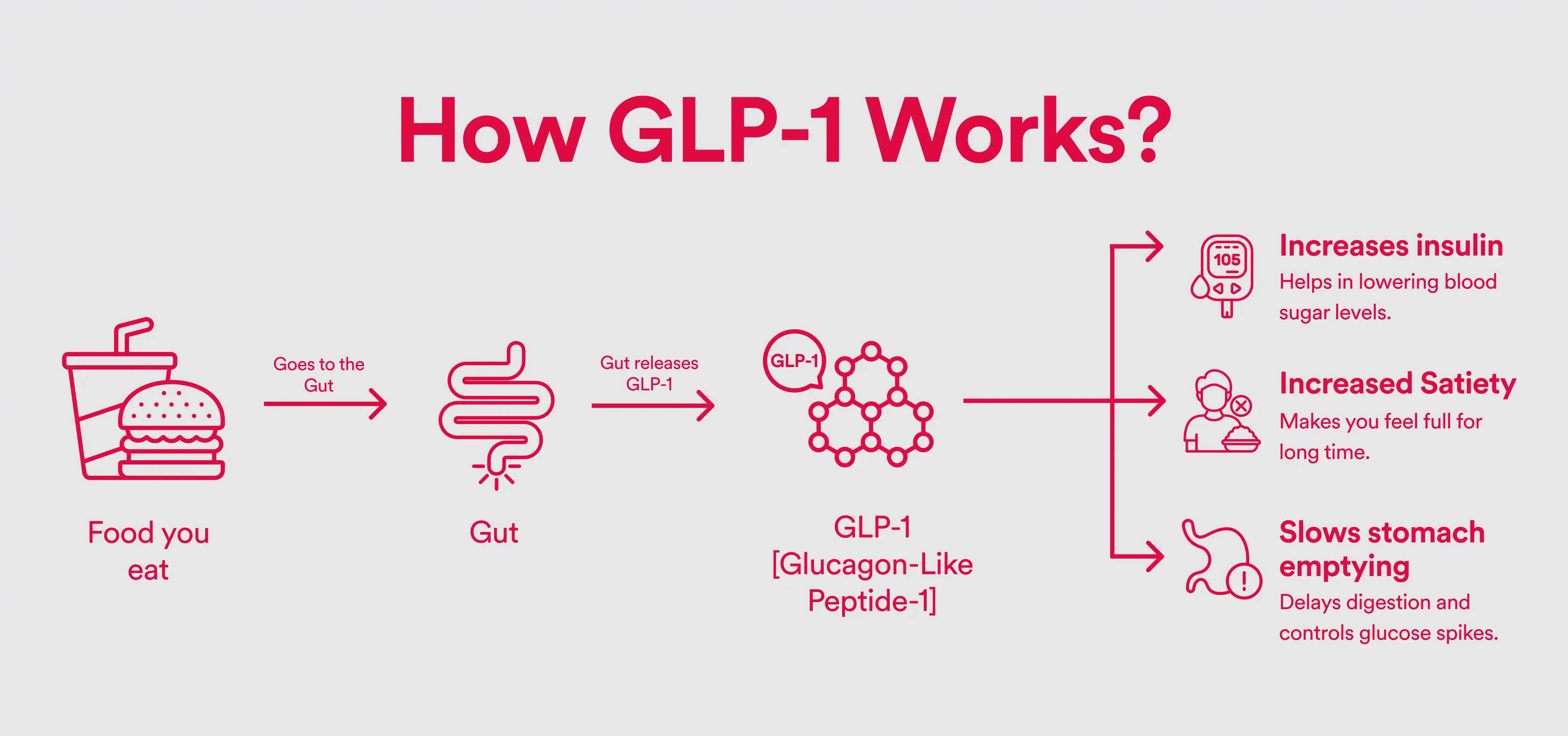
Core Applications of Liraglutide API Powder Across the Pipeline
The practical uses of liraglutide API powder extend well beyond a single finished drug. By activating the GLP-1 receptor, GLP-1 receptor agonists enhance glucose-dependent insulin secretion, inhibit glucagon release, slow gastric emptying, and act on the central nervous system to suppress appetite and enhance satiety. [5][6] That breadth of pharmacological activity is precisely why the API appears across multiple stages and therapeutic angles of drug development, not just in one finished product category.
Reference Standard Work in Analytical Laboratories
It is normal practice for laboratories to calibrate chromatography equipment, validate assay procedures, and ensure that manufacturing batches match an established identification profile using high-purity liraglutide API powder before shipping any commercial-scale batch. Downstream quality control cannot function reliably in the absence of a trustworthy reference-grade powder.
Preclinical Pharmacology and Mechanism Studies
Glucose uptake, beta-cell survival, and appetite signaling research teams rely on a steady supply of API for their in vitro and animal model studies. New evidence suggests that liganduvidide, a GLP-1 receptor agonist, protects pancreatic beta cells from death via increasing PI3-kinase-dependent AKT phosphorylation. Results like these can only be trusted if the various trials use an API that is chemically indistinguishable from one group to another.
Formulation and Stability Development
Liraglutide API powder is the working material for excipient screening, buffer optimization, and accelerated stability testing under ICH-aligned protocols. Formulators stress-test the powder under heat, light, and humidity to predict how a finished injectable or oral candidate will behave over its intended shelf life, long before any clinical packaging decision is made.
Scale-Up Toward Clinical and Commercial Supply
Once a formulation is locked, developers need a liraglutide API powder supply chain capable of scaling from gram-level lab batches to kilogram-level clinical trial material and eventually to commercial tonnage. This is the stage where supplier production capacity and documentation depth start to matter as much as the chemistry itself—a developer can have a perfect formulation and still stall out if the liraglutide API supply cannot scale on schedule.
Quality Benchmarks That Define a Pharmaceutical-Grade Liraglutide API Powder
Not every powder labeled "Liraglutide API Powder" meets the bar pharmaceutical development actually requires. Purity, certification, and traceability separate a usable starting material from one that creates regulatory headaches later. Hongda Phytochemistry's quality system is built around exactly these checkpoints: every batch is tested for ingredient identity, pesticide residues, moisture content, heavy metals, and microbial load before it ever leaves the warehouse, a discipline reinforced by an SGS-standardized laboratory the company jointly operates with university professors and more than twenty professor-level researchers. [3]
|
Quality Parameter
|
Industry Expectation
|
Why It Matters in Development
|
|---|---|---|
|
Purity (HPLC)
|
≥ 99%
|
Minimizes impurity-related variability in pharmacological response
|
|
Identity confirmation
|
Mass spectrometry + HPLC match to reference standard
|
Confirms correct peptide sequence and structure
|
|
Residual solvents & heavy metals
|
Within USP/EP limits
|
Required for downstream toxicology and regulatory filings
|
|
Microbial & endotoxin testing
|
LAL assay, ICH-aligned protocols
|
Critical for injectable formulation safety margins
|
|
Batch-to-batch consistency
|
Validated across multiple lots
|
Supports reproducible preclinical and clinical results
|
HPLC Purity and Identity Verification
High-performance liquid chromatography remains the backbone of confirming that a liraglutide API powder lot matches its certificate of analysis. Hongda's laboratory pairs HPLC with spectrophotometers, atomic absorption spectrophotometers, and automatic titrators to cross-check purity claims rather than relying on a single method.
Heavy Metal and Residual Solvent Screening
Trace contamination from synthesis reagents or upstream raw materials can compromise toxicology readouts long before a compound reaches human trials. Routine heavy-metal and residual-solvent testing closes that gap before powder ever ships.
Certifications That Signal Regulatory Readiness
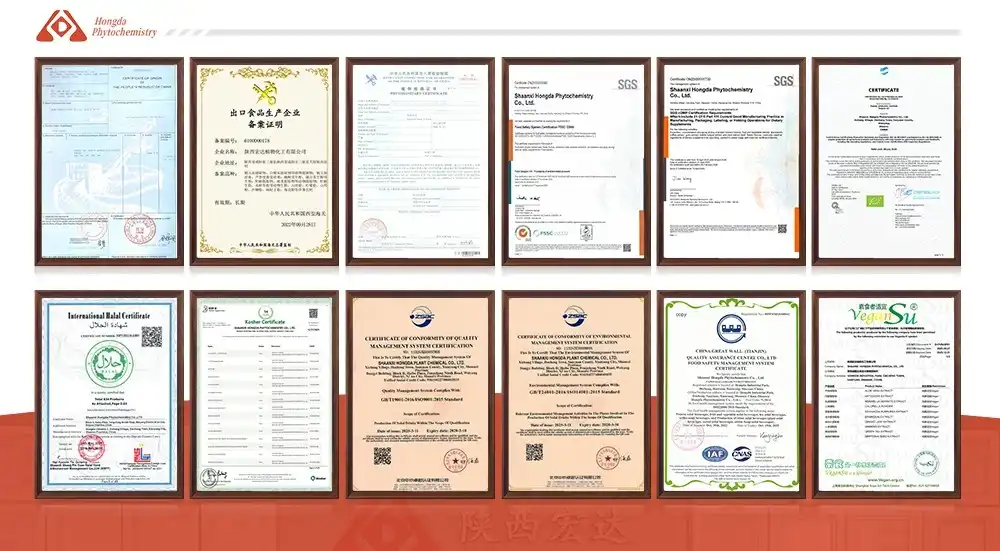
Between 2001 and 2024, the company secured national high-tech enterprise status, food production and feed additive licenses, halal and kosher certification, BRC, FDA recognition, and organic certification. In 2025 alone, it added cGMP, FSSC22000, SC certification, ISO22000, ISO9001, and EU and NOP organic certifications, along with additional national patents—the kind of paper trail that import compliance teams in the US and EU specifically ask for.
Traceability From Cultivation to Finished Powder
Hongda's three dedicated planting bases — covering high-mountain green tea, Sophora japonica bean, and Chinese medicinal materials — are supervised by professional agronomists, giving raw-material traceability a starting point most brokers cannot offer. Combined with a 3,000-square-meter warehouse organized into six dedicated, sterilization-controlled storage zones, the company can document a liraglutide API powder batch's history from field to shipment.
|
Test
|
Specification
|
Results
|
|
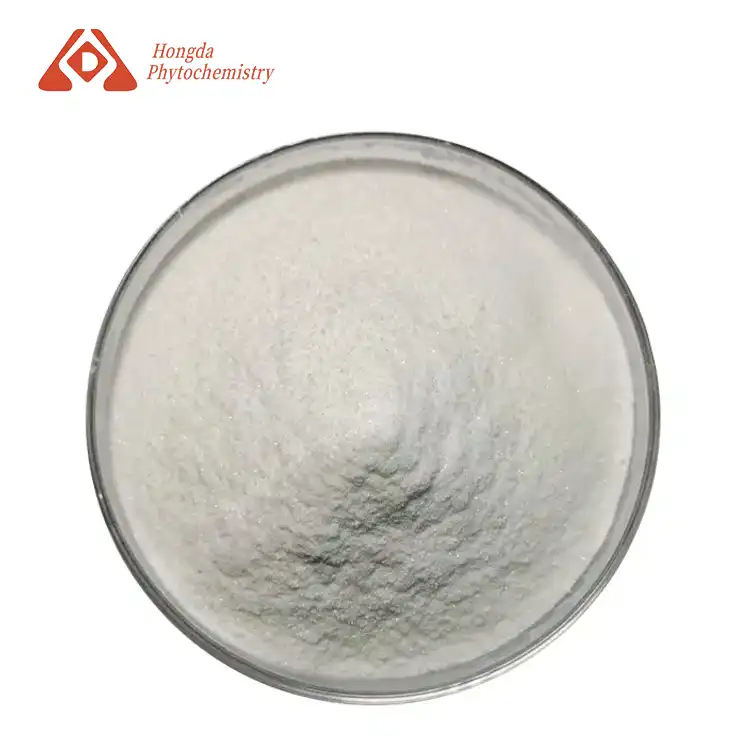
Appearance:
|
White to off-white crystalline powder or lumps
|
White powder
|
|
Identity:
|
3751.2±1.0
|
3751.1
|
|
Purity (By HPLC) :
|
Not Less than 98.0%;
|
99.51%
|
|
Residual solvents:
|
≤0.25%total; ≤0.1%individual;
≤0.01%CH2CN
|
Complies
|
|
Related Peptide
|
Total Impurity ≤ 2.0%
Largest Single Impurity ≤ 1.0%
|
TI =0.41%
LSI =0.25%
|
|
Peptide Content:
|
Not Less than 85.0%
|
87.7%
|
|
Water (K.F.):
|
Not more than 5%
|
4.2%
|
|
Acetate acid:
|
Not more than 10%
|
8.1%
|
|
Bacterial Endotoxins
|
Not more than 50IU/mg
|
Complies
|
Building a Reliable Liraglutide API Supply Chain for Drug Developers
Sourcing decisions are rarely just a price comparison. A development program that depends on liraglutide API powder needs a partner who can deliver the same quality at gram scale during early formulation and at multi-kilogram scale once a candidate advances—without renegotiating specifications each time the volume changes. This is the point at which liraglutide API supply reliability becomes a development-timeline issue, not just a procurement one. Shaanxi Hongda's annual output capacity of roughly 3,000 tons, supported by more than 150 trained workshop technicians, is designed precisely to absorb that kind of scale-up without forcing a requalification of a new supplier mid-program.
If your team is currently mapping out a liraglutide API powder sourcing strategy or needs a documented quality dossier ahead of a formulation milestone, reach out directly to Hongda Phytochemistry at duke@hongdaherb.com—the technical team can walk through certificates of analysis, available batch sizes, and lead times for your specific development stage.
Matching Supplier Capacity to Development Stage
Early discovery work might only need a few hundred grams of liraglutide API powder, while a Phase II program can require kilogram quantities on a fixed schedule. A supplier with two dedicated R&D institutions and systematic testing infrastructure is better positioned to support that transition without quality drift.
Documentation Pharmaceutical Buyers Should Request
Certificates of analysis, stability data, residual solvent reports, and certification copies (cGMP, ISO9001, and FDA-related documentation) should arrive with every shipment, not just on request. This paperwork is what regulatory affairs teams will eventually need to file alongside an IND or equivalent submission.
Avoiding Single-Source Risk in Long Programs
Multi-year drug development programs are vulnerable to single-supplier dependence. Manufacturers with deep inventory—Hongda's warehouse spans six organized storage areas covering fruit and vegetable powders, plant extracts, vitamins, amino acids, and sample stock—reduce the chance that a development timeline stalls due to a stock-out.
Communication and Responsiveness During Scale-Up
Formulation problems rarely wait for a convenient time. A direct technical contact point, rather than a generic sales inbox, shortens the time between a stability question arising and getting a usable answer — a detail that matters more in practice than it looks on a sourcing checklist.
What Comes Next for Liraglutide-Based Drug Development?
The GLP-1 therapeutic category is still expanding rather than maturing, and liraglutide API powder remains a reference point even as dual and triple agonists enter clinical pipelines. Dual GIP/GLP-1 receptor agonists have already demonstrated synergistic effects on glucose metabolism and body weight, marking a meaningful step forward in incretin pharmaceutical development. Developers building next-generation candidates frequently use liraglutide as the pharmacological benchmark against which new molecules are measured, which keeps demand for well-documented, pharma-grade powder steady even as the field innovates around it.
| Hongda Capability | Detail |
|---|---|
| Production footprint | ~20,000 sqm factory, 10+ modern lines, 100,000-level purification workshops |
| Annual output capacity | Approximately 3,000 tons across product lines |
| R&D infrastructure | 2 R&D institutions, an SGS-standardised lab, 20+ professor-level researchers |
| Storage capacity | 3,000 sqm warehouse across six dedicated, sterilization-controlled zones |
| Recent certifications (2025) | cGMP, FSSC22000, SC, ISO22000, ISO9001, EU & NOP organic |
Liraglutide as a Benchmark for Newer GLP-1 Analogs
Newer agents are routinely compared head-to-head against liraglutide in efficacy and tolerability studies, which means consistent access to high-quality liraglutide API remains relevant even for teams developing entirely different molecules.
Combination and Multi-Agonist Research
Some development programs explore combining GLP-1 pathways with amylin or glucagon receptor activity to enhance satiety and metabolic effects. These programs still require a reliable GLP-1 backbone API for use in comparator arms and mechanistic studies.
Geographic Expansion of Sourcing Relationships
As more biosimilar and analog development shifts toward global sourcing networks, certifications recognized across the US, EU, and Middle Eastern markets—halal, kosher, FDA, and EU organic—increasingly determine which suppliers can even be shortlisted for multinational programs.
Long-Term Supply Planning for Commercial-Stage Programs
Programs that clear clinical milestones eventually need a supplier capable of commercial-volume manufacturing without a quality reset. Planning that transition early, rather than scrambling at approval, is what separates smooth launches from supply-driven delays.
Conclusion
Liraglutide API powder sits at the foundation of GLP-1 drug development, from early reference standards through commercial-scale manufacturing. Its value depends entirely on purity, documentation, and consistent liraglutide API supply—qualities Hongda Phytochemistry has built through certified facilities, rigorous testing, and two decades of peptide manufacturing experience. Developers evaluating their next sourcing decision are encouraged to connect with Hongda's team to discuss specifications and availability.
FAQ1. What is liraglutide API powder is primarily used for what?
It serves as the active pharmaceutical ingredient and reference standard for GLP-1 receptor agonist formulation, preclinical research, and manufacturing scale-up.
2. Why does purity matter so much for this API?
Even small impurities in a peptide API can alter receptor binding and introduce variability into preclinical or formulation results, so ≥99% HPLC purity is the typical benchmark.
3. What certifications should a liraglutide API powder supplier hold?
Look for cGMP, ISO9001, ISO22000, and recognized food/drug safety certifications, as well as a documented FDA-related compliance history.
4. Can the same supplier support both lab-scale and commercial-scale needs?
A supplier with high annual production capacity and flexible batch sizing, like Hongda's roughly 3,000-tonne annual output, can typically support both stages without requalification.
Ready to Secure a Dependable Liraglutide Api Powder Source? | HONGDA
If your team is finalizing a formulation, scaling a clinical batch, or simply benchmarking suppliers for liraglutide API powder, Hongda Phytochemistry's technical staff can walk you through specifications, certifications, and current liraglutide API supply availability. Reach out today at duke@hongdaherb.com to request a certificate of analysis or discuss your project timeline—the sooner sourcing is settled, the sooner your development work can move forward.
References
1. Andreozzi, F., Raciti, G.A., Nigro, C., et al. (2016). "The GLP-1 receptor agonists exenatide and liraglutide activate glucose transport by an AMPK-dependent mechanism." Journal of Translational Medicine.
2. Latif, W., Lambrinos, K.J., Patel, P., Rodriguez, R. (2024). "Glucagon-like peptide agonists: A prospective review." Current Reviews, National Center for Biotechnology Information.
3. Tan, Q., Akindehin, S.E., et al. (2024). "Mechanisms of action and therapeutic applications of GLP-1 and dual GIP/GLP-1 receptor agonists." Frontiers research collection, PMC.
4. Rowlands, J., Heng, J., Newsholme, P., Carlessi, R. (2018). "Liraglutide, a human glucagon-like peptide-1 analogue, stimulates AKT-dependent survival signalling and inhibits pancreatic beta-cell apoptosis." British Journal of Pharmacology.
5. Aroor, A.R., Jia, G., Sowers, J.R. (2023). "Cardiovascular protection with a long-acting GLP-1 receptor agonist liraglutide: an experimental update." Frontiers in Cardiovascular Medicine.
6. Hsiao, V., Stein, L.M., Cummings, D.E. (2025). "Mechanisms of GLP-1 receptor agonist-induced weight loss: a review of central and peripheral pathways in appetite and energy regulation. " The American Journal of Medicine.