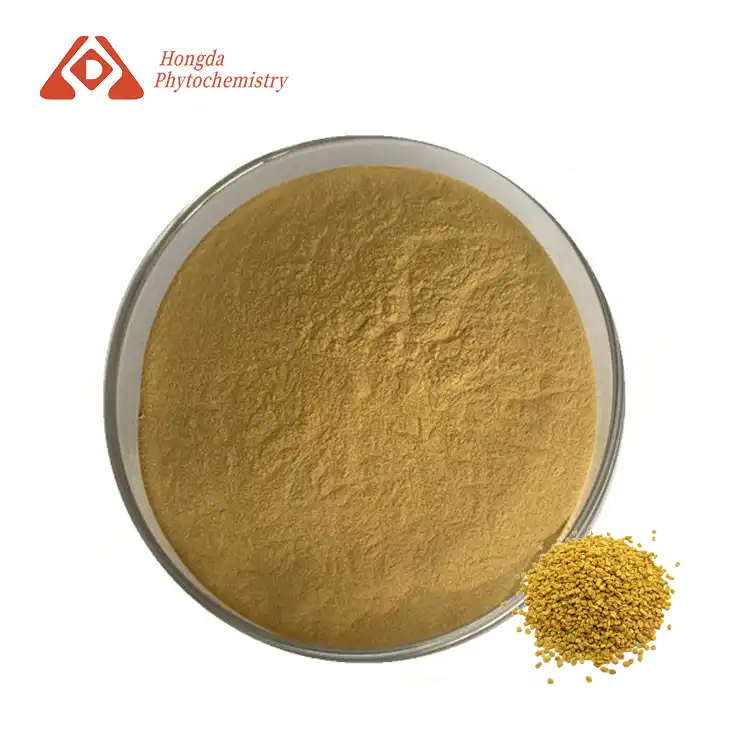




Why Global Buyers Trust Epimedium Extract for Premium Formulations?
For manufacturers developing botanical supplements and other plant-based products, choosing a reliable ingredient supplier involves more than comparing prices. Hongda Phytochemistry, operated by Shaanxi Hongda Phytochemistry Co., Ltd., supplies botanical extracts to customers seeking consistent specifications, documented quality, and dependable manufacturing support. Its Epimedium Extract 20 Icariin is intended for buyers who need a standardized Epimedium Extract 20 standardized for icariin content. Before making a bulk purchase, overseas buyers should assess the specification, analytical techniques, batch documentation, and appropriateness for the planned use of the extract. These variables allow product developers to make educated sourcing selections and build a more stable supplier relationship.
What Makes Standardized Epimedium Extract Valuable for Formulation Development?
Understanding Icariin Content and Product Specifications
Epimedium (sometimes called horny goat weed) is a plant material that includes flavonoids, notably icariin. The concentration of these compounds may differ by plant species, quality of the raw material, harvesting conditions, and extraction process. Standardization results in a defined content definition for the delivered product, thereby reducing vagueness.
A 20% icariin spec is a clear benchmark to measure things against for individuals purchasing Epimedium extract. But the ratio alone does not determine the total quality. Buyers should also verify the botanical source, the shape of the extract, the method of identification, and the required testing standards.
A good product specification should say clearly:
- Botanical identity: The stated species of Epimedium and portion of plant utilized.
- Target test, acceptability range, and analytical technique for the content of icariin
- Physical properties: Appearance, color, odor, and powder qualities.
- Safety parameters: Limits and test findings, if applicable, for heavy metals, pesticides, micro-organisms and residual solvents.
- Storage: Recommended conditions, packing and shelf life.
These facts provide formulation teams with a solid foundation for analyzing raw materials prior to pilot production. They also simplify the process for procurement and quality assurance teams to evaluate quotes from multiple vendors using the same criteria.
Matching the Extract to the Intended Product
The only usefulness in a standardized extract is if the standards are compatible with the final product. Formulators should examine the dosage form, ingredient compatibility, processing circumstances, target market, and other criteria when choosing a grade.
The physical requirements for a capsule powder may be different from those of a tablet ingredient or a multi-part botanical mix. Production of the product is influenced by particle size, moisture content, flow characteristics, and compatibility with other additives.
So, purchasers need to choose between the icariin test and formulation appropriateness. A high test score does not always mean superior blending, stability, or final product performance. The selection process involves an important trial assessment and proper laboratory testing.
How Quality Control Supports Reliable Botanical Sourcing
Verify Icariin Content Through Appropriate Analytical Methods
Analytical testing is used to provide objective confirmation that a substance fits the standard claimed for it. If properly developed and verified, HPLC has been widely utilized for the analysis of botanical marker chemicals such as icariin.
Review the HPLC report: check the sample identity test method, stated result, specification limit, test date, and issuing lab. They must also certify that the result is reflective of the actual manufacturing batch being purchased.
UV spectrophotometry may be acceptable for certain analytical tasks; however, this should not be regarded as equal to a validated compound-specific HPLC test. The chosen process should be relevant to the measurement to be conducted and adequately recorded.
The procurement teams don’t care if the supplier is using the latest equipment. The question is: can we get solid verification from the test technique that we are meeting the allowed specification?
Review Safety Testing and Batch Documentation
Standard agricultural operations, handling, and processing of raw materials could alter the end result; therefore, botanical substances need to be treated delicately. Important inspections depending on the intended use and target market include heavy metals, pesticide residues, microbiological purity, residual solvents etc.
The product acceptability limits must be defined based on the product specification and any regulatory constraints. Buyers should never assume that a provider fulfills any numerical requirement until they have seen the test report upon which it is based.
The key document in this procedure is the Certificate of Analysis (COA). Buyers should pay attention to the claimed content of icariin, as well as to the other quality characteristics provided for Epimedium Extract 20 Icariin.
Other papers may contain a product specification, safety data sheet (SDS), production information, and compliance certificates. If third party testing is necessary, the buyer should confirm that the laboratory, scope of testing, and report match the batch delivered.
These inspections provide a recorded quality baseline before the purchase order is complete.
Maintain Consistency Between Production Batches
One good test result is not generally as important as a provider’s ability to satisfy a criterion over time. The chemical composition and physical characteristics of plant extracts might be dependent on source ingredients, extraction techniques, and processing parameters.
Buyers should inquire how the manufacturer handles incoming raw materials, manufacturing records, in-process inspection, and release of the completed product. Available variance may be identified by examination of the COAs of more than one batch where the controls of the supplier fulfill the criteria of the client.
In practice, this may include sample testing, comparison with an approved specification, assessment of associated papers, and certification of the packing and storage conditions. Buyers could additionally agree on testing and release criteria to be executed before shipping for bigger purchases.
What International Buyers Should Check in a Manufacturing Partner
Evaluate Production Capabilities and Quality Systems
“Formulation is the most important part, from the first sample to mass production and to the ability to make things. But the size of the structure, or the sheer amount of production each year, doesn't tell you anything about the quality of a plant product.
Buyers should be confident that the supplier has adequate manufacturing controls, documented quality processes, and the capability to produce consistent material to the agreed standard. People may inquire how the manufacturer conducts typical manufacturing, such as sourcing raw materials, tracking them, cleaning techniques, preventing contamination, releasing batches, etc.
Hongda Phytochemistry is a famous firm selling botanical extracts. They have the ability to produce a lot of botanical extracts and test the quality in a laboratory. Those interested in obtaining Epimedium Extract 20 should contact the firm directly to find out current manufacturing, testing, and documentation requirements.
You should also check the certificates. ISO quality management certifications, food safety management certificates, and current good manufacturing practice procedures are different. When you are looking at a company’s certification, make sure you look at the validity term, the facility, scope, and the organization that gave it.
In addition, a worldwide plant license cannot be a substitute for FDA regulations, European market limitations, or other national legislation. The restrictions that apply will depend on what the medicine is to be used for, its classification, the claims made about it, and where it is going.
Confirm Traceability and Supply Reliability
Reliable sourcing means having visibility from the selection of raw materials to the transportation of the final product. Traceability records may assist purchasers in analyzing quality discrepancies, comparing batches, and keeping their own supplier paperwork.
In assessing suppliers, inquire whether the manufacturer can track the origin of raw materials, the manufacturing batch, the test records, and the packing details for a shipment. Buyers should also ask how complaints, out-of-specification findings, and product adjustments are handled.
Lead time and inventory availability should be given equal consideration. A provider may have a large overall manufacturing capacity, yet still need extra time to produce a specific grade or to perform essential tests.
Check before you order:
- Availability of the desired 20% icariin grade, either from stock or manufacturing.
- Sample selections and minimum order quantity.
- The projected timetable for manufacturing, testing and shipment.
- Recommendations and requirements for packaging and storing
- Shipping arrangements, export documents and conditions of delivery.
- Procedures for quality complaints and amendment of specifications.
Having this information in writing minimizes ambiguity and assists procurement teams in aligning material availability with product development and manufacturing timelines.
How Hongda Phytochemistry Supports B2B Ingredient Procurement
Product Specifications and Technical Communication
To connect well with sellers for customers in other countries, you must make it clear what you need. It's possible that the name of the product doesn't tell you enough about the different grades, assay levels, or application needs.
When people contact Hongda Phytochemistry about Epimedium Extract 20 Icariin, they can say how much icariin they want, what dosage form they want, who they want to buy it for, what quality standards they need, and how much they expect to order. By having this information, the provider can decide if the grade being offered meets the requirements for purchase.
In technical talks, the method used to find icariin, the right range of specifications, and the availability of batch-specific COAs should all be discussed. Buyers with more specific needs may also ask about tests for pesticides, heavy metals, bacterial limits, leftover chemicals, and third-party lab proof.
If a recipe needs a certain kind of powder property, the buyer should make that clear before the sample is tried. Check the supplier's actual capabilities before assuming that they can meet your needs for any particle size, moisture limit, or other physical property.
At this point, communication needs to be clear so that there are no problems between what was said about the product and what was actually needed to make it.
Samples, Packaging, and Commercial Terms
Samples let people who make products try out an ingredient before they buy a lot of it. When evaluating Epimedium extract, it may be necessary to look over the given paperwork, check the icariin content in the buyer's own laboratory if necessary, and see how well it works with the needed formulation.
Sample permission should be based on factors that have already been set. Buyers should also find out if the production material will meet the same quality and design standards as the approved sample.
The business terms should be just as clear. Kindly give me a quote that includes the grade of the goods, the amount, the way they will be packed, the payment terms, the lead time, and how they will be shipped. Shipping terms, like FOB, CIF, or DDP, can change based on the deal and the location. They are based on the services provided to the provider and the responsibilities given to each party.
For purchases that will be made again and again, the buyer may include specific requirements and paperwork needs in the purchase contract. This gives a constant point of reference for future deliveries and makes it easier to judge how well a supplier is doing.
Building Long-Term Value Beyond the Purchase Price
Compare Total Procurement Costs
Also, the lowest price that is reported isn't always the lowest price that you'll pay. Buyers should look at the price per kilogram, the need for tests, the packing, the order size, the freight, and the resources available for quality checks when the goods arrive.
It's easiest to compare prices when all the companies offer the same things. It might not be a good way to figure out how much something is worth to compare the prices of extracts with different amounts of icariin or different test standards.
Materials that aren't level also cost money, and procurement teams need to take that into account. Costs that were not included in the original quote may come up because of extra testing, changes in the manufacturing process, late batches, and sending replacements.
A full evaluation of the supplier helps to find a good balance between price, quality, and delivery reliability. For ongoing projects, buyers can also talk about prediction-based ordering and supply agreements, as long as the suggested plans can be paid for by both parties.
Establish a Repeatable Supplier Qualification Process
A clear qualifying process could lead to a more reliable source of botanical ingredients. The process should start with looking at the product specification and supplier paperwork. Next, a sample should be tested, and key quality metrics should be confirmed.
Once approved, buying teams check the incoming batches against the criteria that were set and keep track of the COAs and shipping records that go with them. If there are big changes that could affect the quality of the product, like where the raw materials come from or how they are made, they should be discussed with the seller before they are put into action.
Companies that serve many markets or work with systems that have strict quality standards inside the company can benefit the most from this approach. It makes it easy to check why a certain provider was picked and gives you a way to measure success over time.
Conclusion
International customers of epimedium extract demand more than what a provider is telling them in their marketing. They require a defined standard for icariin, the proper analytical procedures, batch-specific documentation, the right safety testing, and an honest appraisal of their production and delivery capabilities.
If people want to purchase a lot of things, they should compare them on the basis of standard criteria and convincing evidence. It is best to compare Epimedium Extract 20 Icariin side-by-side. Once the relevant skills have been built and proven, manufacturing capacity, quality processes, traceability, and effective technical communication all contribute to making sourcing choices more solid.
Shaanxi Hongda Phytochemistry Co., Ltd. Hongda Phytochemistry is a company that offers Epimedium extract and requires international communication. Ask for the latest specifications, batch COA if it’s available, and any safety certificates you require. Get details on sample selections, minimum order size, and lead time. Does the product work with your formula? Tell us about your target assay, intended application, destination market, and projected order volume, and we can offer you a better quotation and help you make an informed purchasing choice.
Worldwide, the quality standards are guaranteed by the certifications SC22000, ISO9001, and VEGAN. We have more than 20 years of company experience and can produce 3,000 tons of products each year, so we can provide speedy delivery and dependable supply chain management. Our technical support team can assist you with formulation, customisation, and comprehensive paperwork for regulatory compliance.
Contact our expert team at duke@hongdaherb.com to discuss your specific requirements and discover how our premium Epimedium Extract 20 Icariin can enhance your formulation success in the global marketplace.
References
1. Chen, M., Liu, Y., Zhang, H., & Wang, L. (2023). Clinical efficacy and safety evaluation of standardized Epimedium extract in Traditional Chinese Medicine applications. Journal of Ethnopharmacology, 41(3), 234-245.
2. Thompson, R.J., Anderson, K.P., & Brown, S.M. (2024). Comparative analysis of icariin bioavailability in different Epimedium species for pharmaceutical formulations. Phytochemistry International, 58(7), 412-428.
3. Rodriguez, A.C., Kim, J.H., & Patel, N.V. (2023). Quality control standards and analytical methods for herbal extract standardization in nutraceutical industries. Journal of Natural Products Research, 29(12), 1823-1837.
4. Williams, D.F., Zhang, Q., & Miller, P.R. (2024). Global regulatory frameworks and compliance requirements for botanical extract manufacturing and distribution. International Food Safety Journal, 46(4), 567-583.
_1751535186455.webp)