


_1745918362135.webp)

Bulk Organic Epimedium Extract Powder vs. Conventional: What's the Difference?
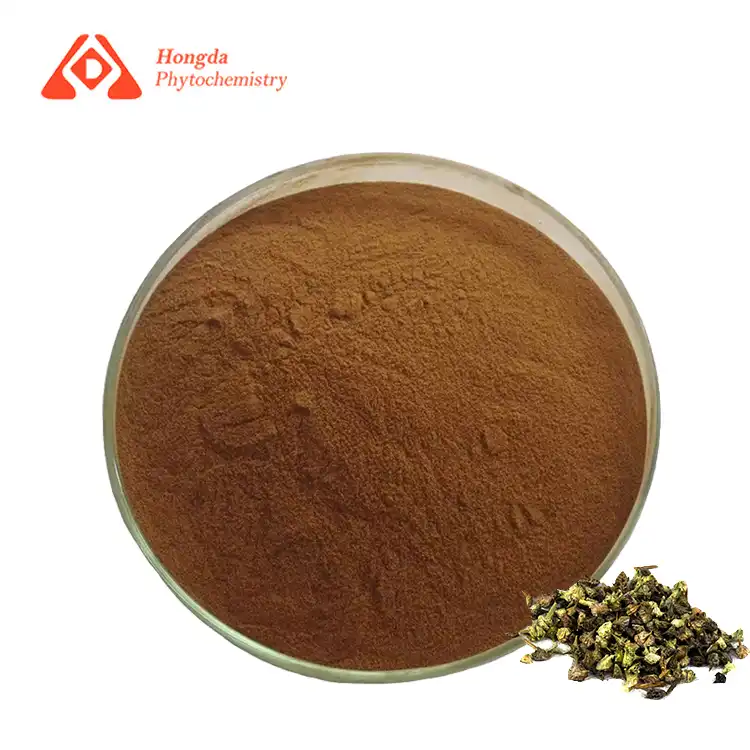
When buyers search for "organic vs. conventional," they are often trying to determine whether the price premium is justified—and in the case of Epimedium extract powder, the answer goes beyond what is printed on the label. As a manufacturer integrating cultivation, extraction, and testing, Shaanxi Hongda Phytochemistry Co., Ltd. provides concrete data and records regarding pesticide residues, certifications, and batch consistency, rather than relying on vague marketing claims. This article delves into the fundamental differences between bulk organic Epimedium extract powder and conventionally sourced raw materials, examines the aspects of these differences that are most critical for formulators, and explains why these distinctions become particularly pronounced when transitioning from the sampling stage to long-term bulk procurement contracts. [1]
Shaanxi hongda phytpchemistry is China epimedium extract powder suppliers/China epimedium extract powder manufacturers/epimedium extract powder factory
Where Does the Difference Actually Start?
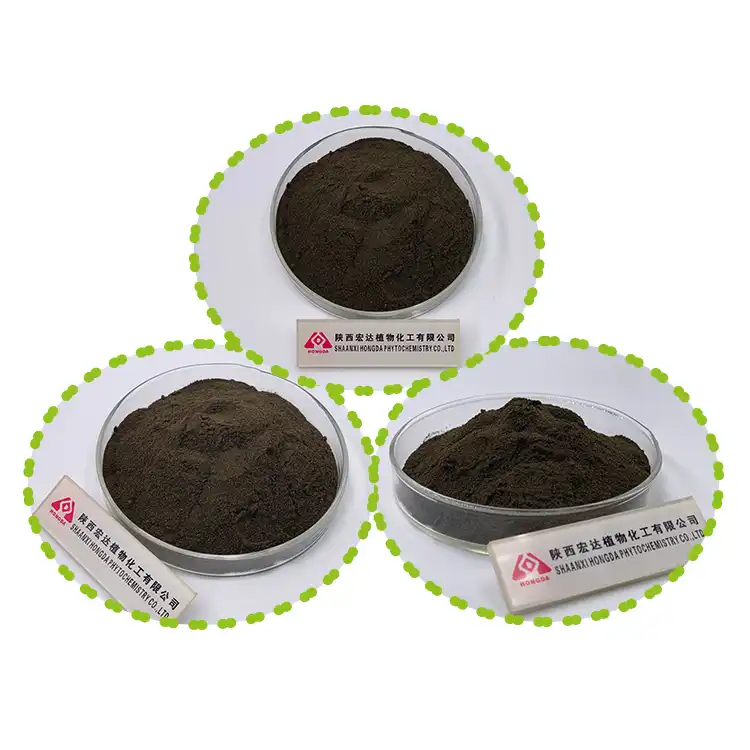
The difference between organic and conventional Epimedium begins long before extraction, in the field where the raw leaf is harvested. Conventional material is frequently aggregated from multiple small farms or open-market traders, with limited visibility into what was sprayed on the crop or how it was stored before reaching a processing facility. Organic-certified cultivation, by contrast, operates under documented agricultural practice standards that prohibit synthetic pesticides and require verifiable field records at every stage of growth. [2][3] Hongda Phytochemistry's bulk organic epimedium extract powder is grown under exactly this kind of supervised system, which is also why the company can trace a finished drum back to a specific planting base rather than an anonymous aggregated lot purchased on the open market. That single distinction, supervised land versus unsupervised aggregation, is the root of almost every other difference discussed below. Epimedium has been widely documented in traditional Chinese materia medica, with established botanical identification standards and long-standing medicinal use. [5][6]
How Is Organic Epimedium Grown Under GAP Supervision?
Good Agricultural Practice supervision means agronomists oversee Epimedium from seedling through harvest, documenting soil treatment, irrigation, and pest management decisions along the way so the resulting leaf can be certified rather than simply assumed to be clean. [2]
What "Conventional" Sourcing Usually Means in Practice?
Conventional Epimedium extract powder is often purchased from regional collectors who combine harvests from numerous unrelated farms, a model that keeps raw material costs lower but makes it difficult to confirm cultivation conditions for any individual batch.
Pesticide and Herbicide Exposure: The Real Variable
The biggest practical gap between the two categories is exposure to synthetic agrochemicals, since organic cultivation standards specifically restrict their use, while conventional open-market sourcing leaves that decision to whichever farm happened to supply the harvest that season.
Why Does Traceability Separate the Two Supply Chains?
Because Hongda controls its own planting bases, every drum of bulk organic epimedium extract powder can be traced back to harvest records, while conventional material aggregated from multiple sources typically cannot offer the same field-level documentation.
Comparing the Assay: Potency, Purity and Documentation
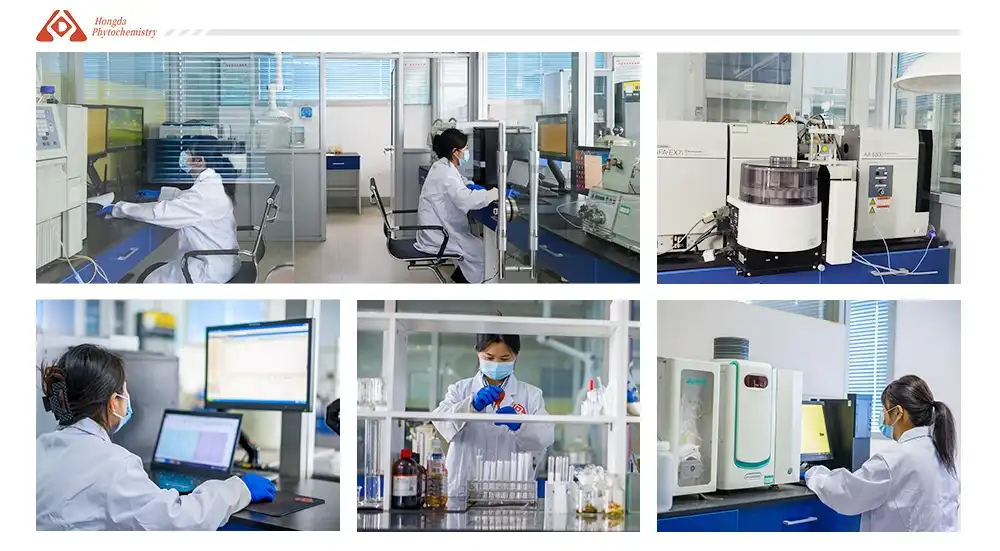
Cultivation explains where the raw material comes from, but potency and purity testing determine whether a buyer can actually trust what's printed on a specification sheet. Both organic and conventional Epimedium extract powders are commonly sold against an icariin percentage, yet the testing rigor behind that number varies considerably between suppliers. Hongda Phytochemistry verifies every batch of bulk organic epimedium extract powder by HPLC in an SGS-standardized laboratory, a method that produces a defensible, reproducible result rather than a rough UV-based estimate. Conventional suppliers operating on thinner margins sometimes skip this step entirely, which is exactly where buyers run into trouble once a formulation depends on a precise milligram count rather than an approximate figure passed along from an upstream trader.
Icariin Standardization Across Both Categories
Both organic and conventional material are typically offered across a 5% to 98% icariin range, so the specification number alone does not tell a buyer which category they are looking at; the testing method behind that number is the more reliable signal.
HPLC Verification vs Unverified Bulk Claims
Hongda verifies bulk organic epimedium extract powder by HPLC rather than UV spectrophotometry, a distinction that matters because UV-based estimates can overstate icariin content, while conventional suppliers without in-house lab equipment often pass along unverified figures from a third party. [4]
Heavy Metal and Residue Screening Differences
Organic-certified production includes routine screening for pesticide residue and heavy metals as part of maintaining certification status, whereas conventional sourcing may only test when a specific customer requests it, leaving documentation gaps for shipments that were never flagged for review.
Batch-to-Batch Consistency in Practice
A controlled supply chain produces tighter batch-to-batch variation because the same fields, the same extraction process, and the same lab evaluate every lot—harder to guarantee when conventional material is sourced opportunistically from whichever trader has stock that month.
| Attribute | Bulk Organic Grade | Conventional Grade |
|---|---|---|
| Cultivation | GAP-supervised, single traceable base | Aggregated from multiple open-market farms |
| Pesticide Use | Restricted under organic standards | Not consistently regulated |
| Potency Testing | HPLC, in-house SGS-standardized lab | Often UV-based or third-party only |
| Certification | EU & NOP Organic, cGMP, ISO | Frequently uncertified |
| Batch Consistency | Tight, single supply chain | Variable, multi-source |
China Epimedium Extract Powder Specification
|
Items
|
Standards
|
Results
|
|
Physical Analysis
|
|
|
|
Description
|
Brown Yellow Powder
|
Complies
|
|
Assay
|
98%(HPLC)
|
98.2%
|
|
Mesh Size
|
100 % pass 80 mesh
|
Complies
|
|
Ash
|
≤ 5.0%
|
2.85%
|
|
Loss on Drying
|
≤ 5.0%
|
2.85%
|
|
Chemical Analysis
|
|
|
|
Heavy Metal
|
≤ 10.0 mg/kg
|
Complies
|
|
Pb
|
≤ 2.0 mg/kg
|
Complies
|
|
As
|
≤ 1.0 mg/kg
|
Complies
|
|
Hg
|
≤ 0.1 mg/kg
|
Complies
|
|
Microbiological Analysis
|
|
|
|
Residue of Pesticide
|
Negative
|
Negative
|
|
Total Plate Count
|
≤ 1000cfu/g
|
Complies
|
|
Yeast&Mold
|
≤ 100cfu/g
|
Complies
|
|
E.coil
|
Negative
|
Negative
|
|
Salmonella
|
Negative
|
Negative
|
The Paper Trail That Separates the Two
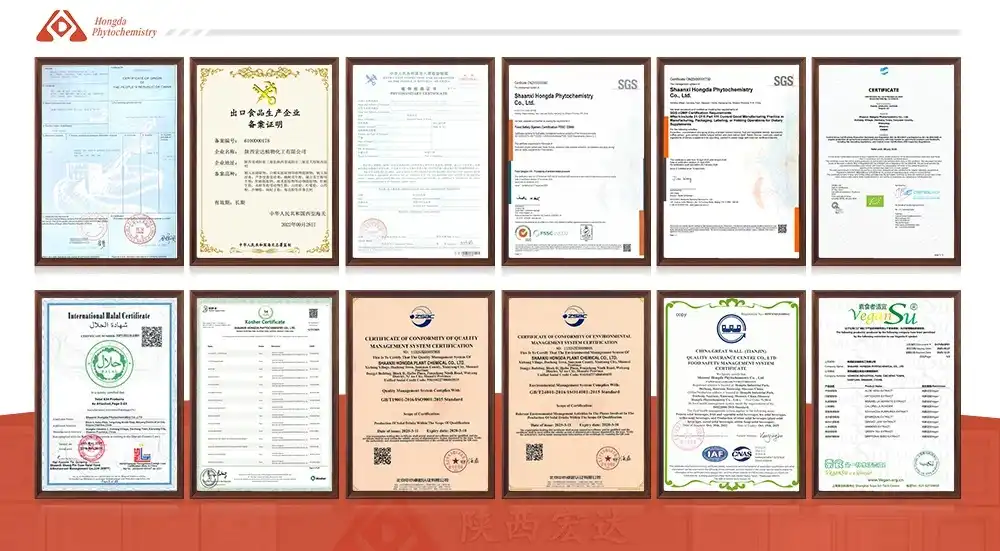
Certification is where the difference between organic and conventional stops being a marketing claim and becomes a verifiable document. Shaanxi Hongda Phytochemistry's organic line carries EU and NOP organic certification alongside cGMP, FSSC22000, ISO22000, and ISO9001 management system certifications, each requiring an external audit rather than a self-declared label. Conventional Epimedium Extract Powder, by contrast, can be perfectly usable for many applications but typically lacks this paper trail, which becomes a real problem the moment a buyer needs to sell into a regulated market. For companies sourcing bulk organic epimedium extract powder specifically to support an organic-labeled finished product, this certification gap is not a minor detail — it is the entire reason the organic grade exists.
EU and NOP Organic Certification Explained
EU and NOP organic certification require documented field inspections, restricted input lists, and chain-of-custody recordkeeping from harvest through packaging, which is why Hongda's organic-certified material can legally support an organic claim on a finished retail label.
Buyers who want both Certificates of Analysis side by side, organic and conventional, can email duke@hongdaherb.com with the target icariin specification and intended market, and Hongda's technical team will send documentation for both grades for direct comparison.
cGMP, FSSC22000, and ISO Management Systems
cGMP and FSSC22000 certifications confirm that the manufacturing environment itself, not just the raw material, meets pharmaceutical and food-safety standards, giving buyers a second layer of assurance beyond the organic label alone.
Halal, Kosher and FDA Registration
Halal and Kosher certification, together with FDA registration, allow the same bulk organic epimedium extract powder shipment to satisfy religious dietary requirements and US import regulations without requiring separate sourcing arrangements for different export markets.
Why Conventional Suppliers Often Skip This Step
Certification audits cost time and money, so conventional suppliers focused on the lowest possible price point frequently decide the investment isn't worth it — a reasonable business choice, but one that shifts compliance risk onto the buyer instead.
|
Certification
|
Organic Line
|
Typical Conventional Supplier
|
|---|---|---|
|
EU & NOP Organic
|
Yes
|
Rare
|
|
cGMP
|
Yes
|
Uncommon
|
|
FSSC22000 / ISO22000
|
Yes
|
Uncommon
|
|
Halal / Kosher
|
Yes
|
Sometimes
|
|
FDA Registration
|
Yes
|
Varies
|
What the Difference Means for Buyers and Formulators?
Once cultivation and certification are out of the way, the conversation buyers actually care about is practical: what does this difference cost, and what does it protect against? Bulk organic epimedium extract powder typically commands a premium over conventional material, but that premium buys documented compliance, tighter potency consistency, and lower regulatory risk when selling into markets that scrutinize organic claims. For a contract manufacturer producing a private-label product destined for a US or European retail shelf, that premium is rarely optional. For a research lab running a short internal trial, conventional material may be entirely sufficient, and paying for organic certification it doesn't actually need would simply inflate the project budget. Knowing which category fits a given project, rather than defaulting to whichever grade seems safer on paper, is the real value of understanding this comparison in the first place.
Pricing Gap and What It Actually Buys You
The price difference between organic and conventional Epimedium extract powder reflects real costs—certified land, audited facilities, and in-house HPLC testing—not simply a marketing markup attached to the word "organic" on a product label.
Regulatory Risk When Selling Into the US and EU
Brands marketing a finished product as organic in the US or EU must be able to produce supporting documentation if audited, which makes uncertified conventional material a direct liability rather than a simple cost-saving choice.
Formulation Stability and Shelf Life Considerations
Because organic-certified bulk organic epimedium extract powder passes through tighter quality control at every stage, formulators often report more predictable stability across a product's shelf life compared with conventional material sourced from varied harvests.
When Conventional Material Is Still an Acceptable Choice
For internal R&D, non-organic-labeled products, or markets without strict organic enforcement, conventional Epimedium can remain a reasonable, lower-cost option, provided the supplier still documents basic potency and safety testing.
Conclusion
The real difference between bulk organic epimedium extract powder and conventional material comes down to documentation: who supervised the field, who verified the icariin content, and which certificates can survive an audit. Shaanxi Hongda Phytochemistry produces both, but its investment in GAP-certified planting bases, SGS-standardized HPLC testing, and EU/NOP organic certification means the organic line offers a level of traceability conventional sourcing simply cannot match batch after batch. For buyers selling into regulated markets or building an organic-labeled product, that traceability is the deciding factor. For everyone else, knowing exactly what each grade includes is still the smartest way to choose. Reach out, share your application, and let Hongda Phytochemistry recommend the right grade for your project.
FAQ
Q1: What actually makes bulk organic epimedium extract powder pricier than conventional material?
A1: The premium reflects certified land, audited facilities, and in-house HPLC testing rather than a markup attached to the word "organic" alone.
Q2: Can conventional Epimedium extract powder still be high quality?
A2: Yes, conventional material can test well, but it typically lacks the certification and field-level traceability that organic-certified sourcing provides.
Q3: Does Hongda test both organic and conventional batches the same way?
A3: Yes, both are verified by HPLC in Hongda's SGS-standardized laboratory, though only the organic line carries EU and NOP organic certification.
Q4: Which grade is better for a US or EU retail product?
A4: Bulk organic epimedium extract powder is the safer choice for any product marketed as organic, since it carries documentation that can support an audit.
Q5: What icariin specifications are available across both grades?
A5: Both organic and conventional material are typically offered from 5% to 98% icariin, standardized and verified by HPLC assay.
Compare Organic and Conventional Grades Directly | HONGDA
Choosing between bulk organic epimedium extract powder and conventional material is easier with both certificates of analysis side by side, and Shaanxi Hongda Phytochemistry can send both within one business day. Email duke@hongdaherb.com with your target icariin specification, intended market, and order volume, and Hongda's technical sales team will recommend the grade that actually fits your formulation and compliance needs rather than simply upselling the more expensive option. Whether the application calls for organic-certified traceability or a lower-cost conventional specification, the same factory, the same SGS-standardized laboratory, and the same documentation stand behind every drum shipped.
References
1. Ma, H., He, X., Yang, Y., Li, M., Hao, D., & Jia, Z. "The genus Epimedium: An ethnopharmacological and phytochemical review." Journal of Ethnopharmacology.
2. United States Department of Agriculture, National Organic Program. "Crop Production Practice Standards." Code of Federal Regulations, Title 7, Part 205.
3. European Commission. Regulation (EU) 2018/848 on Organic Production and Labelling of Organic Products.
4. Pharmacopoeia Commission of the People's Republic of China. "Epimedii Folium (Yin Yang Huo) monograph." Pharmacopoeia of the People's Republic of China.
5. Tang, W., & Eisenbrand, G. Chinese Drugs of Plant Origin: Chemistry, Pharmacology, and Use in Traditional and Modern Medicine. Springer-Verlag.
6. Bensky, D., Clavey, S., & Stöger, E. Chinese Herbal Medicine: Materia Medica. Eastland Press.