


_1745918362135.webp)

Why Standard Curcumin Keeps Failing—and How Technology Responds
The Three-Way Problem: Solubility, Stability, and Speed of Clearance
Curcumin's pharmacokinetic profile is notoriously difficult. It is practically insoluble in water at physiological pH, which means it cannot dissolve effectively in the aqueous environment of the GI tract. It is also unstable — subject to rapid degradation in alkaline conditions and through oxidative processes — and once absorbed, it undergoes extensive hepatic first-pass metabolism, meaning what little reaches systemic circulation is quickly eliminated. [3] Clinical trials have demonstrated that even at high doses (up to 12 g per day), plasma curcumin levels remain negligible in many subjects. This triple barrier — solubility, stability, clearance — is why no delivery innovation that only addresses one of the three factors achieves adequate results in isolation. The technologies that have gained the most commercial traction, including liposomal curcumin powder, address all three simultaneously.
What Nanocurcumin Actually Does — and Where It Excels?
"Nanocurcumin" refers broadly to formulations in which curcumin particles are reduced to nanometer scale (typically 10–500 nm) using techniques such as high-pressure homogenization, nanoprecipitation, or polymer encapsulation. At this scale, the surface area-to-volume ratio increases dramatically, improving water dispersibility and GI-tract contact. Nanocurcumin has demonstrated clear advantages in systemic anti-inflammatory applications—products like Theracurmin and Meriva (a phospholipid complex) have substantial clinical backing for conditions involving peripheral inflammation, joint health, and metabolic function. The limitations of many nanoparticle approaches is their lower specificity for sustained central nervous system (CNS) delivery, shorter circulation time in the bloodstream, and, in some polymer-based systems, technical challenges with manufacturing consistency at large scale. [4]


Why Does Liposomal Delivery Have a Structural Advantage?
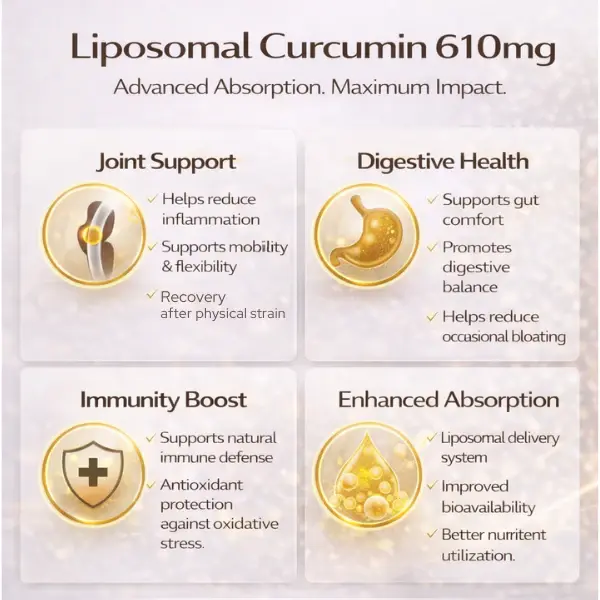
Liposomal delivery goes one step further by encapsulating curcumin — either in the aqueous core or within the lipid bilayer itself — inside a phospholipid vesicle structurally identical to human cell membranes. This design does more than improve solubility: the liposome resists enzymatic degradation in the gut, crosses epithelial barriers via lipid-mediated uptake, and, because the shell mimics endogenous membrane material, it interacts favorably with target cell surfaces. Research on cationic nanocrystal liposomes has demonstrated a 5.4-fold increase in bioavailability compared to crude curcumin powder. Critically, liposomal curcumin has also shown evidence of enhanced blood-brain barrier crossing—making it the preferred form for cognitive health and neuroinflammatory applications, where consistent CNS exposure is the therapeutic goal. [5] For brands developing products in brain health, mood support, or long-term neuroprotection, this distinction is commercially meaningful.

If you are evaluating raw material options or need technical documentation for formulation development, you can contact the Hongda technical team directly at duke@hongdaherb.com for specification sheets, COA templates, and OEM support.
Application Fit: Matching Delivery Technology to Therapeutic Goal
Cognitive Health, Neuroprotection, and the CNS Delivery Advantage
One of the most commercially exciting frontiers for curcumin supplementation is brain health—and it is precisely the category where liposomal curcumin powder holds its clearest edge. Liposomal encapsulation provides prolonged plasma residence time and documented lipid-mediated pathways for blood-brain barrier crossing that polymer nanoparticle systems, primarily designed for peripheral tissue targeting, do not replicate as consistently. For supplement brands building products in the cognitive resilience, anti-aging neurological support, or mood wellness categories—markets that are growing rapidly across North America and Europe—liposomal curcumin is the formulation technology that carries both scientific credibility and a consumer-friendly narrative. The connection to cell membranes, the clean phospholipid story, and the lower effective dose all align with premium supplement positioning.
Inflammation, Joint Health, and Systemic Efficacy
Both liposomal and nanoparticle curcumin have strong data supporting systemic anti-inflammatory activity, but the evidence base for nanocurcumin in joint-specific applications (Theracurmin for osteoarthritis and Meriva phospholipid complex for musculoskeletal conditions) is particularly well-established. For brands entering the joint health or sports recovery categories, nanoparticle forms offer a larger body of clinical literature. However, liposomal curcumin powder is closing this gap quickly—and for formulators seeking a single ingredient that can serve both inflammation and cognitive support claims within a unified product, liposomal technology offers a cross-category flexibility that polymer nanoparticle forms do not. This makes it an especially attractive option for multi-benefit supplement developers looking to reduce SKU complexity while maintaining formulation integrity.
Skin, Gut Health, and Functional Food Integration
Curcumin's antioxidant activity makes it relevant for skin supplement formulations targeting UV-induced oxidative stress, collagen protection, and complexion support—particularly in the growing nutricosmetics category that blends beauty and health claims. In this context, liposomal delivery's ability to improve intracellular concentrations in epithelial and dermal tissues provides a strong mechanistic argument. Additionally, curcumin's role in gut microbiome support and intestinal inflammation management is gaining traction in clinical gastroenterology. Liposomal curcumin powder's powder format enables seamless integration into functional food matrices—drink mixes, protein blends, and health bars—that nanocurcumin liquids cannot easily achieve without compromising the encapsulation structure. This format versatility is a genuine commercial differentiator for a liposomal curcumin powder supplier capable of delivering at scale.
| Application Category | Liposomal Curcumin Powder | Nanocurcumin (Polymer/Micelle) | Recommended Choice |
|---|---|---|---|
| Cognitive health / neuroprotection | Strong CNS delivery evidence | Moderate — less BBB specificity | Liposomal |
| Joint health / anti-inflammatory | Effective, fewer clinical studies | Extensive clinical literature | Either (by label need) |
| Skin / nutricosmetics | Lipid-mediated epidermal uptake | Variable by formulation | Liposomal |
| Functional food / beverage | Powder format — seamless integration | Liquid forms limit applications | Liposomal Powder |
| Gut / digestive health | Protects through GI transit | Nanomicelles have GI data | Both viable |
| Shelf-life / cold-chain sensitivity | Room-temp stable spray-dried powder | Many forms require refrigeration | Liposomal Powder |
Liposomal Curcumin Specification
|
No.
|
TEST ITEM
|
SPECIFICATION
|
RESULT
|
|||
|
1
|
Description
|
Yellow Powder
|
Conform
|
|||
|
2
|
Particle size (20 mesh)
|
≥90%
|
Conform
|
|||
|
3
|
Loss on drying
|
≤5.0%
|
2.33%
|
|||
|
4
|
Bulk Density
|
Measured value
|
368g/L
|
|||
|
5
|
Tapped Bulk Density
|
Measured value
|
721g/L
|
|||
|
6
|
Heavy Metals
|
Arsenic (As)
|
≤2.0ppm
|
Conform
|
||
|
Lead (Pb)
|
≤0.5ppm
|
Conform
|
||||
|
Mercury (Hg)
|
≤0.3ppm
|
Conform
|
||||
|
Cadmium (Cd)
|
≤0.3ppm
|
Conform
|
||||
|
7
|
Microbiological
|
Total plate count
|
≤10000cfu/g
|
10cu/g
|
||
|
Total molds and yeasts
|
≤1000cfu/g
|
10cfu/g
|
||||
|
Coliforms
|
≤10MPN/g
|
≤0.3MPN/g
|
||||
|
E.Coli
|
Negative/25g
|
Negative
|
||||
|
Salmonella
|
Negative/25g
|
Negative
|
||||
|
Staphylococcvs
|
Negative/25g
|
Negative
|
||||
|
8
|
Assay
|
Curcumin
|
70.0%±5%
|
71.6%
|
||
|
Phospholipids (NON-GMO)
|
15.0%±5%
|
12.9%
|
||||
|
Fatty Acids
|
15.0%±5%
|
13.8%
|
||||
|
Conclusion
|
Meet the in house standard.
|
|||||
What to Demand from a Liposomal Curcumin Powder Supplier?
Encapsulation Quality and Entrapment Efficiency
The label "liposomal" is meaningless without documented encapsulation performance. A high-quality liposomal curcumin powder must demonstrate verified entrapment efficiency—the proportion of curcumin genuinely enclosed within the phospholipid bilayer rather than simply co-formulated with liposomal material. This requires precise control of phospholipid composition, aqueous-to-lipid ratio, particle size distribution, and the spray-drying parameters used to convert the suspension to powder form. Shaanxi Hongda Phytochemistry Co., Ltd.'s SGS-standardized laboratory — co-developed with university professors and staffed by more than 20 senior R&D personnel — tests every production batch for encapsulation integrity, curcumin assay (HPLC), and particle size, providing customers with the analytical documentation necessary to substantiate product claims in regulated markets.
Traceability from Turmeric Source to Finished Powder
The raw material origin of curcumin significantly affects the curcuminoid profile, purity, and pesticide risk of the finished ingredient. Hongda Phytochemistry maintains three dedicated raw material planting bases — including a Chinese medicinal material planting base — where professional agronomists supervise cultivation from the ground up. This farm-to-powder traceability model means that every batch of liposomal curcumin powder begins with a traceable, agronomist-verified turmeric input, professionally extracted and tested for curcuminoid content, pesticide residues, heavy metals (Pb, As, Cd, Hg), moisture, and microbiological safety before encapsulation even begins. For a liposomal curcumin powder supplier competing in clean-label and organic-positioned markets, this upstream traceability is not optional — it is a fundamental part of the quality proposition.
Scale, Stability, and On-Time Delivery
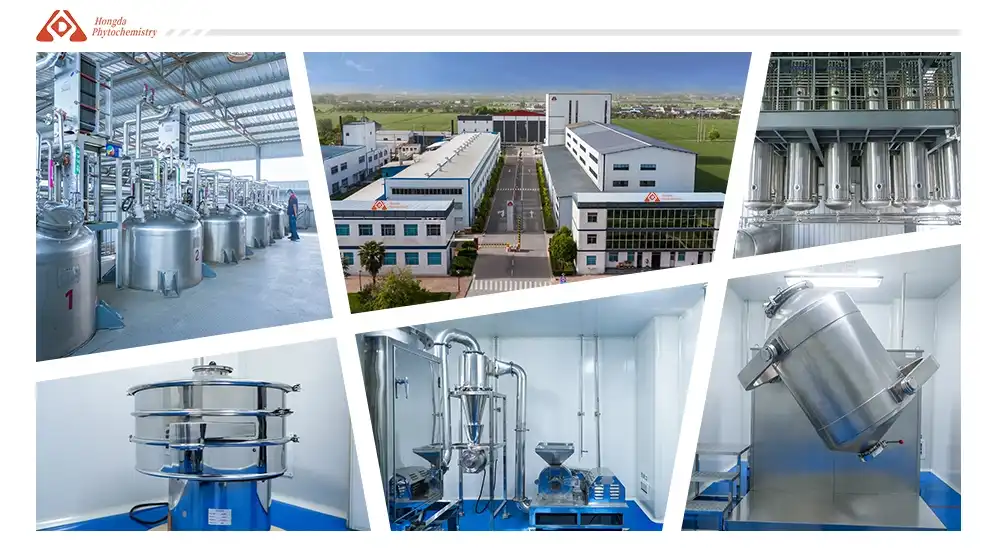
For global supplement brands working with lean inventory models and tight launch timelines, supply reliability is as important as ingredient quality. Hongda's 20,000 m² production facility houses more than 10 modern production lines with 100,000-level purification workshop standards, supported by a 3,000 m² warehouse organized into six dedicated storage zones for different product categories. [6] Annual production capacity reaches 3,000 tons across all ingredient lines, providing the supply buffer that prevents ingredient shortages from derailing product launch schedules. The factory's more than 150 production technicians and two independent R&D institutions ensure that quality systems operate consistently at scale—not just during audits, but across every batch processed throughout the year.
Certifications That Turn Ingredient Quality into Market Access
The 2025 Certification Upgrade and What It Unlocks
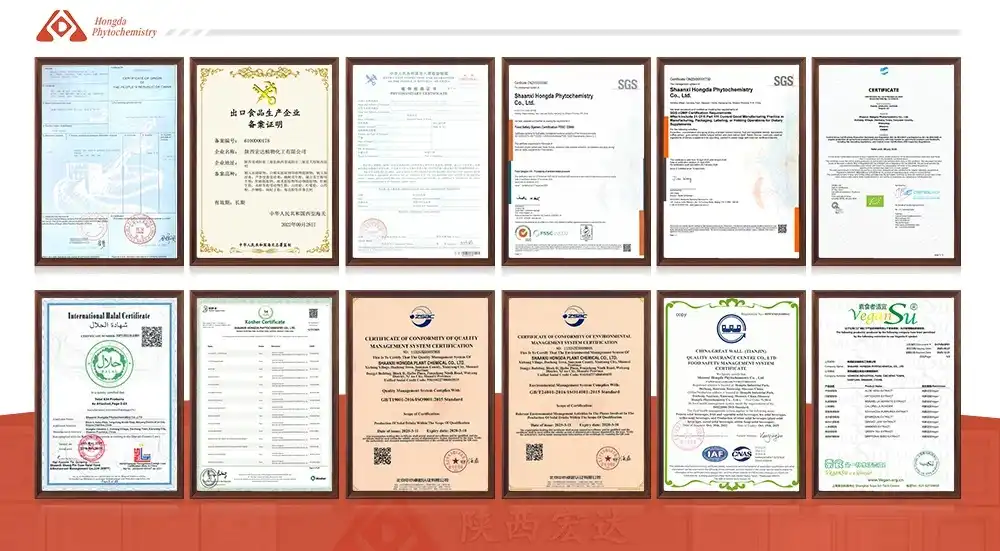
For supplement brands distributing through regulated retail channels—pharmacy chains, health food retailers, and e-commerce platforms with quality verification programs—the certification stack of their ingredient supplier is a direct enabler of market access. Shaanxi Hongda Phytochemistry Co., Ltd. entered 2025 with an already-substantial credentials base: national high-tech enterprise designation (awarded 2010), food production licenses, halal certification, kosher certification, BRC grade, FDA registration, and organic certification. In 2025, the company completed a significant expansion of this portfolio, adding cGMP certification, FSSC 22000, ISO 22000, ISO 9001, and both EU Organic and NOP Organic certification. This means that Hongda-sourced liposomal curcumin powder is ready for pharmaceutical-grade supplement channels in the US and EU without requiring buyers to close any compliance gaps themselves.
Why does purity testing at this level matter for curcumin specifically?
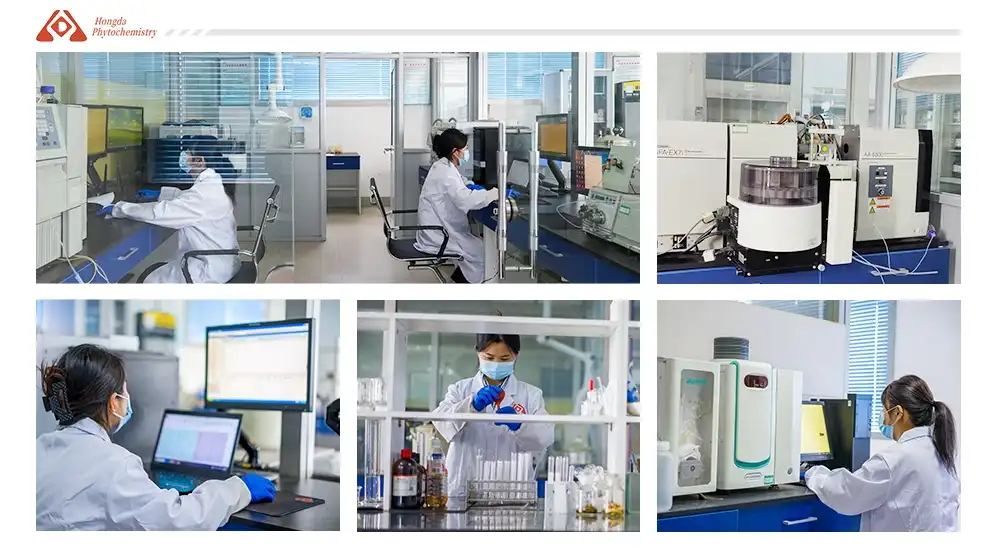
Curcumin sourced from lower-tier suppliers carries genuine risk: adulteration with synthetic colorants (particularly Lead Chromate, historically used to enhance the yellow color of turmeric powder) has been documented in international trade audits. Heavy metal contamination from soil in certain growing regions is a persistent challenge. Pesticide residues, particularly in non-certified conventional turmeric, present a regulatory exposure for finished product brands. Hongda's pre-shipment testing protocol—covering HPLC curcuminoid assay, full heavy metal panel, multi-residue pesticide screen, moisture, and complete microbiological testing—directly addresses these specific risks. Every Certificate of Analysis is generated from instruments in the SGS-standardized laboratory and can be reviewed alongside original instrument outputs on request.
| Quality Parameter | Testing Method | Hongda Standard |
|---|---|---|
| Curcuminoids Assay | HPLC | ≥95% per specification |
| Encapsulation Efficiency | SGS Lab Protocol | Batch-by-batch verification |
| Heavy Metals (Pb/As/Cd/Hg) | Atomic Absorption Spectrophotometry | Meets EU & USP limits |
| Pesticide Residues | GC / LC multi-residue screen | Full panel pre-shipment |
| Particle Size Distribution | Laser diffraction | Controlled, documented per batch |
| Microbiological Safety | TPC, Yeast, mold, and Pathogens | Full panel with COA |
| Moisture Content | Karl Fischer / Loss on Drying | Within specification |
R&D Capacity and Collaborative Formulation Support
Beyond ingredient supply, the most valuable thing a liposomal curcumin powder supplier can offer is technical partnership. Hongda's two R&D institutions, staffed by more than 20 university-background researchers equipped with high-performance liquid chromatographs, gas chromatographs, and a full suite of analytical instruments, are actively engaged in both product innovation and customer-specific formulation support. Whether a customer needs particle size adjustments, specific curcuminoid ratios, carrier matrix optimization for beverage dispersibility, or stability data to support a particular shelf-life claim, the R&D team can collaborate on a protocol-driven basis. This level of technical engagement is what separates a genuine ingredient development partner from a trading company reselling commodity extract.
Conclusion
Both liposomal and nanocurcumin technologies represent genuine advances over conventional curcumin supplementation—but they are not interchangeable tools. For cognitive health, skin wellness, functional food applications, and any format where room-temperature shelf stability matters, liposomal curcumin powder holds structural advantages that nanoparticle forms cannot fully replicate. Shaanxi Hongda Phytochemistry Co., Ltd., with its farm-to-powder traceability, SGS-certified lab infrastructure, 2025 cGMP and ISO certifications, and 3,000-ton annual production capacity, brings every element a global brand needs to source this ingredient with confidence. The choice of technology starts with the science — the choice of supplier starts with trust.
FAQ
Q1: What makes Liposomal Curcumin Powder different from standard curcumin?
A1: Liposomal curcumin powder encapsulates curcumin within phospholipid vesicles, improving solubility, protecting it from rapid metabolism, and significantly enhancing bioavailability compared to standard curcumin powder, which is poorly absorbed and quickly eliminated.
Q2: Why is liposomal delivery more effective for curcumin absorption?
A2: The liposomal structure mimics human cell membranes, allowing curcumin to pass through the digestive system more efficiently, resist enzymatic degradation, and achieve higher systemic circulation levels than conventional or non-encapsulated forms.
Q3: What applications is liposomal curcumin powder best suited for?
A3: It is particularly suitable for cognitive health, anti-inflammatory support, skin health, and functional food formulations, where improved bioavailability and stable powder form are required for consistent performance and product integration.
Q4: How is the quality of liposomal curcumin powder verified before shipment?
A4: Each batch is tested in an SGS-standardized laboratory using HPLC assay, particle size analysis, heavy metal screening, pesticide residue testing, and microbiological safety testing to ensure consistency, purity, and compliance with international standards.
Ready to Source Premium Liposomal Curcumin Powder? | HONGDA
Whether you're developing a high-performance antioxidant supplement, a skin-brightening nutraceutical, a Liposomal Curcumin Powder formula, or an immune support formula, Hongda Phytochemistry has the certified ingredient, the manufacturing scale, and the technical team to back your product from specification to shipment. Founded in 2001 and recognized as a National High-Tech Enterprise, we're ready to be your long-term ingredient partner. Contact us today — let's build something that performs. Email us: duke@hongdaherb.com
References
1. Anand, P. et al. (2007). Bioavailability of curcumin: problems and promises. Clinical Pharmacokinetics.
2. Hewlings, S.J., & Kalman, D.S. (2017). Curcumin: A Review of Its Effects on Human Health. Foods.
3. Shoba, G. et al. (1998). Influence of piperine on the pharmacokinetics of curcumin in animals and human volunteers. Planta Medica.
4. Yallapu, M.M. et al. (2012). Curcumin nanoformulations: a future nanomedicine for cancer. Journal of Nanobiotechnology.
5. Immordino, M.L., Dosio, F., & Cattel, L. (2006). Stealth liposomes: review of the basic science, rationale, and clinical applications. International Journal of Nanomedicine.
6. Torchilin, V.P. (2005). Recent advances with liposomes as pharmaceutical carriers. Nature Reviews Drug Discovery.