



_1745918362135.webp)

How Should Liposomal Curcumin Powder Be Used for Better Results?
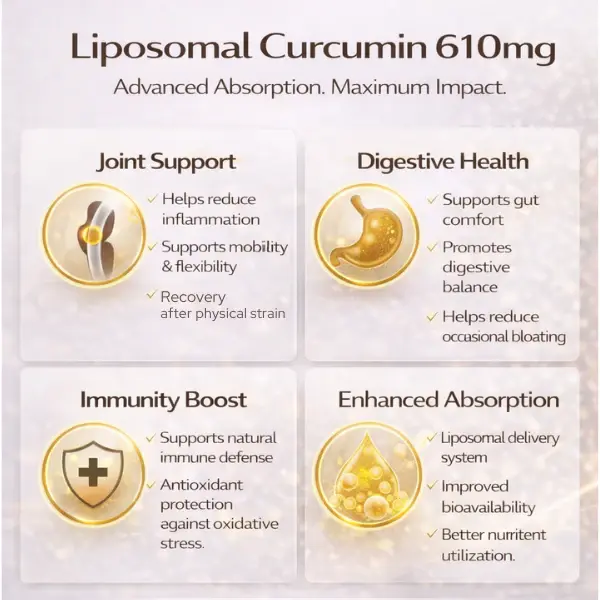
Curcumin doesn't always work well. There are some things in the lab that really help fight free radicals, keep neurons safe, and reduce swelling. This has been known for a long time. But these things are hard for the body to take in all the time, and water quickly breaks them down. That's why these homes aren't always good for real people. That doesn't happen with liposomal curcumin powder since the curcumin is in packages made of phospholipid bilayers. These link cell membranes together to keep the curcumin safe in the gut and make it easy for cells to take it in. [1][2][6] Hongda Phytochemistry is officially known as Shaanxi Hongda Phytochemistry Co., Ltd. In order to make liposomal curcumin powder, they use high-pressure microfluidic cutting technology along with phospholipids from non-GMO sunflower seeds. This is how things that are 100 to 200 nanometres across are made into very small spheres. At least eighty per cent of the boxes must be packed with food-safe ingredients. If something has at least 90%, it is safe for medicine. Now it is possible to make a raw material that is much better for your body than turmeric. How you use the powder is more important than how much you use. This book is about both of them.

Why Standard Curcumin Underperforms Before Liposomal Delivery Changes Everything?
In order to fully understand what Liposomal Curcumin Powder does, you must first understand why regular curcumin doesn't work. Curcumin's main issue is not its strength; in controlled in vitro settings, it consistently blocks NF-κB signalling pathways, removes reactive oxygen species, and interacts with several inflammation mediators. The issue is getting the medicine to where it needs to go. Curcumin is very attracted to fat, doesn't mix well with water at normal pH, and is quickly absorbed and broken down in the intestines before it can reach the bloodstream. Oral absorption tests on regular curcumin always show very low plasma amounts, even at gram-level doses. This means that there is a big difference between what the molecule can do and what it actually does in target tissue. Liposome encapsulation was created to fill that gap. It keeps curcumin from breaking down metabolically in the gut cavity and changes the absorption pathways to work better with lipid-based uptake pathways.1][2][6]
Water Insolubility and Why It Matters More Than It Sounds
Adding standard curcumin powder to a water-based vitamin or drink does not dissolve it; it instead clumps together, settles, and usually stays mostly whole as it goes through the digestive track. The issue is not with the way the formula looks; it's with how well it absorbs, and adding more carrier oil or black pepper extract won't fix it completely on a large scale.
First-Pass Metabolism and the Gut Wall Barrier
Even the small amount of normal curcumin that does dissolve in gut fluid is quickly joined together by intestinal enzymes before it can reach the portal circulation. This is why plasma curcumin levels after oral dosing stay low even when high doses are taken. By putting curcumin in lipid vesicles that can be taken up directly by intestinal cells through endocytosis and membrane fusion, liposomal curcumin powder skips a lot of this metabolic hurdle course.

Stability Under Acidic and Alkaline Conditions
Free curcumin breaks down in alkaline pH and oxidative conditions, which limits the time it can work in the digestive tract. Hongda's Liposomal Curcumin Powder has a phospholipid shell that keeps the vesicle intact in a pH range of 3.0 to 7.0. This range includes the more neutral environment of the intestines, where absorption takes place, as well as the acidic environment of the stomach.
What the Research Says About Liposomal Improvements?
Liposomal curcumin versions are more stable, bioavailable, and dissolve more quickly than regular curcumin powder. Preclinical studies have shown that the liver, spleen, and brain have much higher tissue concentrations of curcumin. These are the tissues that are most important for curcumin's well-known effects on inflammation, oxidative stress, and neurological support.2][3][6]
How Liposomal Curcumin Powder Performs Across Different Product Applications?
For as long as absorption isn't a problem with liposomal curcumin powder, formulators can start making goods based on what it can really do in healthy amounts. Researchers have found that curcumin can help with metabolic syndrome, neurodegeneration, osteoarthritis, heart health, and skin problems. To show that curcumin fights inflammation in more than one way, this type shows them. When you choose the right delivery method and recipe style for each use case, you start the real work of product design.
Joint Health and Inflammation-Focused Supplements
Curcumin's inhibition of NF-κB, cyclooxygenase-2, and related inflammatory mediators makes it a natural ingredient for joint health products, but clinical outcomes with standard curcumin have been inconsistent precisely because of bioavailability variation. Liposomal curcumin powder's more reliable absorption profile makes it the more credible technical choice for any product making evidence-informed inflammatory support claims.
Cognitive Health and the Blood-Brain Barrier
The lipophilic phospholipid coating on liposomal vesicles allows them to interact with the blood-brain barrier more effectively than hydrophilic compounds, which is why liposomal curcumin powder appears increasingly in premium nootropic and memory-support formulations targeting adults concerned about long-term brain health.
Functional Beverages and Acidic Drink Formats
Hongda's Liposomal Curcumin Powder is specifically verified to maintain stable electrostatic dispersion in pH ranges between 3.0 and 7.0, resisting particle aggregation and precipitation in the acidic environments common to health shots, sports drinks, and functional beverage bases where standard curcumin would simply settle out.2][4]
Topical and Cosmetic Applications
Liposomal curcumin powder's nanoencapsulated structure lends itself to topical cosmetic applications where improved skin-cell penetration and localized anti-inflammatory or antioxidant activity are the target outcomes, opening a product category entirely inaccessible to standard curcumin powder.
|
Application Area
|
Why Liposomal Curcumin Powder Fits
|
Key Formulation Note
|
|---|---|---|
|
Anti-inflammatory joint health
|
Elevated plasma and synovial tissue concentrations support NF-κB inhibition at the target site
|
Combine with omega-3 or collagen for multi-mechanism positioning
|
|
Cognitive and neuroprotective
|
Lipophilic coating facilitates blood-brain barrier crossing
|
Pair with phosphatidylserine or DHA in nootropic formulas
|
|
Metabolic and cardiovascular
|
Sustained release profile supports long-term antioxidant activity in vascular tissue
|
Works well in daily softgels or once-daily capsule formats
|
|
Skin and dermatological
|
Both oral and topical routes benefit from improved cellular uptake
|
Stable in acidic cosmetic bases; verify pH compatibility
|
|
Functional beverages
|
Stable Tyndall-effect microemulsion in pH 3.0–7.0, no sedimentation
|
Request reconstitution specifications from liposomal curcumin powder manufacturer
|
Formulation Best Practices That Determine How Well the Liposomes Actually Work?
Certain goods that say they have "liposomal curcumin" don't always really do. It's not just a mistake on the label—phospholipid powder and real bilayer vesicles enter differently. If someone buys liposomal performance but gets something more like a phospholipid complex, they paid for liposomal performance but got something more like a phospholipid complex. This problem is directly dealt with in Hongda Phytochemistry, which shares structural images from transmission electron microscopy along with HPLC data. For buyers, this shows proof that curcumin is inside bilayer vesicles and not just mixed with phospholipids. The Tyndall effect, which is how real colloidal solutions scatter light, is seen when the product is mixed with water. This shows that the structure of liposomes is real. When formulators make products with these claims, they should make sure that any supplier of liposomal curcumin powder meets this level of verification and ask for TEM images as a qualification requirement.
Verifying True Liposomal Structure Before Purchasing
If you want to buy liposomal curcumin powder, ask the company to show you TEM images and a Tyndall effect demonstration. Together, these two tests show that there are real bilayer vesicles and not just a mix of phospholipids and curcumin, which might look the same on paper but absorb very differently in real life.
Dosing Considerations Across Delivery Formats
Liposomal curcumin powder gets more active curcumin into the bloodstream than regular powder. This means that formulators can use lower total curcumin doses than they would for regular extracts. This makes the product cheaper and lowers the chance of going over the effective plasma concentrations.[1][5]
Reconstitution and Mixing Behavior in Beverage Applications
Hongda's powder is made using a low-temperature vacuum drying process that is designed to protect the membrane integrity. This means that when the powder is mixed with water, it quickly returns to a stable microemulsion state without sedimentation or residue. This is an important property for functional beverage manufacturers whose production lines can't handle unstable suspensions, making Hongda a reliable liposomal curcumin powder manufacturer.2][4]
Storage and Stability Requirements That Protect Active Content
For the full 24-month shelf life, liposomal curcumin powder should be kept in a sealed container away from light and at a temperature between 2°C and 25°C. This will protect the phospholipid integrity and curcumin content. Changing these conditions speeds up the breakdown of phospholipids and lowers the effectiveness of packaging before a lot gets to its final user.
Choosing a liposomal ingredient is only the first step. Before moving into large-scale production, it is worth comparing manufacturing technology, encapsulation efficiency, particle size consistency, and the technical documents a supplier can provide. Reviewing these details early can reduce formulation risks, shorten development time, and improve product performance after launch. If you need specification sheets, TEM images, HPLC reports, or advice on selecting the right grade of Liposomal Curcumin Powder for your application, you can contact Hongda Phytochemistry's technical team at duke@hongdaherb.com to discuss your formulation requirements and request evaluation samples before placing a commercial order.
Liposomal Curcumin Specifiction
|
No.
|
TEST ITEM
|
SPECIFICATION
|
RESULT
|
|||
|
1
|
Description
|
Yellow Powder
|
Conform
|
|||
|
2
|
Particle size (20 mesh)
|
≥90%
|
Conform
|
|||
|
3
|
Loss on drying
|
≤5.0%
|
2.33%
|
|||
|
4
|
Bulk Density
|
Measured value
|
368g/L
|
|||
|
5
|
Tapped Bulk Density
|
Measured value
|
721g/L
|
|||
|
6
|
Heavy Metals
|
Arsenic (As)
|
≤2.0ppm
|
Conform
|
||
|
Lead (Pb)
|
≤0.5ppm
|
Conform
|
||||
|
Mercury (Hg)
|
≤0.3ppm
|
Conform
|
||||
|
Cadmium (Cd)
|
≤0.3ppm
|
Conform
|
||||
|
7
|
Microbiological
|
Total plate count
|
≤10000cfu/g
|
10cu/g
|
||
|
Total molds and yeasts
|
≤1000cfu/g
|
10cfu/g
|
||||
|
Coliforms
|
≤10MPN/g
|
≤0.3MPN/g
|
||||
|
E.Coli
|
Negative/25g
|
Negative
|
||||
|
Salmonella
|
Negative/25g
|
Negative
|
||||
|
Staphylococcvs
|
Negative/25g
|
Negative
|
||||
|
8
|
Assay
|
Curcumin
|
70.0%±5%
|
71.6%
|
||
|
Phospholipids (NON-GMO)
|
15.0%±5%
|
12.9%
|
||||
|
Fatty Acids
|
15.0%±5%
|
13.8%
|
||||
|
Conclusion
|
Meet the in house standard.
|
|||||
Sourcing the Right Grade From the Right Liposomal Curcumin Powder Manufacturer
The performance gap between genuine pharmaceutical-grade liposomal curcumin powder and lower-quality alternatives is not visible on a basic COA and not recoverable through downstream formulation adjustments. Sourcing the correct grade from a qualified liposomal curcumin powder supplier from the beginning is the only reliable path to consistent product performance. Hongda Phytochemistry has operated as a leading liposomal curcumin powder manufacturer since establishing its phytochemistry operations in 2001, and its certification portfolio now spans cGMP, FSSC22000, ISO22000, ISO9001, Halal, Kosher, and EU and NOP organic certifications—the documentation stack that simplifies import compliance across the US, European, and Middle Eastern markets simultaneously. With more than 150 workshop technicians operating across a 20,000-square-meter facility and annual output capacity reaching approximately 3,000 tons, the company supports both small-scale OEM development runs and full commercial-volume production without the specification drift that comes from switching manufacturing partners mid-program.
Understanding the Food-Grade Versus Pharmaceutical-Grade Distinction
Food-grade Liposomal Curcumin Powder with encapsulation efficiency at or above 80% suits most dietary supplement and functional food applications, while the pharmaceutical-grade specification reaching 90% encapsulation efficiency is appropriate for products making stricter bioavailability claims or targeting clinical or quasi-pharmaceutical market positioning.
OEM and ODM Flexibility for Differentiated Product Lines
Hongda offers adjustable concentration, particle size, and solubility parameters as part of its OEM and ODM services, allowing supplement brands to build genuinely differentiated liposomal curcumin powder products rather than sourcing a generic formulation that every competitor can access identically.

Certifications That Open Export Markets
Halal, kosher, EU organic, and NOP organic certifications alongside cGMP and ISO22000 give buyers documentation covering the full range of religious, regulatory, and market-access requirements that multi-regional distribution programs encounter—removing certification gaps as a barrier to international launch.

Warehouse and Logistics Infrastructure
Hongda's 3,000-square-meter warehouse, organized into six dedicated and professionally sterilized storage zones covering plant extracts, vitamins, amino acids, and sample stock, supports consistent order fulfillment with the 3-to-5-day preparation window the company documents, reinforcing its capabilities as a liposomal curcumin powder supplier, rather than the open-ended lead times common among smaller brokers.
Conclusion
Liposomal curcumin powder delivers better results than standard curcumin meaningfully by solving the bioavailability problem at its root, and how formulators apply that advantage—across delivery format, dosing strategy, and verified sourcing—determines whether the technology's promise actually reaches the end consumer. Hongda Phytochemistry provides the technical documentation, certified manufacturing, and OEM flexibility to support that entire journey.
FAQ1. How does liposomal curcumin powder differ from standard curcumin extract?
It encapsulates curcumin within phospholipid bilayer vesicles (100–200 nm), bypassing digestive degradation and improving cellular uptake through membrane fusion.
2. What encapsulation efficiency should I expect from a quality product?
At least 80% for food-grade and at least 90% for pharmaceutical-grade liposomal curcumin powder.
3. Can liposomal curcumin powder be used in acidic beverages?
Yes, it maintains stable dispersion without aggregation or precipitation across pH 3.0–7.0.
4. How can I verify that a product is genuinely liposomal and not just phospholipid-blended curcumin?
Request TEM structural images and a Tyndall effect demonstration from your liposomal curcumin powder supplier before purchasing.
Partner With a Liposomal Curcumin Powder Manufacturer Who Can Prove It | HONGDA
Genuine liposomal curcumin powder performance starts with verifiable manufacturing. Hongda Phytochemistry provides TEM structural images, batch-specific HPLC reports, and encapsulation efficiency data alongside full certification documentation. — everything your quality team needs before committing to a formulation program. Email duke@hongdaherb.com with your target specification, grade, and volume, and Hongda's technical team will respond with a complete sample package and OEM/ODM options tailored to your product line.
References
1. Anand, P., Kunnumakkara, A.B., Newman, R.A., Aggarwal, B.B. (2007). "Bioavailability of curcumin: problems and promises." Molecular Pharmaceutics, 4(6), 807–818.
2. Zheng, B., McClements, D.J. (2020). "Formulation of more efficacious curcumin delivery systems using colloid science: Enhanced solubility, stability, and bioavailability." Molecules, 25(12), 2791.
3. Fu, Y.S., Chen, T.H., Weng, L., et al. (2021). "Pharmacological properties and underlying mechanisms of curcumin and prospects in medicinal potential." Biomedicine & Pharmacotherapy, 141, 111888.
4. Banerjee, P.G., et al. (2025). "A comprehensive review of enhanced bioavailability, nutraceutical efficacy, and superior manufacturing quality of Liposomal Curcumin." Acta Traditional Medicine.
5. Marczylo, T.H., Verschoyle, R.D., Cooke, D.N., et al. (2007). "Comparison of systemic availability of curcumin with that of curcumin formulated with phosphatidylcholine." Cancer Chemotherapy and Pharmacology, 60(2), 171–177.
6. Dei Cas, M., Ghidoni, R. (2019). "Dietary Curcumin: Correlation between Bioavailability and Health Potential." Nutrients, 11(9), 2147.


_1752046380392.webp)