



Why Supplement Brands Need a Stability Plan Before Launch
Hongda Gives Your Study a Strong Starting Point
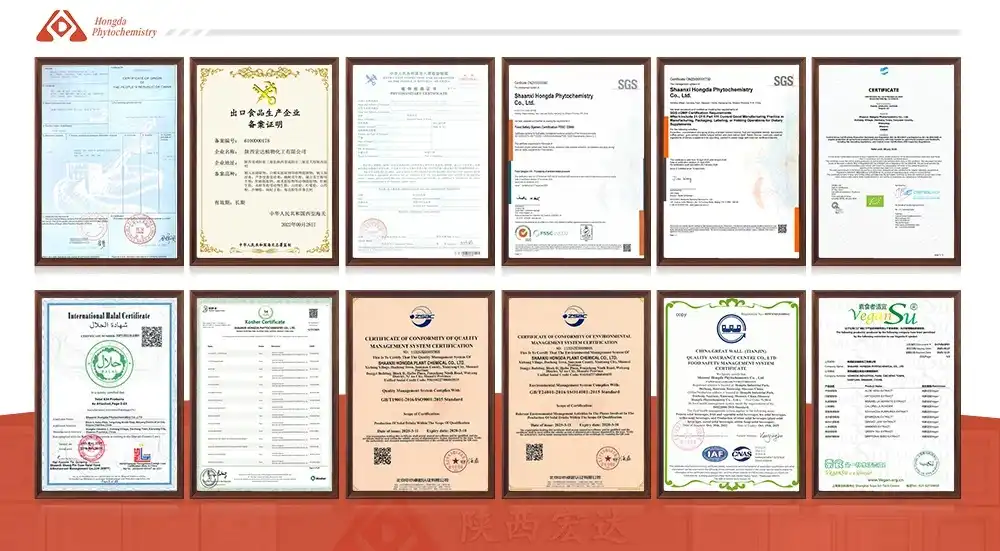
How important a stability study is depends on the things that were studied. Hongda Phytochemistry has more than ten production lines for liposomal iron powder. Each year, they can make up to 3,000 tons of liposomal iron powder by carefully cleaning and drying it. That implies the quantities that your brand tests may be produced in volume. All batches are tested for pesticides, bacteria, additives and moisture before shipping. It allows your squad to start over for the first time. To verify the quality of the batch, request documentation of certifications such as FSSC 22000, ISO 22000, ISO 9001, cGMP, FDA, halal, or kosher. When selecting a liposomal iron source, ask for the certificate of analysis and any stability data that is available. Then, base your technique on those numbers, not assumptions.
What Stability Really Means for a Liposomal Mineral
Stability isn't just one result; it's a group of promises. "The company wants to make sure that with liposomal iron powder, the iron content stays true to the label, the color stays the same, the powder stays loose, and the liposome structure stays the same so the delivery story still holds," she says. And every promise comes with conditions. Oxygen can change iron into its ferric form, and heat can stress the lipid layer. Moisture can change the texture and look of something. These promises are written down so that the study stays on track as testing starts. The small list of traits, each with a good range, gets rid of the normal problem of gathering a lot of numbers that no one can understand. This will also make it easy to talk to accountants, retailers, and legal experts in the future.[4]
Why Early Planning Protects Your Launch Date
Shelf life testing needs real time, and an accelerated six-month study can't be done in a week. Because of this, many companies miss launch windows because they start too late. If you plan ahead, you might have samples in chambers while pilot production is still going on, first data points while packaging is being done, and a rough idea of how long the product will last before the first order comes in. It also gives you time to act. There is still time to add desiccant or change the bag before the big launch if a pack format shows that moisture starts to build up after three months. Firms that see stability as an important project milestone instead of the final product launch move more quickly and with fewer label changes. Being disciplined pays off. Liposomes with iron powder in them
Designing the Study: Conditions, Time Points, and Samples
Choosing Storage Conditions That Match Your Markets
The place where the things are stored should be like the place where they will actually live. ICH Q1A (R2) is the most common scheme. It includes long-term storage at 25 °C and 60% relative humidity or 30 °C and 65% humidity, an intermediate scheme at 30 °C and 65% humidity, and fast storage for six months at 40 °C and 75% humidity. Many brands that sell in hot and humid places add +30 °C with 75%. Ask your liposomal ferric glycinate producer what conditions they have tested so that you can base your approach on what they already know. Hongda Phytochemistry can talk to technical experts to help you pick locations that are best for spreading plants in Europe, North America, or the tropics. This makes the claim that a liposomal iron supplier has a maximum shelf life sound a lot better than it really does.[1][2][3]
Setting Time Points and Sample Quantities
A sample is pulled at the start of long-term storage, then again at three, six, nine, twelve, eighteen, and twenty-four months, with faster pulls at zero, three, and six months. Differentiation between lots is part of the story that buyers and officials want to see, so use at least three lots if you can. It's important to carefully figure out how much of the sample there is. There must be enough liposomal iron powder in each pull for all tests, plus extra for repeats and a sample to look at side by side. Mark chambers, trays, and packs with the lot number, condition, and date of pull, and keep a simple log so that nothing gets lost when your schedule gets busy. At this point, careful cleanup gets rid of most of the data gaps that can change later results.
Testing in the Final Pack, Not Just in a Jar
What is the point of powder in a tightly sealed glass jar if it's not in a warehouse in a package or a plastic bottle? Adding liposomal iron powder to the same mix of packaging, closure, and desiccant that is going to be sold is the most useful study. This is true whether it's an aluminum-laminate sachet, an HDPE container with a desiccant canister, or a blister pack for finished capsules. Run two different pack forms next to each other and look at the data to see which one protects you better. One control sample to help separate the effects of the packaging from the effects of the substance in a locked, sealed container. In real life, this method also helps with making decisions about bag thickness, desiccant quantity, and carton design. So, the study is both a way to test how long something will last and a way to make packaging better.[1][3][4]
|
Study Type
|
Typical Condition
|
Typical Duration
|
Purpose
|
|---|---|---|---|
|
Long-term
|
25 °C / 60% RH or 30 °C / 65% RH
|
At least 12 months at submission, continuing to the claimed shelf life
|
Supports the shelf-life claim
|
|
Intermediate
|
30 °C / 65% RH
|
6 months
|
Added if accelerated data show change
|
|
Accelerated
|
40 °C / 75% RH
|
6 months
|
Stress test and provisional support
|
|
Hot, humid markets
|
30 °C / 75% RH
|
Per market plan
|
Reflects tropical distribution
|
Building your protocol now? Email duke@hongdaherb.com with your target markets, pack format, and finished-product type, and ask the Hongda team about sample quantities of liposomal iron powder for stability work.
Choosing the Tests That Actually Predict Shelf Life
Physical Tests: Appearance, Moisture, and Flow
The simplest tests are frequently the most illuminating. Color the record against a retained sample under identical lighting conditions each time. Note any clumping and estimate moisture by loss on drying or Karl Fischer titration. Most powders show the earliest indication of moisture development. Water activity is another indicator of availability of moisture for reactions. A simple flow or bulk density test may detect caking long before it has any effect on the operation of a filling line. Liposomal ferrous glycinate suppliers tend to change slowly, so a large jump is something to look at. Hongda Phytochemistry’s lab utilizes automated titrators and other equipment for routine testing. Brands may request the same settings in their technique to have consistent results between the supplier and an independent lab.
Chemical Tests: Iron Content and Oxidation State
Iron assay, usually by atomic absorption or ICP methods, will confirm that the mineral is still present at label strength, and a ferrous-to-ferric speciation test will show if iron has been migrating to its oxidized form. If you conduct both tests, you will have neither false alarms nor false comfort. Color may alter with no change in total iron. The peroxide value or any other oxidation marker of the lipid fraction is an index of shell aging. These data represent the chemical portion of a stability file of a liposomal iron powder. Utilize an established or at least validated technique for your matrix and utilize the same methodology throughout your study since a change in procedure might seem like a change in the product. A highly equipped laboratory offering liposomal ferrous glycinate might be helpful with procedure selection.[4][6]
Structure and Safety Tests: Size, Encapsulation, and Microbiology
It is a serious program, since its value is in its structure, and it is looked at over time. Rehydrate the powder and check the polydispersity and particle size to ensure that the vesicles have not aggregated. Whether such a technology exists, analyze encapsulation efficiency to see whether iron is staying inside the lipid shell. Microbiological tests yeast and mold, total plate count) show no growth due to moisture fluctuations. Heavy metal screening at the beginning and conclusion of the study serves as a safety anchor. Hongda Phytochemistry tests the contents, heavy metals, and microorganisms before mailing you a baseline, and your own subsequent testing validates whether the liposomal iron powder retains its profile for the whole shelf life.[4][5][6]
|
Attribute
|
Typical Method
|
Why It Matters
|
|---|---|---|
|
Appearance and colour
|
Visual check against retained sample
|
First sign of oxidation or moisture
|
|
Moisture
|
Loss on drying or Karl Fischer
|
Predicts caking and reactions
|
|
Iron content
|
Atomic absorption or ICP
|
Confirms label strength
|
|
Ferrous / ferric ratio
|
Colorimetric speciation
|
Explains shade change
|
|
Particle size and PDI
|
Light scattering after rehydration
|
Shows structural integrity
|
|
Microbiology
|
Plate counts
|
Confirms safety over time
|
Reading Results and Turning Them Into a Shelf-Life Claim
Setting Acceptance Criteria and Spotting Trends
Numbers are not judgments until compared to predetermined parameters. Prior to the first draw, determine the approval criteria for iron content, moisture, microbiological counts, size, and appearance, depending on your quality standards and supplier needs. Then plot a graph over time for each characteristic without reading each result in isolation. A slow rise that is always within easy reach sends an entirely different message than a flat line that suddenly shoots up. A simple regression may be used to estimate when a trend will meet a limit. This helps support the shelf life statistic on the label. Any out-of-trend findings should be reported and investigated. This easy approach helps build trust with your partners and convinces merchants that you care about your liposomal ferrous glycinate manufacturer promotion.
From Accelerated Data to a Provisional Shelf Life
Fast findings enable you to start while long-term data is still being gathered. When no significant change is shown after six months of accelerated data, a tentative shelf life of one to two years is often acceptable based on your quality policy and local regulations and confirmed when real-time data is obtained. Talk openly with your liposomal iron powder supplier about this strategy so that both parties know what results are uncertain and what findings are conclusive. Hongda Phytochemistry can provide batch papers and help to explain how our initial needs fit your acceptance limits. Set an initial cautious shelf life, then extend it if the data at 12 and 18 months suggest stability. The wording on labels and sales material is carefully selected to protect your brand, but it also offers your customers a clear expiry date.[1][2]
Using the Data to Improve Formulas, Packs, and Sales Stories
Stability data are also an advantage for marketing and growth. Research has shown which pack provides the greatest protection, which formula holds its color the longest, and what storage advice should be on the label. Sales teams will likely be able to respond to questions from distributors and retailers on summary facts, e.g., a short stability statement in a technical dossier. If the result is not ideal, it's design feedback. Change desiccant, change bag film, add an antioxidant, or change the mixing sequence for your finished blend and run a brief confirmatory trial. That loop makes the liposomal ferrous glycinate manufacturer a known part of your portfolio, so your brand can compete in countries where documentation and consistency are as crucial as the promises on the front of the box.
|
Observation
|
Likely Cause
|
Next Step
|
|---|---|---|
|
Moisture rising steadily
|
Pack leakage or too little desiccant
|
Upgrade barrier film and desiccant
|
|
Colour darkening, iron content stable
|
Partial ferrous-to-ferric conversion
|
Reduce headspace and oxygen exposure
|
|
Particle size growing
|
Vesicle aggregation
|
Review rehydration method and storage
|
|
Microbial count rising
|
Moisture ingress
|
Inspect seals and retest
|
Conclusion
A useful but not difficult stability program for a liposomal iron powder supplier. Take a good baseline from a trusted source. Specify storage conditions applicable to your markets. Test the finished pack and monitor a targeted panel of moisture, iron content, stage of oxidation, particle size and microbiological. Compare all result with the stated parameters. If you have no long-term data to support a longer shelf life, be conservative with your first estimate of shelf life. Shaanxi Hongda Phytochemistry Co., Ltd. has a 20,000 square meter factory, an SGS-standardized lab, rigorous pre-shipment testing and international certifications to help supplement brands build that evidence with confidence so every capsule and sachet you sell tells the same trustworthy story from the first production lot to the last day of shelf life.
FAQ
1. What storage conditions should I use for liposomal iron powder?
Long-term: 25 °C/60% RH or 30 °C/65% RH, plus accelerated: 40 °C/75% RH, adjusted to your markets.
2. How many batches should I include?
Three production lots are recommended where possible.
3. Which tests matter most?
Moisture, iron content, ferrous/ferric ratio, particle size, appearance, and microbiology.
4. Can accelerated data support a launch?
It can support a provisional shelf life, which long-term data then confirm.
Start Your Stability Plan | HONGDA
If your brand is ready to build a stability file you can trust, begin with a partner who tests before it ships. Shaanxi Hongda Phytochemistry Co., Ltd. offers liposomal iron powder supported by a modern factory, an SGS-standardized laboratory, ample inventory, and certifications that open doors in the United States and Europe. Tell us your target markets, pack format, and finished-product type, and our specialists will respond with baseline documentation, practical suggestions, and sample options. Whether you are a formulator, an OEM brand, or a distributor, start the conversation today and move toward launch with confidence. Write to duke@hongdaherb.com and let HONGDA help you plan the first pull.
References
1. International Council for Harmonisation. ICH Q1A(R2): Stability Testing of New Drug Substances and Products. 2003.
2. International Council for Harmonisation. ICH Q1E: Evaluation of Stability Data. 2003.
3. World Health Organization. Stability Testing of Active Pharmaceutical Ingredients and Finished Pharmaceutical Products. WHO Technical Report Series No. 953, Annex 2. 2009.
4. Grit M, Crommelin DJA. Chemical Stability of Liposomes: Implications for Their Physical Stability. Chemistry and Physics of Lipids. 1993;64(1-3):3-18.
5. Mozafari MR. Liposomes: An Overview of Manufacturing Techniques. Cellular and Molecular Biology Letters. 2005;10(4):711-719.
6. AOAC International. Official Methods of Analysis of AOAC International. 21st ed. Rockville, MD: AOAC International; 2019.