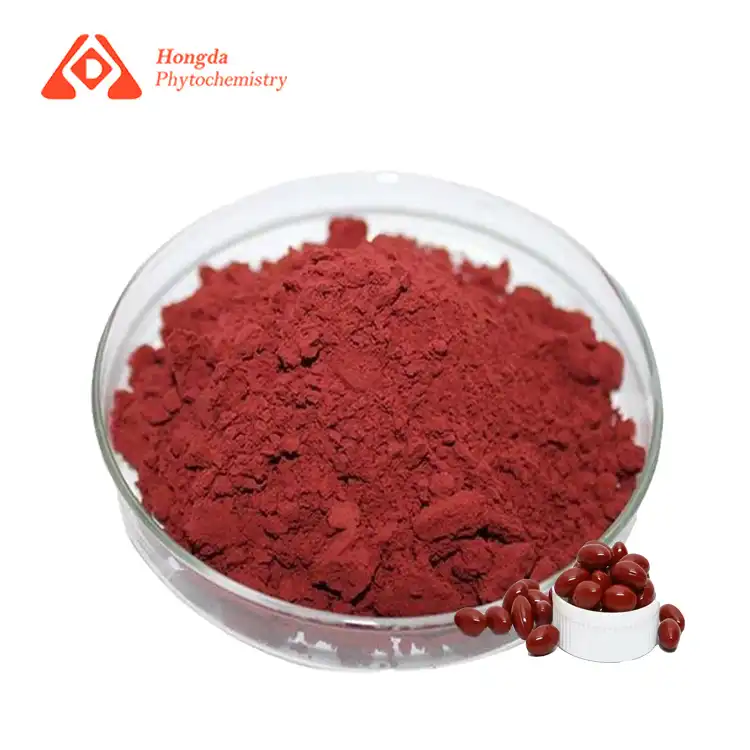


_1745918362135.webp)

People who buy plant-based drinks often ask themselves, "Should I get plain whole-leaf powder or lemon balm extract powder?" For more than 20 years, Shanghai Hongda Phytochemistry Co., Ltd. has helped people with things like this. Hongda is not a shop; it's a machine that makes food. You can see how much of the active ingredient is in each batch with HPLC. Normal extraction rates are used to make lemon balm extract powder. How they make money and how they work are all looked at in this study. Whole-leaf powder and extract powder from Melissa officinalis are used. People who buy flowers can then choose the type that works best for each situation.
Lemon Balm Extract Powder vs. Whole-Leaf Powder: The Core Difference
What Is Lemon Balm Extract Powder?
Melissa officinalis essential oils contain rosmarinic acid, vitamins, and chlorogenic acid. [1][2] A mix of water and ethanol is used to get them out. [4] Another step is to pour off the extra water, leaving a fine powder behind. It's much more medicinal to eat the green leaf than the powder. The plant has been hurt and fixed before. You can spell out the profit number as 10:1 or 50:1 for people who want to buy. 10–50 kg of raw lemon balm were used to make that much extract powder.
What Is Whole-Leaf Lemon Balm Powder?
For example, whole-leaf lemon balm powder is just water mixed with a dried Melissa officinalis leaf. The plant isn't doing well. The plant's fibres and the chemicals that make them smell good are saved. There is still some confusion about how much of each active sign is still there. When the taste of the whole herb is more important than how strong it is, one uses this method. It looks like an assortment of tea leaves.
Why does the distinction matter for buyers?
The people who make pill labels that tell you how much to take don't care about this difference. It tells them how many of each item they need for each serving size. Also, the plates will not change from one batch to the next. You can be sure that all of the batches of lemon balm extract powder are the same if you count how many key marks are on each one. How the plants grow, when the leaves are picked, and how old the leaves are all affect how full-leaf powder is made.
Hongda's Extraction Standard (10:1, 50:1)
Two different amounts of lemon balm extract powder are made by Hongda Phytochemistry. These are 10:1 and 1:1. People can choose the amount that works best for them and their food this way. Each batch of raw lemon balm has been checked for germs, heavy metals, and chemical waste. This is great for brands that need ready-to-use raw products for a small market.
Comparing Potency: Rosmarinic Acid Content and Bioactivity
Rosmarinic Acid Levels in Extract vs. Whole Leaf
A lot of research has been done on the chemical rosmarinic acid, which is found in lemon balm. Most of the time, this is also the best way to measure how strong different products are. It has been found that dried lemon balm leaf has a natural range of rosmarinic acid amounts. But tests in the lab have shown that commercial dried leaf material always has a lower amount of rosmarinic acid than commercial lemon balm extract powder. This is the main reason formulators use Lemon Balm Extract Powder when they need to show on the label that a product is strong in a way that is true.
Flavonoid and Chlorogenic Acid Profile
Rosmarinic acid and chlorogenic acid are some of the antioxidants that are found in the lemon balm drink, Lemon Balm Extract Powder. [5] These chemicals come from the fact that people have used this plant for a long time to help them feel calm and clear-headed. This is because there was no step to combine the chemicals in whole-leaf powder, so the amounts change more and are less stable. If you want to show that something has antioxidant power, extract powder is a more level and uniform way to do it.
Why Does Standardization Improve Consistency?
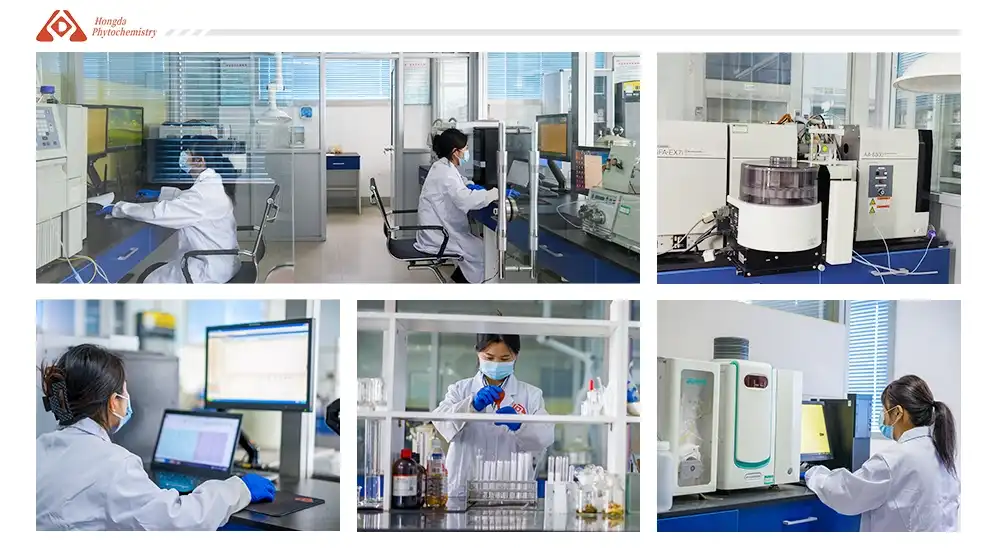
Industrial goods are steady because they are standardized, but farming goods are not. With HPLC, gas chromatography, and spectrophotometry, Hongda Phytochemistry checks every batch of lemon balm extract powder in its own SGS-approved lab. When they buy something, they get a proof of analysis that says the extraction ratio and the presence of key chemicals. This is something that whole-leaf sellers who don't have their own testing labs often can't offer.
| Attribute | Lemon Balm Extract Powder | Whole-Leaf Lemon Balm Powder |
|---|---|---|
| Processing method | Water/ethanol extraction, then dried | Dried leaf, milled directly |
| Common ratios | 10:1, 50:1 | Not applicable (whole herb) |
| Active compound density | Higher, standardizable | Lower, naturally variable |
| Typical use case | Supplements, standardized formulas, cosmetics | Tea blends, whole-food style products |
| Batch-to-batch consistency | High, verified by HPLC | Depends on harvest and origin |
Functional Applications Across Industries
Nutraceutical and Supplement Use
People often make pills, tablets, and mixes of powders from lemon balm extract powder to help them relax, sleep better, and concentrate. Passionflower, valerian, and chamomile are some plants that help relieve stress, which go well with this one because they all have a lot of rosmarinic acid and flavonoids. There is still the same amount of strength in each pill.
Food and Beverage Applications
Lemon balm tastes like lemon and goes well with fruits and herbs in teas, drinks, and baked goods. It has more of it in every gram when you grind it up. It tastes more like mint and lemon. A lot of people make these drinks because they're easy and don't need many things. Functional beverage formulations and botanical compositions are also supported in patented applications involving lemon balm extracts[6].
Cosmetic and Personal Care Use
Rosmarinic acid and vitamins that are good for you are found in skin care items that make you feel calm. These things help skin cells deal with the stress of daily life. This is another spot where beauty experts pick the extract form. This is because salt-free extract powder mixes well with water-based makeup bases, while raw leaf powder does not.
Pharmaceutical Raw Material Applications
In the drug business, standardized lemon balm juice is used to make medicines that improve nerve function and break down food. [3] Active signs are always present in people, not because they want to be, but because that's how things work.
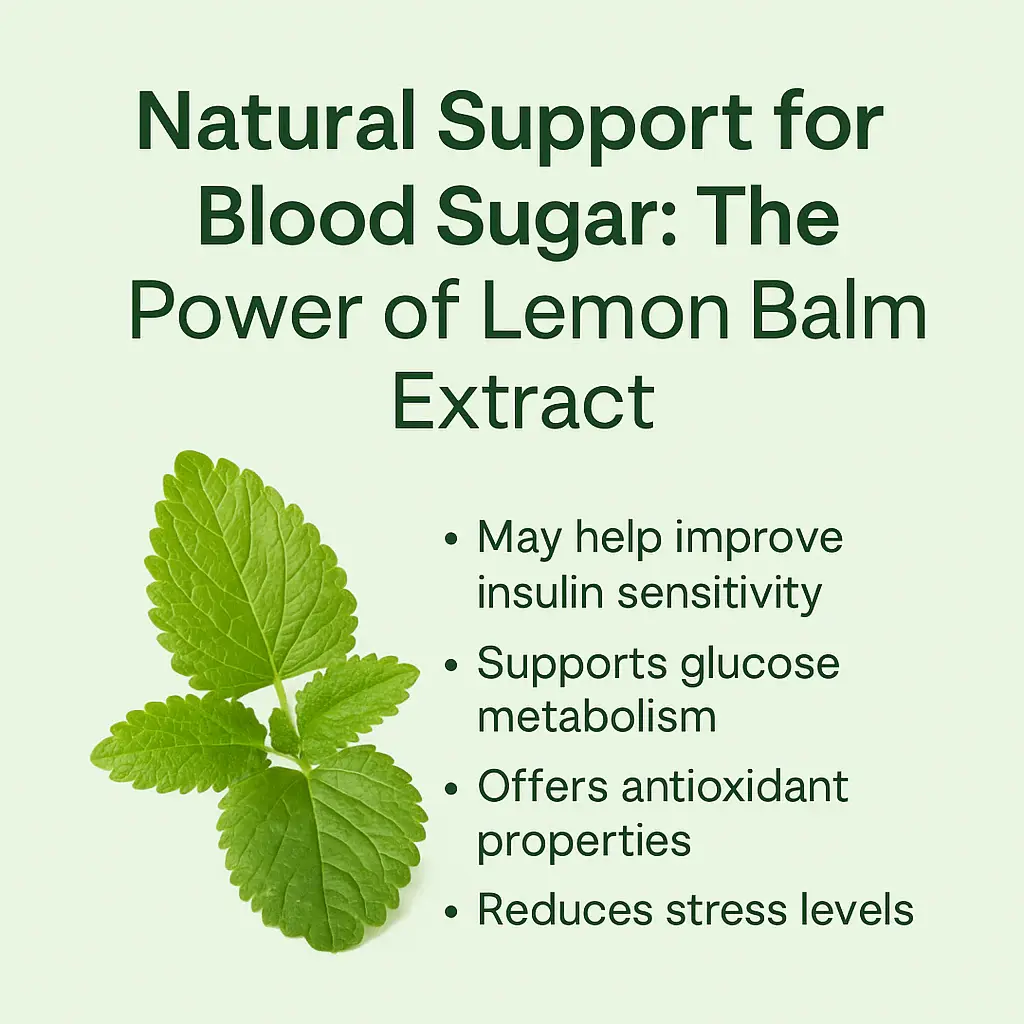
Sourcing Considerations: Choosing a Lemon Balm Leaf Powder Supplier
Quality Control and Testing Protocols
Not every business that sells lemon balm leaf powder tests it the same way. Before picking a seller, buyers should find out what tests are done in-house and what are done by outside companies. They should also find out if heavy metal, germ, and pesticide residue screening happens before or after extraction. If the service is in charge of the whole process, from getting the raw leaves to packing them, they can usually make more reliable claims about the requirements.
Certifications That Matter
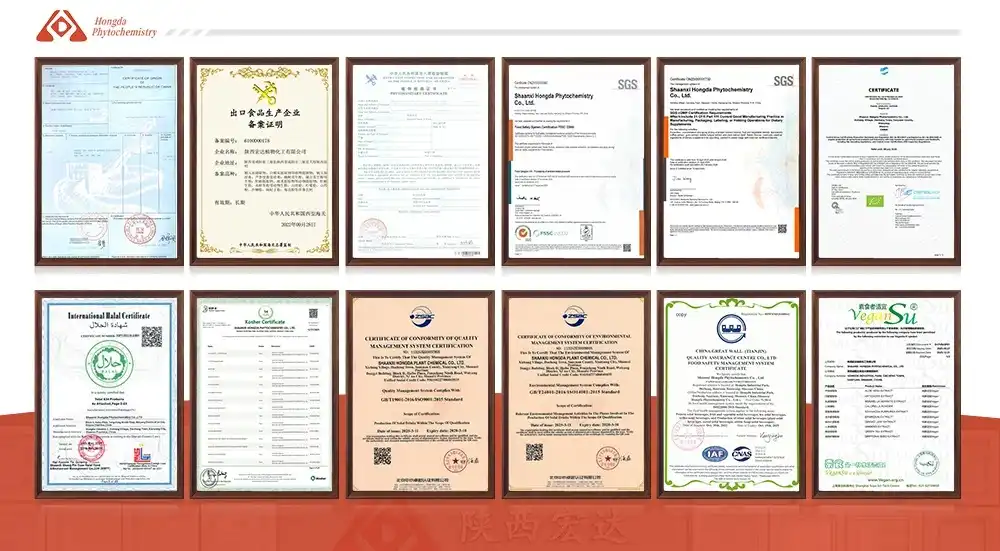
Looking at their licenses is one of the fastest ways to find out how reliable a company is as a lemon balm leaf powder supplier that sells lemon balm leaf powder without having to go to the plant. Check for Kosher, Halal, BRC, FDA, ISO9001, and ISO22000 standards at the very least. You should also look for organic approval if your finished product is going to be sold under a clean name or as an organic additive.
Organic Lemon Balm Powder Supplier Standards
More and more companies in the EU and North America that sell organic products need a supplier of organic lemon balm powder that can show the full chain of custody, from the farm to the finished powder. A company that sells organic lemon balm powder should be able to show you organic papers that show how the powder was made and how the plants were grown.
Supply Chain Reliability
Last, check to see how reliable the service is. A provider is much less likely to leave a production line waiting for raw materials if they have a marked building and enough stock on hand. This is especially important for lemon balm, since it's only picked once a year, and if a seller doesn't keep enough on hand between harvests, there may be shortages.
If you need detailed specifications, COA documents, or sample support for formulation testing, you can directly contact our technical team at duke@hongdaherb.com for fast assistance and product guidance.
Hongda Phytochemistry Lemon Balm Extract Powder – Product Specification
|
Item
|
Specification
|
Result
|
Method
|
|
Appearance
|
Brown Powder
|
Complies
|
Visual
|
|
Odor
|
Characteristic
|
Complies
|
Organoleptic
|
|
Taste
|
Characteristic
|
Complies
|
Organoleptic
|
|
Drying Method
|
Vacuum drying
|
Complies
|
/
|
|
Loss on Drying
|
≤10.0%
|
4.30%
|
TQ-104(105°C/2h)
|
|
Ash (Sulphated Ash)
|
≤10.0%
|
5.56%
|
TQ-104(525°C/3h)
|
|
Particle Size
|
NLT 100% Through 80 mesh
|
Complies
|
AOAC973.03(TQ_106)
|
|
Total Heavy Metals
|
≤10ppm
|
Complies
|
ICP/MS AOAC 993.14
|
|
Lead(Pb)
|
≤1ppm
|
Complies
|
ICP/MS AOAC 993.14
|
|
Arsenic(As)
|
≤1ppm
|
Complies
|
ICP/MS AOAC 993.14
|
|
Cadmium (Cd)
|
≤1ppm
|
Complies
|
ICP/MS AOAC 993.14
|
|
Mercury(Hg)
|
≤0.05ppm
|
Complies
|
ICP/MS AOAC 993.14
|
|
Total Plate Count
|
≤10,000cfu/g
|
5000cfu/g
|
AOAC 996. 23
|
|
Total Yeast & Mold
|
≤1,000cfu/g
|
100cfu/g
|
(BAM) 7th Ed.
|
|
E.Coli
|
Negative
|
Negative
|
USP33,NF28,2010
|
|
Salmonella
|
Negative
|
Negative
|
USP33,NF28,2010
|
|
Staphylococcus
|
Negative
|
Negative
|
USP33,NF28,2010
|
|
Conclusion
|
The product meet the testing requirements
|
||
Why Manufacturers Choose Hongda Phytochemistry?
Vertical Integration From Planting to Extraction
About 20,000 square meters of land are used by the Shaanxi Hongda Phytochemistry Co., Ltd., which has been around since 2001. There are more than ten current production lines and cleaning workshops that are 100,000 times cleaner. The company grows its herbs in three different places and works with professional agronomists to keep track of each batch of lemon balm extract powder, from the raw materials it uses to the places where they were grown. People who buy this can see the whole supply line instead of just getting a standard product.
In-House SGS-Standardized Laboratory
He set up an SGS-standard lab with more than twenty professor-level R&D and testing staff with the help of university teachers. A lot of different types of lab equipment are there, such as automatic titrators, spectrophotometers, gas chromatographs, and high-performance liquid and gas chromatographs. So, every batch of lemon balm extract powder that leaves the building is checked for heavy metals, bacteria, chemical residue, and the amount of ingredients that are in it.
Global Certifications and Export Readiness
From 2001 to 2024, Hongda got certifications for Halal, Kosher, BRC, FDA, and organic products. It also became a national high-tech company and got a license to make food, feed additives, and other things. In 2025, the business got more national patents and organic certifications from cGMP, FSSC22000, SC, ISO22000, ISO9001, and EU/NOP. These standards help buyers when they send things that have been made into limited markets in the US and Europe.
Flexible Packaging and Private Label Support
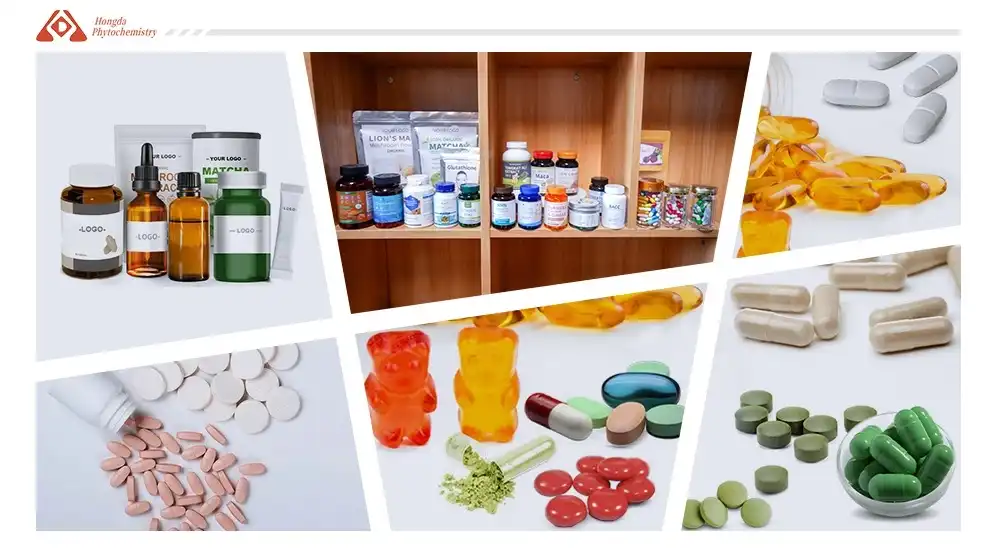
The company (organic lemon balm powder supplier) has a building that is 3,000 square meters and is split into six storage areas. It can make about 3,000 tonnes of goods every year. In other words, Hongda can handle both big contracts and small test orders. For private label projects, they can change the mix and package specs.
Conclusion
Choosing between lemon balm extract powder and whole-leaf powder ultimately comes down to whether your formulation needs standardized, verifiable potency or a whole-herb profile. For most supplement, cosmetic, and pharmaceutical raw material applications, extract powder offers the consistency modern manufacturing demands. Backed by SGS-standardized testing, full traceability, and 2025's newest cGMP and organic certifications, Shaanxi Hongda Phytochemistry Co., Ltd. is positioned to supply that consistency at scale—reach out today to request specifications and samples.
FAQ
1. What is the difference between lemon balm extract powder and whole-leaf powder?
Extract powder is concentrated from raw leaf through a water or ethanol extraction process, giving it a higher and more consistent level of active compounds than whole-leaf powder, which is simply dried and milled leaves.
2. What extraction ratios does Hongda offer for lemon balm extract powder?
Hongda produces Lemon Balm Extract Powder at both 10:1 and 50:1 ratios, allowing buyers to select the concentration that best fits their formulation strength.
3. Is Lemon Balm Extract Powder water-soluble?
Yes, Hongda's Lemon Balm Extract Powder is water-soluble, which makes it suitable for beverages, cosmetic formulations, and easily dispersible supplement blends.
4. What certifications should I look for from a lemon balm leaf powder supplier?
At minimum, look for Kosher, Halal, BRC, FDA, ISO9001, and ISO22000 certification, plus organic certification if your product targets the organic supplement category.
Get a Quote on Lemon Balm Extract Powder | HONGDA
If you are evaluating suppliers for Lemon Balm Extract Powder — whether you need a documented organic lemon balm powder supplier for a clean-label launch or a high-volume 50:1 extract for an established formula — Hongda Phytochemistry can provide specification sheets, certificates of analysis, and sample quantities for internal testing. With over two decades of extraction experience, an in-house SGS-standardized lab, and 2025's newest cGMP and organic certifications, our team is ready to support your next production run. Contact us directly at duke@hongdaherb.com to start the conversation and request your quote today.
References
1. Draginic, N. et al. Extraction and Quantification of Rosmarinic Acid in Lemon Balm (Melissa officinalis L.), LUP Student Papers Repository.
2. Examine.com Research Team. Lemon Balm (Melissa officinalis): Benefits, Dosage, and Safety Evidence Review.
3. European Medicines Agency, Committee on Herbal Medicinal Products (HMPC). Community Herbal Monograph on Melissa officinalis L., folium.
4. Subcritical Water Extraction of Rosmarinic Acid from Lemon Balm (Melissa officinalis L.) and Its Effect on Plant Cell Wall Constituents, Molecules/MDPI Journal.
5. Rosmarinic Acid and Melissa officinalis Extracts: Differential Effects on Glioblastoma Cell Lines, National Center for Biotechnology Information (PMC).
6. United States Patent and Trademark Office. Food Compositions Comprising Lemon Balm Extracts, Patent Specification Document.
_1754906006438.jpg)