

_1745918362135.webp)

Why Choose Lemon Balm Extract Powder for Calming Formulations?
Formulators are using lemon balm extract powder more and more because it is a stable plant that helps people keep their health in check. People who buy things now value Hongda Phytochemistry more than any other company. Shaanxi Hongda Phytochemistry Co., Ltd. has grown from a small company that processed plants in the area to a well-known company that makes natural plant products all over the world. People know that the lemon balm extract powder stays strong, has a clean taste, and can be bought in large quantities for a long time. This extract is made from Melissa officinalis leaves that were grown with great care and are handled with strict quality controls. It is steady and easy to mix. It has a lot of melissic acid, rosmarinic acid, chlorogenic acid, vitamins, and chlorogenic acid. There are many things that make Hongda's extract special. This piece goes over how its main ingredients work, how it can be used in current recipes, and why the company is a long-term source for companies that make goods that calm, help with sleep, and ease stress.
Lemon Balm Extract Powder: A Trusted Calming Botanical from Shaanxi Hongda Phytochemistry
A Legacy of Botanical Extraction Since 2001
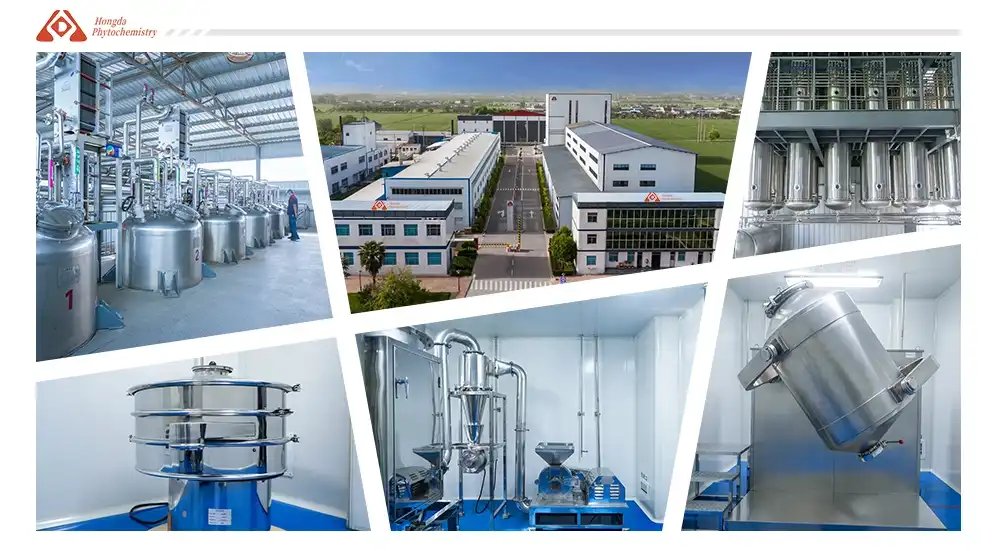
The Shaanxi Hongda Phytochemistry Co., Ltd. was established in 2001 and has been researching and developing the science of natural plant extraction for over twenty years. Before lemon balm became a popular way to relax, the business built its name. It has more than ten modern production lines in a building that is about 20,000 square meters in size. It's important to have that much experience because lemon balm extract powder is a sensitive plant extract that needs to be handled in a certain way and at a certain temperature so that each batch keeps its lemony smell and bioactive chemical profile.
Why Are Formulators Turning to Lemon Balm?
More people want lemon balm extract powder because it is gentle, made from plants, and helps keep the nervous system in balance and helps you sleep well. Instead of being made in a lab, lemon balm has been used for a long time. More and more research is being done on rosmarinic acid and related polyphenols. The extract is easy to mix into pills, tablets, powders, and drinks without making other flavors taste too strong. This makes it a good addition to lines of products that help people deal with worry and sleep issues that are aimed at health-conscious people all over the world. It's easy for marketing teams to tell a visual story because it smells like lemon and mint. This helps new supplements stand out on tables that are already full of supplements.[1][4][6]
Positioned for the Global Calming Ingredients Market
In North America, Europe, and Asia, the market for drugs that help you sleep and calm down is moving up. Buyers need a partner in production who can make more goods without lowering the quality. The Shaanxi Hongda Phytochemistry Co., Ltd. employs 500 professionals and each year produces around 3,000 tons of lemon balm extract powder. They can work with both small formulators and big nutrition brands that need a reliable source for lemon balm extract powder and know they will get orders back.[5]
Lemon Balm Extract Specification
|
Item
|
Specification
|
Result
|
Method
|
|
Appearance
|
Brown Powder
|
Complies
|
Visual
|
|
Odor
|
Characteristic
|
Complies
|
Organoleptic
|
|
Taste
|
Characteristic
|
Complies
|
Organoleptic
|
|
Drying Method
|
Vacuum drying
|
Complies
|
/
|
|
Loss on Drying
|
≤10.0%
|
4.30%
|
TQ-104(105°C/2h)
|
|
Ash (Sulphated Ash)
|
≤10.0%
|
5.56%
|
TQ-104(525°C/3h)
|
|
Particle Size
|
NLT 100% Through 80 mesh
|
Complies
|
AOAC973.03(TQ_106)
|
|
Total Heavy Metals
|
≤10ppm
|
Complies
|
ICP/MS AOAC 993.14
|
|
Lead(Pb)
|
≤1ppm
|
Complies
|
ICP/MS AOAC 993.14
|
|
Arsenic(As)
|
≤1ppm
|
Complies
|
ICP/MS AOAC 993.14
|
|
Cadmium (Cd)
|
≤1ppm
|
Complies
|
ICP/MS AOAC 993.14
|
|
Mercury(Hg)
|
≤0.05ppm
|
Complies
|
ICP/MS AOAC 993.14
|
|
Total Plate Count
|
≤10,000cfu/g
|
5000cfu/g
|
AOAC996. 23
|
|
Total Yeast & Mold
|
≤1,000cfu/g
|
100cfu/g
|
(BAM) 7th Ed.
|
|
E.Coli
|
Negative
|
Negative
|
USP33,NF28,2010
|
|
Salmonella
|
Negative
|
Negative
|
USP33,NF28,2010
|
|
Staphylococcus
|
Negative
|
Negative
|
USP33,NF28,2010
|
|
Conclusion
|
The product meet the testing requirements
|
||
What Sets Hongda's Lemon Balm Extract Powder Apart?Advanced Extraction and Purification Technology
Hongda's production lines combine 100,000-level cleaning workshops with technology created with university research partners. This gives the company a number of national patents for extraction technologies. In the case of lemon balm extract powder, this means using kinder methods of processing that keep volatile aromatic chemicals safe while increasing the amount of rosmarinic acid and flavonoids. The end result is a fine, uniform powder that smells like fresh lemons and is instantly recognizable as a sign of quality by both formulators and end users.
Rigorous Quality Testing Before Every Shipment
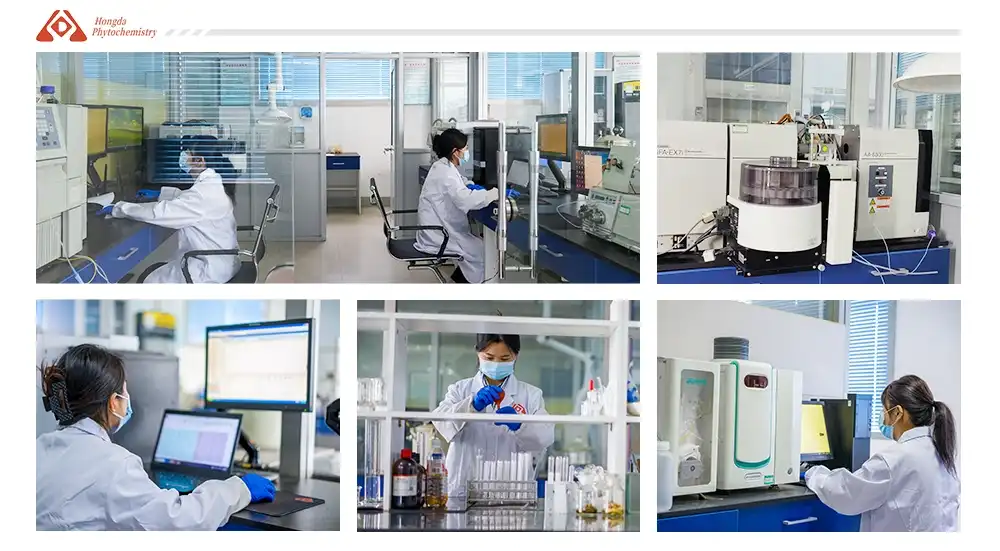
It was set up with the help of university teachers and is run by more than twenty researchers and testers at the professor level. Every batch of lemon balm extract powder goes through Shaanxi Hongda's SGS-certified lab. With the help of high-performance liquid chromatographs, gas chromatographs, spectrophotometers, and atomic absorption spectrophotometers, the lab checks all shipments before they leave the building for heavy metals, microbial safety, active chemical levels, and pesticide residues. This shows buyers from other countries that you are consistent in writing.
Certifications That Open Doors to US and EU Markets
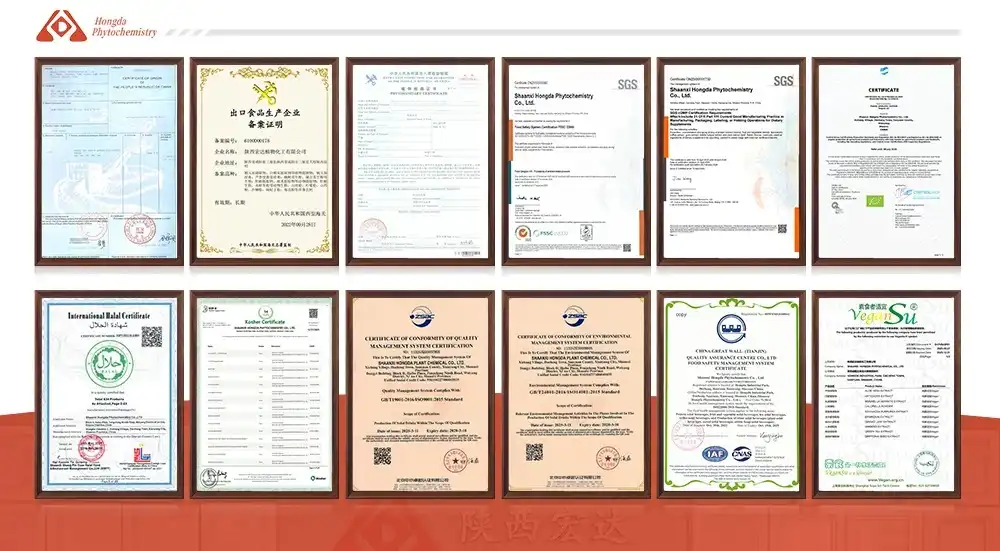
If someone wants to sell lemon balm extract powder in a controlled market, they need to get it from a source that has good paperwork and good products. To make food and feed products, Shaanxi Hongda has had a license since 2001. They are approved by cGMP, FSSC22000, ISO9001, ISO22000, FDA, Halal, Kosher, and EU/NOP Organic. As late as 2025, some of these qualifications were gained. They let formulators in North America and Europe know that every package meets the safety standards that their own officials need, so they can source it with trust. This is done without the delays that often happen when working with suppliers who aren't as well-documented.[5]
Reliable Inventory and On-Time Delivery
Having a steady supply is just as important as having good chemicals. There are six different storage rooms in the 3,000-square-meter building at Shaanxi Hongda. Plant extracts, like Lemon Balm Extract Powder, are kept in climate-controlled rooms that are supervised by people who know how to keep things clean. Because of how well the company organizes its stock, it can quickly fill large or repeat orders. This helps supplement brands that need to get their goods to market on time, even though lead times aren't always clear.
For formulators evaluating specifications, sampling options, or OEM cooperation, you can directly contact Shaanxi Hongda Phytochemistry at duke@hongdaherb.com to receive technical documents, pricing details, and application guidance.
Key Active Compounds Behind the Calming EffectRosmarinic Acid and Its Role in Nervous System Support
It is the rosmarinic acid in lemon balm that makes it known for being calming. One of the main parts of Hongda's Lemon Balm Extract Powder is also this herb. Rosmarinic acid has been studied to find out how it works as an antioxidant and how it changes nerve pathways that are linked to relaxation. Formulators can see how well their products work by measuring the amount of rosmarinic acid in them. Customers who want to know how well vitamins that help with sleep and stress work can also see this.[2][3]
Chlorogenic Acid and Antioxidant Synergy
Along with rosmarinic acid, chlorogenic acid also makes the product a better source of antioxidants. A lot of research has been done on this chemical to find out how well it can fight reactive stress. Instead of competing with the relaxing tannins in Lemon Balm Extract Powder, it works with them. This gives formulators a more complete plant ingredient than single-compound isolates do.
Flavonoids and Melissic Acid Contributions
Last but not least, flavonoids and melissic acid are the two active substances in the lemon balm leaf powder extract lemon balm leaf powder supplierr. They make the plant smell better and work better as an antioxidant. The rosmarinic and chlorogenic acids in lemon balm extract powder make it work well not only in pills and tablets but also in liquids and drinks, where it's important that the flavour stays the same and the compounds dissolve well. Last but not least, flavonoids and melissic acid are the two active substances in the lemon balm leaf powder extract lemon balm leaf powder supplierr. They make the plant smell better and work better as an antioxidant. The rosmarinic and chlorogenic acids in lemon balm extract powder make it work well not only in pills and tablets but also in drinks and liquids, where it's important for the flavour to stay the same and for compounds to dissolve well.
Standardization for Consistent Potency
Because the amounts of active compounds can be different from one raw lemon balm leaf harvest to the next, Hongda makes sure that its lemon balm extract powder meets certain standards. For your reference, these standards are summed up below.
| Active Compound | Typical Role in Formulation |
|---|---|
| Rosmarinic Acid | Primary marker compound; supports calm, balanced nervous system response |
| Chlorogenic Acid | Antioxidant support complements the extract's polyphenol profile |
| Flavonoids | Contribute aroma stability and broad-spectrum antioxidant activity |
| Melissic Acid | Reinforces the extract's characteristic lemon-mint sensory profile |
Compound roles summarized from Hongda Phytochemistry product documentation for Lemon Balm Extract Powder.
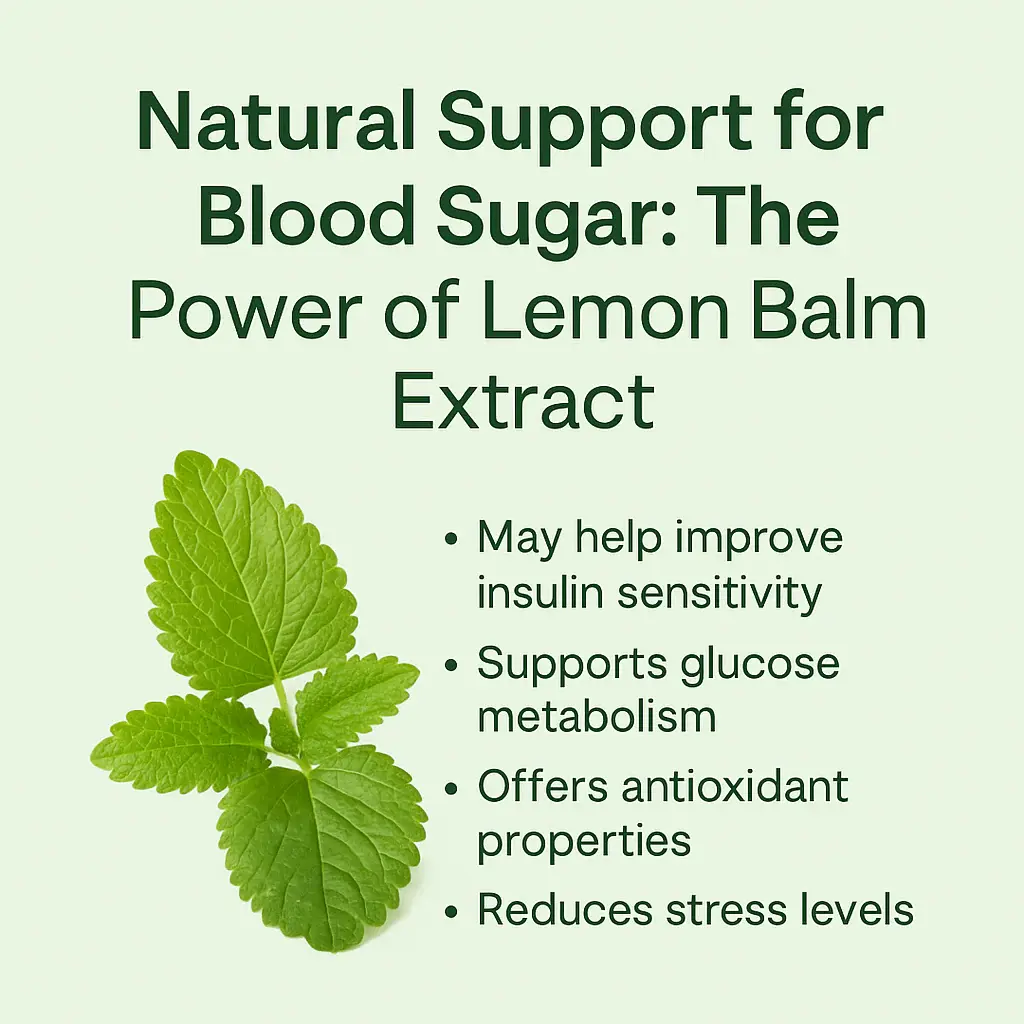
Formulation Applications for Lemon Balm Extract Powder
Dietary Supplements and Nootropic Blends
It's in many pills and tablets that claim to help you relax, remember things, and handle stress. It works better when you add plants like chamomile, ashwagandha, and L-theanine. It is often taken with nootropics and adaptogens because of this. This powder has a light flavour and doesn't stick or split when mixed into powder mixes.
Functional Beverages and Sleep-Support Teas
This powder made from lemon balm works well in pills, ready-to-drink rest shots, and tea mixes for the evening. Because it smells like lemon, it goes well with chamomile, valerian, and passionflower. Now, people who make drinks can also make sleep aids that taste good and have the right amount of chemicals from plants to work.
Cosmetic and Personal Care Formulations
Organic lemon balm powder, organic lemon balm powder supplier, is also liked by beauty formulators who are making lines of skin care products that relax, masks that calm, and personal care products that work like aromatherapy because it has vitamins. When companies sell goods to help with stress and self-care, they often look for ingredient stories that link health on the inside with health on the outside. Because lemon balm has two different names, it works well for this type of cross-category product story, from calming serums to bath and body products sold to help people wind down in the evening.
OEM and Private Label Opportunities
Brands can get help from Shaanxi Hongda Phytochemistry Co., Ltd. at any point in the development process, from improving formulas to making OEM labels and packaging. This means that smaller brands don't have to build their own factories in order to get finished lemon balm extract powder goods on the market.
Sourcing, Certifications, and Why Buyers Choose Hongda as a Lemon Balm Leaf Powder Supplier?
Traceable Raw Material Sourcing
Shaanxi Hongda has three specific planting bases for high mountain green tea, Sophora japonica bean, and Chinese medicine materials. These planting bases are watched over by professional agronomists who keep track of how the plants are grown from seed to harvest. When it comes to lemon balm, the same traceability principles are used, but the raw leaves are chosen from screened growing partners and inspected before being processed. This gives buyers confidence when they need a documented, traceable supplier of lemon balm leaf powder for regulated finished products sold in markets that need to know where their ingredients come from.
International Certifications and Compliance
People who want to buy organic lemon balm powder often base their choice on how well-known the company is. In 2025, Shaanxi Hongda got organic approvals from both the EU and the NOP. The company is serious about following the rules and isn't just trying to get one certification. These, along with their cGMP, ISO22000, and FSSC22000 certifications, show that. For brands that want to work with sellers for a long time and not just buy one thing, this is important.
Serving as a Trusted Organic Lemon Balm Powder Supplier
Here is a list of common product specs that buyers can expect when they buy Lemon Balm Extract Powder from Shaanxi Hongda. This list can be used as a quick reference while evaluating suppliers and planning formulations.
| Specification | Typical Value |
|---|---|
| Botanical Source | Melissa officinalis (lemon balm leaf) |
| Appearance | Fine powder, light brown to yellow-brown, lemon-scented |
| Extraction Ratio | Available in standard and concentrated ratios upon request |
| Testing Parameters | Pesticide residue, moisture, heavy metals, microbial load |
| Certifications | cGMP, ISO9001, ISO22000, EU/NOP Organic, Halal, Kosher |
| Packaging | Custom bulk and retail-ready packaging with OEM label options |
Specification ranges provided for general reference; contact Hongda for a full certificate of analysis.
Conclusion
Lemon Balm Extract Powder from Shaanxi Hongda Phytochemistry Co., Ltd. combines a well-documented compound profile with the manufacturing scale, certifications, and traceability that international formulators require. From rosmarinic acid's calming reputation to flexible application across supplements, beverages, and cosmetics, this extract offers a dependable foundation for stress-support product development. Backed by over two decades of extraction expertise and a growing certification portfolio, Hongda stands ready to support your next formulation. [1][6] Reach out today to request samples, specifications, or pricing.
FAQ
1. What is Lemon Balm Extract Powder made from?
It is produced from Melissa officinalis leaves, standardized for rosmarinic acid, chlorogenic acid, flavonoids, and melissic acid content.
2. Is Hongda's Lemon Balm Extract Powder organic certified?
Yes, Shaanxi Hongda holds EU and NOP Organic certification alongside cGMP, ISO9001, and ISO22000 credentials.
3. What applications suit Lemon Balm Extract Powder best?
It works well in dietary supplements, functional beverages, sleep-support teas, and calming cosmetic formulations.
4. Can Shaanxi Hongda provide OEM or private label services?
Yes, the company offers formula optimization, OEM packaging, and label design for finished Lemon Balm Extract Powder products.
Partner With a Trusted Lemon Balm Extract Powder Supplier | HONGDA
Ready to source premium Lemon Balm Extract Powder for your next formulation? Shaanxi Hongda Phytochemistry Co., Ltd. combines rigorous testing, internationally recognized certifications, and dependable production capacity to support brands of every size. Whether you need bulk raw material, OEM development, or ongoing supply for an established product line, our technical team is ready to help. Contact us today at duke@hongdaherb.com to request specifications, certificates of analysis, or a sample for your evaluation, and discover why formulators worldwide choose Hongda as their long-term botanical extract partner.
References
1. Shakeri, A., Sahebkar, A., & Javadi, B. (2016). Melissa officinalis L. — A review of its traditional uses, phytochemistry and pharmacology. Journal of Ethnopharmacology.
2. Petersen, M., & Simmonds, M. S. J. (2003). Rosmarinic acid. Phytochemistry.
3. Awad, R., Muhammad, A., Durst, T., Trudeau, V. L., & Arnason, J. T. (2009). Bioassay-guided fractionation of lemon balm (Melissa officinalis L.) using an in vitro measure of GABA transaminase activity. Phytotherapy Research.
4. Kennedy, D. O., Little, W., & Scholey, A. B. (2004). Attenuation of laboratory-induced stress in humans after acute administration of Melissa officinalis. Psychosomatic Medicine.
5. Miraj, S., Rafieian-Kopaei, & Kiani, S. (2017). Melissa officinalis L: A review study with an antioxidant prospective. Journal of Evidence-Based Complementary and Alternative Medicine.
6. Ulbricht, C., Brendler, T., Gruenwald, J., et al. (2005). Lemon balm (Melissa officinalis L.): An evidence-based systematic review by the Natural Standard Research Collaboration. Journal of Herbal Pharmacotherapy.