


_1745918362135.webp)

What Features Define High-Quality Liposomal NMN Powder?
Nicotinamide mononucleotide (NMN) has become one of the most talked-about ingredients of the decade thanks to its use in life supplements around the world. As a direct NAD⁺ precursor that is involved in more than 500 enzyme reactions in the body, NMN has sparked a lot of research and business interest from companies that want to promote good aging, energy metabolism, and cell repair.[1][5] However, not all NMN products are the same. The difference between a good NMN powder and a really great one comes down to a few quality factors, such as the purity of the raw materials, the packaging technology, the regularity of the particles, and the level of maker approval.
Shaanxi Hongda Phytochemistry Co., Ltd. was founded in 2001 as a National High-tech Development Enterprise. They make liposomal NMN powder that meets all of these requirements with pharmaceutical-grade production standards and a full set of global certifications. The most important thing for supplement brands and OEM buyers looking at their options is to know what makes premium liposomal NMN powder different from cheaper options. Hongda Phytochemistry is designed to help them make the right choice.
Why NMN Purity and Stability Are the First Things to Check
The Hidden Cost of Low-Purity NMN
The most important quality factor is the purity of the raw NMN, but it's also the one that gets lost the most when ingredients are sourced. When NMN is exposed to heat, light, water, and air, it breaks down quickly. A low-purity NMN powder might test well when it's being made, but by the time it gets to the formulator's facility, it has been broken down a lot and has much less active ingredient than the claimed analysis. This difference between what the label says about dosage and what actually happens is not only a quality issue for brands that put dose promises on finished products, but it is also a legal and image risk. Before making a supply deal, people who want to buy liposomal NMN powder for business products need to make sure they have lot-by-lot COA data that has been checked by a third-party HPLC analysis.
How Liposomal Encapsulation Protects NMN Stability?
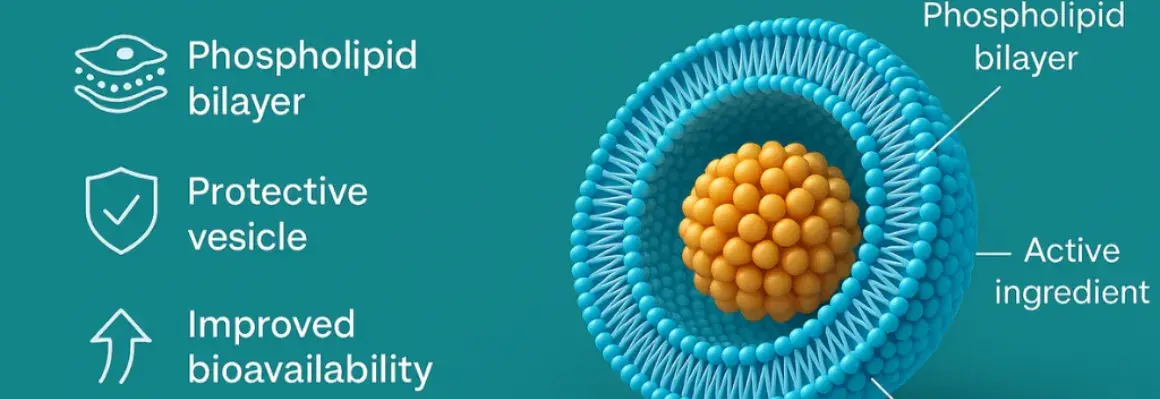
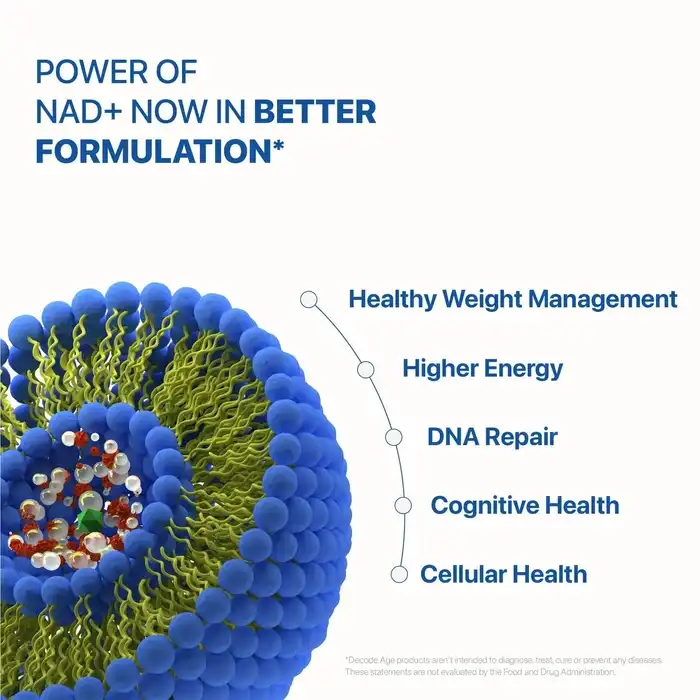
The problem of reliability is immediately fixed by liposomal transport technology. Liposomes protect NMN from oxidative and chemical breakdown that happens to unencapsulated powders while they are stored and travel through the GI tract. They do this by enclosing NMN molecules in phospholipid bilayer vesicles, which are structures that are very similar to the lipid membrane of human cells.[3][4] Hongda Phytochemistry's liposomal NMN powder uses high-pressure microfluidic cutting technology to make nanoscale particles that are narrow and constant in size. This makes encapsulation more effective and dose distribution more consistent across batches.
What Encapsulation Efficiency Actually Means for Formulators?
A feature that many buyers miss is encapsulation efficiency, which is the percentage of NMN molecules that are properly contained within liposomal vesicles. Hongda's liposomal NMN powder is made to pharmaceutical-grade standards, and DLS measurements show that the particle sizes stay between 100 and 200 nm. For this level of process control, you need special nanoemulsion tools and close tracking of the whole process, which is something that most common producers can't do.
|
Feature
|
Standard NMN Powder
|
Liposomal NMN Powder
|
|
GI acid protection
|
Unprotected
|
Phospholipid bilayer shields NMN
|
|
Particle size control
|
Variable
|
100–200 nm (DLS verified)
|
|
Encapsulation efficiency
|
N/A
|
≥80% (food) / ≥90% (pharma grade)
|
|
Stability in storage
|
Sensitive to heat, light, and moisture
|
Enhanced by lipid membrane protection
|
|
Water reconstitution
|
Standard dissolution
|
Rapid microemulsion, no sedimentation
|
|
Carrier material
|
None
|
Non-GMO sunflower phospholipids
|
The Health Science Behind NMN and Why Delivery MattersNMN as a NAD⁺ Precursor: The Core Mechanism
Nicotinamide adenine dinucleotide, or NAD⁺, is a coenzyme that holds DNA together, makes energy, and turns on sirtuins. Sirtuins are a group of proteins that play a big role in life and how well cells can handle stress. As people age, their NAD⁺ amounts drop a lot. This drop is connected to many changes that happen as we age, like cells becoming less efficient, tissues taking longer to heal, and our minds becoming less sharp.[1][5] In food, NMN is the most direct way to make NAD⁺.[5] Studies on animals and early tests on humans have shown that NMN vitamins raise the amount of NAD⁺ in the blood and help the metabolism work better, which can make insulin work better and make you stronger.[5][6]
Cellular Energy, Metabolism, and Healthy Aging
Studies that used NMN supplements on both animals and people showed changes in how their bodies use energy, how well their mitochondria work, and signs of molecular age.[2][6] Because liposomal NMN powder is made to protect NMN better in the GI tract than unencapsulated forms, it gives formulators a way to put their NMN product at the high end of a competitive marketplace. This is especially important in places like the US, the EU, Japan, and Australia, where people who care about their health are looking for ingredients with clear technology stories and are willing to pay more for them.
Skin Health, Cognitive Support, and Cross-Category Appeal
The study of NAD+ precursors has grown to include a lot more than just aging. Liposomal NAD⁺ products have been shown to slow down the aging process in vascular cells and keratinocytes. This has led to new opportunities in high-end skin care and beauty from the inside out.[3] Liposomal NMN powder is a flexible base ingredient that can be used in a number of high-growth markets because it helps with energy, overall health, and cognitive support.
Are you evaluating liposomal NMN powder for your next formulation or looking for a certified OEM supplier? Shaanxi Hongda Phytochemistry's technical team can provide full product documentation — COA, MSDS, encapsulation efficiency data, and third-party test reports — along with custom specification support for particle size, concentration, and packaging format. Whether you need a sample for R&D evaluation or are ready to discuss commercial volumes, reach out to us at duke@hongdaherb.com.
What the Specification Sheet Should Tell You?
Key Parameters to Request Before Buying
A credible liposomal NMN powder supplier should readily provide documentation covering NMN assay purity (≥98% HPLC), encapsulation efficiency, particle size distribution, loss on drying, heavy metal limits, and full microbiological testing. Shelf life should be at least 24 months under sealed, cool, dark conditions (2–25°C). A supplier who can't provide lot-by-lot COA data should not be on your shortlist.
Shaanxi hongda phytochemistry's COA:
|
Test Item |
Specification |
Method |
|
NMN assay purity |
≥98.0% |
HPLC |
|
Encapsulation efficiency |
≥80% (food) / ≥90% (pharma) |
Dialysis / DLS |
|
Particle size |
100–200 nm |
DLS |
|
Loss on drying |
≤5.0% |
USP <731> |
|
Heavy metals — As |
≤1.0 ppm |
ICP-MS |
|
Heavy metals — Pb |
≤0.5 ppm |
ICP-MS |
|
Total plate count |
≤1,000 cfu/g |
USP <2021> |
|
Salmonella |
Negative / 25g |
USP <2022> |
|
Phospholipid carrier |
Non-GMO sunflower phospholipids |
— |
|
Shelf life |
24 months (sealed, 2–25°C, dark) |
Stability study |
|
Packaging |
1 kg / bag | 25 kg / drum |
— |
Certificates That Signal a Serious Supplier
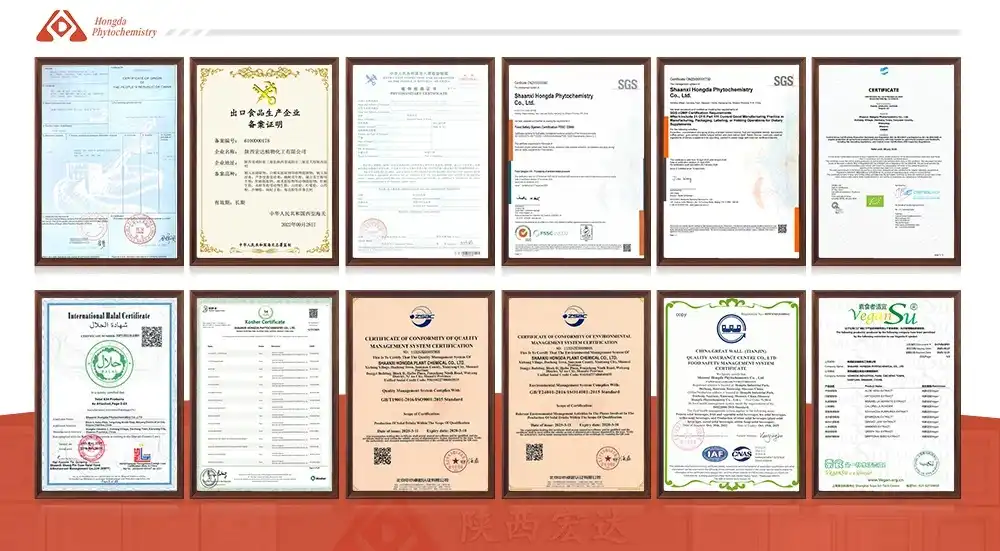
For brands selling into regulated markets, the supplier's certification portfolio is as important as the product specification. Hongda Phytochemistry holds ISO 9001, ISO 22000, FSSC 22000, cGMP, Halal, Kosher, Organic (EU and NOP), BRC, and FDA certifications — a breadth of credentials that effectively pre-qualifies the ingredient for entry into the US, EU, Middle Eastern, and specialty retail markets without requiring buyers to conduct their own facility audits. This is a meaningful commercial advantage in an industry where regulatory timelines can make or break a product launch.
Why Hongda Phytochemistry Is the Supplier Premium Brands Choose?
Manufacturing Depth That Scales With You
Shaanxi Hongda Phytochemistry Co., Ltd. operates a 20,000 m² production facility in China with more than 10 modern manufacturing lines, 100,000-level purification workshops, and an annual output capacity of 3,000 tons. A 3,000 m² dedicated warehouse — organized into six specialized storage zones, with Area E specifically designated for vitamins and amino acid products, including NMN — guarantees consistent availability and on-time delivery for brands at every stage of commercial scale. For buyers requiring liposomal NMN powder in both development and production quantities, packaging is available in 1 kg sample bags and 25 kg drums.
R&D Infrastructure and Genuine OEM Capability
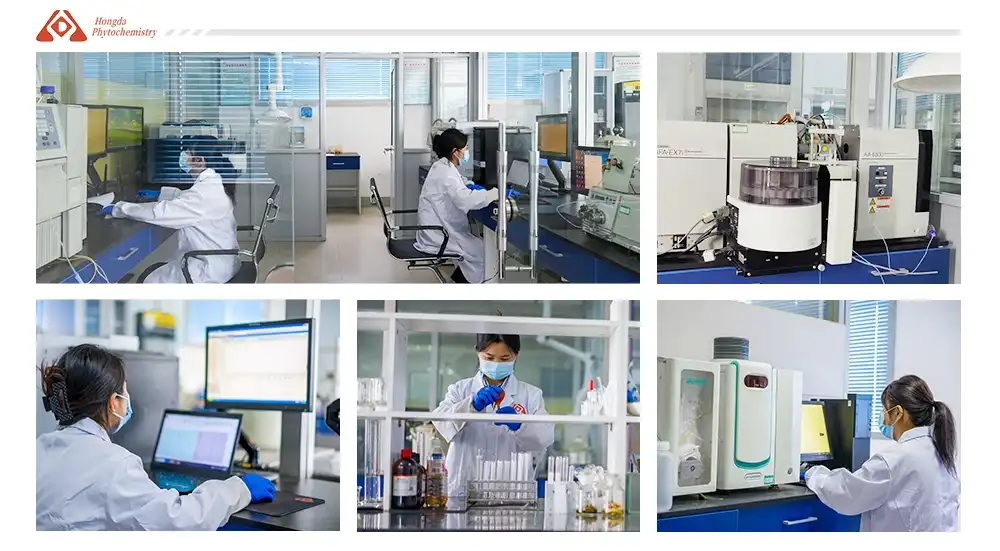
Hongda's two R&D institutions — staffed by over 20 scientists in an SGS-standardized lab equipped with HPLC, GC, and atomic absorption instruments — support genuine formulation collaboration. Customers can request custom particle size ranges, phospholipid ratios for liposomal NMN powder, or granulation formats through Hongda's OEM/ODM program, enabling real product differentiation beyond a catalog ingredient.
Conclusion
As demand for healthy aging, cellular energy, and longevity-focused supplements continues to grow, ingredient quality has become a key differentiator in product success. Premium liposomal NMN powder is not simply defined by its NMN content, but by its purity, encapsulation efficiency, particle size consistency, stability, and manufacturing standards. By combining advanced liposomal delivery technology with pharmaceutical-grade production and rigorous quality control, Hongda Phytochemistry provides a reliable solution for brands seeking to develop high-performance NMN formulations. For companies looking to compete in premium nutraceutical markets, selecting a trusted supplier is just as important as choosing the right ingredient.
FAQ
1. What makes liposomal NMN powder different from standard NMN powder?
Liposomal NMN is encapsulated within phospholipid bilayer vesicles at the nanoscale, protecting NMN from GI degradation and improving stability during storage and transit compared to unencapsulated powder.
2. What encapsulation efficiency should I require from a supplier?
Look for ≥80% for food-grade applications and ≥90% for pharmaceutical-grade. Hongda's liposomal NMN powder meets both thresholds depending on the grade selected.
3. What certifications does Hongda's liposomal NMN powder carry?
ISO 9001, ISO 22000, FSSC 22000, cGMP, Halal, Kosher, Organic (EU and NOP), BRC, and FDA — supporting US, EU, and global specialty market compliance.
4. What is the minimum order quantity for sampling?
Sampling starts at 1 kg bags. Commercial production orders are fulfilled in 25 kg drums.
5. Can Hongda customize the liposomal NMN powder specification?
Yes — particle size range, phospholipid ratio, NMN concentration, and granulation format can all be adjusted through Hongda's OEM/ODM program.
Formulate With Confidence — Source Certified Liposomal NMN Powder | HONGDA
Whether you are developing a next-generation longevity supplement, a healthy-aging formula, or an innovative cellular wellness product, Hongda's Liposomal NMN Powder offers the quality, consistency, and technical support needed for long-term success. Backed by global certifications, comprehensive documentation, scalable production capacity, and flexible OEM/ODM services, we help brands accelerate product development and bring premium formulations to market with confidence. Contact our team today for samples, COA documentation, custom specifications, and competitive bulk pricing at duke@hongdaherb.com.
References
1. Shade C. The science behind NMN — a stable, reliable NAD⁺ activator and anti-aging molecule.IntegrativeMedicine: A Clinician's Journal. 2020;19(1):12–14.
2. Mills KF, Yoshida S, Stein LR, et al. Long-term administration of nicotinamide mononucleotide mitigates age-associated physiological decline in mice. Cell Metabolism. 2016;24(6):795–806.
3. Passarella S, et al. A liposomal formulation enhances the anti-senescence properties of nicotinamide adenine dinucleotide (NAD⁺) in endothelial cells and keratinocytes. International Journal of Molecular Sciences. 2025;26.
4. Purpura M, Jäger R, Godavarthi A, et al. Liposomal delivery enhances absorption of vitamin C into plasma and leukocytes: a double-blind, placebo-controlled, randomized trial. European Journal of Nutrition. 2024.
5. Yoshino J, Baur JA, Imai SI. NAD⁺intermediates: the biology and therapeutic potential of NMN and NR. Cell Metabolism. 2018;27(3):513–528.
6. Fujita H, et al. Oral NMN supplementation raises blood NAD⁺ levels and improves insulin sensitivity in older adults: a randomized, double-blind trial. NPJ Aging. 2024.