


_1745918362135.webp)

What Makes Liposomal NMN Powder Ideal for Anti-Aging Formulas?
Because it is more bioavailable and readily absorbed by cells, liposomal NMN powder is a great ingredient for anti-ageing products. Unlike regular nicotinamide mononucleotide, this improved delivery method uses sunflower phospholipid coating to keep the active ingredient safe during digestion. This makes sure that NAD+ repair works well at the cellular level. The liposomal technology makes nanoparticles that are 80 to 120 nm in diameter. This allows them to be delivered specifically to mitochondria and greatly enhances the rate of conversion inside cells. We at Hongda Phytochemistry have created a pharmaceutical-grade liposomal product that converts NAD+ over 8 times faster than regular powders. This is a revolutionary answer for B2B companies looking for high-performance anti-ageing ingredients that always work.
Understanding Liposomal NMN Powder and Its Anti-Ageing Benefits
The Science Behind Liposomal Encapsulation Technology
Nanotechnology has changed how nicotinamide mononucleotide gets to the cells in the body that it needs to reach. Shaanxi Hongda Phytochemistry Co., Ltd. uses phospholipid molecules from sunflowers to make a two-layer structure that looks like natural cell membranes and is very biocompatible. This way of packaging keeps the active chemical from breaking down in the stomach's acidic environment, so it can go straight into cells. The lipid-based spheres blend in perfectly with cell membranes, making internal release possible without the need for extra transport systems.
The phospholipid bilayer structure is very stable during production and storage, which solves a major problem in supplement formation. Our white powder recipe keeps the purity level at ≥70%, and thorough testing shows that it meets strict quality standards. It is important for formulators who are making business goods that the particle sizes stay the same across batches so that the absorption rates and bioavailability patterns are always the same.
NAD+ Restoration and Cellular Energy Metabolism
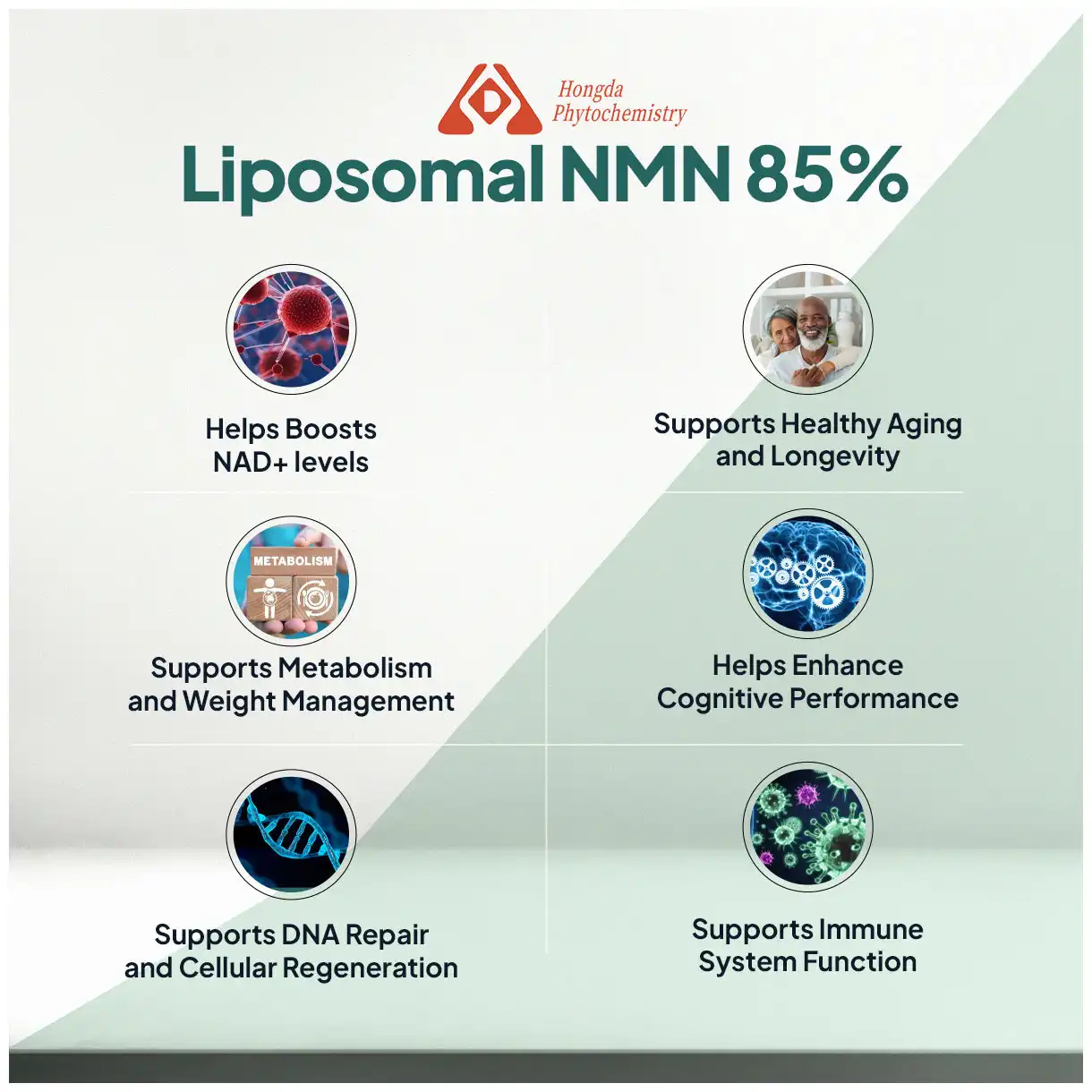
Nicotinamide adenine dinucleotide is an important coenzyme that helps cells make energy and carry out metabolic processes. NAD+ levels naturally drop as organisms age, which makes mitochondrial function worse and cellular repair less effective. It becomes necessary to take supplements with precursors that are easily absorbed in order to keep metabolic function at its best. Our improved transport method speeds up the processes that make NAD+, which helps energy production at the mitochondrial level, which is where ageing has the most significant effect on cell health.
Clinical studies show that sirtuins are activated when NAD⁺ is restored effectively. Sirtuins are a family of proteins that are closely linked to life and cellular resistance. Some of the most important things that these proteins control are DNA repair, the reaction to inflammation, and metabolic adaptability. By making sure that liposomal transport reaches all cells, products can have biological effects at lower amounts than regular supplements. This is better for effectiveness and saves money for B2B makers.
Targeted Benefits for Anti-Ageing Formulations
Our liposomal system has special lipophilic qualities that let it pass through certain barriers, such as the blood-brain barrier and mitochondrial membranes. This focused transport makes it different from water-soluble forms that have trouble being absorbed. This trait is especially useful for procurement managers who are making brain health products, since cognitive improvement is a rapidly growing market area in the anti-ageing category.
DNA repair systems work much better when NAD+ is always available. Researchers have found that poly (ADP-ribose) polymerase enzymes are able to find and fix broken genetic material when there are enough coenzyme levels. Formulations that use our pharmaceutical-grade ingredient offer a scientifically proven way to deal with cellular ageing at the molecular level, backed up by strong mechanistic evidence to support product promises.
Comparing Liposomal NMN Powder to Other NMN Forms and Anti-Ageing Solutions
Bioavailability Advantages Over Conventional Delivery Methods
Nicotinamide mononucleotide powders and pills have a hard time being absorbed because the molecules are unstable, and the membranes don't let much of the drug through. Comparative studies show that non-liposomal types, including liposomal NMN powder, have a bioavailability that varies from 30 to 50 per cent when conditions are ideal. The biomimetic structure of the liposomal capsule we use at our Shaanxi plant completely changes this absorption profile by going around the normal gut breakdown routes.
Our testing methods show that nanoparticles between 80 and 120 nm are the best size for cells to take in. Particles that meet these requirements have better tissue distribution and longer circulation times than bigger masses or molecules that are not enclosed. Quality assurance experts who look at raw materials for making supplements know that uniform particle size is directly linked to reliable performance from batch to batch, which is a very important factor when making a lot of supplements to sell commercially.
The phospholipid membrane forms a shield that protects and does more than just help absorption. Lab tests show that wrapping greatly improves hygroscopic control, which lowers the amount of water absorbed by up to 35% during the capsule filling process. Production managers like this stability because it means less waste during the production process. This is especially true in settings with controlled humidity, where dealing with exposed powders can be difficult.
Performance Comparison with Alternative NAD+ Precursors
Another way that NAD+ is made is through nicotinamide riboside, which uses different enzymes to change forms inside cells. Both substances work well as predecessors, but their molecular properties are very different. Nicotinamide mononucleotide needs fewer steps of enzymes to get to the final form of coenzyme, which means it should be easier to convert. When liposomal delivery is added, which makes sure that the precursors reach the cells, the efficiency gap gets a lot bigger compared to other precursors that don't have better delivery methods.
When doing a cost-benefit study for product creation, you need to think about both the dose needs and the prices of the raw materials. Because our liposomal method makes nutrients more bioavailable, it lets product makers get the molecular benefits they want with smaller dose sizes. This dosage efficiency affects many parts of a product's economics, such as the cost of things sold, the claims made on the label, and how valuable the product is seen by consumers. When category buyers look at different food choices, they use these factors to figure out which raw materials give the best results for the least amount of money.
Formulation Compatibility and Stability Considerations
When developing a product, buying teams have to deal with the technical issues that come with integrating it into different delivery forms. Our off-white to light yellow powder works well with pill formulas and stays stable for 24 months if stored properly. The bulk density of 380g/L and the tapping density of 580g/L make the flow properties reliable during activities with automatic filling equipment.
For tablet formulas, you need to think about crushing qualities and how excipients interact with each other more. The liposomal structure stays together even when it's compressed moderately, but formulators should try it to make sure it works with certain excipient systems. Hongda Phytochemistry's technical support teams work directly with R&D formulators to find the best pill hardness, breakdown time, and dissolution profiles based on the specs of the final product and the powers of the production equipment.
Why Liposomal NMN Powder Is Ideal for B2B Procurement and OEM Manufacturing?Quality Assurance and Regulatory Compliance Framework
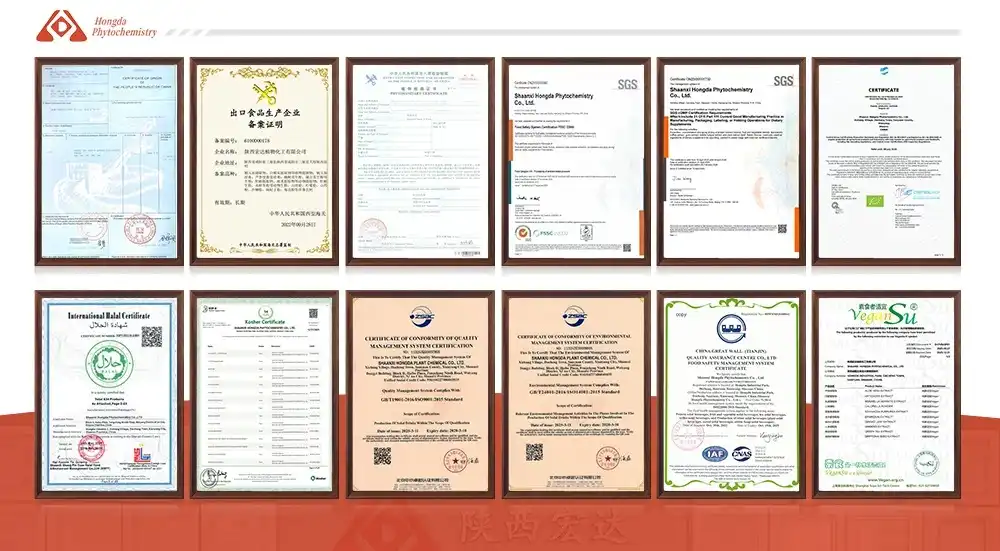
It is imperative for ingredient providers that serve controlled markets to adhere to strict international standards. Our factory has a lot of different certificates, such as cGMP, ISO9001, ISO22000, FSSC22000, HALAL, and KOSHER, which make it easier to sell our products in a lot of different places. These certificates show that the suppliers follow organised quality management practices that B2B buyers look for when choosing which suppliers to add to their lists of approved vendors.
Documentation standards that are kept up at our location support regulatory entries for liposomal NMN powder in a number of different areas. Each batch comes with a Certificate of Analysis report that lists all the tests that were done to make sure it was pure (70% ± 5% NMN content), free of heavy metals (lead, arsenic, mercury, and cadmium were all below detection levels), and microbiological (total microbial count at 50 cfu/g, which is much lower than the 10,000 cfu/g requirement). When quality assurance professionals look over these papers, they feel more confident in the consistency of the products and the trust of the suppliers.
Traceability tools are used throughout our entire production process to keep track of each batch from the time we get the raw materials to the time we package them. During governmental checks or customer audits, this paperwork infrastructure comes in very handy. Mid-sized to large ingredient buyers know that strong tracking lowers supply chain risk and makes it easier to act quickly if quality issues do arise in commercial sales, which is very rare.
Strategic Procurement Advantages and Supply Reliability
Flexibility in the minimum order number is a strategic advantage for both new names and well-known makers. Our 1kg MOQ policy lets product makers test their products thoroughly and make sure they're ready for the market without having to commit to too much inventory. This ease of access encourages new ideas while handling capital well. This is especially helpful when exploring new recipe ideas or joining new anti-ageing market groups.
In the plant extract business, the ability to handle inventory is what sets trusted sellers apart from traders who are only looking to make money. Strategic stockpile stocks of 5 tonnes are kept by Hongda Phytochemistry and are spread out among warehouses in the US and Europe. This placement of goods protects B2B clients from delays in the supply chain and changes in the prices of raw materials that can happen on occasion in Asian export markets. Professionals in procurement appreciate sellers who put money into warehouse infrastructure that helps them stick to their production plans and make more money.
Our 20,000-square-metre building can make up to 3,000 tonnes of all of our products every year. We have specialised production lines and 100,000-level cleaning workshops to keep pollution under control. This scale gives you peace of mind that you can handle more orders without affecting delivery times or product quality. When contract makers look at long-term supply partnerships, one of the most important things they look at is the ingredient providers' production ability.
OEM Customisation and Technical Collaboration
In addition to providing ingredients, flexible production includes full OEM and ODM services that are suited to the needs of each brand. Over 20 scientists at the professorial level work on our research and development team, which works directly with client formulation teams to create unique solutions. This way of working together technically shortens the time it takes to make a product while taking advantage of experts' knowledge in extraction technology and transport system optimisation.
There are many ways to customise, such as choosing the particle size, changing the carrying system, and mixing and matching ingredients to make your own unique mixtures. Customising packaging meets the needs of each brand, from large packages to forms that are ready for consumers. This all-in-one service approach makes supply chain management easier for brands that want full solutions instead of having to deal with multiple providers for recipe development and contract production.
When a seller and a client work together, they come up with new ways to place products and set them apart in the market. When buyers in a certain category are coming up with strategies for premium positioning, they can use detailed information about recipe improvements that back up claims of better product quality. Our work in the nutrition, skincare, and functional food industries gives us a cross-industry view that makes product development talks more interesting and helps us spot new possibilities in market areas that are changing.
Safety Profile and Considerations for B2B Buyers
Clinical Evidence and Established Safety Parameters
Extensive research evaluating nicotinamide mononucleotide supplementation provides reassuring safety data for manufacturers developing consumer products. Human clinical trials conducted at reputable research institutions have examined dosing protocols and monitored participants for adverse responses. This body of evidence supports the safety profile that quality-conscious brands require when selecting ingredients for long-term supplementation products marketed to health-conscious consumers.
The liposomal delivery enhancement does not introduce safety concerns beyond those associated with the active ingredient itself. Sunflower phospholipids utilised in our formulation possess an established safety history across food and pharmaceutical applications. Non-GMO sourcing and absence of synthetic preservatives further align with clean label expectations prevalent in North American and European markets. Product developers targeting premium retail channels such as Whole Foods recognise that ingredient transparency and safety documentation directly impact channel acceptance and consumer trust.
Microbiological testing protocols implemented at our SGS-standard laboratory ensure every batch meets pharmaceutical-grade purity standards. Total microbial counts consistently measure below 100 cfu/g—substantially lower than industry standard specifications—while pathogenic organisms remain undetectable through comprehensive screening procedures. These stringent microbiological controls provide an additional safety margin that risk management teams at regulated manufacturers require when evaluating ingredient suppliers.
Supplier Verification and Authenticity Assurance
The botanical extract industry faces ongoing challenges with product adulteration and misrepresentation that threaten brand integrity and consumer safety, including for liposomal NMN powder. Procurement professionals implement rigorous supplier qualification processes to mitigate these authenticity concerns. Third-party verification through accredited testing facilities, including SGS and Eurofins, provides independent confirmation of product specifications, adding an essential layer of verification beyond supplier-provided documentation.
Authentication testing examines multiple parameters, including active compound identity confirmation through HPLC analysis, absence of undeclared fillers or adulterants, and verification of non-irradiation status when organic claims apply. Our laboratory maintains advanced instrumentation, including high-performance liquid chromatographs, gas chromatographs, and spectrophotometers that enable comprehensive analytical characterisation. This testing infrastructure allows real-time quality verification during production rather than relying solely on finished product testing.
Supply chain transparency extends to raw material sourcing, with our three dedicated planting bases providing vertical integration for key botanical materials. This farm-to-factory traceability addresses growing regulatory expectations around supply chain documentation and provides assurance regarding agricultural practices, pesticide management, and sustainability considerations. Corporate social responsibility programmes increasingly evaluate supplier practices across environmental and social dimensions, making transparent sourcing practices a competitive differentiator in supplier selection processes.
Conclusion
Liposomal NMN powder represents a significant advancement in anti-ageing ingredient technology, delivering superior bioavailability through innovative nanoscale delivery systems. The pharmaceutical-grade formulation developed at Hongda Phytochemistry achieves over 8 times greater intracellular NAD+ conversion compared to conventional forms, providing B2B manufacturers with a high-performance ingredient backed by rigors quality standards and comprehensive regulatory certifications. The combination of enhanced efficacy, manufacturing reliability, and technical support positions this ingredient as an ideal choice for brands seeking competitive differentiation in the growing anti-ageing supplement market.
FAQ1. What purity level does your liposomal NMN powder achieve?
Our pharmaceutical-grade formulation maintains NMN content at ≥70% purity, with typical batch results around 70.7% as verified through HPLC analysis. The Certificate of Analysis accompanying each batch documents comprehensive quality parameters, including heavy metal screening, microbiological testing, and physical characteristics, all conforming to in-house specifications that exceed industry standards.
2. How does liposomal encapsulation improve stability during manufacturing?
The sunflower phospholipid bilayer creates a protective barrier that reduces hygroscopic behaviour by approximately 35% compared to unencapsulated powder. This stability enhancement minimises moisture uptake during capsule filling and tabletting operations, reducing production waste and ensuring consistent product performance. The 24-month shelf life under proper storage conditions provides adequate timeframes for distribution and retail sale.
3. Can you accommodate custom formulation requirements for OEM projects?
Our R&D team works directly with clients to develop tailored solutions, including particle size modifications, proprietary blends with complementary ingredients, and custom packaging configurations. With over 20 professor-level scientists and comprehensive testing capabilities, we support complete product development from concept through commercial-scale manufacturing, providing the technical documentation needed for regulatory submissions.
Partner with HONGDA for Premium Liposomal NMN Powder Supply
B2B manufacturers seeking a reliable liposomal NMN powder supplier will find comprehensive solutions at Hongda Phytochemistry. Our vertically integrated operations—from dedicated planting bases through pharmaceutical-grade manufacturing facilities—ensure consistent quality and supply reliability for brands developing premium anti-ageing formulations. The combination of advanced liposomal technology, rigorous quality systems validated through cGMP, ISO22000, and FSSC22000 certifications, and flexible MOQ policies starting at just 1kg makes us an ideal partner for both emerging brands and established manufacturers. Contact our technical team at duke@hongdaherb.com to discuss your specific formulation requirements and request samples for evaluation in your product development process.
References
1. Yoshino, J., Baur, J. A., & Imai, S. I. (2018). NAD+ intermediates: the biology and therapeutic potential of NMN and NR. Cell Metabolism, 27(3), 513-528.
2. Mills, K. F., Yoshida, S., Stein, L. R., Grozio, A., Kubota, S., Sasaki, Y., & Imai, S. I. (2016). Long-term administration of nicotinamide mononucleotide mitigates age-associated physiological decline in mice. Cell Metabolism, 24(6), 795-806.
3. Akbari, M., Kirkwood, T. B., & Bohr, V. A. (2019). Mitochondria in the signaling pathways that control longevity and health span. Ageing Research Reviews, 54, 100940.
4. Poddar, S. K., Sifat, A. E., Haque, S., Nahid, N. A., Chowdhury, S., & Mehedi, I. (2019). Nicotinamide mononucleotide: exploration of diverse therapeutic applications of a potential molecule. Biomolecules, 9(1), 34.
5. Shade, C. W. (2016). Liposomes as advanced delivery systems for nutraceuticals. Integrative Medicine: A Clinician's Journal, 15(1), 33-36.
6. Rajman, L., Chwalek, K., & Sinclair, D. A. (2018). Therapeutic potential of NAD-boosting molecules: the in vivo evidence. Cell Metabolism, 27(3), 529-547.