


_1745918362135.webp)

What Makes Zinc Bisglycinate Powder More Bioavailable?
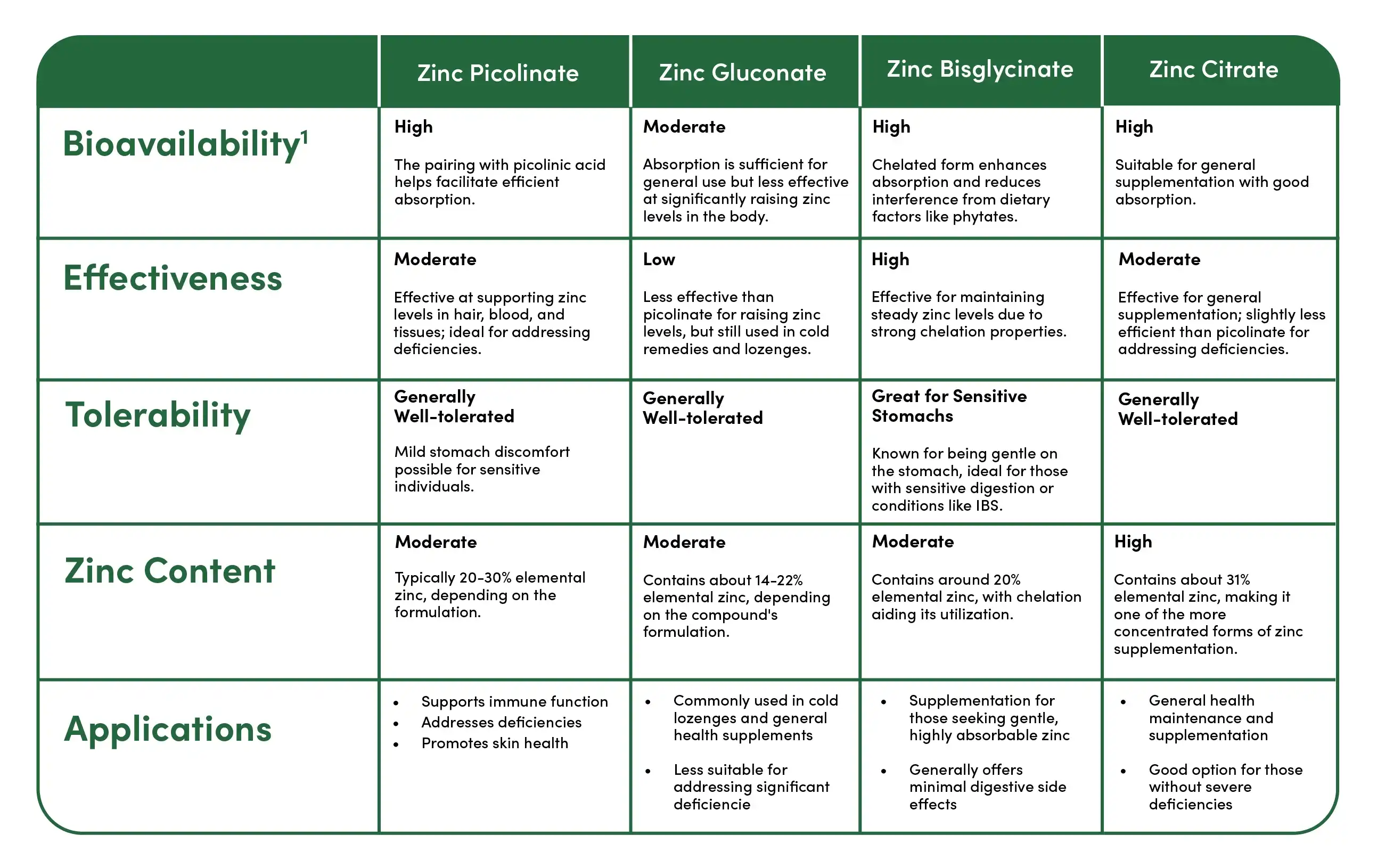
Zinc bisglycinate powder's chelated structure forms stable covalent-coordinate connections with two glycine molecules, improving bioavailability. This heterocyclic ring shape shields zinc during gastric transit, permitting small intestine absorption via dipeptide channels (PEPT1) rather than mineral ion transporters. Inorganic zinc salts dissociate rapidly in acidic environments and bind with dietary phytates, but this chelated form remains intact and delivers 43% higher absorption efficiency than zinc gluconate while minimizing gastrointestinal discomfort—important for formulators seeking premium raw materials, such as those supplied by Shaanxi Hongda Phytochemistry Co., Ltd.
Understanding Zinc Bisglycinate Powder and Its Bioavailability
The Chelation Mechanism Behind Enhanced Absorption
Zinc bisglycinate powder is a high-tech amino acid chelate that connects one zinc cation to two glycine anion partners in a 1:2 stoichiometric range. Traditional zinc salts like zinc oxide or zinc sulphate break apart right away in the stomach's acidic environment (pH 1.5–3.5). This releases free zinc ions that combine with phytates, tannins, and food fibre to trap zinc and stop it from being absorbed. The name for this structure of molecules used by nutritional biochemists is a "neutral charge envelope."
This is not a problem for the chelated structure. The most basic amino acid, glycine, guards zinc and keeps it soluble at pH 3.5 to 9.0. Leading nutrition institutes discovered that this protected form doesn't break down too quickly in the stomach and arrives whole in the small intestine. There, it uses peptide transport pathways to absorb dipeptides from protein digestion instead of competing for limited mineral-specific carriers that are full of calcium, iron, and magnesium.
Why Do Procurement Professionals Prioritize Bioavailable Zinc Forms?
At Shaanxi Hongda Phytochemistry Co., Ltd., we know that choosing the right parts for a product affects how well it works and how well customers follow the instructions. Managers who buy raw materials for speciality nutrition goods, functional drinks, and nutritional supplements are under a lot of pressure to come up with effective formulas. Whether to use cheap zinc or high-quality chelated forms depends on how bioavailable the zinc is.
Using stable isotope tracers in clinical absorption tests shows that Zinc Bisglycinate Powder keeps absorption rates high even in foods high in phytate, where regular zinc levels drop by 40–50%. This stability makes it possible for regular doses and more accurate label claims, which are very important for businesses in countries like the US that are based on following the rules, where FDA oversight is getting stricter.
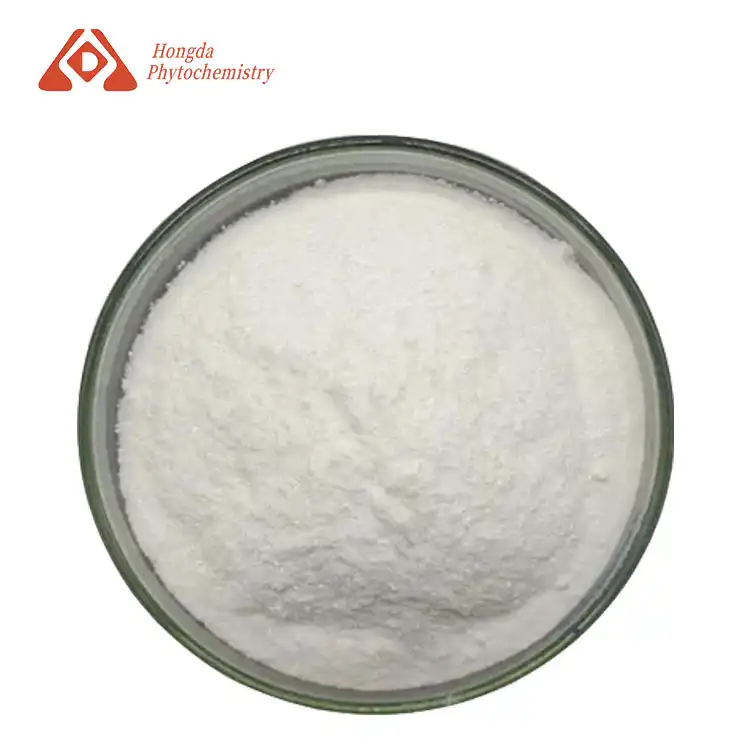
The value to industry goes beyond absorption. Zinc bisglycinate powder is a spray-dried, off-white powder with particles that are 80 to 100 mesh large. It moves easily. This regular physical shape makes it possible to mix multiple ingredients evenly, stops tablet compression segregation, and keeps the stability of the encapsulation—all of which are real problems that affect how efficiently large-scale manufacturing works.
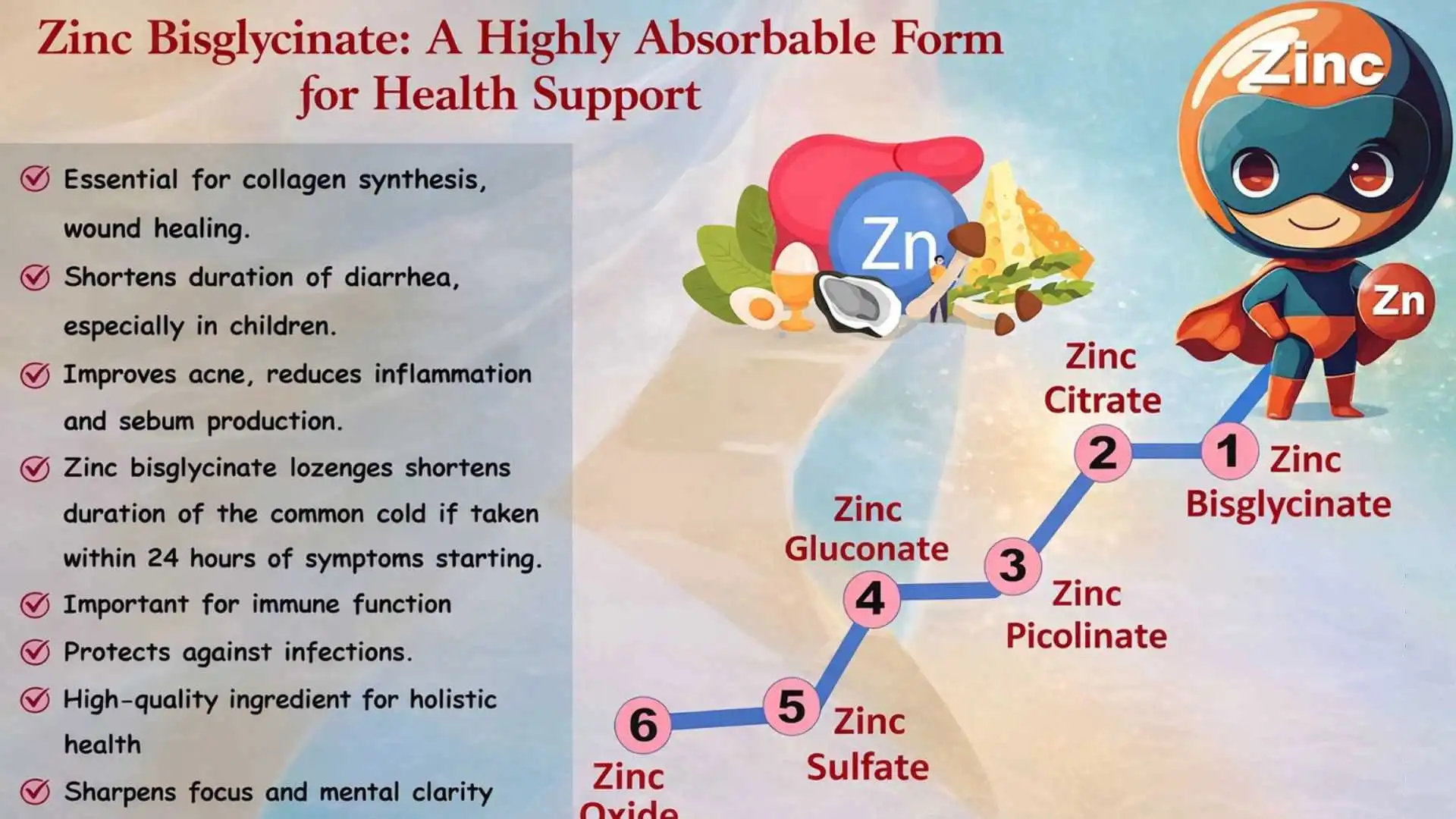
Comparison of Zinc Bisglycinate Powder with Other Zinc Forms
Clinical Data Distinguishing Chelated Zinc from Inorganic Salts
R&D teams evaluate zinc sources for formulation requirements using absorption kinetics and tolerability characteristics. While zinc sulfate is cheap and widely accessible, it has been linked to gastrointestinal discomfort. Zinc sulfate supplements cause 15-30% nausea in human studies, a compliance issue that compromises long-term supplementing regimens.
Zinc gluconate softens gastrointestinal effects and improves fast absorption. The gluconate molecule rapidly dissociates in stomach acid, causing phytate-binding difficulties like inorganic ions at low chelation strength. Zinc picolinate, another organic form, has high absorption but a yellow hue and a unique taste that might interfere with flavor systems in beverages.
Chelation stability is demonstrated by a Fourier Transform Infrared Spectroscopy (FTIR) study of zinc bisglycinate powder. This analytical method distinguishes genuine chelates from zinc oxide mixtures with amino acids by showing characteristic absorption bands indicating intact coordinate bonds between zinc and glycine. This quality control verification separates pharmaceutical-grade ingredients from commodity alternatives. Hongda Phytochemistry's SGS-standard laboratory verifies chelate integrity in every production batch using FTIR and XRD.
Application-Specific Advantages Across Industry Sectors
Nutraceutical formulations vary greatly, making ingredient adaptability a major procurement factor. Zinc bisglycinate powder overcomes many technical issues in functional beverage development. Its strong water solubility and precipitation resistance at different pH levels make it perfect for clear functional fluids and immune-support injections. Zinc sulfate creates visible precipitates when mixed with citric acid or ascorbic acid, but the chelated version retains solution clarity throughout shelf life testing, which is important for luxury beverage brands where visual appearance affects consumer perception.
Ingredient selection is also crucial in pediatric nutrition. Gummies and infant formulae need zinc with neutral organoleptic characteristics and minimal gastric irritation risk. Zinc bisglycinate powder fits these strict standards, allowing formulators to fortify products with 3-5 mg of zinc per serving without metallic flavor or gastrointestinal distress, which might deter sensitive populations.
Antagonistic ingredients make sports nutrition formulas difficult to absorb. Mineral absorption sites are limited in complex matrices, including calcium from whey protein, magnesium from electrolyte mixes, and iron from performance additives. Zinc Bisglycinate Powder's peptide-based transport mechanism avoids this competition, allowing athletes to fully recover from zinc's function in protein synthesis and testosterone metabolism without reducing mineral absorption.
How to Optimize Use and Dosage of Zinc Bisglycinate Powder?
Evidence-Based Dosing Guidelines for Different Applications
Understanding elemental zinc concentration and bioavailability enhancement variables helps determine the zinc bisglycinate powder dose. Commercial zinc bisglycinate powder comprises 20-30% elemental zinc by weight; therefore, 100 mg of powder provides 20-30 mg of absorbable zinc. To minimize copper deficiency and immune function interference, people should consume 8-11 mg of elemental zinc daily, with a 40 mg top limit.
Dietary supplements use 15-30 mg of elemental zinc per serving to produce therapeutic advantages without exceeding safety limits due to zinc bisglycinate powder absorption. Functional foods for immune support or skin health provide 5-15 mg per serving, offering considerable nutritional density and allowing numerous daily usages without exceeding suggested intakes. To improve growth performance and immunological competence during weaning stress, poultry and swine feed use greater doses (50-100 ppm in total feed).
Manufacturing Conditions That Preserve Bioavailability
Thermal processing is crucial to chelate integrity. Zinc bisglycinate powder can endure spray drying (inlet temperatures of 150-180°C), tableting compression pressures (up to 3 tons), and extrusion operations in functional food manufacture. However, excessive alkaline conditions (pH >10) or chelating chemicals like EDTA during co-processing might damage the bond structure.
Storage methods affect ingredient stability. Keep zinc bisglycinate powder in sealed containers out of direct sunlight and moisture (relative humidity below 60%). A properly made substance retains potency and chelation for 36 months. Bulk storage in humidity-controlled warehouses like our 3,000-square-meter facility with six specialized zones maintains ingredient purity from manufacture to formulation.
Procurement Considerations for Bulk Zinc Bisglycinate PowderCertification Requirements and Quality Verification Protocols
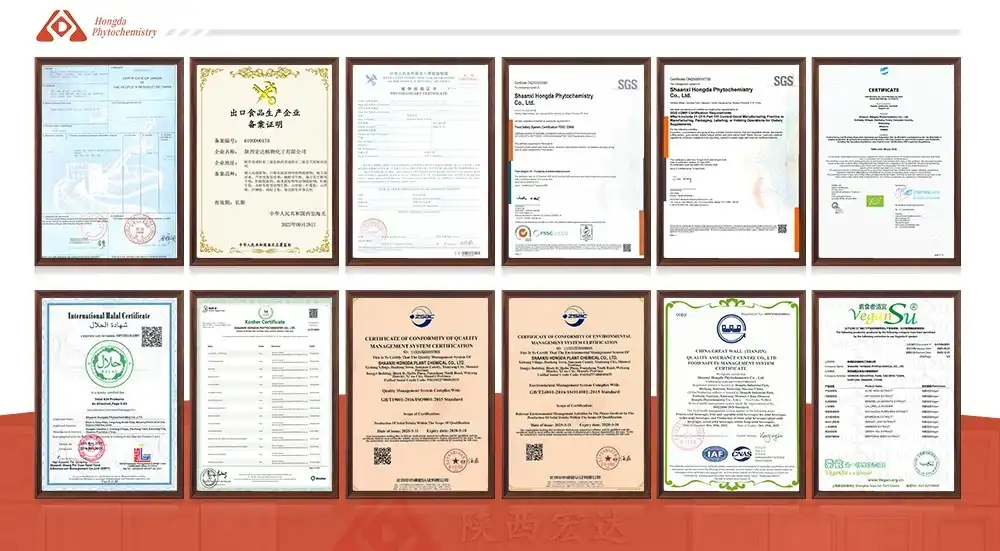
Beyond price negotiation, zinc bisglycinate powder purchases require quality assurance. Regulated market buyers need providers with extensive certifications. At Shaanxi Hongda Phytochemistry Co., Ltd., our quality management system encompasses cGMP (current Good Manufacturing Practices), ISO 9001 quality management, ISO 22000 food safety management, and FSSC 22000 certification—the globally recognized food safety standard that integrates HACCP principles with prerequisite programs.
Dietary and religious certifications increase market access. Our HALAL and KOSHER certifications allow formulators to serve devout Muslims and Jews, while VEGAN certification serves the expanding plant-based nutrition market that needs zinc without animal ingredients. Organic (NOP and EU) certification satisfies clean-label demands for products without synthetic processing aids.
Analytical quality control documentation supports ingredient approval. COAs should include elemental Zinc Bisglycinate Powder assay (20-30%), nitrogen-to-zinc molar ratio analysis (approximately 2:1), heavy metal screening (ICP-MS) confirming lead <0.5 ppm, cadmium <1 ppm, arsenic <2 ppm, and mercury <0.1 ppm, and microbiology testing confirming absence of Salmonella, E. coli, and S. aureus in 25g samples.
Strategic Sourcing Advantages and Value-Added Services
Bulk ingredient pricing depends on raw material costs (pharmaceutical-grade glycine and zinc oxide precursors), manufacturing scale, quality tier (food vs. pharmaceutical), and order volume. Suppliers usually demand 100–1000 kg for standard criteria. Shaanxi Hongda Phytochemistry Co., Ltd. has a huge inventory in six warehouse zones, allowing variable order quantities for experimental formulations and big production runs.
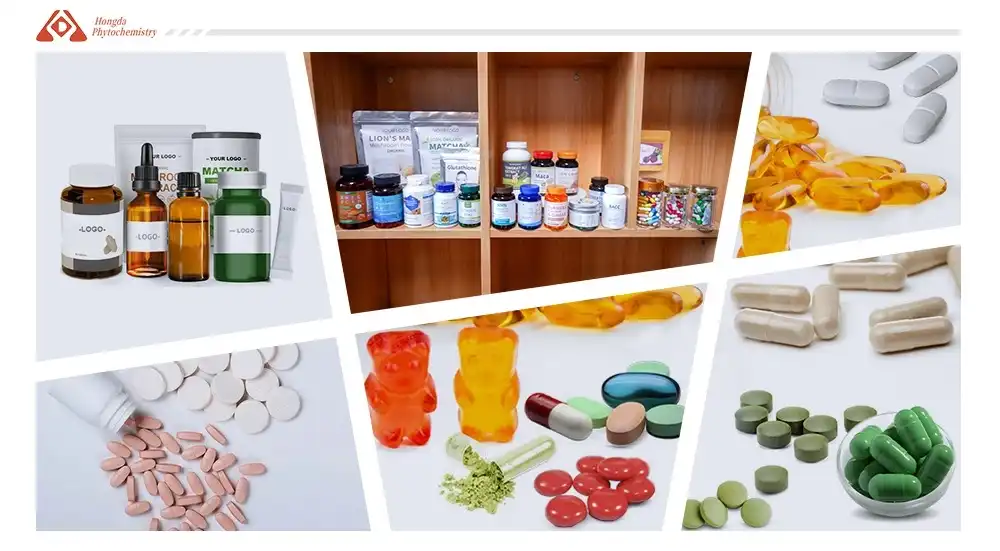
OEM and ODM services let firms enter the market quickly without manufacturing infrastructure expenditure. Our customization services include particle size modification for tablet compression or faster dissolution, co-processed blends of Zinc Bisglycinate Powder with complementary nutrients like vitamin C or magnesium glycinate for simplified formulation, private label packaging from 1 kg foil bags to 25 kg fiber drums, and analytical method development for stability testing and quality assurance programs.
International logistics experience enables supply chain efficiency. Our staff handles FCL and LCL container shipping, customs documents such as certifications of origin and phytosanitary certifications, and DDP (Delivered Duty Paid) arrangements for U.S. and European buyers. Standard packaging uses 27 fiber drums per pallet with double-layer food-grade PE bags to maximize container usage and maintain product integrity throughout transcontinental shipping.
Future Outlook: Why is Zinc Bisglycinate Powder Gaining Popularity?
Market Dynamics Driving Chelated Mineral Adoption
As customers want higher-quality supplements, the global mineral supplement market shifts toward premium, science-backed substances. Market research shows that bioavailability claims influence health-conscious customers, particularly millennials and Gen Z, who investigate ingredient types before buying goods. Zinc Bisglycinate Powder is becoming popular with this educational trend.
The placement of amino acid chelates matches clean-label formulation criteria. Zinc bisglycinate powder is non-GMO, allergen-free, and vegan-compatible, meeting many clean-label standards without reformulation. People who read labels prefer simple ingredients like zinc and glycine over manufactured substances with chemical names.
Innovation Opportunities in Chelation Technology
New methods for chelation chemistry include multi-mineral chelates, time-release chelate matrices, zinc bisglycinate powder, and tailored delivery systems that optimize absorption timing to circadian cycles. These innovations give ingredient suppliers and finished product businesses that invest in next-generation formulations a competitive edge.
Our partnership with university research teams and over 20 professor-level R&D staff puts Shaanxi Hongda Phytochemistry Co., Ltd. at the forefront of chelation innovation. Our patented production procedures increase chelate stability, powder flowability, and hygroscopicity, improving manufacturing efficiency and product quality.
Conclusion
Zinc bisglycinate powder's stable chelated structure improves bioavailability by 43% over traditional zinc forms and eliminates gastrointestinal pain that affects compliance. These performance features make it the chosen choice for premium dietary supplements, functional foods, and specialty nutrition applications where efficacy and tolerability directly impact brand success. Buyers benefit from suppliers with excellent production and quality processes, ensuring ingredients fulfill worldwide regulatory standards and boosting formulation innovation.
FAQ1. What distinguishes zinc bisglycinate from zinc glycinate?
Zinc bisglycinate powder is the 1:2 stoichiometric ratio where one zinc ion interacts with two glycine molecules. Industry names typically overlap. This exact molecular structure allows excellent chelation stability. Some "zinc glycinate" compounds have varying ratios or partial chelation. FTIR chelate integrity checks confirm bisglycinate structure.
2. How does particle size affect formulation performance?
Standard 80-100 mesh zinc bisglycinate powder (150-180 microns) flows well for encapsulation and tableting. Finer mesh sizes (200+) enhance surface area for faster beverage breakdown but may restrict flow. Hongda Phytochemistry can tailor particle size distribution to processing equipment and dissolution.
3. Can zinc bisglycinate be used in liquid formulations?
Absolutely. Clear functional drinks, liquid supplements, and injectable veterinary preparations benefit from its excellent water solubility and pH stability (3.5-9.0). Unlike inorganic salts that precipitate with acidic substances, chelated salts remain clear throughout rapid stability testing.
4. What certifications should procurement managers prioritize when sourcing zinc bisglycinate?
Quality and food safety management require cGMP, ISO 22000, and FSSC 22000 certifications. HALAL, KOSHER, and VEGAN certifications broaden market reach. USDA NOP and EU organic certification satisfy clean-label regulations. SGS or Eurofins third-party testing relationships offer due diligence-compliant quality verification.
Partner with HONGDA for Premium Zinc Bisglycinate Powder Supply
Shaanxi Hongda Phytochemistry Co., Ltd. is a trusted Zinc Bisglycinate Powder manufacturer with 20+ years of experience and cGMP, FSSC 22000, ISO, and HALAL, KOSHER, and VEGAN certifications. Our 100,000-level purification workshops and SGS-standardized laboratories with HPLC, GC, and ICP-MS ensure every batch meets pharmaceutical-grade standards in our 20,000-square-meter manufacturing facility. Our extensive inventory across many warehouse zones allows customizable MOQs and fast delivery to match your production schedules. Our OEM/ODM services provide formulation development to private label packaging for standard or bespoke particle sizes. Contact our technical team at duke@hongdaherb.com to discuss Zinc Bisglycinate Powder needs and obtain COAs, specification papers, and regulatory support files to simplify ingredient qualification.
References
1. Gandia, P., Bour, D., Maurette, J.M., Donazzolo, Y., Duchène, P., Béjot, M., Houin, G., & Marini, H. (2007). "A bioavailability study comparing two oral formulations containing zinc (Zn bis-glycinate vs. Zn gluconate) after a single administration to twelve healthy female volunteers." International Journal of Vitamin and Nutrition Research, 77(4), 243-248.
2. Wegmüller, R., Tay, F., Zeder, C., Brnic, M., & Hurrell, R.F. (2014). "Zinc absorption by young adults from supplemental zinc citrate is comparable with that from zinc gluconate and higher than from zinc oxide." Journal of Nutrition, 144(2), 132-136.
3. DiSilvestro, R.A., & Cousins, R.J. (2018). "Physiological ligands for copper and zinc in human metabolism." Annual Review of Nutrition, 38, 291-310.
4. Ashmead, H.D., Graff, D.J., & Ashmead, H.H. (2012). "Intestinal absorption of metal ions, trace elements and radionuclides." Charles C. Thomas Publisher, Springfield, Illinois.
5. Sandström, B., & Lönnerdal, B. (2019). "Promoters and antagonists of zinc absorption: Implications for dietary recommendations." Journal of Trace Elements in Medicine and Biology, 53, 1-7.
6. Institute of Medicine (US) Panel on Micronutrients. (2001). "Dietary Reference Intakes for Vitamin A, Vitamin K, Arsenic, Boron, Chromium, Copper, Iodine, Iron, Manganese, Molybdenum, Nickel, Silicon, Vanadium, and Zinc." National Academies Press, Washington DC.