


_1745918362135.webp)

Where can I buy Semaglutide Powder?
For pharmaceutical companies, research organizations, and qualified API buyers, finding a reliable source of Semaglutide Powder involves much more than comparing prices on a supplier website. Hongda Phytochemistry is a business of Shaanxi Hongda Phytochemistry Co., Ltd. Semaglutide is a peptide API, and Hongda Phytochemistry demonstrates its production, testing, and documentation skills to clients assessing bulk raw materials. Knowing where to get Semaglutide Powder is crucial, but knowing whether the seller can give the identity, purity, batch paperwork, production details, storage requirements, and regulatory assistance required for the desired application is more critical. This distinction is especially important because semaglutide is associated with prescription medicines and regulated drug manufacturing, and therefore pharmaceutical procurement should be addressed through appropriate commercial and regulatory channels, rather than as an ordinary health supplement ingredient.
Where Qualified Buyers Should Source Semaglutide Powder?
The first thing that determines the proper supplier of semaglutide powder is what the customer wants to accomplish with the commodity. Typically, pharmaceutical firms get APIs either directly from certified producers or via established pharmaceutical raw material wholesalers. Research groups may buy reduced amounts for laboratory development, analytical work, formulation research, or other legitimate research operations, according to their relevant institutional and regulatory constraints. If you are a consumer wishing to use semaglutide for your own treatment, you are in a different scenario and should seek to get an authorized semaglutide drug from a registered healthcare professional and reputable pharmacy rather than trying to buy the bulk powder.
In B2B, purchasing a direct manufacturer is good since the purchaser gets to see the place of production rather than having to trust the middleman totally. The supplier should be able to identify the manufacturing entity, offer a well-defined product specification, describe the documentation available, and state whether the material is for research, pharmaceutical development, or other regulated application. This information should be determined prior to placing a commercial order.
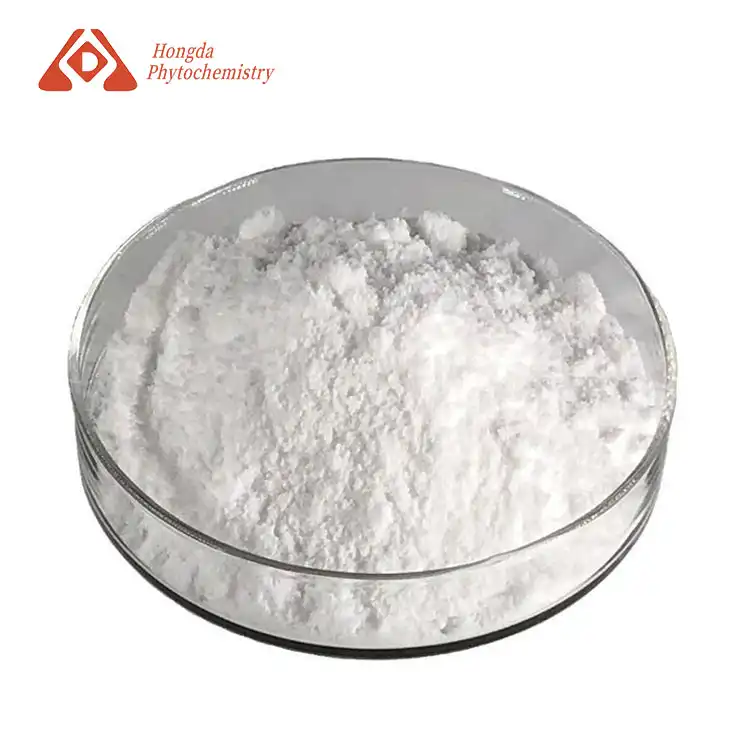
The published product information indicates that Hongda’s Semaglutide Powder is supplied by Shaanxi Hongda Phytochemistry Co., Ltd. with CAS No. 910463-68-2, a specification of 99%, an appearance of white powder, and packing of 1 kilogram aluminum foil bags and 25 kg drums. The website also lists a cGMP-standard workshop, laboratory facilities, peptide synthesis equipment, and batch testing documents. Buyers should, however, not depend on such generic declarations on the internet solely but ask for up-to-date batch-specific documentation and make sure that the given specification matches their own quality needs.
Start With the Intended Use and Regulatory Route
Before contacting a supplier, the buyer should determine the intended application of the material. This has an impact on the needed specification, documentation, testing, packing, shipping circumstances, and quality agreement. A substance acquired for analytical research may not have the same documentation requirements as an API meant to enable commercial pharmaceutical manufacture.
This difference also helps to avoid a frequent error when buying online. Semaglutide powder should not be marketed or sold as a traditional dietary supplement ingredient. In the US, the FDA has issued many warnings about unapproved and compounded GLP-1 medicines and the use of bulk drug ingredients for compounding, which are subject to special regulatory constraints. In April 2026, the FDA planned to remove semaglutide from the 503B bulk drug substances list after deciding that it had not discovered a therapeutic necessity for outsourcing facilities to synthesize semaglutide from bulk material.
This is why one professional sourcing site must segregate API procurement from patient access to prescription drugs. This difference increases regulatory precision and consumer trust.

What Should You Check Before Choosing a Semaglutide Supplier?
A supplier's website may provide an initial indication of production competence but should not be the basis for ultimate supplier certification. Experienced pharmaceutical purchasers tend to look at the substance, the process of making it, and the paperwork that comes with each batch.
First ask for a recent Certificate of Analysis or COA for the particular lot or representative lot being sold. A good Certificate of Analysis should identify the product, lot number, test procedures, parameters, and findings. Buyers may need information on identification, assay or purity, related compounds, residual solvents, water content, and other quality parameters as appropriate, according to the specification negotiated. Identity validation by adequate analytical means is especially critical for a peptide API, as a high numerical purity result does not always prove that the substance is the desired peptide.
The buyer should check the supplier’s COA for Semaglutide Powder against the supplier’s written specification as well. If the website indicates 99% but the commercial specification, test technique, or basis of computation is not clear, the buyer should seek clarification. A percentage without an analytical procedure is not good enough for a rigorous API certification process.
Review Identity, Purity, and Related Substance Data
Semaglutide is a complicated peptide, and so the analytical characterization should be more important than a simple visual examination. Buyers should inquire how the identification is established and whether the provider can offer supporting chromatographic or mass-spectrometric data as necessary under the quality agreement.
Hongda’s published literature highlights the use of LC-MS and HPLC testing as part of its quality-control methodology, and it offers analytical information on its product pages at the batch level. Such information may be beneficial for an initial screening of potential suppliers, but the purchaser should ask to see the real current paperwork for the commodity he is purchasing.
Related compounds are equally significant. The provider may have a high overall purity but provide little information on particular contaminants. In the pharmaceutical development context, buyers consequently need to question the management of peptide-related contaminants, degradation products, residual solvents, and other relevant features. The precise acceptance criteria should be based on the agreed specification and the customer’s regulatory needs, not on a general marketing promise.
Check Batch Traceability and Quality-System Documentation
A good provider should be able to explain how raw ingredients, production batches, analytical findings, and packing and shipping records link. Traceability is especially crucial when a client is vetting many suppliers or compiling paperwork for a controlled development program.
Deviations, change control, complaints, corrective and preventative measures, document control, and batch release should also be included in the quality system. They are less obvious than a product purity number but frequently more valuable in deciding if a supplier can sustain a long-term pharmaceutical project.
Information released by Hongda specifies a cGMP-standard manufacturing environment and independent laboratory facilities, combined with peptide synthesis and freeze-drying capabilities. Buyers should ask for the required certifications and quality-system documentation directly and verify their current validity, rather than assuming that every certificate posted on a website is an approval for a specific medicinal product or market.

How Do Certifications Affect Semaglutide Powder Procurement?
Certifications may bolster a supplier qualification package, but they need to be evaluated appropriately. Useful proof of the quality infrastructure of the producer may be provided by cGMP-related controls, ISO management systems, laboratory capabilities, and other certifications. They do not in themselves indicate that a specific batch of semaglutide powder is an authorized finished pharmaceutical or that the substance automatically meets all regulatory requirements in all countries.
This is especially significant for foreign sourcing. For example, a raw-material product of semaglutide should not be represented as FDA approval but as FDA registration. Certifications such as ISO, FSSC22000, Halal, Kosher, or organic certifications also cover specific systems or procedures and should not be marketed as alternatives to pharmaceutical regulatory clearance.
Hongda’s Semaglutide Powder product site presently cites cGMP, ISO, FSSC, Halal, Kosher, FDA, and organic-related certifications as part of its declared credentials. For a professional buyer the ideal method is to ask for copies of the necessary certifications and check their scope and validity and whether they are relevant to the planned use and destination market.
Ask for Documentation That Matches Your Project
A successful supplier discussion should be centered on paperwork that may be used in the buyer’s qualifying procedure. This may comprise, depending on the project, product specifications, COA, SDS, analytical techniques or method summaries, impurity information, manufacturing information, stability-related data, packaging requirements, and pertinent quality-system paperwork, as well as the product specification.
Regulatory paperwork may also become crucial when a pharmaceutical research project involving semaglutide powder progresses into later phases of development. Hence, the supplier’s willingness and capacity to give suitable technical information may be more beneficial than a general statement that the item is “high quality.”
The FDA now warns that compounding from bulk chemicals raises patient-safety concerns and regulatory limits and recommends that compounders know the source of bulk medicinal ingredients. Therefore, purchasers should consider supplier certification as a technological and regulatory procedure rather than a typical online buying choice.

Is Direct Factory Purchasing Better Than Buying Through a Distributor?
Direct factory sourcing can provide advantages when the manufacturer has the necessary technical infrastructure and documentation. Communication is generally more direct, which can make it easier to discuss specifications, batch records, analytical testing, packaging, lead times, and quality agreements. It can also reduce the number of parties involved in a supply chain.
However, “factory direct” should not automatically be interpreted as “better.” A distributor with a strong pharmaceutical quality system may be a better choice for some buyers if it provides reliable traceability, local regulatory support, inventory management, and established logistics.
The right comparison is therefore between qualified suppliers rather than between “factory” and “distributor” as labels. Buyers should consider whether the supplier can consistently provide the required material and documentation, whether its quality system is appropriate for the project, and whether the commercial terms are transparent.
Hongda states that its production system includes multiple peptide synthesis units, ultra-low-temperature vacuum freeze-drying equipment, and automated packaging capabilities, while its published product information describes annual capacity for peptide raw materials rather than a specific annual production volume of Semaglutide Powder. This distinction is worth maintaining because overall peptide capacity should not be presented as semaglutide-specific capacity.
Compare Total Procurement Value Instead of Only Price
Semaglutide powder price is naturally important in bulk procurement, but the lowest quotation is not necessarily the lowest-cost option. If a supplier provides incomplete documentation, inconsistent batches, poor packaging, or limited technical support, the buyer may face additional analytical testing, qualification work, delays, or rejected material later.
A more useful commercial comparison considers product specification, batch consistency, documentation, packaging, shipping conditions, lead time, payment terms, minimum order quantity, and technical support together. Once these factors are compared on the same basis, the buyer can determine whether a price difference represents a genuine commercial advantage.
For this reason, a supplier quotation should ideally be reviewed alongside a technical package. The purchasing team can then compare commercial terms without separating price from quality and compliance requirements.

What Questions Should You Ask a Semaglutide Powder Manufacturer?
Before placing an order, buyers should have a clear understanding of what the supplier is actually offering. The product name should be confirmed together with CAS number, specification, purity or assay basis, physical form, packaging, storage conditions, and intended-use restrictions. The supplier should also explain which tests are performed on each batch and which documents are supplied with the shipment.
For a peptide API such as Semaglutide Powder, it is also reasonable to ask about identity testing, related substances, residual solvents, water content, impurity control, batch traceability, and the availability of original analytical records. If third-party testing is important to the project, this should be discussed before the purchase rather than after the material has shipped.
Storage and transportation requirements deserve the same attention. Semaglutide is a peptide, and the appropriate storage conditions depend on the manufacturer's validated specification and packaging configuration. Hongda's published product information provides storage and transportation guidance, but buyers should confirm the current requirement for the exact batch and packaging format they intend to purchase.
Finally, buyers should clarify whether the supplier can support technical communication after the sale. A manufacturer that can respond to questions about specifications, documentation, packaging, and quality issues is generally more useful to an R&D or procurement team than a supplier that only provides a price quotation.
Why Hongda Phytochemistry May Be Considered by API Buyers?
Hongda Phytochemistry presents itself as a manufacturer focused on peptide and other API-related production rather than simply an online chemical reseller. According to the company's published information, Shaanxi Hongda Phytochemistry Co., Ltd. was established in 2001 and has developed peptide synthesis, purification, freeze-drying, laboratory testing, and packaging capabilities. Its Semaglutide Powder page identifies a 99% product specification and describes cGMP-standard workshop and laboratory facilities.
The company's published technical information also describes 12 continuous mobile-phase synthesis units with capacities ranging from 10 L to 200 L and an overall peptide raw-material production capacity of approximately 1.2 kt per year. For buyers considering a long-term supply relationship, this type of manufacturing information can be useful when assessing whether a supplier has sufficient infrastructure to support development and commercial procurement.
Another relevant consideration is documentation. Hongda states that its batches can be supported with analytical information, including HPLC and LC-MS-related testing, while its product pages provide specifications covering identity, purity, residual solvents, and other quality attributes. Buyers should request the current documents directly and evaluate them against their own approved specifications before making a purchasing decision.
Most importantly, the supplier should be evaluated according to the buyer's actual regulatory pathway. A manufacturer may be a suitable source of API material for one type of project while requiring additional qualification for another. That is why a technical discussion before ordering is more useful than relying solely on a generic “pharmaceutical-grade” label.
A More Reliable Way to Buy Semaglutide Powder
The safest approach to sourcing semaglutide powder is to treat the transaction as an API qualification process rather than a simple online purchase. Start by defining the intended use and destination market, then request the product specification and current COA. After that, review identity, purity, related substances, residual solvents, water content, packaging, storage, and traceability information. If the project is regulated, the quality and regulatory teams should also assess the manufacturer's documentation and applicable certifications before supplier approval.
Buyers should also be cautious about suppliers making unusually broad claims. A certificate does not automatically equal regulatory approval, a high purity number does not establish complete product quality, and a low price does not prove manufacturing efficiency. The FDA has specifically highlighted quality and legal concerns surrounding unapproved compounded semaglutide and has warned that some products may contain semaglutide salt forms that differ from the active ingredient used in approved medicines.
For that reason, professional buyers should favor suppliers that are willing to provide verifiable technical information and discuss quality requirements openly. The objective is not simply to find Semaglutide Powder for sale but to identify a material and supplier that can withstand technical review, quality qualification, and the regulatory requirements associated with the intended project.
Conclusion
Successfully navigating the global market to buy Semaglutide Powder requires careful evaluation of manufacturer credentials, quality assurance systems, regulatory compliance, and service capabilities beyond simple price comparisons. Shaanxi Hongda Phytochemistry Co., Ltd. presents itself as a China-based peptide and API manufacturer with cGMP-related production capabilities, laboratory testing infrastructure, and published Semaglutide Powder specifications. For qualified pharmaceutical and research buyers, the next step should be to request the current specification, batch-specific COA, available analytical data, applicable certifications, packaging information, and commercial quotation so the material can be assessed against the project's requirements. Whether you are evaluating Semaglutide Powder for pharmaceutical R&D, analytical research, or regulated API development, a transparent supplier qualification process provides a more reliable basis for procurement than price or marketing claims alone. Contact our technical team at duke@hongdaherb.com to discuss your specific requirements and discover how our factory-direct supply model and collaborative approach can accelerate your product development timeline while ensuring the highest quality standards throughout your supply chain.
References
1. Knudsen LB, Lau J. The Discovery and Development of Liraglutide and Semaglutide. Frontiers in Endocrinology. 2019;10:155. Published by Novo Nordisk researchers documenting the pharmaceutical development history of GLP-1 receptor agonists.
2. Wilding JPH, Batterham RL, Calanna S, et al. Once-Weekly Semaglutide in Adults with Overweight or Obesity. New England Journal of Medicine. 2021;384:989-1002. The STEP 1 trial investigators are reporting landmark clinical efficacy data for weight management applications.
3. Marso SP, Bain SC, Consoli A, et al. Semaglutide and Cardiovascular Outcomes in Patients with Type 2 Diabetes. New England Journal of Medicine. 2016;375:1834-1844. The SUSTAIN-6 trial investigators are demonstrating cardiovascular safety and benefits.
4. Davies M, Pieber TR, Hartoft-Nielsen ML, Hansen OKH, Jabbour S, Rosenstock J. Effect of Oral Semaglutide Compared With Placebo and Subcutaneous Semaglutide on Glycemic Control in Patients With Type 2 Diabetes. Journal of the American Medical Association. 2017;318(15):1460-1470. Research team reporting on novel oral delivery formulation development.
5. Nauck MA, Quast DR, Wefers J, Meier JJ. GLP-1 Receptor Agonists in the Treatment of Type 2 Diabetes – State-of-the-Art. Molecular Metabolism. 2021;46:101102. Comprehensive review by leading endocrinology researchers on mechanisms and clinical applications of GLP-1 therapeutics.