


_1745918362135.webp)

Why Choose Liraglutide API Powder Over Other GLP-1 Raw Materials?
Procurement teams evaluating GLP-1 raw materials rarely face a shortage of options; what they actually struggle to find is a supplier whose liraglutide API powder performs identically from one purchase order to the next. Hongda Phytochemistry, operating under its registered name Shaanxi Hongda Phytochemistry Co., Ltd., has spent more than twenty years narrowing that gap between what a peptide API promises on paper and what actually arrives at a formulator's loading dock. Liraglutide remains the longest-tracked GLP-1 receptor agonist on the market, with a clinical safety record stretching back to its original FDA approval, and Hongda's combination of a 20,000-square-metre cGMP-aligned facility, an SGS-standardised laboratory, and roughly 3,000 tons of annual output gives developers a reason to default to Liraglutide API powder rather than gamble on a newer or less-documented raw material. This piece breaks down exactly why, examining each molecule and supplier capability in detail.
Liraglutide Api Powder Compared Against the Rest of the GLP-1 Family
The GLP-1 receptor agonist class now includes exenatide, liraglutide, albiglutide, dulaglutide, semaglutide, and a growing list of dual and triple agonists, with current FDA-approved options split into exendin-4-based agents and GLP-1-based agents. [1][3][4]Liraglutide sits in the second group alongside dulaglutide and semaglutide, sharing close structural lineage with native human GLP-1. [5] For a procurement officer or formulation scientist, that lineage is not a footnote — it determines how predictably a raw material will behave once it enters a synthesis line and why Liraglutide API Powder continues to outsell several newer alternatives in raw-material catalogues worldwide.
Structural Similarity to Native Human GLP-1
Liraglutide carries roughly 97% amino acid sequence homology with native GLP-1, modified only enough to resist enzymatic breakdown. That close resemblance to the body's own hormone provides formulators a more predictable starting point than agents built on exendin-4, a lizard-venom-derived peptide with a fundamentally different backbone.
Track Record Versus Newer GLP-1 Analogs
Liraglutide carries the longest real-world safety record of any GLP-1 agonist, having first reached regulatory approval well over a decade ago, with cardiovascular outcome data and paediatric approvals that newer molecules like semaglutide have only partially matched. [4][6] That depth of clinical history gives Liraglutide API Powder a documentation advantage that is difficult for newer raw materials to replicate.
Manufacturing Route: Synthetic Versus Recombinant
Liraglutide and semaglutide were originally produced industrially through recombinant fermentation methods, but solid-phase peptide synthesis has matured into a robust, scalable alternative capable of tighter impurity control and lower batch-to-batch variation. [2]Hongda's production lines are built around this synthetic approach, giving Liraglutide API Powder a more controllable, more easily audited manufacturing trail than fermentation-derived alternatives.
Why Half-Life Differences Do Not Disqualify Liraglutide?
Semaglutide's longer C-18 fatty diacid chain extends its half-life well beyond liraglutide's roughly 13 hours, but a longer half-life is not automatically the right specification for every formulation target. Daily-dosing development programmes, fixed-dose combination research, and paediatric formulations still frequently call specifically for liraglutide API powder because of its shorter, more controllable pharmacokinetic window.
Purity, Testing, and Documentation: Where Do Suppliers Actually Differ?
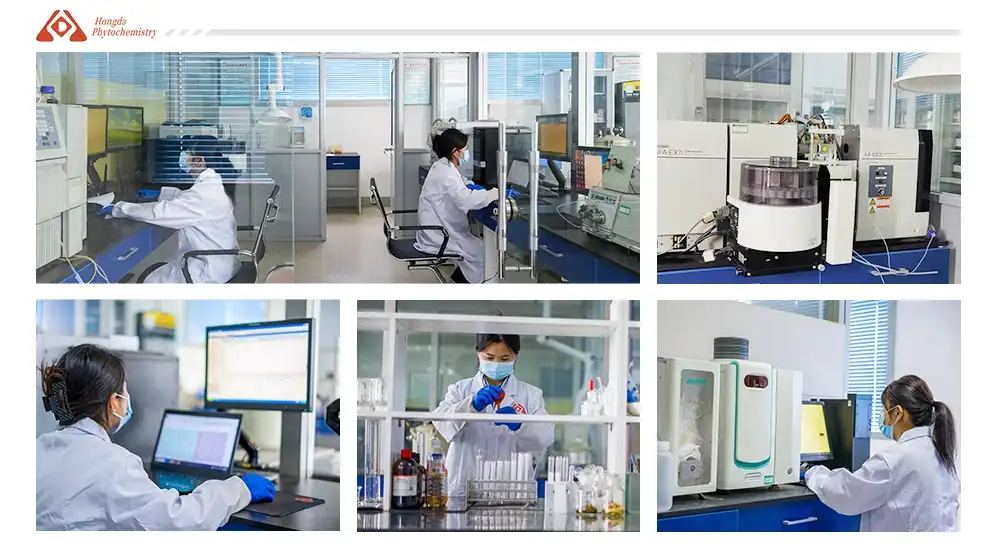
Once a development team settles on liraglutide api as the target molecule, the real differentiation happens at the supplier level, not the molecule level. Liraglutide API powder from one factory is not interchangeable with liraglutide API powder from another once impurity profiles, testing rigour, and documentation depth are taken into account. Hongda's quality system was built specifically to close that gap: every batch passes through ingredient identity testing, pesticide residue screening, moisture analysis, heavy metal detection, and microbial testing before it ever leaves the facility, backed by an SGS-standardised laboratory operated jointly with university professors and more than twenty professor-level researchers.
| Comparison Point | Generic/Unverified Powder | Hongda Liraglutide Api Powder |
|---|---|---|
| Purity verification | Self-reported, inconsistent methods | HPLC + mass spectrometry, every batch |
| Heavy metal & residue testing | Often skipped or sampled occasionally | Standard pre-shipment protocol |
| Certification depth | Limited or undisclosed | cGMP, ISO9001, ISO22000, FDA-related, EU/NOP organic |
| Traceability to raw material | Rarely documented | Dedicated planting bases with agronomist oversight |
| Production scale flexibility | Fixed, low-volume batches | Up to ~3,000 tons annual capacity |
HPLC and Mass Spectrometry as Non-Negotiable Checks
Sequence-level verification matters more for peptide APIs than for most small-molecule raw materials, since a truncated or misfolded chain in Liraglutide API powder can quietly alter receptor binding without showing up in a basic appearance check. Pairing HPLC with mass spectrometry on every lot closes that blind spot.
Certifications That Unlock Export Markets
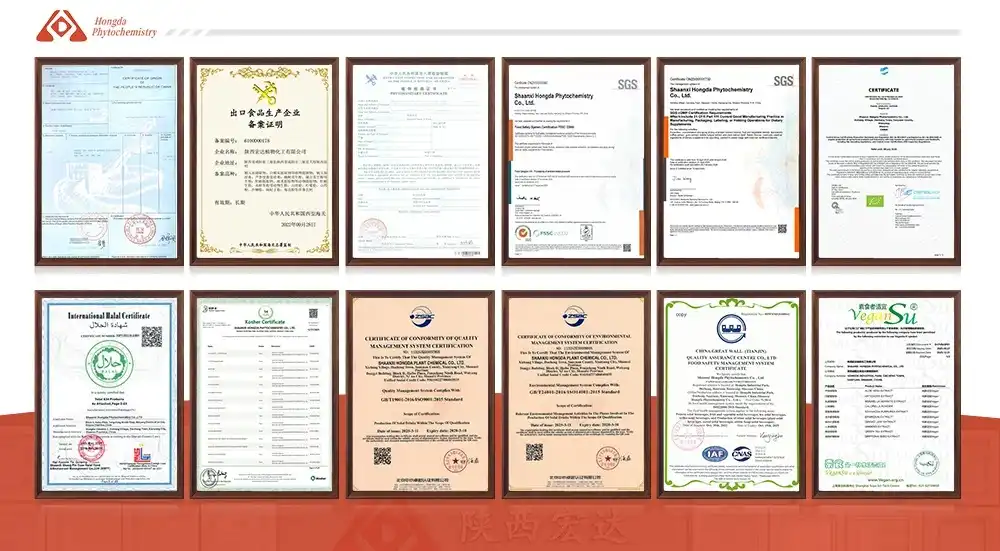
Between 2001 and 2024 Hongda secured national high-tech enterprise status; food and feed additive production licences; halal and kosher certification; BRC; FDA recognition; and organic certification, and 2025 brought cGMP, FSSC22000, SC certification, ISO22000, ISO9001, and EU and NOP organic certification on top of that. For buyers shipping into the US and EU, this certification stack is frequently the deciding factor between shortlisting a supplier and passing on one.
Raw Material Traceability From the Ground Up
Few competitors can trace a peptide API back to a specific cultivation programme, but Hongda's three planting bases — covering high-mountain green tea, Sophora japonica bean, and Chinese medicinal materials — are overseen by professional agronomists who supervise every stage before raw material even enters processing. That level of upstream control feeds directly into the consistency of the finished Liraglutide API powder.
Inventory Depth That Prevents Supply Gaps
Hongda's 3,000-square-metre warehouse is organised into six dedicated zones — A and B for fruit and vegetable powders, C and D for plant extracts, E for vitamins and amino acids, and F for sample stock — each maintained under professional sterilisation protocols. That structured inventory system is part of why liraglutide API supply rarely becomes the bottleneck in a client's production schedule.
Product Specification
|
Test
|
Specification
|
Results
|
|
Appearance:
|
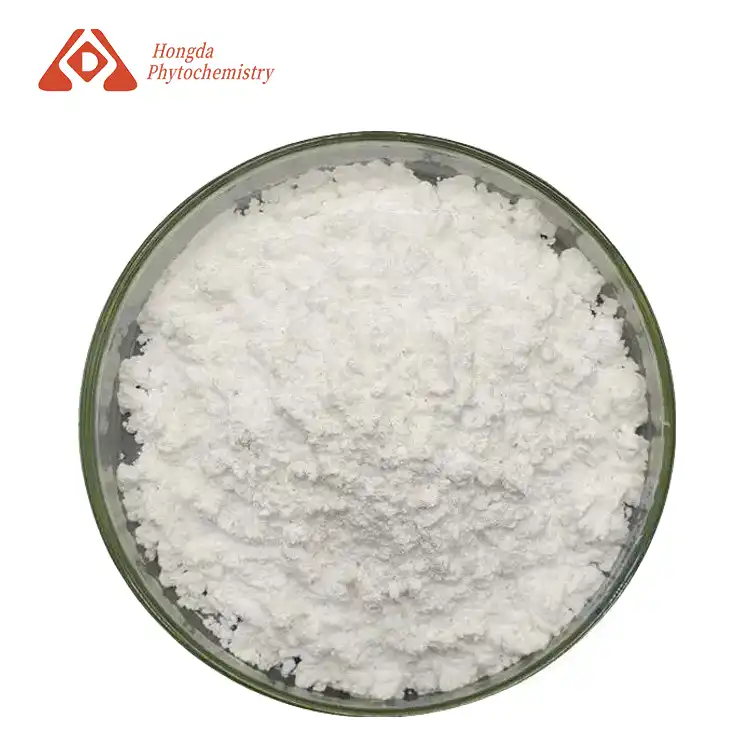
White to off-white crystalline powder or lumps
|
White powder
|
|
Identity:
|
3751.2±1.0
|
3751.1
|
|
Purity (By HPLC) :
|
Not Less than 98.0%;
|
99.51%
|
|
Residual solvents:
|
≤0.25%total; ≤0.1%individual;
≤0.01%CH2CN
|
Complies
|
|
Related Peptide
|
Total Impurity ≤ 2.0%
Largest Single Impurity ≤ 1.0%
|
TI =0.41%
LSI =0.25%
|
|
Peptide Content:
|
Not Less than 85.0%
|
87.7%
|
|
Water (K.F.):
|
Not more than 5%
|
4.2%
|
|
Acetate acid:
|
Not more than 10%
|
8.1%
|
|
Bacterial Endotoxins
|
Not more than 50IU/mg
|
Complies
|
Cost, Scalability, and Supply Reliability Across GLP-1 Raw Materials
Price comparisons between GLP-1 raw materials almost always miss the variable that matters most over a multi-year programme: whether the supplier can still deliver the same liraglutide API powder specification at ten times the original order volume. Hongda's more than 150 trained workshop technicians and roughly 3,000-tonne annual output exist precisely to absorb that kind of scale-up, while many smaller GLP-1 raw material brokers cannot move past pilot batch volumes without re-negotiating specifications or timelines.
For procurement teams comparing landed cost, lead time, and scale-up flexibility across different GLP-1 raw materials, the fastest way to get a real answer is to ask directly — email Hongda Phytochemistry's team at duke@hongdaherb.com with your target volume and timeline, and they can return a comparative quote against whatever alternative you are currently evaluating.
Why Landed Cost Beats List Price as a Comparison?
A lower quoted price on a competing GLP-1 raw material often hides additional testing costs, slower lead times, or inconsistent purity that forces re-ordering. Factoring in Hongda's pre-shipment testing and certification coverage typically narrows or reverses that apparent price gap once the total landed cost is calculated.
Scaling From Pilot Batch to Commercial Volume
Programs that work with gram-scale Liraglutide API powder during early formulation need a supplier capable of jumping to kilogram and eventually multi-tonne volumes without disrupting the established quality baseline — exactly the transition Hongda's production infrastructure is designed to support.
Avoiding Single-Source Dependency Risk
Multi-year development and commercial programmes are vulnerable when they depend on a single small-batch broker for liraglutide API supply. Hongda's two dedicated R&D institutions and systematic testing equipment give buyers a backup-capable, audit-ready alternative rather than a single point of failure.
Responsiveness During Time-Sensitive Scale-Up Decisions
When a formulation milestone depends on a timely answer about available batch size or updated certificates of analysis, working with a supplier whose technical team responds directly — rather than routing through a generic distributor — measurably shortens decision cycles during scale-up.
Making the Switch: What Buyers Should Verify Before Changing Suppliers?
Switching a GLP-1 raw material supplier mid-programme is rarely simple, and teams considering a move toward Hongda's Liraglutide API powder should know exactly what to request before committing. The goal is not just matching a previous specification on paper but confirming the new supplier can reproduce that specification at the volumes the programme will eventually need.
| GLP-1 Molecule | Typical Dosing Interval | Approval History |
|---|---|---|
| Liraglutide | Daily | FDA-approved 2010, longest real-world track record in class |
| Exenatide | Twice daily / weekly | Exendin-4-based, earlier-generation agent |
| Dulaglutide | Weekly | GLP-1-based, approved for T2D |
| Semaglutide | Weekly | Approved 2017, longer half-life via C-18 fatty diacid chain |
Requesting a Full Certificate of Analysis
Every shipment of Liraglutide API powder should arrive with a certificate of analysis covering purity, identity, residual solvents, and microbial testing results — not a generic spec sheet copied across product lines.
Comparing Stability Data Side by Side
Before switching, request accelerated and long-term stability data under ICH-aligned conditions and compare it directly against your current supplier's figures, since stability behaviour can vary even between two powders that both claim 99% purity.
Confirming Certification Validity for Your Target Market
Not every certification applies to every export market. Confirm which of Hongda's cGMP, FDA-related, halal, kosher, or EU/NOP organic certifications are directly relevant to the regulatory pathway your finished product will follow.
Running a Parallel Qualification Batch
Most experienced procurement teams run one parallel qualification batch of new Liraglutide API powder alongside their existing material before fully switching suppliers, confirming real-world performance rather than relying on paperwork alone.
Conclusion
Choosing Liraglutide API Powder over other GLP-1 raw materials comes down to a proven molecule backed by a supplier that can prove its quality, certifications, and liraglutide API supply capacity at any scale. Hongda Phytochemistry's testing infrastructure, certification depth, and production capacity make that case directly. Teams comparing GLP-1 raw materials are encouraged to request a side-by-side quote before finalising their next sourcing decision.
FAQ1. What makes Hongda's liraglutide API powder different from other suppliers?
Hongda's certified manufacturing infrastructure, batch-level HPLC and mass spectrometry testing, and documented raw-material traceability distinguish it from unverified brokers.
2. Can Hongda supply Liraglutide API powder at a commercial scale?
Yes, the factory's annual output capacity reaches approximately 3,000 tons across its product lines.
3. What certifications should I verify before switching GLP-1 raw material suppliers?
Confirm cGMP, ISO9001, ISO22000, and any market-specific certifications such as FDA, halal, kosher, or EU/NOP organic status.
4. How do I request a comparative quote for liraglutide API supply?
Email duke@hongdaherb.com with your target volume and timeline for a direct comparison against your current supplier.
HONGDA Liraglutide API Supply & Comparison Inquiry
If you are weighing Liraglutide API powder against another GLP-1 raw material, the most useful next step is a direct comparison, not another data sheet. Send your specifications, target volume, and timeline to duke@hongdaherb.com, and Hongda's technical team will respond with certificates of analysis, pricing, and available liraglutide API supply windows so you can make the switch with full confidence.
References
1. Knudsen, L.B., Lau, J. (2019). "The Discovery and Development of Liraglutide and Semaglutide." Frontiers in Endocrinology.
2. Rasmussen, J.H. (2018). "Synthetic peptide API manufacturing: a mini review of current perspectives for peptide manufacturing. "Bioorganic & Medicinal Chemistry.
3. Latif, W., Lambrinos, K.J., Patel, P., Rodriguez, R. (2024). "Glucagon-like peptide agonists: A prospective review." National Center for Biotechnology Information research collection.
4. Htike, Z.Z., Zaccardi, F., Papamargaritis, D., et al. (2017). "Efficacy and safety of glucagon-like peptide-1 receptor agonists in type 2 diabetes: a systematic review and mixed-treatment comparison analysis. "Diabetes, Obesity and Metabolism.
5. Tan, Q., Akindehin, S.E., et al. (2024). "Mechanisms of action and therapeutic applications of GLP-1 and dual GIP/GLP-1 receptor agonists." PMC research collection.
6. Andersen, A., Knop, F.K., Vilsbøll, T. (2018). "A pharmacological and clinical overview of oral semaglutide for the treatment of type 2 diabetes." Drugs.