


_1745918362135.webp)

Tirzepatide API Powder: What Manufacturers Must Control in Production?
Manufacturing a 39-amino-acid dual-agonist peptide is very different from running a standard small-molecule production line, and the difference between a controlled process and an uncontrolled one is clear in every batch of Tirzepatide Api Powder that leaves the factory. Hongda Phytochemistry, operating under its registered name Shaanxi Hongda Phytochemistry Co., Ltd., has built its production system around exactly the control points that matter for this class of molecule – synthesis precision, impurity tracking, and verified raw material inputs – across a 20,000-square-metre facility with more than ten modern production lines and 100,000-level purification workshops. The company's national patent technologies and its 2010 recognition as a National High-Tech Development Enterprise reflect years of refining these controls specifically for complex peptide APIs. This article breaks down what manufacturers genuinely need to control at each stage of Tirzepatide API powder production and why skipping any of these steps creates risk that surfaces much later in a formulation programme.
Controlling the Synthesis Stage Before Anything Else
Tirzepatide's 39-residue chain, which is usually made using solid-phase peptide synthesis, gives manufacturers many more chances to make mistakes than shorter peptides do. Stepwise amino acid assembly means that even small variations in coupling reagents, resin selection, or reaction time can quietly compound across dozens of synthesis cycles, and an impurity that looked insignificant in a 100-milligram lab batch can become a critical quality problem once production scales to kilograms. Manufacturers producing Tirzepatide Api Powder at commercial volume have to treat every one of these synthesis variables as a control point, not an assumption, because nothing downstream can fully correct for a flawed synthesis run.[1][3]
Resin Selection and Coupling Reagent Consistency
Switching resin batches or coupling reagents mid-programme without revalidation is one of the fastest ways to introduce inconsistency into Tirzepatide API powder production, since even subtle reactivity differences between reagent lots can change how cleanly each amino acid couples to the growing chain.[2]
Capping Strategies to Limit Truncation Impurities
Effective capping at each synthesis cycle prevents truncated peptide chains from continuing to elongate, which is essential for a 39-residue sequence where even a handful of truncation events per cycle can produce a measurable impurity load by the time synthesis is complete.
Cleavage and Side-Chain Deprotection Control
The cleavage step, which removes the completed peptide from its solid support and deprotects side chains, is itself capable of generating new impurities if reaction time or reagent concentration drifts outside validated ranges – a risk that has to be specifically monitored for any Tirzepatide API powder production run.
Managing Aggregation During Synthesis and Cleavage
Larger, more hydrophobic peptide sequences like tirzepatide are more prone to aggregation during synthesis or cleavage, which can quietly reduce both yield and purity if process conditions are not specifically adjusted to manage it.[4]
Purification and Impurity Control Once Synthesis Is Complete
Finishing synthesis is only the midpoint of producing reliable Tirzepatide API powder. Purification has to separate the target peptide from a complex mixture of related and unrelated impurities, and regulatory expectations are unambiguous that peptide-related impurities arising from starting materials or side reactions during synthesis must be strictly controlled. The challenge is that some of these impurities can couple at a faster rate than the target molecule itself during synthesis, becoming enriched in the crude product, and can then co-elute with the active peptide during purification – making them genuinely difficult to remove once they reach this stage.
| Control Point | What Can Go Wrong Without It | Why It Matters for Tirzepatide Api Powder |
|---|---|---|
| Reverse-phase HPLC purification parameters | Co-elution of peptide-related impurities with target API | Impurities can be hard to detect with routine release methods |
| Residual solvent control (acetonitrile, TFA, etc.) | Solvent residues concentrated during lyophilisation | Less volatile impurities can build up in the final dried powder |
| In-process testing between synthesis stages | Problems detected only at final release, too late to correct | Early detection limits cost and rework at the commercial scale |
| Final lyophilisation parameters | Moisture variability affecting stability | Directly impacts shelf life and downstream formulation behaviour. |
Reverse-Phase HPLC as the Primary Purification Step
Reverse-phase HPLC purification remains the standard method for isolating Tirzepatide API powder from synthesis-related impurities, but the solvents and reagents used at this stage — acetonitrile, methanol, isopropanol, acetic acid, trifluoroacetic acid — carry their own risk of impacting final product quality if not tightly controlled themselves.
Tracking Impurities That Resist Standard Detection
Some peptide-related impurities are genuinely difficult to detect using routine API release methods, which is why manufacturers serious about Tirzepatide Api Powder quality build additional orthogonal testing into their release process rather than relying on a single analytical method.
Managing Concentration Effects During Lyophilisation
Evaporation and lyophilisation steps can concentrate less volatile impurities in the final substance rather than removing them, making careful control of these final processing steps just as important as the purification step itself.
In-Process Testing Versus End-Stage Testing Alone
Catching a developing impurity problem mid-process, rather than waiting for final batch release testing, is what allows manufacturers to correct course before an entire commercial-scale batch of Tirzepatide Api Powder is compromised.
Product Specification
|
Test Items
|
Specifications
|
|
|
Appearance
|
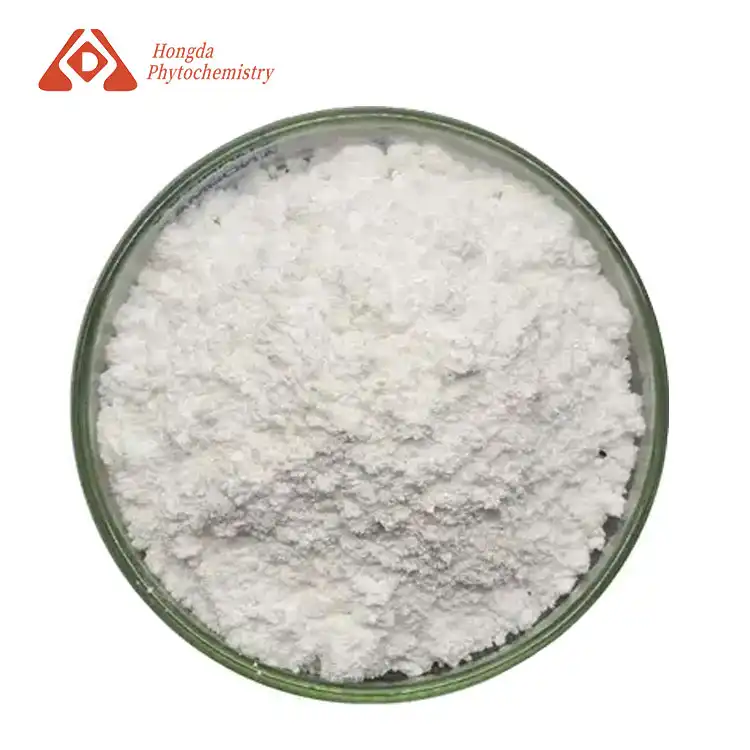
White or almost white powder
|
|
|
Solubility
|
Freely soluble in water
|
|
|
Identification by HPLC
|
The retention time of the principal peak of the test solution corresponds to that of the reference solution, as obtained in the assay
|
|
|
Molecular Ion Mass by MS
|
4813.45±1.0
|
|
|
Amino Acid Content
|
Asp
|
1.6 ~ 2.4
|
|
Tyr
|
1.6 ~ 2.4
|
|
|
Lys
|
1.6 ~ 2.4
|
|
|
Ile
|
2.0 ~ 3.2
|
|
|
Leu
|
1.6 ~ 2.4
|
|
|
Val
|
0.8 ~ 1.2
|
|
|
Thr
|
1.6 ~ 2.4
|
|
|
Phe
|
1.6 ~ 2.4
|
|
|
Ser
|
4.0 ~ 6.0
|
|
|
Ala
|
3.2 ~ 4.8
|
|
|
Gly
|
3.2 ~ 4.8
|
|
|
Glu
|
3.2 ~ 4.8
|
|
|
Pro
|
3.2 ~ 4.8
|
|
|
Aib
|
N/A
|
|
|
AEEA
|
N/A
|
|
|
Water Content (K. F)
|
Not more than 8.0%
|
|
|
Solution Clarity and Color
|
Clear and colorless
|
|
|
Purity (HPLC)
|
Not less than 99.0%
|
|
|
Related Substances (HPLC)
|
Total impurities
|
Not more than 1.0%
|
|
Maximum single impurity
|
Not more than 0.5%
|
|
|
Impurities with molecular masses greater than that of Tirzepatide (Size Exclusion)
|
Not more than 0.50%
|
|
|
Residual Solvents
|
Acetonitrile
|
Not more than 410 ppm
|
|
Methanol
|
Not more than 3000 ppm
|
|
|
Bacterial Endotoxins
|
Less than 10 EU/mg
|
|
|
Microbial Limits
|
TAMC
|
Not more than 100 CFU/g
|
|
TYMC
|
Not more than 100 CFU/g
|
|
|
Trifluoroacetate Ion
|
Not more than 0.10%
|
|
|
Sodium Ion
|
Not more than 5.0%
|
|
|
Acetate Ion
|
Not more than 0.10%
|
|
|
Phosphate Ion
|
Not more than 0.10%
|
|
|
Peptide Content
|
Not less than 60.0 mg
|
|
|
Assay (HPLC)
|
95.0% ~ 105.0% (On anhydrous and salt-free substance basis)
|
|
Verifying Raw Material Quality Before Production Even Begins
Every control point in the synthesis and purification stages depends on raw materials that were already pure and properly characterised before production began. Quality attributes for raw materials feeding into peptide synthesis need to account not just for basic identity and purity but for tight limits on trace impurities that could otherwise transform into peptide-related impurities during the coupling process itself.
For manufacturers and formulators who want to see exactly how Hongda verifies raw material inputs before Tirzepatide Api Powder production begins, the most direct way to get that documentation is to email duke@hongdaherb.com and request current certificates of analysis alongside raw material traceability records. This is precisely the kind of upstream control that prevents downstream impurity problems from ever developing in the first place.
Why Raw Material Testing Happens Before Synthesis Starts?
Testing finished, Tirzepatide API powder alone cannot catch every risk; raw materials entering the synthesis process need their own identity, purity, pesticide residue, heavy metal, and moisture testing because contamination introduced this early can turn into harder-to-detect impurities later.
Traceability From Cultivation Through to Synthesis Input
Hongda's three dedicated planting bases, covering high-mountain green tea, Sophora japonica bean, and Chinese medicinal materials, are supervised by professional agronomists specifically so that raw material quality can be traced back to its origin rather than simply trusted on arrival.
Final-Stage Materials Carry the Highest Risk
Materials used in the final manufacturing steps are considered the most critical of all, since no further purification follows them — meaning any contamination introduced here has nowhere left to be removed before the Tirzepatide API powder batch is released.
Inventory and Storage Conditions That Preserve Raw Material Integrity
Hongda's 3,000-square-metre warehouse, divided into six dedicated and sterilisation-controlled storage zones, protects raw material integrity between receipt and production use, reducing the chance that storage conditions introduce variability before synthesis even starts.
Certifications and Documentation That Prove the Controls Actually Work
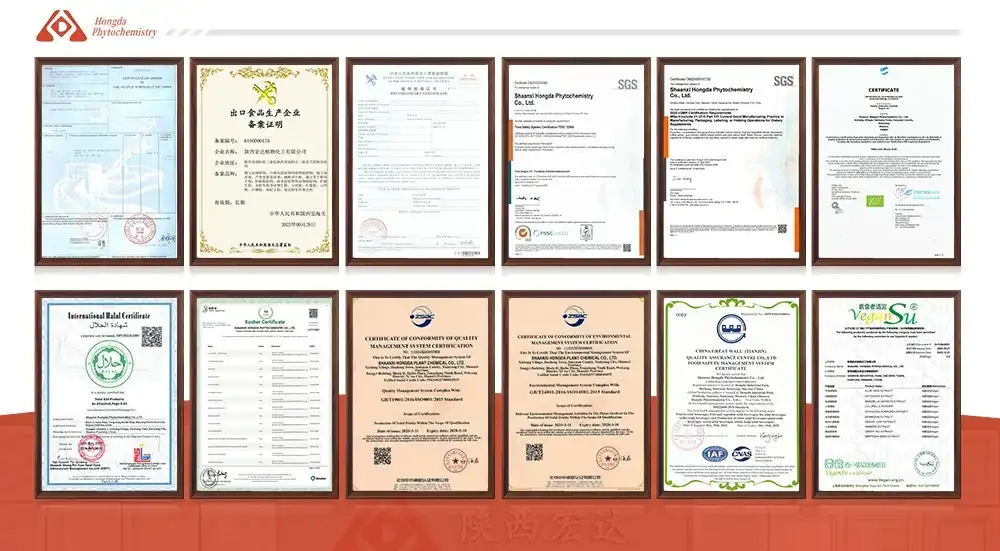
None of these production controls matter to a buyer unless documentation proves, audits, and traces them. Hongda's certification portfolio exists specifically to demonstrate that its Tirzepatide Api Powder controls are real and verifiable, not just claimed. The company's certifications now span cGMP, FSSC22000, SC certification, ISO22000, and ISO9001, secured in 2025, layered on top of national high-tech enterprise status; food production licences; halal and kosher certification; BRC; FDA-related certification; and organic certification accumulated since 2001, alongside EU and NOP organic certification that further opens export pathways into Western markets.
|
Certification
|
Year Obtained
|
Relevance to Tirzepatide Api Powder Buyers
|
|---|---|---|
|
National High-tech Enterprise status
|
2010
|
Confirms ongoing R&D investment and innovation capacity
|
|
FDA-related certification, BRC, halal/kosher
|
2001–2024
|
Supports export readiness across multiple markets
|
|
cGMP, ISO22000, ISO9001, FSSC22000
|
2025
|
Confirms documented, auditable production process control
|
|
EU and NOP organic certification
|
2025
|
Opens regulatory pathways into US and European markets
|
What a Certificate of Analysis Should Actually Confirm?
A meaningful certificate of analysis for Tirzepatide Api Powder needs to go beyond a single purity percentage and document identity confirmation, residual solvent levels, heavy metal results, and microbial testing outcomes for the specific batch being shipped.
cGMP Certification as Proof of Process Discipline
cGMP certification signals that production controls are documented, repeatable, and subject to audit, rather than informal — exactly the standard buyers should expect before committing to a long-term Tirzepatide API powder supply relationship.
ISO Certifications and Quality Management Systems
ISO9001 and ISO22000 certifications demonstrate that quality management extends beyond the production line itself into how a facility manages documentation, corrective actions, and continuous improvement across its entire operation.
Why Export-Market Certifications Matter for Global Buyers
EU and NOP organic certification, FDA-related certification, and BRC accreditation collectively reduce the regulatory friction buyers face when importing Tirzepatide Api Powder into the US and European markets, where documentation gaps can otherwise delay shipments significantly.
Conclusion
Producing reliable Tirzepatide API powder requires controlling synthesis precision, impurity formation, raw material quality, and documentation at every stage, not just testing the finished batch. Hongda Phytochemistry's certified infrastructure and rigorous process controls address each of these points directly. Manufacturers evaluating a new supplier are encouraged to request full documentation before committing to a production partnership.
FAQ1. Why is Tirzepatide API powder harder to manufacture consistently than shorter peptides?
Its 39-residue chain creates more opportunities for synthesis variability and impurity accumulation across dozens of coupling cycles.
2. What is the biggest impurity risk during peptide API production?
Peptide-related impurities that couple faster than the target molecule and co-elute during purification, making them difficult to remove or detect.
3. Does raw material quality really affect the final Tirzepatide API powder batch?
Yes, contamination introduced at the raw material stage can transform into harder-to-detect impurities later in synthesis.
4. What certifications should I check before sourcing Tirzepatide Api Powder?
Look for cGMP, ISO9001, ISO22000, and relevant export-market certifications such as FDA-related and EU/NOP organic certifications.
HONGDA Technical Support for Tirzepatide API Documentation & Quality Verification
If your team needs to verify exactly how Tirzepatide Api Powder is controlled from synthesis through final release, Hongda Phytochemistry's technical staff can provide certificates of analysis, impurity profiles, and certification records on request. Email duke@hongdaherb.com with your specification requirements and volume, and receive the documentation your quality team needs before finalising your next production partnership.
References
1. USP Therapeutic Peptides Expert Panel (2024). "Control Strategies for Synthetic Therapeutic Peptide APIs, Part I: Analytical Considerations." Pharmaceutical Technology.
2. USP Therapeutic Peptides Expert Panel (2024). "Control Strategies for Synthetic Therapeutic Peptide APIs, Part II: Raw Material Considerations." BioPharm International.
3. USP Therapeutic Peptides Expert Panel (2024). "Control Strategies for Synthetic Therapeutic Peptide APIs, Part III: Manufacturing Process Considerations." Pharmaceutical Technology.
4. D'Hondt, M., Bracke, N., Taevernier, L., et al. (2014). "Related impurities in peptide medicines." Journal of Pharmaceutical and Biomedical Analysis.

_1751535186455.webp)