


_1745918362135.webp)

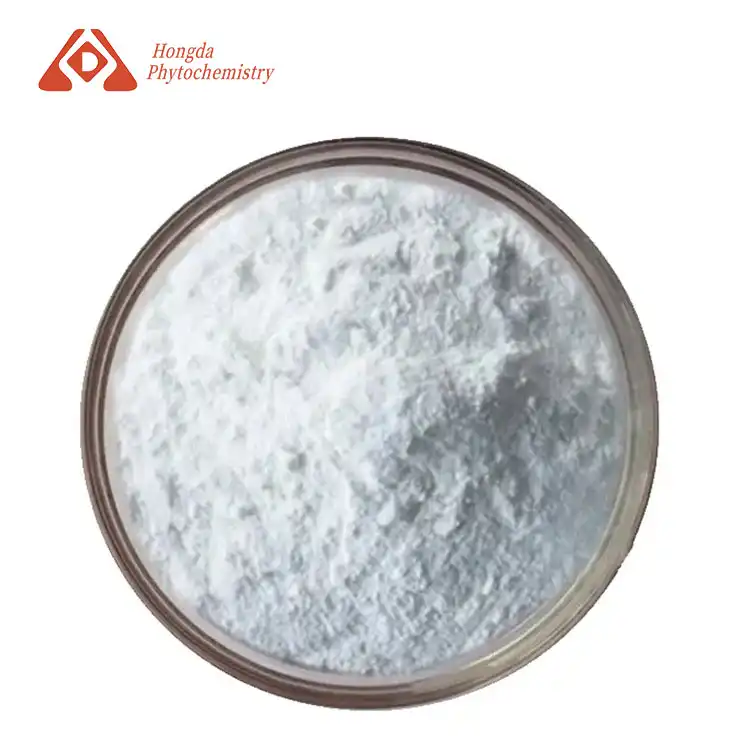
Bulk Soy Lecithin Powder - High Quality & Food Grade
Industrial-grade emulsifiers are made by Hongda Phytochemistry and Shanxi Hongda Phytochemistry Co., Ltd. for stable, scalable food production systems that need consistent recipe performance.If your production line has problems with phase separation, unstable emulsification, or different batches of different textures, choosing the right Soybean Lecithin Powder Bulk is more than just buying an ingredient. Food companies today have very strict quality standards. Even small problems with emulsification can cause batches to be rejected, products to be recalled, and production costs to go up.
What Soy Lecithin Does in Industrial Food Systems
Soy lecithin is a phospholipid complex that comes from soybeans and is made into a useful lubricant that is used in a lot of processed foods. When Soybean Lecithin Powder Bulk is mixed with water, it stabilises the boundary between the oil and water phases, which allows for even distribution in complicated food mixtures.
Some of its main roles are:
- Making emulsions stable in systems with more than one phase
- Getting prepared foods to have more consistent textures
- Improving the speed of mixing during production
- Keeping things from separating during travel and storage
Compared to lower-grade emulsifiers, lecithin that has been properly handled keeps working well even when the temperature changes and there is mechanical pressure.
Functional Parameters That Determine Industrial Performance
The success of Soybean Lecithin Powder Bulk is based on chemistry and physical factors that can be measured, not on promises of general quality.
Some key success measures are:
- Consistency of phospholipid levels
- Controlling the amount of residual liquid (important for food safety)
- Content that doesn't dissolve in acetone (functional emulsification strength sign)
- Stability in moisture (lowers the risk of microbes during storage)
Particle consistency (affects how well production processes mix things together). Each measure in Soybean Lecithin Powder Bulk has a direct effect on how the emulsifier works in real production settings, like when it is mixed quickly, heated, or stored for a long time.

Industrial Applications Across Food Manufacturing
Because it works with a lot of different manufacturing methods, soy lecithin powder is used in a lot of different types of industrial foods.
Systems for processing bread
- Makes the dough more flexible and easier to work with
- Makes the crumbs softer and the shelf more stable.
- Keeps ingredients from separating during baking
Production of Chocolate and Sweets
- Keeps stickiness in check while processing
- Makes mould release work better
- Makes the layer smoother
Formulations for Drinks and Food
- Allows for quick spread in liquids
- Keeps protein and vitamin powders from settling to the bottom.
- Speeds up the recovery of dry mixes
Systems for processed foods
- Keeps sauces, salads, and blended spreads stable.
- Improves the uniformity of fat spread
- Makes the process more stable at high temperatures
Production Efficiency Impact in Manufacturing Lines
Soybean Lecithin Powder Bulk makes products more stable and makes manufacturing more efficient when it is used correctly.
Some of the perks seen in the industry are:
- Lower amounts of emulsifier needed
- Less batch decline because of instability
- Automatic mixing methods are now more consistent.
- Not as many additional stabilisers are needed.
- Better compatibility with processes at high temperatures
Because of these changes, there is less variation in output, and the total cost of making one unit is cheaper.
Quality Control and Certification Framework
Global safety and quality systems must be strictly followed when making food-grade emulsifiers.
Soybean Lecithin Powder Bulk manufacturers usually work under the following conditions:
- Quality control methods based on ISO 9001
- The FSSC 22000 license for food safety
- Production limits based on HACCP
- Systems for following Halal and Kosher rules
- Verification schemes for non-GMO foods (if available)
These methods make it possible to track soybeans from where they are grown to where they are packaged, which lowers the risk of noncompliance for producers further down the line.
Global Regulatory Compliance Requirements
Different markets have different rules about how emulsifiers can be used.
- FDA GRAS compliance (approval for sale in the US market)
- EU rules for food additive compliance
- Codex Alimentarius sets international rules for food safety
- Certified sellers give all the necessary paperwork, which includes:
Certificate of Analysis (COA) for each batch
- Reports on heavy metal and chemical residue
- Data from microbiological safety tests
- MSDS documents for safety
In foreign trade, this paperwork is necessary to clear customs and pass regulatory checks.
Supply Chain Stability and Bulk Procurement Strategy
For industrial buyers, supply continuity is often more important than unit price.
Reliable sourcing of Soybean Lecithin Powder Bulk reduces:
- Production interruption risk
- Emergency sourcing costs
- Quality inconsistency between batches
- Inventory stock-out risk
Bulk packaging formats (drums, palletised loads, container shipping) are designed to support large-scale food manufacturing systems with predictable consumption cycles.
Technical Support and Application Engineering
Leading providers offer expert support in addition to delivering raw materials. This includes:
- Fixing problems with emulsion stability
- Optimising dosage for certain formulas
- Making changes to processing conditions
- Testing to see if it works with other items
With this support, producers can shorten the time it takes to test new formulations and make output more efficient.
Conclusion
Good quality Soybean Lecithin Powder Bulk Bulk Soy Lecithin Powder - High Quality & Food Grade is an important part of modern food production systems that affects security, efficiency, and keeping costs down. By picking a trusted source like Hongda Phytochemistry and Shanxi Hongda Phytochemistry Co., Ltd., you can be sure of regular emulsification performance, help with regulatory compliance, and a reliable supply chain for commercial food production. Contact us at duke@hongdaherb.com today to discuss your specific requirements and discover how our expertise can elevate your product formulations.
References
1. "Food Emulsifiers and Their Applications" by Gerard L. Hasenhuettl and Richard W. Hartel, published by Springer Science & Business Media, comprehensive technical reference on lecithin functionality in food systems.
2. "Lecithin and Phospholipids: Technological and Nutritional Aspects" by Ivan Perneti, Proceedings of the European Lecithin Conference, examining quality standards and industrial applications.
3. "GRAS Substances (SCOGS) Database: Lecithin" by the United States Food and Drug Administration Select Committee on GRAS Substances, regulatory documentation establishing safety status.
4. "Soy Lecithin: Production, Properties and Applications in Food Industry" by Maria Teresa Pedrosa Silva Clerici in Journal of Food Science and Technology, peer-reviewed analysis of processing methods and quality parameters.
_1752046380392.webp)