



_1745918362135.webp)

How Can Tirzepatide API Powder Impact Dual-Agonist Formulations?
Dual-agonist therapeutics require more from raw materials than single-receptor peptides, and this is where Tirzepatide Api Powder changes the calculation for formulators. Hongda Phytochemistry, operating as Shaanxi Hongda Phytochemistry Co., Ltd., has built its peptide manufacturing programme around the kind of batch-to-batch consistency that dual-receptor chemistry requires, supported by an SGS-standardised laboratory, more than ten modern production lines across a 20,000-square-metre facility, and the national patent technologies the company has accumulated since its 2010 recognition as a National High-Tech Development Enterprise. For teams formulating around a molecule engineered to activate two distinct G-protein-coupled receptors at once, Tirzepatide Api Powder's purity profile and documentation depth directly determine whether a dual-agonist candidate behaves predictably in early formulation work. This article walks through exactly how that influence plays out, stage by stage.[1][6]
What Makes Tirzepatide a Structurally Different Raw Material?
Tirzepatide is not simply liraglutide or semaglutide with an extra feature bolted on — it is a fundamentally different synthetic peptide, built as a 39-amino-acid chain based on the native GIP sequence rather than the GLP-1 backbone most single-agonist raw materials share. A 20-carbon fatty diacid moiety attaches to this backbone and binds to albumin, extending the molecule's half-life to roughly five days and enabling once-weekly dosing. Tirzepatide API powder, therefore, arrives at the formulation bench with a structural identity that behaves differently from the GLP-1-only peptides most labs have years of handling experience with, and that difference shows up in everything from solubility behaviour to purification strategy.[1][6]
Built on the GIP Backbone, Not GLP-1
Tirzepatide API Powder carries receptor-binding characteristics primarily inherited from GIP biology because researchers engineered it by introducing GLP-1 activity into a GIP-based sequence, layering GLP-1 activity on top — a reversal of how most earlier dual-mechanism research approached incretin chemistry. [2]
The 20-Carbon Fatty Diacid Chain and Half-Life
The albumin-binding fatty diacid attachment is what gives Tirzepatide API Powder its extended five-day half-life, a longer window than liraglutide's daily profile and broadly comparable to semaglutide's weekly dosing window, though achieved through distinct chemistry.
Imbalanced Receptor Affinity by Design
Tirzepatide binds the GIP receptor with an affinity comparable to native GIP but engages the GLP-1 receptor roughly five times more weakly than native GLP-1 itself — an intentionally imbalanced, biased agonism that researchers believe helps maximise efficacy while limiting the gastrointestinal effects associated with stronger GLP-1 receptor activation.
Why Does This Structure Demand Tighter Synthesis Control?
A 39-residue peptide with a large lipidated side chain is structurally more complex to synthesise cleanly than shorter single-agonist peptides, which is precisely why Tirzepatide Api Powder purity verification needs to go beyond a single HPLC pass to include complementary methods that confirm both sequence fidelity and correct fatty-chain attachment.
How Does Tirzepatide API Powder Change the Dual-Receptor Formulation Strategy?
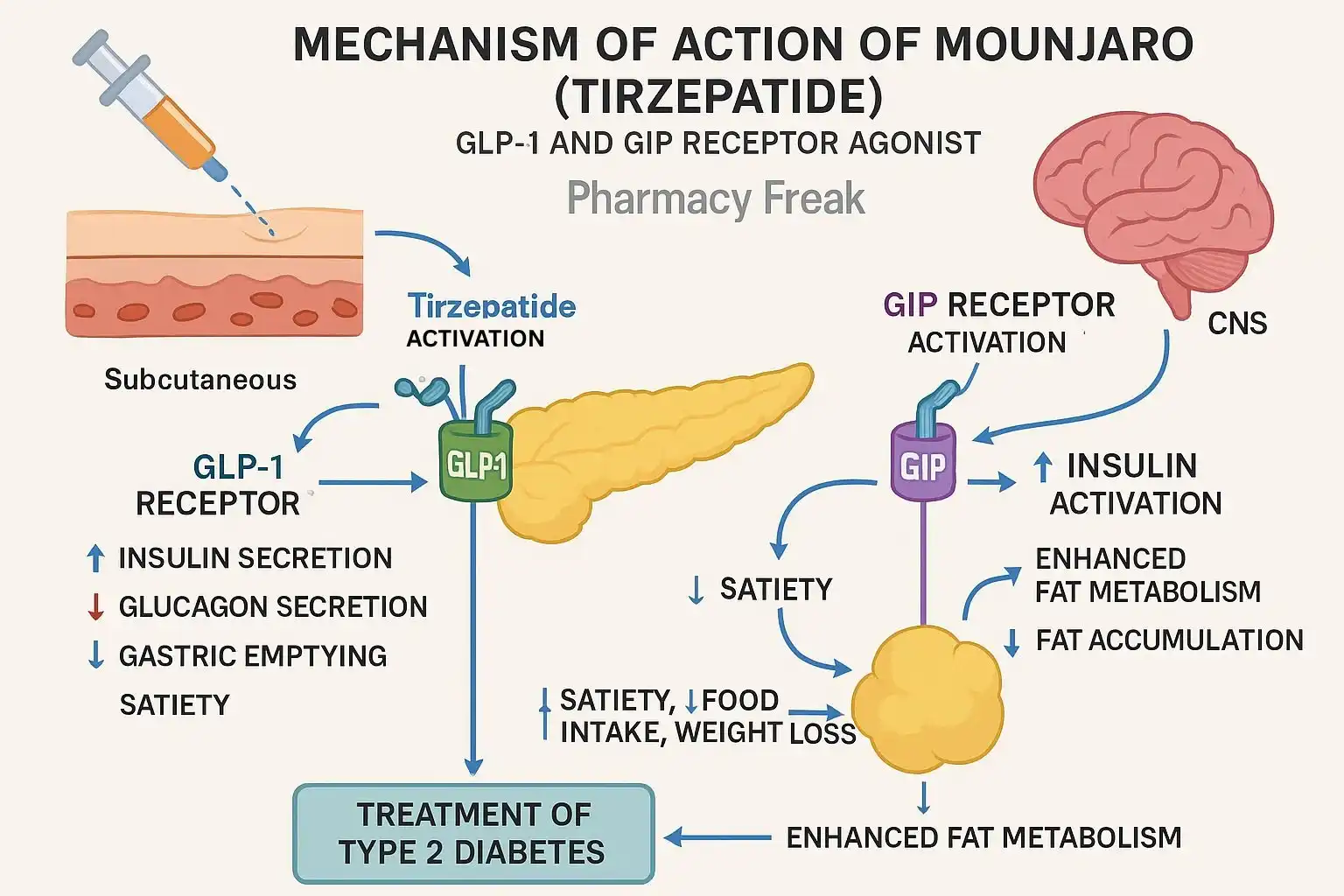
Formulating around a dual-agonist molecule is not simply a matter of swapping one peptide for another inside an existing process. Activation of both the GIP and GLP-1 receptors triggers complementary signalling cascades across pancreatic beta cells, adipose tissue, and central appetite-regulating circuits, producing effects that single-receptor agents cannot fully replicate. Formulators working with Tirzepatide Api Powder need to account for that dual mechanism at every stage, from excipient compatibility testing through to stability protocol design, because the molecule's behaviour in solution and under stress conditions reflects both of its receptor-binding domains simultaneously.[5]
|
Formulation Consideration
|
Why Tirzepatide Api Powder Requires Extra Attention
|
|---|---|
|
Solubility profile
|
The larger lipidated 39-residue structure behaves differently from shorter GLP-1-only peptides
|
|
Stability under thermal stress
|
A dual-domain structure can show distinct degradation pathways at each binding region
|
|
Excipient compatibility
|
The albumin-binding fatty acid chain interacts differently with common buffer systems
|
|
Reference standard verification
|
Confirms both GIP-derived backbone and GLP-1 functional activity are intact
|
Solubility and Buffer System Selection
The fatty diacid side chain on Tirzepatide Api Powder influences how the molecule behaves across different pH and buffer conditions, making early solubility mapping a more involved step than it typically is for smaller, unmodified peptides.
Stress Testing Across Two Receptor-Binding Domains
Because tirzepatide's GIP-derived backbone and its GLP-1-binding region can respond differently to heat, light, or agitation, accelerated stability testing on tirzepatide API powder needs to track degradation indicators relevant to both functional domains, not just one.
Reference Standard Calibration for Dual Activity
Laboratories rely on high-purity Tirzepatide Api Powder as a reference standard to confirm that production batches retain activity at both the GIP and GLP-1 receptors, since a batch could pass identity testing on sequence alone while still showing reduced functional binding at one receptor.
Combination and Comparator Study Design
Dual-agonist research increasingly compares tirzepatide against single-receptor agents and newer multi-agonist candidates, which means a consistent, well-documented tirzepatide API powder supply is essential for generating comparator data that actually holds up across study phases. [4]
Tirzepatide Api Specification
|
Test Items
|
Specifications
|
|
|
Appearance
|
White or almost white powder
|
|
|
Solubility
|
Freely soluble in water
|
|
|
Identification by HPLC
|
The retention time of the principal peak of the test solution corresponds to that of the reference solution, as obtained in the assay
|
|
|
Molecular Ion Mass by MS
|
4813.45±1.0
|
|
|
Amino Acid Content
|
Asp
|
1.6 ~ 2.4
|
|
Tyr
|
1.6 ~ 2.4
|
|
|
Lys
|
1.6 ~ 2.4
|
|
|
Ile
|
2.0 ~ 3.2
|
|
|
Leu
|
1.6 ~ 2.4
|
|
|
Val
|
0.8 ~ 1.2
|
|
|
Thr
|
1.6 ~ 2.4
|
|
|
Phe
|
1.6 ~ 2.4
|
|
|
Ser
|
4.0 ~ 6.0
|
|
|
Ala
|
3.2 ~ 4.8
|
|
|
Gly
|
3.2 ~ 4.8
|
|
|
Glu
|
3.2 ~ 4.8
|
|
|
Pro
|
3.2 ~ 4.8
|
|
|
Aib
|
N/A
|
|
|
AEEA
|
N/A
|
|
|
Water Content (K. F)
|
Not more than 8.0%
|
|
|
Solution Clarity and Color
|
Clear and colorless
|
|
|
Purity (HPLC)
|
Not less than 99.0%
|
|
|
Related Substances (HPLC)
|
Total impurities
|
Not more than 1.0%
|
|
Maximum single impurity
|
Not more than 0.5%
|
|
|
Impurities with molecular masses greater than that of Tirzepatide (Size Exclusion)
|
Not more than 0.50%
|
|
|
Residual Solvents
|
Acetonitrile
|
Not more than 410 ppm
|
|
Methanol
|
Not more than 3000 ppm
|
|
|
Bacterial Endotoxins
|
Less than 10 EU/mg
|
|
|
Microbial Limits
|
TAMC
|
Not more than 100 CFU/g
|
|
TYMC
|
Not more than 100 CFU/g
|
|
|
Trifluoroacetate Ion
|
Not more than 0.10%
|
|
|
Sodium Ion
|
Not more than 5.0%
|
|
|
Acetate Ion
|
Not more than 0.10%
|
|
|
Phosphate Ion
|
Not more than 0.10%
|
|
|
Peptide Content
|
Not less than 60.0 mg
|
|
|
Assay (HPLC)
|
95.0% ~ 105.0% (On anhydrous and salt-free substance basis)
|
|
Quality Infrastructure Behind a Dependable Tirzepatide Api Powder Supply
None of tirzepatide's structural advantages matter if the raw material arriving at a formulator's bench cannot be trusted batch after batch. Hongda's quality system addresses this directly: every Tirzepatide Api Powder batch undergoes ingredient identity testing, pesticide residue screening, moisture analysis, heavy metal detection, and microbial testing before shipment, carried out through an SGS-standardised laboratory jointly operated with university professors and supported by more than twenty professor-level researchers using equipment ranging from high-performance liquid chromatographs to atomic absorption spectrophotometers.
If your formulation team needs detailed batch documentation or wants to discuss specifications for an upcoming dual-agonist programme, the fastest path forward is direct contact — email Hongda Phytochemistry at duke@hongdaherb.com with your target purity and volume requirements, and the technical team can confirm current Tirzepatide Api Powder availability and lead times.
Multi-Method Purity Verification
Because tirzepatide's structure is more complex than single-agonist peptides, relying on HPLC alone leaves gaps. Cross-checking with mass spectrometry and complementary analytical methods on every lot of Tirzepatide Api Powder closes those gaps before the material ever reaches a customer.
Certifications That Support Global Dual-Agonist Programs
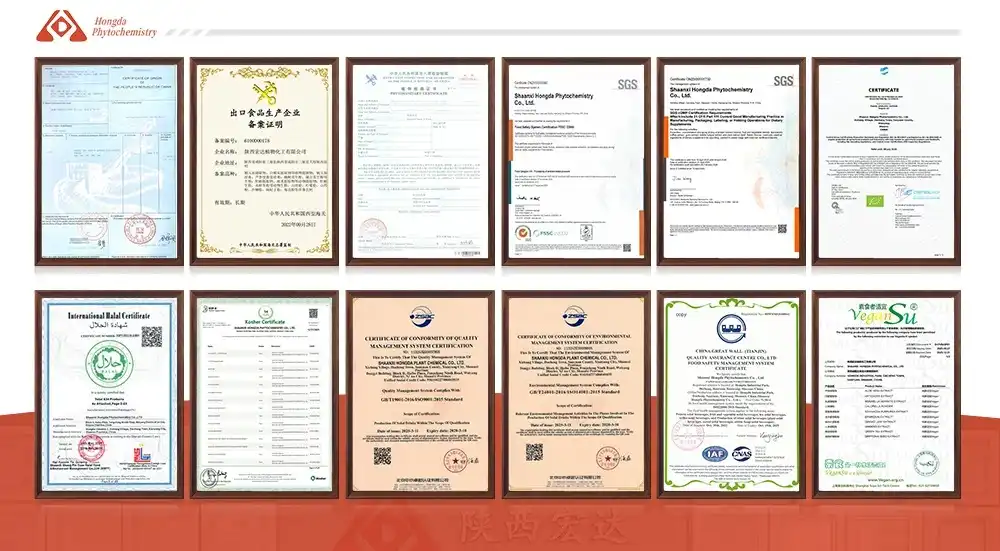
Hongda's certification portfolio, including cGMP, FSSC22000, ISO22000, ISO9001, and EU and NOP organic certification secured in 2025 alongside earlier FDA-related and BRC certifications, gives buyers documentation that import compliance teams across the US and EU specifically look for when qualifying a new dual-agonist raw material supplier.
Raw Material Traceability and Inventory Depth
Hongda's 3,000-square-metre warehouse, divided into six dedicated and professionally sterilised storage zones, supports consistent Tirzepatide API powder fulfilment even as demand for dual-agonist raw materials accelerates across the industry.
Scaling Without Losing Specification Integrity
An annual output capacity of roughly 3,000 tons, supported by more than 150 trained workshop technicians, allows Hongda to move a dual-agonist development programme from gram-scale formulation work to commercial-volume Tirzepatide Api Powder supply without forcing a costly re-qualification step mid-programme.
Where Dual-Agonist Formulation Work Is Heading Next?
Tirzepatide's success has already reshaped how the field thinks about incretin-based therapeutics, and the formulation lessons learned from working with Tirzepatide Api Powder are now informing the next generation of multi-receptor candidates. Triple agonists targeting GIP, GLP-1, and glucagon receptors simultaneously are already in active development, and much of the analytical and stability groundwork pioneered around dual-agonist formulation directly carries over to these newer molecules.
| Molecule Class | Receptor Targets | Dosing Interval |
|---|---|---|
| Liraglutide (single agonist) | GLP-1 only | Daily |
| Semaglutide (single agonist) | GLP-1 only | Weekly |
| Tirzepatide (dual agonist) | GIP + GLP-1 | Weekly |
| Emerging triple agonists | GIP + GLP-1 + glucagon | Weekly (in development) |
Tirzepatide as the Benchmark for Multi-Agonist Research
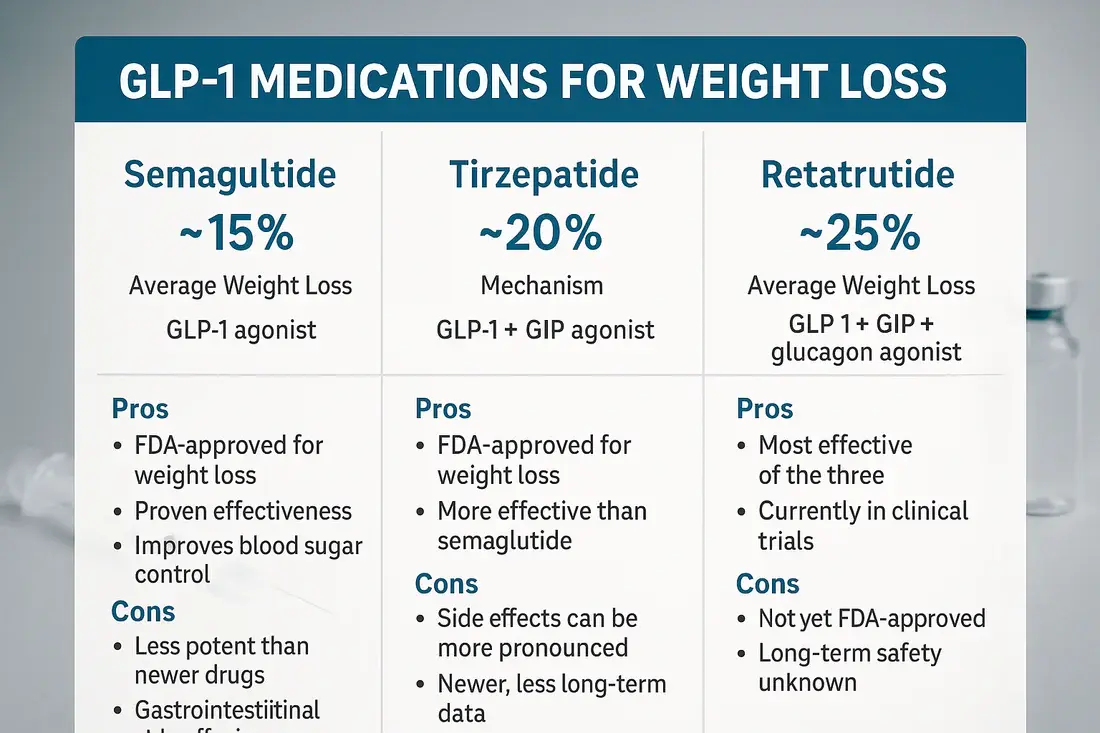
Head-to-head trials have already demonstrated meaningfully greater weight loss with tirzepatide compared to single-receptor GLP-1 agents, which keeps Tirzepatide Api Powder in steady demand as a comparator standard for newer multi-agonist candidates entering development. [3][4]
Lessons Carrying Over to Triple-Agonist Formulation
The stability and purity verification protocols developed around dual-receptor peptides translate directly into triple-agonist formulation work, since both molecule classes share the same fundamental challenge of confirming multiple binding-domain activities within a single batch.
Expanding Beyond Diabetes and Weight Management
Emerging research into Tirzepatide's effects on liver, kidney, and cardiovascular pathways is widening the formulation use cases for Tirzepatide Api Powder well beyond its original diabetes and obesity indications.
Long-Term Supply Planning for Commercial-Stage Dual-Agonist Products
As more dual- and multi-agonist candidates move toward commercial approval, developers need suppliers capable of scaling Tirzepatide Api Powder production without disrupting established specifications — a transition best planned years, not months, ahead of an anticipated approval.
Conclusion
Tirzepatide Api Powder brings genuinely different structural and formulation demands compared to single-receptor GLP-1 raw materials, and getting dual-agonist work right starts with a dependable, well-documented supply. Hongda Phytochemistry's testing infrastructure and certified production capacity support that consistency at any development stage. Teams building dual-agonist formulations are encouraged to reach out and discuss their specific Tirzepatide Api Powder requirements.
FAQ1. What makes Tirzepatide Api Powder different from single-receptor GLP-1 raw materials?
It is built on a GIP-derived 39-amino-acid backbone with an attached fatty diacid chain, giving it dual receptor activity and a distinct formulation profile.
2. Why does tirzepatide need a longer half-life than liraglutide?
Its albumin-binding fatty diacid chain extends the half-life to roughly five days, supporting once-weekly dosing rather than daily administration.
3. How is Tirzepatide API powder purity verified?
Through HPLC, combined with complementary analytical methods to confirm both sequence fidelity and functional activity at both receptor domains.
4. Can Hongda supply Tirzepatide API powder at a commercial scale?
Yes, the factory's annual output capacity reaches approximately 3,000 tons across its product lines.
5. How do I request documentation or a quote for Tirzepatide Api Powder?
Email duke@hongdaherb.com with your target purity and volume requirements for current availability and lead times.
Talk to Our Team About Your Tirzepatide Api Powder Needs | Tirzepatide manufacturer china
Dual-agonist formulation work deserves a raw material partner that understands the chemistry, not just the paperwork. Hongda Phytochemistry's technical staff can walk you through certificates of analysis, stability data, and current Tirzepatide API powder availability for your programme. Email duke@hongdaherb.com today with your specifications and volume, and move your dual-agonist formulation forward with confidence.
References
1. Min, T., Bain, S.C. (2021). "The Role of Tirzepatide, a Dual GIP and GLP-1 Receptor Agonist, in the Management of Type 2 Diabetes: The SURPASS Clinical Trials." Diabetes Therapy.
2. Willard, F.S., Douros, J.D., Gabe, M.B., et al. (2020). "Tirzepatide is an imbalanced and biased dual GIP and GLP-1-receptor agonist." JCI Insight.
3. Frías, J.P., Nauck, M.A., Van, J., et al. (2018). "Efficacy and safety of LY3298176, a novel dual GIP and GLP-1 receptor agonist, in patients with type 2 diabetes: a randomised, placebo-controlled and active comparator-controlled phase 2 trial."The Lancet.
4. Rosenstock, J., Wysham, C., Frías, J.P., et al. (2021). "Efficacy and safety of a novel dual GIP and GLP-1 receptor agonist tirzepatide in patients with type 2 diabetes (SURPASS-1). "The Lancet.
5. Patel, R., Sandhu, A., et al. (2025). "Unveiling Tirzepatide's Therapeutic Spectrum: A Dual GIP/GLP-1 Agonist Targeting Metabolic, Neurological, and Cardiovascular Health." Review article, PMC research collection.
6. Nauck, M.A., D'Alessio, D.A. (2022). "Tirzepatide, a dual GIP/GLP-1 receptor co-agonist for the treatment of type 2 diabetes with unprecedented effectiveness. "Molecular Metabolism.

_1753233943768.webp)