

_1745918362135.webp)

When pharmaceutical buyers, compounding pharmacies, and generic drug developers evaluate GLP-1 receptor agonist APIs, they typically focus on two molecules: liraglutide and semaglutide. Both are subcutaneous injectable peptides. Both treat type 2 diabetes and chronic obesity. Both have robust clinical datasets and global regulatory approvals. But they are not interchangeable, and the decision between them has real consequences for product development timelines, manufacturing cost, formulation complexity, and market positioning. Liraglutide API powder from Hongda Phytochemistry—produced by Shaanxi Hongda Phytochemistry Co., Ltd via a proprietary green solid-phase peptide synthesis (SPPS) process—brings a specific set of advantages to this comparison: 15-plus years of post-marketing safety data, ≥98% HPLC purity, and a 30–40% cost advantage over conventional synthesis routes. Understanding where each API fits in a buyer's strategy is what this guide is designed to deliver.
Molecular Profiles: Understanding What You're Actually Buying?
Before comparing clinical outcomes and commercial strategy, buyers need to understand how these two peptides differ at the molecular level, as those differences shape everything downstream.
Liraglutide: The Original Long-Acting GLP-1 Analogue
Liraglutide API Powder (CAS 204656-20-2) is a 31-amino acid acylated peptide with a molecular weight of 3,751.2 Da and 97% sequence homology to native human GLP-1 (7-37). Its extended half-life of 11–15 hours — enabling once-daily subcutaneous dosing — is achieved through a C-16 fatty acid chain attached to lysine-26, allowing the molecule to bind reversibly to albumin. This mechanism of binding to albumin slows down absorption from the subcutaneous depot, stops dipeptidyl peptidase-4 (DPP-4) from breaking it down, and lowers renal clearance. The molecule is produced via solid-phase peptide synthesis using standard Fmoc chemistry, with Hongda Phytochemistry's green SPPS process achieving ≥98% purity through single-pass RP-UHPLC purification and producing particles at ≤10 µm that dissolve fully in aqueous solution within one minute — a formulation-relevant characteristic that directly supports dissolution efficiency during sterile manufacturing.
Semaglutide: A Second-Generation Advance With Different Trade-offs
Semaglutide (CAS 910463-68-2) is a larger peptide at 4,113.6 Da, modified at two positions relative to native GLP-1: an aminoisobutyric acid (Aib) substitution at position 8 for DPP-4 resistance, and a C-18 fatty diacid chain linked via a spacer at lysine-34 for albumin binding. These modifications produce a dramatically extended half-life of approximately 165–184 hours, enabling once-weekly dosing, which is the defining commercial differentiator of semaglutide products. From an API manufacturing standpoint, semaglutide's larger molecular weight and more complex side-chain chemistry translate into more demanding synthesis and purification requirements than liraglutide API powder, contributing to its higher cost per gram at equivalent purity grades. For pharmaceutical buyers, the question is whether the clinical advantages of weekly dosing — primarily improved patient adherence in chronic therapy — justify the manufacturing cost premium at the API sourcing stage.
Half-Life, Dosing Regimen, and Formulation Implications
The half-life difference between Liraglutide API powder (11–15 hours) and semaglutide (165–184 hours) has practical consequences for both finished product formulation and clinical use. Liraglutide's shorter half-life requires daily dosing, but it also means that plasma concentrations reach steady state within days rather than weeks — a pharmacokinetic advantage in dose-titration protocols and in patients who require dose adjustments. For contract manufacturers developing multi-dose pen devices or prefilled syringes, liraglutide's formulation profile is well-characterised across more than 15 years of commercial production, with a deep body of reference data on excipient compatibility, preservative systems, and stability at various temperatures. Semaglutide's weekly dosing is clinically convenient, but its newer commercial history means that reference formulation knowledge is less mature and generic development timelines are longer.
|
Parameter
|
Liraglutide API Powder
|
Semaglutide API
|
|---|---|---|
|
CAS Number
|
204656-20-2
|
910463-68-2
|
|
Molecular Weight
|
3,751.2 Da
|
4,113.6 Da
|
|
Amino Acid Length
|
31 residues
|
31 residues (modified)
|
|
GLP-1 Sequence Homology
|
97%
|
94%
|
|
DPP-4 Resistance
|
C-16 fatty acid chain
|
Aib substitution + C-18 diacid
|
|
Plasma Half-Life
|
11–15 hours
|
165–184 hours
|
|
Dosing Frequency
|
Once daily (SC)
|
Once weekly (SC); oral available
|
|
Typical Purity (Pharmaceutical)
|
≥ 98% (Hongda HPLC)
|
≥ 98%
|
|
Relative API Cost
|
Lower (generic market open 2024)
|
Higher (patent protection in most markets)
|
|
Commercial History
|
FDA-approved 2010; 15+ years data
|
FDA-approved 2017/2021
|
|
Generic Market Status (2025)
|
Generic available (Teva, Hikma, others)
|
Patent-protected (most markets)
|
|
Synthesis Complexity
|
Moderate (standard SPPS)
|
High (complex linker chemistry)[6]
|
Clinical Efficacy: What the Head-to-Head Data Actually Shows?
The clinical comparison between these two molecules is well-studied. Here is what the evidence shows — and what it means for the products buyers are building.
Glycemic Control: Both Effective, Semaglutide Marginally Superior
Both liraglutide API powder-based formulations and semaglutide products achieve clinically meaningful HbA1c reductions in type 2 diabetes, with the difference being a matter of degree rather than kind. A 2025 systematic review and meta-analysis comparing the two agents found that semaglutide showed superior HbA1c reduction relative to liraglutide in most head-to-head analyses. [2] However, for pharmaceutical buyers, this distinction matters primarily at the product positioning level rather than the API sourcing level. A liraglutide-based product formulated at 1.8 mg/day delivers HbA1c reductions of approximately 1.1–1.6%, which is clinically significant and appropriate for the majority of type 2 diabetes patients. [5]The incremental superiority of semaglutide in glycaemic endpoints does not render liraglutide clinically inadequate—it simply positions liraglutide products in a well-established first-and-second-line therapy space with an enormous existing patient and prescriber base.
Weight Loss Outcomes: The Most Commercially Significant Difference
The weight loss comparison is where the clinical gap between the two molecules is most apparent, and it is the factor that most directly influences product positioning decisions. A large real-world effectiveness study published in 2024 reported that at one year, patients on semaglutide achieved an average weight reduction of 5.1% compared to 2.2% for liraglutide, with the difference widening further among patients with persistent medication coverage, where semaglutide for obesity produced −12.9% versus −5.6% for liraglutide for obesity. [1] For pharmaceutical manufacturers developing obesity treatment products, this gap is meaningful and influences prescriber preference in markets where both products compete. However, for buyers focused on the cost-sensitive primary care and compounding pharmacy segments — where patients who cannot afford branded semaglutide are actively seeking alternatives — liraglutide API powder-based products fill a real and growing access gap with clinically validated outcomes.
Cardiovascular Outcomes: Liraglutide's Long-Term Evidence Advantage
One dimension where liraglutide API powder holds a genuine advantage is the depth and maturity of its cardiovascular outcomes data. The LEADER trial — a 9,340-patient study — demonstrated a statistically significant 13% reduction in major adverse cardiovascular events (MACE) with liraglutide 1.8 mg versus placebo in patients with type 2 diabetes and high cardiovascular risk, with more than 3.5 years of median follow-up. [3] This level of long-term safety and cardiovascular efficacy documentation is unmatched by any other GLP-1 agent in depth of follow-up data. For pharmaceutical manufacturers developing branded or generic liraglutide products targeting cardiometabolic indications — or for formulators building evidence-based product narratives for prescriber education — this cardiovascular dataset represents a durable and difficult-to-replicate clinical asset that supports premium positioning despite liraglutide's generic market status.
Whether you're launching a generic liraglutide injectable, qualifying an API for a compounding programme, or evaluating both molecules for a multi-product pipeline — Hongda Phytochemistry offers a ≥98% purity liraglutide API powder with full cGMP documentation and a 30–40% cost advantage. Start your sourcing conversation today. Enquire Now: duke@hongdaherb.com
The Commercial Case for Liraglutide API Powder in 2026 and Beyond
Clinical comparison only tells part of the story. The commercial and regulatory landscape is where the liraglutide case for buyers becomes especially compelling.
Generic Market Entry: The Opportunity That Opened
The single most commercially significant event for liraglutide API powder buyers in recent years was the expiration of Novo Nordisk's core liraglutide patents and the subsequent launch of authorised generics in 2024. Teva Pharmaceuticals launched the first U.S. generic liraglutide in June 2024, with Hikma receiving FDA approval for both generic Victoza and generic Saxenda equivalents in December 2024. In the EU, UK, and Australia, regulatory approvals for generic versions have similarly followed. This generic market opening creates a substantial volume opportunity for pharmaceutical manufacturers and their API supply chains — one that rewards early qualification of a reliable liraglutide API supply partner with manufacturing scale, cGMP certification, and the documentation depth required to support abbreviated new drug application (ANDA) filings or equivalent international generic submissions. Hongda Phytochemistry's capacity to support commercial-scale volumes, combined with its SGS-validated quality infrastructure, positions it as a natural partner for the wave of generic product launches now underway.
Cost Economics: What the API Price Difference Means for Margin?
Semaglutide's greater clinical potency comes at a cost — both at the API level and in the finished product market. The more complex synthesis chemistry of semaglutide, its longer molecular structure, and its ongoing patent protection in most markets mean that semaglutide API commands a significant price premium over the liraglutide API powder. For generic manufacturers, compounding pharmacies, and pharmaceutical companies serving cost-sensitive markets or payer-constrained formulary environments, liraglutide's lower API cost translates directly into improved gross margins and greater pricing flexibility in the finished product. Hongda Phytochemistry's green SPPS process amplifies this advantage by further reducing per-unit production costs by 30–40% relative to conventional synthesis routes – creating a cost structure that supports competitive pricing in generic markets without sacrificing the ≥98% purity that pharmaceutical quality standards demand.
Compounding Pharmacy and Access Market Applications
The compounding pharmacy segment represents one of the fastest-growing channels for liraglutide API powder sourcing in North America, driven by patient demand for GLP-1 therapies that are not covered by insurance or are experiencing supply shortages. Compounding facilities operating under the FDA's 503A and 503B frameworks use pharmaceutical-grade liraglutide API to prepare individualised dosage forms — custom concentrations, combination peptide formulas, and proprietary weight management protocols — that serve patients who cannot access or afford branded products. Hongda Phytochemistry's cGMP-certified manufacturing; comprehensive COA package, including endotoxin testing by LAL assay and identity confirmation by mass spectrometry; and its ability to support qualification documentation requirements for outsourcing facility vendor approval make it a well-suited API supply partner for serious compounding operations navigating the increased FDA scrutiny of GLP-1 compounded products since 2024.
| Buyer Type / Application | Recommended API | Primary Reason |
|---|---|---|
| Generic pharma: ANDA / MA filing | Liraglutide API Powder | Generic market open (2024); extensive reference product data; lower API cost |
| Compounding pharmacy (503A/503B) | Liraglutide API Powder | Lower per-unit cost; established safety profile; cGMP documentation depth |
| Premium obesity treatment brand | Semaglutide | Greater weight loss outcomes; once-weekly adherence advantage; branded positioning |
| CRO / preclinical research | Liraglutide API Powder | Longer research history; abundant published reference data; cost efficiency for study scale |
| Cardiometabolic indication product | Liraglutide API Powder | LEADER trial cardiovascular data; established cardiology prescriber familiarity |
| Combination peptide R&D pipeline | Either / both | Molecule selection depends on target receptor profile and partner API compatibility |
| Cost-sensitive emerging market pharma | Liraglutide API Powder | Generic access; 30–40% cost advantage from Hongda's green SPPS process |
Sourcing Liraglutide API Powder: Why Does Hongda Phytochemistry Stand Apart?
Choosing an API is inseparable from choosing the supplier. Here is what distinguishes Hongda as a liraglutide API supply partner for serious pharmaceutical buyers.
Green SPPS: A Manufacturing Innovation With Real-World Impact
Hongda Phytochemistry's proprietary green solid-phase peptide synthesis process is not just a marketing label — it is a validated manufacturing method that significantly reduces organic solvent consumption compared to conventional SPPS routes, resulting in a cleaner residual solvent profile in the finished Liraglutide API powder and meeting ESG reporting requirements that pharmaceutical supply chains increasingly face. The process produces particles that are ≤10 µm, which dissolve completely in the aqueous phase within one minute, and achieves ≥98% purity through single-pass RP-UHPLC purification. The economic benefit — a 30–40% reduction in per-unit cost relative to traditional routes — means that pharmaceutical buyers can either improve their gross margin on liraglutide-based products or pass the savings through to patients and payers, improving formulary access in price-sensitive markets without sacrificing quality.
Quality Infrastructure: Scale, Laboratory, and Documentation
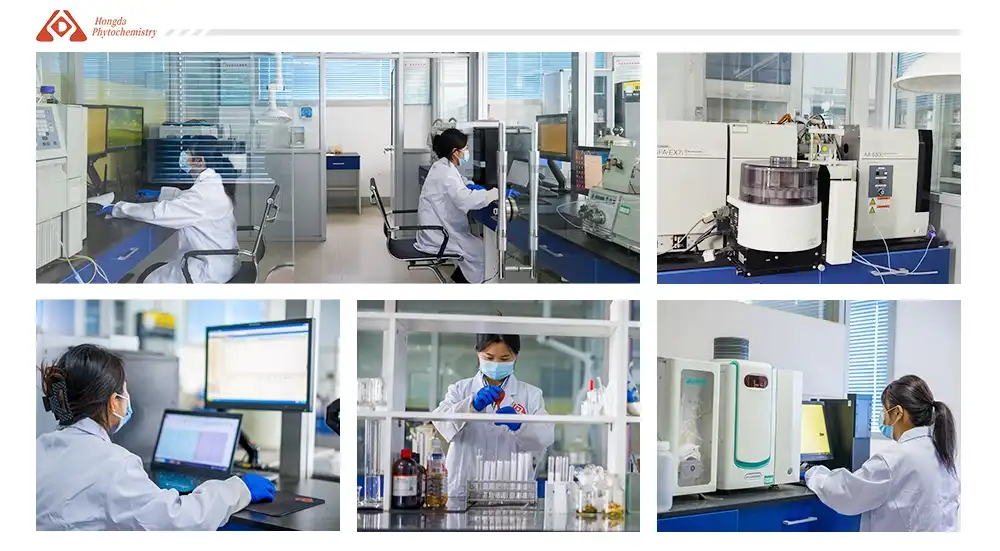
Hongda Phytochemistry operates a 20,000 m² facility with more than ten production lines and 100,000-level purification workshops – supported by a 3,000 m² warehouse organised into six dedicated storage zones with professional sterilisation staff. The in-house SGS-standardised laboratory, co-developed with university-level scientific partners, runs full characterisation assays for every production batch of Liraglutide API powder: identity by MS, purity by RP-UHPLC, residual solvents by GC headspace, heavy metals by ICP-MS, and endotoxin by LAL assay. This documentation depth — with more than 20 professor-level R&D and testing professionals maintaining the quality system — provides the COA completeness that pharmaceutical regulatory submissions and vendor qualification audits require. For buyers who have experienced gaps in API supplier documentation, Hongda's quality system architecture offers a materially different standard of accountability.
Certifications and Market Access Readiness
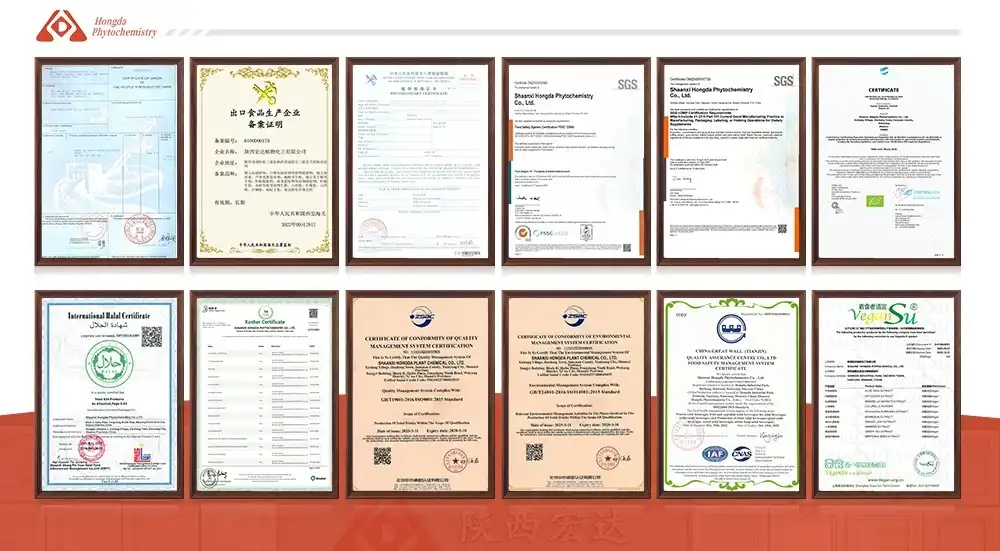
Hongda's certification portfolio for liraglutide API powder production includes cGMP, FSSC22000, ISO9001, ISO22000, FDA registration, BRC, Halal, and Kosher — the range needed to support pharmaceutical manufacturers targeting North American, European, and Asia-Pacific markets from a single API supply source. Recognised as a National High-Tech Enterprise since 2010 and with over 24 years of operational history, Hongda brings the institutional stability that matters in long-cycle pharmaceutical procurement relationships. Its annual production capacity of 3,000 metric tons across its product portfolio ensures that volume commitments on liraglutide API can be met without the supply disruptions that smaller or broker-dependent sources routinely create for development-stage and commercial pharmaceutical companies alike.
Liraglutide and semaglutide each have a defensible place in a pharmaceutical buyer's GLP-1 strategy — but they serve different market moments. Semaglutide wins on weight loss magnitude and dosing convenience. Liraglutide API Powder wins on cost, generic market access, cardiovascular evidence depth, and formulation maturity. For generic manufacturers, compounding facilities, and cost-sensitive market entrants, the open generic landscape of 2024 and beyond makes liraglutide the more actionable opportunity right now. Shaanxi Hongda Phytochemistry Co., Ltd., with its cGMP-certified green SPPS process and ≥98% purity supply, is the partner built to support that opportunity at scale.
FAQ
1. Is liraglutide now available as a generic API for pharmaceutical manufacturing?
Yes. Following patent expiration, generic liraglutide entered the U.S. market in mid-2024 (Teva) and late 2024 (Hikma), with the EU and other markets following. This opens the API supply chain to competitive sourcing from certified manufacturers like Hongda Phytochemistry.
2. What purity does Hongda's liraglutide API Powder achieve?
Hongda supplies Liraglutide API powder with ≥98% purity, confirmed by RP-HPLC and single-pass RP-UHPLC purification, and provides full batch COA documentation, including MS identity confirmation and endotoxin testing by LAL assay.
3. For which buyer type does liraglutide make more sense than semaglutide?
Generic pharmaceutical manufacturers, compounding pharmacies, CROs, cardiometabolic product developers, and cost-sensitive market entrants are better served by liraglutide API powder. Semaglutide is more appropriate for premium obesity brands prioritising maximum weight-loss efficacy and weekly dosing positioning.
4. What cost advantage does Hongda's green SPPS process offer?
Hongda's green solid-phase peptide synthesis process reduces per-unit production costs by 30–40% compared to conventional synthesis routes, without compromising the ≥98% purity or pharmaceutical compliance standards required for regulatory submissions.
5. What certifications does Hongda hold for liraglutide API powder production?
Hongda holds cGMP, FSSC22000, ISO9001, ISO22000, FDA, BRC, Halal, and Kosher certifications — covering the full compliance requirements for pharmaceutical API supply into North American, European, and Asia-Pacific markets.
Request Liraglutide API Powder Samples & Pricing | HONGDA
Hongda Phytochemistry has supplied pharmaceutical manufacturers, compounding outsourcing facilities, and drug development organisations across North America, Europe, and Asia-Pacific for over two decades. Our Liraglutide API powder is produced via green cGMP-certified SPPS, achieves ≥98% HPLC purity, and ships with complete analytical documentation — at a 30–40% cost advantage over conventional sources. Whether you're qualifying for an ANDA filing, building a compounding GLP-1 programme, or scaling a generic liraglutide injectable, our team is ready to support your project from day one. Start Your Sourcing Inquiry: duke@hongdaherb.com
References
1. Gasoyan H, Pfoh ER, Schulte R, et al. One-year weight reduction with semaglutide or liraglutide in clinical practice. Obesity. 2024. doi:10.1002/oby.24144.
2. Wen J, How-Volkman C, Truong A, et al. Comparative efficacy of semaglutide versus liraglutide or efinopegdutide on weight loss in obese patients: a systematic review and meta-analysis. Cureus. 2024;16(12):e75304.
3. Marso SP, Daniels GH, Brown-Frandsen K, et al. Liraglutide and cardiovascular outcomes in type 2 diabetes (LEADER trial). New England Journal of Medicine. 2016;375(4):311–322.
4. Pi-Sunyer X, Astrup A, Fujioka K, et al. A randomised, controlled trial of 3.0 mg of liraglutide in weight management (SCALE Obesity and Prediabetes). New England Journal of Medicine. 2015;373(1):11–22.
5. Sorli C, Harashima SI, Tsoukas GM, et al. Efficacy and safety of once-weekly semaglutide monotherapy versus placebo in patients with type 2 diabetes (SUSTAIN 1). Lancet Diabetes & Endocrinology. 2017;5(4):251–260.
6. Ozempic (semaglutide) and Victoza (liraglutide): comparative prescribing information. U.S. Food and Drug Administration; current edition 2024.