



_1745918362135.webp)

Why Oxidation Is the Central Production Challenge for Liposomal Vitamin C
The Short Answer: Control Oxygen, Heat, Light, Moisture, and Metals
The most reliable technique to preserve liposomal vitamin C powder bulk against oxidation is to consider each stage of the line as an oxidation checkpoint. Ascorbic acid tends to donate electrons and, in the presence of oxygen, is converted to dehydroascorbic acid and subsequently to degradation products, which no longer have the same value. Heat accelerates the process, light may initiate it, moisture allows it to flow through a layer of powder, and trace copper or iron ions catalyze it. Thus, it requires a series of tiny safeguards, not a single fix: clean raw materials, moderate temperatures, restricted air contact, tight moisture management, light-resistant packaging. Each step in the chain guarantees that the final powder retains its calibrated potency from the reactor to the customer’s blending room.
Why Ascorbic Acid Is So Sensitive in Water-Rich Systems
Vitamin C is one of the classic free radical scavengers. This is the reason for its weakness. It is a self-sacrifice to neutralize reactive oxygen.[1] As such, it also interacts rapidly with oxygen present in a production tank. As an added obstacle, the manufacture of liposomes starts in an aqueous phase in which dissolved oxygen, heat, and mechanical energy are all present. So while looking for a scavenger of free radicals wholesaler in China, buyers should not only inquire about potency on a certificate but also ask about how the provider preserves that potency via hydration, shearing, and drying. A lot of liposomal vitamin C powder bulk that appears great on paper could lose value if the line permits uncontrolled exposure to air. This awareness allows procurement teams to ask sharper questions and dismiss ambiguous claims.
What Liposomal Encapsulation Adds, and What It Cannot Do Alone
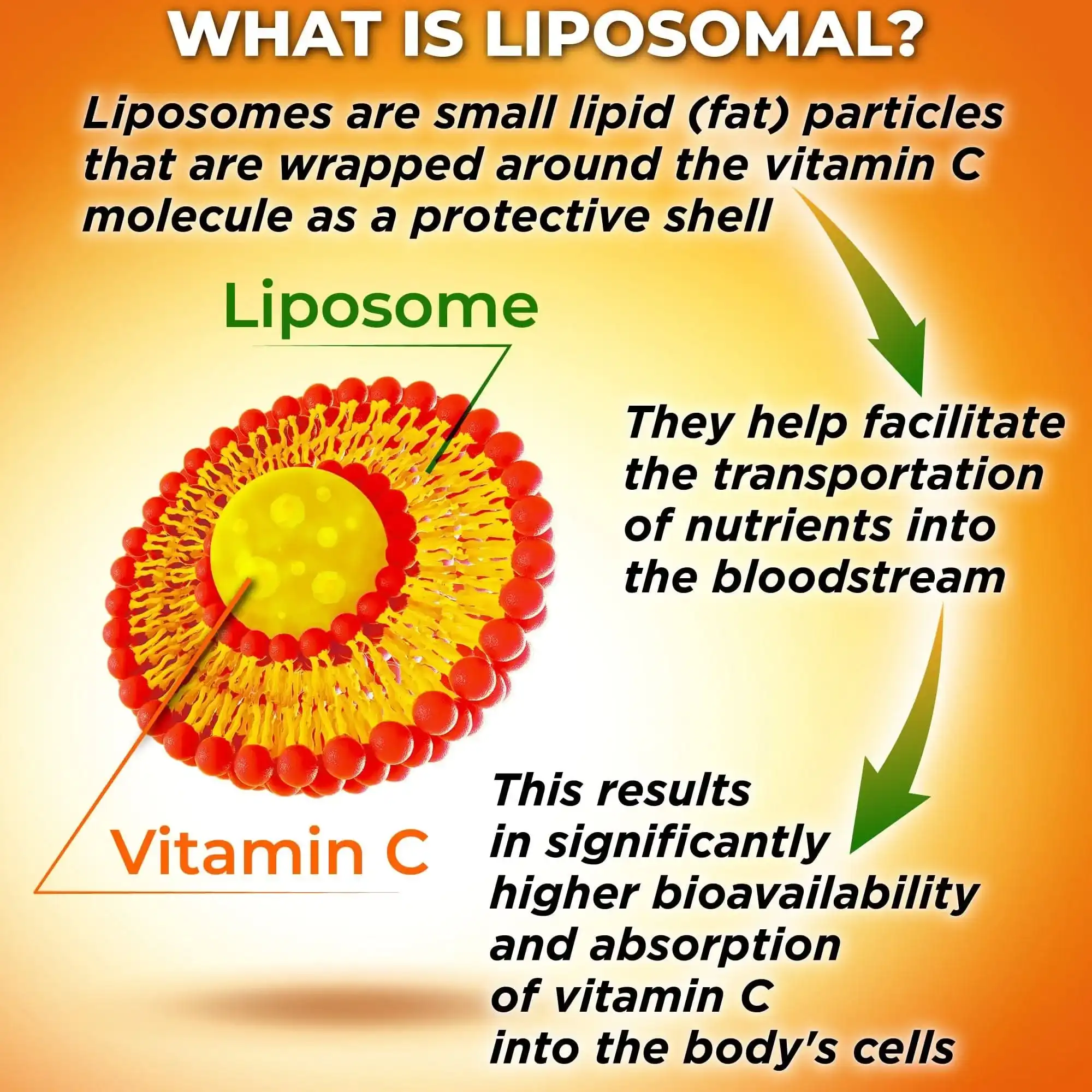
Encapsulation is a true benefit. Hongda’s technique encapsulates vitamin C in bilayer vesicles derived from non-GMO sunflower phospholipids, with an encapsulation efficiency of more than 90 percent, so most of the ascorbic acid is protected behind a lipid barrier instead of in open solution. But even so, a liposome isn’t an oxygen-proof fortress. The shell may be broken down by heat, and free vitamin C outside the vesicles is fragile.[3][5] That's why the surrounding procedure is as important as the technology. In reality, liposomal vitamin C powder bulk operates well when gentle processing, a good carrier, and protective packaging all cooperate with the phospholipid structure.[3][4][5] Think of encapsulation as the initial line of defense and process discipline as the reinforcements that hold that defense up during the drying and transportation process.
Stage-by-Stage Oxidation Defenses Inside the Production Line
Raw Material Selection and Water Quality
Prevention of oxidation begins before the first batch is mixed. Hongda’s recipe includes vitamin C, non-GMO sunflower seed phospholipids, and acid-treated starch. Each ingredient is logged and inspected before it enters the encapsulating process. The quality of phospholipid is important since oxidized lipids may pass along instability to the vitamin C they are designed to safeguard. Another silent variable is process water: dissolved oxygen and trace metal ions may accelerate ascorbic acid loss; therefore, filtered, low-metal water is a smart practice for any liposomal ingredients wholesale line. ICP-MS testing that shows lead, arsenic, cadmium, and mercury well within spec is a comforting indicator that metal pollution is under control throughout the facility.
Thin-Film Hydration and Ultrasonic Nano-Shearing Under Control
The key to Hongda’s approach is the linked thin-film hydration and ultrasonic nano-shearing procedure. A phospholipid film is hydrated with the vitamin C solution, and then the resultant vesicles are disrupted by ultrasonic energy to an average size of 100 to 250 nm with a polydispersity index of < 0.25. Ultrasonic shearing creates heat and may introduce air into the liquid; thus, oxidation control here boils down to temperature management, restricted headspace, and short exposure durations. The second step usually involves chilled containers, degassed liquids, and an inert nitrogen blanket, and these are the questions a buyer should ask of any bulk liposomal vitamin C powder supplier. A limited particle size distribution is also a good indicator: homogeneous vesicles provide a steady energy input which preserves both structure and vitamin C content.
Low-Temperature Spray Drying and Cryoprotection
Drying is when a sensitive liquid becomes a shelf-stable powder and is where heat may cause the greatest harm.[2][4] Hongda employs low-temperature spray drying, adding cryoprotectants throughout the drying step to stabilize the liposome structure during temperature changes. The dry powder is carried on a matrix of acid-treated starch as part of the ingredient list. Mild intake conditions, fast passage of the product through the drying tower, and rapid post hoc cooling all reduced the time window for oxygen and heat to interact. The product is a pale yellow to white fine powder that retains its structure upon drying. When you are a team analyzing wholesale offers on liposomal chemicals, especially liposomal vitamin C powder in bulk, the drying procedure is one of the most telling discussion topics.
|
Stage
|
Oxidation Risk
|
Control Reference
|
|---|---|---|
|
Raw materials
|
Oxidized lipids, metal traces
|
Non-GMO sunflower phospholipids; ICP-MS metals testing
|
|
Hydration
|
Dissolved oxygen, warm liquid
|
Thin-film hydration with controlled temperature
|
|
Nano-shearing
|
Heat and air from ultrasonic energy
|
Average size 100-250 nm, PDI below 0.25 by DLS
|
|
Drying
|
Heat stress on vesicles
|
Low-temperature spray drying with cryoprotectants
|
|
Finished powder
|
Moisture and light
|
Loss on drying 1.60% (limit ≤5%); light-resistant storage
|
|
Release
|
Undetected potency loss
|
HPLC assay 53.38%; batch records
|
Proving That Oxidation Has Been Prevented Through Quality Testing
HPLC Assay: Confirming Vitamin C Content at 53.38 Percent
Prevention makes sense only if it is quantifiable. Hongda’s liposomal vitamin C powder supplier has a bulk specification of 50 to 55 percent vitamin C, and the HPLC result on record is 53.38 percent, well inside that range. HPLC allows for direct separation and quantification of ascorbic acid; therefore, any loss due to oxidation will be reflected by a decreased test value. Ask any provider to provide the chromatogram underlying the number, rather than just a summary figure. Compare test readings across numerous batches to establish whether potency is stable. If you would like to study a sample certificate of analysis or discuss assay expectations for your own formula, please contact duke@hongdaherb.com and the Hongda team will provide you with the paperwork that matches your application.
Moisture Control and Loss on Drying
Thus, moisture management is a direct measure of protection in a powder. Water transport is. The specification restricts loss on drying to 5 percent or less, and the reportable result is 1.60 percent, giving Hongda a large safety margin. The low residual moisture content decreased the mobility of ascorbic acid and oxygen in the powder bed, which reduced the browning and loss of effectiveness during storage. The standard additionally monitors residual ethanol at 5,000 ppm or less by GC-HS, demonstrating that process solvents are controlled in addition to water. A low moisture figure enhances flowability for liposomal vitamin C powder bulk for sticks, capsules, or tablets, avoiding the clumping that may make mixing unpredictable.
Particle Size, Encapsulation Rate, and Batch Records
What Structural Testing tells you is whether the protecting liposome is still intact. Dynamic light scattering indicates an average particle size between 100 and 250 nm with a PDI < 0.25. The observed encapsulation rate surpasses 90 per cent. For each bulk shipment, Hongda delivers HPLC encapsulation efficiency spectra and laser particle size distribution spectra. TEM pictures of spherical bilayer vesicles are available upon request. Behind those tests is a complete batch record on every lot showing the powder from raw ingredients of sunflower seed to the final spray drying.[4][5] It’s easier to trust a liposomal vitamin c provider who proactively sends out this paperwork than one that supplies merely a brochure, and it makes each lot of liposomal vitamin C powder quantity considerably simpler to inspect.
|
Item
|
Specification
|
Result
|
Method
|
|---|---|---|---|
|
Vitamin C
|
50%-55%
|
53.38%
|
HPLC
|
|
Loss on drying
|
≤5%
|
1.60%
|
Ch.P2020
|
|
Residual ethanol
|
≤5000 ppm
|
Complies
|
GC-HS
|
|
Lead / Arsenic / Cadmium / Mercury
|
≤3 / ≤3 / ≤1 / ≤0.1 ppm
|
Complies
|
ICP-MS
|
|
Total plate count
|
≤1000 cfu/g
|
Complies
|
USP-NF 2022
|
|
Yeast and mould
|
≤100 cfu/g
|
Complies
|
USP-NF 2022
|
|
E. coli / Salmonella / S. aureus
|
Negative
|
Negative
|
USP-NF 2022
|
Protecting the Powder After Production Through Packaging, Storage, and Supply
Light-Resistant, Moisture-Protected Packaging
Once the powder leaves the dryer, packaging becomes the guardian of potency. The specification calls for storage in a well-closed, light-resistant container that protects from moisture, addressing the two enemies that remain after production. Standard bulk packing is 12 kg per drum with 27 drums per tray, a format that keeps handling simple and limits the number of times a drum must be opened. Buyers can protect their own inventory by resealing drums promptly, avoiding warm loading docks, and dividing large drums into smaller working containers under dry conditions. With those habits, scavengers of free radicals wholesaler in China holds its structure and color from the receiving dock through to the final blend, and the light yellow to white appearance remains a visible sign of good storage.
Inventory, Overseas Warehouses, and Delivery Speed
Long supply chains give oxidation more time to work, so speed and proximity matter. Hongda reports a stock of 15 tons of liposome series products and delivery in three to seven working days, with dry warehouses in key logistics hubs in the US and Europe that can ship analytical powders and particle size sample packages locally. Shorter transit means fresher powder and fewer temperature swings during shipment. The company's own 3,000-square-meter warehouse, divided into six storage areas with professionals responsible for sterilization, follows the same logic of organized, protected storage. For a brand launching a new product, ready inventory of liposomal vitamin C powder in bulk shortens development time and lowers the risk of buying aged stock.
Table 3. Supply and Service Snapshot (Source: Hongda product page)
|
Item
|
Details
|
|---|---|
|
Specification
|
50%-55% vitamin C
|
|
Appearance
|
Light yellow fine powder to white powder
|
|
Bulk packing
|
12 kg per drum, 27 drums per tray
|
|
Delivery
|
3-7 working days
|
|
Main markets
|
Europe, North America, Asia, Vietnam, Switzerland
|
|
Inventory
|
15 tons of liposome series products
|
|
Shipment documents
|
HPLC encapsulation efficiency spectra, laser particle size spectra, batch records
|
Choosing a Supplier Who Can Prove Oxidation Control
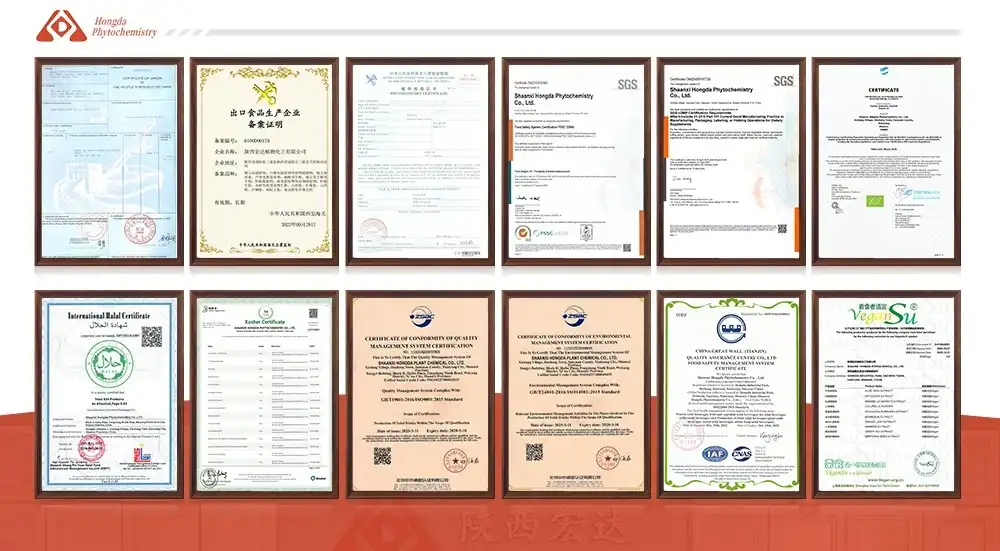
The final question is who can back these promises with evidence. A dependable liposomal vitamin C powder supplier should show certifications, laboratory capability, and documentation without hesitation. Hongda's factory holds US FDA registration and cGMP, ISO22000, HACCP, HALAL, and KOSHER certifications, and the company added FSSC22000, ISO9001, and EU and NOP organic certifications in 2025. Founded in 2001, it operates a 20,000 square meter facility with more than ten production lines, 100,000-level purification workshops, and an SGS-standardized laboratory with over 20 professor-level personnel, supporting annual output of up to 3,000 tons. Every lot is tested before shipment. Table 3 condenses the supply facts buyers need when comparing liposomal vitamin C powder bulk offers.
Conclusion
Liposomal vitamin C supplier manufacturing is all about discipline at every stage to avoid vitamin C oxidation: clean raw materials, gentle ultrasonic shearing, low-temperature spray drying, strict moisture limitations, and safe packaging. That is what the discipline looks like in numbers: the results published by Hongda of 53.38 percent vitamin C by HPLC, 1.60 percent loss on drying, particle sizes of 100 to 250 nm, and encapsulation of more than 90 percent. When evaluating a source, don’t only ask for the brochure; ask for the chromatograms, the batch records, and the storage guidelines. The strongest security for your recipe is a partner that welcomes such inquiries and answers them with statistics. Call Hongda now for samples and documentation.
FAQ
Q: What causes vitamin C to oxidize during production?
A: Oxygen, heat, light, moisture, and trace metal ions all speed up the conversion of ascorbic acid into inactive degradation products.
Q: Does liposomal encapsulation stop oxidation completely?
A: No. Encapsulation above 90 percent adds a protective barrier, but gentle processing, drying control, and proper packaging are still required.
Q: Which test confirms vitamin C potency?
A: HPLC assay. Hongda reports 53.38 percent vitamin C against a 50 to 55 percent specification.
Q: How is moisture controlled in the finished powder?
A: Loss on drying is limited to 5 percent or less, with a reported 1.60 percent, and storage should be well-closed, light-resistant, and moisture-protected.
Q: What documents come with bulk shipments?
A: HPLC encapsulation efficiency spectra, laser particle size distribution spectra, and batch records, with TEM images available on request.
Secure Stable Liposomal Vitamin C with HONGDA
HONGDA is ready to supply liposomal vitamin C powder bulk that is protected from oxidation at every stage, from sunflower phospholipid raw materials to sealed, light-resistant drums. Shaanxi Hongda Phytochemistry Co., Ltd. offers flexible minimum order quantities, competitive factory pricing, ready inventory, and a documentation package that lets your quality team verify potency before you commit. Whether you are launching a supplement, an oral solid beverage, or a private-label capsule, our specialists will match the specification and packaging to your plan. Send your target market, order volume, and formulation goals to duke@hongdaherb.com, request a sample and certificate of analysis, and let HONGDA help you build a vitamin C product that stays potent from production to purchase.
References
1. Padayatty, S. J., Katz, A., Wang, Y., et al. (2003). Vitamin C as an antioxidant: Evaluation of its role in disease prevention. Journal of the American College of Nutrition, 22(1), 18-35.
2. Herbig, A. L., & Renard, C. M. G. C. (2017). Factors that impact the stability of vitamin C at intermediate temperatures in a food matrix. Food Chemistry, 220, 444-451.
3. Gallarate, M., Carlotti, M. E., Trotta, M., & Bovo, S. (1999). On the stability of ascorbic acid in emulsified systems for topical and cosmetic use. International Journal of Pharmaceutics, 188(2), 233-241.
4. Chen, C., Han, D., Cai, C., & Tang, X. (2010). An overview of liposome lyophilization and its future potential. Journal of Controlled Release, 142(3), 299-311.
5. Allen, T. M., & Cullis, P. R. (2013). Liposomal drug delivery systems: From concept to clinical applications. Advanced Drug Delivery Reviews, 65(1), 36-48.
Related Products
‑ Liposomal Glutathione Powder
- Ascorbic Acid Powder