


_1745918362135.webp)

Everyone knows that CoQ10 is an energy-supporting vitamin, but how it is delivered determines just about everything about how much of that benefit really gets into the body. In an effort to meet this need, liposomal coenzyme Q10 powder was developed, and Hongda Phytochemistry, previously known as Shaanxi Hongda Phytochemistry Co., Ltd., has produced its own version to boost the cellular absorption and use of this nutrient. CoQ10 is directly involved in how mitochondria make usable energy, so the difference between an ingredient that is poorly absorbed and one that is efficiently delivered is not a small technical detail; it is the difference between a product that works and one that just sits in a capsule doing very little. Hongda’s liposomal coenzyme Q10 powder delivers the active molecule in a phospholipid shell of nanoscale size, presenting formulators with a version of this ingredient designed for demonstrable efficacy, not a marketing promise. Here’s a discussion of CoQ10 and energy research, how liposomal delivery changes the game, who tends to see the biggest benefit, and what to look for when purchasing this ingredient in bulk.
How Does Liposomal Coenzyme Q10 Powder Affect Energy Levels?
CoQ10's Role in Cellular Energy Production
Coenzyme Q10 (CoQ10) is a naturally occurring molecule found in almost every cell in the body. The greatest levels of CoQ10 are found in organs with the highest energy requirements, such as the heart, liver, and kidneys. It is a key component of the electron transport chain within mitochondria, the organelles that transform nutrition into adenosine triphosphate, the chemical fuel cells use. This energy conversion route is less efficient in the absence of sufficient CoQ10 and is one of the reasons why low levels of CoQ10 are commonly associated with declining vitality. Liposomal CoQ10 powder has been designed to assist this process and to deliver more usable CoQ10 to the tissues with the highest mitochondrial activity.[[1][2]
Why Does Absorption Determine How Much Energy Benefit You Actually Get?
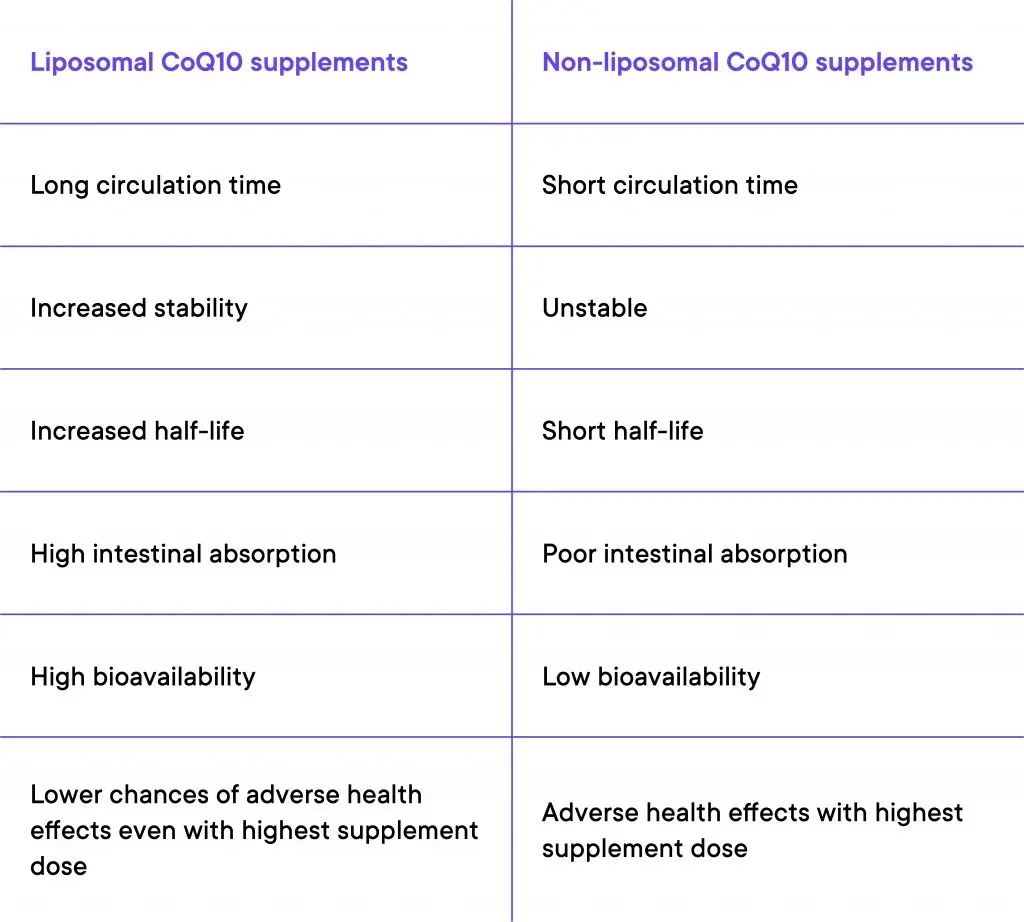
But the connection between CoQ10 and energy is mostly meaningless if the body cannot absorb and use the molecule, and that’s where standard crystalline CoQ10 has an issue, with uptake rates often below 5 percent. But if the drug is poorly absorbed, it will simply pass through the digestive system unutilized. Good biology on paper means nothing. Liposomal coenzyme Q10 powder addresses this problem directly by encapsulating the molecule in a protective envelope that protects it from digestion and dramatically increases the amount that actually makes it into systemic circulation (the point at which an energy support claim translates into a tangible, felt difference for the person taking it).
The Liposomal Advantage for Sustained Energy Support
The liposomal delivery format helps to boost the absorption of CoQ10 and tends to help maintain a smoother release profile than crystalline forms, which may be absorbed unevenly depending on meal intake and individual digestive variation. This is vital if you are using CoQ10 to sustain continuous energy rather than simply a fast spike. It’s the sustained bioavailability on a day-to-day basis that will make a noticeable difference over weeks of use. The same constancy is seen in Hongda’s liposomal coenzyme q10 powder, providing formulators with an ingredient that delivers consistently from batch to batch, not run to run.
The Science Behind Hongda's Liposomal Coenzyme Q10 Powder
Mitochondrial Function and the ATP Connection
CoQ10 is right smack dab in the midst of the metabolic process that keeps those power plants running in tip-top form. Mitochondria are often referred to as the powerhouses of the cell. CoQ10 is an essential part of the electron transport chain. It allows for the passage of electrons from one protein complex to the next in a cycle that ultimately produces ATP, the energy currency that the cells of the body require to do just about everything. If the cell is low in CoQ10 because of age-related decline or poor absorption from the food, the process of energy production may become less efficient. Liposomal coenzyme Q10 powder is designed to facilitate the transfer of this chemical to the location of mitochondrial activity, the metabolic foundation of cellular energy generation in all tissues.
How does nano-encapsulation improve cellular uptake?
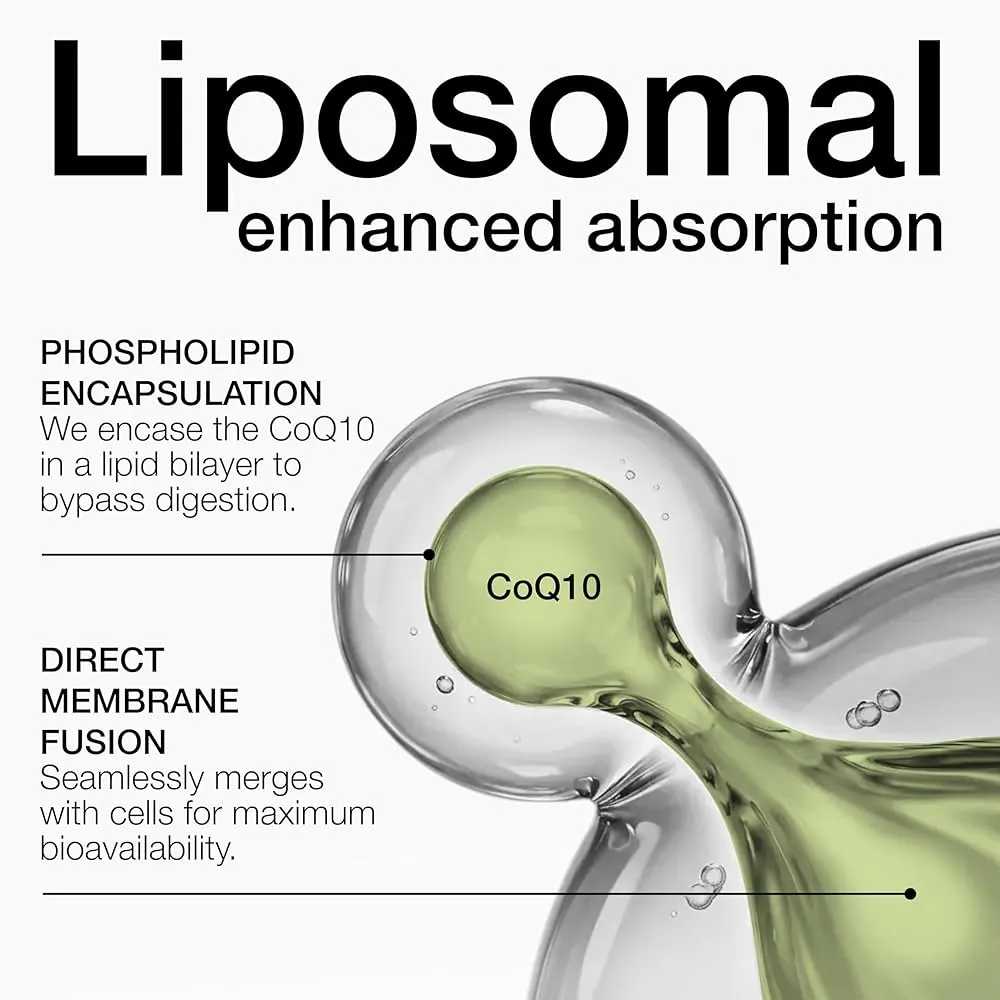
Hongda liposomal coenzyme Q10 powder is created by employing a phospholipid bilayer from sunflower-derived phospholipids to encapsulate CoQ10 molecules in nano-lipids. The particle size is regulated at roughly 100-400 nanometers. arrangement is remarkably comparable to the lipid bilayer of a human cell membrane and appears to allow the encapsulated CoQ10 to pass intestinal barriers more efficiently, unlike the crystal point. The encapsulation efficiency is above 90 percent; therefore, there is very little of the active substance on the exterior of the liposome. The resulting powder has a substantially low point. Age of fully bioavailable CoQ10 than China Coenzyme Q10 powder, the raw, unencapsulated material marketed at identical specifications and at a similar price point.[3]
Comparing Onset and Duration to Standard CoQ10
Buyers and formulators commonly ask how liposomal coenzyme Q10 powder compares to normal versions in the real world. The data we have points to a major difference between the two. Hongda’s liposomal formulation attained plasma concentrations estimated to be 3 to 10 times those of crystalline CoQ10, a difference substantial enough to change dosing strategy for a whole final product line. That performance gap is exactly why formulators developing energy supplements are increasingly specifying a liposomal coenzyme Q10 supplier rather than defaulting to conventional bulk CoQ10 powder, as the real-world performance of the finished product is heavily dependent on this single upstream ingredient decision made early in development.
|
Attribute
|
Crystalline CoQ10
|
Liposomal CoQ10 (Hongda)
|
|---|---|---|
|
Absorption rate
|
Under 5%
|
3–10x higher plasma concentration
|
|
Particle size
|
Micron-scale, unmodified
|
Approximately 100–400 nanometers
|
|
Water dispersibility
|
Poor, tends to clump or float
|
Disperses readily, stable suspension
|
|
Cold-chain requirement
|
Often needed for stability
|
Not required
|
Who Notices the Difference: Energy-Focused Use Cases?
Active Adults and Fitness-Focused Consumers
Consumers with active lives notably seek out CoQ10 because of its involvement in mitochondrial energy generation, and this is a population that is particularly likely to notice the difference between a poorly absorbed ingredient and one that is adequately encapsulated. With liposomal coenzyme Q10 powder, fitness-oriented formulas have a real technological advantage. The increased bioavailability implies that more of the ingested chemical may actually be employed in cellular energy metabolism and not pass through unused. This is precisely the reason why brands that produce pre-workout mixes, recovery formulations, or general performance-support products have gravitated to this ingredient format, marketing it as a functional enhancement and not just a substitute.
Aging Populations With Naturally Declining CoQ10 Levels
Endogenous CoQ10 synthesis peaks at age 20 and progressively declines from there. This is one reason this ingredient is so often included in energy-support formulas targeting older persons in their composition. Since absorption efficiency does not improve with age and may, in fact, become more erratic, liposomal coenzyme Q10 powder provides a convenient way to counter both the natural decline in production and the perpetual difficulty of getting enough functional CoQ10 from diet or standard supplements alone. The higher bioavailability frequently translates to a more consistent, reliable outcome across a wider variety of individual users and body types, which formulators working on products for this audience tend to appreciate.
Formulators Building Energy and Performance Supplements
For product makers in the energy and performance supplement space, ingredients that can support a legitimate, evidence-backed claim are essential, and working with a reliable liposomal coenzyme Q10 supplier can provide access to liposomal coenzyme Q10 powder with precisely that type of scientific basis to construct a launch around. Because the absorption advantage versus crystalline CoQ10 is well documented, relatively easy to communicate to a general audience, and provides a clear marketing message versus a vague energy claim with no underlying ingredient science, brands can develop clearer, more defensible marketing language around bioavailability. This clarity is more important as customers are more savvy about reading supplement labels and studying ingredient forms before they make a purchase choice at the shelf or online, and compare goods from numerous companies side by side.
Combining Liposomal CoQ10 With Other Energy-Supporting Actives
Many formulators add liposomal coenzyme Q10 powder to other energy-supporting compounds like B vitamins, L-carnitine, or adaptogenic botanicals to provide a more complete final product for their unique target consumer group. Hongda’s encapsulation platform can already handle multiple liposomal ingredients in the same facility, making it easy to source compatible liposomal actives from a single manufacturing partner, rather than juggling multiple suppliers with inconsistent quality standards and documentation practices. If you’re interested in building a combination formula around cellular energy support, please contact duke@hongdaherb.com, and the scientific team at Hongda will assist you in analyzing compatibility and dose across your intended ingredient stack.
Manufacturing Quality Behind Every Batch of Hongda's Liposomal Coenzyme Q10 Powder
Factory Infrastructure and R&D Capability
Established in 2001, Shaanxi Hongda Phytochemistry Co., Ltd. is located in the city of Weinan in the Shaanxi Province of China, with a factory of about 20,000 square meters, more than ten modern production lines, and 100,000-level purification workshops for its liposomal coenzyme Q10 powder line, as well as the other products of the company. Further enhancements to the encapsulation process are underway by two R&D institutions in collaboration with over twenty researchers from universities and scientific institutions in China. The factory’s annual production capacity of up to 3,000 tons across the entire catalogue also offers the necessary scale to enable energy-supplement brands to transition from initial trials to full commercial production without supply disruptions.
Testing and Verification Standards
In the laboratory of Hongda, jointly established with university academics and standardized by SGS, each batch of liposomal coenzyme Q10 powder is tested by high-performance liquid chromatographs, atomic absorption spectrophotometers, automatic titrators, and other testing devices. The testing procedure confirms ingredient purity, moisture content, heavy metals, and microbiological safety. Microbiological testing is compatible with GMP requirements throughout every manufacturing cycle. A coenzyme Q10 powder plant that applies this level of attention to every batch offers energy-supplement formulators the assurance that the bioavailability advantage they are paying for is indeed there in the material they get and not inferred from general product literature alone.
|
ITEM
|
SPECIFICATION
|
RESULTS
|
|
Assay(CoQ10)
|
70%士5%
|
73.1%
|
|
Appearance
|
Of-white to light yellow Powder
|
Conforms
|
|
Physical& Chemical Characteristics
|
||
|
Particle size(20Mesh)
|
90%
|
Conforms
|
|
Lose on dyring
|
≤5.0%
|
1.2%
|
|
Bulk Density
|
Actual Value
|
600g/L
|
|
Tapped Bulk Density
|
Actual Value
|
918g/L
|
|
Heavy metals
|
||
|
ead(Pb)
|
≤0.5ppm
|
Not Detected
|
|
Arsenic(As)
|
≤2.0ppm
|
Not Detected
|
|
Mercury(Hg)
|
≤0.3ppm
|
Not Detected
|
|
Cadmium(Cd)
|
≤0.3ppm
|
Not Detected
|
|
Microbiological Tests
|
||
|
Total Microbial Count
|
≤10000cfu/g
|
50cfu/g
|
|
Coliforms
|
<10MPN/g
|
0.310MPN/g
|
|
Conclusion:
|
Conform to In-house standard.
|
|
Certifications That Matter for Energy Supplement Brands
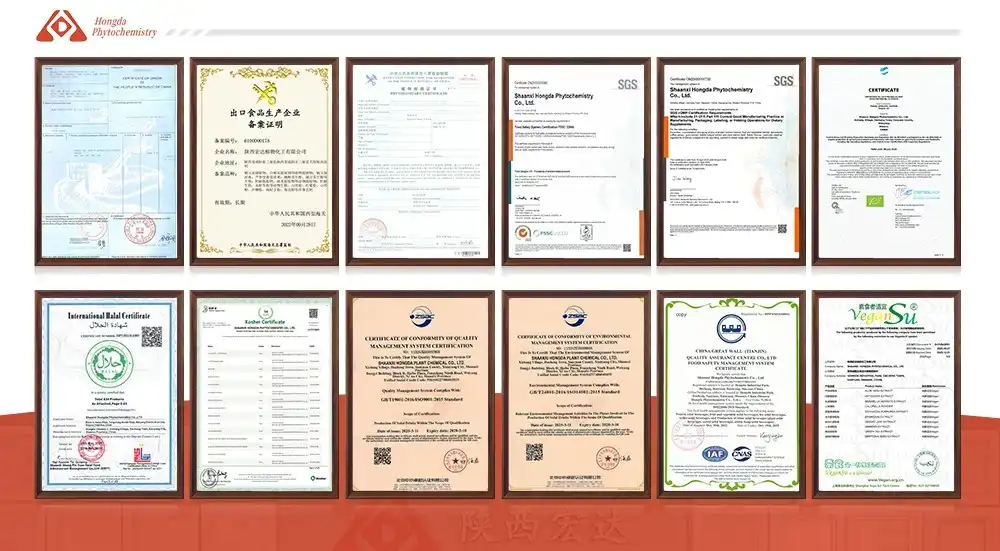
Between 2001 and 2024, Hongda developed certifications, including national high-tech enterprise, food production licenses, feed additive production licenses, HALAL, KOSHER, BRC, FDA registration, and organic certification for a number of regulated markets throughout the globe. In 2025, the firm added cGMP, FSSC22000, SC certification, ISO22000, ISO9001, and organic certification to both EU and NOP standards, further expanding its documentation coverage for demanding consumers. This breadth of certification goes a long way toward removing the compliance friction often associated with launching a new product built around a specialized ingredient such as liposomal coenzyme Q10 powder while also demonstrating the capabilities expected of a reliable coenzyme Q10 powder factory—especially for energy-supplement brands with an eye on distribution across North America, Europe, and other regulated markets.[4][5][6]
Sourcing Liposomal Coenzyme Q10 Powder for an Energy-Focused Product Line
What to Verify Before Placing a Bulk Order?
Before finalizing a bulk purchase, buyers should request encapsulation efficiency data and particle size distribution figures specific to the batch they plan to order, rather than relying solely on general marketing claims about absorption. This step confirms that a supplier's liposomal coenzyme Q10 powder is genuinely nano-encapsulated rather than a standard powder loosely marketed under the liposomal label without the underlying process to back it up. Reputable manufacturers, including Hongda, treat this documentation as a normal part of the sales process, and hesitation to provide it during evaluation is a signal worth taking seriously before committing to a supply agreement.[5]
Comparing a China Coenzyme Q10 Powder Manufacturer Against Alternatives
Energy-supplement brands evaluating a Chinese coenzyme Q10 powder source against manufacturers elsewhere should weigh production scale, certification coverage, and testing depth alongside price, since these factors tend to matter more over a multi-year supply relationship than a marginal difference in per-kilogram cost early on in the negotiation process. Hongda's combination of established infrastructure, broad certification, and in-house testing capability gives it a competitive position for brands prioritizing consistency and documentation over the lowest available quote from an unfamiliar or unaudited factory they have never visited in person before signing a long-term supply contract that locks in pricing and volume commitments.[4][6]
Choosing a Coenzyme Powder Manufacturer for Long-Term Supply
Energy-supplement brands planning for sustained growth need more than a one-time bulk order; they need a supplier capable of maintaining consistent quality across repeated production cycles as demand scales over time and across new markets. A coenzyme powder manufacturer with sufficient factory capacity, standing inventory, and dedicated R&D support is better positioned to keep pace with a growing brand than a smaller operation working near full capacity on its existing customer base. Buyers should ask directly about production headroom and typical lead times for reorders before finalizing a long-term sourcing decision for this ingredient category and committing to a single supplier.
Conclusion
Liposomal coenzyme Q10 powder supports cellular energy production by delivering substantially more usable CoQ10 than crystalline forms, and Hongda Phytochemistry, a trusted coenzyme powder manufacturer, backs its version with verified encapsulation data, in-house testing, and broad certification coverage. Brands building energy or performance formulations should evaluate this ingredient closely before finalizing their next sourcing decision. Reach out today to request samples and specifications for your upcoming product.[2][3]
FAQ
1. How does CoQ10 relate to cellular energy production?
CoQ10 is a key part of the mitochondrial electron transport chain that produces ATP, the molecule cells use for energy.
2. Why does liposomal CoQ10 outperform standard crystalline CoQ10?
Crystalline CoQ10 has under 5% absorption, while Hongda's liposomal version delivers 3 to 10 times higher plasma concentrations.
3. What particle size does Hongda's liposomal coenzyme q10 powder use?
Particle sizes are controlled within approximately 100 to 400 nanometers, with encapsulation efficiency above 90 percent.
4. Who tends to benefit most from liposomal CoQ10 in a formulation?
Active adults, aging populations, and formulators are building energy- or performance-focused supplements.
Power Your Formula With HONGDA's Liposomal Coenzyme Q10 Powder| Liposomal coenzyme q10 powder supplier
If your energy or performance supplement line needs a CoQ10 ingredient built for real bioavailability, HONGDA's liposomal coenzyme Q10 powder gives your formulation the verified absorption advantage today's consumers expect. Shaanxi Hongda Phytochemistry Co., Ltd. supports every batch with encapsulation and particle size documentation, so your team can formulate with confidence rather than guesswork. Reach out to our technical staff at duke@hongdaherb.com to request samples, review specifications, or discuss your next bulk order.
References
1. National Center for Complementary and Integrative Health. Overview of coenzyme Q10 research and clinical evidence.
2. Journal of Clinical Biochemistry and Nutrition. Studies on CoQ10 bioavailability and mitochondrial function.
3. International Journal of Pharmaceutics. Research on nano-lipid encapsulation and particle size engineering.
4. International Organization for Standardization. ISO 22000 Food Safety Management System documentation.
5. U.S. Food and Drug Administration. Dietary Supplement Labeling and Facility Registration Requirements.
6. British Retail Consortium. BRC Global Standard for Food Safety, certification framework overview.

_1756102508452.jpg)