


_1745918362135.webp)

How Does Liposomal Coenzyme Q10 Powder Support Heart Health?
Now more than ever, it's important to get help that has been shown to work. Heart disease is still the main cause of death. Liposomal coenzyme Q10 powder is the main thing that people are looking for. This new way of giving drugs is slowly changing the rules of how they are absorbed. Coenzyme Q10 is what cells need to do to turn food into energy. Hongda Phytochemistry (Shanxi Hongda Phytochemistry Co., Ltd.) has been a star in plant and drug science since 2001. They make a powder called liposomal coenzyme Q10. It has pure CoQ10 set up in phospholipid walls. This means that the amounts in plasma are three to ten times higher than those in solid forms.[1][6] Companies that make medicines and useful foods can really improve how well their goods work with this.
Why Is Bioavailability the Heart of the Matter?
The Absorption Problem with Standard CoQ10
It's a big molecule that doesn't mix well with water or fats as they are. When taken as a softgel or dry powder, less than 5% of the drug is usually absorbed. This means that the body gets rid of a lot of the drug's active ingredient before it can reach the mitochondria in the heart muscle or muscle tissue. For their steady, high-energy work to keep going, heart cells need CoQ10. It's good for your heart. This bad journey is a big mistake in the plans. People over 65 tend to have a lot less CoQ10 in their cells than people under 65. This has been known for a long time. Taking vitamins that work is now even more important.[4]
How Liposomal Technology Solves It?
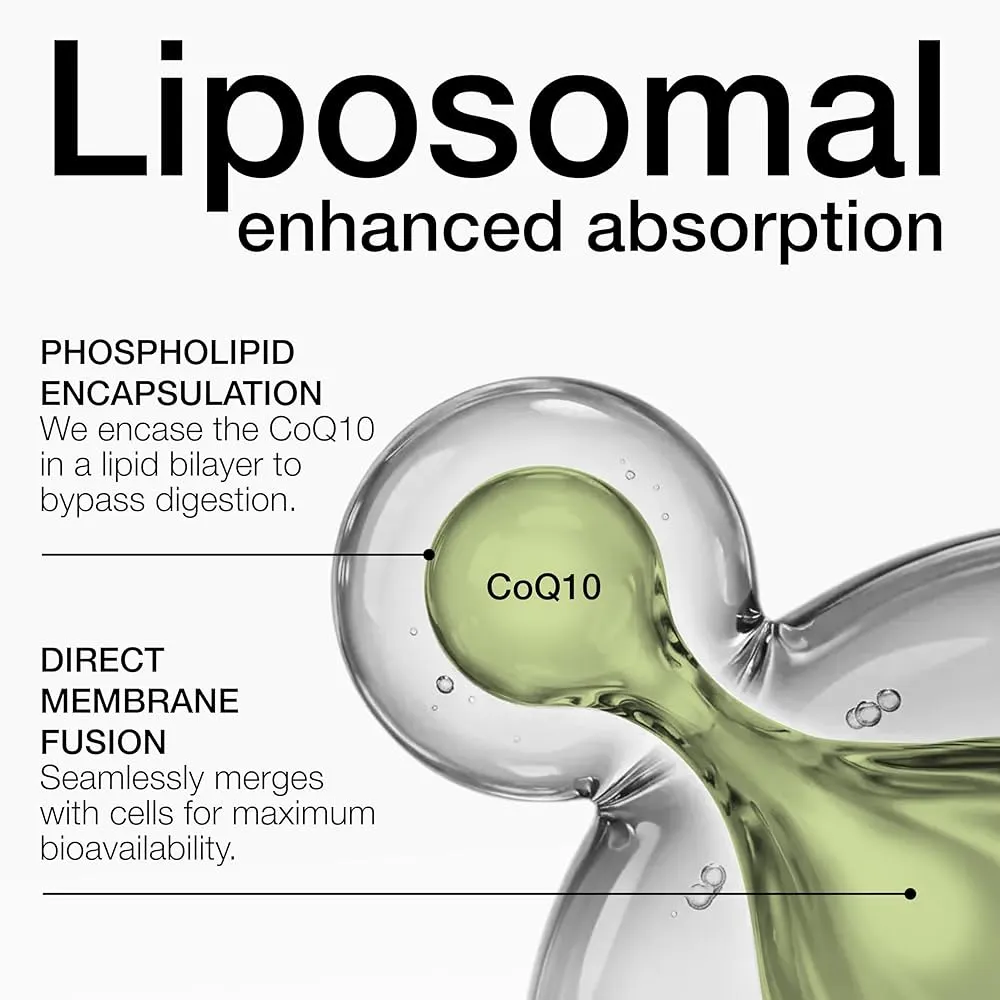
Inside a phospholipid layer, liposomes carry it. This is similar to how cell walls are built in the body. Because cells in the gut see liposomes as "self-like" structures, they don't break down there as some other vitamins do. Solutes can move around more easily, and cells can take in food better. Hongda's liposomal coenzyme Q10 powder is first mixed under high pressure to make particles that are 100–400 nm in size and are usually surrounded by other particles. The liquid liposomal fluid is dried with a spray-drying method that is the most up-to-date. It means something that doesn't change shape at room temperature, mixes well with water, and soaks up the same amount every time.[3][6]
At this stage of product development or technical evaluation, brands that require detailed specifications, formulation support, or OEM cooperation can directly contact Hongda’s technical team at duke@hongdaherb.com for documentation, samples, and application guidance.
CoQ10 and Cardiac Energy Metabolism
The heart beats about 100,000 times a day, and it always needs ATP to do its job. It sends electrons from complex I/II to complex III and is a key part of the mitochondrial electron transport chain. That's the reason it's so important for making ATP. Heart cells can keep up their energy flow well when they have enough CoQ10. CQ10 is a strong antioxidant that breaks down fat and gets rid of free radicals that are made during mitochondrial respiration.[4][5] It also turns food into energy. Liposomal coenzyme Q10 powder is good for your heart because it protects cells and gives them energy. This is the main reason why it's in a lot of expensive heart health pills.
Liposomal COQ 10 Powder Specification
|
ITEM
|
SPECIFICATION
|
RESULTS
|
|
Assay(CoQ10)
|
70%士5%
|
73.1%
|
|
Appearance
|
Of-white to light yellow Powder
|
Conforms
|
|
Physical& Chemical Characteristics
|
||
|
Particle size(20Mesh)
|
90%
|
Conforms
|
|
Lose on dyring
|
≤5.0%
|
1.2%
|
|
Bulk Density
|
Actual Value
|
600g/L
|
|
Tapped Bulk Density
|
Actual Value
|
918g/L
|
|
Heavy metals
|
||
|
ead(Pb)
|
≤0.5ppm
|
Not Detected
|
|
Arsenic(As)
|
≤2.0ppm
|
Not Detected
|
|
Mercury(Hg)
|
≤0.3ppm
|
Not Detected
|
|
Cadmium(Cd)
|
≤0.3ppm
|
Not Detected
|
|
Microbiological Tests
|
||
|
Total Microbial Count
|
≤10000cfu/g
|
50cfu/g
|
|
Coliforms
|
<10MPN/g
|
0.310MPN/g
|
|
Conclusion:
|
Conform to In-house standard.
|
|
Cardiovascular Benefits Backed by Science
Supporting Healthy Blood Pressure and Vascular Function
More and more studies are looking into how CoQ10 helps keep vascular tone healthy. One possible explanation is that CoQ10 helps capillary nitric oxide (NO) production, which in turn helps blood vessels get bigger and blood pressure stay healthy.[2][4] Vascular endothelium has a lot of metabolic activity and is easily damaged by oxidative stress. CoQ10's protective qualities and ability to make ATP make liposomal coenzyme Q10 powder a very appealing ingredient for products that aim to lower blood pressure. Liposomal formulations have better solubility, which means that clinically useful plasma amounts can be reached more consistently, even at smaller doses. This is a big formulation benefit.
Protecting the Heart Against Oxidative Damage
Oxidative stress hurts cells and is a main reason for high cholesterol, heart muscle swelling, and problems with blood vessel walls. Because it works in the lipid phase, it is only found in cell membranes and LDL particles. In these places, oxidative damage is the most dangerous. Even after being broken down into liposomes, CoQ10 can still protect cells.[5] Through a busy ubiquinol/ubiquinone cycle, it also gets to the cells it needs to reach. That liposomal coenzyme Q10 powder is a good antioxidant has been found by researchers. This is also good for vitamin companies that want to make items that keep cells healthy and help people live longer. The older people who want to find items that will protect them and give them energy should pay extra attention to this.
Mitochondrial Support for Athletes and Active Aging Populations
Like the heart, skeletal muscle uses a lot of energy. Athletes and older people, two groups that are buying more, have lower levels of CoQ10-dependent mitochondrial performance. For sports, having enough CoQ10 means faster ATP renewal, less toxic stress from exercise, and maybe even faster healing.[2][6] Restoring CoQ10 helps older people deal with a normal decline that starts in their 40s and gets worse with some drugs, like statins. The clean label formulas and better absorption of liposomal coenzyme Q10 powder make it a good fit for both markets. Today's health-conscious customer likes pill amounts that are smaller. Hongda is a reliable source of liposomal coenzyme Q10 powder, and it works with brands that serve both niches around the world.
What Sets Hongda's Manufacturing Apart?
Precision Engineering at Scale
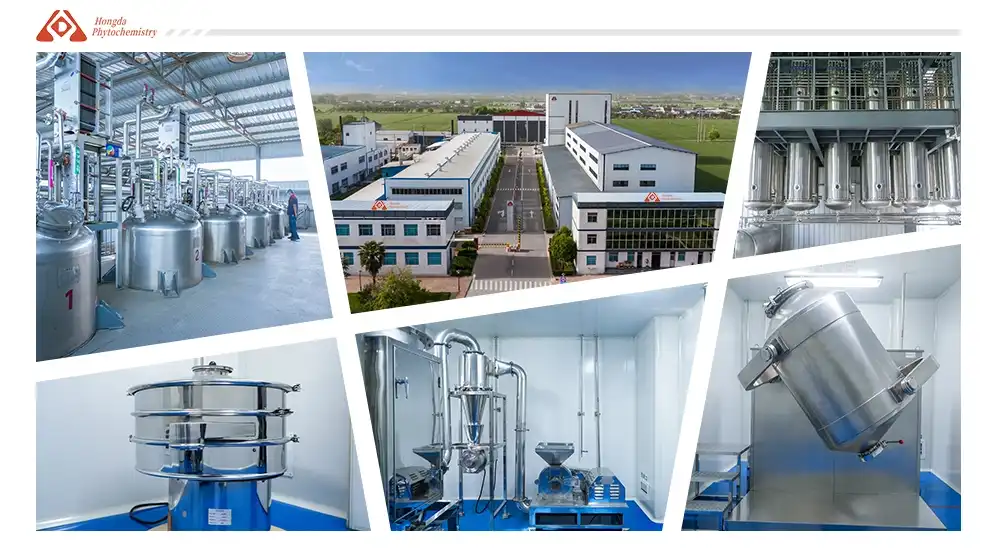
Hongda's factory in Shaanxi is 20,000 square meters big and has 100,000-level sterile workshops with more than 10 modern production lines. The team can now make liposomal coenzyme Q10 powder on a large scale without affecting the accuracy needed for nanoencapsulation processes thanks to this technology. Each batch goes through high-pressure homogenization to get the particle size range of 100–400 nm that is needed for reliable liposomal performance. This is followed by improved spray-drying with cryo-protectant systems that keep the integrity of the vesicles during the powder conversion step. The plant can make more than 3,000 metric tons of all kinds of products every year, so even big buyers don't have to worry about supply problems.
SGS-Standardized Laboratory and Rigorous QC
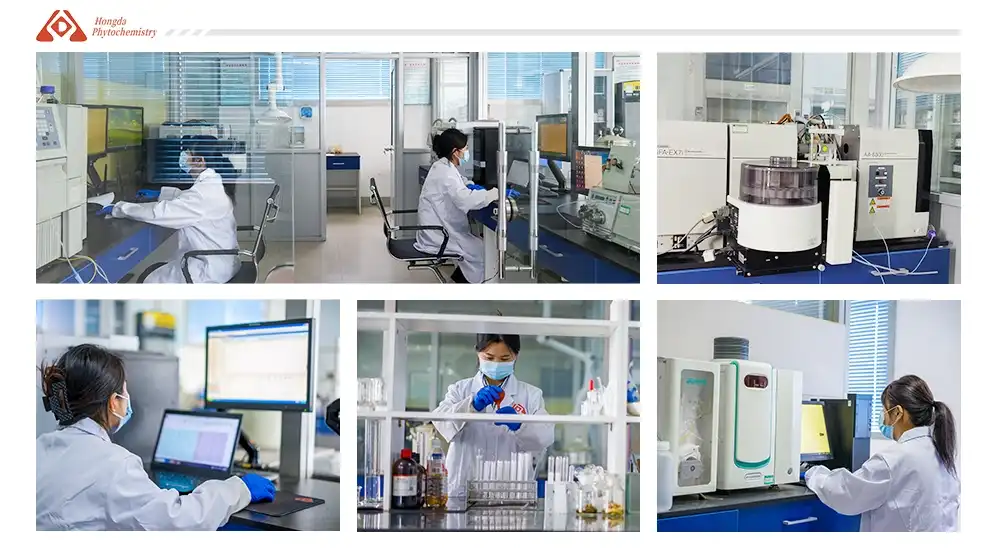
One of Hongda's labs is SGS-standard and has tools like polarimeters, high-performance liquid chromatographs (HPLC), gas chromatographs, atomic absorption spectrophotometers, and more. The other lab is for research and development. In this lab, more than 20 professor-level scientists and testing staff from China's best universities work together to do things like check if encapsulation works, check particle size distribution, look for heavy metals, check microbiological safety, and do multi-condition stability studies. Before it is shipped, liposomal coenzyme Q10 powder is checked for dirt, heavy metals, germs, and chemical leftovers. This makes sure that all of the places it's meant for meet foreign standards.
Certifications That Open Global Markets
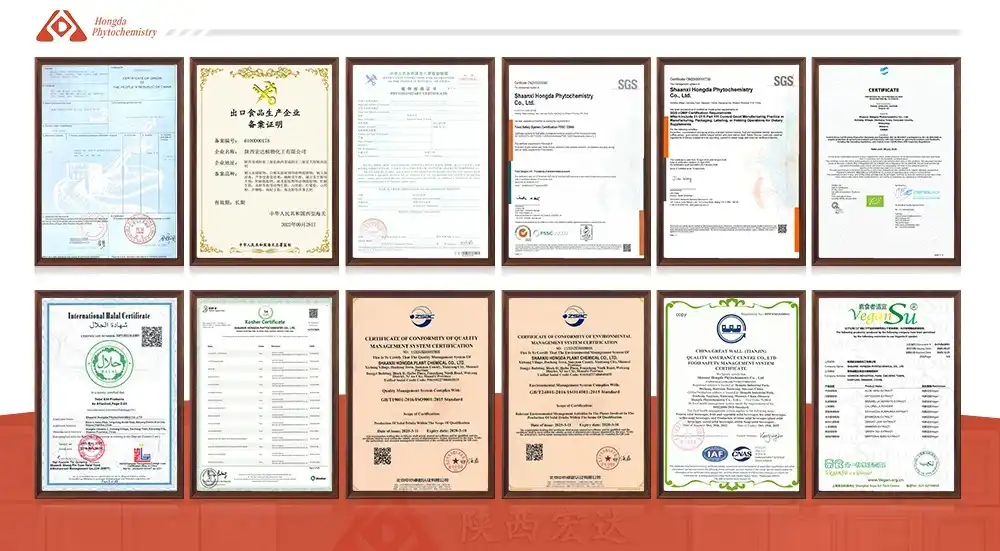
Shaanxi Hongda has been around since 2001 and has built up a large collection of certifications that buyers from other countries seek out as a liposomal coenzyme q10 powder supplier. Since 2010, the business has been known as a National High-Tech Enterprise. It also has licensing to make food, add chemicals to feed, be Halal, and be Kosher. In 2025, Hongda got certificates for cGMP, FSSC22000, SC, ISO 22000, ISO 9001, EU organic, and NOP organic. They can now go straight to markets in the US, EU, and other places. With this level of acceptance, Hongda goes from being a place to get common products to being a real strategic supply partner for people who buy in controlled markets.
|
Certification / Standard
|
Relevance
|
Year Obtained
|
|---|---|---|
|
National High-Tech Enterprise
|
Chinese government R&D recognition
|
2010
|
|
Halal Certification
|
Middle East & Muslim-majority markets
|
Pre-2024
|
|
Kosher Certification
|
North American & Jewish markets
|
Pre-2026
|
|
BRC / FDA Certification
|
UK & US food safety compliance
|
Pre-2025
|
|
Organic Certification
|
Natural product market positioning
|
Pre-2026
|
|
cGMP Certification
|
Pharmaceutical-grade manufacturing
|
2025
|
|
FSSC 22000
|
Global food safety system standard
|
2026
|
|
ISO 22000 / ISO 9001
|
Quality and food safety management
|
2026
|
|
EU Organic / NOP Organic
|
European and US organic market access
|
2026
|
Formulation Applications and Why Brands Choose Liposomal Powder?
Functional Beverages and Ready-to-Mix Formats
One of the most commercially exciting attributes of Hongda's liposomal coenzyme Q10 powder is its water dispersibility. Unlike crystalline CoQ10 — which floats, clumps, and creates an unpleasant film in aqueous applications — the liposomal powder disperses immediately upon hydration, reforming stable colloidal suspensions without the need for additional emulsifiers or surfactants.[3][6] This makes it ideal for heart-health energy drinks, functional waters, and powdered stick-pack formats that brands are increasingly launching to capture the on-the-go wellness segment. The powder format also eliminates cold-chain requirements that complicate liquid liposomal products, making global distribution straightforward for any liposomal coenzyme Q10 powder supplier operating at scale.
Premium Capsule and Softgel Applications
For supplement manufacturers working in hard-shell capsule or two-piece capsule formats, liposomal coenzyme Q10 powder offers an additional advantage: because bioavailability is dramatically higher than standard CoQ10, formulators can achieve the same plasma concentration with a meaningfully lower dose. This creates real formulation space — smaller capsule size for consumer comfort, room for complementary ingredients like vitamin K₂ or magnesium, and a reduced cost-per-effective-dose that improves product economics. Brands' positioning in the premium cardiovascular health category can command higher price points while providing measurably superior clinical outcomes, a competitive combination in a crowded supplement market.
Anti-Aging and Longevity Product Lines
The longevity supplement category — driven by growing consumer awareness of mitochondrial health, cellular aging, and energy metabolism — is one of the fastest-growing segments in nutraceuticals. Liposomal coenzyme Q10 powder slots naturally into anti-aging stacks alongside NMN, resveratrol, and NAD⁺ precursors. Its dual identity as both a mitochondrial fuel source and a potent antioxidant gives formulators a multi-claim ingredient that resonates across energy, cognitive health, cardiovascular support, and skin vitality narratives.[4][5] Hongda's manufacturing consistency—the same particle size distribution, the same encapsulation efficiency, and the same purity batch-to-batch—gives brands the supply reliability required to scale these high-value product lines confidently.
Sourcing from a Trusted Supplier: The Hongda Advantage
Vertically Integrated from Raw Material to Finished Ingredient
What distinguishes Hongda as a liposomal coenzyme Q10 powder supplier—and as a broader coenzyme powder exporter—is the depth of its vertical integration. The company maintains three dedicated agricultural planting bases, including a high-mountain green tea base, a Sophora japonica planting base, and a traditional Chinese medicinal materials base, each managed by professional agronomists who supervise growth from soil preparation through harvest. While CoQ10 itself is produced via fermentation technology, this agricultural foundation reflects a company-wide commitment to raw material traceability and quality control from the earliest stages of the supply chain—a commitment that directly benefits buyers seeking clean-label, fully traceable ingredients.
Warehousing, Logistics, and Supply Reliability
Hongda's 3,000-square-meter warehouse is organized into six dedicated storage zones—Areas A through F—with professional staff responsible for sterile conditions in each. Zone E specifically stores vitamins and amino acid products, including materials supplied by a coenzyme powder exporter, ensuring that temperature-sensitive and chemically distinct ingredients are maintained under appropriate conditions. This structured warehousing system, combined with a factory output capacity exceeding 3,000 metric tons per year, means that buyers can place substantial orders with confidence that delivery timelines will be met. Shipments are traceable from departure through delivery, and the company's logistics infrastructure supports both air and marine freight to global destinations.
R&D Partnership and Custom Formulation
Beyond standard ingredient supply, Hongda's two R&D institutions offer buyers genuine technical collaboration. With more than 20 university-affiliated scientists on staff, the team is equipped to support custom CoQ10 concentrations, alternative carrier systems, and stability optimization for specific end-product formats. For brands developing proprietary formulations, this partnership capability transforms the supplier relationship from transactional to strategic. Hongda's stated philosophy—"natural, green, healthy, and serving customers"—is backed by continuing investment in product innovation, with new certifications and international market approvals obtained as recently as 2025, demonstrating an ongoing commitment to staying at the forefront of the global nutraceutical ingredient industry.
Conclusion
Liposomal coenzyme Q10 powder represents a genuine leap forward in cardiac health supplementation — not a marketing claim, but a measurable improvement in how effectively this essential molecule reaches the heart and mitochondria. Shaanxi Hongda Phytochemistry Co., Ltd. has spent over two decades building the manufacturing infrastructure, scientific expertise, and certification portfolio to supply this ingredient at pharmaceutical-grade quality and commercial scale. For supplement brands, functional food developers, and global distributors seeking a reliable partner, Hongda's liposomal CoQ10 powder offers the combination of bioavailability science, supply reliability, and regulatory credibility that premium heart-health formulations demand.
FAQ
1. What makes liposomal CoQ10 more effective for heart health than standard CoQ10?
Liposomal encapsulation increases plasma CoQ10 concentrations by 3–10× compared to conventional crystalline forms. Because the heart is the body's most energy-demanding organ, this improved delivery translates directly to better mitochondrial support and antioxidant protection in cardiac tissue.
2. What is the purity of Hongda's liposomal coenzyme Q10 powder?
Hongda's product carries a CoQ10 assay of 70% ± 5%, with tested results typically returning 73.1%. The carrier is sunflower phospholipids, and every batch is validated by HPLC and third-party heavy metal and microbiological testing before shipment.
3. What is the minimum order quantity (MOQ) for Hongda's liposomal CoQ10 powder?
The minimum order quantity is 1 kg, making Hongda accessible for both early-stage brands testing formulations and established manufacturers placing large commercial orders. Custom quantities and packaging options are available on request.
4. Is the product suitable for vegan, halal, and kosher formulations?
Yes. The sunflower phospholipid carrier is plant-derived, making it compatible with vegan formulations. Hongda holds both Halal and Kosher certifications, as well as EU Organic and NOP Organic designations, supporting broad global market access.
References
1. Bhagavan, H. N., & Chopra, R. K. (2006). Coenzyme Q10: Absorption, tissue uptake, metabolism and pharmacokinetics. Free Radical Research, 40(5), 445–453.
2. Mortensen, S. A., et al. (2014). The effect of coenzyme Q10 on morbidity and mortality in chronic heart failure: Results from the Q-SYMBIO randomized double-blind trial. JACC: Heart Failure, 2(6), 641–649.
3. Sarmah, D., et al. (2020). Liposomal drug delivery systems: A recent update. Current Pharmaceutical Design, 26(37), 4726–4737.
4. Raizner, A. E. (2019). Coenzyme Q10. Methodist DeBakey Cardiovascular Journal, 15(3), 185–191.
5. Garrido-Maraver, J., et al. (2014). Coenzyme Q10 therapy. Molecular Syndromology, 5(3–4), 187–197.
6. Peng, Q., et al. (2022). Bioavailability enhancement of coenzyme Q10 by liposomal encapsulation: In vitro and in vivo evaluation. Journal of Functional Foods, 91, 104994.