



_1745918362135.webp)

When formulators get down to the business of selecting an iron source, the choice always boils down to two well-known names: ferrous sulfate, the industry’s long-standing default, and ferrous bisglycinate powder, the chelated alternative that is increasingly required in modern formulations. Hongda Phytochemistry produces the latter with a level of purity and consistency meant to make that comparison an easy one. Shaanxi Hongda Phytochemistry Co., Ltd., a specialist manufacturer, created its ferrous bisglycinate powder line based on the unique characteristics that make chelated iron stand out from its inorganic predecessor, from absorption behavior to how it behaves when it reaches a final product.
Understanding the Two Iron Forms Buyers Compare Most
What Is Ferrous Sulfate and Why It's Still Widely Used
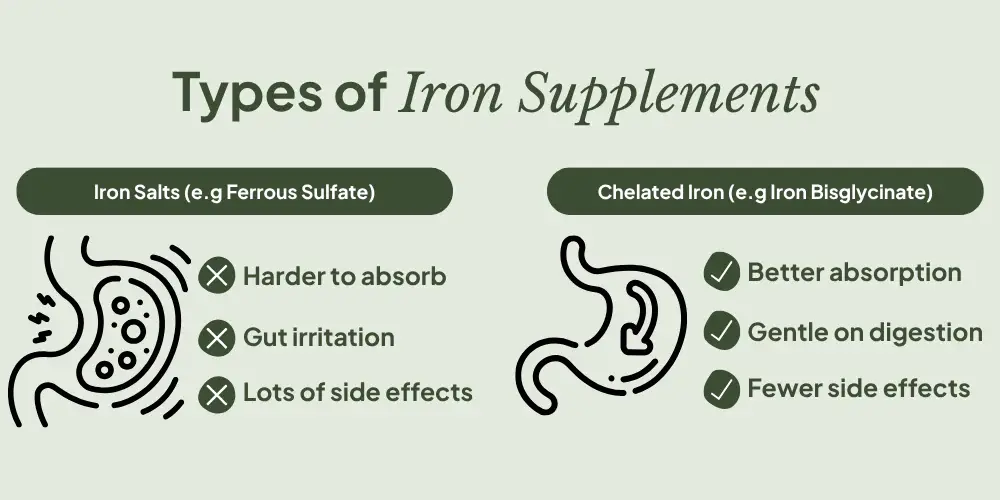
Ferrous sulfate is an inorganic iron salt that has helped underpin the supplement and fortification business for decades, partly because it is very affordable to manufacture and provides a reasonably high concentration of elemental iron per gram. And its lengthy history of clinical usage means there’s a massive amount of dosage and safety data behind it, which some manufacturers still appreciate when formulating conservatively, especially for generic or cost-sensitive product lines where the price of the raw ingredient is the main buying driver. Still, the lower cost comes with trade-offs in taste, color stability, and digestive comfort that have led many formulators to look for alternatives such as ferrous bisglycinate powder when consumer experience is a priority, particularly in categories where a product’s flavor and appearance have a direct impact on whether a customer reorders.[1][3]
What Is Ferrous Bisglycinate Powder and How It's Made
Ferrous bisglycinate powder is created by chelating iron with two glycine amino acid molecules to create a stable ring structure around the iron ion. This production needs more precision than crystallizing an inorganic salt, which is part of the reason the final ingredient gets greater scrutiny from companies with devoted chelation know-how. This causes the resulting powder to behave more like an amino acid complex during digestion than a raw mineral. This is the basis for most of the practical differences formulators notice when they switch a formula from ferrous sulfate to this chelated alternative. Understanding this basis will make every other comparison in this article easier to follow.[4][5]
The Core Chemical Difference Between the Two
The key difference is how firmly the iron ion is bonded before it enters the small intestine. Ferrous sulfate disintegrates rapidly in the stomach and releases the free iron ions practically immediately. Bulk ferrous bisglycinate powder maintains the iron bound up inside the glycine structure during most of the digestive process. This one structural difference cascades into almost every other point of comparison covered in this article, from absorption pathway to taste to how each ingredient behaves when blended into a multi-ingredient formula. This is precisely why formulators tend to treat this chemistry as the jumping-off point for any deeper sourcing conversation.
|
Attribute
|
Ferrous Sulfate
|
Ferrous Bisglycinate Powder
|
|---|---|---|
|
Elemental Iron
|
~20%
|
~20-24%
|
|
Ion Release
|
Rapid, in the stomach
|
Gradual, through digestion
|
|
Typical Taste
|
Strong, metallic
|
Mild, low metallic notes
|
|
Cost Position
|
Lower
|
Higher, reflecting processing
|
Absorption and Bioavailability Compared
How Ferrous Sulfate Is Absorbed in the Body
The main method for absorption of ferrous sulfate is via the DMT1 mineral transport pathway, where the iron ion is reduced and dissolved in stomach acid so that it may pass the intestinal wall. Such dependence implies that any change in the acidity of the stomach, including certain drugs or combinations of foods, may greatly impact the amount of iron absorbed from ferrous sulfate. It also means that competing minerals in the same meal or supplement can interfere with this pathway, which is one of the practical disadvantages that formulators weigh against its lower price point, especially in fortified foods where several minerals are already competing for absorption in a single serving.
How Ferrous Bisglycinate Powder Is Absorbed Differently
Since ferrous bisglycinate powder is chelated to glycine, it may be partially absorbed by amino acid transport channels instead of entirely relying on the mineral-specific mechanism that ferrous sulfate depends on. This dual-pathway absorption is part of the reason chelated iron is less influenced by changes in stomach acidity or the presence of competing minerals in the same formula. This is a mechanism formulators often refer to when explaining why ferrous bisglycinate powder works more predictably across different consumer populations, including those taking acid-reducing medications, older adults who have naturally lower stomach acid, or anyone whose diet already has several other fortified or supplemented minerals.
Why Absorption Efficiency Affects Dosing Strategy
Because the two forms have different absorption efficiencies, dosage techniques developed for ferrous sulfate cannot usually be immediately applied to a ferrous bisglycinate powder formula without modification. Some formulators may aim for a slightly lower level of elemental iron when moving to the chelated form based on published absorption comparisons, while others will preserve constant dosage and depend on the enhanced tolerance to enable more reliable daily compliance. In both cases, a competent formulation scientist should be consulted since it is not possible to simply make a one-to-one replacement of the two basic chemicals. The dosage choices eventually need to be verified against the particular demographic and use case the final product is intended to serve.
Elemental Iron Content Side-by-Side
Buyers often begin by comparing elemental iron content. It is tempting to think that a larger proportion makes ferrous sulfate the better value. In practice, the comparison should be in relation to the expected absorption and consumer compliance of the elemental content, as a lower elemental percentage in wholesale ferrous bisglycinate powder can still mean the same or better functional iron delivery if it is taken consistently and not stopped halfway through due to poor tolerance, which is the most important outcome for both brands and consumers.[1][2][3]
Formulation and Sensory Differences
Taste and Color Impact in Finished Products
Ferrous sulfate is well known for its metallic taste and propensity to discolor final goods with time, especially in candies, chewables, and flavored powders. Ferrous bisglycinate powder is much more resistant to both, since the glycine-bound structure is less reactive to the flavorings, colorants, and acids often utilized in these forms. This sensory difference is becoming a key reason for brands that make consumer-facing products, where taste and looks drive repeat purchases, to opt for the chelated ingredient over the cheaper alternative, especially for products that are marketed as natural or gentle, and that would be undermined by a metallic aftertaste.
Stability Across Tablets, Capsules, and Liquids
Ferrous bisglycinate powder is often less aggressive toward common excipients than ferrous sulfate in the manufacture of tablets and capsules, which may help facilitate blend uniformity testing and lessen the potency loss due to oxidation over the product shelf life. Liquid forms of ferrous sulfate are more prone to discoloration and precipitation over time, a stability issue that chelated iron often better manages. These differences don’t obviate the need for proper formulation science, but they do give ferrous bisglycinate powder a practical edge in several common delivery formats, reducing the number of stability-related reformulation cycles a brand needs to run before arriving at a finished, shelf-stable product.
Compatibility With Other Actives in a Formula
Multi-nutrient formulas that combine iron and zinc, calcium, or vitamin C have a more complex compatibility profile with ferrous sulfate, as free iron ions compete more directly with other minerals for common absorption pathways and can also catalyze degradation of some vitamins during storage. The bonded structure of ferrous bisglycinate powder diminishes some of this direct interaction, which is why it occurs so often in complicated multivitamin and prenatal formulae where a number of actives must co-exist in the same tablet or capsule without undermining each other.[1][2][4]
Cost, Sourcing, and Supply Considerations
Why Ferrous Bisglycinate Powder Commands a Different Price Point
Because of the more extensive chelation process in ferrous bisglycinate powder, and the stricter quality control necessary to verify that chelation is complete, ferrous bisglycinate is naturally priced higher than ferrous sulfate. This price difference must be viewed in the light of the above-discussed sensory, absorption, and compliance advantages and not as a pure cost disadvantage, as the total value proposition often favors the chelated form for consumer-facing products where taste and tolerance drive repeat purchases even when the initial per kilogram price comparison looks less favorable on paper.
What Buyers Should Confirm When Comparing Suppliers
Buyers should not only look at the price per kilogram when comparing bulk ferrous bisglycinate to a ferrous sulfate quote, but also the amount of elemental iron, projected dosage volume, and the testing documents offered by each ferrous bisglycinate manufacturer. A supplier with a lower headline price but less transparency in testing may cost more in the end when factoring in issues of quality or the need to reformulate — hence the importance of comparing in detail rather than with a simple cost-per-kilogram spreadsheet, especially for buyers looking to roll out a formula across several markets with different requirements in terms of documentation.
Evaluating a Ferrous Bisglycinate Manufacturer Against a Sulfate Supplier
A ferrous bisglycinate company is likely to have more specific chelation and testing infrastructure than a standard mineral supplier that happens to have ferrous sulfate as one of several commodity items. Buyers should ask pointed questions about chelation verification methods and recent batch consistency records, since these details reveal whether a supplier truly specializes in chelated minerals or is merely repackaging a broader mineral inventory under a more attractive label. This is a distinction that only becomes obvious once you ask specific technical questions rather than reading a general product brochure. If you need help comparing paperwork from multiple providers, the technical staff at duke@hongdaherb.com can guide you through side-by-side specification sheets.
|
Factor
|
Ferrous Sulfate
|
Ferrous Bisglycinate Powder
|
|---|---|---|
|
Raw Material Cost
|
Lower
|
Higher
|
|
Testing Complexity
|
Standard
|
Includes chelation verification
|
|
Formulation Flexibility
|
Limited by taste/color
|
Broader across formats
|
|
Consumer Compliance
|
Lower on average
|
Higher on average
|
Why Shaanxi Hongda Phytochemistry Is a Trusted Source for the Chelated Form
Production Scale Supporting Bulk Ferrous Bisglycinate Orders
Shaanxi Hongda Phytochemistry Co., Ltd. has a plant of around 20,000 square meters, more than ten modern production lines, and 100,000-level purification workshops, so the company has the scale to support recurring bulk ferrous bisglycinate orders without sacrificing chelation consistency. Having over 150 workshop operation technicians, the factory has an annual output capacity of about 3,000 tons across its whole amino acid/vitamin range, and can handle trial orders through to established commercial volumes, without the long lead times smaller blending operations can sometimes struggle to avoid.
In-House Testing Backing Every Batch
In the laboratory built in partnership with university academics, each batch of ferrous bisglycinate powder manufactured in the plant is tested and standardized to procedures defined by SGS with the participation of over twenty professor-level researchers and testing experts. Examples of equipment used to confirm elemental iron content, chelation completeness, moisture, heavy metals, and microbial counts before release include high-performance liquid chromatographs and atomic absorption spectrophotometers. This gives buyers documented proof of quality, not just the simple assurance printed on a specification sheet.
Certifications Enabling Wholesale Ferrous Bisglycinate Distribution Globally
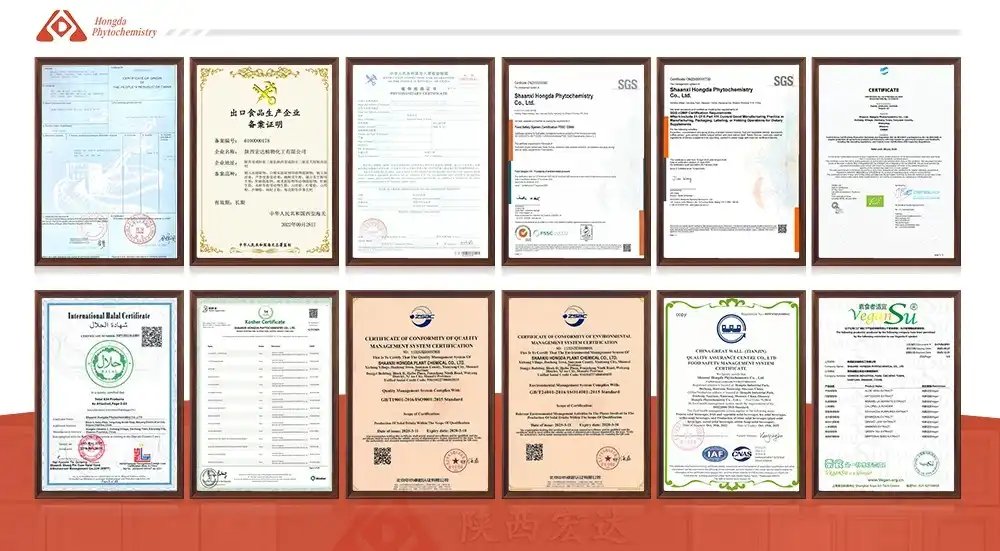
Shaanxi Hongda has gained national high-tech business status, food production and feed additive licenses, halal and kosher certification, BRC, FDA registration, and organic certification from 2001 to 2024. In 2025, the firm added cGMP, FSSC22000, SC-certification, ISO22000, ISO9001, and EU and NOP organic certification. This certification portfolio may be used by buyers of wholesale ferrous bisglycinate for North America, Europe, and abroad to satisfy import compliance and retailer review requirements.
Conclusion
Ferrous bisglycinate powder varies from ferrous sulfate in its absorption route, sensory profile, and formulation compatibility, but offers considerable benefits for businesses considering customer compliance rather than raw cost alone. Shaanxi Hongda Phytochemistry backs this substance with scaled-up manufacturing, in-house SGS-standardized testing, and an expanding worldwide certification portfolio. Buyers considering this comparison should acquire documentation and a sample batch prior to selecting an iron source for their future formulation. They should compare taste, appearance, and stability outcomes head-to-head against their current ferrous sulfate formula and not just accept broad promises.
FAQ
Q1: Is ferrous bisglycinate powder more expensive than ferrous sulfate?
A: Yes, generally, reflecting the more involved chelation process and additional testing required to confirm quality.
Q2: Does ferrous bisglycinate powder contain less elemental iron than ferrous sulfate?
A: Elemental content is similar in range, though absorption behavior differs meaningfully between the two forms.
Q3: Why do gummies and chewables often use ferrous bisglycinate powder instead of ferrous sulfate?
A: It resists discoloration and metallic taste better, which supports product appearance and consumer acceptance.
Q4: Can ferrous bisglycinate powder be used in multivitamin formulas with other minerals?
A: Yes, its bound structure reduces some of the mineral competition seen with unbound iron salts.
Q5: Does Shaanxi Hongda Phytochemistry provide documentation comparing iron sources?
A: Yes, the technical team can walk through specification comparisons directly upon request.
Compare Iron Sources With Confidence Through HONGDA
If your team is deciding between ferrous sulfate and a chelated alternative, Shaanxi Hongda Phytochemistry can provide current specifications, certificates of analysis, and sample batches of ferrous bisglycinate powder to support your formulation comparison. With scaled production, in-house SGS-standardized testing, and certifications supporting global distribution, HONGDA is equipped to help you make an informed sourcing decision. Reach out today at duke@hongdaherb.com to request documentation and discuss your bulk order requirements.
References
1. National Institutes of Health, Office of Dietary Supplements — Iron Fact Sheet for Health Professionals
2. Journal of Nutrition — comparative studies on iron chelate versus inorganic salt bioavailability
3. Linus Pauling Institute, Oregon State University — Micronutrient Information Center, Iron
4. American Journal of Clinical Nutrition — research on amino acid chelate mineral absorption pathways
5. U.S. Pharmacopeia — Dietary Supplement Compendium, Mineral Chelate Monographs