



_1745918362135.webp)

When acquiring a reputable batch of magnesium bisglycinate chelate powder, nutraceutical companies, contract manufacturers, and finished-dosage formulators learn that it’s seldom as easy as searching and choosing the first result. Purity, elemental composition, documentation, and uniformity between shipments are all important, and that is where Hongda Phytochemistry has made its name. Shaanxi Hongda Phytochemistry Co., Ltd. is a specialized manufacturer that integrates large-scale purification equipment and an in-house laboratory to supply magnesium bisglycinate chelate powder that meets the purity, traceability, and compliance requirements that international buyers now require before placing a bulk order.
What Buyers Need to Know Before Sourcing Magnesium Bisglycinate Chelate Powder
The Chelation Advantage Over Standard Magnesium Salts
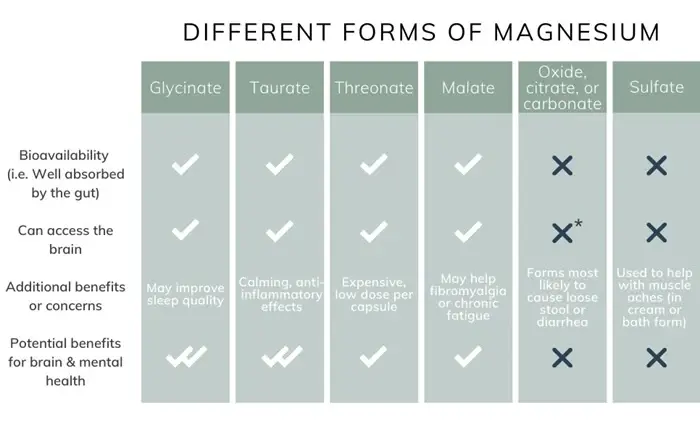
Before you compare vendors, it’s useful to understand why magnesium bisglycinate chelate powder is so typically sought over oxide, citrate, or sulfate forms. Here, a magnesium ion is complexed to two molecules of glycine, which protects it from acids and alkaline substances that ordinarily interfere with mineral uptake in the stomach. This form is often easier on digestion but still provides usable magnesium, and is favored by buyers making products for stress support, sleep, or muscle rehabilitation. When formulators assess a batch of magnesium bisglycinate chelate powder, they often want to know what the ratio of bound glycine to free magnesium is, since this ratio impacts stability and accuracy of finished-product labeling.[2][5]
Elemental Magnesium Content and Bioavailability
This is one of the first things a buyer should verify. Chelated forms inherently contain less elemental mineral per gram than inorganic salts. A correctly made magnesium bisglycinate chelate powder will usually have a specified elemental range, and any variation from that should be noted on the certificate of analysis and not left for the consumer to figure out themselves. Suppliers’ bioavailability studies should clearly state the circumstances under which the testing was performed, since absorption claims without supporting data are among the most frequent discrepancies found by buyers comparing several bids for the same raw material. It is also worth questioning whether the elemental value reported is an average of recent manufacturing runs or a single historical batch, since seasonal change in the raw glycine and magnesium source material might move findings somewhat from one production cycle to the next.[1][2][3][4]
Certifications That Signal a Trustworthy Batch
A filled-in specification sheet does not guarantee that magnesium bisglycinate chelate powder has been manufactured under regulated, auditable circumstances. Depending on the target market, buyers should ask about food safety management, good manufacturing practice compliance, and, where appropriate, organic or kosher and halal designation. These certifications are not just paper; they are a reflection of the sanitation, batch record-keeping, and testing discipline behind each production run, and they become critical when a finished product later needs to pass the customs inspection or retailer compliance review in the United States or European Union.[6]
|
Magnesium Form
|
Approx. Elemental Magnesium
|
Digestive Tolerance
|
Typical Application
|
|---|---|---|---|
|
Magnesium Oxide
|
~60%
|
Lower
|
High-dose tablets
|
|
Magnesium Citrate
|
~16%
|
Moderate
|
Liquid and powder blends
|
|
Magnesium Bisglycinate Chelate
|
~14-18%
|
High
|
Capsules, sleep and stress blends
|
|
Magnesium Sulfate
|
~10%
|
Lower
|
Topical and bath products
|
Where International Buyers Are Finding Reliable Supply
Domestic Blending vs Importing Raw Powder
Many firms are deciding whether to acquire pre-blended completed products locally or import raw magnesium bisglycinate chelate powder straight for their own production facilities. The buyer is responsible for quality verification, while importing the raw ingredient is often what provides formulators greater freedom over dose, excipient choice, and label claims. Direct sourcing of a magnesium bisglycinate chelate powder supplier is preferred by companies that manufacture at scale, since it removes layers of markup and offers the opportunity for closer scrutiny of particle size, moisture content, and consistency between batches (when you have a single formulation across several production cycles).[1][3]
Why China Has Become a Primary Sourcing Hub
In the last decade, a major portion of the world production of magnesium bisglycinate chelate powder has been transferred to Chinese producers, mainly because of their integrated manufacturing, the known skill in amino acid chelation, and the cheap raw material costs. Plants that integrate chemical synthesis with in-house purification will have more control over impurity profiles. Smaller, regional blenders will have less. For worldwide purchasers comparing quotes, this concentration of knowledge frequently means more uniform specs and quicker lead times, assuming the manufacturer has the testing infrastructure required to back up its paperwork with actual data.[4]
What Separates a Verified Supplier From a Broker
Not all companies that sell magnesium bisglycinate chelate powder genuinely make it. Some are trade intermediates who re-package goods from elsewhere, with no complete view of the original manufacturing circumstances. A reliable provider of magnesium bisglycinate chelate powder should be able to provide you with proof of their facilities, records of batch traceability, and honest answers regarding the source of their raw materials. Buyers who bypass this verification stage occasionally find that the purity of shipments varies, which may be significantly more disruptive to a production plan than spending a few extra days in the screening process right from the start of the partnership.
Warning Signs When Screening a Manufacturer
Buyers should be skeptical of magnesium bisglycinate chelate powder manufacturers that provide ambiguous specification sheets, are hesitant to release third-party test findings, or quote prices well below the rest of the market with no explanation. Most reputable manufacturers will be more than happy to discuss their manufacturing process, testing equipment, and certification history in detail. A manufacturer that cannot explain how moisture, heavy metals, and microbiological limitations are managed during manufacturing is a red flag to continue researching alternative possibilities before committing to a purchase order. The practical approach to validate these claims without requiring an onsite facility visit prior to the first order is to request a brief video tour of the production and testing area or a recent third-party audit report.
Why Shaanxi Hongda Phytochemistry Stands Out as a Source
Facility Scale and Production Capacity
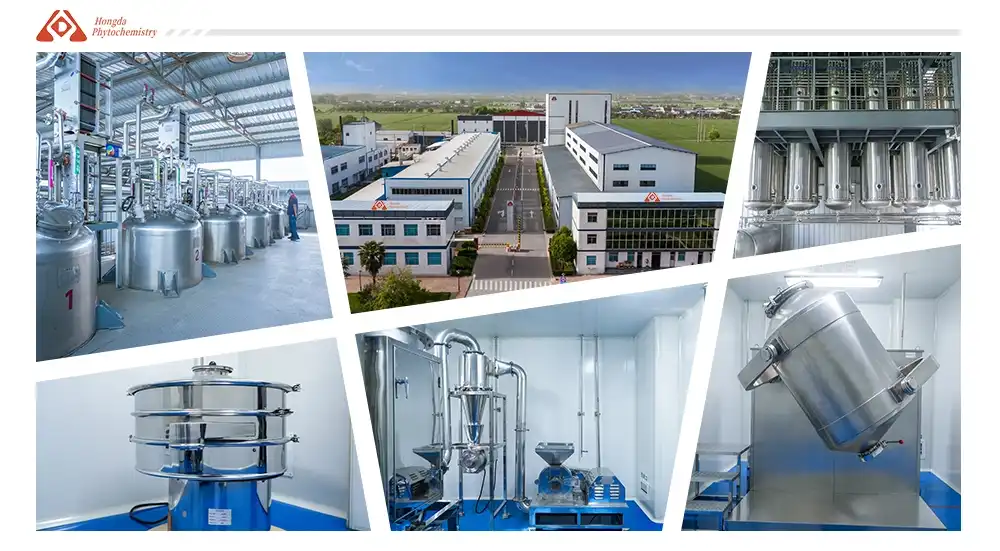
Shaanxi Hongda Phytochemistry Co., Ltd. has a manufacturing base of around 20,000 square meters centered on more than ten contemporary production lines and 100,000-level purification workshops. This enables the firm to manufacture magnesium bisglycinate chelate powder, in addition to its larger vitamin and amino acid product line, and assures batch-to-batch uniformity. With over 150 workshop operating experts and an annual production capacity of about 3,000 tons across all product lines, the plant is well positioned to serve both smaller trial orders and the recurrent bulk quantities required by established nutraceutical brands.
In-House SGS-Standardized Testing
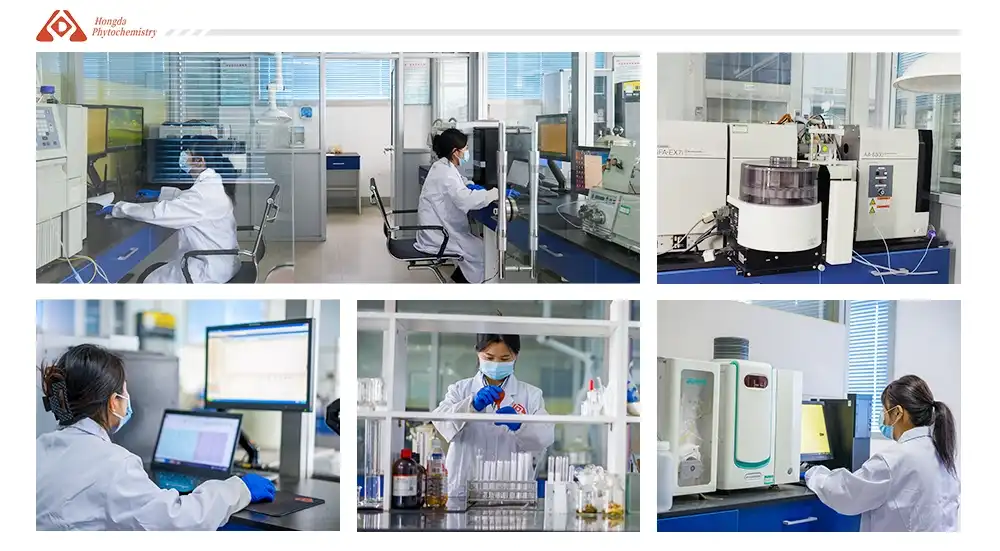
An on-site lab that was built with university academics and standardized to SGS norms is used for quality verification of the magnesium bisglycinate chelate powder manufacturer. There are more than twenty professor-level researchers and testing workers, using equipment such as high-performance liquid chromatographs, atomic absorption spectrophotometers, and automated titrators. Each batch undergoes testing for ingredient correctness, pesticide residue, moisture, heavy metals, and microbiological contamination before it is sent to the customer, providing verifiable assurance, rather than just a statement of quality written on a sales sheet.
Certifications Supporting US and EU Market Entry
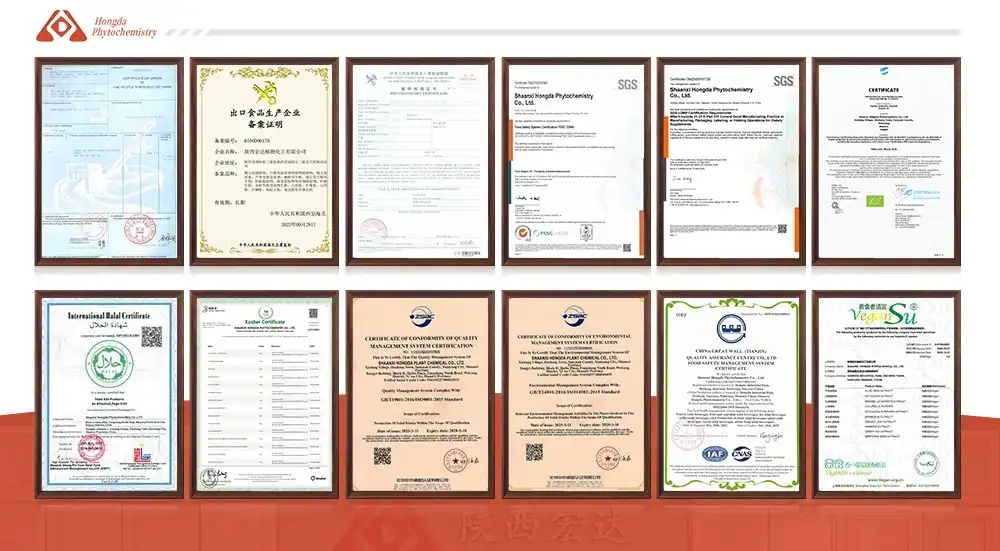
In controlled markets, the buyer exporting the final product must have a supply of magnesium bisglycinate chelate powder whose documentation can pass examination. Shaanxi Hongda obtained national high-tech business status, food production and feed additive licenses, halal and kosher certification, BRC, FDA registration, and organic certification from 2001 to 2024. In 2025, the firm added new national patents, cGMP, FSSC22000, SC certification, ISO22000, ISO9001, and EU and NOP organic certification. If you would like to see current copies of the certificates or a formal quote for the magnesium bisglycinate chelate powder, you are welcome to contact the sourcing and technical team directly at duke@hongdaherb.com to go over the paperwork before you commit to a purchase order.[6]
|
Category
|
Certifications
|
|---|---|
|
Quality Management
|
ISO9001, ISO22000, FSSC22000, cGMP
|
|
Market Access
|
FDA registration, BRC, SC certification
|
|
Dietary Compliance
|
Halal certification, Kosher certification
|
|
Organic Standards
|
EU Organic, NOP Organic
|
|
Enterprise Status
|
National High-tech Enterprise
|
Placing a Successful Bulk Order
Requesting Samples and Certificates of Analysis
If you are serious about buying magnesium bisglycinate chelate powder, you should start with a sample and a current certificate of analysis. Rather than trusting the supplier’s paperwork, you may test the sample against your own inbound quality control checks to verify the particle size, color, solubility, and odor are what your formulation demands. This also allows purchasers to check the return time on future documentation requests, a crucial early sign of how responsive the partnership will be once regular purchase orders are in place.
MOQ, Packaging, and Lead Time Considerations
The minimum order quantities for magnesium bisglycinate chelate powder may vary based on production schedules and the amount of inventory already in the facility. Buyers should also confirm packaging choices early on, as moisture-sensitive powders often need multi-layer bags with desiccant, and fiber drums for stability during ocean freight for bigger orders. Lead time conversations should include the manufacturing schedule and the testing window that has to happen prior to release. A manufacturer who cuts corners on quality checks in an effort to reach a shipment date is taking a shortcut that pushes risk onto the customer in the end. Buyers that purchase on a recurrent basis sometimes pre-negotiate a standing production slot, reducing the likelihood of delays when the manufacturer is operating many product lines at once.
Understanding Bulk Pricing Factors
The pricing for magnesium bisglycinate chelate powder is based on the raw glycine and magnesium input prices, the amount of the order, packaging requirements, and the level of testing accompanying the shipping. When comparing bids, buyers should check precisely what is included in the offered price since some vendors claim a cheaper base cost but charge extra for third-party testing, sample delivery, or documentation bundles. A transparent quote should delineate these factors explicitly so that the total landed cost may be compared correctly across several possible vendors.
|
Factor
|
What to Confirm With the Supplier
|
|---|---|
|
Packaging
|
Moisture-barrier bags, drum options, labeling format
|
|
Documentation
|
COA, MSDS, certificate of origin, halal/kosher letters
|
|
Lead Time
|
Production schedule plus quality release window
|
|
Shipping Terms
|
FOB, CIF, or DDP arrangement and responsible party
|
Evaluating Long-Term Sourcing Partnerships
Powder Format vs Other Magnesium Delivery Formats
Prior to selecting how they want to build their supply chain, some customers may compare magnesium bisglycinate chelate powder to pre-encapsulated or tableted versions. Under the parameters of the brand, often sourcing the raw powder will provide you with greater freedom to formulate for private label, enabling the brand to blend it with other minerals or botanicals that complement it. When a buyer has many SKUs from a single core ingredient, engaging directly with a powder supplier frequently simplifies formulation modifications vs. relying on a finished-format manufacturer for each change.
Comparing Cost Per Elemental Magnesium Unit
Experienced purchasers don't only look at the raw price per kilogram but at the cost per unit of elemental magnesium given by the powder, since chelated forms have a smaller proportion of elemental magnesium than inorganic salts. This computation offers a more accurate understanding of genuine value when comparing magnesium bisglycinate chelate powder to other forms with varied absorption patterns. Tolerability is a major consideration as well as elemental cost, since a slightly higher price per kilogram might still be a better overall value if it decreases formulation complaints related to stomach pain.
Building a Reliable Long-Term Relationship
A single order success does not guarantee long-term consistency. Buyers should examine the communication of a magnesium bisglycinate chelate powder provider in the event of manufacturing delays, raw material shortages, or certification renewals. Suppliers who proactively communicate capacity or testing schedule modifications are often more reliable partners than those that simply reply after a shipment is already late. Making this kind of communication early, with a clear escalation point, makes it much simpler to expand order volume as your own product demand increases. Buyers that take the effort to develop this connection in year one of sourcing generally find that as order history builds up, price, lead times, and paperwork turnaround become more predictable.
Conclusion
The key to selecting a source for magnesium bisglycinate chelate powder in bulk is confirmed purity, open record keeping, and a producer that can grow with your company. Shaanxi Hongda Phytochemistry offers large-scale manufacturing, in-house SGS standardized testing, and rising international certifications to satisfy formulators requiring consistent shipment after shipment. Order the most recent paperwork and a sample batch of the product for your own quality team to evaluate the fit before you place your next purchase order.
FAQ
Q1: What elemental magnesium percentage should I expect from magnesium bisglycinate chelate powder?
A: Most quality batches fall within a defined elemental range, typically lower than inorganic salts, and this should always be confirmed on the certificate of analysis.
Q2: How is magnesium bisglycinate chelate powder different from magnesium citrate?
A: The chelated glycine structure generally offers gentler digestive tolerance, while citrate provides a higher elemental yield per gram.
Q3: What documentation should a supplier provide before shipment?
A: A certificate of analysis, MSDS, and relevant certifications such as ISO, FDA registration, or organic status should accompany every order.
Q4: Can Shaanxi Hongda Phytochemistry supply samples before a bulk order?
A: Yes, samples along with current testing documentation can be requested directly from the sourcing team.
Q5: What packaging is recommended for bulk shipments of this powder?
A: Moisture-barrier lined bags or fiber drums with desiccant are commonly used to protect powder stability during transit.
Partner With HONGDA for Your Next Bulk Order
If your team is ready to move forward, Shaanxi Hongda Phytochemistry can provide current specifications, certificates of analysis, and sample batches of magnesium bisglycinate chelate powder tailored to your formulation needs. With scaled production capacity, an in-house testing laboratory, and certifications supporting both US and EU market entry, HONGDA is positioned to support your bulk sourcing requirements reliably over the long term. Reach out today at duke@hongdaherb.com to request documentation, discuss minimum order quantities, and start building a dependable long-term supply partnership.
References
1. National Institutes of Health, Office of Dietary Supplements — Magnesium Fact Sheet for Health Professionals
2. Journal of the American College of Nutrition — studies on magnesium glycinate bioavailability and tolerability
3. Linus Pauling Institute, Oregon State University — Micronutrient Information Center, Magnesium
4. World Health Organization — Trace Elements in Human Nutrition and Health
5. U.S. Pharmacopeia — Dietary Supplement Compendium, Mineral Chelate Monographs
6. International Organization for Standardization — ISO 22000 and ISO 9001 Food Safety Management Standards