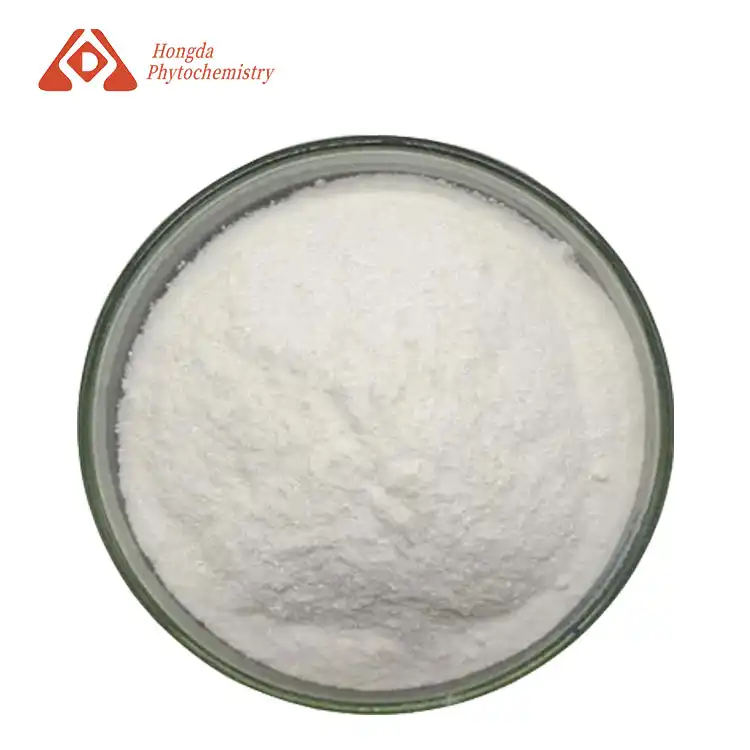




Those who have opened a drum of iron powder and discovered a duller, browner product than anticipated know that storage is no small thing. This article will go over the question in the title and provide practical instructions for warehouses, ships, and receiving docks. Shaanxi Hongda Phytochemistry Co., Ltd. is the manufacturer of the export brand Hongda Phytochemistry, which provides all aqueous-phase chelation and constant-temperature spray-dried ferrous bisglycinate powder with over 95% chelation rate, 2.0% or less ferric iron, and 24-month shelf life under sealed, cool, and dark storage. Read on to find out how oxidation gets started, what storage practices keep it at bay, and what to look for before accepting a delivery.
Why Oxidation Is the Quiet Risk in Iron Raw Materials
What Happens When Ferrous Iron Meets Air
Fe 2 + is the active form that formulators depend on. Ferrous iron is chemically eager to give up an electron. In the presence of oxygen, moisture, and warmth, Fe2+ gradually converts to ferric iron, Fe3+, a less useful form, which shows up as a darker, duller color. For a corporation that makes finished goods, the effects are more practical than dramatic: color drift between batches and label calculations that no longer represent reality. So a reputable provider of ferrous glycinate will question you about oxidation control before they talk about price. The technical documentation from Hongda says they test each batch for Fe2+ and Fe3+ with a ferric limit of 2.0% or below so that customers can observe the amount of inactive iron that is present in a lot. The easiest method of maintaining that original quality is to store ferrous bisglycinate powder carefully.[1][2][3]
How Chelation Gives the Powder a Head Start
The first line of defense against oxidation is chelation. In the powder of ferrous bisglycinate, each iron ion is caught in a ring of two molecules of glycine, protecting the metal from many of the change agents. Hongda says their all-aqueous phase chelation method with constant-temperature spray drying achieves a chelation rate over 95 percent and a ratio of around one mole of iron to two moles of glycine. A basic mixture of ferrous salt and glycine lacks this protection and wanders quicker. So a reliable ferrous bisglycinate maker provides proof of identification. Hongda provides Fourier transform infrared spectroscopy data upon request to prove that a real chemical connection has been created. Good storage will not improve a badly produced material, but will maintain a competently built one for its entire shelf life.[2][3][4]
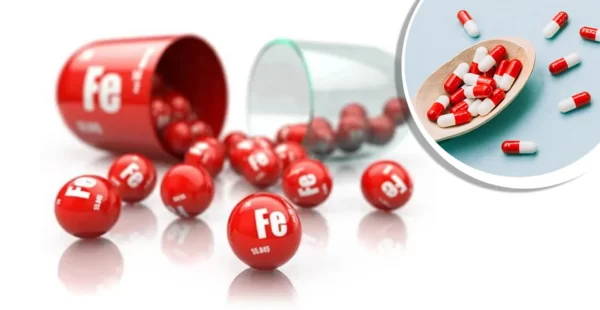
Specification Markers That Predict Storage Behavior
Not all lines on a datasheet are created equal for storage. Four indicators need to be looked at closely. These are the ferric iron limit, loss on drying, nitrogen concentration, and particle size. The loss on drying limit shows how dry the powder is to begin its trip, as moisture is the accelerator for oxidation and caking. Nitrogen content is a secondary test for completion of the chelation. The size of the mesh controls the surface area exposed to the air in a drum. The table consolidates the numbers presented on the Hongda ferrous bisglycinate powder product page, and why each one counts when you plan warehouse space and stock rotation. Post a copy next to your receiving goods method.[1][2]
|
Parameter
|
Hongda standard
|
Why it matters for storage
|
|---|---|---|
|
Ferric iron (Fe³⁺)
|
≤ 2.0%
|
Caps the oxidized, inactive iron in each lot
|
|
Loss on drying
|
≤ 7.0%
|
Limits moisture that drives caking and oxidation
|
|
Nitrogen content
|
10.0–12.0%
|
Secondary indicator of chelate completeness
|
|
Chelate ratio
|
About 1 mole iron : 2 moles glycine
|
Confirms the protective 1:2 structure
|
|
Particle size
|
60–80 mesh, adjustable
|
Affects flow and exposed surface area
|
|
Shelf life
|
24 months, sealed, cool and dark
|
Sets the stock rotation window
|
Storage Rules That Protect Iron Powder Inside Your Warehouse
Cool, Dry, and Dark as a Daily Habit
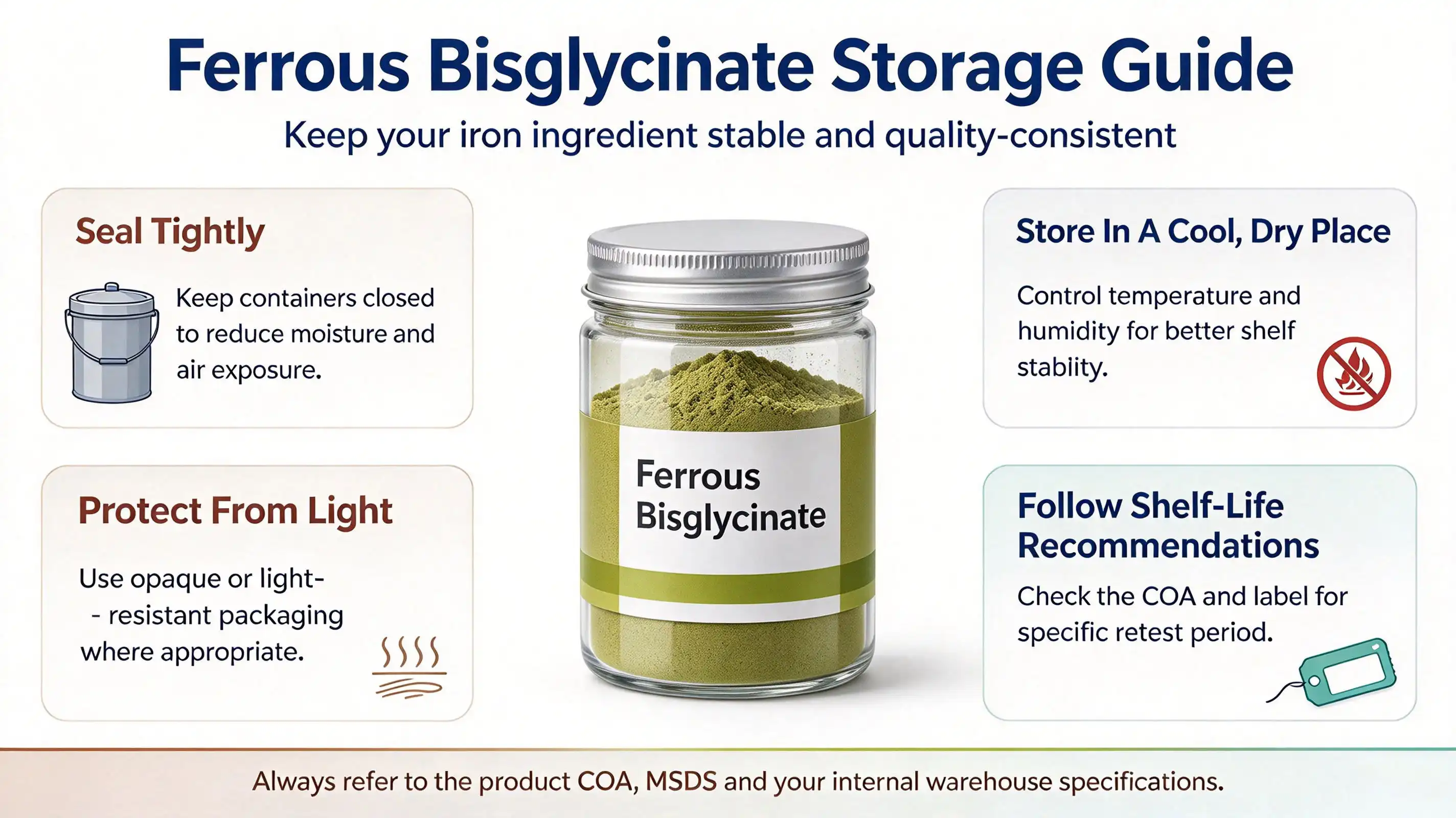
Hongda’s recommendation for its bulk ferrous bisglycinate is refreshingly simple: store barrels in a cold, dry, dark place with tight seals. Every word has a place. Cool temperatures delay the chemical reaction that converts Fe2+ to Fe3+, dry air inhibits the moisture that drives it, and darkness prevents light-driven change. Buying in bulk ferrous bisglycinate makes the warehouse part of your quality system. Designate a clean area away from loading doors, steam lines, and sunny windows. Store drums on pallets, not on bare flooring. Allow for ventilation, and plan for frequent recording of temperature and humidity in the area. The product has a 24-month shelf life when kept sealed, cold, and dark, which offers planners plenty of space, as long as the environment is maintained.
Opening, Resealing, and Rotating Drums
Most oxidation issues start after delivery, the instant a drum is opened. Hongda recommends not opening and resealing often, and using quickly after breaking the seal. This entails scheduling production runs such that a drum is opened for a specific batch and then emptied or resealed right away. Press air out of the inside bag, fold and tighten it, then seal the outside fiber drum tightly. Each drum should be tagged with an opening date and handled on a first-in, first-out basis so that older batches leave the warehouse first. Plants that employ little quantities in numerous products may split a drum into sealed sections -- from day one. These practices cost nothing and safeguard ferrous bisglycinate powder far more than any subsequent repair can.
Tropical Climates and Long Storage Periods
All storage plans are tested in hot, humid areas. Hongda highly advises improved moisture and air-barrier packaging for tropical areas, and can offer upgraded protective packaging if requested. Distributors buying wholesale ferrous bisglycinate to resell in Southeast Asia, Africa, or Latin America should request that upgrade and should maintain reserves in the coolest, driest portion of the plant. If your team needs a storage plan tailored to your climate, send your destination market and finished-product format to duke@hongdaherb.com, and the Hongda sourcing-technical team will reply with suggestions for your ferrous bisglycinate powder. The table summarizes the key checkpoints from storage to opening.
|
Checkpoint
|
Hongda guidance
|
What it protects against
|
|---|---|---|
|
Storage room
|
Cool, dry, dark area with drums tightly sealed
|
Slows Fe²⁺ oxidation and moisture uptake
|
|
Drum opening
|
Avoid frequent repeated opening
|
Limits air exposure
|
|
Opened stock
|
Use promptly once the seal is broken
|
Prevents color drift and caking
|
|
Packaging
|
25 kg fibre drum with double PE-aluminum bags
|
Blocks moisture and air
|
|
Hot, humid routes
|
Upgraded moisture and air-barrier packaging
|
Counters tropical conditions
|
Packaging, Transit, and Arrival Checks That Close the Loop
Why Double PE-Aluminum Bags Matter
Packaging is storage’s silent accomplice. Hongda packs iron glycinate powder in 25 kg food-grade fiber drums, coated with double PE-aluminum moisture-proof inner bags, packaged immediately after the batch passes the quality check. The aluminum layer prevents the entry of oxygen and moisture. The outer drum protects against knocks during handling, and 27 drums fit on a tray for sturdy palletizing. Buy bulk ferrous bisglycinate for a multi-month manufacturing schedule. Examine the packaging as carefully as the powder: undamaged seals, no punctures, no traces of moisture on the inside bag. If you see a liner that is damaged, this is the first indication that there may be a quality problem and should be reported to the supplier with pictures on the day the cargo arrives, far before any test result comes back.
Sea Freight, Air Freight, and Container Heat
In ocean shipment, powders experience weeks of temperature changes, and the inside of containers may get quite hot in the summer. Hongda provides sea or air freight and advises enhanced moisture- and air-barrier packaging for tropical routes. The technical team says that moisture and air entering the package are frequently the culprits behind color change after a lengthy trip, and container heat only makes it worse. So adequate cold and dry storage after arrival is still important. When comparing ferrous glycinate suppliers on shipping, inquire about the packing they use for ocean shipments, whether they provide any protective enhancements, and what the supplier’s process is if a shipment comes with an obvious problem. Air freight is more expensive but may be used for urgent trials and premium amounts of wholesale ferrous bisglycinate.
A Simple Incoming Inspection Plan
Your best bet is on arrival day to make sure storage and transit worked. Compare the certificate of analysis for the lot to your requirements, taking special attention to the ferrous and ferric iron findings since Hongda does provide these on their COA. If your lab has the ability, compare the look with the supplier's description of a fine powder, dark brown or grayish green, and then test loss on drying and nitrogen content. Hongda may also supply chelate structure supporting documents, such as FTIR identification, for supplier qualification checks if formally requested. The batch file logs each outcome as the lot progresses through production. Here's a simple plan in a table for a ferrous bisglycinate manufacturer, utilizing reference values from the Hongda product site, so workers receiving the goods may act swiftly.[1][2][4]
|
Inspection item
|
Reference from Hongda
|
Why check it
|
|---|---|---|
|
Appearance
|
Dark brown or grayish green fine powder
|
Early sign of color drift
|
|
Ferric iron (Fe³⁺)
|
≤ 2.0%
|
Measures oxidized, inactive iron
|
|
Loss on drying
|
≤ 7.0%
|
Indicates moisture exposure
|
|
Nitrogen content
|
10.0–12.0%
|
Secondary check on chelate completeness
|
|
Chelate identity
|
FTIR report on request
|
Confirms a true chelate, not a blend
|
|
Packaging
|
Double PE-aluminum bags intact
|
Shows the barrier protection held
|
Sourcing From a Manufacturer That Fights Oxidation at the Source
Production Steps Built Around Fe²⁺ Stability
Store can only sell what the manufacturer produces. Hongda offers a process for ferrous bisglycinate powder focused on the primary failure issues purchasers see: inadequate chelation, uncontrolled oxidation, and insufficient moisture protection. Non-qualified batches of incoming ferrous salt and food-grade glycine are rejected prior to being fed into the reaction tanks. The chelation process is done under regulated pH and temperature; drying is done under mild, low-temperature conditions to maintain Fe 2+ stability; and milling and sieving homogenize particle size. Each lot is examined for ferrous and ferric ratio, nitrogen, loss on drying, heavy metals, and microbiological indicators before release. Powder is packaged immediately in moisture barrier bags. Purity is just one part, but ferrous bisglycinate manufacturers that explain each stage of the process may make your own storage strategy much better.[1][2][5]
Factory Strength and Certifications
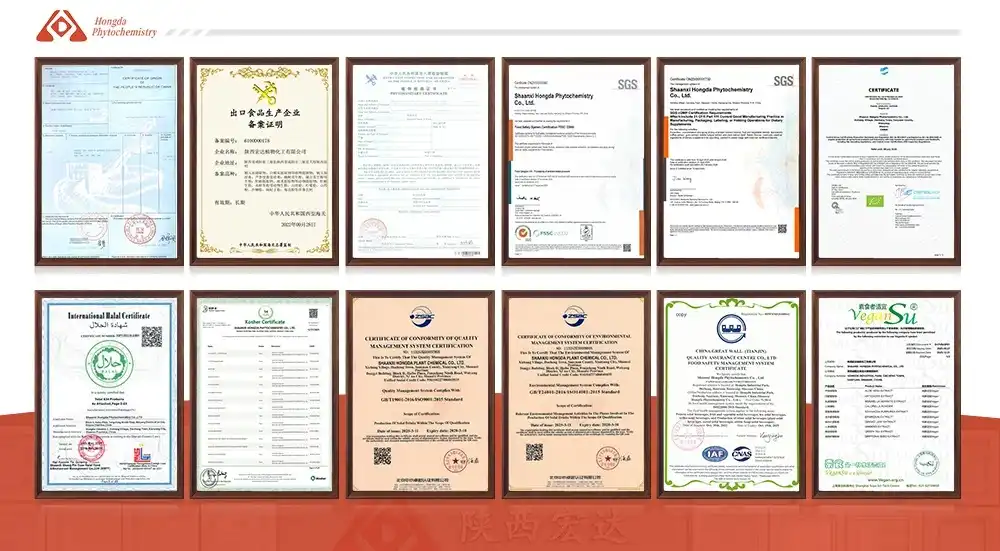
Shaanxi Hongda Phytochemistry Co., Ltd. was founded in 2001, with a factory area of around 20,000 square meters, and more than ten sets of advanced manufacturing lines and 100,000-level purification workshops. We were honored as a National High-tech Development Enterprise in 2010, and we have more than 150 workshop technicians and can achieve a yearly production of 3,000 tons. An SGS-standardized laboratory, jointly established with university academics, integrates more than 20 professor-level researchers and testing personnel, liquid chromatographs, gas chromatographs, and atomic absorption spectrophotometers. The ferrous bisglycinate powder line has been certified with cGMP, FSSC22000, ISO9001, ISO22000, BRC, kosher, halal, and organic certifications, which has helped the firm to service customers from Europe, America, and Southeast Asia where documentation standards are high.
Ordering Samples and Planning Your First Shipment
A small brief begins a seamless initial order. Tell the Hongda team what your finished-product format is, such as pills, capsules, drops, gummies, or solid drinks, and what your target market is, so packaging and papers may be matched to the route. The standard minimum order is 25 kg; tiny lab trial samples are available for validation. Particle size may be adjusted for high-speed tableting to increase filling accuracy and minimize dust. Hongda’s stability testing offers compatibility guidance, available upon request to brands formulating ferrous bisglycinate powder with vitamin C or folate. We provide wholesale ferrous bisglycinate to buyers who produce other products. The product is sold as an industrial raw material in bulk and is not for sale to customers.
Conclusion
The chain of modest habits preventing the oxidation of ferrous glycinate supplier: Choose a well-chelated material, Store drums in a cool, dry, dark area, Open seldom, Rotate stock, check every delivery. Hongda Phytochemistry supports that chain with regulated manufacturing, double PE-aluminum packaging, lot-specific Fe²⁺ and Fe³⁺ data, and a 24-month shelf life if stored correctly. Consider the warehouse an extension of your quality system, and your final goods will have the color, substance, and consistency your consumers expect from the first drum to the last. Start with a sample, check the data, and develop a storage process that your complete team can follow. Every drum will perform like the first one.
FAQ
Q1: What are the ideal storage conditions for ferrous bisglycinate powder?
A: Keep drums tightly sealed in a cool, dry, dark area, away from heat and humidity.
Q2: How long is the shelf life?
A: Hongda lists 24 months under sealed, cool, dark warehouse storage.
Q3: Why can the powder change color after ocean shipping?
A: Moisture and air entering the packaging, plus container heat, can oxidize Fe²⁺ into Fe³⁺, so barrier packaging and proper storage matter.
Q4: Should I reopen the same drum many times?
A: No. Avoid repeated opening and use stock promptly once the seal is broken.
Q5: What packaging and minimum order does Hongda offer?
A: A 25 kg fibre drum with double PE-aluminum inner bags, with a 25 kg minimum order and small lab samples available.
Contact HONGDA to Secure Oxidation-Controlled Ferrous Bisglycinate Powder
Ready to protect your iron supplement line from color drift and activity loss? The HONGDA team can send technical datasheets, lot-specific COAs with Fe²⁺ and Fe³⁺ results, FTIR chelate identification, and packaging recommendations for your climate. Tell us your target format and destination market, and our sourcing-technical specialists will suggest the right packaging and a sensible sample plan for ferrous bisglycinate powder. With a 25 kg minimum order, small lab trial samples, and export-grade moisture-barrier drums, getting started is simple. We also welcome questions about stability trials, particle size, and vitamin C or folate combinations. Email duke@hongdaherb.com today, and a specialist from Shaanxi Hongda Phytochemistry Co., Ltd. will reply within 24 working hours with documents, samples, and pricing details.
References
1. EFSA Panel on Food Additives, Flavourings, Processing Aids and Materials in Contact with Food. Opinion on ferrous bisglycinate as a source of iron for use in the manufacturing of foods and in food supplements. EFSA Journal. 2006;299:1-17.
2. Ashmead HD. The absorption and metabolism of iron amino acid chelate. Archivos Latinoamericanos de Nutrición. 2001;51(1 Suppl 1):13-21.
3. Bovell-Benjamin AC, Viteri FE, Allen LH. Iron absorption from ferrous bisglycinate and ferric trisglycinate in whole maize is regulated by iron status. American Journal of Clinical Nutrition. 2000;71(6):1563-1569.
4. Pineda O, Ashmead HD. Effectiveness of treatment of iron-deficiency anemia in infants and young children with ferrous bis-glycinate chelate. Nutrition. 2001;17(5):381-384.
5. Jeppsen RB, Borzelleca JF. Safety evaluation of ferrous bisglycinate chelate. Food and Chemical Toxicology. 1999;37(7):723-731.
6. Hurrell R, Egli I. Iron bioavailability and dietary reference values. American Journal of Clinical Nutrition. 2010;91(5):1461S-1467S.