


_1745918362135.webp)

|
Phase
|
Action
|
Evidence You Collect
|
|---|---|---|
|
1. Before sampling
|
Define the metric and method
|
Written method statement
|
|
2. Sample testing
|
Separate free glutathione; assay by HPLC
|
Your own encapsulation figure
|
|
3. Before contract
|
Compare data, set acceptance criteria
|
Specification agreement
|
|
4. After delivery
|
Inspect and monitor each lot
|
Lot records and retest results
|
Phase One: Define the Metric Before You Request Samples
Encapsulation Rate, Loading, and Purity Are Different Things
Buyers are typically confused by three numbers and three questions. Encapsulation rate (or encapsulation efficiency) reflects the proportion of glutathione in the product that is encapsulated in liposomes or free in the system. Loading, like the 50% specification we provide on our liposomal glutathione powder, tells you how much glutathione is in the powder. Purity is a measure of the amount of reduced, active glutathione and the absence of impurities. A powder may have high loading but low encapsulation or good purity but poor structure. Since every number has to be tested independently, it is convenient to have a data sheet with all three listed separately. Write these definitions down at the outset of a negotiation so that everyone is measuring the same thing when quality conversations begin.
Why Glutathione Is Tricky to Measure
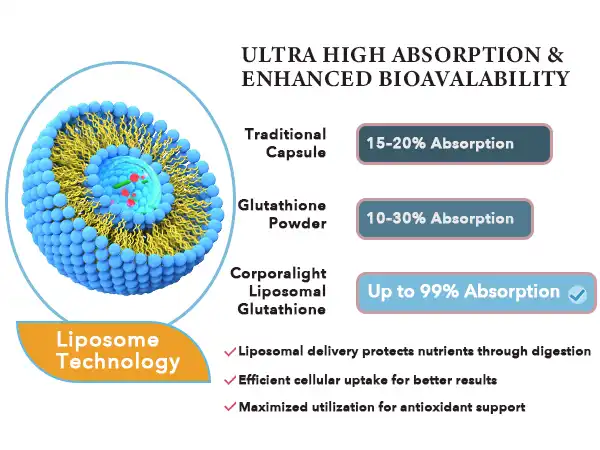
Glutathione is a tiny water-loving tripeptide; thus, it would want to dwell in the aqueous center of a liposome, not in the lipid wall. That position makes it easy to lose during processing, and just as easy to lose during testing. Gentle treatment may keep vesicles intact, but rigorous separation can drive glutathione out. Reduced glutathione is likewise easily oxidized; therefore, a careless test may indicate degraded material as if it were missing from vesicles. These factors suggest that liposomal glutathione powder requires a verified process, carefully designed, not a fast approximation. Ask the provider whether free and encapsulated fractions were separated under conditions known to preserve vesicles intact and if the test separates reduced glutathione from oxidized glutathione. Suppliers who are aware of these hazards frequently discuss them without being asked.[3][4][5][6]
What a Credible Supplier Should Offer Upfront
Any reputable provider of glutathione powder should be able to tell you in clear language what his analytical capacity is, before any sample is shipped. The Hongda laboratory is equipped with a Waters 2695 HPLC for content determination, a laser particle size analyzer, and transmission electron microscopy. HPLC and TEM are listed as the testing techniques for wholesale pure glutathione powder in the product specification. These devices cover quantity, size, and structure together. Ask for a sample COA, TEM picture, and particle size report so you may assess the quality of the documents before you pay for anything. Also inquire who does the testing and if an independent lab such as SGS was involved. Openness at this time is a good predictor of conduct later, when a tough outcome requires an honest explanation.
Phase Two: Run the Separation and Assay When Samples Arrive
Separating Free From Encapsulated Glutathione
No encapsulation test is complete without the separation of the material within the vesicles and outside. Common methods include centrifugal ultrafiltration, dialysis, and size-exclusion chromatography. All of these methods employ size to separate liposomes from free glutathione. Ultrafiltration is fast and often used in quality labs, dialysis is gentle but sluggish, and size-exclusion provides a clean separation but dilutes the material. Whichever way your team chooses to do this, run a control with free glutathione alone to check it goes through, and a control with intact liposomes to confirm minimal leakage. When evaluating liposomal glutathione powder, reconstitute in a consistent medium at a constant concentration and with a consistent hydration duration since the rehydration of a powder might affect the number of vesicles formed. Document each step so that the output may be re-created.[1][4][5]
Quantifying Glutathione by HPLC
Calculate the amount of glutathione in each fraction after separation. One always compares the quantity within the vesicles with the total amount, and the total content may be acquired by breaking up the liposomes with a suitable solvent or detergent and measuring everything together. HPLC is quite suitable for this purpose, and Hongda’s specification mentions HPLC as an assay technique for their liposomal glutathione powder. Use an approved calibration curve and freshly generated reduced glutathione standards with duplicate injections. Keep samples cool and shielded from oxidation while waiting. Various separate stages might provide various responses from the same powder; thus, if your figure varies from the supplier figure, verify techniques before you compare figures. A gap may generally be closed quickly in a calm technical discussion with the help of both raw datasets.[3][6]
Cross-Checking Structure With TEM and Particle Size
An encapsulation percentage indicates how much glutathione is preserved, but it doesn’t indicate what preserves it. Transmission electron microscopy visually confirms spherical vesicles, and laser particle size measurement shows how homogeneous they are. Request photos and size distributions from the same lot you evaluated. Evidence from a different batch tells you little about your shipment. A high encapsulation number with weak or no structural evidence should raise issues, whereas a clean TEM picture with a low encapsulation number should suggest different questions. All three tests offer formulators consistent, actual assurance that the liposomal glutathione powder in their prototype is functioning as a delivery mechanism and not just a physical combination of chemicals.
|
Principle
|
Best For
|
Watch Out For
|
|
|---|---|---|---|
|
Centrifugal ultrafiltration
|
Filter retains liposomes
|
Fast routine checks
|
Membrane binding
|
|
Dialysis
|
Free peptide diffuses out
|
Gentle separation
|
Slow, possible leakage
|
|
Size-exclusion chromatography
|
Liposomes elute first
|
Clean separation
|
Sample dilution
|
|
HPLC quantification
|
Measures reduced glutathione
|
Total and free fractions
|
Oxidation during handling
|
Phase Three: Judge the Numbers Before You Sign
Reading Supplier Encapsulation Data Critically
When encapsulation data arrive, read them like an auditor. Check the method, the number of replicates, the sample preparation, and whether the result comes from the powder or from a liquid intermediate. Buyers who ask for a glutathione powder supplier for supplements should be equally careful about the word pure, because purity and encapsulation describe different qualities, and a liposomal product is judged on both. Hongda offers liposomal glutathione powder in 50% and 70% specifications, so ask which loading each dataset refers to. A single impressive percentage without context is a marketing statement, while a table showing several lots, the method used, and the spread between replicates is evidence. Treat the second kind of document as the standard and politely decline to base a purchasing decision on the first.[2][4][5]
Batch Consistency and Rehydration Behavior
One good batch is a promising start, not proof. Compare encapsulation data across at least three consecutive lots, and look for the same particle size range, similar appearance, and stable results after rehydration. Our liposomal glutathione powder is described as white to yellowish, and unexpected color changes between lots are a useful early signal to investigate. Hongda's high-pressure homogenization process and 100,000-level purification workshops are designed to keep production repeatable at scale, with annual factory output of up to 3,000 tons across the company's range. Ask how the manufacturer monitors drift and what it does when a lot falls near a limit. A supplier who can describe its corrective actions in concrete terms is showing the discipline that long-term supply relationships depend on.
Acceptance Criteria Worth Writing Into the Contract
Turn verification into contract language. Specify the encapsulation method, the minimum acceptable result, the assay for total glutathione, the particle size range, appearance, moisture, and the reports that must accompany each shipment. When you work with a glutathione scavenger wholesaler in China, written criteria also prevent misunderstandings across time zones and languages. Hongda's minimum order is 1 kg, shelf life is 24 months, and specifications can be customized, which means acceptance limits can be agreed before a pilot lot is produced. Add a dispute clause that names an independent laboratory and a retained-sample procedure so disagreements are settled by data. Clear criteria protect both sides, shorten approval cycles, and let your team reorder liposomal glutathione powder without renegotiating quality every time.
|
Parameter
|
What to Specify
|
Hongda Reference
|
|---|---|---|
|
Loading
|
Percentage and tolerance
|
50% standard, 70% available, customizable
|
|
Assay reports
|
Method and reports per lot
|
HPLC and TEM
|
|
Encapsulation rate
|
Method and minimum result
|
Agreed per project
|
|
Appearance
|
Color and form
|
White to yellowish powder
|
|
Order and storage terms
|
Pilot size and shelf life
|
MOQ 1 kg, 24 months
|
Phase Four: Keep Verifying After Delivery
Incoming Inspection and Storage Monitoring
Verification does not end when the drums arrive. Inspect packaging integrity, appearance, and documentation at receiving, then retain a sample from every lot for future testing. Store glutathione scavenger wholesaler in China sealed and dry, away from heat and strong acids that can disturb phospholipid vesicles, and record storage conditions so any later question can be traced. Repeat a simple encapsulation check at planned intervals during the first months, especially if your product will be shipped through warm climates. Comparing those results with the original data shows whether the powder holds its structure across the full 24-month shelf life. These records also support your own marketing claims and help your regulatory team respond confidently when retailers, distributors, or marketplace reviewers request supporting documentation.[4][5]
Working With a Manufacturer That Welcomes Audits
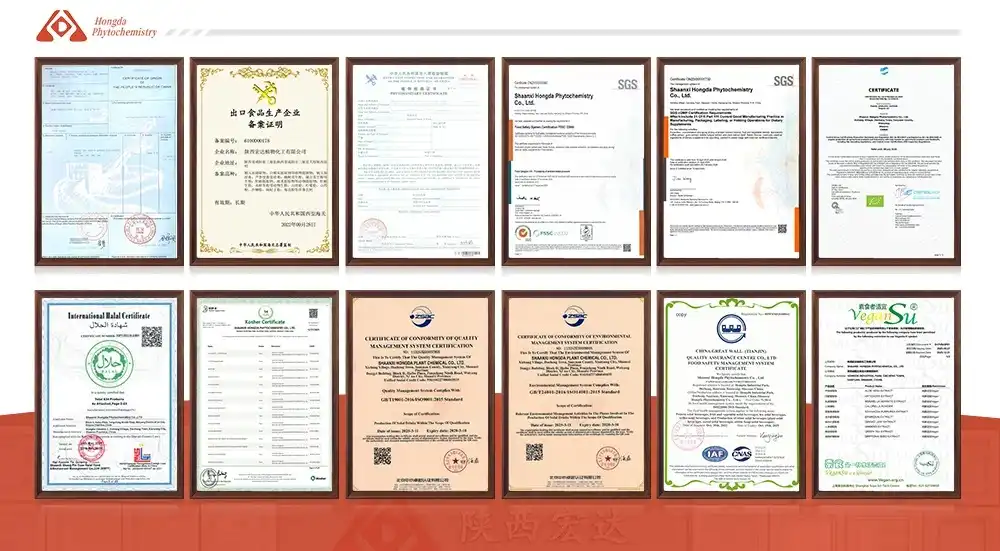
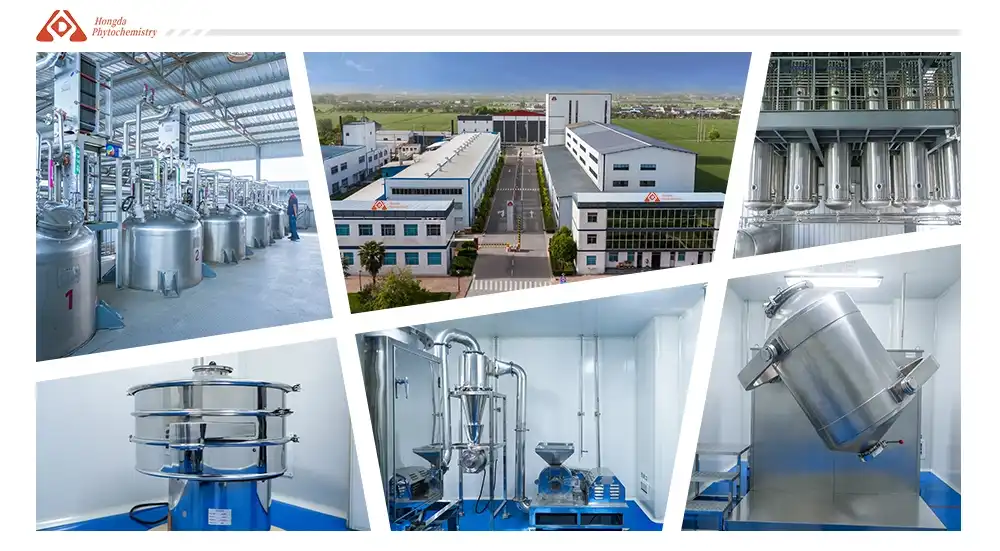
The finest verification partner is the one that encourages examination. Founded in 2001, Shaanxi Hongda has a manufacturing area of around 20,000 square meters, more than 150 workshop technicians, and an SGS-standard laboratory created with university academics. The company is certified to ISO22000, FSSC22000, halal, kosher, and US FDA facility registration, as well as cGMP and BRC credentials for its variety of ingredients. All products are checked for ingredients, pesticide residues, dampness, heavy metals, and microbes before they are sent. See how the lab gets the figures on your liposomal glutathione powder paperwork. That may be done via an audit visit or a video inspection. From sample prep to equipment calibration. Suppliers that are proud of their lab will typically be pleased to show it to you, and the readiness to do so is worth more than any brochure.
Building Long-Term Supply Continuity
The aim is continuation after passing verification. A reliable provider of glutathione free radical scavenger in China should have enough stock, schedule production ahead of your orders, and communicate explicitly about lead time. Hongda has a 3,000sqm warehouse and six storage facilities, so there is stock ready for on-time delivery. OEM, ODM, and private-label assistance, bespoke specs, and sample testing let firms scale from a pilot to ongoing replenishment without changing partners. Share your prediction, maintain your acceptance criteria up to date, and examine lot data together at least annually. That process maintains the quality dialog real and keeps your line of liposomal glutathione powder constant as volumes expand.
Conclusion
Encapsulation rate verification is a process, not a test. Define the metric first, then separate free from glutathione free radical scavenger supplier in China using an established technique, quantify by HPLC, check structure using TEM and particle size data, and then record the findings into your contract. Keep checking after delivery. HPLC and TEM testing of each phase: Flexible 50% and 70% specification; 1 kg minimum order. Certified facilities: Shaanxi Hongda Phytochemistry Co., Ltd. Careful buyers safeguard their formulae, their clients, and their brands. They rapidly discover which suppliers will provide the evidence. Ask for the statistics. Test it yourself. Choose a partner who embraces both.[1][3][4][5][6]
FAQ
Q1. What is encapsulation rate?
The fraction of glutathione held inside liposomes rather than free in the powder.
Q2. How can I measure it myself?
Separate free from encapsulated glutathione, then quantify each fraction by HPLC.
Q3. Which reports does Hongda provide?
Batch COA with HPLC and TEM assay, plus particle size data.
Q4. What specifications are available?
A 50% standard, with 70% available and customization on request.
Q5. What are the MOQ and shelf life?
The MOQ is 1 kg, and the shelf life is 24 months.
Request Verification Samples From HONGDA Today
If you are sourcing liposomal glutathione powder and want encapsulation data you can test for yourself, HONGDA is ready to help. Our team will send samples with a batch COA, TEM image, and particle size report, explain the analytical methods behind each figure, and quote factory-direct prices with OEM and private-label support. Tell us your dosage form, target specification, and timeline, and we will suggest a practical verification plan from pilot lot to repeat orders. Write to duke@hongdaherb.com today and see the evidence before you commit.
References
1. Fry DW, White JC, Goldman ID. Rapid separation of low molecular weight solutes from liposomes without dilution. Analytical Biochemistry. 1978;90(2):809–815.
2. Xu X, Khan MA, Burgess DJ. A quality by design (QbD) case study on liposomes containing hydrophilic API: I. Formulation, processing design and risk assessment. International Journal of Pharmaceutics. 2011;419(1–2):52–59.
3. Ellman GL. Tissue sulfhydryl groups. Archives of Biochemistry and Biophysics. 1959;82(1):70–77.
4. Bulbake U, Doppalapudi S, Kommineni N, Khan W. Liposomal formulations in clinical use: an updated review. Pharmaceutics. 2017;9(2):12.
5. Maherani B, Arab-Tehrany E, Mozafari MR, Gaiani C, Linder M. Liposomes: a review of manufacturing techniques and targeting strategies. Current Nanoscience. 2011;7(3):436–452.
6. Wu G, Fang YZ, Yang S, Lupton JR, Turner ND. Glutathione metabolism and its implications for health. Journal of Nutrition. 2004;134(3):489–492.