


_1745918362135.webp)

Organic Chlorella Powder: The Ultimate Plant-Based Protein for Functional Foods
As demand for plant-based and algae-derived ingredients grows, organic chlorella powder is attracting attention from functional food manufacturers looking for concentrated protein and naturally occurring pigments in a single ingredient. Hongda Phytochemistry, operated by shaanxi hongda phytochemistry co., ltd., supplies chlorella-based ingredients for B2B applications, with production, testing, packaging, and documentation capabilities designed for commercial ingredient sourcing. For manufacturers evaluating chlorella algae powder , the key considerations are not simply nutritional positioning but also cultivation, processing, specifications, testing, particle size, packaging, and supply consistency.
Understanding the Composition of Organic Chlorella Powder
Protein Content and Amino Acid Composition
Chlorella is a freshwater micro-alga, frequently used in powdered food and supplement formulations. The dry biomass of this crop may have a very high proportion of protein, although the exact amount of protein varies depending on the species, conditions of growing, harvesting, processing, and product specifications. Manufacturers should confirm the protein assay in the current product specification and COA and not rely only on the broad industry range.
Chlorella is also being researched for plant-based and alternative-protein formulations because of its amino acid profile. It also contains essential and non-essential amino acids, which makes it suitable for products when an algae-generated protein source is part of the formulation process. However, the amino acid profile must be examined based on the raw material being purchased for commercial development.
The processing of the cell wall also influences the qualities of the chlorella powder. Disrupted cell wall powders could be more suitable for applications where improved access to intracellular components is required. Confirm the exact processing method and the specs that will come from it with the supplier before the formulation.
Chlorophyll, Carotenoids, and Natural Pigments
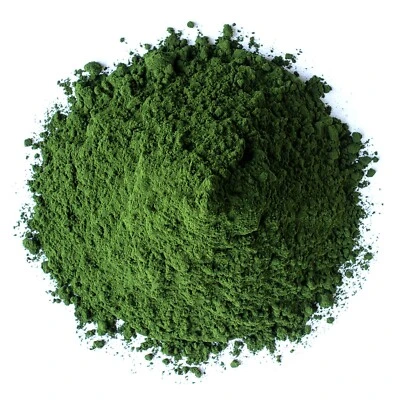
In chlorella, the naturally occurring chlorophyll pigments are responsible for the distinct green hue. Depending on the species and processing, Chlorella may also contain carotenoids and other naturally occurring compounds.
These components may be of interest to food makers developing products requiring an algae-generated green color or a chlorella algae powder signature ingredient profile. Manufacturers should check the supplier product requirements when color consistency is important. Pigment retention is affected by the conditions of cultivation, drying, storage, and processing.
If a formula specifies levels of chlorophyll, carotenoids, moisture, or any other measurable properties, the purchaser should require evidence of each lot rather than take the pigment content as a fixed number.
Vitamins, Minerals, Lipids, and Other Components
Chlorella biomass is a source of a number of naturally occurring nutrients and other compounds such as minerals, lipids, nucleic acids, pigments, and vitamins. But the combination of substances might vary greatly from product to product.
Therefore, vitamin and mineral levels should be evaluated against the particular specification of the targeted substance. This is even more important if chlorella is being utilized to make a product that has certain nutritional labeling requirements. If a certain nutrient is important in the finished product, customers should ask for analytical data instead of general descriptions of chlorella.
This also gives the maker a way to differentiate the general composition of the algae from the validated specification for one commercial batch.
How Chlorella Powder Is Produced and Controlled
Cultivation and Processing Considerations
Consistent chlorella powder begins with regulated manufacture of the basic ingredient. Cultivation variables such as water quality, temperature, pH, fertilizer availability, and harvesting circumstances affect the composition of biomass and characteristics of the end product.
After harvesting, the biomass is processed by operations such as concentration, drying, milling, and, where appropriate, cell wall disintegration. Each step may affect moisture, particle size, color, dispersability, and retention of naturally occurring components.
Shaanxi Hongda Phytochemistry Co., Ltd. has a production workshop of around 20,000 square meters and more than 10 production lines for processing of natural ingredients. The organization also has regulated purifying facilities to provide consistent manufacturing conditions.
What is vital for purchasers is that the production capability is linked to specified specifications. Manufacturers should request the supplier’s production method, specification sheet, current COA, packaging information, and appropriate batch-testing data when evaluating the source.
Laboratory Testing and Batch Documentation
Quality control is a key part of acquiring chlorella algae powder, especially for producers providing food items to markets with specific raw material needs.
Tests may cover identity, appearance, moisture, ash, particle size, microbiological characteristics, heavy metals, and other standards related to the product and destination market. Additional testing can be arranged to appropriate standards or customer needs where called for by the purchasing specification.
Hongda’s laboratory is equipped with HPLC, GC, spectrophotometers, atomic absorption, and automatic titration tools. These analytical tools may be employed for analyzing raw materials and finished ingredients to suitable criteria.
The COA is especially essential for B2B purchases, as it helps bridge the gap from the product specification to the actual batch that is given. Buyers should look for criteria like batch number, production date, test date, analytical methodologies, and specification limits instead of judging a supplier based on broad marketing promises.
Certifications and Regulatory Documentation
Certification standards vary depending on the destination market, product category, and intended application. Hongda’s certification portfolio comprises cGMP, FSSC22000, ISO22000, ISO9001, BRC, Halal, Kosher, FDA registration, EU Organic, and NOP Organic paperwork for its relevant activities and goods.
When buying organic chlorella powder, customers should check whether the certificate applied for covers the specific product and production site. This applies equally to organic claims, food safety certifications, and other regulatory documentation.
This is a crucial difference for B2B customers because a supplier may have many certifications, but a specific product, batch, or intended use may have other documentation requirements.
Where Organic Chlorella Powder Fits in Food Manufacturing
Protein Bars, Powder Blends, and Dry Formulations
Organic chlorella powder is used in protein bars, powdered drink mixes, meal format products, green powder blends, and other dry formulas. This is relevant to plant-derived or algae-based formulations due to the protein content and the intrinsic green color.
The amount to utilize should be decided via formulation trials, as chlorella can affect color, flavor, texture, and overall powder qualities. Manufacturers may also need to consider interactions with other compounds, especially when formulating goods with a certain sensory character.
Another practical consideration is that of particle size. If a more homogeneous powder mixture is desired, Hongda can deliver ultra-fine material in the range of 80–100 mesh, depending on the approved product standard.
Functional Beverages and Food Mixes
Chlorella powder can also be considered for powdered drinks and other dry mixes. In these applications, dispersion, sedimentation, color, flavor, and processing compatibility during product development have to be considered.
The supplier shall offer representative samples prior to large-scale purchasing so that the formulation team can evaluate the ingredient under actual processing circumstances. This is especially true when the final product needs a specific look or sensory profile.
Dietary Supplement Formulations
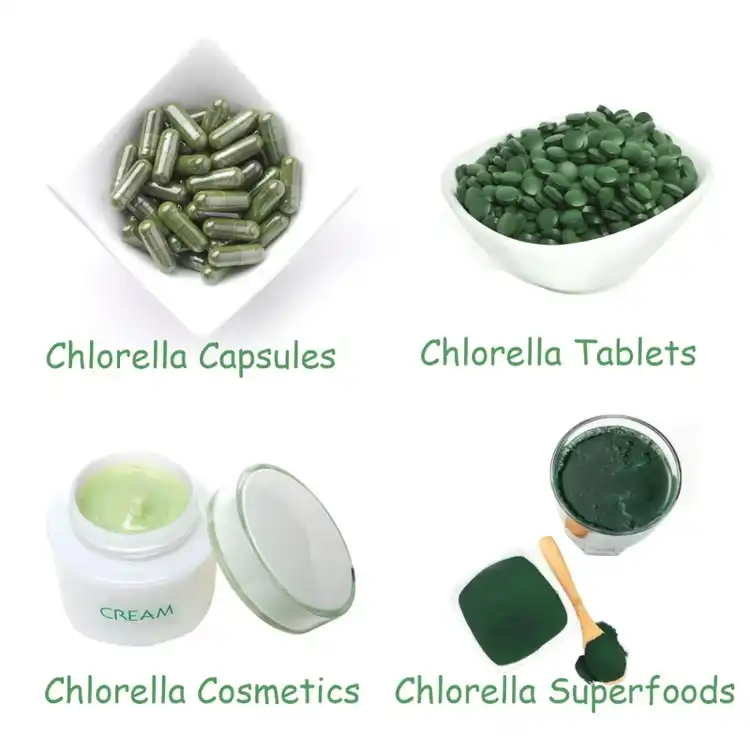
Chlorella is a popular botanical ingredient made from algae and utilized in dietary supplement formulations, including capsules, pills, powders, and blended formulae. For these applications, customers usually need detailed information on identification, purity, microbiological parameters, heavy metals, particle size, packaging, and batch documentation.
The final formulation and labeling are subject to evaluation for compliance with target market legislation. Technical documentation can be supplied by suppliers, but the responsibility for ensuring that the final product conforms to the relevant requirements lies with the producer of the finished product.
What B2B Buyers Should Check Before Ordering?
Specification, Sample, and COA Review
Manufacturers should compare the product specifications with their formulation requirements before placing a bulk purchase. Important factors may include protein content, moisture, particle size, color, microbiological limitations, heavy metals, packaging, and any customer-specific testing needs.
A sample of chlorella algae powder is useful to verify color, odor, texture, dispersibility, and processing behavior before committing to commercial quantities. The sample shall be compared with the specification and, when appropriate, with the COA provided with the commercial batch.
Packaging, MOQ, and Supply Planning
For industrial purchasing, the packaging can be just as significant as the ingredient itself. Hongda can provide bulk packages such as 25 kg drums, and customized package designs might be negotiated according to the order needs.
Buyers should additionally check the MOQ, lead time of manufacturing, stock available, shipping arrangements, and documentation prior to making an order. For recurrent purchases, preserving the standards from batch to batch can make formulation and quality-control procedures easier.
OEM, ODM, and Customized Specifications
varied food manufacturers may have varied requirements for particle size, packing type, testing goods, labeling documents, etc. A supplier with flexible manufacturing and technical support could be valuable in producing a novel chlorella-based product.
Customization should be negotiated before production to clearly specify the required specification, testing strategy, packaging, and documentation. This helps to prevent differences between development samples and commercial batches.
Why Supplier Capability Matters for Chlorella Algae Powder?
A product listing is not a good chlorella supplier. The practical experience of B2B sourcing is influenced by cultivation and processing capability, analytical equipment, production capacity, documentation, and communication.
Shaanxi Hongda Phytochemistry Co., Ltd. has the production, lab testing, and warehouse capacity to accommodate commercial ingredient requests. It has a larger manufacturing operation with more production lines, regulated workshops, technical experts, and documented quality-management procedures.
When analyzing chlorella algae powder, the best way for manufacturers to evaluate the product is to consider the actual product specification and supporting documents in combination with the capabilities of the supplier’s manufacturing. This provides a more robust basis for comparing suppliers than that of the use of nutritional marketing language.
Conclusion
Organic Chlorella Powder can be a practical algae-derived ingredient for functional foods, powdered blends, beverages, protein-focused formulations, and dietary supplements. Its value for manufacturers depends on verified composition, appropriate processing, consistent particle size, quality testing, and suitability for the intended formulation.
Shaanxi Hongda Phytochemistry Co., Ltd. provides chlorella powder with manufacturing, laboratory, packaging, and documentation support for B2B customers. Buyers can request chlorella algae powder product specifications, samples, COAs, testing information, packaging details, and customized requirements before moving from product evaluation to bulk purchasing.
ontact our experts today at duke@hongdaherb.com to discuss your specific requirements and receive a complimentary sample of our premium organic chlorella powder. Together, we can create functional food products that not only meet market demands but exceed consumer expectations for quality, nutrition, and sustainability.
References
1. Rodriguez-Garcia, C., Martinez-Hernandez, L., & Chen, W. (2023). Nutritional evaluation and protein quality assessment of organic chlorella powder in functional food applications. Journal of Functional Foods, 89, 234-247.
2. Thompson, K.L., Park, S.H., & Anderson, M.R. (2022). Bioavailability and digestibility of plant proteins from microalgae sources: A comparative study of chlorella and spirulina. International Journal of Food Science and Nutrition, 73(4), 445-458.
3. Liu, H., Yamamoto, T., & Singh, R.P. (2024). Industrial applications of organic chlorella powder in sustainable food manufacturing: Quality control and processing optimization. Food Chemistry and Technology, 41(2), 112-125.
4. Williams, J.A., Brooks, D.E., & Kumar, V. (2023). Functional properties and health benefits of chlorella-based protein supplements: A comprehensive review of clinical and preclinical studies. Nutrition Research Reviews, 36(3), 289-304.

_1757665863489.jpg)