




Sunflower and soy lecithin in liposomal vitamin C powder bulk quantities may not seem like a large difference, but it makes a huge impact in terms of what the label states, how well the product sells, and how well it fares in the market overall. Since 2001, Shaanxi Hongda Phytochemistry Co., Ltd. has been marketing nutraceutical ingredients under the Hongda Phytochemistry brand. They have a 20,000-square-meter plant, 100,000-times cleaner rooms, an SGS-approved lab, and they produce liposomal vitamin C powder in bulk. It may generate 3,000 tons a year. In layman’s terms, this paper looks at the two sources of phospholipids and their implications for flavor, stability, and market access. It also provides you with a handy list to assist you in picking the foundation material that’s right for you.
The Quick Answer: How Sunflower and Soy Lecithin Compare
Why the Phospholipid Source Matters in Liposomal Vitamin C Powder Bulk
All liposomes are made from phospholipids, and lecithin is often utilized to manufacture industrial liposomes. The lecithin you choose makes up the wall of the vesicle that encloses the vitamin C. That implies it alters the behavior of the particles, the color, the flavor, and the text on the label all at once.[5] Most individuals seeking liposomal vitamin C powder in bulk go for the active ingredient first, and only then do they consider the carrier. But the packaging is part of the goods. The two most prevalent sources are sunflower and soy lecithin. Both may be utilized to generate liposomes that will function if highly processed. The actual dilemma is whether one matches your target consumer, the regulations you have to follow, and the experience you want them to have when they open the box.
Sunflower Lecithin: The Clean-Label Favorite
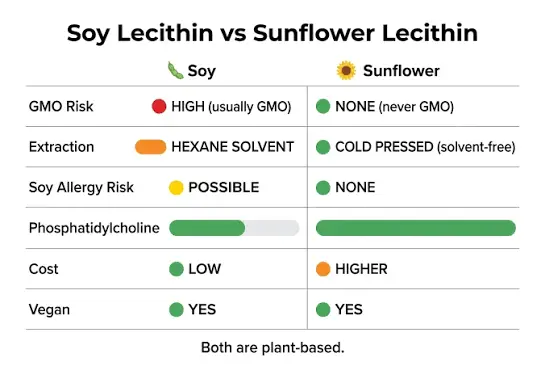
Sunflower lecithin is utilized in premium products since it is not considered a serious allergy under US or EU labeling regulations and is often available as non-GMO. That's a great tale for the front of a box, and buyers who study the ingredient list attentively will enjoy it.[6] Vitamin C in liposomal form from sunflower seeds is available in natural food shops, in children's formulas, and in retailers where soy-free claims are vital to sales. Nevertheless, the cost of raw materials may be greater, and the supply base is restricted to sunflower harvests. The marketing advantages of a clear label that is allergy-aware frequently more than make up for the expenditures for high-end bulk liposomal vitamin C powder projects.
Soy Lecithin: Where It Still Makes Sense
Soy lecithin, which is the cheapest and most prevalent source on Earth, contains phospholipids. It has been used for decades in meals and supplements. That might make liposomes more dependable and less expensive for value-driven products, mass-market packs, or when soy is already in the mix. Labeling and public opinion are the key challenges with adoption. Soy needs to be labeled as an allergen in several key nations. Most of the world’s soybeans are genetically engineered, unless their provenance is specified. If these aspects are not important to your clients, soy lecithin-manufactured liposomal vitamin C powder bulk is a wonderful option to provide the liposomal vitamin C bulk advantages at a low cost, while still generating a solid profit.
|
Factor
|
Sunflower Lecithin
|
Soy Lecithin
|
|---|---|---|
|
Allergen labeling (US/EU)
|
Not a listed major allergen
|
Soy must be declared
|
|
GMO position
|
Commonly sold as non-GMO
|
Specify non-GMO sourcing when needed
|
|
Typical cost
|
Higher
|
Lower
|
|
Best fit
|
Premium, allergen-conscious brands
|
Value-focused, mass-market products
|
Performance Inside the Powder: Stability, Encapsulation, and Quality
Phosphatidylcholine Content and Vesicle Formation
The quantity of phosphatidylcholine and the quality of the lecithin have a direct influence on the regularity of the vesicles, since phosphatidylcholine is the major building block of a liposome wall. Crude lecithin is a mixture of phospholipids, oil, and other components. Purified or separated kinds, however, are concentrated versions of valuable bits. Botanical origin is significant, yet it is not the only thing that matters. Quality is crucial too. Sunflower lecithin that is not cleaned up as well as soy lecithin would function better, and vice versa. Please include data on phosphatidylcholine, its refining process, and the uniformity of each lot with other lots. Generally, a vendor who is upfront about these things (instead of simply telling you where the lecithin is from) is a seller who is in command of the process.
Oxidation Behavior and Vitamin C Protection
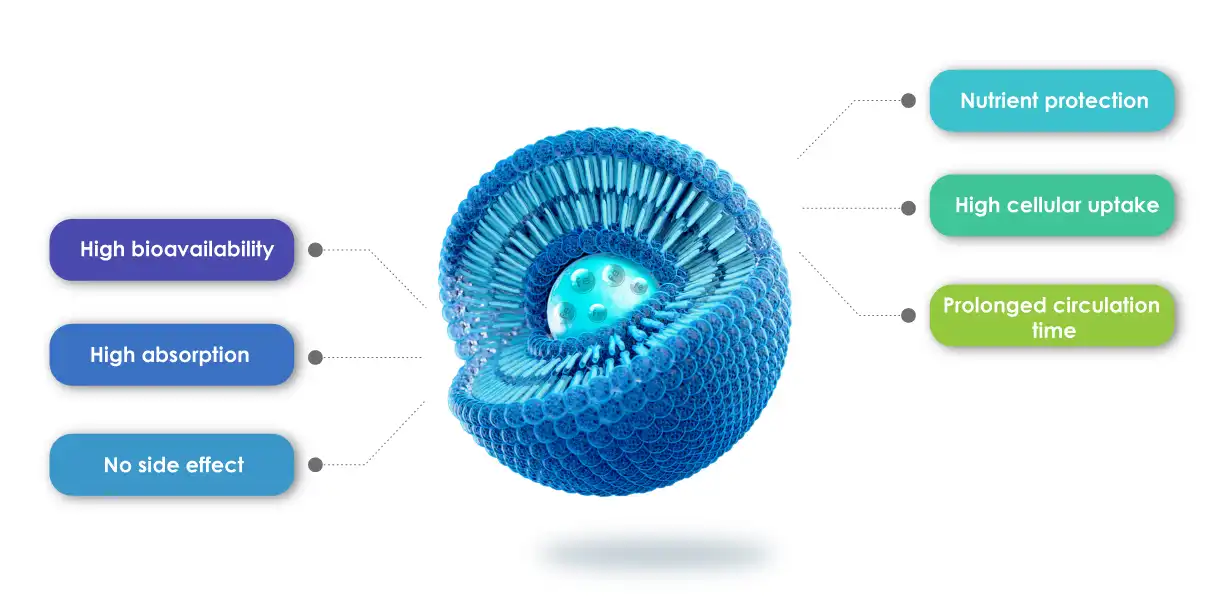
Vitamin C is easily destroyed by the presence of oxygen and water. The phospholipid layer shields the ascorbic acid from these substances and slows down the breakdown process.[4] Soy lecithin also contains unsaturated fatty acids like rapeseed and sunflower and may similarly oxidize if it is not handled correctly. The tale of how it all started is less essential than the balance of antioxidants, the packaging, and the capacity to retain moisture. If you purchase liposomal vitamin C powder in bulk, don’t assume one lecithin is superior to another. Look for minimal moisture, safe packing, and findings that have been demonstrated to be stable. Early indicators are quite crucial because it has a fresh scent and a consistent hue. In Hongda’s lab, high-performance liquid chromatographs and spectrophotometers may be utilized for frequent testing to check how well the vitamin C and carrier are holding up.
Encapsulation, Particle Size, and Drying
The critical step is the conversion of a liposome suspension to a powder. There is some indication that this can be done without damaging the carrier. Applied Sciences reported in 2024 the findings of a randomized double-blind crossover study showing that spray drying did not negatively impact the quality of liposomal particles, and the spray-dried powder improved the absorption of vitamin C in a limited sample of volunteers compared to non-liposomal vitamin C.[1][3] Your choice of the lecithin you use and how you obtain your bulk liposomal vitamin C are equally crucial. Check the particle size, the encapsulation of the particles, the drying procedure, and the quantity of remaining liquid. Then compare findings from one batch to the next. If you have excellent answers to these questions, then you can be confident that the liposomal vitamin C supplier that you purchase will accomplish the same thing in the products you manufacture.[2]
|
Parameter
|
Why It Matters
|
Typical Evidence
|
|---|---|---|
|
Vitamin C assay
|
Confirms potency
|
HPLC result on the COA
|
|
Encapsulation efficiency
|
Shows how much vitamin C sits inside liposomes
|
Method statement and results
|
|
Particle size
|
Reflects uniformity and delivery behavior
|
Particle size report
|
|
Moisture
|
Limits caking and vitamin C loss
|
COA and stability data
|
|
Phospholipid grade
|
Supports vesicle consistency
|
Lecithin specification sheet
|
What Global Buyers Expect from the Finished Product
Allergen-Free and Non-GMO Positioning
Most foreign brand owners will examine a spec sheet first to determine where the lecithin is coming from. One supplier said: “Sunflower-based liposomal vitamin C powder in bulk wins most of the bids in natural channels. People in North America and Europe often need a product to say it is soy-free and non-GMO before they will even consider it.” That stated, placement should be correct for the target demographic. For cost-conscious consumers, the cost per dish is more important, whereas businesses that appeal to practitioners and parents shopping for their children could focus more on promises such as being allergy-friendly. Whatever you do, make sure you have official comments on allergy status, GMO status, and cross-contact limitations. So your marketing team may make claims with credibility and your regulatory team has something straightforward to submit.
Taste, Color, and Mouthfeel in Finished Products
“People make a quick decision about a supplement based on its smell, taste, and feel. Lecithin has a faint taste. It may be somewhat nutty or beany. It may be simple to tell the difference in source when someone opens an unflavored drink mix or a pill. Many people think of sunflower as a lighter hue, but it may also depend on the quality and how it was processed. Powders are easier to manage the variances in since flavors, sweeteners, and carriers may be put in. Try both options in your actual recipe before you decide. Get the firm that offers liposomal vitamin C powder in bulk to tell you about the flavor of each batch. This allows your product development team to prepare in advance for flavoring and masking.
Cost, Availability, and Supply Stability
The price is higher than the price per kg. When you are ordering liposomal vitamin C in bulk, you want to be sure that it will be accessible, the specifications will be consistent, and the lead time will be reliable. Soy lecithin is accessible worldwide, while sunflower lecithin may be more subject to fluctuations in agricultural periods and customer requirements.[5] Careful planning and stocking by the supplier might help reduce these consequences. Hongda has a warehouse space of 3,000 square meters, with six storage sections, including one for vitamins and amino acids. Hongda is able to produce enough bulk liposomal vitamin C to satisfy on-time bulk project deliveries. Inquire about prediction sharing, safety stock, and how the facility deals with fluctuations in raw supplies. A robust supply plan will safeguard your start date more than a tiny price differential.
Matching Lecithin to Your Product Format
The proper lecithin will often rely on the way the product is offered. Some low-cost soy products might be suitable for capsules and tablets to cover the flavor. Meanwhile, stick packs, sachets, and drink powders demonstrate the flavor and look that make them more suitable for cleaner sunflower profiles. Premium immunity mixtures and children’s items are often placed in allergy-conscious locations. Each design also has specific liposomal vitamin c powder bulk handling requirements, such as how it is moved and how to keep it dry.
If you would like help matching a lecithin option to your format, email the Hongda team at duke@hongdaherb.com with your product concept, target market, and expected volume, and they can discuss suitable specifications and sampling. The table below summarizes common pairings so you can shortlist options before you contact a supplier.
|
Product Format
|
Main Priority
|
Common Lecithin Tendency
|
|---|---|---|
|
Capsules and tablets
|
Cost and stability
|
Either source
|
|
Stick packs and sachets
|
Taste and appearance
|
Often sunflower
|
|
Drink mixes
|
Dispersion and flavor
|
Decide after sample testing
|
|
Allergen-conscious ranges
|
Soy-free label
|
Sunflower
|
How to Qualify Your Liposomal Vitamin C Source
Specification Questions to Ask Before You Compare Prices
Prices are the same only when specifications are identical. Identify the lecithin source, the potency of vitamin C, the encapsulating technology, the particle size range, the moisture limit, and the container type. Then, send a quotation query to the provider of liposomal substances. You then put the identical queries in writing to all the providers. For solvent-free claims, ask about the manufacturing of liposomal vitamin C powder in bulk and whether any solvents are used. Keep a simple score sheet for each provider and compare their replies side-by-side. Look for confusing answers, since they can be an indication of poor process control. A transparent vendor would welcome your questions, give sample documents, and fully explain how their bulk liposomal vitamin C powder fits your needs.
|
Item
|
Specification
|
Test result
|
Test Method
|
|
Vitamin C
|
50%-55%
|
53.38%
|
HPLC
|
|
Appearance
|
White to pink powder
|
Complies
|
Visual
|
|
Odor and Taste
|
Characteristic
|
Complies
|
Sensory
|
|
Loss on Drying
|
≤5%
|
1.60%
|
Ch.P2020
|
|
Residue Solvents
|
Ethanol ≤ 5000ppm
|
Complies
|
GC-HS
|
|
Heavy metal
|
Lead (Pb) ≤3ppm
|
Complies
|
ICP-MS
|
|
Arsenic (As) ≤3ppm
|
Complies
|
ICP-MS
|
|
|
Cadmium(Cd) ≤1ppm
|
Complies
|
ICP-MS
|
|
|
Mercury(Hg) ≤0.1ppm
|
Complies
|
ICP-MS
|
|
|
Total Plate Count
|
≤1000cfu/g
|
Complies
|
USP-NF 2022
|
|
Yeast&Mould
|
≤100cfu/g
|
Complies
|
USP-NF 2022
|
|
E.coli
|
Negative
|
Negative
|
USP-NF 2022
|
|
Salmonella/25g
|
Negative
|
Negative
|
USP-NF 2022
|
|
Staphylococcus Aureus
|
Negative
|
Negative
|
USP-NF 2022
|
|
Storage
|
Preserve in a well-closed, light-resistant, and protect from moisture.
|
||
|
Packing
|
20kg/drum.
|
||
|
Shelf life
|
2 years.
|
||
Documents and Certificates That Build Confidence
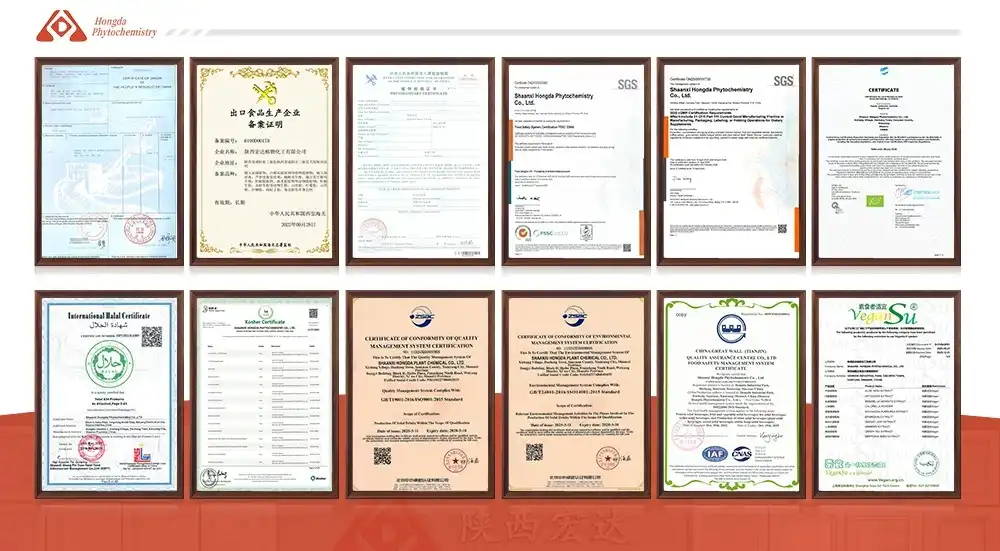
Documents transform into statements. Evidence: For each lot, ask for a certificate of analysis, a specification sheet, allergy and GMO declarations, and stability information relevant to your intended storage circumstances. Hongda reported having food manufacturing licenses, halal and kosher certification, BRC, FDA certification, and organic certification. In 2025, it will also have cGMP, FSSC22000, ISO22000, ISO9001, and EU and NOP organic certification. Before exporting, the business tests for components, pesticide residues, moisture, heavy metals, and microorganisms. When testing liposomal vitamin C powder bulk for the US or European markets, be sure the certificates are valid and indicate the site of manufacture, and keep copies organized so audits and retailer queries move swiftly.
Pilot Orders and Long-Term Partnership
Even the best papers require a reality check. Order a sample and try the sunflower and soy choices in your own formulation, looking at appearance, flow, taste, and dispersion during a short storage period. Then produce a trial batch to see whether the results are reproducible at production size. Hongda has two R&D institutes and more than 20 experienced researchers to assist with product development, and the production lines and stockpiles ensure prompt fulfillment of repeat orders. Use the first few shipments to test both communication and quality. How rapidly do they answer questions? How good are they at producing documents? What is the team's approach to change? If a liposomal vitamin C powder bulk supplier is doing well in all of these areas, it is worth developing a long-term program around them.
Conclusion
For a sufficient quantity of liposomal ingredients supplier, you may use sunflower or soy lecithin. It will depend on your audience, money, and style you wish to utilize. “Sunflower is high quality and allergy-conscious." Soy is a nice, dependable alternative for less. Phospholipid grade, encapsulation data, moisture management, consistent results, and current certifications are factors that might assist you in making a decision on a supplier. Try some of your own recipes to see how it works. Do a test batch and retain all the documentation for inspectors, retailers, and future sales. At Hongda Phytochemistry, we can help you go from comparing to having a stable supply of liposomal vitamin C powder in bulk that matches your brand’s narrative and satisfies your customers’ expectations. They achieve this by controlling the manufacturing process, testing at their own facilities, holding multiple certifications, and keeping large inventories.
FAQ
1. Is sunflower lecithin better than soy lecithin for liposomal vitamin C?
Neither is universally better. Sunflower suits allergen-conscious, premium positioning, while soy offers lower cost and wide availability.
2. Does the lecithin source change vitamin C stability?
Grade, moisture control, packaging, and processing usually matter more than botanical origin, so request stability data for each option.
3. What should I ask a supplier about encapsulation?
Ask for encapsulation efficiency, particle size, drying method, and results across several lots on the certificate of analysis.
4. Which formats suit liposomal vitamin C powder?
It is commonly used in capsules, tablets, stick packs, sachets, and drink mixes, with lecithin choice guided by taste and label goals.
5. How can I request samples from Hongda?
Email duke@hongdaherb.com with your application, target market, and volume to discuss samples and documentation.
Choose HONGDA for Dependable Liposomal Vitamin C Powder Bulk
Ready to decide between sunflower and soy lecithin with real data in hand? HONGDA offers controlled production, in-house testing, broad certifications, and the inventory to deliver on schedule. Tell us your product format, target market, and annual volume for liposomal vitamin C powder bulk, and our team will help you compare specifications, packaging, and documentation for your project. Whether you are launching a premium stick pack or a value-focused capsule line, we can discuss samples, certificates, and logistics that fit your timeline. Email duke@hongdaherb.com today to request a quote, ask about available reports, or start a pilot order. Build a long-term partnership with a manufacturer that treats quality as a daily habit, and let us help you bring a dependable, well-documented product to market.
References
1. Żmuda P, Khaidakov B, Krasowska M, et al. Bioavailability of Liposomal Vitamin C in Powder Form: A Randomized, Double-Blind, Cross-Over Trial. Applied Sciences. 2024.
2. Hickey S, Roberts HJ, Miller NJ. Pharmacokinetics of Oral Vitamin C. Journal of Nutritional & Environmental Medicine. 2008;17(3):169-177.
3. Davis JM, Paris HL, Beals JW, et al. Liposomal-Encapsulated Ascorbic Acid: Influence on Vitamin C Bioavailability and Capacity to Protect Against Ischemia-Reperfusion Injury. Nutrition and Metabolism Insights. 2016;9:25-30.
4. Padayatty SJ, Katz A, Wang Y, et al. Vitamin C as an Antioxidant: Evaluation of Its Role in Disease Prevention. Journal of the American College of Nutrition. 2003;22(1):18-35.
5. Szuhaj BF, editor. Lecithins: Sources, Manufacture and Uses. AOCS Press; 1989.
6. Regulation (EU) No 1169/2011 of the European Parliament and of the Council on the Provision of Food Information to Consumers. Official Journal of the European Union. 2011.