


_1745918362135.webp)

The B2B Guide to Sourcing Premium Berberine Powder Bulk in 2025
For companies purchasing berberine powder bulk , supplier selection involves more than comparing price per kilogram. Hongda Phytochemistry, operated by shaanxi hongda phytochemistry co., ltd., supplies plant-derived berberine products for international B2B buyers and provides specifications, analytical documentation, packaging, and customization options. A practical sourcing process should begin with the required berberine hydrochloride assay, botanical source, testing method, documentation, packaging format, and target-market requirements. By reviewing these factors before placing an order, buyers can compare suppliers on measurable criteria rather than marketing claims.
Start With the Product Specification, Not the Supplier Price
Confirm Berberine Form, Assay, and Botanical Source
The first step in buying berberine powder bulk is to decide exactly what the completed raw material has to contain. Berberine can be delivered in several forms and from diverse botanical sources; thus, a buyer should not compare bids until the product specification is clear.
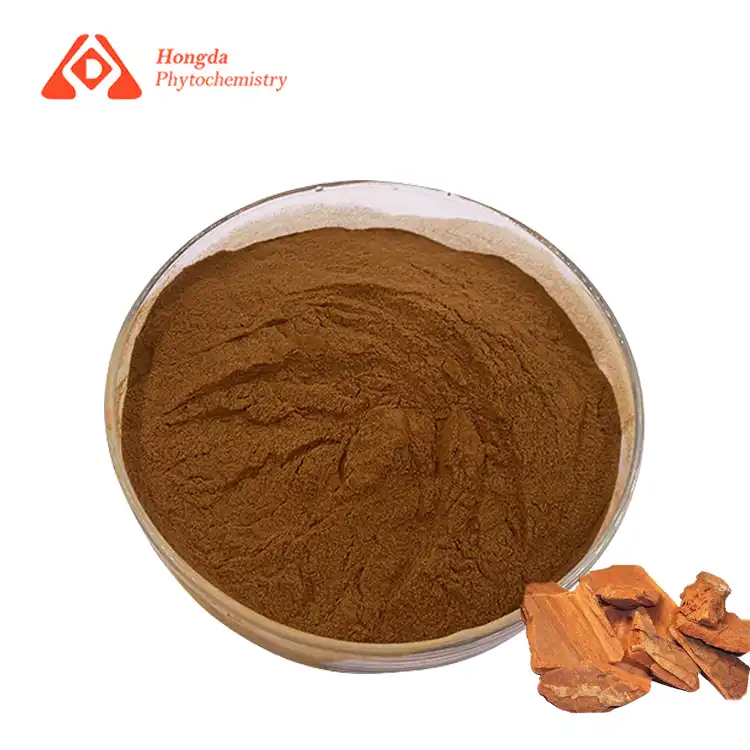
The current product information from Hongda for berberine hydrochloride is a specification of 97% utilizing HPLC as the test technique. The basic specification also lists Coptis chinensis as a botanical source. In its product description, plant-derived substance from Phellodendron amurense bark is referenced. The source should be confirmed in writing for the particular quotation and batch. Botanical source can impact the profile of impurities and evidence required by a customer.
Therefore, a buy specification should include the chemical form, assay range, botanical source, CAS number (if applicable), appearance, limit for moisture or loss-on-drying, impurity requirements, microbiological requirements, and method of testing. If the material is for a regulated completed product, the buyer should also validate that the supplier's specification is consistent with the finished-product manufacturer's internal standard.
Match the Specification to the Intended Application
The typical grade from a provider may not be the best for all formulation needs. Some purchasers may need a precise particle size distribution, others a certain test range, special impurity controls, unique packaging, or private labeling.
Hongda’s product page refers to alternatives such as high-density granular, micronized powder forms and customizable physical parameters. These options may be useful if the raw material needs to meet a certain manufacturing process, but the precise specification should be validated before an order is placed.
Thus, the final price should be requested when the buyer has provided his technical specification. When a provider gets the full request, they might propose a more useful product instead of just giving the cheapest conventional powder.
Build a Practical Quality Verification Process
Use HPLC Data to Confirm Assay
HPLC is one of the major analytical tools to check berberine content in berberine powder bulk. Hongda says the test method for its listed berberine hydrochloride product is HPLC, and batch-related analytical information is available on its product page.
The key aspect for B2B procurement isn't just whether a supplier mentions HPLC. Buyers should seek a COA for the actual batch and confirm that the reported assay, test technique, specification, lot number, and testing date are consistent.
The buyer’s quality team may additionally request the analytical method, reference standard information, chromatogram, impurity profile, or independent laboratory testing for usage in a regulated product. The criteria should be agreed upon before production, not after distribution.
Review Impurities, Heavy Metals, and Microbiological Data
A professional quality review has to be deeper than the headline assay value. Buyers may need data on heavy metals, pesticide residues, residual solvents, microbiological parameters, moisture, ash or residue on ignition, and other important impurities depending on the application and the target market.
According to the current product information issued by Hongda, its testing and documentation can include screening for heavy metals and pesticide residues, and its product specifications also specify microbial testing requirements.
But buyers should be careful not to think that one supplier specification will immediately meet the requirements of every market. Acceptance criteria and microbiological procedures may vary according to the finished product category and applicable standard. For example, USP General Chapter <61> covers microbial enumeration testing for nonsterile products; it is not to be taken as a blanket assertion of permissible microbiological levels for every product.
The safest way to buy is to give your own specification to the supplier and ask for written proof that they meet it.
Evaluate the Supplier Behind the Product
Check Manufacturing and Quality-Control Capability
Supplier audits should be more than just factory pictures. See how raw materials are received, identified, stored, removed, purified, dried, packed, and released.
Hongda represents a closed production process, including extraction by ethanol or water and subsequent purification by means such as chromatography or crystallization. Its supply method currently includes lab testing and batch-specific quality documentation in addition to the berberine page.
Buyers may request information on production equipment, quality-control laboratories, batch records, cleaning methods, raw-material traceability, change-control procedures, and how nonconforming batches are handled. These records are more valuable evidence of control of industry than are vague claims of “advanced technology.”
The supplier should additionally indicate if the quoted capacity is for whole plant production or solely for berberine hydrochloride. This difference is important when we schedule regular orders.
Verify Certifications for the Actual Supply Chain
Certifications can aid in supplier qualification, but buyers should examine what each certificate covers, who issued it, its validity duration, and if it relates to the relevant manufacturing site and product category.
Hongda's current product page lists certifications including KOSHER, HALAL, BRC, ORGANIC, ISO9001, and ISO22000.
These certifications should not be repeated in a specification for purchase. Instead, the buyer should ask for current certificates and verify that they meet the standards of the market the product is intended for. The regulatory status also depends on the classification and marketing of the ultimate product. For example, FDA’s CGMP framework separates criteria for food and dietary supplements, and dietary supplements go under 21 CFR Part 111 rather than a single generic “FDA approval” idea.
Compare Quotations on Total Procurement Cost
Look Beyond the Price Per Kilogram
The cheapest quote isn’t always the cheapest sourcing choice. In a good comparison you would want to see product specifications, assay, packaging, MOQ, lead time, freight, testing needs, payment conditions, and the cost of managing rejected or delayed batches.
Packaging can also affect the final cost of berberine powder bulk. For its basic product information, Hongda now lists 25 kg drums and 27 drums per tray. Any buyer needing lower trial numbers or a bespoke package should make sure of the available format before asking for a commercial quotation.
A purchasing team should also ask if the price given is for a standard specification or a custom grade. The differences in purity, particle size, packaging, testing, and documentation make it hard to compare two seemingly equivalent quotes.
Confirm MOQ, Samples, and Lead Time
Create three independent delivery points before accepting a supplier: Sample Availability, Trial Order Lead Time, and Regular Bulk Order Lead Time.
On the current product page for Hongda, you will see sample options, standard bulk packaging, and delivery information; however, lead times may vary depending on order quantity and availability of raw materials.
For new suppliers, a tiny lab sample might be helpful for the buyer to check the appearance, assay, dissolving behavior, and other internal needs before placing a bigger order. Once the material has passed the buyer’s qualifying process, the commercial order can be placed on the basis of an agreed specification and approved sample.
Put Documentation Into the Purchasing Process
Request a Complete Pre-Order Documentation Package
A B2B buyer needs to identify the documentation requirements prior to sending the purchase order. A typical package may comprise the product specification, COA, SDS, manufacture information, appropriate certificates, origin information, packaging details, and testing records applicable to the order.
The batch number should be identified in the COA so that the document may be directly linked to the material shipped. Buyers should also check that the specification shown on the COA is the same as that negotiated in the purchase order.
Depending on the destination market and the final product category, regulated applications may require supplementary documents. Procurement teams should not assume a DMF, CEP, stability study, or other regulatory document would be required. They should first establish the exact submission method and then confirm what documentation the supplier can offer.
Maintain Batch Traceability
The problem of traceability gets more acute when the organization shifts from trial orders to recurring buying. Each shipment should be linked to a defined batch, production record, certificate of analysis, packing record, and shipment document.
The idea is simple: the buyer can identify the lot in question and trace it without having to go through a year’s worth of purchase history when a quality problem occurs during incoming inspection or finished-product manufacturing.
In the case of long-term contracts, purchasers may also set up mechanisms to notify customers of major changes in the supply of raw materials, manufacturing processes, requirements, testing methods, or production sites.
Reduce Supply Risks Before Signing a Long-Term Contract
Establish Quality Agreements and Acceptance Criteria
A long-term supply agreement should address what happens if a shipment does not meet the agreed specification. The contract may include sampling processes, acceptance criteria, notification periods, investigative responsibilities, and procedures for retesting or replacement.
This is especially relevant for berberine powder bulk, where a minor variance in assay, moisture, particle size, or impurity profile could affect a downstream formulation or manufacturing process.
The buyer should also ask if the supplier is allowed to modify the botanical source or the manufacturing procedure without notice. Written change-control processes facilitate management of supplier relationships as volumes grow.
Keep a Qualified Backup Source
A second certified supplier reduces the dependency on a single production site. But backup sourcing should not entail buying from an unknown provider at the last minute.
It’s better to pre-qualify an alternate provider and check the specification with the primary source and keep the essential technical papers. Then if supply conditions change, the buyer can consider the alternative without having to go through the entire certification procedure again.
And that is why accurate inventory planning is essential. Safety stock should be established by actual demand, supplier lead time, manufacturing schedules, and the value of the ingredient to the finished product.
Make the Final Supplier Decision With a Buyer-Specific Checklist
A sourcing team can follow a straightforward routine when evaluating berberine powder bulk vendors. First, check chemical form, botanical source, assay, and test method. Then, review the COA and supporting analytical data. Then look at manufacturing-site certifications, and consider if they are applicable to the target market and product category.
After technical examination, do a comparison of MOQ, packaging, lead time, payment conditions, logistics, and customization choices. Finally, before progressing to larger, recurring purchases, try a sample or trial-order evaluation.
This moves the decision from vague words like “premium quality” to measurable procurement criteria. It provides buying, quality assurance, and regulatory and production teams with a clearer trail to follow.
Conclusion
Sourcing berberine powder bulk successfully requires a structured review of product specifications, analytical testing, documentation, manufacturing controls, certifications, packaging, and supply conditions. The right supplier should be evaluated against the buyer's actual technical and regulatory requirements rather than selected solely on price or marketing language.
Hongda Phytochemistry provides berberine hydrochloride products with HPLC-based specifications, bulk packaging options, quality documentation, and customization services. Its current product information lists 25 kg drum packaging and certifications including KOSHER, HALAL, BRC, ORGANIC, ISO9001, and ISO22000.
For buyers planning regular berberine powder bulk procurement, the next practical step is to provide the required assay, botanical source, testing criteria, packaging, quantity, destination market, and documentation requirements. This allows the supplier to provide a quotation and technical package that can be evaluated on comparable B2B purchasing criteria.
Ready to secure your premium berberine supply chain? Contact our procurement specialists at duke@hongdaherb.com for customized quotations, technical specifications, and partnership opportunities that drive your business success.
References
1. Zhang, Y., Li, X., Zou, D., Liu, W., Yang, J., Zhu, N., ... & Ning, G. (2008). Treatment of type 2 diabetes and dyslipidemia with the natural plant alkaloid berberine. Journal of Clinical Endocrinology & Metabolism, 93(7), 2559-2565.
2. Kumar, A., Ekavali, Chopra, K., Mukherjee, M., Pottabathini, R., & Dhull, D. K. (2015). Current knowledge and pharmacological profile of berberine: An update. European Journal of Pharmacology, 761, 288-297.
3. Feng, R., Shou, J. W., Zhao, Z. X., He, C. Y., Ma, C., Huang, M., ... & Chen, X. (2015). Transforming berberine into its intestine-absorbable form by the gut microbiota. Scientific Reports, 5(1), 12155.
4. Wang, K., Feng, X., Chai, L., Cao, S., & Qiu, F. (2017). The metabolism of berberine and its contribution to the pharmacological effects. Drug Metabolism Reviews, 49(2), 139-157.