


_1745918362135.webp)

Citicoline Sodium Powder: The Key Ingredient for Modern Brain Health Supplements
For manufacturers sourcing citicoline sodium powder, product consistency, documentation, testing capability, and dependable supply are often more important than a low quotation alone. Hongda Phytochemistry, operated by shaanxi hongda phytochemistry co., ltd., supplies Citicoline Sodium Powder for pharmaceutical, nutraceutical, and formulation applications, with a focus on controlled production, batch testing, documentation, and international B2B supply. For buyers comparing suppliers in China, these factors provide a more practical basis for evaluating whether a material is suitable for their formulation and procurement requirements.

Understanding Citicoline Sodium Powder for B2B Formulation
Product Identity and Basic Specifications
Citicoline sodium is the sodium salt of citicoline, a component frequently found in products developed for cognitive and nutritional support. However, for procurement, the most significant consideration is not only the name of the ingredient. Prior to commercial order, buyers should confirm the material identity, assay specification, appearance, solubility, packaging requirements, and suitable testing techniques.
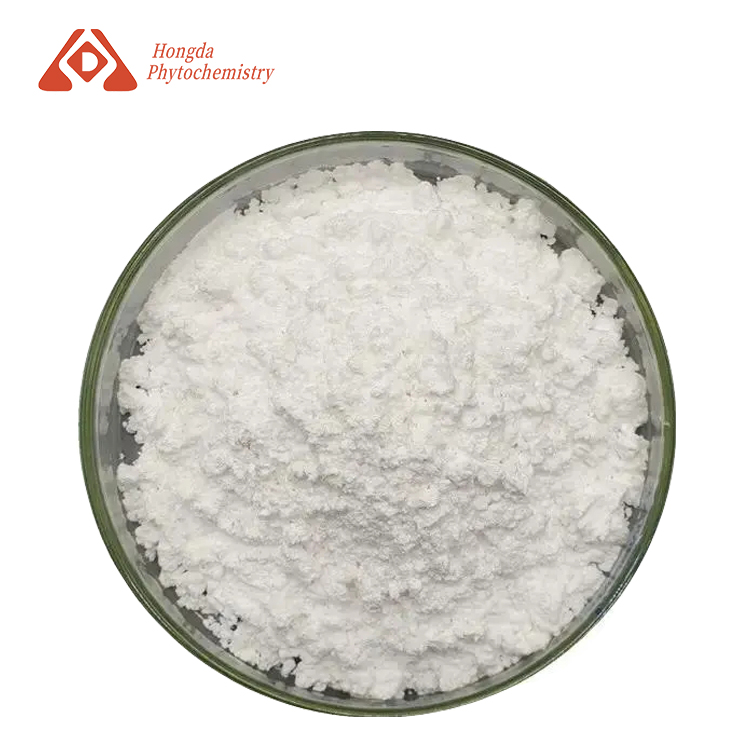
Hongda offers citicoline sodium powder in white crystalline powder. Product Identification: CAS No. 33818-15-4 The standard specification can be checked according to the technical requirements and intended application of the buyer. Rather than relying on just a broad assurance of purity, buyers can request the necessary spec sheet and batch-specific Certificate of Analysis before accepting material for manufacturing.
This method is particularly valuable to producers producing tablets, capsules, powders, liquid formulations, and other products in which the physical and analytical properties of the raw material need to be constant from batch to batch.
Why Specification Control Matters
A raw material specification is worth more to a formulation manufacturer than a generic statement like “premium quality.” It sets measurable criteria for verification during inbound inspection.
Depending on the approved specification, documentation may include identification, assay, appearance, moisture-related parameters, residual contaminants, heavy metals, microbiological requirements, and other relevant quality indicators. Buyers should always verify the supplier’s specification against their own finished-product needs, rather than assume that one specification would be adequate for every application.
Repeat purchases using the same authorized specification and testing procedure can further facilitate supplier certification. The more you produce, the better you can compare the fresh batches to the already approved material by procurement and quality teams if the paperwork is consistent.
Manufacturing and Quality Control at Hongda
Production Infrastructure for Consistent Supply
Hongda Phytochemistry has a manufacturing plant of almost 20,000 square meters with over 10 production lines and dedicated sections for purification. The company has over 20 years of experience in the manufacturing of ingredients and has production, testing, warehousing, and packaging operations in its manufacturing system.
Manufacturing capacity is an important consideration for B2B purchasers because when a product transitions from sample development to regular commercial production, raw material availability can be an issue. A provider should therefore be judged not just on the quality of one sample but on its ability to duplicate the agreed specification in successive batches.
Hongda’s production and warehouse operations are set up to support both sample requirements and bigger commercial orders. Before a purchase plan is finalized, buyers may negotiate target specifications, packaging, order quantities, and delivery needs.
Analytical Testing and Batch Documentation
Citicoline sodium powder sourcing is strictly quality controlled. The laboratory of Hongda is equipped with analytical tools, including HPLC, GC, spectrophotometers, atomic absorption, and automatic titrators. These tools support raw material evaluation, in-process control, and end product testing in accordance with the relevant specifications.
For B2B customers, a batch-specific COA is particularly crucial because it gives verified analytical information on the goods being shipped. The COA allows consumers to compare the actual batch to the agreed standard, rather than a generic product page.
For firms with their own quality management systems, other documents may also be considered depending on the target market and application. This can comprise product specifications, test results, packing information, and other regulatory or technical documents as part of the supplier certification process.
Certifications and Market Documentation
Hongda holds multiple quality and food safety certifications, such as cGMP, FSSC 22000, ISO 9001, ISO 22000, BRC, Halal, Kosher, EU Organic, and NOP Organic, for related products and production systems.
However, the certification standards differ depending on the final product, the destination country, and the regulatory category. Just because a firm has certification doesn't mean all ingredients are automatically approved for every market.
Buyers must state the destination market and intended use when asking for documents to that effect. It means that the supplier can give the documentation for the real purchasing project, not some generic certification package.
Formulation Considerations for Citicoline Sodium
Solubility and Processing Characteristics
Another rationale for its employment in diverse formulation formats is its applicability for applications where water solubility and processing qualities are critical. Depending upon the final product design, the material may be examined for solid and liquid formulation systems.
The pragmatic question for formulators is whether the raw material behaves consistently under the intended processing conditions. Mixing process, excipient selection, moisture exposure, storage conditions, and packaging may influence the handling properties of a powdered item.
Prior to commercial manufacturing, an accepted sample may be subjected to compatibility and stability verification by the makers. This provides a more dependable basis for formulation decisions than a broad statement about the substance.
Supporting Different Product Formats
According to current regulatory criteria, citicoline sodium powder is an ingredient that may be used in a number of nutraceutical and pharmaceutical formulation projects. Common development formats may include capsules, pills, powders, and liquid formulations.
The correct material specification will depend on the final formulation. For instance, a company generating a powdered drink may have different criteria for solubility and sensory properties than a company making a compacted tablet.
This is the reason B2B sourcing needs to begin by establishing the requirements of the end product. If the buyer can offer information on the intended dosage form, target market, packaging, and projected yearly volume, the supplier can propose the suitable specification and provide the documentation for review.
A Practical Approach to Bulk Procurement
Samples, COA, and Specification Confirmation
Buyers should be aware of the approval process before they place a big order. A common evaluation might start from product specification, sample, COA, and related technical documentation. Then the customer quality team can check the provided material to its internal specifications.
If a batch is accepted, using the same specification and quality requirements that have been established makes repeat purchasing easier. If the buyer has alternative requirements for assay range, particle-size profile, packing configuration, or testing, they should be checked before production, not after shipment.
This procedure avoids misconceptions between procurement, quality, and manufacturing teams and provides a clearer basis for long-term supply.
Packaging and Storage
Good packaging is crucial to keep the good condition of the powdered materials during storage and international shipping. Hongda generally employs PE inner bags and fiber drums for commercial packaging. Packaging specifications are customized according to customers’ requirements and order quantity.
The final packing depends on the storage circumstances of the goods, the means of transportation, the anticipated storage period, and the customer’s warehouse requirements. Buyers should also check the recommended storage conditions and shelf-life information in the authorized product paperwork.
The purchasing specification for greater quantities will include the final packaging specifications. This avoids unnecessary adjustments between sample approval and commercial delivery.
Supporting Repeat and Bulk Orders
The value of a supplier connection grows when a product progresses past the first sample stage. Repeat purchasers generally require stable specifications, predictable lead times, uniform packing, and accessible documentation on every shipment.
Hongda’s warehousing capacity and production facilities are suitable for commercial ingredient supply, and its experience in exports adds to the discussion on documentation and shipping arrangements for diverse overseas destinations.
If you are a buyer looking for a new project, you can specify your projected order quantity, location, packaging option, needed specification, and documentation needs. This information allows the provider to prepare a proposal based on the actual purchasing conditions and not on a generic pricing.
Choosing a Citicoline Sodium Powder Supplier
What Buyers Should Confirm Before Ordering?
Price is simply one element in supplier evaluation. Before buying citicoline sodium powder, buyers should validate the product authenticity, accepted assay specification, testing procedures, COA availability, packaging, minimum order quantity, lead time, and documents required for the destination market.
It is also useful to know whether the provider will be able to keep the same authorized specification on repeat orders. This becomes more and more crucial when an element has already passed formulation trials and is being introduced into normal commercial manufacturing.
A single supplier, capable of coordinating manufacturing, quality testing, paperwork, packaging, and export preparations through one procedure, helps close communication gaps between purchasing and quality teams.
Direct Factory Communication
Working with the manufacturer directly can also make technical communication more streamlined. Instead of getting information from several middlemen, buyers can talk to the supplier directly about product specifications, sample requirements, testing documentation, packaging, and manufacturing dates.
So the most relevant comparison for buyers comparing different China-based providers is not just the offered price. A better way is to look at the full menu of supply conditions—what's documented, what's tested, what can be adjusted, and how will repeat orders be treated?

Conclusion
Sourcing citicoline sodium powder for commercial formulation requires more than checking a purity number or comparing supplier quotations. Buyers should consider product specifications, analytical testing, COA documentation, manufacturing capability, packaging, certifications, and the supplier's ability to support repeat orders.
Hongda Phytochemistry provides Citicoline Sodium Powder together with manufacturing, testing, documentation, warehousing, and export support for B2B customers. By confirming the required specification and application before ordering, manufacturers can establish a clearer procurement process and reduce uncertainty during sample approval and commercial production.
For current specifications, samples, packaging options, and quotations, buyers can contact Hongda's team with their target application, order quantity, destination market, and documentation requirements. Contact duke@hongdaherb.com today to request samples, detailed quotations, or technical consultations. Experience the Hongda difference – where pharmaceutical excellence meets competitive pricing for global success.
References
1. Zhang, L., Wang, M., & Chen, H. (2023). Pharmaceutical manufacturing standards for citicoline sodium: A comprehensive analysis of global regulatory requirements. Journal of Pharmaceutical Manufacturing Science, 45(3), 234-248.
2. Rodriguez, A. M., Kumar, S., & Thompson, J. R. (2024). Quality control methodologies in large-scale citicoline sodium production: HPLC validation and impurity profiling. International Journal of Pharmaceutical Quality Assurance, 52(2), 167-182.
3. Williams, K. D., Lee, S. J., & Martinez, P. C. (2023). Global supply chain optimization for pharmaceutical-grade nootropic compounds: A case study in citicoline sodium distribution. Pharmaceutical Supply Chain Management Review, 18(4), 89-103.
4. Anderson, T. L., Brown, R. M., & Davis, N. K. (2024). Regulatory compliance frameworks for international pharmaceutical ingredient exports: Focus on cognitive enhancement compounds. Regulatory Affairs Pharmaceutical Industry Journal, 31(1), 45-62.
_1751511432865.webp)