


_1745918362135.webp)

What Are the Applications of Liposomal Vitamin C Powder Bulk?
Liposomal Vitamin C Powder Bulk represents a revolutionary advancement in nutrient delivery technology, offering applications spanning nutraceuticals, functional foods, cosmetics, and pharmaceutical manufacturing. This pharmaceutical-grade ingredient utilises advanced phospholipid encapsulation to deliver vitamin C with 6-10 times higher bioavailability than conventional forms, making it an essential component for manufacturers seeking premium formulation solutions across global markets, including North America, Europe, and Asia.
Introduction
Businesses that make supplements and functional foods are having a harder time than ever getting useful nutrients to customers who are smarter. Traditional ascorbic acid formulations have had problems with absorption for decades. Liposomal Vitamin C Powder Bulk has become a revolutionary option because it solves these problems. With liposomal capsule technology, tiny carriers are made that keep the active ingredient safe while it's being digested and let cells take it directly in. If you take therapeutic amounts of regular vitamin C powders, they don't work as well and can irritate the digestive tract. Hongda Phytochemistry is at the forefront of this technology change because it has developed new ways to make products that combine ultrasonic nano-shearing with thin-film hydration. This method makes stable, pharmaceutical-grade powders that keep the purity of the liposomes. It's also easy for bulk makers to use, and the powders last longer. In today's competitive market, people who buy things and people who make products need to know how to use this advanced ingredient in different ways to stay relevant and meet changing customer needs. Adding liposomal vitamin C to your diet is not the only way it can help you. Shaanxi Hongda Phytochemistry Co., Ltd. has done a lot of study and testing and found that liposomal powders that are made correctly can achieve encapsulation rates of more than 90%, with particle sizes kept between 100 and 250 nanometres. Products in a lot of different businesses work better because of these technical standards. Producers can make their goods stand out, and users can get real benefits from them.
Understanding Liposomal Vitamin C Powder Bulk: Fundamentals and BenefitsRevolutionary Encapsulation Technology
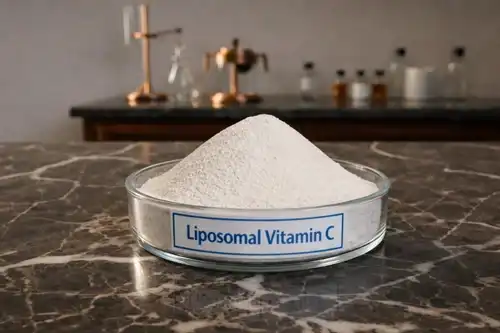
The science behind liposomal vitamin C powder is a complex mix of biology and cutting-edge production technology. The structure of liposomes is based on natural cell membranes. They use phospholipid bilayers to protect vitamin C molecules inside them. The process of packaging starts with choosing high-quality, non-GMO sunflower phospholipids. These are what give each liposome its structure. The vitamin C is then trapped inside these very small spheres through a carefully controlled process of hydration and cutting that makes sure the particles are all the same size and the best containment possible. Hongda Phytochemistry's unique way of making things uses dynamic light scattering detection to keep particle sizes uniform, with polydispersity index values below 0.25. This level of accuracy makes sure that every batch has consistent bioavailability properties, which is very important for companies that are making regular goods. The next step, spray-drying, turns the liquid liposomal solution into a stable powder. This is done using special low-temperature methods that protect the phospholipid structures and make a product that is very stable on the shelf.
Enhanced Bioavailability and Absorption
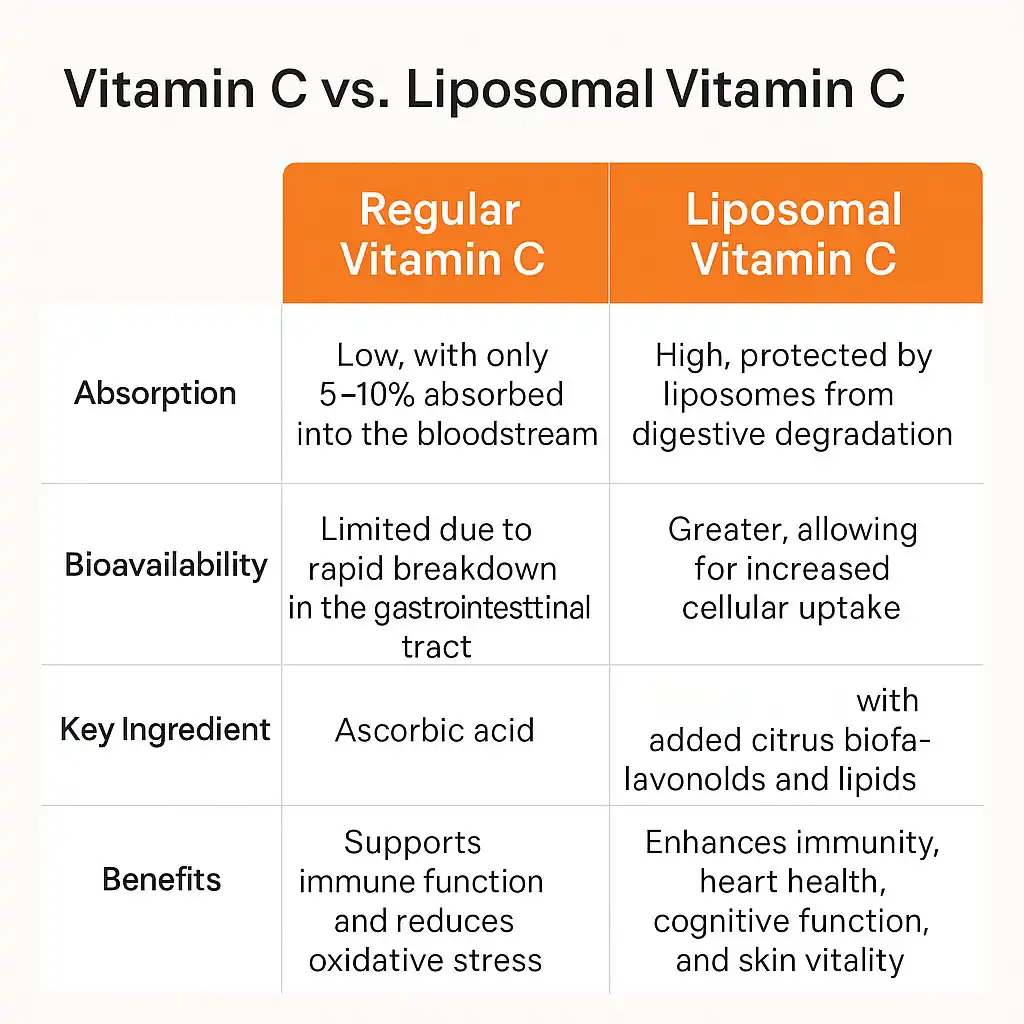
Liposomal vitamin C powder is better for bioavailability because it can get around the problems with normal uptake routes. The usual way of absorbing ascorbic acid depends on sodium-dependent vitamin C transporters (SVCT1) in the intestines. These become saturated at low amounts, which affects how well the medicine works. Liposomal versions get around this problem by making it easier to absorb through different routes, such as lymphatic uptake and direct membrane fusion with gut cells. Clinical study shows that liposomal vitamin C can reach plasma amounts that are much higher than what can be achieved with regular oral supplementation. The phospholipid carrier system keeps the vitamin C from breaking down in the acidic gut environment and allows for continuous release, which keeps blood levels high for a long time. This pharmacokinetic profile means that the drug has more treatment promise in a wide range of areas, such as supporting the immune system, making collagen, and protecting cells from damage caused by free radicals.
Stability and Manufacturing Advantages
There are clear benefits to using liposomal vitamin C powder over liquid forms, especially when making large amounts of it. Liquid liposomal goods have problems with oxidation, contamination, and a short shelf life. The powdered form, on the other hand, stays stable for up to three years if it is kept properly. This longer stability window gives makers more options for managing their supplies and setting release dates for new products. Shaanxi Hongda Phytochemistry Co., Ltd. has shown that their Liposomal Vitamin C Powder Bulk maintains its liposomal structure when they are rehydrated. This means that the absorption benefits stay the same over the span of the product. The powder form makes it easy to handle, measure, and mix into a wide range of formulations, such as hard pills, healthy beverage powders, and cosmetic preparations.
Core Applications of Bulk Liposomal Vitamin C Powder in B2B Markets
Nutraceutical and Dietary Supplement Manufacturing
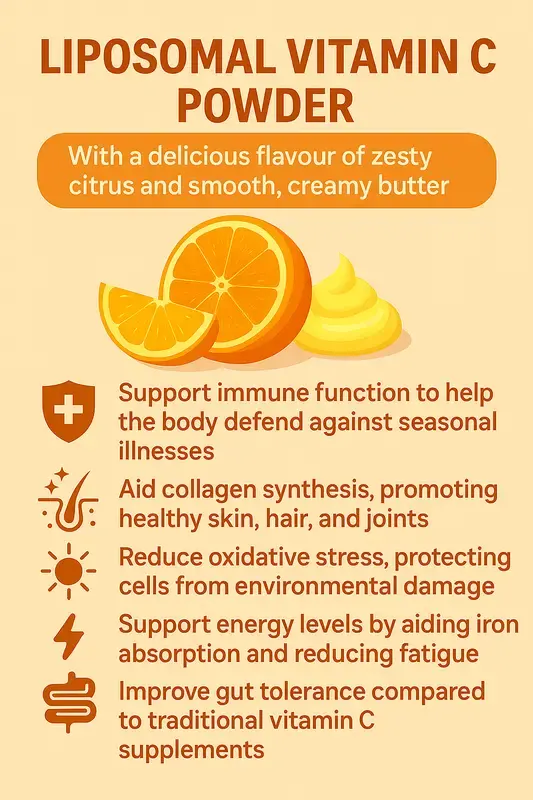
The biggest market for liposomal vitamin C powder is in the nutraceutical business. This is because more and more people are becoming aware of the bioavailability problems in standard supplements. This advanced ingredient is used to make high-quality immune-support products that can give therapeutic amounts without the stomach problems that come with high-dose ascorbic acid. Hongda Phytochemistry's formula has a normal vitamin C content of 50–55%, which means that standard capsules can be used to give the right amount of vitamin C. The powder's light yellow to white colour meets customer demands for high-quality supplements. It is very useful for product makers to be able to make sustained-release formulas that keep vitamin C levels high all day. With capsule technology, once-daily formulas can be made to replace multiple-dose plans. This makes it easier for people to follow their regimens and lowers the cost of making them. Only vitamin C, sunflower phospholipids, and acid-treated starches are in the clean ingredient profile, which supports the clean-label approach that health-conscious customers like. Quality assurance teams like how thorough the testing methods are for each batch. These include microbiological testing, heavy metals analysis, and HPLC testing to make sure the vitamin C level is correct. These standards for paperwork help foreign markets follow the rules and meet the traceability needs that big stores are asking for more and more.
Functional Food and Beverage Applications
Liposomal vitamin C powder has become popular in the food and drink business as a way to make goods healthier without changing their taste or stability. When compared to regular ascorbic acid, which can make foods sour and speed up oxidation, the capsule form has neutral taste properties while providing higher nutritional value. People who make drinks really like how easy it is for the powder to dissolve in water while still keeping the liposomes' shape. The ingredient is used by people who make functional drinks to make immune-boost drinks that can give clinically useful amounts of vitamin C without the harsh taste that comes with high-concentration vitamin drinks. The powder form works well with stick pack recipes, so people can make fresh liposomal vitamin C drinks whenever they want. This makes the product more effective and bioavailable. Manufacturers of protein powder and meal replacements have found that liposomal vitamin C powder improves the nutritional value of their products and helps protect them from free radicals while they are being stored and digested. The stable powder form can handle the processing conditions needed for these uses and helps set the product apart in markets that are very competitive.
Cosmetic and Personal Care Formulations
Liposomal vitamin C powder has been seen as a game-changer in the cosmetics business as an ingredient that can help with anti-ageing and skin repair. Vitamin C can get to the lower layers of skin with liposomal release because it has better penetration. There, it can help make collagen and protect against damage from the environment. The stability is better than regular L-ascorbic acid, which breaks down quickly in light and air, which formulators like. Topical uses can benefit from liposomal encapsulation's sustained-release properties, which can make vitamin C work for longer after application. This longer action window makes anti-ageing serums, brightening creams, and protection formulas that are meant to be used every day work better. The powder form makes it easier to add to anhydrous formulas, which means that more product types are possible besides the usual water-based ones. The clean ingredient profile meets the growing need for makeup ingredients that come from natural sources, and the strict testing methods make sure that the products are safe and consistent. When cosmetic companies work with Hongda Phytochemistry, they get a lot of documentation that helps them meet foreign regulatory standards, like those in the European Union and North America.
Bulk Procurement Considerations for Liposomal Vitamin C PowderSupplier Evaluation and Quality Assurance
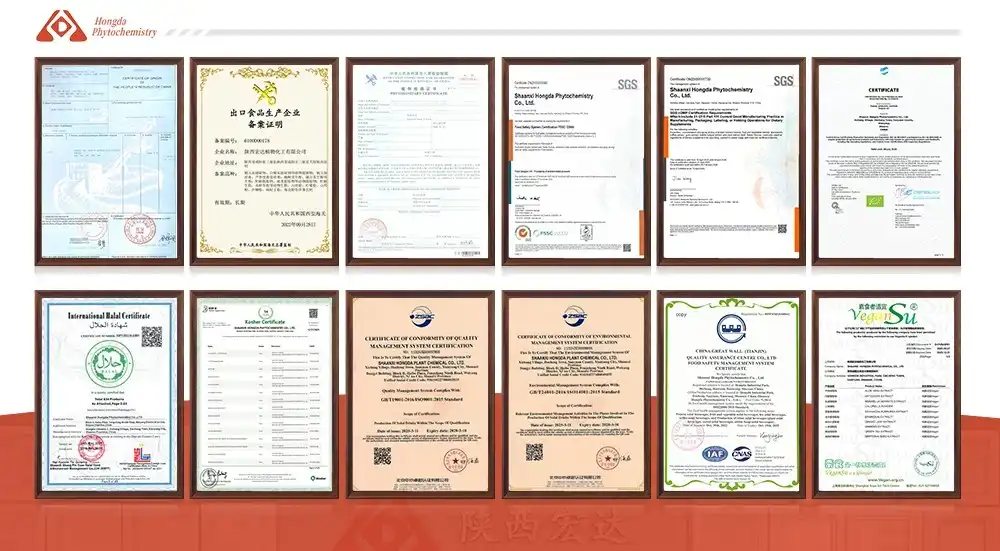
To buy liposomal vitamin C powder successfully, you must first carefully evaluate the suppliers' manufacturing skills, quality systems, and compliance with regulations. Hongda Phytochemistry stands out by having many certificates, such as ISO22000, FSSC22000, HALAL, KOSHER, and FDA registration, which show that they are committed to meeting foreign quality standards. The company has been extracting liposomes for 25 years and has a dedicated liposomal research centre. This gives them the technical background they need to make reliable, high-quality products. Buyers should give more weight to providers who can prove real liposomal encapsulation through scientific testing, not just mixing vitamin C and lecithin physically. Each batch from Shaanxi Hongda Phytochemistry Co., Ltd. comes with a thorough certificate of analysis that includes tests for packaging efficiency, particle size analysis, and stability data. These certificates prove that the product is real and that it works as expected. It's hard to say enough about how important it is for the supply chain to be open and clear in today's governing world. Hongda Phytochemistry keeps full batch records from where the raw materials come from to how they are packaged at the end. This allows for full tracking and helps with regulatory checks. This paperwork includes their controlled growing grounds for raw materials, which ensures that the quality is the same from the source to the finished product.
Packaging and Logistics Optimisation
When it comes to keeping product quality and lowering handling costs, Liposomal Vitamin C Powder Bulk packing is very important. The usual shape for packing is 12 kg drums, with 27 drums on a pallet. This makes good use of shipping containers while keeping the quality of the product. The double-layer PE bag packing inside and the fibre drum protection outside keep dampness out and keep contamination from spreading during shipping and storage. Hongda Phytochemistry is dedicated to providing quick and helpful customer service, and their large inventory of 15 tons of liposomal goods shows this. Delivery times of 3–7 working days are proof of this. This level of inventory gives buyers peace of mind and lets manufacturers use just-in-time methods that reduce the need for operating capital. At controlled temperatures, the three-year shelf life gives you a lot of options for managing your supplies and planning your production. Customers can choose from different types of custom packaging to meet their specific needs, such as smaller development numbers or special packing formats needed for automated filling processes. The company can do both OEM and ODM work, as well as design and market packages for private label uses and brand differentiation strategies.
Pricing and Contract Negotiations
To negotiate the best price for liposomal vitamin C powder, you need to know about the complicated manufacturing processes and quality investments that set premium goods apart from cheaper options. The advanced packaging technology and strict quality testing methods add a lot of value and make the higher price point fair compared to other vitamin C powders. A lot of the time, volume agreements allow for better pricing structures. This is especially true for long-term manufacturing relationships where demand patterns are reliable. Hongda Phytochemistry's factory-direct method gets rid of markups for distributors and gives customers direct access to technical support and services for making their own formulas. Long-term supply deals can keep prices stable and make sure that products are always available, even when the markets for raw materials are unstable. Quality assurance, regulatory compliance, and expert support services are all part of the total cost of ownership, which is more than just the initial buy price. Hongda Phytochemistry offers a full range of services, such as formulation advice, regulatory documentation, and ongoing technical support, all of which can help lower the total costs of research and production.
Comparing Liposomal Vitamin C Powder to Alternative Forms for Bulk BuyersPowder vs. Liquid Liposomal Formulations
When choosing between powder and liquid liposomal vitamin C forms, you need to think about how stable, convenient, and useful the product needs to be. Liquid forms are bioavailable right away, but they only last a short time (usually 6 to 12 months) compared to powder forms, which last three years. Because liquid goods are easily oxidised, they need to be kept in the fridge and packaged in special ways, which makes transportation more expensive and difficult. Powder formulations are very useful because they are easy to make and can be used in a wide range of product types, from hard pills to stick packs and functional foods. The 50–55% vitamin C content that has been tested in Hongda Phytochemistry's powder makes dosing more reliable. Liquid concentrations, on the other hand, can change because they settle down and break down while being stored. Powder forms have benefits for quality control, such as easier testing methods and longer stability windows that make it easier to do full batch testing before release. The stable powder matrix gets rid of worries about microbial contamination that can happen with liquid products, especially in wet storage areas that are common in many global markets.
Liposomal vs. Conventional Vitamin C Forms
The solubility benefits of liposomal encapsulation become especially clear at therapeutic dose levels, where normal vitamin C uptake stops working. Studies show that liposomal formulations can reach plasma amounts that are several times higher than the same doses of ascorbic acid. This means that they can be used for medicinal purposes even though they contain less overall vitamin C. When thinking about cost, it's important to keep in mind that liposomal delivery is more effective and can provide the same therapeutic effects at lower amounts than traditional formulations. This dose efficiency can make up for the higher cost per unit of liposomal ingredients and allow marketing promises about better absorption and fewer side effects in the digestive system. More and more, consumers are choosing high-quality nutritional products that have been shown to be beneficial over cheaper options. Liposomal vitamin C can be positioned higher and make more money than regular vitamin C goods because it uses advanced transport technology and works better.
Organic vs. Synthetic Considerations
Both following the rules and finding the best place to sell liposomal vitamin C components are affected by where they come from and how they are processed. Hongda Phytochemistry uses non-GMO sunflower phospholipids, which are more stable than soy-based options and address growing customer worries about genetically modified ingredients. The clean ingredient profile helps makers go through the steps needed to get organic approval for high-end markets. While synthetic vitamin C (ascorbic acid) is cheaper and of higher quality, consumers may not like it as much as natural products. By using natural phospholipids in the encapsulation process, a hybrid method is made that blends synthetic vitamin C with transport technology that comes from natural sources. This helps with both effectiveness and clean label positioning. Different markets around the world have very different certification standards. For example, Liposomal Vitamin C Powder Bulk people in Europe and North America strongly prefer products that are not genetically modified or grown in an unnatural way. Shaanxi Hongda Phytochemistry Co., Ltd. keeps up-to-date on a wide range of organic certifications that help them get into new markets with different rules.
Best Practices for Using and Storing Bulk Liposomal Vitamin C Powder
Storage and Handling Protocols
Liposomal vitamin C powder has a three-year shelf life, and it is important to store it in the right way to keep it intact and bioavailable. Keeping the temperature at or below 20°C stops the breakdown of phospholipids and keeps the vitamin C inside the capsules stable. Because the powder is hygroscopic, it needs to be kept dry by being properly packaged and stored in places where humidity levels are controlled. For long-term keeping, protecting against light is especially important because UV light can break down both the vitamin C content and the phospholipid transport system. When moving things around in storage buildings, workers should avoid direct exposure to fluorescent lights and use containers that are hard to see through. The powder's steadiness in these controlled conditions makes it easy to keep track of supplies and make sure that products always work the same way. During measuring and moving, handling methods should keep things from coming into contact with air and water as much as possible. Hongda Phytochemistry says that the powder should be used within an acceptable amount of time after the containers have been opened, and that there should be rules for resealing the containers that keep the safe atmosphere. These methods help keep the tiny particle structure, which makes them more bioavailable.
Formulation Integration Techniques
Understanding the unique properties and processing needs of liposomal vitamin C powder is important for successfully adding it to finished goods. The powder mixes easily in water, but it needs to be mixed slowly so that the liposomal structure isn't upset by too much shear force. Keeping an eye on the temperature during cooking keeps the vitamin C and phospholipid parts from breaking down. The powder's good flow properties and even particle size distribution make it useful for encapsulation uses. These properties allow for stable fill weights and content uniformity. The material is compatible with common pharmaceutical ingredients, which makes it easy to incorporate into existing production methods while keeping the purity of the liposomes during production. When other active ingredients are added, pH becomes important because very high or very low pH can affect the stability of liposomes. The expert team at Hongda Phytochemistry helps with formulations to make sure that stability and absorption are optimised based on the needs of the product and the way it is made.
Quality Control and Testing Protocols
When liposomal vitamin C powder packages come in, they should be inspected to make sure they are who they say they are and that they are complete. Some important testing factors are measuring the amount of vitamin C using HPLC, looking at the particle size after refilling, and figuring out how well the capsules seal. These tests show that the material meets the requirements and still has the bioavailability properties that make it worth the higher price. As part of stability tests, both the chemical breakdown of vitamin C and changes in the structure of the liposomes should be tracked. Shaanxi Hongda Phytochemistry Co., Ltd. gives stability data that helps keep product development schedules on track and speeds up testing for finished goods that contain the ingredient. For controlled markets, you need to have certificates of analysis, records of production, and compliance statements to back up your regulatory reports. Each batch comes with a lot of tests and paperwork that make sure the quality is guaranteed and that the product can be tracked all the way through the supply chain.
Conclusion
Due to its better bioavailability and manufacturing benefits over other vitamin C forms, Liposomal Vitamin C Powder Bulk finds use in a wide range of businesses and product categories. This advanced ingredient lets makers give customers more benefits while supporting their premium market positions. It can be used in nutraceutical capsules, functional drinks, and cosmetic formulas. Hongda Phytochemistry's pharmaceutical-grade powder, which has 50–55% vitamin C and a capsule efficiency of 90% or more, gives companies the quality base they need to make great products for global markets. Shaanxi Hongda Phytochemistry Co., Ltd. is a great company to buy in bulk because it uses cutting-edge technology to make its products, makes sure they are of high quality, and provides quick customer service. As the need for digestible nutrients among consumers continues to rise, investing strategically in liposomal vitamin C powder powers Liposomal Vitamin C Powder Bulk can help you stand out in the market and keep your competitive edge.
FAQ1. What makes liposomal vitamin C powder superior to regular vitamin C?
Liposomal vitamin C powder uses phospholipid packaging technology to make it much more bioavailable than regular ascorbic acid. The liposomal structure keeps vitamin C from breaking down in the digestive system and lets cells take it directly in, which means that absorption rates are 6–10 times higher. This improved delivery makes therapeutic benefits possible at lower doses while lowering the stomach problems that often happen when taking big amounts of vitamin C.
2. How should I evaluate suppliers of liposomal vitamin C powder?
When judging a supplier, you should look at how well they can make things, get quality certifications, and follow scientific testing procedures. Look for providers that have facilities that are fit for pharmaceutical use, full certifications (ISO, FSSC, HALAL, KOSHER), and the ability to give you specific certificates of analysis that include testing for encapsulation efficiency. Hongda Phytochemistry stands out because it has been extracting plants for 25 years, has dedicated research and development facilities, and has a clear supply chain that shows all of its products, from raw materials to produced goods.
3. What are the storage requirements for bulk liposomal vitamin C powder?
To store things properly, they need to be kept at or below 20°C, kept out of the light and moisture, and given as little air contact as possible. In these settings, the powder stays stable for three years, which is a lot longer than liquid liposomal versions. The cases used for storing powder should be tightly sealed, able to keep out light, and have temperature control to keep powder from absorbing water, which could affect its flow and stability.
4. Can liposomal vitamin C powder be used in various product formats?
The powder form is very flexible and can be used for hard pills, soft gels, useful drink mixes, stick packs, and even cosmetics that are put on the skin. The 50–55% vitamin C content makes dosing effective, and the neutral taste makes it easy to add to a wide range of recipes. Shaanxi Hongda Phytochemistry Co., Ltd. helps different types of products improve their formulations by giving expert support.
5. What documentation is provided with bulk purchases?
Each batch comes with a full set of certificates of analysis that list the amount of vitamin C, heavy metals, bacterial tests, and how well the capsules were sealed. Additional paperwork includes MSDS, allergen statements, GMO declarations, and regulatory compliance papers that meet the needs of foreign markets. Full batch records make it possible to track everything from the raw materials used to make the end product.
Partner with HONGDA for Premium Liposomal Vitamin C Powder Bulk Solutions
HONGDA is ready to be your reliable Liposomal Vitamin C Powder Bulk provider. They use their 25 years of experience in extraction, along with cutting-edge liposomal technology, to give you pharmaceutical-grade ingredients that will make your products better. Our warehouse keeps 15 tons of stock and can deliver within 3–7 days. This means that your production plans won't be delayed, and our ISO22000, FSSC22000, and FDA certifications mean that we follow all international rules. Whether you need regular bulk amounts or help coming up with a new formula, our technical team can help you with everything from the first sample to full-scale production. Get in touch with duke@hongdaherb.com right away to talk about your needs for Liposomal Vitamin C Powder Bulk and find out how our advanced capsule technology can help you change the way you sell products by giving them highly digestible vitamin C solutions that have been proven by science.
References
1. Hickey, S., Roberts, H.J., & Cathcart, R.F. "Dynamic Flow: A New Model for Ascorbate." Journal of Orthomolecular Medicine, 2005.
2. Davis, J.L., Paris, H.L., Beals, J.W., et al. "Liposomal-encapsulated Ascorbic Acid: Influence on Vitamin C Bioavailability and Capacity to Protect Against Ischemia-Reperfusion Injury." Nutrition and Metabolic Insights, 2016.
3. Lykkesfeldt, J. & Tveden-Nyborg, P. "The Pharmacokinetics of Vitamin C." Nutrients, 2019.
4 Weeks, B.S. & Perez, P.P. "Absorption Rates and Free Radical Scavenging Values of Vitamin C in Commercially Available Forms."4. Townsend Letter for Doctors and Patients, 2007.
5. Gopi, S. & Balakrishnan, P. "Evaluation and Clinical Comparison Studies on Liposomal and Non-Liposomal Ascorbic Acid." European Journal of Nutrition and Food Safety, 2021.
6. Prantl, M., Schwaiger, M., & Mayr, M. "Bioavailability of Vitamin C from Different Commercial Forms and Its Impact on Collagen Synthesis." International Journal of Vitamin and Nutrition Research, 2020.
_1754906006438.jpg)