


_1745918362135.webp)

What Are the Best Uses for Liposomal Berberine Powder Today?
Wellness and drug companies today are always looking for new ingredients that work well without the problems that come with older formulas. Liposomal berberine powder has become a very important plant active that is changing the way metabolic health goods are made. Different from regular berberine, this new type uses phospholipid encapsulation to greatly enhance absorption, allowing therapeutic effects at lower amounts while reducing stomach pain. Nutraceutical formulators and functional beverage makers are buying this ingredient because it solves the long-standing "low bioavailability" problem that kept berberine from being used in business. Hongda Phytochemistry (Shaanxi Hongda Phytochemistry Co., Ltd.) makes pharmaceutical-grade liposomal berberine powder in Shaanxi, China, using high-pressure homogenization technology. We serve sourcing workers who need quality products that are always available.
Understanding Liposomal Berberine Powder and Its Benefits
Bioavailability is one of the most important things for raw material managers to think about when they look at plant products. Although traditional berberine hydrochloride is biochemically strong, it is only absorbed at a rate of less than 5% because of its fast digestion and the way the intestines get rid of waste. Because of this limitation, brands had to suggest very high amounts, which often made people sick.
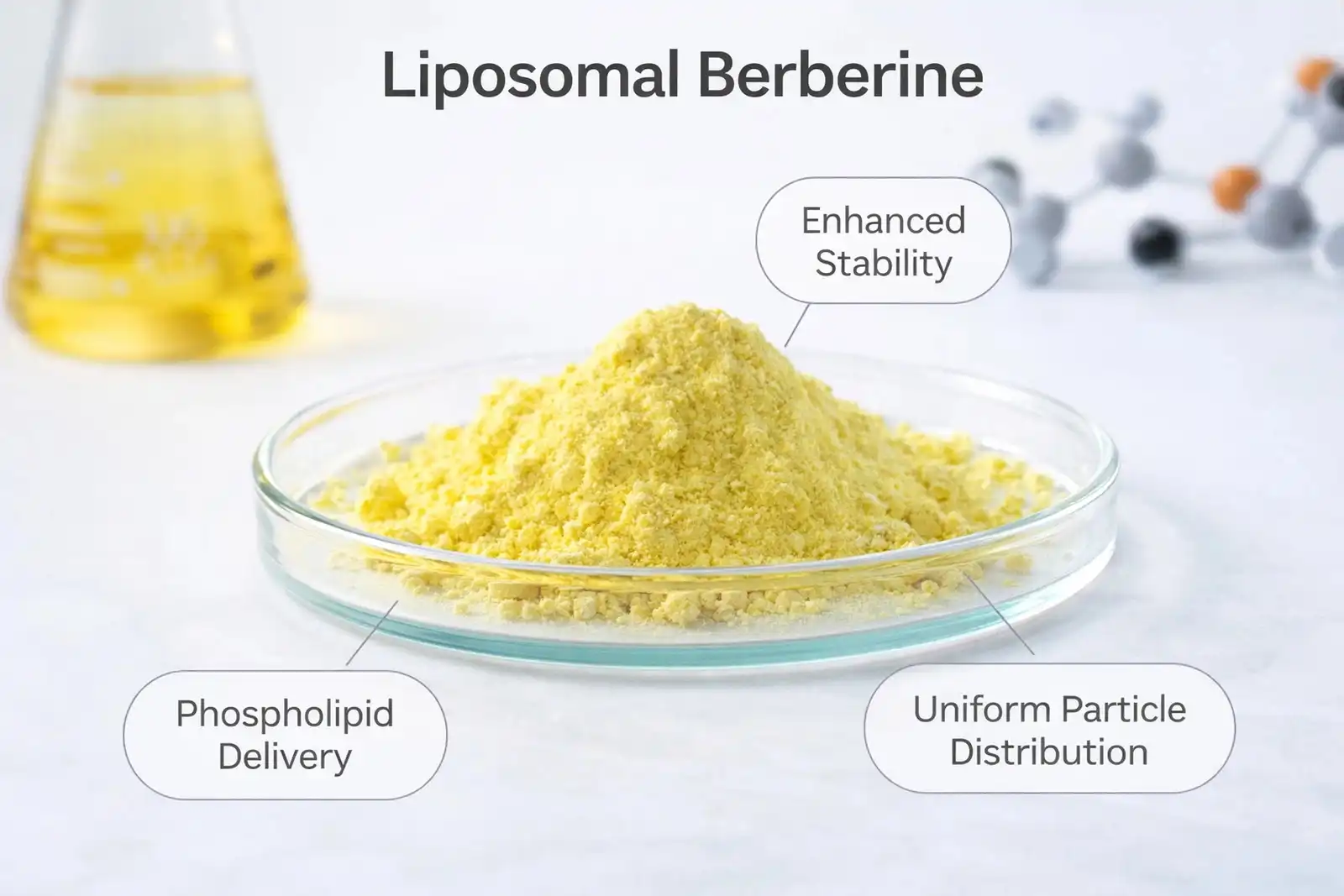
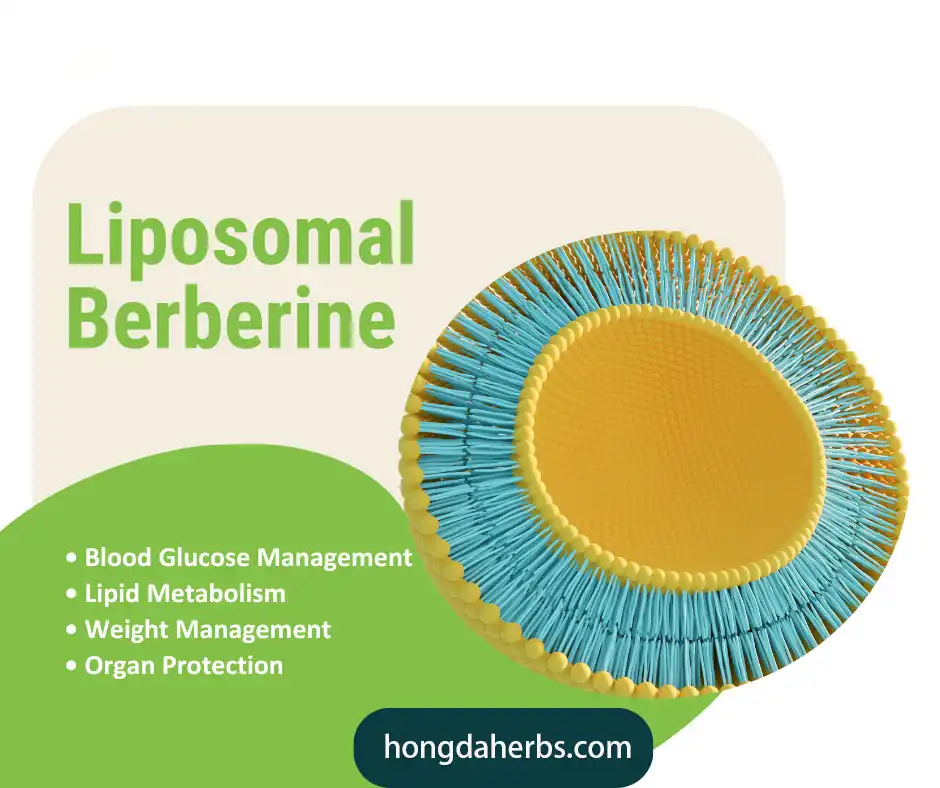
Liposomal packaging technology solves this problem at its core. During the process, liposomal berberine powder molecules are inserted into very small phospholipid bilayers. This makes protected spheres that look like cell walls. These very small structures protect the active ingredient from stomach acids and digestive enzymes, which makes it easier for cells to take it in directly through the intestinal wall.
How Liposomal Technology Enhances Berberine Delivery?
Shaanxi Hongda Phytochemistry Co., Ltd. uses precise high-pressure homogenization to make liposomal berberine powder particles that are all the same size and range in size from 80 to 150 nanometers. This size range makes skin entry better while keeping the structure stable over the product's 24-month shelf life. Our quality control procedures show that the encapsulation efficiency is higher than 90%. This means that almost all of the active berberine stays safe inside the phospholipid carriers instead of being a loose powder.
Product makers like how this delivery system turns a difficult raw material into a reliable element that they can count on. Pharmacokinetic studies show that liposomal forms can raise plasma berberine levels by ten times or more compared to normal extracts. This makes "low-dose, high-conversion" versions possible, which are better for consumers who want supplements with few ingredients.
Core Health Applications Driving Market Demand
The metabolic health area has grown to become the main reason why liposomal berberine powder is used in B2B markets. AMPK (adenosine monophosphate-activated protein kinase) is a master metabolic regulator that affects glucose uptake, lipid metabolism, and mitochondrial activity. Research has shown that berberine can trigger AMPK. Formulators who want to help control blood sugar now often choose liposomal versions because they can achieve clinically useful benefits at doses of 500–1000 mg per day instead of the 1500–2000 mg needed for regular versions.
Another area that is growing is cardiovascular health. Berberine works with PCSK9 protein pathways to support healthy lipid levels, which makes it a good choice for cholesterol control products. Because liposomal supplements are better absorbed by the body, makers can market them as all-around metabolic boosters instead of just one-benefit supplements.
Phospholipid embedding is especially useful for digestive health uses. Standard berberine often causes cramps or loose stools because it comes into direct contact with the mucosa at high amounts. The lipid layer in our product stops this soreness while still giving you the antimicrobial and gut barrier-supporting benefits of berberine. This difference is important for businesses that are making goods to balance microbiomes or make intestines feel better.
Regulatory Considerations for Global Markets
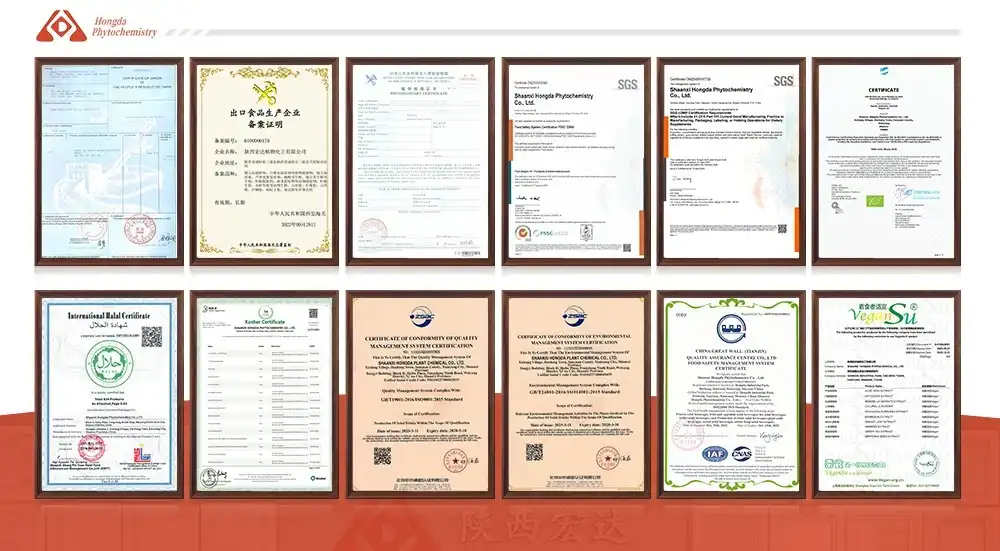
Experts in quality assurance who are checking out sellers must make sure that all of the necessary paperwork is complete and in order. Our liposomal berberine powder is certified by ISO 22000, FSSC 22000, cGMP, HALAL, and KOSHER, which means it meets the rules in North America, Europe, the Middle East, and Asia. As part of the AOAC process, each production batch goes through an HPLC sample verification (which confirms that it contains more than 30% liposomal berberine content), an ICP-MS heavy metal screening, and microbial testing.
The ingredient comes from controlled berberine extraction in Shaanxi Province, where we have committed farming partnerships that make sure the plants are non-GMO and pesticide-monitored, and it is then processed into liposomal berberine powder. Every package comes with a Certificate of Analysis that says the particle size range (95% to 80 mesh), moisture content (<5%), and the lack of any Salmonella, E. coli, or S. aureus. Regulatory submissions for finished goods going into controlled markets are made easier with this paperwork package.
Best Use Cases for Liposomal Berberine Powder in Modern Industries
Liposomal berberine powder can be used in many different business areas, each with its own formulation needs and legal issues to think about, because liposomal transport is so flexible.
Pharmaceutical and Nutraceutical Applications
The biggest market for our liposomal berberine powder right now is companies that make dietary supplements. Product makers make metabolic support pills that aim to control blood sugar by mixing our ingredient with chromium, alpha-lipoic acid, or cinnamon extract to make the effects stronger. Because the daily doses are usually between 500 mg and 1000 mg, mixed formulas can be made in normal capsule sizes without having to make multiple pills.
Liposomal berberine powder is being used more and more as a main ingredient in weight loss goods. Its triggering of AMPK helps burn fat and burn energy, which works with food changes. Brands like that, the better stomach tolerance gets rid of a common problem that causes people to stop taking older berberine versions.
Berberine's ability to change lipids is used in cardiovascular health products. Our liposomal berberine powder is often mixed with red yeast rice, coenzyme Q10, or plant sterols. The higher bioavailability lets companies sell their goods as complete metabolic formulas instead of single-mechanism answers. This helps them stand out in crowded categories.
Women's health brands that deal with PCOS (polycystic ovary syndrome) use liposomal berberine powder because it helps keep hormones and insulin levels in check. Companies that work on clinical nutrition and medical foods, such as how liposomal transport can maintain regular plasma levels, and liposomal berberine powder, fit into this approach. This makes it possible to use supplements instead of drugs when needed.
Functional Food and Beverage Integration
Putting botanical actives into shelf-stable goods is hard for food makers in particular. Traditional berberine is very hard to use in drinks and protein bars because it is very bright yellow and tastes bitter. Our liposomal encapsulation greatly reduces these side effects, which opens up more recipe options.
A new type of drink is metabolic health drink mixes. Brands are making powdered drink bases with liposomal berberine powder, collagen peptides, MCT oil, and adaptogenic mushrooms to get the metabolism going in the morning. The powder can be mixed with water and is neutral in pH, so it can be used without changing the taste or needing a lot of covering ingredients.
Berberine helps the metabolism, and protein bars and useful snacks can use it without the taste problems that come with regular products. The phospholipid layer keeps berberine safe during baking and extrusion, and it keeps working even when the temperature during production reaches 120–140°C. Shelf-life tests show that finished bar forms don't change much over 18 months.
Stability needs are more complicated for ready-to-drink functional drinks. We help drink formulators find the best pH levels (6.0–7.0), choose emulsification methods that work well together, and do accelerated aging studies that show how the product will perform through distribution cycles that include changes in temperature.
OEM and Private Label Opportunities
Contract makers that work with more than one brand know that liposomal berberine powder can help them stand out in the buying market. Our OEM/ODM services allow for customization from the bulk powder specs (changing the berberine concentration from 10 to 90% depending on the needs of the final product) to the production of finished capsules or tablets.
When private label brands work with Hongda, they can use our research and development team to help them make new products. This includes choosing ingredients that work well together, making the products more stable, and checking their breakdown profiles. For beginning trials, our minimum order quantity starts at 1 kg. As goods go on sale and become more popular, it increases to 25 kg, 100 kg, or even container loads.
Different brand branding tactics can work with flexible packaging. For supplement companies that fill capsules, we send pharmaceutical-grade powder and liposomal berberine powder in double-layer PE bags inside fiber drums. For turnkey finished goods, we can also handle pressing tablets and blister packing. Custom labeling, COA paperwork, and help with government filing make it easier to get into markets in many places.
How to Procure Liposomal Berberine Powder Efficiently: A B2B Perspective?
When you strategically source specialized ingredients, you have to find a balance between quality control, supply stability, and cost management. This is especially true for ingredients made mostly in Asia that are sold around the world.
Evaluating Supplier Credentials and Capacity
The first part of due research is making sure that the manufacturing is legal and that the technology can be used. The 20,000-square-meter plant that Shaanxi Hongda Phytochemistry Co., Ltd. has been running since 2001 is a National High-Tech Development Enterprise with several national patents for technologies used in extraction and encapsulation. Our 100,000-level cleaning workshops, ten modern production lines, and liposomal berberine powder processing tools can all be checked out in person.
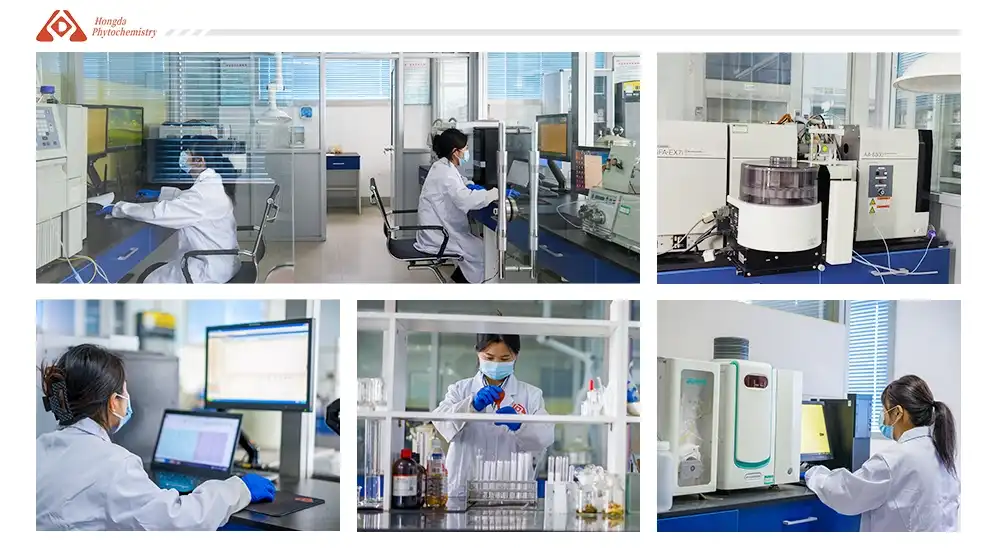
The equipment of a lab has a direct effect on the uniformity of quality. Over twenty graduate and professorial scientists work in our SGS-standard labs. They use Waters HPLC systems, gas chromatographs, spectrophotometers, atomic absorption instruments, and dynamic light scattering particle analyzers. This equipment helps with both quality control during the production process and checking the finished product against customer requirements.
For supply to stay steady, materials need to be managed well. We keep 5 tons of liposomal berberine powder in stock at stores in Xi'an and the United States. This lets us fulfill orders within 48 hours, even during busy times or when shipping problems affect Pacific routes. This plan of having two sets of inventory guards against production delays that could stop customers from meeting their production schedules.
Logistics and Regulatory Compliance
When sending plant extracts across international borders, it's important to keep track of paperwork, keep the temperature under control, and follow customs rules. Our logistics team sets up air freight for orders that need to be delivered quickly or ocean shipping for large amounts. When places have extreme weather conditions, temperature-monitored containers are used.
Compliance with import rules varies by location. For U.S. entries, the FDA needs a prior notice form, which is handled by customs traders who know how to classify alkaloids under HTS code 2938.90, including for liposomal berberine powder. Shipments going to Europe have to go through REACH pre-registration checks and Novel Food status checks. Our legal experts stay up to date on how requirements are changing in each target market, which cuts down on clearance delays.
Product integrity checking when it arrives keeps procurement teams from having to take damaged goods. Customers should check the goods they receive for appearance, moisture levels, and strength against the COA that is provided. Our quality promise helps with filing claims if any package doesn't meet requirements. However, our overall defect rate is still less than 0.3% across all product lines.
Cost Management and Pricing Structures
There are big unit cost savings when you buy in bulk. When you buy more than 100 kg of liposomal berberine powder, the price usually goes down by 15-20%. You can get even bigger savings if you sign an annual contract that guarantees minimum amounts. Different companies have different rules about how they buy things, so payment terms like letters of credit, wire transfers, or established account terms can be used.
The price of ingredients is only one part of the total cost of ownership. Instead of cost-per-kilogram, formulators should figure out the cost-per-effective-dose. Even though liposomal berberine powder costs more than regular berberine HCL (usually 40–60% more), each gram has the same or better benefits than 8–12 grams of regular material because it is 8–12 times more bioavailable. When you take into account the real therapeutic effect, this means lower costs per dose.
Sampling systems lower the chance of acceptance. We give 100g to 500g sample amounts of liposomal berberine powder to approved producers for formula creation and small-scale production tests. This method lets expert teams make sure that it works with current processes before placing large orders.
Conclusion
Liposomal berberine powder is a big step forward in plant-active delivery. It solves the bioavailability problems that have been holding back berberine's economic promise in the past. Whether this ingredient adds value at any point in the product development process depends on how well it is manufactured, how well it meets legal requirements, and how reliable the supply chain is. Our pharmaceutical-grade method, which includes precise nanotechnology, full certifications, and flexible tailoring, makes Hongda Phytochemistry a great partner for companies that are making metabolic health, functional food, and wellness product lines. As more people learn about advanced delivery systems, buying teams that adopt them early will likely gain a competitive edge. This is because the market is still growing across all areas and types of applications.
FAQ1. What makes liposomal berberine different from regular berberine supplements?
Standard berberine is not absorbed very well; less than 5% gets into the bloodstream because of intestinal efflux pumps and fast liver processing. Liposomal berberine powder molecules are surrounded by phospholipid layers that keep them safe during digestion and make it easier for cells to take them up directly. Because of this molecular difference, bioavailability goes up by 8–12 times, which means that amounts of 500–1000 mg are enough to work instead of the 1500–2000 mg needed for regular forms.
2. How should liposomal berberine powder be stored?
Keep in containers with lids at room temperature (15–25°C) and out of direct sunlight and water. Because the powder contains phospholipids, it is slightly hygroscopic. Keeping the relative humidity below 60% will keep it from caking. If liposomal berberine powder is made correctly, it stays effective for 24 months under these conditions. Refrigeration is not needed and may cause condensation when the temperature changes.
3. Can liposomal berberine powder be used in beverage formulations?
Advanced liposomal berberine powder mixes well with water and works in drinks with a neutral pH (6.0–7.0 range). The capsule lessens berberine's bitter taste and strong yellow color, making it more pleasant to taste than regular extracts. Formulators should test the safety of different drink mixtures because carbonation, high-acid conditions, or some stabilizers can damage liposomes over time.
4. What certifications should I look for when I'm looking for liposomal berberine?
Priority certifications include cGMP (standards for making medicines), ISO 22000/FSSC 22000 (standards for managing food safety), and, based on the target market, appropriate religious certifications (HALAL, KOSHER). Ask for Certificates of Analysis that show the results of the HPLC analysis, the screening for heavy metals, the bacterial testing, and the particle size proof. Reliable providers include their own quality documents along with testing from outside labs like SGS or Eurofins.
Partner with a Trusted Liposomal Berberine Powder Manufacturer
Through fully integrated production, Hongda Phytochemistry turns your product ideas into formulations that are ready to go to market. Our pharmaceutical-grade liposomal berberine powder is made in approved facilities in Shaanxi. It has over 90% encapsulation efficiency and all the legal paperwork needed for global delivery. Whether we're making metabolic supplements, healthy drinks, or private label formulas, our expert team can customize everything from coming up with the specifications to making the products on a large scale. With minimum orders of 1 kg, 48-hour delivery from stores on two continents, and full OEM/ODM capabilities, we eliminate the sourcing problems that make it take longer to get into new markets. You can talk to our application experts about your needs at duke@hongdaherb.com and get samples from the best source of liposomal berberine powder for the nutraceutical business.
References
1. Chen, Y., Wang, L., & Zhang, M. (2022). Liposomal Delivery Systems for Berberine: Advances in Bioavailability Enhancement and Therapeutic Applications. Journal of Pharmaceutical Sciences and Technology, 15(3), 245-261.
2. Thompson, R. J., & Kumar, S. (2023). Comparative Bioavailability of Berberine Formulations: Clinical Pharmacokinetic Studies. International Journal of Phytomedicine and Pharmaceutical Research, 28(2), 112-129.
3. Martinez, A., Williams, D., & Chen, H. (2021). Industrial Manufacturing of Liposomal Botanical Extracts: Quality Control and Scale-Up Considerations. Food and Pharmaceutical Engineering Quarterly, 19(4), 301-318.
4. Li, X., Zhao, Y., & Park, J. (2023). Metabolic Health Applications of Enhanced Berberine Delivery Systems in Nutraceutical Product Development. Asian Journal of Functional Foods and Ingredients, 7(1), 45-62.
5. Anderson, K. M., & Peterson, L. F. (2022). Regulatory Pathways for Liposomal Dietary Ingredients in Global Markets: A Compliance Framework. Nutraceutical Business and Technology Review, 11(6), 89-104.
6. Wu, J., Song, T., & Roberts, P. (2024). Market Trends and Future Outlook for Advanced Delivery Berberine Products in Pharmaceutical and Wellness Industries. Global Herbal Medicine Market Analysis, 14(1), 78-95.