


_1745918362135.webp)

What Are the Clinically Studied Benefits of Organic Turmeric Curcumin Powder?
For Hongda Phytochemistry, understanding the evidence behind Organic Turmeric Curcumin Powder is just as important as maintaining consistent raw-material quality. Shaanxi Hongda Phytochemistry Co., Ltd. supplies turmeric-derived ingredients for nutritional and functional formulations, while the broader clinical literature provides useful context for manufacturers evaluating curcumin as an active botanical ingredient. Curcumin has gained great academic attention for its possible effects on inflammatory and oxidative-stress pathways; however, the level of clinical evidence differs depending on formulation, dosage, study population, and health outcome being investigated. A 2024 comprehensive review and meta-analysis of 103 randomized clinical trials and 7216 people reported significant improvements for several metabolic, inflammatory, and oxidative endpoints, but the confidence of the evidence varied significantly among endpoints. B2B buyers care about the difference. A clinical trial using a specific curcumin formulation should not be taken to mean that all turmeric or curcumin powders will have the same effect. Before a clinical discovery may be turned into a commercial product, the raw material specification, curcuminoid content, administration mechanism, analytical tests, and intended use need to be considered.
Understanding the Composition Behind Turmeric Curcumin Powder
Turmeric is derived from the rhizome of the plant Curcuma longa L., which has been used as food and an herb for thousands of years. Curcumin is one of the key chemicals that give turmeric its distinctive yellow color and is part of a wider family of compounds known as curcuminoids. The three principal curcuminoids in standardized turmeric extracts are generally curcumin, demethoxycurcumin, and bisdemethoxycurcumin.
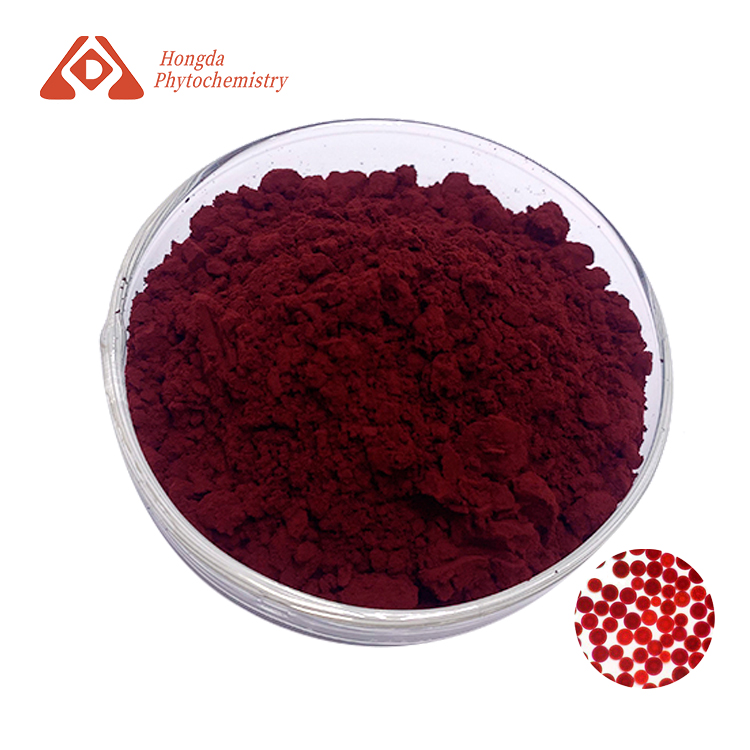
This difference is especially crucial in a comparison of raw materials. Turmeric powder for culinary use and a standardized extract of curcumin are not the same thing. A normal turmeric powder will include a considerably smaller amount of curcuminoids; however, a standardized extract may be made to contain a certain amount of curcuminoids. For example, in the product description for Hongda, their Organic Turmeric Curcumin Powder is described as a Curcuma longa L. ingredient with 95% curcumin specification and HPLC testing.
For producers, the phrase “organic” must also be considered independently of potency. Organic certification applies to the relevant manufacturing and certification standards. It does not in itself prove that a substance has greater therapeutic effectiveness than a non-organic counterpart. Buyers consequently need to check both the organic certification status and the actual curcuminoid specification of the substance they are buying.
What Clinical Research Says About Inflammation and Joint Health?
Inflammation is one of the most studied topics of curcumin. Laboratory studies have studied the manner in which curcumin interacts with many molecular pathways involved in inflammatory signalling, whereas human studies have studied inflammatory biomarkers and symptoms in diverse groups. But mechanistic findings should not be seen as comparable to a proven clinical consequence.
A meta-analysis of randomised studies in 2024 concluded that curcumin supplementation could modulate inflammatory and oxidative markers, including C-reactive protein, with confidence of evidence ranging from result to outcome. This is a more meaningful interpretation than just saying curcumin is an "anti-inflammatory ingredient". There are human clinical trials to examine, but the outcomes depend on what is being assessed and what formulation is being given.
Evidence for Joint Comfort and Mobility
One of the most economically viable uses is joint health, since a number of clinical trials have investigated supplementation with turmeric or curcumin in persons with osteoarthritis-related symptoms. The NCCIH states that several meta-analyses have indicated preliminary positive evidence for outcomes such as knee pain, stiffness, joint function, and mobility, but it emphasises the need for higher-quality research.
These findings may help supplement makers’ research on joint-health formulas but should not be turned into an unsubstantiated medical claim. Clinical evidence is associated with certain research designs and products, and hence a completed product should only be able to make claims that are suitable for its formulation, target market and regulatory constraints.
This is also why ingredient standardisation is important. If two raw materials, such as Organic Turmeric Curcumin Powder, have considerably differing quantities of curcuminoids, one cannot presume that they provide similar levels of the chemicals assessed in a clinical study. Thus, the buyer, while evaluating providers, should not only look at the product name but also check the actual assay technique, specification and batch paperwork.
Antioxidant Activity and Oxidative-Stress Research
Curcumin is also intensively studied for its link with oxidative stress. Its chemical structure enables it to react with reactive chemicals. The effects of the polyphenol on endogenous antioxidant systems and on signalling pathways connected to cellular stress have also been studied.
Human clinical research shows some evidence for alterations in oxidative-stress-related indicators. The big 2024 meta-analysis discovered outcomes including antioxidant measures such as glutathione and superoxide dismutase, but the confidence of evidence was not equally great for each endpoint.
That’s why it’s more correct to say curcumin is a botanical substance that’s being examined for its antioxidant and oxidative-stress support properties, rather than outright saying it “protects cells from damage". The latter formulation might suggest a level of clinical confidence that is not always supported by the data available.

Why Mechanistic Evidence Should Be Used Carefully?
There are a great number of human clinical trials and cell and animal investigations of curcumin research. These studies are valuable for understanding plausible biological pathways, but outcomes shown in lab settings may not immediately transfer into demonstrable advantages in people.
This difference is particularly important as it pertains to generating marketing material. A mechanism including cytokines, transcription factors, antioxidant enzymes or cellular signalling might explain researchers’ interest in curcumin, but this should not be portrayed as clear confirmation of a health effect. A distancing mechanism from clinical proof makes technical information more credible and less prone to overclaiming the ingredient’s advantages.
Metabolic Health: What Human Studies Have Found?
Curcumin has also been investigated in connection to glucose metabolism, lipid profile, body weight and other metabolic indicators. Evidence is positive in certain areas but varied because of various dosages, formulations, people, and intervention durations employed in research.
Several metabolic outcomes showed statistically significant benefits in the 2024 comprehensive analysis of 103 randomised clinical trials, with particularly strong evidence among the endpoints investigated for fasting blood glucose and HDL. Other outcomes (e.g., insulin resistance-related measurements, numerous lipid or body-composition markers) had moderate, low or very low confidence according to the particular endpoint.
This variant is key for B2B product development. A supplier should not be allowed to use a single favourable clinical outcome to argue that a curcumin component improves metabolic health in general. Instead, producers may use the body of research to develop viable formulation approaches while preserving adequate limitations around product claims.
Cardiovascular Research Requires the Same Evidence-Based Approach
Curcumin, including Organic Turmeric Curcumin Powder, has been explored in connection to vascular and cardiometabolic parameters, including inflammatory state, oxidative stress and lipid indicators. There are perhaps beneficial changes noted in certain trials; however, there is not enough evidence to consider common curcumin as a therapy for cardiovascular disease.
Research on cardiovascular disease is thus best seen, for commercial products, as part of the science that underlies the continuous development of ingredients, not as a foundation for disease-prevention claims. Prior to the development of any claim, the formulation, target population, regulatory jurisdiction and available clinical data should all be evaluated.
What Is Known About Cognitive and Neurological Outcomes?
Research on the possible advantages of curcumin for cognitive health is accumulating, especially since inflammation and oxidative stress have been associated with brain ageing. Human experiments have explored memory and other cognitive outcomes, although findings have been inconsistent at times.
In an updated meta-analysis in 2026, there were nine RCTs with 501 participants. The pooled analysis reported an improvement in global cognitive function, with more robust effects in some subgroups, such as studies of at least 24 weeks' duration and ages 60 or older. But a comprehensive review and meta-analysis of 10 human trials with 531 participants published in 2026 revealed no substantial overall impact on global cognition, but it identified increases in certain areas such as working memory and processing speed.
The contrast between these analyses shows why cognitive assertions must be made with special care. While existing data supports further investigation into cognitive-health formulations based on curcumin, there is no evidence to support a universal benefit to cognition from all curcumin products.

Why Bioavailability Can Change the Interpretation of Clinical Evidence?
Oral bioavailability is one of the most significant technical challenges in curcumin formulation. Oral administration of native curcumin is limited by low water solubility and substantial metabolism, which may affect systemic exposure. To address this, the researchers have devised a number of delivery techniques to enhance the absorption and exposure.
The literature studied techniques including piperine, phospholipid complexes, micelles, emulsions, nanoparticles, and liposomal systems. But these techniques are not equivalent. Greater measured exposure from a formulation does not equate to increased clinical effectiveness, and bioavailability data from one branded formulation cannot be transferred to a different raw material.
Choosing Between Conventional and Enhanced Curcumin Ingredients
The best decision for a B2B buyer is not a headline bioavailability statistic but the intended product. A standard extract may be acceptable if the formulation is based on a high curcuminoid content, and a specific delivery mechanism may be explored if the end product needs a more dispersible or absorbable product.
Recent pharmacokinetic studies further support the need to exercise care in the comparison of bioavailability claims. A 2026 independent research study that examined numerous curcumin formulations revealed significant variability across products and questioned whether exposure values frequently reported always correlate to clinically relevant doses of unconjugated curcumin.
This implies that manufacturers should ideally see identifiable human pharmacokinetic evidence to back up a supplier’s bioavailability claim, rather than a broad statement like “100 times more bioavailable.”
Safety Considerations for Product Developers
Curcumin and turmeric have been researched extensively overall, but “natural” doesn’t imply that every formulation is right for every user. For those considering Organic Turmeric Curcumin Powder, the specific formulation and intended use should still be evaluated carefully. NCCIH states that at the levels studied for short-term use, taking turmeric by mouth on a regular basis is likely safe for most individuals. Possible side effects that may occur include nausea, reflux, upset stomach, diarrhea, and constipation.
Products with enhanced bioavailability warrant further consideration. NCCIH says that certain formulations of turmeric or curcumin that are highly bioavailable have been linked to liver damage. This does not mean that all enhanced formulations are harmful, but it does indicate that producers need to assess the individual chemical, dose, formulation technique, and safety data, rather than just assuming that increased absorption is inevitably better.
Interactions with drugs and usage in pregnancy also need to be properly considered from a professional and regulatory point of view. Therefore, finished-product producers should provide relevant instructions for use and warnings depending on the intended market and formulation, rather than generic ingredient descriptions.
How Raw Material Quality Supports Consistent Formulation?
Clinical evidence is only one part of successful product development. Once a manufacturer decides to investigate organic turmeric curcumin powder, raw-material consistency becomes equally important because changes in composition can affect the reproducibility of the finished product.
Standardization is a central quality parameter. If the intended specification is 95% curcuminoids, the supplier should be able to demonstrate the assay using a recognized analytical method such as HPLC. Hongda's published product specification identifies 95% curcumin and HPLC testing, together with parameters covering physical characteristics, heavy metals, and microbiological quality.
A strong quality-control program should also consider pesticide residues, heavy metals, microbial contamination, moisture, particle characteristics, and storage stability according to the product's intended use and applicable regulatory requirements. Batch-specific documentation is particularly useful because a single historical test report does not demonstrate that every future lot will have the same characteristics.
Organic Certification Should Be Verified at the Material Level
For buyers sourcing an organic ingredient, certification should be treated as a procurement requirement rather than simply a marketing phrase. The supplier should be able to provide the applicable certificate and clarify its scope, validity, and relationship to the supplied material.
Hongda's certification information lists EU Organic and NOP. Organic certifications are among its certification portfolio, while its 2026 company update states that it completed the 2026 review process for renewal of its EU and NOP organic certifications. Buyers should nevertheless request the current documentation relevant to their specific order and destination market before making a purchasing decision.
What Manufacturers Should Evaluate Before Buying?
For B2B buyers, a reliable purchasing decision should connect clinical relevance with technical specifications. The first question is whether the material is actually the type of ingredient used in the evidence being reviewed. A standardized curcumin extract, whole turmeric powder, and a bioavailability-enhanced curcumin system may have very different characteristics.
The next consideration is assay consistency. Buyers should request the specification, analytical method, representative or batch-specific COA, and relevant contaminant testing. If the product is marketed as organic, current certification documents should also be reviewed rather than relying solely on a supplier's website statement.
Formulation compatibility is another practical issue. Curcumin's low water solubility can influence dispersion, processing, dosage form, and finished-product stability. If a manufacturer plans to combine curcumin with piperine or another delivery technology, the complete formulation should be evaluated for stability, safety, regulatory suitability, and intended consumer use.
Finally, supplier responsiveness matters. Technical data, traceability information, documentation, packaging requirements, sample availability, and production consistency can affect whether an ingredient performs reliably at a commercial scale. Hongda's published Organic Turmeric Curcumin Powder information includes a 25 kg drum packaging option and HPLC-based specification information, giving buyers a starting point for technical discussions.
Where Organic Turmeric Curcumin Powder Fits in Modern Formulations?
Based on the current clinical literature, turmeric-derived curcumin is most relevant to formulation concepts involving joint comfort, inflammatory balance, antioxidant support, metabolic health, and selected areas of cognitive research. These applications should be approached as evidence-informed product-development opportunities rather than as proof that the ingredient can prevent or treat disease.
The strongest commercial opportunity often comes from matching the ingredient's specification to a clearly defined formulation objective. For example, a manufacturer developing a joint-health supplement may prioritize standardized curcuminoid content and evidence from osteoarthritis-related clinical research. Another manufacturer may focus more heavily on dispersibility or bioavailability if the finished dosage form requires those characteristics.
This approach also makes the product story more credible. Instead of relying on broad statements about “powerful anti-inflammatory effects,” manufacturers can explain what has been studied, identify the limitations of the evidence, and show how their selected raw material is controlled through analytical testing and documentation.
Conclusion
Organic turmeric curcumin powder has a substantial body of human research behind it, particularly in areas related to inflammation, joint health, oxidative stress, metabolic markers, and cognitive function. However, the evidence is not uniform, and clinical outcomes cannot be separated from the characteristics of the curcumin preparation being studied. Large systematic reviews indicate potentially meaningful effects for several outcomes, while also showing that evidence certainty varies considerably between endpoints.
For manufacturers and ingredient buyers, the practical lesson is to evaluate curcumin from both a scientific and a raw-material perspective. The botanical identity, curcuminoid standardization, analytical testing, organic certification, contaminant controls, bioavailability strategy, and batch consistency all contribute to the suitability of an ingredient for commercial formulation.
A supplier such as Hongda Phytochemistry can therefore add value not simply by providing organic turmeric curcumin powder but by giving buyers the technical documentation needed to understand what they are purchasing. When clinical evidence is interpreted conservatively and combined with transparent quality information, manufacturers have a stronger basis for developing responsible, consistent, and market-ready turmeric curcumin formulations.
Contact our team today at duke@hongdaherb.com to discuss your organic turmeric curcumin powder requirements and discover how our technical expertise can support your product development goals.
References
1. Hewlings SJ, Kalman DS. Curcumin: A Review of Its Effects on Human Health. Foods. 2017;6(10):92.
2. Sharifi-Rad J, Rayess YE, Rizk AA, et al. Turmeric and Its Major Compound Curcumin on Health: Bioactive Effects and Safety Profiles for Food, Pharmaceutical, Biotechnological, and Medicinal Applications. Frontiers in Pharmacology. 2020;11:01021.
3. Peng Y, Ao M, Dong B, et al. Anti-Inflammatory Effects of Curcumin in the Inflammatory Diseases: Status, Limitations, and Countermeasures. Drug Design, Development, and Therapy. 2021;15:4503-4525.
4. Ng QX, Koh SSH, Chan HW, Ho CYX. Clinical Use of Curcumin in Depression: A Meta-Analysis. Journal of the American Medical Directors Association. 2017;18(6):503-508.