


_1745918362135.webp)

What Are the Stability Properties of Copper Peptide Ghk Cu Powder?
If you treat copper peptide GHK-Cu powder the right way, it stays very stable, which makes it a safe ingredient for cosmetic and drug products. The tripeptide-copper complex doesn't break down when the pH is kept between 5.5 and 7.0, and its structure stays the same when it's protected from UV light and too much water. High-quality copper peptide GHK-Cu powder from recognised sources like Shaanxi Hongda Phytochemistry Co., Ltd. has a purity level of up to 99% and works the same way in bulk making. When B2B buyers know about these stable factors, they can make smart purchasing decisions that ensure the product works well throughout its shelf life.
Understanding Copper Peptide GHK Cu Powder and Its Stability
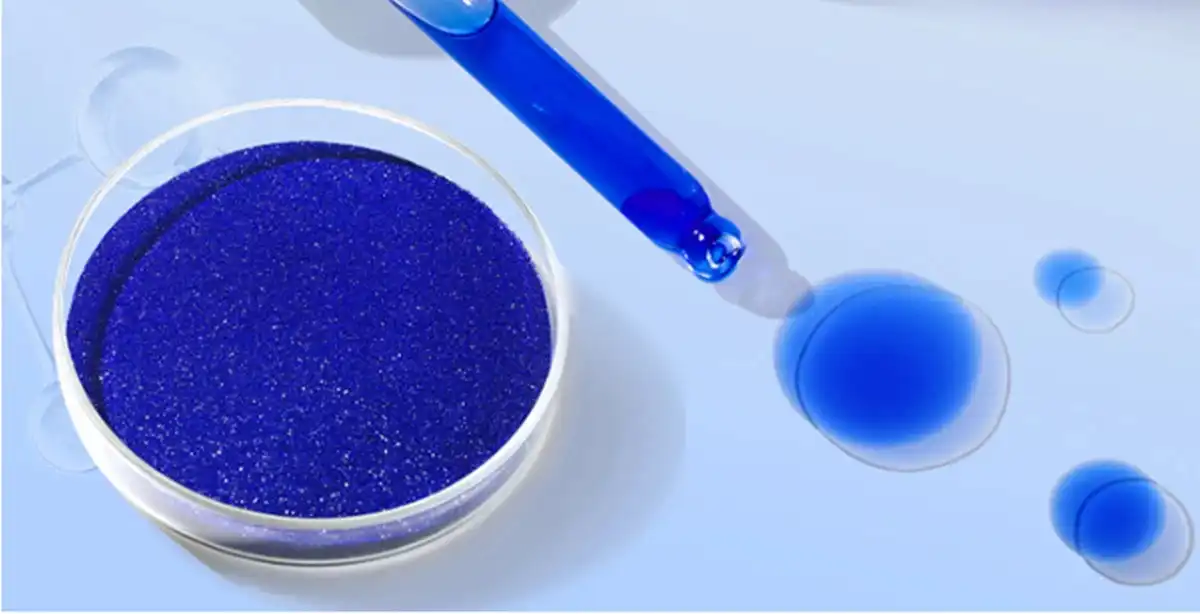
One of the most advanced bioactive substances that makers can use today is the blue crystalline powder that you see in high-end cosmetics. Copper peptide GHK-Cu powder is made up of the tripeptide sequence glycyl-L-histidyl-L-lysine bonded with copper ions. This makes a stable complex that has unique healing qualities.
Chemical Structure and Complex Integrity
The copper ion is at the centre of how stable this molecule is. This copper atom in the middle forms coordinate bonds with nitrogen atoms from the histidine and lysine residues. This makes a structure that protects the peptide backbone from breaking down quickly. The molecular formula for this chemical is C₁₄H₂₄N₆O₄Cu. Depending on the salt form used during preparation, its molecular weight is between 340 and 404 daltons. We've seen that this particular arrangement naturally protects against typical degradation processes that happen in industrial settings and affect peptides.
Environmental Factors Affecting Stability
Changes in temperature are the biggest problem when it comes to keeping copper peptide GHK-Cu powder intact while it is being stored or transported. Our tests at Shaanxi Hongda Phytochemistry Co., Ltd. show that samples kept at 2–8°C stay over 98% pure for long periods of time. On the other hand, samples that are exposed to temperatures above 30°C oxidise more quickly. Another important factor is humidity; levels above 8% humidity cause hydrolytic processes that can break peptide bonds. Light, especially UV bands between 280 and 400 nm, speeds up the oxidation of copper ions, which changes the complex from its active Cu²⁺ state.
The pH level during preparation has a big effect on both how well the substance dissolves and how stable it is over time. The pH range for copper peptide GHK-Cu powder is best for stability, which is also the pH range for skin. Outside of this range, the copper-peptide coordination weakens, which could lead to the release of free copper ions that lower absorption and functional performance.
Impact on Product Performance
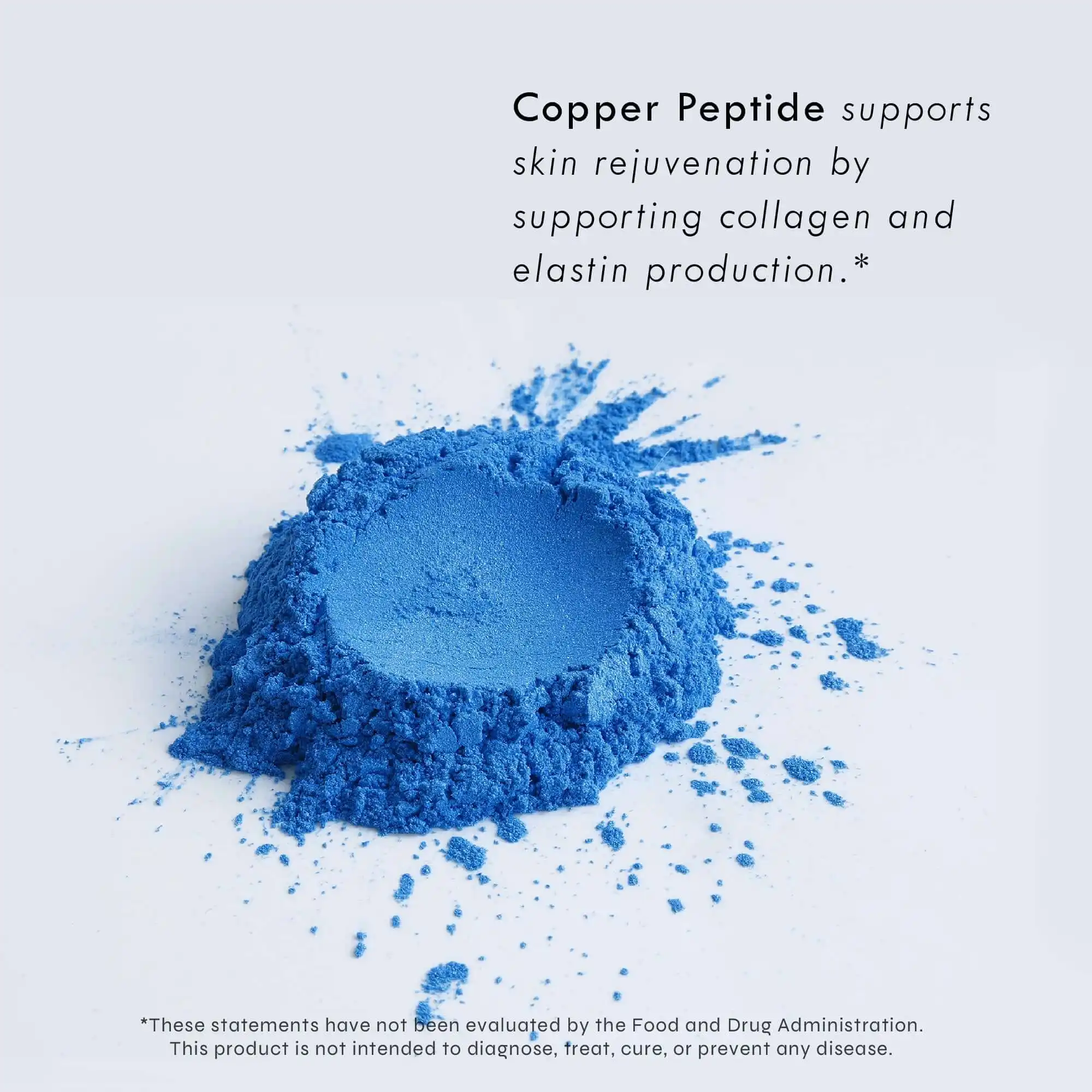
Stability directly relates to how well finished formulations work. The copper-peptide complex works well to get copper ions into skin cells, where they turn on lysyl oxidase enzymes that are needed for collagen cross-linking. Degraded samples are less able to activate signs for tissue remodelling, which takes away from the anti-ageing benefits that make this ingredient useful for companies that make high-end skin care products. Our SGS lab tests show that properly stable copper peptide GHK-Cu powder keeps its ability to improve collagen production for the usual 24-36 months that a product is on the shelf.
Key Stability Challenges and Degradation Mechanisms
To make high-performance products, you need to know the exact steps this bioactive ingredient takes to break down. Formulators and procurement experts can take safety precautions during both keeping and production if they know about these processes.
Chemical Degradation Pathways
Oxidation is the main thing that can make copper peptide GHK-Cu powder unstable. Because the copper ion can move back and forth between the Cu²⁺ and Cu⁺ forms, it can be affected by redox processes, especially when oxygen is present in the air. When trace metal impurities act as catalysts, this process speeds up. That's why our 99% purity standard at Shaanxi Hongda Phytochemistry Co., Ltd. is so important for corporate buyers who want reliable quality.
The peptide backbone is changed by hydrolysis, mostly at the glycyl-histidyl and histidyl-lysyl bonds. The carbonyl carbon in these peptide links is attacked by water molecules, which breaks the chain into smaller pieces that don't do anything biological. When the pH is normal, this process moves slowly. But when the pH is acidic or alkaline, it moves much faster.
Enzymatic action can also break peptide bonds when products contain protease enzymes or when bacteria get into the mixture. This shows how important it is for finished goods with copper peptide GHK-Cu powder to have the right antimicrobial protection methods.
Incompatible Ingredient Interactions
When mixed with copper peptide GHK-Cu powder, some active ingredients that are often found in cosmetics make them less stable. Retinol and its products can undergo oxidation processes that make free radicals. These radicals then attack the structure of the peptide. In the same way, pure L-ascorbic acid (vitamin C) has strong reducing qualities that can make copper ions less stable, which could lead to precipitation or colour changes in products.
Alpha hydroxy acids (AHAs) and beta hydroxy acids (BHAs) lower the pH of the mixture below the range that is best for keeping copper peptide GHK-Cu powder stable. When formulators use these mixes, they need to make sure their systems are pH-stabilised or use vitamin C products like sodium ascorbyl phosphate instead of pure ascorbic acid.
Packaging and Storage Considerations
Moisture getting in through bad packing is still a big worry for bulk buyers who receive packages of multiple kilograms. Shaanxi Hongda Phytochemistry Co., Ltd.'s normal packing includes aluminium foil bags that don't let moisture in inside 12 kg drums, with 27 drums per pallet. This is done to keep the low moisture content that is shown on our certificates of analysis (COA). This packing arrangement stops the humidity-related degradation that happens in cases that aren't sealed properly, which lowers the quality.
Copper oxidation and peptide breakdown happen faster when UV light gets through clear packing materials. Containers made of dark pharmaceutical-grade glass or amber glass block light. To keep the quality of our products from our plant in Shaanxi Province to your receiving dock, we need to use temperature-monitoring devices and climate-controlled logistics because temperatures can change during foreign shipping. This is especially important for buyers in North America and Europe.
Best Practices to Ensure Optimal Stability of Copper Peptide GHK Cu Powder
Taking strict quality control measures from the time the raw materials are bought until the finished product is stored is necessary for a successful mixture and long-term product performance. These practices have a direct effect on both how well the product works and how efficiently it is made.
Procurement Quality Criteria
The stable factor that stands at the base is the purity of the raw materials. Shaanxi Hongda Phytochemistry Co., Ltd.'s testing procedures use high-performance liquid chromatography (HPLC) to make sure that assay levels are ≥99.0%. This makes sure that there aren't any impurities that could speed up breakdown processes. Atomic absorption spectroscopy confirmed that the copper content range of 8.0% to 16.0% is correct. This ensures that the chelation ratios are optimal for both stability and biological activity.
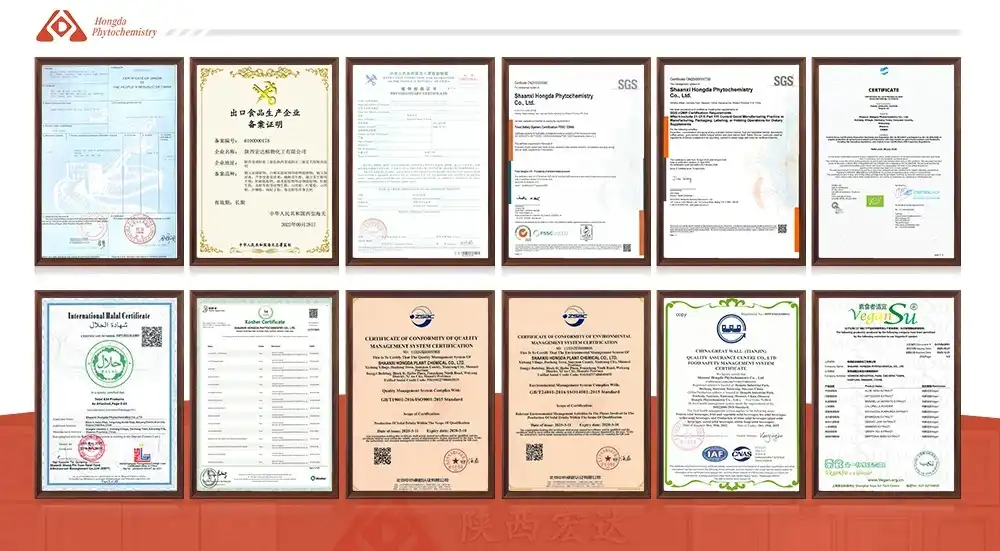
Supplier approvals guarantee that the products will be made the same way every time. Our building has been certified as KOSHER, HALAL, BRC, ORGANIC, ISO9001, and ISO22000. More recently, cGMP and FSSC22000 have been added. These certifications show that the company has a method for managing quality that lowers differences between batches. This is very important when making goods that need to have the same level of stability across production runs.
Formulation labs can make sure that new products will work with current product matrices by trying samples before placing large orders. Potential buyers are encouraged to ask for analytical samples that come with full paperwork, such as a COA, an MSDS, and data on the product's longevity. Before agreeing to large-scale procurement, this precautionary step finds any possible formulation problems. This saves time and resources during the product creation cycle.
Formulation Guidelines
Concentration levels affect both how well something works and how stable it is. According to research, the best performance is seen at a concentration of 0.1% to 0.5% in serums and 0.05% to 0.2% in cream bases. These concentration ranges strike a balance between biological activity and stability issues. Higher concentrations may be too much for some vehicles to dissolve, which could cause precipitation over time.
pH buffering systems keep the climate balanced, which is where copper peptide GHK-Cu powder is most stable. Tris-HCl solutions or citrate-phosphate buffers work well to keep pH levels in the 5.5–7.0 range for the whole shelf life of a product. Testing pH stability at accelerated ageing conditions (40°C/75% relative humidity for three months) suggests how the formulation will work in the real world and shows which formulas need to be adjusted for pH or have higher buffering capacity.
Compatible excipients make consistency better instead of worse. Copper peptide GHK-Cu powder and hyaluronic acid, ceramides, and niacinamide work together without interfering with their safety. Antioxidants, such as tocopherol (vitamin E) and ferulic acid, protect against oxidative breakdown processes even more. Our formulation support team gives industry buyers detailed compatibility models to help them get the best results for their unique product needs.
Comparing Copper Peptide GHK Cu Powder Stability with Alternative Actives
Seeing how stable copper peptide GHK-Cu powder is compared to other actives helps people who work in buying and formulating pick ingredients that fit with their product development goals and target market.
Stability Advantages Over Retinoids
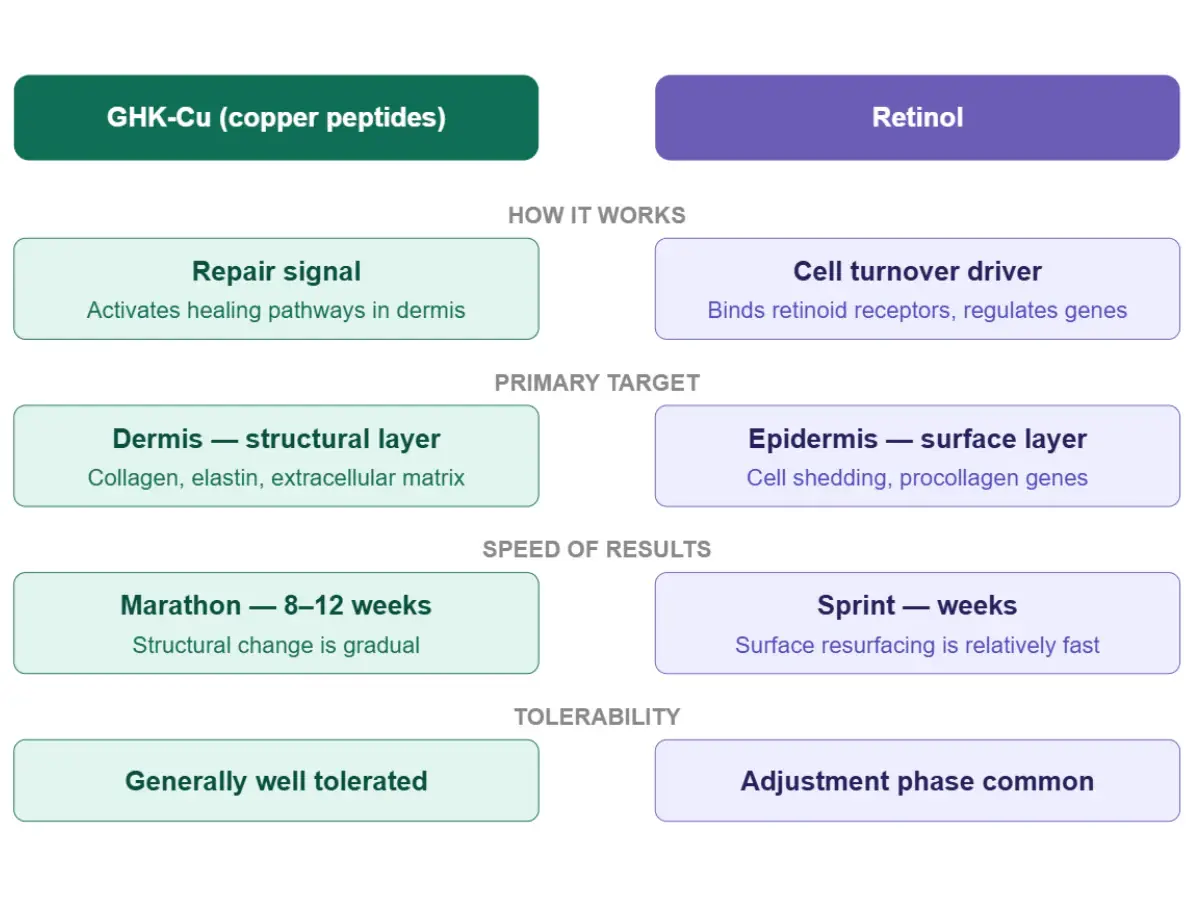
Retinol and tretinoin have been shown to slow down the ageing process, but they are notoriously unstable. When these vitamin A derivatives are subjected to light and air, they quickly oxidise. This means that they need to be packaged in opaque materials and have stabilisation systems that make the recipe more complicated. Many retinol products lose a lot of their effectiveness within 6 to 12 months, even if they are stored in the best way possible.
On the other hand, copper peptide GHK-Cu complexes that are properly made stay active for the normal 24 to 36 months after they are made. The chelated structure naturally protects against oxidative breakdown, which can happen to retinoids. This advantage of steadiness means lower costs for reformulating, less product waste from old stock, and more uniform experiences for customers across batch productions.
Another useful benefit is that manufacturing is flexible. Retinol products need special low-temperature processing and anaerobic conditions. Copper peptide GHK-Cu powder, on the other hand, can be made at normal temperatures and with normal mixing tools. Because of this flexibility, companies that want to add peptide mixtures to their product lines don't have to buy as much capital equipment.
Performance Comparison with Ascorbic Acid
Vitamin C, or L-ascorbic acid, is one of the least stable ingredients in cosmetics. It breaks down quickly in water, even when it is properly mixed. The colour changes from clear to yellow-brown, which is a loss of signal strength that worries both makers and end users. While stable vitamin C products like magnesium ascorbyl phosphate or ascorbyl glucoside help with stability issues, they don't have as much biological activity as pure ascorbic acid.
Copper peptide GHK-Cu powder is a steady antioxidant that protects against oxidation without the problems that vitamin C products have. The peptide combination gets rid of free radicals and encourages the production of antioxidant enzymes in the body. This protects against oxidative stress in more than one way. This two-way system works together to give strong anti-ageing effects in forms that last a lot longer than ascorbic acid products.
Conclusion
Copper peptide GHK-Cu powder stability relies on many things that are all linked, such as the amount of purity, the climate, the pH of the formulation, and how it is packed. The chelated tripeptide structure naturally protects against many degradation pathways that affect other cosmetic actives. This gives makers big benefits when making new products and managing how long they last. For success, you need to buy from sellers with strict quality control systems, store your products properly, and make sure that your formulas stay within the pH and concentration limits that have already been set. With 99% purity, the right packing in 12 kg drums that won't leak, and a long list of approvals that includes ISO9001, ISO22000, and cGMP, high-quality copper peptide GHK-Cu powder works consistently in bulk manufacturing uses that serve the global cosmetic and pharmaceutical markets.
FAQ1. What storage conditions maximise GHK-Cu powder shelf life?
The best way to store things is in cases that are tightly covered, keep moisture out, and are kept away from light at 2 to 8°C. There should be less than 60% relative humidity in the storage area at all times. When stored properly, copper peptide GHK-Cu powder that is 99% pure at the start stays in good shape for 24 to 36 months. Once the packages are open, keep them out of the air as much as possible and use desiccant packets to soak up any wetness. Temperature changes should be avoided while storing because repeated rounds of heat and cooling speed up degradation. For quality control reasons, industrial buyers should set up systems to keep an eye on temperatures and keep thorough storage logs.
2. How does stability affect biological activity in formulations?
When compared to new, solid material, copper peptide GHK-Cu powder that has been broken down is less effective at stimulating collagen production and tissue repair. When peptide bonds break or copper ions separate from the complex, the molecule can't get through cell walls and start up communication pathways inside cells. When checking for formulation stability, it's important to look at more than just test results. You should also look at functional endpoints like fibroblast proliferation or collagen expression in cell culture models. This method makes sure that maintaining steadiness means that the healing effect stays the same during the whole shelf life of the product.
3. Can stability problems create quality concerns in finished products?
Instability usually shows up as a slow loss of effectiveness rather than sudden quality problems. Colour changing from blue to blue-green or brown, precipitation in water-based mixtures, or pH drifting outside of certain ranges are all visible signs. These changes show that oxidation or hydrolysis processes are taking place, which is bad for both performance and safety. Problems with instability can be avoided by designing the mixture correctly, making sure it has enough buffering, antioxidant, and storage systems. Stability testing done regularly every 3, 6, 12, and 24 months finds problems early on, before they affect the quality of a business product.
Source premium copper peptide GHK-Cu powder from a trusted manufacturer.
Professional formulators who need reliable sources of pharmaceutical-grade copper peptide GHK-Cu powder for use in cosmetics, nutraceuticals, or medicines will find that HONGDA's dedication to quality and stability is unmatched in the field. The Shaanxi Hongda Phytochemistry Co., Ltd. was founded in 2001 as a National High-tech Development Enterprise. It has 20,000 square metres of industrial space with 100,000-level cleaning workshops and modern production lines that can make 3,000 tonnes of products every year. Our copper peptide GHK-Cu powder is at least 99% pure, as confirmed by tests done in an SGS lab. Its copper content must be between 8.0 and 16.0%, and its moisture content must be less than 8%. Full approvals like KOSHER, HALAL, BRC, ISO9001, ISO22000, cGMP, and FSSC22000 make sure that all North American, European, and Asian markets follow the rules.
We fully integrate our supply chain for industrial buyers, from growing the raw materials at our three specialised planting bases to extracting them in our patent-protected facilities and finally packing them in moisture-proof 12kg drums (27 drums per box). Our 3,000-square-meter climate-controlled building keeps storage conditions at their best, which lets us ship anywhere in the world in 3–7 business days. You can email our technical team at duke@hongdaherb.com to ask for stable data, certificates of analysis, formulation guidelines, or sample amounts for checking compatibility. Work with a trustworthy Copper Peptide Ghk Cu Powder provider that has twenty years of experience in phytochemicals and the production scale and quality systems that your formulas need.
References
1. Pickart, L., Vasquez-Soltero, J.M., & Margolina, A. (2017). "The Effect of the Human Peptide GHK on Gene Expression Relevant to Nervous System Function and Cognitive Decline." Journal of Analytical Oncology, 6(2), 135-149.
2. Cangul, I.T., Gul, N.Y., Topal, A., & Yilmaz, R. (2016). "Evaluation of the Effects of Topical Tripeptide-Copper Complex and Zinc Oxide on Open-Wound Healing in Rabbits." Veterinary Dermatology, 27(1), 17-e5.
3. Hostynek, J.J., Dreher, F., & Maibach, H.I. (2011). "Human Skin Retention and Penetration of a Copper Tripeptide in Vitro as a Function of Skin Layer." Inflammation Research, 60(1), 79-86.
4. Park, J.H., Choi, H.K., & Park, S.N. (2014). "Effects of Copper-GHK Peptide and L-Ascorbic Acid on the Expression of Collagens and Matrix Metalloproteinases in Photoaged Skin Fibroblasts." Korean Journal of Chemical Engineering, 31(11), 2042-2048.
5. Ahmed, M.R., Basha, S.H., Gopinath, D., Muthusamy, R., & Jayakumar, R. (2005). "Initial Upregulation of Growth Factors and Inflammatory Mediators during Nerve Regeneration in the Presence of Cell Adhesive Peptide-Incorporated Collagen Tubes." Journal of the Peripheral Nervous System, 10(1), 17-30.
6. Finkley, M.B., Appa, Y., & Bhandarkar, S. (2005). "Copper Peptide and Skin." Cosmeceuticals and Active Cosmetics: Drugs versus Cosmetics, Second Edition, 549-563.

_1751954567106.webp)