


_1745918362135.webp)

What Are the Top OEM Strategies for Copper Peptide Ghk Cu Powder Manufacturing?
Successful OEM manufacturing of Copper Peptide Ghk Cu Powder requires more than obtaining a high-purity raw material. Shaanxi Hongda Phytochemistry Co., Ltd. is Hongda Phytochemistry. We are here to help B2B clients evaluate product specifications, quality documentation, packing, customisation and delivery. For firms creating copper peptide skincare products, an efficient OEM approach should combine material selection with formulation development, quality control, production planning and regulatory needs. The aim here is not merely to make a blue peptide powder but to build a repeatable supply method that matches the standards of the targeted product and market.
Build the OEM Project Around a Clear Product Specification
Define the Required API or Cosmetic Ingredient
The initial OEM approach is to have a defined technical specification before talking about commercial manufacturing. Buyers must specify the desired level of purity, chemical identity, appearance, moisture content, copper content, solubility, testing technique, packaging and storage requirements.
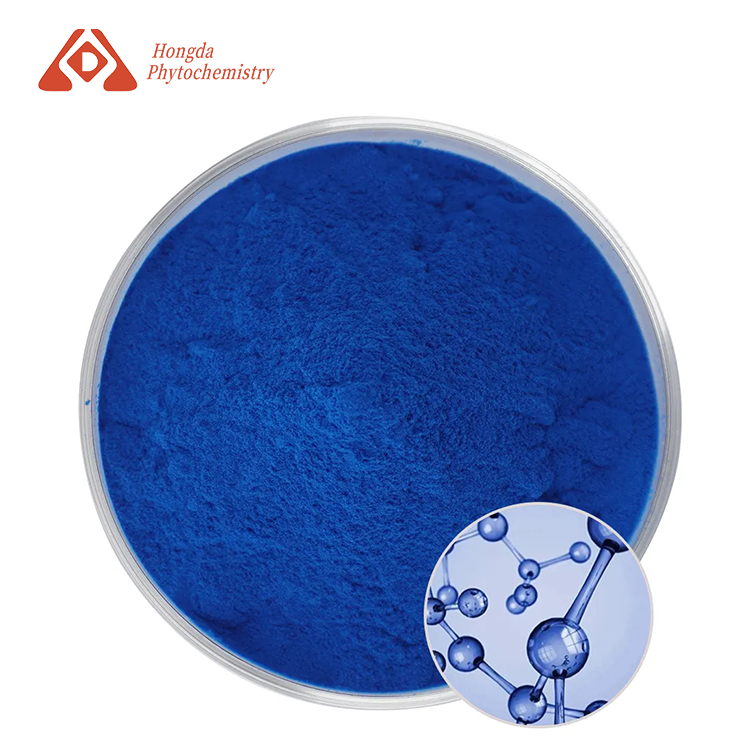
Hongda Copper Peptide GHK-Cu Powder CAS No. 49557-75-7 99% Specification Blue Powder. The normal package indicated is 12 kilograms per drum, with a delivery time of 3-7 working days. Before manufacturing starts, buyers should check the current specification and commercial terms for their particular order.
A thorough specification is a shared reference point for both parties. It also minimises the chance of buying a material that may theoretically fit a generic description but does not fulfil standards of the completed composition.
Separate Development Requirements From Commercial Requirements
It’s possible for an OEM project to evolve as it advances from lab testing to pilot production and finally commercial manufacture. A small research batch could need different packaging and quantities compared to a big production order.
Therefore, companies should decide early on which needs are non-negotiable and which may be altered throughout the development phase. This might include objectives for purity, package size, analytical documentation, labelling, and delivery timelines.
Clearly stating your requirements will make it easy to compare suppliers and prevent costly revisions once manufacturing is underway.

Use Quality Control as a Core OEM Strategy
Establish Batch-to-Batch Testing
When choosing a peptide ingredient, the consistency of quality is one of the most significant aspects. The supplier should have specified processes for each batch of raw material received, processed, tested, released, and documented.
Depending on the agreed specification, purchasers may test copper peptide GHK-Cu powder for criteria such as identification, assay or purity, copper content, moisture, appearance, pH of a prescribed solution, and water solubility.
You need to know what test panel you want before you buy. Buyers should check what analytical procedures are used and whether the findings shown on the Certificate of Analysis (COA) match the specification being bought.
Use Representative Samples Before Scale-Up
Sample certification is a good technique to decrease OEM risk. A brand may request a representative sample and test it in its own laboratory or from a competent third-party testing facility before committing to a major commercial order.
The assessment might include:
- Verify Your Identity
- Purity or assaying
- Moisture
- The copper content
- Solubility Appearance
- Microbiological parameters if applicable
- Compatibility with the proposed formulation
If the sample fulfills the stipulated standards, the same specification may be utilized as a reference for further commercial batches.
This gives a better baseline quality and decreases the uncertainty in scaling up.

Select an OEM Partner With Flexible Customization
Customize the Material to the Formulation
The handling properties of the ingredients vary from product to product. A water-based serum, cream, mask, or other cosmetic formulation might have varying solubility, concentration, pH, packaging, and stability needs.
Brands should not ask for modification without a clear purpose but should provide the provider with the intended use and formulation environment. The provider may then assess which standards are realistically amendable.
Hongda’s product information states that Copper Peptide Ghk Cu Powder is water-soluble and formulation-related information for cosmetic applications. But it is better to look at the ultimate use levels and compatibility as a thing to be ascertained by formulation testing, not as a universal direction.
Customize Packaging and Documentation
OEM customization involves more than just the powder. Packaging and paperwork may also influence how efficient a supply program is.
Buyers may require, depending on the project:
- Standard bulk packing
- Custom Label
- COA batch identification Product specification
- Safety documents
- Storage data
- Shipping papers.
- Technical files related to the market
Hongda presently specifies a common packaging configuration for this product at 12 kg/drum. Customers with varying needs should ensure packaging choices are available before purchase.
Build Formulation Support Into the OEM Process
Evaluate Compatibility Early
A typical error among OEM manufacturers is to finalize the raw material before evaluating how it performs in the completed recipe.
Ingredients of copper peptide may be added to water-based skincare systems; however, the compatibility of the formulation will rely on the overall formula. The pH, preservatives, additional active chemicals, manufacturing temperature, mixing conditions, and packaging all impact the final product.
That’s why a good development procedure involves testing the element in the final mix early on.
Conduct Stability Testing Before Commercial Launch
Stability testing should be performed to verify the completed mixture keeps within the specified physical and chemical parameters throughout storage.
For copper peptide products, development teams may monitor color, clarity, precipitation, pH, assay, and other relevant parameters for change. The test procedure should be representative of the packaging, storage circumstances, and the targeted market.
It is always preferable to discover a compatibility or stability problem during the creation of a pilot than after the commercial product is out.
Use a Controlled Scale-Up Strategy
Move From Laboratory Samples to Pilot Batches
From Laboratory Samples to Pilot Batches
A successful OEM project should not go from a tiny laboratory sample immediately to large commercial manufacturing.
A more realistic phased method is
- Specify the specification.
- Check the supplier sample.
- Test the substance in formulation.
- Make a pilot batch.
- Review analysis and stability outcomes.
- Validate Production Specification.
- Commence commercial production.
The pilot production gives the technical team the opportunity to detect issues with mixing, solubility, color, packaging, or process conditions before the order volume is big.
Maintain the Same Quality Standard During Commercial Production
Material specifications accepted should not alter on scale-up unless a documented justification exists. Procurement, quality, formulation, and manufacturing teams should all work to the same authorized specification.
The OEM supplier should inform the change prior to the change execution when it is required to alter. This may involve modifications to raw materials, manufacturing processes, analytical procedures, packaging, or sites of production.
Documentation of a change-control procedure helps ensure consistency across several orders.

Strengthen Regulatory and Documentation Management
Match Documents to the Target Market
The target market needs to be considered at the beginning of an OEM strategy. Cosmetic ingredient requirements are not always the same in different regions, so documentation created for one market does not necessarily meet the needs of another.
Brands should determine the target countries for Copper Peptide Ghk Cu Powder before requesting the complete documentation package. This provides the supplier and customer with knowledge of the certifications, specifications, safety documentation, testing reports, and ingredient information that could be necessary.
Currently, KOSHER, HALAL, BRC, ORGANIC, and ISO9001 and ISO22000 certifications are shown on Hongda’s product site. Buyers should examine the validity of certificates and scope and relevance to their individual project before relying on any certification for regulatory reasons.
Avoid Confusing Supplier Certifications With Product Approval
A supplier's quality accreditation does not inevitably guarantee that a final cosmetic product is accepted in every market.
The OEM manufacturer and brand owner remain responsible for ensuring that the completed formulation, labeling, safety assessment, claims, and market registration or notification fulfill relevant local regulations.
This difference is especially relevant when a product is sold with claims regarding skin restoration, anti-aging, wound healing, or other biological benefits. Cosmetic marketing claims should be validated and presented according to the regulations of the destination market.
Improve Supply Chain Planning
Align MOQ With Demand
MOQ is an important part of OEM cost management. Ordering too little can increase unit costs, while ordering too much can create unnecessary inventory and storage pressure.
Brands should estimate demand using realistic production estimates rather than placing the biggest possible order only to acquire a lower stated unit price.
A competent supplier should be able to clarify MOQ, available stock, production timing, and repeat-order needs effectively.
Plan Lead Time and Safety Stock
Hongda's current product information claims a delivery time of 3–7 working days. Actual lead time may vary on order amount, specification, stock condition, testing, packing, and shipping arrangements; therefore, buyers should check the timetable for each commercial purchase.
For items with regular demand, the right safety-stock strategy may also help decrease the risk of production disruptions.
It aims to balance the cost of holding inventory against the expense of late delivery of raw material.
Use Technical Communication as a Competitive Advantage
Create a Single Communication Channel
OEM initiatives bring together teams from procurement, formulation, quality control, regulatory affairs, manufacturing, and marketing.
Miscommunication between these parties may produce unneeded changes. A preferable method is to have one approved technical specification and one documented modification procedure.
Important choices should be documented rather than handled merely via casual messaging. This makes subsequent reorders easy and eliminates the likelihood of conflicting needs.
Review Supplier Performance Over Multiple Batches
However, one good batch does not mean that an OEM supplier can keep that level up over time.
Brands should analyze supplier performance on a variety of indicators:
- Batch Consistency
- Delivery performance
- Accuracy of documentation
- Response duration
- Handling complaints
- Change notice
- Consistency of packaging
- Reliability in ordering again
This offers a better idea of the supplier’s capabilities in the long run.
What Makes an Effective Copper Peptide OEM Partnership?
Combine Manufacturing With Technical Support
A good OEM partner should be more than just a manufacturing facility. Technical communication during formulation development may assist in identification of possible problems prior to commercial manufacture.
For Copper Peptide Ghk Cu Powder, this may include material parameters, solubility, handling, packing, analytical testing, and formulation compatibility.
But the final formulation is the responsibility of the brand and its formulation staff. Product-development testing suited to the product should confirm the supplier’s recommendations.
Build a Long-Term Supply Program
OEM collaborations provide long-term value when both sides adopt repeatable methods. Once the material standard, testing requirements, packaging, and ordering method are approved, subsequent orders may follow a set pipeline.
This may save repeated qualifying labor and help make procurement more predictable.
A reliable supply program may also make it simpler for expanding skincare firms to raise production volume without having to redesign their sourcing strategy altogether.
Why Can Hongda Phytochemistry Be Considered for OEM Sourcing?
Copper Peptide Ghk Cu Powder is offered by Shaanxi Hongda Phytochemistry Co., Ltd. to B2B buyers searching for wholesale cosmetic ingredient supply and technical details. 99% Specification Present Product Page Appearance Blue powder CAS No. 49557-75-7 Packaging 12 kg/drum Delivery time: 3-7 working days Many mentioned quality certifications.
The next stage for an OEM buyer is to determine the precise specification necessary for the project and to ask for the related technical documentation. Buyers may negotiate sample quantities, MOQ, packaging, analytical testing, target market documentation, and estimated production timetables.
This method enables the assessment of the supplier relationship on measurable criteria rather than marketing promises.
Conclusion
The OEM manufacturing landscape for Copper Peptide Ghk Cu Powder requires a combination of clear specifications, controlled quality processes, formulation testing, flexible packaging, regulatory documentation, and reliable supply planning. The most effective strategy is to treat OEM development as a staged process rather than simply outsourcing production.
For brands, the key steps are to define the material specification, qualify representative samples, test formulation compatibility, complete pilot production, establish quality standards, and confirm commercial logistics before full-scale manufacturing. A supplier such as Shaanxi Hongda Phytochemistry can then be evaluated according to its actual product specifications, documentation, production arrangements, and ability to support the project's requirements.
A structured OEM approach helps brands reduce avoidable development problems while creating a more predictable path from raw-material sourcing to finished skincare production.
FAQ
1. What minimum order quantities do you require for custom Copper Peptide Ghk Cu Powder?
We accommodate orders ranging from 10-gram samples to metric tons of production. Our flexible manufacturing approach allows small brands to test market acceptance while providing scalability for growing demand. Initial development batches typically start at 1 kg to support comprehensive testing and market validation.
2. How do you ensure consistent quality across different production batches?
Our quality control system employs multiple checkpoints throughout production. Every batch undergoes comprehensive testing, including purity analysis, copper content verification, moisture testing, and solubility validation. Our SGS-certified laboratory maintains strict protocols that ensure 99%+ purity levels consistently.
3. What regulatory documentation do you provide for international markets?
We provide complete documentation packages, including Certificates of Analysis, Material Safety Data Sheets, REACH compliance documentation, and market-specific certifications. Our regulatory expertise covers North America, Europe, Australia, and Southeast Asia markets with appropriate documentation for each region.
4. Can you help optimize formulations for specific skin care applications?
Our formulation team provides comprehensive technical support, including concentration recommendations, compatibility testing, and stability analysis. We offer specific guidance for serums (0.1-0.5%), creams (0.05-0.2%), and specialized applications. Our researchers work collaboratively to optimize bioavailability and efficacy.
Partner With Shaanxi Hongda Phytochemistry for Premium Copper Peptide Manufacturing
Shaanxi Hongda Phytochemistry stands ready to transform your Copper Peptide Ghk Cu Powder vision into market-ready products. Our proven track record spanning over two decades demonstrates unwavering commitment to manufacturing excellence and customer success. Whether you require custom formulations for skin regeneration products or specialized applications for hair growth treatments, our comprehensive OEM/ODM capabilities deliver results that exceed expectations. Our unique combination of advanced manufacturing technology, expert technical team, and flexible production capabilities makes us the ideal Copper Peptide Ghk Cu Powder supplier for ambitious brands. We understand that peptide skincare products require exceptional quality standards and provide the manufacturing expertise needed to achieve market leadership. Contact duke@hongdaherb.com today to discuss your specific requirements and discover how our customized solutions can accelerate your product development timeline. Our team stands ready to provide detailed proposals, technical specifications, and sample products that demonstrate our capabilities.
References
1. Chen, L., & Wang, K. (2023). "Advanced Manufacturing Techniques for Cosmetic Peptides: Quality Control and Optimization Strategies." Journal of Cosmetic Manufacturing, 45(3), 78-92.
2. Rodriguez, M., et al. (2022). "OEM Partnership Models in the Global Peptide Industry: Best Practices and Success Factors." International Journal of Contract Manufacturing, 18(7), 234-248.
3. Thompson, A., & Zhang, H. (2023). "Quality Assurance Protocols for Copper Peptide Production: Regulatory Compliance Across International Markets. "Cosmetic Science Quarterly, 31(4), 156-170.
4. Kumar, S., & Li, J. (2022). "Scalability Challenges in Peptide Manufacturing: From Laboratory to Commercial Production." Biotechnology Manufacturing Review, 29(2), 45-59.
5. Anderson, P., et al. (2023). "Innovation Strategies in Cosmetic Peptide Development: OEM and ODM Collaboration Models." Beauty Industry Manufacturing Journal, 12(6), 112-125.
6. Williams, R., & Chen, X. (2022). "Supply Chain Optimization for High-Value Cosmetic Ingredients: Case Studies in Peptide Manufacturing." Global Manufacturing Strategies, 38(9), 203-217.