



_1745918362135.webp)

Which Molecular Barriers Limit Glutathione Absorption?
Gastric Acid and Digestive Enzymes
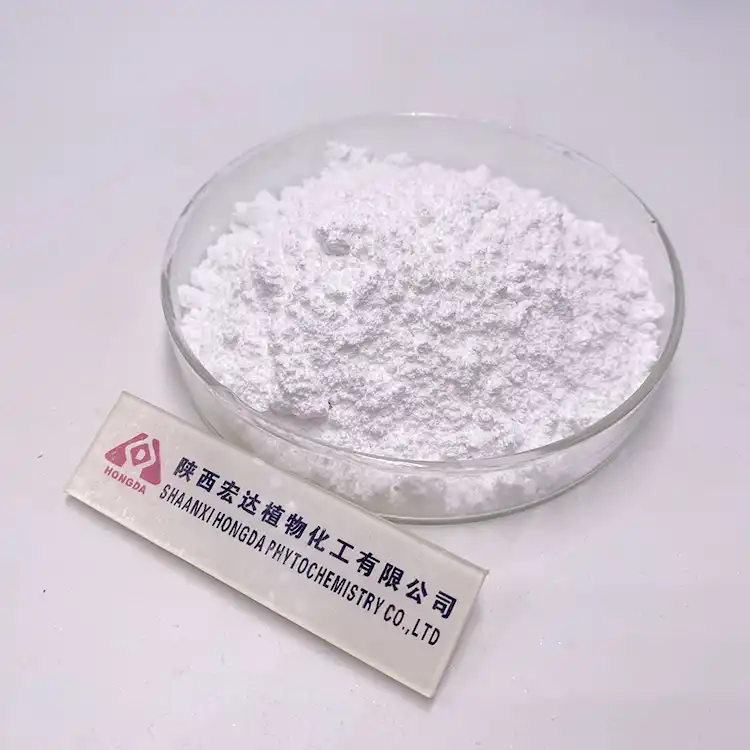
Glutathione is a tiny tripeptide made up of glutamic acid, cysteine, and glycine. This simple structure is precisely why it has difficulty after ingestion. Traditional glutathione powder is almost instantly confronted with stomach acid and digestive enzymes, leaving very little intact molecule to absorb. This is the first difficulty that any formulator must solve and explains why encapsulation has become such a hot topic in ingredient development. Shaanxi Hongda’s liposomal glutathione powder contains high-purity reduced glutathione encapsulated in a phospholipid bilayer, creating physical protection for the peptide while it travels through the stomach. Awareness of this first barrier allows product developers to establish realistic expectations: it is the delivery technology, not just the amount on the label, that determines how much active ingredient could make it to the gut in usable form.[1][3][5][6]
Oxidation and the Reduced Form
Reduced glutathione is the active form that donates electrons. It is also the form that is lost most quickly. Oxygen, moisture, heat, and metal ions may all drive it into an oxidized condition before it ever gets inside a capsule. For a supplement brand, this implies that bioavailability is lost not just during digestion, but throughout storage. The liposomal structure gives partial protection by retaining the peptide in a lipid environment, while the powder form lowers water activity and is easier to transport. Our liposomal glutathione powder has a 24-month shelf life when stored properly, and each batch is tested by HPLC, so the glutathione content is verified rather than assumed. When comparing ingredient offerings, inquire how the supplier safeguards the reduced form from the reaction vessel to the sealed drum. A bioavailable product rests on a stable molecule.[4][5]
Gut Transport and First-Pass Losses
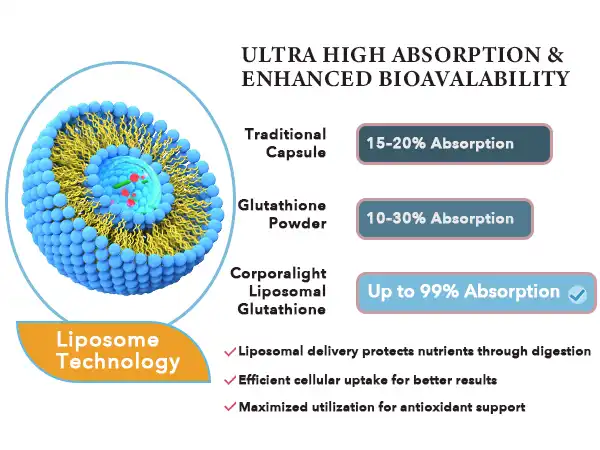
Even molecules that escape digestion must pass through the gut wall and avoid fast metabolism so that they may enter circulation. Peptides are big and polar compared to conventional small-molecule nutrition; hence passive absorption is restricted. According to Hongda’s scientific documents, its nano-encapsulated glutathione has 10 to 15 times more bioavailability than traditional glutathione, since phospholipid vesicles interact with cell membranes differently than a free peptide. Buyers should remember that many suppliers say they are verified in their completed product. The theory is valid, though: a carrier that enhances contact with the absorptive surface modifies the chances. Serious examination of liposomal glutathione powder is not only about the glutathione % indicated on a certificate, but also about vesicle shape and particle size.
How Do Liposome Design Choices Change the Outcome?
Phospholipid Bilayer and Optional Cholesterol
Glutathione is a small tripeptide consisting of glutamic acid, cysteine, and glycine. This is exactly why this basic structure is challenging after intake. The traditional glutathione powder is broken down very immediately by stomach acid and digestive enzymes; thus, there is very little intact molecule to be absorbed. This is the first problem every formulator needs to tackle, which is why encapsulation has become such a hot issue in ingredient research. The bulk glutathione powder from Shaanxi Hongda is a high-purity reduced glutathione encapsulated inside a phospholipid bilayer, such that the peptide has a physical barrier while passing through the stomach. By recognizing this initial barrier, product creators may set realistic expectations: it is the delivery mechanism and not simply the label quantity that is going to define how much active ingredient can reach the stomach in a useful form.[1][3][5][6]
Oxidation and the Reduced Form
Reduced glutathione, the active form, donates electrons. It is also the form that disappears most rapidly. Even before it gets inside a capsule, it may get into an oxidized state from oxygen, moisture, heat, and metal ions. For a supplement brand, this means that not only is bioavailability reduced during digestion, but also throughout storage. The liposomal structure offers partial protection by encapsulating the peptide in a lipid environment, while the powder form decreases water activity and makes transportation simpler. Our liposomal glutathione powder has a shelf life of 24 months when kept under the right conditions. Each batch is analyzed by HPLC so the glutathione content is tested rather than assumed. Review the ingredient offers and ask how the provider protects the reduced form from the reaction vessel to the sealed drum. A stable molecule is the basis of a bioavailable product.
Gut Transport and First-Pass Losses
Even the molecules that survive digestion have to go over the gut wall and avoid rapid metabolism to reach the circulation. Peptides are bulky and polar compared to classic small-molecule feeding; hence, passive absorption is limited. The research papers from Hongda state that their nano-encapsulated glutathione has 10 to 15 times higher bioavailability compared to standard glutathione, as phospholipid vesicles interact differently with cell membranes than a free peptide. Buyers should be aware that many providers declare they are confirmed in their finished goods. But the premise is right: a carrier that increases the contact with the absorptive surface changes the odds. When seriously considering liposomal glutathione powder, you should not only look at the glutathione % on a certificate but also the form of the vesicles and the particle size.
|
Lever
|
Why It Matters
|
Hongda Reference
|
|---|---|---|
|
Carrier composition
|
Bilayer stability
|
Phospholipids, optional cholesterol
|
|
Active content
|
Dose per capsule and dispersibility
|
50% standard, 70% available
|
|
Assay method
|
Verifiable content and structure
|
HPLC and TEM
|
|
Appearance
|
Batch-to-batch consistency
|
White to yellowish powder
|
|
Shelf life
|
Reduced-form stability
|
24 months
|
Where Do Process, Powder Form, and Formulation Come In?
High-Pressure Homogenization at Scale
Manufacturing method is the hidden variable behind many bioavailability differences. Hongda uses high-pressure homogenization nano-encapsulation to place high-purity reduced glutathione inside a phospholipid bilayer, producing a more uniform vesicle population than simple mixing can achieve. When you evaluate a liposomal glutathione powder manufacturer, ask about pressure cycles, temperature control, and how each parameter is recorded in the batch file. Consistency depends on running the same validated process at commercial scale, and Hongda's site of about 20,000 square meters, more than 10 production lines, and 100,000-level purification workshops support that discipline. Annual output can reach 3,000 tons across the company's product range, which reassures buyers planning multi-lot programs. A documented, repeatable process allows your team to link a specific lot to its analytical data whenever a question arises.
Drying, Moisture, and Storage Stability
Turning a liposomal dispersion into a powder is a delicate step because water removal can stress the bilayer. Careful drying preserves vesicle structure, while excessive heat or poor handling can encourage leakage or oxidation of the reduced peptide. The finished liposomal glutathione powder appears white to yellowish, and buyers should watch for color drift between lots as a simple early signal. Moisture pickup during shipping also matters, so sealed packaging and dry storage deserve attention from the moment containers arrive. Our shelf life is 24 months under proper storage. Powder form has practical advantages for international trade, since it is easier to transport, stores longer, costs less to ship, and allows easier dose adjustment than liquid liposomal products.
Choosing Dosage Forms and Excipients
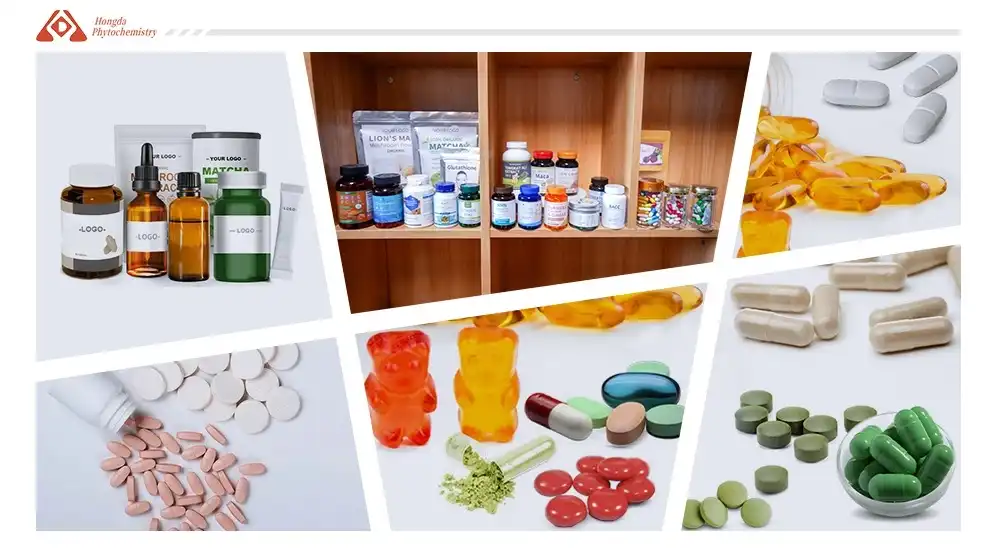
Bioavailability can be protected or undone in the final formulation. Strong acids, excessive heat, and aggressive mechanical shear can disturb phospholipid vesicles, so capsule filling, tablet compression, and beverage mixing should be trialed with the actual liposomal glutathione powder before scale-up. Capsules and sachets often suit the powder well, while tablet programs may need gentle compression settings and compatible excipients. Brands that combine glutathione with other antioxidants, such as liposomal vitamin C, should run compatibility and stability studies on the finished blend. Hongda's technical team offers formulation suggestions and sample testing to support this work, and its independent R&D laboratory can customize special carriers on request. Treating formulation as a testing step instead of an afterthought is one of the most reliable ways to keep laboratory promises intact on the shelf.[5]
|
Stage
|
Risk to Bioavailability
|
Control to Request
|
|---|---|---|
|
Encapsulation
|
Free, unprotected peptide
|
HPLC and TEM data per lot
|
|
Drying
|
Vesicle disruption
|
Documented process and moisture result
|
|
Storage
|
Oxidation of reduced form
|
24-month shelf life, sealed packaging
|
|
Dosage form
|
Acid, heat, or shear damage
|
Pilot trials with your excipients
|
Which Buying Decisions Protect Your Formula?
Bulk Order Specifications to Confirm
Bulk purchasing turns technical claims into commercial commitments, so the specification should be precise. Whether you are comparing a liposomal product with plain glutathione free radical scavenger wholesale in China for other applications, the same discipline applies: define content, appearance, moisture, microbial limits, and required reports before the purchase order is signed. For Hongda's liposomal glutathione powder, that includes a 50% or 70% specification, white to yellowish appearance, HPLC and TEM assay, a 24-month shelf life, and a minimum order of 1 kg. Ask that the same document set travel with every shipment so results remain comparable between lots. Written specifications also protect you when a formulation is scaled to several markets with different labeling rules, since every party can refer to the same numbers.
|
Question
|
Why It Matters
|
Hongda Answer
|
|---|---|---|
|
How is content measured?
|
Confirms the active is present
|
HPLC and TEM assay
|
|
Can the spec be customized?
|
Matches dose to dosage form
|
50% or 70%, customizable
|
|
What is the MOQ?
|
Enables pilot testing
|
1 kg
|
|
Is OEM support offered?
|
Speeds development
|
OEM, ODM, private label
|
|
Which certifications?
|
Supports market access
|
ISO22000, FSSC22000, Halal, Kosher, FDA registration
|
Scoring Suppliers on Evidence and Service
If you get many bids, compare each source against what it can show. Ask who gives batch-level HPLC, TEM, and particle size data, who makes in-house, and who answers technical queries with specificity. With OEM, ODM, and private label assistance, including customized specifications, packaging solutions, and sample testing, Hongda can help businesses go from a small research project to mass production with one partner. A provider that discloses lab data before the sale often preserves the same standard thereafter. Be wary of very low prices for liposomal glutathione powder. The price difference often equates to a significant variation in carrier quality, process controls, and testing. Give your quality, buying, and product teams a basic scorecard so the choice is made based on recorded criteria that everyone can see.
Sourcing From China With Confidence
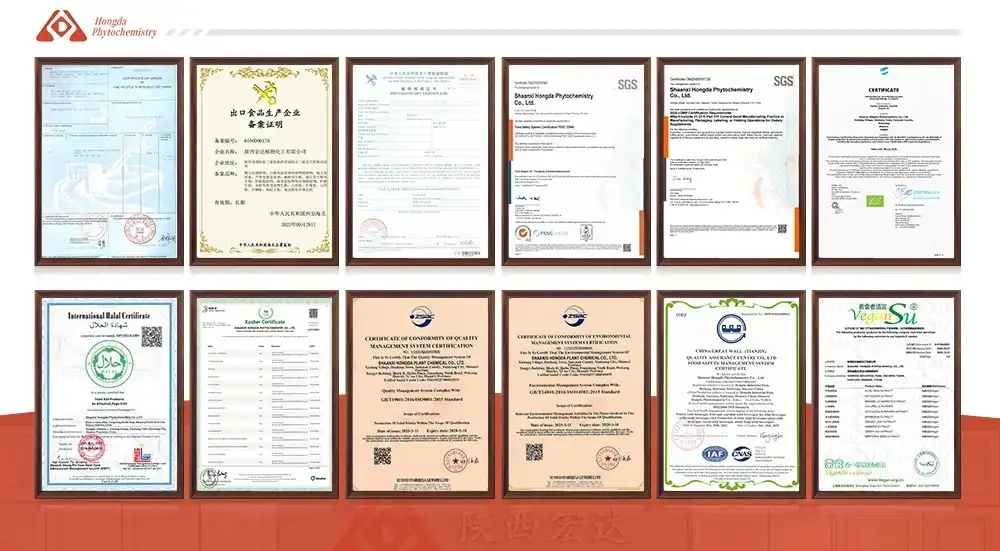
Many multinational firms are looking for a glutathione free radical scavenger wholesale in China, since Chinese manufacturers provide the best of both worlds – size and reasonable cost, but the greatest results are obtained by selecting a facility that can prove its quality. Shaanxi Hongda was founded in 2001, has more than 150 workshop technicians, and is certified by ISO22000, FSSC22000, halal, kosher, and US FDA facility registration. Each cargo is backed by testing at its SGS-standardized laboratory for ingredients, pesticide residues, moisture, heavy metals, and microbes. With these credentials, customers importing to the United States or Europe may cut down the supplier certification time. Combine this with batch data for your liposomal glutathione powder, and you have a sourcing relationship that ensures compliance and consistent product performance over numerous orders.
Conclusion
Bioavailability is the sum of many little choices. The difficulty is digestive breakdown and oxidation; the solution is determined by bilayer composition, particle size, and encapsulation efficiency; and whether that solution survives to the shelf is governed by manufacturing, drying, and dosage-form decisions. Shaanxi Hongda Phytochemistry Co., Ltd. supports every stage with high-pressure homogenization, HPLC and TEM validation, customizable 50% and 70% standards, and accredited facilities. Glutathione powder suppliers have the greatest opportunity to work as promised when formulators seek data, do pilot trials, and include requirements in their contracts. Start with evidence, test in your own formula. Choose a partner that embraces both.
FAQ
Q1. Why is liposomal glutathione powder more bioavailable than conventional powder?
The phospholipid bilayer shields glutathione from stomach acid and digestive enzymes; Hongda Materials cites 10 to 15 times greater bioavailability.
Q2. What specifications are available?
A 50% standard specification, with 70% available and customization on request.
Q3. How is quality verified?
Each lot is assayed by HPLC and TEM, with particle size analysis available.
Q4. What are the MOQ and shelf life?
The MOQ is 1 kg, and the shelf life is 24 months.
Q5. Does the final dosage form matter?
Yes. Heat, acids, and mechanical shear can disturb vesicles, so run pilot trials.
Start Your Glutathione Project With HONGDA Today
If you are planning a supplement launch and want an ingredient partner who backs claims with data, HONGDA is ready to help. Our team will send samples and a batch COA for liposomal glutathione powder, discuss 50% and 70% specifications, and quote factory-direct prices with OEM and private-label support. Tell us your dosage form, target market, and timeline, and we will suggest a practical development path from pilot batch to repeat orders. Write to duke@hongdaherb.com today and let us help you turn a promising formula into a reliable product.
References
1. Witschi A, Reddy S, Stofer B, Lauterburg BH. The systemic availability of oral glutathione. European Journal of Clinical Pharmacology. 1992;43(6):667–669.
2. Richie JP Jr, Nichenametla S, Neidig W, et al. Randomized controlled trial of oral glutathione supplementation on body stores of glutathione. European Journal of Nutrition. 2015;54(2):251–263.
3. Sinha R, Sinha I, Calcagnotto A, et al. Oral supplementation with liposomal glutathione elevates body stores of glutathione and markers of immune function. European Journal of Clinical Nutrition. 2018;72(1):105–111.
4. Forman HJ, Zhang H, Rinna A. Glutathione: overview of its protective roles, measurement, and biosynthesis. Molecular Aspects of Medicine. 2009;30(1–2):1–12.
5. Sercombe L, Veerati T, Moheimani F, et al. Advances and challenges of liposome assisted drug delivery. Frontiers in Pharmacology. 2015;6:286.
6. Aw TY, Wierzbicka G, Jones DP. Oral glutathione increases tissue glutathione in vivo. Chemico-Biological Interactions. 1991;80(1):89–97.