



_1745918362135.webp)

The Reliable Method at a Glance: Separate, Break Open, Measure
The Short Answer: Free Versus Total Vitamin C by HPLC
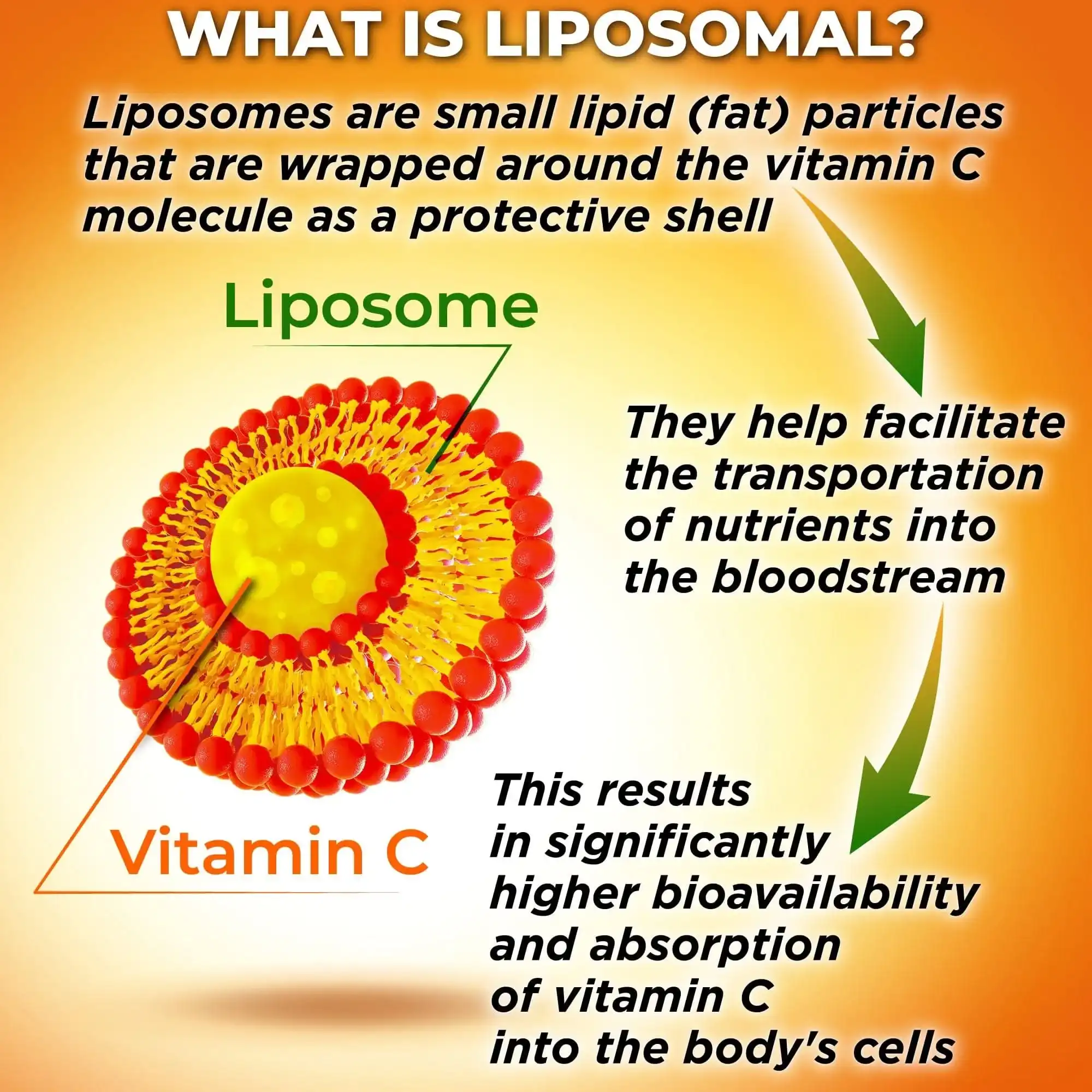
A good encapsulation test addresses one question: how much of the vitamin C in the powder is within the liposomes and how much is free outside them? The conventional procedure is to take the liposomal vitamin C powder bulk, re-dissolve it in water, separate the free fraction from the vesicle fraction, and measure the vitamin C in each fraction using HPLC.[1][3][5] The encapsulation rate is then estimated as (total vitamin C − free vitamin C)/total vitamin C × 100. The advantage of HPLC is that it quantifies ascorbic acid precisely, unlike simple titration or color reactions, which may be interfered with by phospholipids and other components. Because the computation is based on two independent readings, labs frequently do repeats and confirm the recovery.
What Encapsulation Rate Actually Tells You
The encapsulation rate is the most direct predictor of liposome efficacy. Vitamin C is water-soluble; hence, it may be either inside the aqueous core of a vesicle or free in the surrounding media. Only the encapsulated part is protected by the phospholipid bilayer barrier.[1][3][4] A high rate indicates that the formulation and drying procedure preserved the integrity of the vesicles and the vitamin C within. Hongda says their liposomal vitamin C powder bulk is encapsulated at a rate far over 90 percent utilizing its thin-film hydration and ultrasonic nano-shearing method. Numbers like those are only meaningful when you know how the test is done, which is why the remainder of this tutorial is about how you measure.
Why Buyers in Wholesale Markets Should Ask for the Method
In a competitive liposomal vitamin C wholesale market, you might have two vendors telling you the same number for encapsulation but measuring considerably differently. Some may completely separate the free vitamin C and test duplicate samples, while others may utilize a simple filtering step that retains the free vitamin C in the sample and inflates the result. That is why experienced purchasers always ask for the technique, the sample preparation conditions, and the chromatogram behind every number. With every bulk order of liposomal vitamin C powder, Hongda provides HPLC core encapsulation efficiency spectra and laser particle size distribution spectra, so R&D and procurement teams may see the data for themselves. When a supplier embraces that level of examination, it's typically a hint that the figure was obtained in the lab and not created for the brochure.
Step-by-Step Workflow for Measuring Encapsulation Rate
Step 1: Reconstitute the Powder and Separate Free Vitamin C
Start by dissolving a precisely weighed portion of liposomal vitamin C wholesale in cold, purified water and allowing it to rehydrate for a defined time, because the reconstitution conditions must be identical from test to test. Hongda's powder is designed to dissolve into a translucent microemulsion without layering, which makes this step clean and repeatable. Next, separate the free fraction using ultracentrifugation, centrifugal ultrafiltration, dialysis, or size-exclusion chromatography, all of which are well established for liposome work. Buyers who compare the powder with liquid formats offered by a vitamin C ampoules supplier in China should note that a powder can be tested at a controlled concentration in the laboratory, making the encapsulation figure easier to verify.
Step 2: Break the Vesicles Open to Measure Total Vitamin C
A second aliquot of the reconstituted sample is taken, and the liposomes are disrupted, resulting in the release of all molecules. In the analysis of ascorbic acid, laboratories would normally utilize an organic solvent such as methanol or ethanol or a moderate surfactant, coupled with an acidic medium to stabilize ascorbic acid. Oxidation may be prevented from distorting the result by use of a stabilizer such as metaphosphoric acid, operating at low temperature and analyzing rapidly. The overall value should also be tested against the labeled content of the liposomal vitamin C powder bulk. Hongda’s specification of 50 to 55 percent with an HPLC result of 53.38 percent is a good reference point.
Step 3: Quantify by HPLC and Calculate the Encapsulation Rate
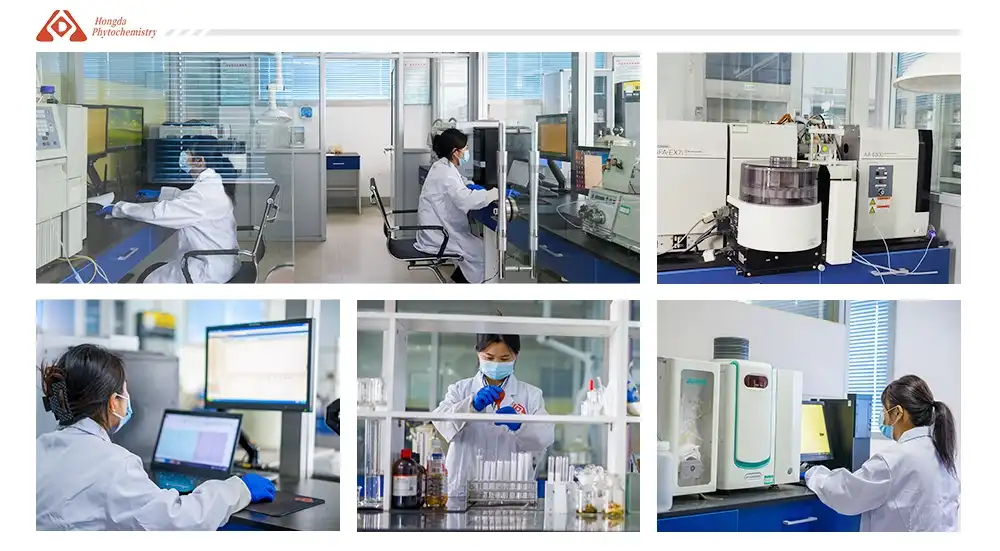
Now that you have prepared both the samples, inject them into an HPLC system with an appropriate column using an acidic mobile phase and detect the ascorbic acid by UV absorbance, typically at 245 to 265 nm. Compare peak regions to a calibration curve generated from a vitamin C reference standard. The encapsulation rate is the total vitamin C concentration minus the free vitamin C concentration, divided by the total, multiplied by 100. Good practice is to have at least three duplicates, a spike recovery check, and a blank to demonstrate that phospholipids do not interfere. Hongda has an SGS-accredited laboratory with high-performance liquid chromatographs. The liposomal vitamin C powder bulk documentation includes HPLC spectra for encapsulation efficiency, so purchasers have the raw material to check the calculation.
|
Method
|
Principle
|
Strength
|
Watch-Out
|
|---|---|---|---|
|
Ultracentrifugation
|
High g-force pellets the vesicles
|
Clean separation of nanoscale vesicles
|
Needs suitable rotor and long spin times
|
|
Centrifugal ultrafiltration
|
Membrane retains vesicles; free vitamin C passes through
|
Fast and widely available
|
Membrane binding and clogging
|
|
Dialysis
|
Free vitamin C diffuses across a membrane
|
Gentle on the vesicles
|
Slow, so oxidation must be controlled
|
|
Size-exclusion chromatography
|
Vesicles elute before small molecules
|
Clear fraction separation
|
Sample dilution
|
Supporting Tests That Confirm the Encapsulation Number
Dynamic Light Scattering and Polydispersity Index
An encapsulation rate makes the most sense when it is paired with proof that the vesicles are the right size and evenly distributed. Dynamic light scattering measures the average particle size and the polydispersity index, and Hongda reports 100 to 250 nm with a PDI below 0.25, which indicates a narrow, uniform population.[2] Laser particle size distribution spectra accompany each bulk shipment, so buyers can compare the curve for their lot with the published range. If you would like to see a sample spectrum or request the HPLC and particle size documents for your own evaluation of liposomal vitamin C powder bulk, write to duke@hongdaherb.com, and the Hongda team will send what fits your project.
TEM Imaging: Seeing the Bilayer Vesicles
Numbers tell of the people; photos prove the architecture. Transmission electron microscopy reveals the presence of spherical vesicles with a visible bilayer, confirming that the substance is a real liposome and not just a mixture of phospholipid and vitamin C. How can consumers tell that it is really a liposomal ingredient and not just a regular mixture? Hongda will provide photographs of their liposomal vitamin C powder bulk under TEM upon request, and the images complement HPLC data to address that query. For any vitamin C ampoules supplier china seek photos that are clear, at scale, with spherical, well-separated vesicles and not aggregated or merged formations. This visual evidence supports the numerical findings.
Assay, Moisture, and Microbial Data as Context
Encapsulation data are part of a broader quality picture. HPLC test of vitamin C is 53.38 percent, potency confirmed; loss on drying is 1.60 percent (limit 5 percent), low moisture indicated; ICP-MS findings for lead, arsenic, cadmium, and mercury are within specification. Microbial testing (using USP-NF 2022 procedures) shows total plate count and yeast and mold to be within limits, with E. coli, Salmonella, and Staphylococcus aureus negative. The combined findings describe a liposomal vitamin C powder bulk ingredient that is powerful, dry, clean, and structurally sound. If you see a good encapsulation rate but poor moisture management or contamination, you should question this; therefore, study the whole certificate of analysis and don’t just look at one headline result.
|
Indicator
|
Typical Method
|
Hongda Published Value
|
|---|---|---|
|
Encapsulation rate
|
HPLC, free versus total vitamin C
|
Greater than 90%
|
|
Vitamin C content
|
HPLC
|
50%-55% specification; 53.38% result
|
|
Average particle size
|
Dynamic light scattering
|
100-250 nm
|
|
Polydispersity index
|
Dynamic light scattering
|
Below 0.25
|
|
Vesicle structure
|
TEM imaging
|
Spherical bilayer vesicles; photos on request
|
|
Loss on drying
|
Ch.P2020
|
1.60% (limit ≤5%)
|
|
Appearance
|
Visual
|
Light yellow fine powder to white powder
|
Turning Test Data Into Confident Sourcing Decisions
How to Read an Encapsulation Rate on a Certificate of Analysis
A CoA should provide you with more information than a percentage. Look for the test technique, batch number, date, and reported result, preferably with a chromatogram attached. Please confirm that the encapsulation rate is for the completed powder and not the liquid liposome before drying, since spray drying might modify the structure.[1][3] Hongda dries its material at low temperature and adds cryoprotectants to assist in retaining the liposome structure during temperature fluctuations. So the powder outcome is what you will really get. If feasible, compare numerous batches. One stunning statistic doesn't mean much if you don't have consistent findings across lots. Make that the encapsulation number, particle size, and assay all refer to the same lot of bulk liposomal vitamin C.
Good Questions to Ask Before You Place a Bulk Order
Good inquiries may differentiate the prepared vendors from the unprepared. Ask what separation method was used for the free fraction, whether the number was measured on dry powder, how many duplicates were done, and how the lab avoids vitamin C from oxidizing during the test. Are raw chromatograms and TEM pictures available? How are batch records maintained? Hongda addresses these concerns with thorough batch record keeping that traces each lot from the sunflower seed raw materials all the way to the final spray drying step, and HPLC and particle size spectra with each shipment. Also ask about shipping and packing. The powder is available in 12-kilogram barrels, and delivery is between three and seven business days. A source that can answer all of these immediately is likely to be reliable for liposomal vitamin C powder bulk in the long run.
Choosing a Manufacturing Partner With Verified Capability
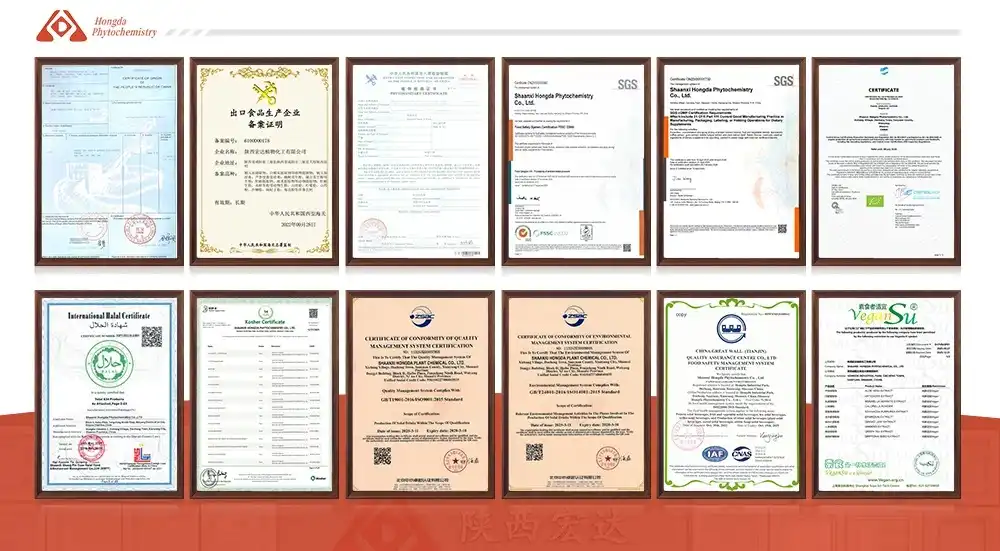
Testing is only as good as the plant and lab behind the test. Shaanxi Hongda Phytochemistry Co., Ltd. is a liposomal vitamin C powder company that was founded in 2001 and was awarded as a National High-tech Development Enterprise in 2010. The plant spans an area of roughly 20,000 square meters, equipped with more than ten manufacturing lines and 100,000-level purification workshops, more than 150 workshop specialists, and an annual output of 3,000 tons. We have more than 20 academics on our team. We have constructed an SGS-standard laboratory with university professors. Equipment includes HPLC, gas chromatography, and spectrophotometry. The location has US FDA registration and cGMP, ISO22000, HACCP, HALAL, and KOSHER certifications, and a 15-ton inventory of liposome series items to ensure the timely delivery of bulk liposomal vitamin C powder. Table 3 provides a summary of the papers to be requested.
|
Document
|
What It Proves
|
Hongda Reference
|
|---|---|---|
|
HPLC encapsulation efficiency spectra
|
Free versus total vitamin C
|
Included with bulk shipments
|
|
Laser particle size distribution spectra
|
Size uniformity
|
100-250 nm, PDI below 0.25
|
|
TEM images
|
Bilayer vesicle structure
|
Available on request
|
|
Batch record
|
Traceability
|
Sunflower seed raw materials to spray drying
|
|
Certificate of analysis
|
Potency, moisture, metals, microbes
|
53.38% vitamin C; 1.60% loss on drying
|
|
Certifications
|
Compliance
|
US FDA registration, cGMP, ISO22000, HACCP, HALAL, KOSHER
|
Conclusion
The most reliable way to test the encapsulation rate of a liposomal vitamin C powder manufacturer is to separate free vitamin C, release the total vitamin C, and quantify both by HPLC, then confirm the result with particle size data and TEM images. Hongda reports an encapsulation rate above 90 percent, a PDI below 0.25, and an HPLC vitamin C content of 53.38 percent, all backed by spectra and batch records that buyers can inspect. When you compare suppliers, favor the one that shares its method as freely as its number. Clear evidence today protects your formula, your brand claims, and your customers tomorrow. Contact Hongda to request the documents behind these results.
FAQ
Q: What is encapsulation rate?
A: It is the share of vitamin C held inside the liposomes compared with the total vitamin C in the sample.
Q: Which method is the most reliable?
A: Measuring free and total vitamin C by HPLC after separating the vesicles and then disrupting them.
Q: What encapsulation rate does Hongda report?
A: Above 90 percent, with an average particle size of 100 to 250 nm and a PDI below 0.25.
Q: Which documents come with bulk orders?
A: HPLC encapsulation efficiency spectra, laser particle size distribution spectra, and batch records, with TEM images on request.
Q: How is the powder packed and delivered?
A: It ships in 12 kg drums, 27 drums per tray, with delivery in three to seven working days.
Verify the Difference with HONGDA Liposomal Vitamin C
HONGDA invites you to test our liposomal vitamin C powder bulk the way a serious formulator should: with transparent methods, real spectra, and full batch traceability. Shaanxi Hongda Phytochemistry Co., Ltd. supplies non-GMO sunflower phospholipid liposomal vitamin C with flexible minimum order quantities, competitive factory pricing, ready inventory, and a documentation package built for your quality team. Whether you are preparing a supplement, an oral solid beverage, or a private-label capsule, our specialists will match specifications, packaging, and delivery to your schedule. Send your target market, volume, and testing requirements to duke@hongdaherb.com, request a sample and the encapsulation documents, and let HONGDA help you launch a vitamin C product that proves its quality on paper and in practice.
References
1. Maherani, B., Arab-Tehrany, E., Mozafari, M. R., Gaiani, C., & Linder, M. (2011). Liposomes: A review of manufacturing techniques and targeting strategies. Current Nanoscience, 7(3), 436-452.
2. Danaei, M., Dehghankhold, M., Ataei, S., et al. (2018). Impact of particle size and polydispersity index on the clinical applications of lipidic nanocarrier systems. Pharmaceutics, 10(2), 57.
3. Lombardo, D., & Kiselev, M. A. (2022). Methods of liposomes preparation: Formation and control factors of versatile nanocarriers for biomedical and nanomedicine application. Pharmaceutics, 14(3), 543.
4. Davis, J. L., Paris, H. L., Beals, J. W., et al. (2016). Liposomal-encapsulated ascorbic acid: Influence on vitamin C bioavailability and capacity to protect against ischemia-reperfusion injury. Nutrition and Metabolism Insights, 9, 25-30.
5. Padayatty, S. J., Sun, H., Wang, Y., et al. (2004). Vitamin C pharmacokinetics: Implications for oral and intravenous use. Annals of Internal Medicine, 140(7), 533-537.
6. Spínola, V., Mendes, B., Câmara, J. S., & Castilho, P. C. (2012). An improved and fast UHPLC-PDA methodology for determination of L-ascorbic and dehydroascorbic acids in fruits and vegetables. Analytical and Bioanalytical Chemistry, 403(4), 1049-1058.