



_1745918362135.webp)

The Answer First: Yes, If the Blend Is Designed to Protect the Vesicles
The Short Answer: Control Moisture, Acidity, and Contact Time
Iron and vitamin C are one of the most recognized combinations in nutrition. The good news is that liposomal ferrous powder may be added to a final mix with vitamin C without losing its structure. When three factors are controlled — moisture, acidity, and contact duration — the vesicles remain intact. Low residual water in dry powders limits chemical interaction. A phospholipid shell protected from very acidic surroundings resists hydrolysis. Short contact in liquid form keeps stress low. Hongda’s liposomal vitamin C powder has a loss on drying of 1.60 percent, much below the 5 percent restriction, which indicates how dry these liposomal powders may be. Think of the blend as a design effort, not just a mix, and the two elements will work together rather than against each other.
Why Iron and Vitamin C Make a Natural Pair
There is a reason why formulators mix these nutrients. One longstanding technique to promote iron absorption is to add vitamin C, which serves as a reducing agent to convert ferric iron to the more soluble ferrous form, the type most easily taken up by the gut.[1][2] Hongda's technical literature states that their liposomal iron powder is absorbed up to 3.5 times quicker than ferrous sulfate, and combining it with vitamin C is in line with the same objective of a premium iron solution with excellent nutritional reasoning. Consumers also comprehend the mix intuitively; thus, it will be easier to sell capsules, sachets, and enriched beverages. The last challenge for a formulator is more technical than nutritional: how to insert liposomal iron powder next to an acidic, reactive substance without stressing the phospholipid membrane.
What Can Go Wrong: Understanding Vesicle Stress
Vesicle damage in a mix normally takes one of three routes. Strong acidity can slowly hydrolyze phospholipids, ascorbic acid in conjunction with iron may promote oxidation processes that damage unsaturated lipids, and moisture collected up during storage allows those events to flow through the powder. This results in bigger particles, leaky iron, and decreased encapsulation effectiveness. Those dangers can be managed, but they do illustrate why choices of formulation are important. Buyers sourcing from an iron-based liposomal iron powder manufacturer supplier in China should inquire about how the product performs in mixed formulae and not just a single ingredient. A strong solo specification does not mean a reliable blend. Hongda tackles this by considering liposomal iron powder and vitamin C as partners to be created and evaluated together.
The Chemistry Behind Vesicle Stability in Iron and Vitamin C Blends
Acidity and Phospholipid Bilayers
Phospholipid membranes like to be in a close-to-neutral environment. Prolonged exposure to severely acidic environments may stimulate hydrolysis of the ester linkages that keep the bilayer together. In a dry powder mixture, this is not a problem, since the acid is not activated until water is present. It becomes more significant when the mix is dissolved in water, since ascorbic acid reduces the pH of the drink. Therefore, the preparation of a beverage containing liposomal iron powder and vitamin C should take into consideration short holding durations, cold or room temperature water, and rapid consumption. Hongda’s liposomal vitamin C powder consists of sunflower phospholipids and acid-treated starch, which dissolves into a transparent microemulsion, indicating that liposome structure and vitamin C may coexist as long as the system is designed to do so.
Redox Activity and Why the Iron Form Matters
The supply of iron is important. Iron may accelerate oxidation. Vitamin C can act as an antioxidant or a pro-oxidant, depending on the circumstances.[4] Soluble ferrous salts are very reactive and may increase lipid oxidation, while weakly soluble ferric pyrophosphate is milder, especially in a dry powder.[4][6] Hongda’s liposomal iron powder is based on micronized ferric pyrophosphate for stability and a neutral flavor, with vesicles that form a phospholipid barrier between the iron and the surrounding mix. When you are evaluating a liposomal iron provider, ask what iron compound they are using and how it is disseminated, since those options determine how the powder will react with vitamin C. The iron is paired with an encapsulated version of vitamin C, which gives another layer of protection and further minimizes direct contact.
Moisture: The Hidden Trigger in Powder Blends
Moisture is the silent accelerator of almost every stability issue. In a dry mixture, ascorbic acid, iron, and phospholipids interact weakly. Add water vapor from the air, and each process accelerates. Hongda’s liposomal vitamin C powder had a loss on drying of 1.60 percent vs. a limit of 5 percent. The light yellow to white powder is free-flowing and does not tend to clump in stick pack applications. Anyone creating a mix using liposomal iron powder is concerned with those numbers, since a low initial moisture gives more space to play before storage humidity becomes an issue. Combine dry materials, moisture barrier packaging, and avoid mixing on humid days without controls. Table 1 highlights the primary stressors and the corresponding preventative strategies.
|
Stress Factor
|
Risk to Vesicles
|
Protective Measure
|
|---|---|---|
|
Acidity in water
|
Slow hydrolysis of phospholipids
|
Short holding time; prompt use; dry formats
|
|
Free ascorbic acid contact
|
Lipid oxidation near iron
|
Encapsulated vitamin C; physical separation
|
|
Moisture
|
Faster interaction in powder
|
Vitamin C powder loss on drying 1.60% (limit ≤5%); barrier packaging
|
|
Heat
|
Membrane disruption
|
Low-temperature spray drying with cryoprotectants
|
|
Mixing shear
|
Vesicle rupture
|
Gentle low-shear blending
|
Practical Blending Blueprints for Powders, Capsules, and Sticks
Dry Blending Best Practices
A good dry blend starts with restraint. Sieve ingredients to remove lumps, use a gentle low-shear mixer such as a ribbon or V blender rather than high-energy milling, and avoid grinding steps that could rupture vesicles.[3] Add the liposomal powders after the bulk carriers so they spend less time under mechanical stress, and keep humidity controlled in the blending room. Working with an iron based powder supplier in China that also makes companion liposomal ingredients helps here, because particle size, moisture, and flow behavior can be matched in advance. Hongda's liposomal vitamin C powder is described as high-flowability and cold-water-soluble, which supports even blending and reliable dosing. Record mixing time and speed for each pilot so that results can be repeated on the production line.
Pairing Liposomal Vitamin C Powder With Liposomal Iron Powder
The most protective strategy is to make both nutrients liposomal. With vitamin C already sitting inside phospholipid vesicles, ascorbic acid has less chance to contact iron directly, and both ingredients bring compatible sunflower phospholipid carriers. Hongda produces liposomal vitamin C powder at 50 to 55 percent with encapsulation above 90 percent, and its R&D laboratory supports customized liposomal development for special carriers including iron. That means a formulator can request a matched pair, with particle sizes and moisture levels chosen to work together in liposomal iron powder blends. If you would like to discuss a combined iron and vitamin C formula, request samples, or review technical documents, email duke@hongdaherb.com and the Hongda team will help you plan a pilot that fits your product and your market.
Format Choices: Capsules, Sachets, and Oral Solid Beverages
Each finished format calls for a slightly different approach. Hard capsules and tablets are the easiest, since a dry, moisture-protected blend keeps interaction to a minimum. Stick packs and oral solid beverages need barrier film and desiccant, and the powder should be dissolved in cold or room-temperature water and consumed promptly. For very sensitive premium products, dual-compartment capsules or layered tablets keep liposomal iron powder and vitamin C physically apart until swallowed. Hongda's own customized solution ideas include an antioxidant oral solid beverage built on cold-water-soluble liposomal vitamin C powder, which shows the appeal of ready-to-drink sticks. Whatever format you choose, confirm the design with a pilot batch rather than assuming that success in one format will carry over to another.
|
Format
|
Recommended Approach
|
Key Precaution
|
|---|---|---|
|
Hard capsules
|
Dry blend of liposomal iron and liposomal vitamin C powders
|
Moisture-barrier packaging
|
|
Tablets
|
Direct compression of a dry blend
|
Avoid excessive compression force and heat
|
|
Stick packs and oral solid beverages
|
Cold-water-soluble powders in barrier film
|
Dissolve in cool water; drink promptly
|
|
Premium dual-phase products
|
Separate compartments or layers
|
Physical separation until ingestion
|
Proving Your Blend Works Through Testing and Sourcing
Stability Testing Protocol: Size, PDI, and Encapsulation Retention
The only actual confirmation that vesicles survive a mix is via measurement. Evaluate the mix at the start and after accelerated and real-time storage, monitoring average particle size, polydispersity index, and encapsulation efficiency retention. Dynamic light scattering after reconstitution indicates if particles expand or agglomerate, and transmission electron microscopy demonstrates that spherical bilayer vesicles are visible. Include basic lipid oxidation tests, such as peroxide value, to identify early membrane damage. Hongda’s liposomal vitamin C powder claims a particle size of 100 to 250 nm with a PDI below 0.25 and encapsulation over 90 percent. And its technical documents reference 150 to 250 nm droplets for a liposomal iron supplier. This gives you baselines to compare to.
Documentation to Request From Suppliers
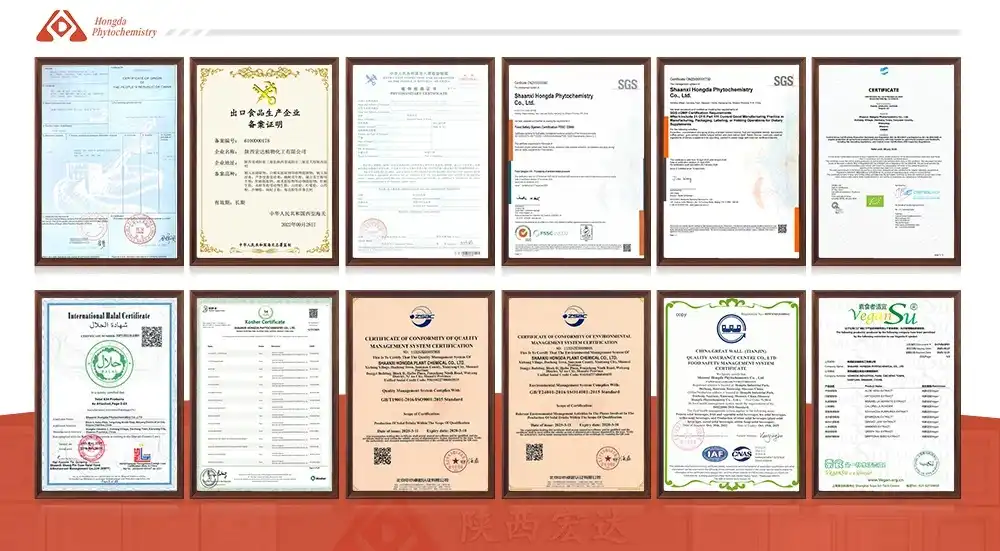
Good documentation cuts development time. Request certificates of analysis, HPLC or UV data, particle size reports, TEM photos, and batch records for both ingredients in your mix from each provider. Hongda sends HPLC encapsulation efficiency spectra and laser particle size distribution spectra for liposomal vitamin C bulk orders, offers TEM pictures upon request for all its liposome series, and maintains comprehensive batch records for sunflower seed raw materials until final spray drying. Its plant is cGMP, FSSC 22000, ISO 22000, HALAL, and KOSHER certified, and the firm gained ISO9001 and EU and NOP organic credentials until 2025. The quality evaluation is quicker, and supplier mismatches are reduced if the liposomal iron powder and vitamin C are from the same supplier and matching paperwork is available.
Choosing a Partner With Both Ingredients and Laboratory Depth
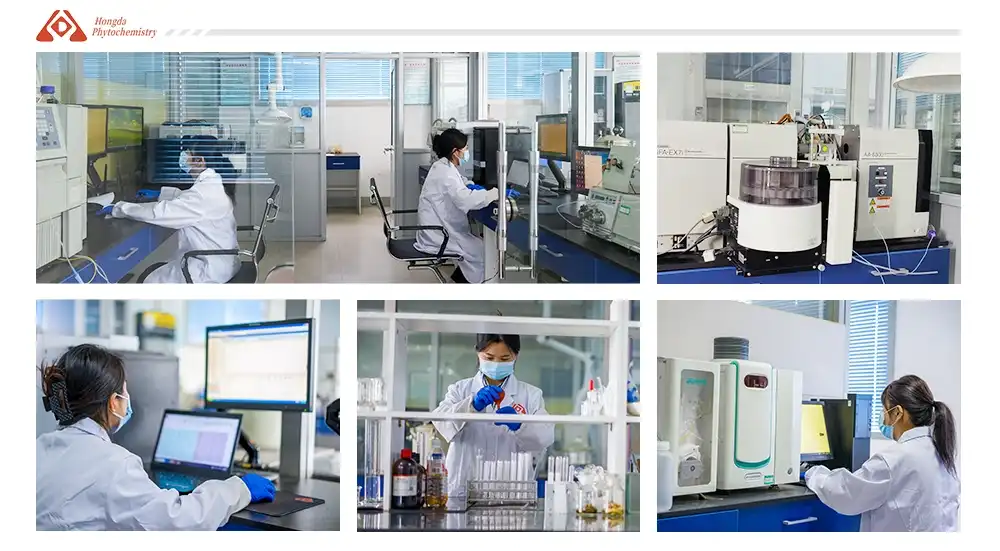
A good provider of liposomal iron powders should have the scalability, testing capability, and flexibility to create combinations. Shaanxi Hongda Phytochemistry Co., Ltd. was founded in 2001 and was designated as a National High-tech Development Enterprise in 2010. The plant encompasses approximately 20,000 square meters, with more than 10 manufacturing lines, 100,000-level purification workshops, and more than 150 specialists, and can produce 3,000 tons annually. We have SGS-standardized laboratories with over 20 professor-level personnel who can perform HPLC, gas chromatography, spectrophotometry, and atomic absorption analysis for your testing, and we have a 3,000-square-meter warehouse to provide on-time delivery. The minimum order for pilots is 1 kilogram. Shipping within 3 to 7 working days. Table 3. The two ingredients side by side to help you create a matched experiment.
|
Parameter
|
Liposomal Iron Powder
|
Liposomal Vitamin C Powder Bulk
|
|---|---|---|
|
Specification
|
50%
|
50%-55% (HPLC result 53.38%)
|
|
Core active
|
Micronized ferric pyrophosphate
|
Vitamin C
|
|
Carrier
|
Phospholipid bilayer
|
Non-GMO sunflower phospholipids
|
|
Particle size
|
150-250 nm
|
100-250 nm, PDI below 0.25
|
|
Encapsulation
|
Request lot-specific data
|
Above 90%
|
|
Delivery
|
3-7 working days
|
3-7 working days
|
Conclusion
liposomal iron powder supplier can be blended with vitamin C without breaking its lipid vesicles when the formula is designed around low moisture, gentle mixing, short acid contact, and smart pairing. Choosing an encapsulated vitamin C, matching particle sizes, and selecting the right format all reduce stress on the membrane, while stability testing proves the result. Hongda offers both ingredients, backed by an SGS laboratory, complete batch documentation, and flexible development support. Start with a small pilot, measure particle size and encapsulation before and after storage, and let the data guide your scale-up. Contact Hongda today to request samples and technical documents for your iron and vitamin C project, and start building with confidence.
FAQ
Q: Can liposomal iron powder be blended with vitamin C?
A: Yes, when the blend is dry, mixed gently, packaged against moisture, and validated with stability testing.
Q: What protects the vesicles most in a blend?
A: Low moisture, low-shear mixing, short acid contact, and using an encapsulated form of vitamin C.
Q: Which tests show the vesicles survived?
A: Particle size and PDI by dynamic light scattering, encapsulation retention, TEM imaging, and a lipid oxidation check.
Q: Does Hongda supply both ingredients?
A: Yes. Hongda offers liposomal iron powder at a 50 percent specification and liposomal vitamin C powder in bulk at 50 to 55 percent.
Q: What are the order size and delivery time?
A: Orders start at 1 kg, and shipping takes three to seven working days according to Hongda's technical materials.
Build a Stable Iron and Vitamin C Blend with HONGDA
HONGDA is ready to help you turn an iron and vitamin C idea into a stable, market-ready formula. Shaanxi Hongda Phytochemistry Co., Ltd. supplies liposomal iron powder and liposomal vitamin C powder from a cGMP-standard factory, backed by an SGS laboratory, batch-level documentation, and R&D support for customized carriers. Our team can recommend matched particle sizes, moisture levels, and blending approaches for capsules, sachets, and oral solid beverages, and we can ship samples quickly so your pilot can start on schedule, with flexible order sizes and competitive factory pricing. Send your target format, market, and volume to duke@hongdaherb.com, and let HONGDA help you protect every vesicle from the first blend to the final package. Contact us today.
References
1. Hallberg, L., Brune, M., & Rossander, L. (1989). The role of vitamin C in iron absorption. International Journal for Vitamin and Nutrition Research Supplement, 30, 103-108.
2. Teucher, B., Olivares, M., & Cori, H. (2004). Enhancers of iron absorption: Ascorbic acid and other organic acids. International Journal for Vitamin and Nutrition Research, 74(6), 403-419.
3. Allen, T. M., & Cullis, P. R. (2013). Liposomal drug delivery systems: From concept to clinical applications. Advanced Drug Delivery Reviews, 65(1), 36-48.
4. Halliwell, B., & Gutteridge, J. M. C. (1990). Role of free radicals and catalytic metal ions in human disease: An overview. Methods in Enzymology, 186, 1-85.
5. Grit, M., & Crommelin, D. J. A. (1993). Chemical stability of liposomes: Implications for their physical stability. Chemistry and Physics of Lipids, 64(1-3), 3-18.
6. Moretti, D., Zimmermann, M. B., Wegmüller, R., Walczyk, T., Zeder, C., & Hurrell, R. F. (2006). Iron status and food matrix strongly affect the relative bioavailability of ferric pyrophosphate in humans. American Journal of Clinical Nutrition, 83(3), 632-638.