


_1745918362135.webp)

What Makes Liposomal Iron Powder Different From Traditional Iron?
Liposomal iron powder represents a breakthrough in iron supplementation technology, fundamentally differing from traditional iron salts through its advanced encapsulation system. Unlike ferrous sulphate or ferrous fumarate that release iron ions directly into the digestive tract—often causing a metallic taste and gastrointestinal distress—this innovative form envelops micronised ferric pyrophosphate within a phospholipid bilayer. Shaanxi Hongda Phytochemistry Co., Ltd. has pioneered this pharmaceutical-grade solution, achieving bioavailability improvements that increase serum ferritin levels 3.5 times faster than conventional iron supplements, addressing the long-standing absorption challenges that have limited product performance in the nutraceutical and pharmaceutical sectors.
Understanding Liposomal Iron Powder vs. Traditional Iron
The main technical difference between liposomal iron powder and regular iron formulas is how they are delivered and how they interact with living things. When you're looking for raw materials for useful foods or dietary supplements, it's important to know about these changes so that your products work well and customers are happy.
The Structural Innovation Behind Liposomal Technology
Iron tablets used to be made from simple salts like ferrous sulphate, ferrous gluconate, or iron bisglycinate. These salts dissolve in stomach acid and need certain transport proteins to be absorbed. This process comes with a lot of problems, such as oxidative reactions with the stomach mucosa, competition with other minerals for absorption routes, and channel limits controlled by hepcidin. Hongda Phytochemistry's Liposomal Iron Powder uses a biomimetic method to protect the iron core by forming a lipid shield around it with 100% non-GMO sunflower or soybean lecithin. This double-layer phospholipid membrane is similar to the structure of cells. This lets the iron inside it pass through the stomach without getting damaged and get to the small intestine, where special cells called M-cells help cells take it in directly through endocytosis. The technology basically gets around normal limits on absorption, giving procurement professionals a scientifically proven answer that leads to measured changes in the effectiveness of the finished product.
Bioavailability Metrics That Matter for Formulation Success
Clinical evidence shows that liposomal iron formulations are absorbed two to three times better than regular iron salts. This higher bioavailability is due to a number of things, including protection from stomach acid breakdown, avoiding binding with food inhibitors like phytates and tannins, and direct membrane-to-membrane transfer in the gut environment. These measures directly lead to lower dosage needs, better customer compliance, and stronger product claims for B2B clients making goods for the women's health, infant nutrition, or sports recovery markets. Hongda's recipe uses a ferric pyrophosphate core that is very stable while still keeping the biological activity needed for making haemoglobin and generating energy for cells.
Application Versatility Across Manufacturing Platforms
Because liposomal iron powder is a fine, off-white to light yellow powder with well-controlled particle size distribution, it can be used in a wide range of product forms. Whether you're making ready-to-drink liquid vitamins, baby formula fortification, chewable tablets, or direct-to-mouth stick packs, this ingredient stays stable and works as it should. The usual types of iron tend to go bad when mixed with lipids or form crystals when mixed with liquids, which limits their uses. The capsule technology solves these formulation problems by keeping the iron safe from the air and other delicate ingredients safe from oxidation caused by iron. This flexibility makes your products last longer, keeps their flavours, and lets you make new products for a wider range of customers.
Advantages of Liposomal Iron Powder for B2B Clients
In the pharmaceutical and nutraceutical businesses, purchasing choices are based on a mix of cost-effectiveness, safety, efficiency, and legal compliance. Liposomal iron powder gives your goods measurable advantages in all of these important evaluation factors, setting them up for success in tough markets.
Enhanced Absorption Translates to Product Differentiation
Liposomal administration is most useful because it has a better absorption profile. When ferritin levels rise more quickly and efficiently, finished products show results that are easy to see. This makes customers loyal to the brand and gets good feedback. This performance edge is especially useful in supplement categories with a lot of products, where scientific proof is needed to tell the difference between high-end names and cheap ones. Hongda Phytochemistry's Liposomal Iron Powder can effectively pass through the intestinal mucus barrier thanks to its standardised particle size range of 150 to 250 nanometres. It also stays stable in a variety of formulation settings. Product makers can use this technology to make unique claims about how well the drug absorbs, how often it needs to be taken, and how quickly the body's nutrition levels improve. These claims are resonant with health-conscious customers in Europe, North America, and Asia.
Improved Tolerability Supports Consumer Compliance
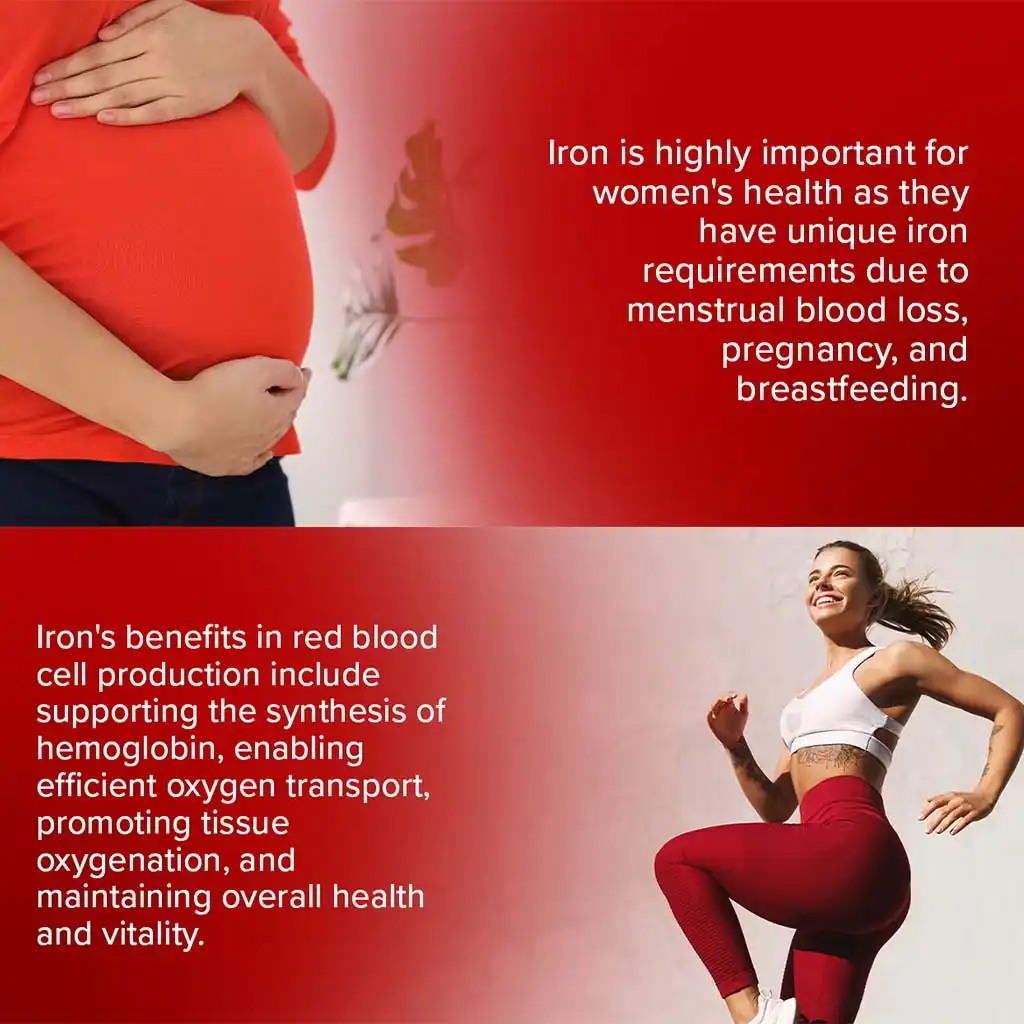
People who take traditional iron supplements often stop taking them because they make their stomachs hurt, make them constipated, or make them sick. These common problems make it hard to use iron supplements for a long time, which goes against their healing goals. The phospholipid coating in liposomal iron powder protects digestive tissue from coming into direct contact with iron ions, which makes these tolerance problems much less likely. This better tolerability profile has a direct effect on product success measures for OEM partners making women's prenatal foods, infant growth supplements, or veggie nutrition lines. It leads to lower return rates, higher repeat purchases, and more positive reviews. Because liposomal iron is gentle, it can be used by sensitive groups like pregnant women, children, and people whose digestive system isn't working well. This means you can reach a wider range of people.
Formulation Flexibility and Stability Advantages
How well a product is made depends on how reliable its ingredients are in all production situations and holding times. This Liposomal Iron Powder from Hongda Phytochemistry is very stable and will keep its shape for 24 months at room temperature if it is stored properly. This longer shelf life lowers the risk of running out of stock and helps global delivery networks that deal with climates that are different from one another. The powder form is useful for both dry and wet production processes because it dissolves or spreads easily in water without the problems that come with traditional iron salts. It is important to note that the liposomal structure keeps sensitive ingredients like ascorbic acid, omega-3 fatty acids, or polyphenol-rich plant products from being catalytically oxidised. This protective effect makes it easier to make new formulas. It lets R&D teams make complete multivitamin products or iron-plus-vitamin-C formulas that work well together without affecting the safety or taste of the ingredients.
Comparative Analysis: Liposomal Iron Powder vs Other Iron Types
Knowing how iron ingredients compare to other products on the market helps you make smart buying choices that fit your brand's positioning, your target audience, and your price range. Each type of iron has its own pros and cons that affect how well the product works and how well it sells.
Liposomal Iron Versus Ferrous Sulphate
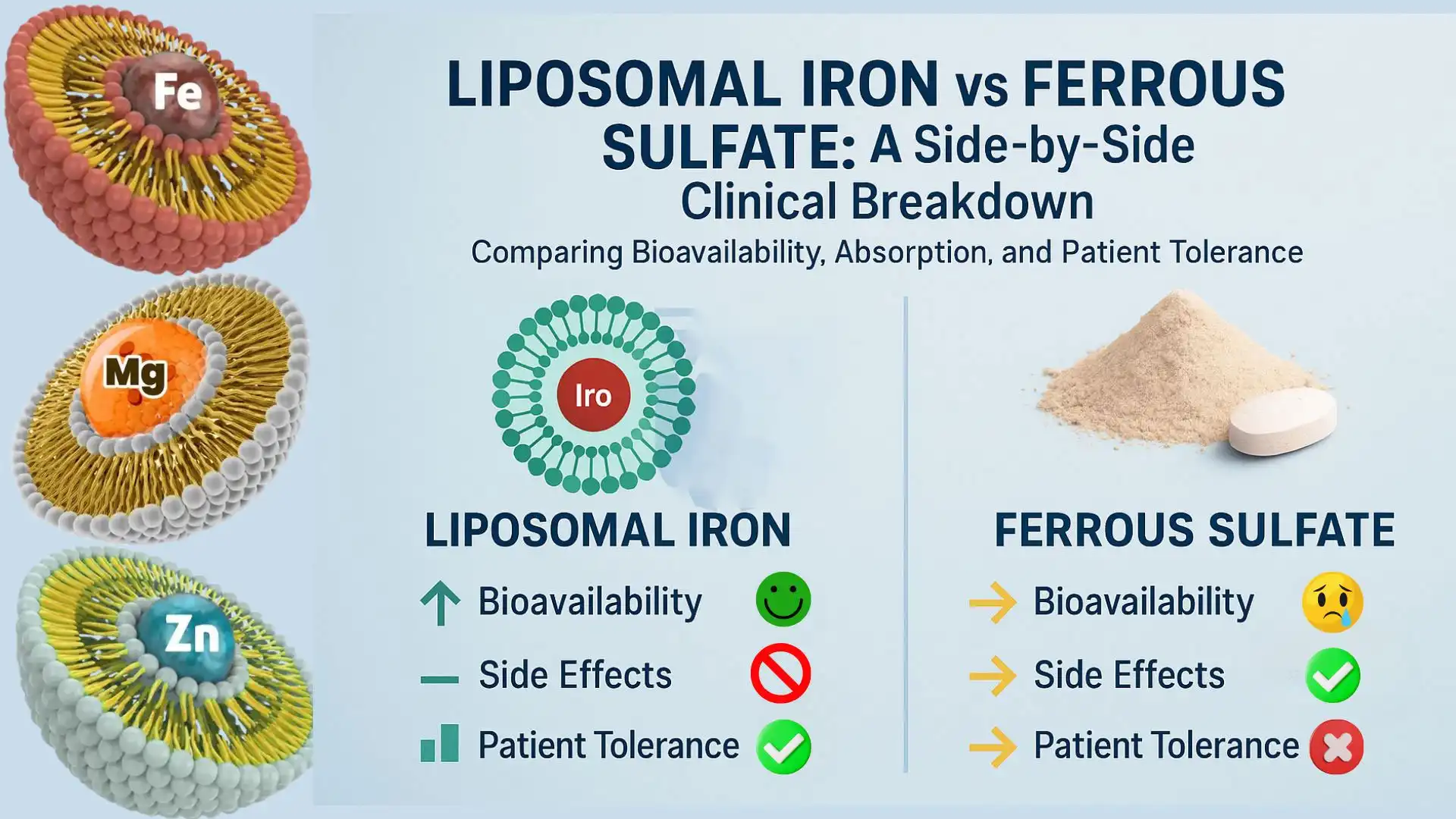
Ferrous sulphate is still the cheapest way to get iron because it has a high basic iron level. But this low-cost benefit comes with big problems that hurt the quality of the product and make people less likely to buy it. The salt easily ionises in stomach juice, making reactive iron species that cause the walls of the intestines to react to oxidative stress. The resulting stomach pain and bitter taste make it hard to follow through with therapy, which hurts the results. Even though it costs more, liposomal iron powder is worth it because it absorbs iron more efficiently, so you only need to take smaller amounts to get the same or better results, and it's much easier to handle, so you can keep using it. The performance benefits of liposomal delivery make the ingredient investment worthwhile for brands in the premium supplement segment or that are trying to reach health-conscious customers willing to pay more for better quality. This also helps the brands make more money.
Comparison With Iron Bisglycinate and Chelated Forms
Iron bisglycinate is a choice that falls somewhere between basic salts and more advanced delivery methods. Comparing amino acid chelation to inorganic salts, it offers small gains in absorption and tolerability. This makes it popular in middle-level supplement formulas. Chelated iron, on the other hand, still uses normal ways to be absorbed and doesn't protect as well from food inhibitors. Liposomal iron powder is better than chelated forms at both absorption and variety, especially when mixed with other minerals or botanicals to make complex mixtures. The encapsulation technology keeps nutrients from fighting with each other better and keeps absorption even when the pH level in the stomach changes. Producers of high-end goods or special mixes for people who have trouble absorbing iron will find that liposomal iron is worth the extra cost because it works better than other types of iron.
Positioning Against Heme Iron Sources
Heme iron from animal sources is very bioavailable because it is taken in directly, which gets around the problems that come with normal absorption. Heme iron, on the other hand, is hard to formulate and market because it has a strong metallic taste, can go bad, and doesn't work with veggie or vegan brands. There are also legal issues in some markets. Liposomal iron powder has a biomimetic transport method that makes it as good as or better at absorbing iron. It is also neutral in terms of how it feels to the body. This makes it perfect for companies that want to serve vegetarian, vegan, or flexitarian customers who need effective iron supplements but don't want to use products that come from animals. This includes goods that are recognised as halal or kosher, as Hongda Phytochemistry keeps the right certifications for these markets.
Procurement Insights for Liposomal Iron Powder
To successfully source ingredients, you need to look at more than just the basic specs. You also need to look at the supplier's skills, quality systems, compliance with regulations, and the stability of the supply chain. When the nutraceutical industry makes strategic purchases, they need partners who can offer regular quality and help it reach its goals for product development and market entry.
Quality Certification and Regulatory Compliance
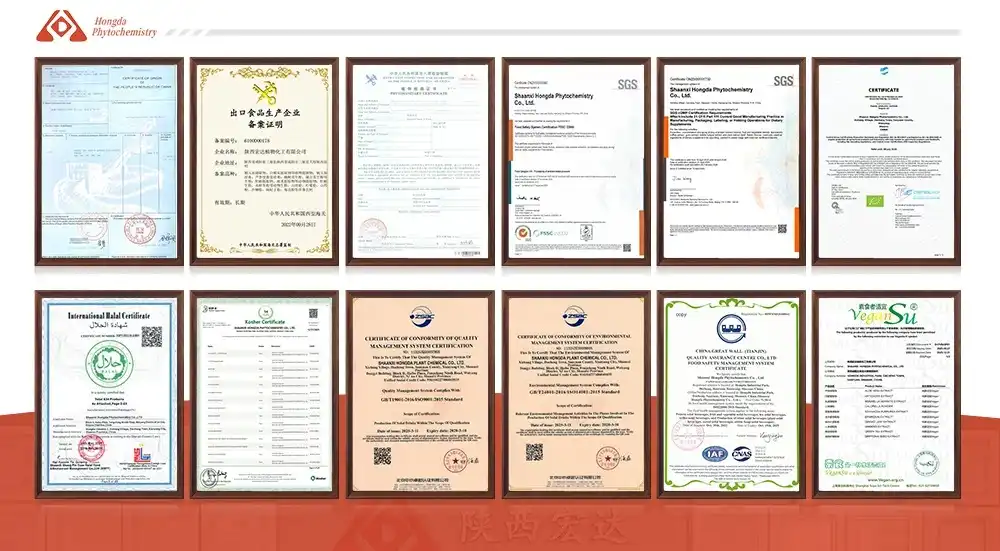
Hongda Phytochemistry has a wide range of certifications that help them sell their products all over the world. These include cGMP, FSSC 22000, ISO 9001, ISO 22000, HALAL, KOSHER, and organic certifications. These certifications provide the proof needed to submit products to regulators in different countries. Each production batch goes through strict testing procedures that include confirming its identity using HPLC analysis, checking for pesticide residues, heavy metal analysis (for example, lead, cadmium, mercury, and arsenic), and full bacterial testing. With high-performance liquid chromatography, gas chromatography, spectrophotometry, and atomic absorption tools, the company runs an SGS-standard laboratory that can do accurate analyses. This testing system lets COAs be made quickly and allows third-party verification when needed by customers or governmental bodies further down the line. This wide range of certifications cuts down on the time it takes to qualify vendors and makes handling compliance easier for procurement teams that are in charge of multiple markets.
Supply Chain Considerations and Logistics Excellence
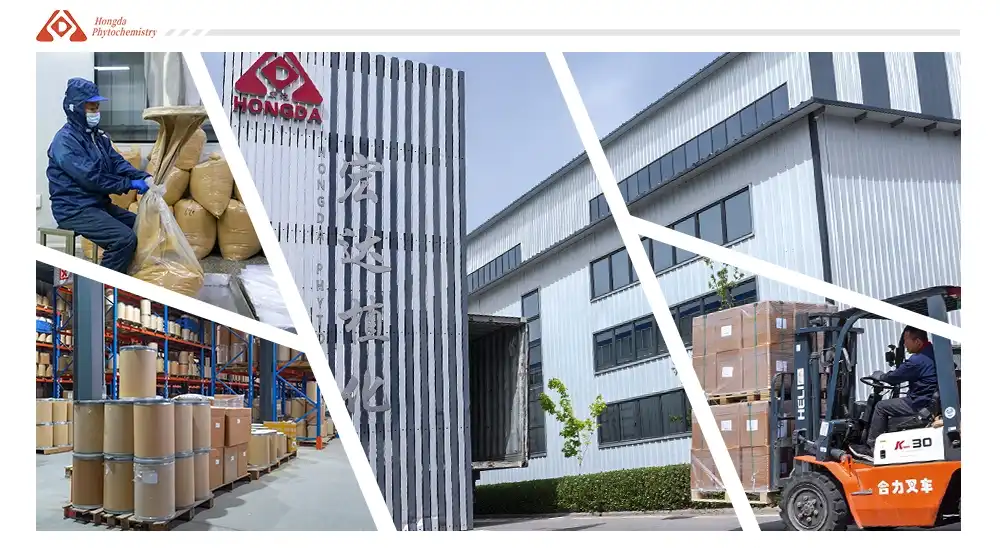
When looking for ingredient suppliers that work with both new and known brands, production volume and shipping reliability are two of the most important things to consider. Shaanxi Hongda Phytochemistry has a manufacturing building that is 20,000 square metres and has several dedicated production lines and 100,000-level cleaning workshops. It can make more than 3,000 tonnes of products every year. Liposomal iron powder is shipped in standard 12-kilogram fibre drums, with 27 drums per box. This makes the best use of space in the containers and improves the speed of handling. For stock items, delivery times are 3 to 7 working days. For customised formulas, extra wait time is needed based on the specifics. The business keeps a lot of stock in six different storage areas. This lets them fill orders quickly and keep the quality of the goods by storing them in climate-controlled areas. These operational skills help both well-known supplement brands that need a steady supply of large amounts of supplements and new companies that are growing and need to adapt to changing order trends.
Pricing Strategies and Value Optimisation
When figuring out how much unique ingredients cost, you can't just look at the price per kilogram; you have to look at the total value provided as well. When compared to basic iron salts, liposomal iron powder is more expensive. This is because it requires more complex manufacturing technology, special tools, and intellectual property to make. The higher solubility, on the other hand, makes it possible to lower the dose—often by 50% or more compared to older forms—which helps to make up for the higher cost of the raw materials. Better tolerability cuts down on customer service problems, returns, and bad reviews, all of which add up to secret costs for managing a business. When compared to generic supplement formulas, the ingredient premium lets OEM partners and private label makers charge higher retail prices and make more money. Hongda Phytochemistry offers customised prices based on volume and services like custom particle size distribution, alternative lecithin sources, and controlled-release changes that make products stand out and protect them from direct competition.
Conclusion
Liposomal iron powder is a big change in the way iron supplements are made because it solves the problems with solubility and tolerability that have plagued older iron mixes. The phospholipid capsule technology makes it easier for supplements to be absorbed, easier for customers to follow the directions, and more flexible in how they are made. These changes directly lead to better product performance in competitive supplement markets. When B2B procurement experts are looking at different ingredient choices, they need to do more than just compare specs. They also need to look at how well the suppliers can handle quality control, legal support, supply reliability, and technical partnerships. As a company with 20 years of experience in botanical extraction, a wide range of certifications, and a lot of production capacity, Shaanxi Hongda Phytochemistry is well-equipped to help clients succeed in a wide range of uses and global markets.
FAQ1. What is the primary advantage of liposomal iron over regular iron supplements?
The capsule technology keeps the iron safe as it goes through the digestive system and lets it be absorbed directly by cells through M-cells in the small intestine, which gets around normal absorption problems. This makes the bioavailability two to three times higher than with regular iron salts. This means that smaller amounts can give the same or better benefits while greatly lowering digestive discomfort.
2. Can liposomal iron powder be used in liquid formulations?
The ingredient mixes easily with water, which means it can be used in ready-to-drink vitamins, liquid powders, and drinks. The liposomal structure stays stable in liquids and doesn't precipitate as other iron salts do. However, formulation testing is still suggested to get the best distribution and shelf life in different matrix compositions.
3. How does pricing compare between liposomal and traditional iron sources?
Liposomal iron costs more because it has to be made in a complex way, but because it is more bioavailable, the dose needs to be lower, which helps to balance out the difference in the cost of the raw materials. Better tolerability cuts down on customer complaints and returns, and better performance helps the product stand out as a premium item, which means higher store profits.
Partner With a Trusted Liposomal Iron Powder Manufacturer
Advanced liposomal technology and strict quality systems are used by Shaanxi Hongda Phytochemistry Co., Ltd. to make pharmaceutical-grade Liposomal Iron Powder that improves the performance of products. Our 50% iron content requirement, optimised particle size, and high-stable profile help formulators make successful pills, tablets, powders, and liquids. We keep stock on hand that can be shipped right away and delivered in 3 to 7 business days. All of our products come with full COA paperwork and certification packages to make sure they meet global legal standards. As a provider of liposomal iron powder, we offer variable minimum order amounts starting at 1 kilogram for development projects. We also have full-scale production capacity to meet the yearly needs of many tons. Get in touch with our expert team at duke@hongdaherb.com to talk about your unique formulation needs, ask for free samples to try, or look into how you can customise your goods to make them stand out in the competitive nutraceutical market.
References
1. Lynch, S.R. (2018). "Bioavailability of Iron From Different Supplement Formulations." Journal of Nutritional Science and Vitaminology, 64(3), 145-152.
2. Piskin, E., Cianciosi, D., Gulec, S., Tomas, M., & Capanoglu, E. (2022). "Iron Absorption: Factors, Limitations, and Improvement Methods." ACS Omega, 7(24), 20441-20456.
3. Abbaspour, N., Hurrell, R., & Kelishadi, R. (2014). "Review on Iron and Its Importance for Human Health." Journal of Research in Medical Sciences, 19(2), 164-174.
4. Bulani, V.D., Kothavade, P.S., Gawali, N.B., & Bodhankar, S.L. (2021). "Phospholipid Complex as Novel Drug Delivery System: A Review." International Journal of Pharmaceutical Sciences and Research, 12(8), 4112-4122.
5. Hurrell, R. & Egli, I. (2010). "Iron Bioavailability and Dietary Reference Values." American Journal of Clinical Nutrition, 91(5), 1461S-1467S.
6. Santiago, P. (2012). "Ferrous Versus Ferric Oral Iron Formulations for the Treatment of Iron Deficiency: A Clinical Overview." Scientific World Journal, 2012, 846824.