




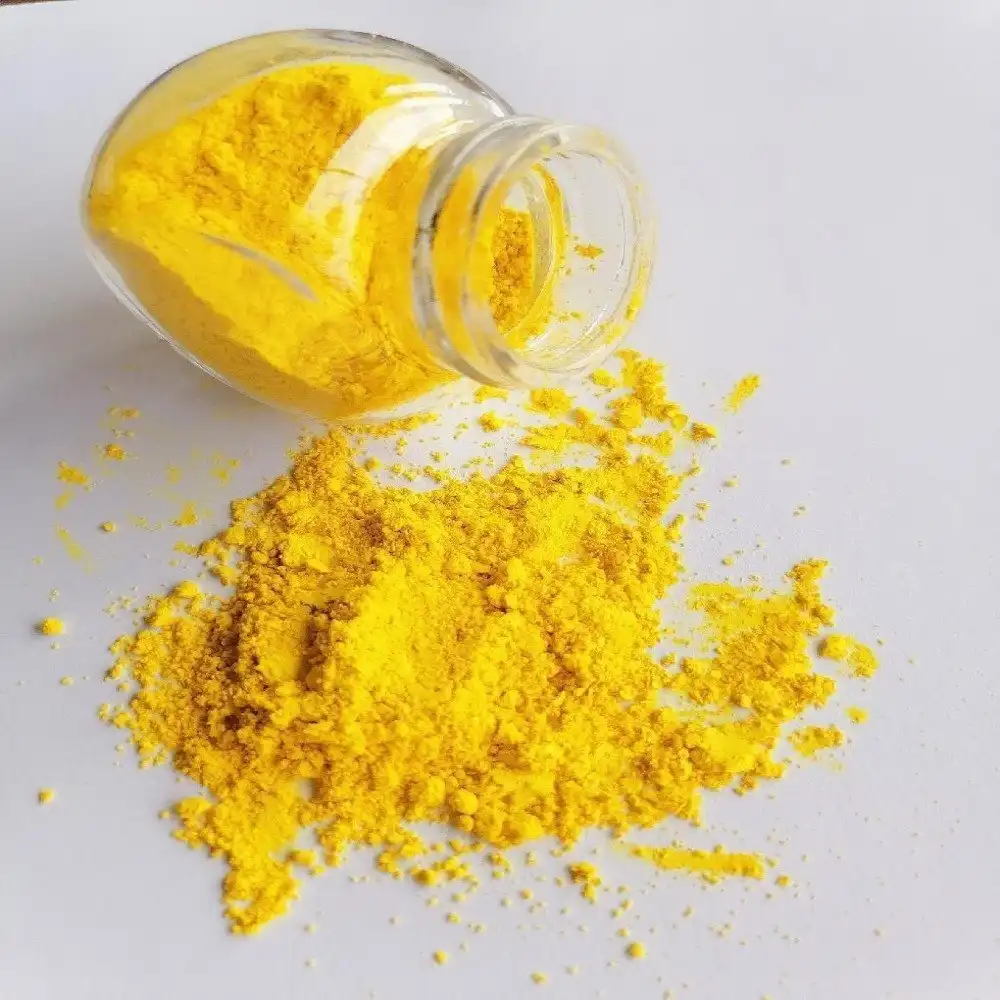
The encapsulation rate is one of the easiest assertions to put on a specification sheet and one of the hardest to confirm. How to measure the real encapsulation rate of liposomal berberine powder? The robust solution is a combination: separate the berberine that is within the vesicles from the berberine that is not, quantify both using an established technique, and confirm the finding with independent evidence. Shaanxi Hongda Phytochemistry Co., Ltd. (referred to by buyers as Hongda Phytochemistry) supplies liposomal berberine powder from a 20,000 square meter factory with more than ten production lines and an SGS-standardized laboratory with high-performance liquid chromatographs and spectrophotometers, the same instruments used in this analysis. This guide describes the process in straightforward words.
Why the Encapsulation Rate Needs Proof, Not Just a Number
Hongda's Liposomal Berberine Powder and Its Verifiable Quality
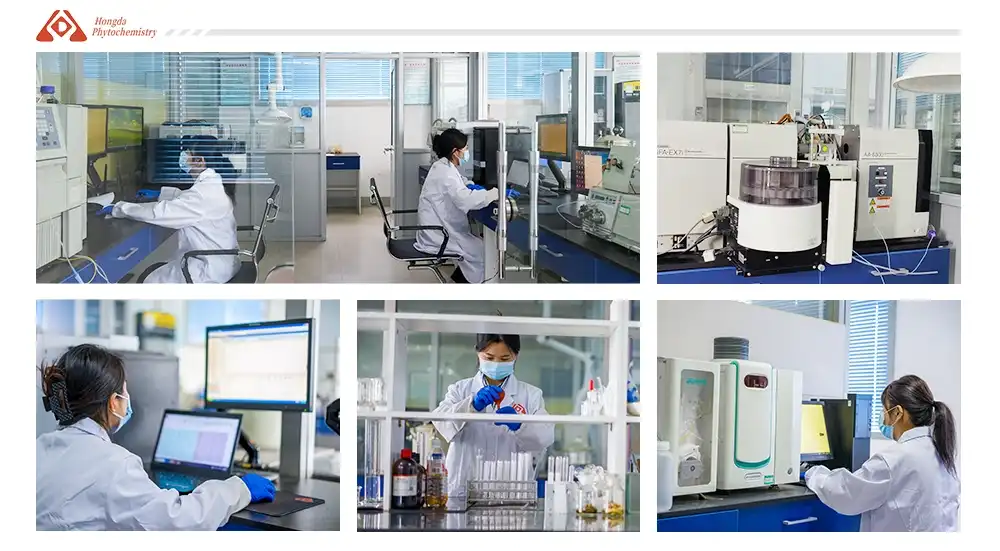
Hongda Phytochemistry liposomal berberine powder is produced in a 100,000-level purification workshop with an annual output up to 3,000 tons and more than 150 workshop personnel. In-house, a laboratory staff of more than twenty R&D and testing professionals may do chromatographic and spectrophotometric work. Each batch is checked for ingredients, pesticide residues, moisture, heavy metals, and microbes before shipping. For purchasers, this is important since encapsulation data is only believable when it can be explained by the manufacturer. Documentation requirements from the United States and Europe are backed by certifications such as FSSC 22000, ISO 22000, cGMP, FDA, halal, and kosher. If you compare berberine wholesale offers, ask each provider to reveal the procedure, the result, and the batch it pertains to, then rate liposomal berberine powder by evidence, not adjectives.
What "Encapsulation Rate" Actually Means
Encapsulation efficiency is defined as the ratio of total berberine in a sample that is physically within or within the lipid bilayer to that free in the surrounding media. Berberine is a positively charged alkaloid which is able to reside in the aqueous core, attach to the surface of negatively charged lipids, or to tuck into the bilayer. Different methodologies may count these sites differently. That is why a basic % on a certificate is not enough. Useful reporting includes how free and entrapped fractions were separated and how each was assessed, and whether the liposomal berberine powder was rehydrated before testing. It also has to specify the lipid composition and the ratio of berberine to lipid. In this scenario, two labs can mimic each other’s findings, and buyers may compare vendors on an equal footing.[2][3]
Why Powder Form Adds a Twist
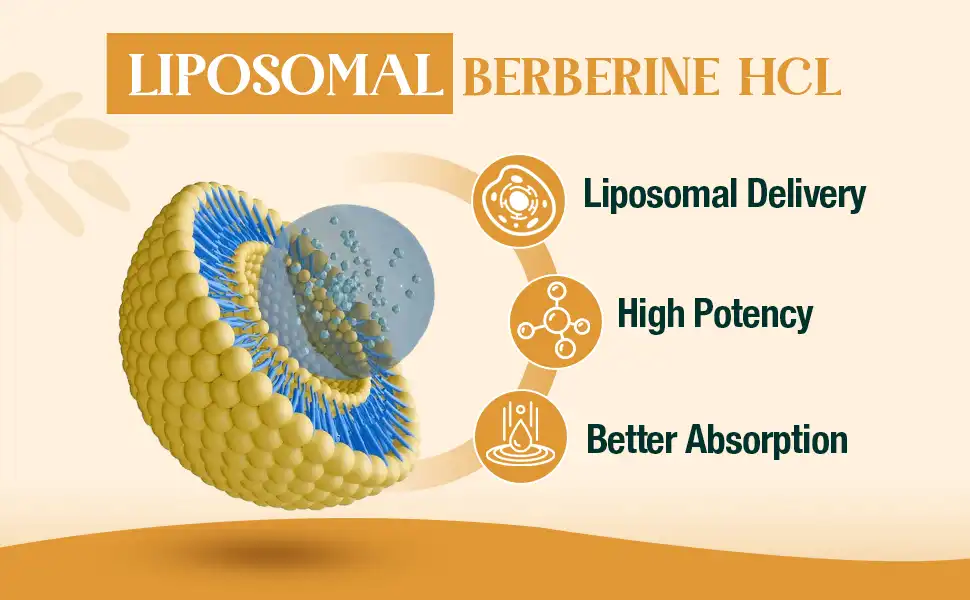
Testing a liquid liposome is one thing; testing a dry powder is another. Freeze-drying or spray-drying may stress the vesicles and allow some berberine to escape during processing or after rehydration. This is why a good technique tests encapsulation on the final liposomal berberine powder after reconstitution in a specified manner, and not only on the liquid before drying. Labs also often compare before- and after-drying measurements to assess what was kept. The composition of the cryoprotectants and carriers in the powder needs to be taken into consideration so that the berberine content is estimated to the proper total mass. This twist encourages purchasers to ask better questions, not only what the encapsulation rate was in the liquid stage, but what it is in the powder they will really get.[5]
Separating Free From Entrapped Berberine
Centrifugation and Ultracentrifugation
The simplest approach is to spin down the sample until vesicles settle down and then quantify what is left in the supernatant as free berberine. Ordinary centrifugation seldom pellets tiny liposomes, and ultracentrifugation is often used for an hour or more at extremely high rates. The pellet is then lysed with a detergent or an organic solvent to liberate the contained berberine wholesale for measurement. The procedure is simple and makes use of standard equipment but is potentially harsh since large pressures may distort or rupture certain vesicles. A check on recovery is obtained by summing the free and entrapped fractions and comparing this with the total berberine determined in an unaffected sample. If you are purchasing bulk berberine as liposomal berberine powder, ask if the supplier’s findings were verified in this manner. Poor recovery means the data may not be valid.[4]
Ultrafiltration and Centrifugal Filters
Free berberine is able to cross the membrane, but centrifugal filter units with a predetermined molecular weight cut-off retain vesicles. The free fraction is then estimated by measuring the filtrate. It is a rapid and popular approach, although berberine may bind to membranes and plastic housings, making the free fraction seem lower and the encapsulation appear better than it is. Good labs do controls: a free berberine solution run through the same equipment to evaluate recovery, and a blank filter to check for interference. Also, membranes may be pre-conditioned. With ultrafiltration as a screening instrument for regular batch checks, liposomal berberine powder is feasible, especially if an occasional cross-check with a second separation method is supported.
Size-Exclusion Chromatography and Dialysis
Gel filtration columns separate big vesicles, which elute early, and tiny free molecules, which elute later. Fractions may be gently separated on a spin column or short Sephadex-type column, and each fraction tested. Dialysis is different: the material is put into a membrane bag, and free berberine diffuses out into a vast volume of buffer over hours. Both procedures are milder than ultracentrifugation, but dilution and extended run periods may enable leakage; thus, timing and temperature must be regulated. Since each approach has its own bias, a cautious laboratory states which was used and preferably validates the findings with another. For liposomal berberine powder, agree on one way with your provider before the first purchase so you don't have problems later on about whose number is accurate.[4]
|
Method
|
Principle
|
Strength
|
Watch-Out
|
|---|---|---|---|
|
Ultracentrifugation
|
Vesicles pellet under high force
|
Common equipment
|
Can stress vesicles; check recovery
|
|
Ultrafiltration
|
Membrane retains vesicles and passes free drug
|
Fast and routine |
Berberine may stick to the membrane
|
|
Size-exclusion chromatography
|
Large vesicles elute first
|
Gentle separation
|
Dilution and leakage during the run
|
|
Dialysis
|
Free drug diffuses through a membrane
|
Gentle
|
Slow; leakage over time
|
Want to compare methods on your own samples? Email duke@hongdaherb.com with your preferred separation and assay approach, and ask the Hongda team about sample amounts of liposomal berberine powder for a side-by-side check.
Measuring Berberine Accurately: Analytical Tools and Pitfalls
HPLC-UV: The Reference Technique
High-performance liquid chromatography with UV detection is the most used analytical method for berberine. The molecule absorbs strongly in the UV and visible range; thus, the peaks are easy to see. The chromatographic separation separates berberine bulk powder from the related alkaloids and lipid components that could interfere. A validated technique comprises calibration curves throughout the predicted concentration range, system appropriateness tests, and recovery studies. Care must be taken in preparing samples from lysed vesicles so that detergent or lipid does not foul the column. Ask producers of berberine HCl powder if they have encapsulation findings by HPLC and whether the procedure follows recognized validation criteria such as ICH Q2(R2). The lab at Hongda Phytochemistry has high-performance liquid chromatographs, so the technical staff can talk about the liposomal berberine powder process details immediately.[1]
UV-Vis and Fluorescence: Fast but Sensitive to Context
Spectrophotometry is a quicker, easier approach to measure berberine, because fluorescence can detect the faintest levels. However, the optical properties of berberine are environment-dependent. The absorbance and fluorescence intensity of berberine may be altered upon binding to lipid membranes compared to the free berberine in water. Calibration standards should match the sample matrix. Lipids or turbidity may scatter light and skew measurements. These approaches are best utilized for rapid screening or for process monitoring, with HPLC as confirmation. The Hongda Phytochemistry laboratory has spectrophotometers, which are appropriate for regular testing of liposomal berberine powder. If the report provides just one optical reading and does not provide calibration and matrix controls, beware of results that may overestimate accuracy.
Method Validation, Recovery, and Mass Balance
The believability of an approach lies in its validation. The main factors are specificity, linearity, accuracy, precision, and limits of detection and quantification. Mass balance is highly informative for encapsulation work: the free plus entrapped berberine should equal the amount measured in an unmanipulated sample, within an acceptable range of recovery determined by the laboratory. If the total is much smaller, berberine may have been lost to membranes, tubes, or decomposition, and the encapsulation figure cannot be believed. Request at least triplicate measurements and an explanation of the variability. Hongda Phytochemistry may talk through validation processes with technical teams to verify that liposomal berberine powder findings are similar between the supplier’s lab and an independent lab.
|
Technique
|
Signal
|
Best Use
|
Caution
|
|---|---|---|---|
|
HPLC-UV
|
Absorbance after chromatographic separation
|
Reference quantification
|
Needs validation and clean samples
|
|
UV-Vis spectrophotometry
|
Absorbance
|
Quick screening
|
Lipids and turbidity can interfere
|
|
Fluorescence
|
Emission intensity
|
Sensitive detection
|
Signal depends on the binding environment
|
|
LC-MS
|
Mass detection
|
Identity and impurity checks
|
Costly and specialised
|
Confirming With Independent Evidence and Reading Results Wisely
Size, Structure, and Microscopy
If the structure supports it, the encapsulation figures are believable. Dynamic light scattering after rehydration provides particle size and polydispersity information showing whether the vesicles are well-formed and monodisperse. The zeta potential provides an indication of the surface charge and stability, which is of particular importance for a positively charged chemical like berberine interacting with lipid surfaces. Closed vesicles may be directly seen by cryo-electron microscopy. Such evidence indicates the presence of liposomes and that the material is not just a mixture. These findings do not replace the encapsulation test for liposomal berberine powder, but they make it much easier to trust. Before an order is authorized, queries may be raised about a powder with big, uneven particles or no visible vesicles but high claimed encapsulation.[4][6]
Thermal and Crystallinity Checks on the Powder
As the substance is a dry powder, solid-state testing gives more evidence. Differential scanning calorimetry and X-ray diffraction may point to the presence of crystalline berberine as a distinct phase. If the bulk berberine is genuinely incorporated into the lipid structure, then the typical crystalline signals of the pure chemical should be diminished or absent, and lipid transitions altered in recognizable ways. The tests do not yield a percentage, but they do provide good corroborating evidence that the active is not just mixed up with excipients. Along with a chemical assay and rehydration test, they provide a compelling multi-angle image. Buyers requesting such data on liposomal berberine powder generally find that providers with good technical capabilities can respond quickly, and this is a valuable indicator regarding quality processes.
Release Testing and Reading the Final Report
The in vitro release assays demonstrate the rate of berberine release from the vesicles under specified circumstances. This supports the statement that the active was retained within the vesicles and was not readily dissolved. Liposomal Berberine Powder vs. Equal Amount of Free Berberine. Simple Dialysis-Based Release Profile in Buffer at Body Temperature. In reading a final report, look for a named separation process, a verified quantification method, mass balance, repeated findings, rehydration conditions, and supporting structural data. Hongda Phytochemistry was founded in 2001 and is a National High-tech Enterprise with certifications including BRC, FDA, organic, cGMP, and ISO 9001. The company helps businesses document their ingredients for US and European markets. If it has all of these features for each bulk powder order of berberine, you may explain the report to an auditor or a client with confidence.
|
Evidence
|
What It Shows
|
Role
|
|---|---|---|
|
EE% by separation plus HPLC
|
Direct measure of entrapment
|
Primary
|
|
Mass balance recovery
|
Reliability of the EE figure
|
Primary control
|
|
Particle size and PDI
|
Vesicle formation and uniformity
|
Supporting
|
|
Cryo-electron microscopy
|
Closed vesicle structure |
Supporting
|
|
DSC or X-ray diffraction
|
Absence of separate crystalline berberine
|
Supporting
|
|
In vitro release
|
Retention compared with free berberine
|
Supporting
|
Conclusion
To determine the actual encapsulation rate of berberine HCl powder manufacturers, more than a single value is required. This requires a method to separate free and entrapped berberine with known limitations, a validated method to quantify both fractions (e.g., HPLC), mass balance, and corroborative size, microscopy, and solid-state data. Ask for results to be given on the final powder after rehydration, with techniques clearly specified. Shaanxi Hongda Phytochemistry Co., Ltd. has a 20,000-square-meter factory, an SGS-compliant laboratory, full pre-shipment testing, sufficient inventory, and internationally recognized certifications. This allows brands in the U.S. and Europe to make data-driven decisions, so that every claim on your label is backed by proof you can share with customers and auditors.[1][4][5][6]
FAQ
1. How is encapsulation efficiency calculated?
Total berberine minus free berberine, divided by total berberine, multiplied by 100.
2. Which method is most reliable for measuring berberine?
A validated HPLC-UV method, with mass balance checked.
3. Why test the powder after rehydration?
Drying can cause leakage, so the finished powder must be tested as the customer will use it.
4. Can one test prove encapsulation on its own?
No. Combine a separation-based assay with size, microscopy, and solid-state evidence.
Verify the Data | HONGDA
If you want liposomal berberine powder backed by data you can check, start a conversation with a team that tests before it ships. Shaanxi Hongda Phytochemistry Co., Ltd. offers a modern factory, an SGS-standardized laboratory, ample inventory, and certifications that open doors in the United States and Europe. Tell us your preferred methods, target specifications, and packaging needs, and our specialists will reply with documentation, practical suggestions, and sample options. Whether you are a formulator, an OEM brand, or a distributor, begin today and compare real numbers before you commit to a large order. Write to duke@hongdaherb.com and let HONGDA support your next project with transparent, well-documented quality.
References
1. International Council for Harmonisation. ICH Q2(R2): Validation of Analytical Procedures. 2023.
2. Imenshahidi M, Hosseinzadeh H. Berberine and Barberry (Berberis vulgaris): A Clinical Review. Phytotherapy Research. 2019;33(3):504-523.
3. Och A, Podgorski R, Nowak R. Biological Activity of Berberine: A Summary and Update. Toxins. 2020;12(11):713.
4. Barenholz Y. Doxil: The First FDA-Approved Nano-Drug: Lessons Learned. Journal of Controlled Release. 2012;160(2):117-134.
5. Franze S, Selmin F, Samaritani E, Minghetti P, Cilurzo F. Lyophilization of Liposomal Formulations: Still Necessary, Still Challenging. Pharmaceutics. 2018;10(3):139.
6. Danaei M, Dehghankhold M, Ataei S, et al. Impact of Particle Size and Polydispersity Index on the Clinical Applications of Lipidic Nanocarrier Systems. Pharmaceutics. 2018;10(2):57.