


_1745918362135.webp)

Why Do Supplement Brands Prefer Liposomal Vitamin C Powder Bulk?
If you ask any supplement maker why they stopped using normal ascorbic acid, the response is almost invariably absorption and comfort. That’s precisely the gap Liposomal Vitamin C Powder Bulk was created to fix. Hongda Phytochemistry has developed, throughout the years, a phospholipid encapsulation technology that preserves vitamin C during digestion and delivers it into cells intact, rather than allowing most of the dosage to go to waste. This ingredient is produced by Shaanxi Hongda Phytochemistry Co., Ltd. at pharmaceutical-grade purity and at an industrial scale, so formulators can rely on a consistently performing raw material whether it ends up in a capsule, a beverage, or a multi-ingredient wellness stack. That is why so many supplement brands now recognize it by name.
The Formulation Problem Supplement Brands Are Solving
Why Standard Ascorbic Acid Underdelivers at the Cellular Level?
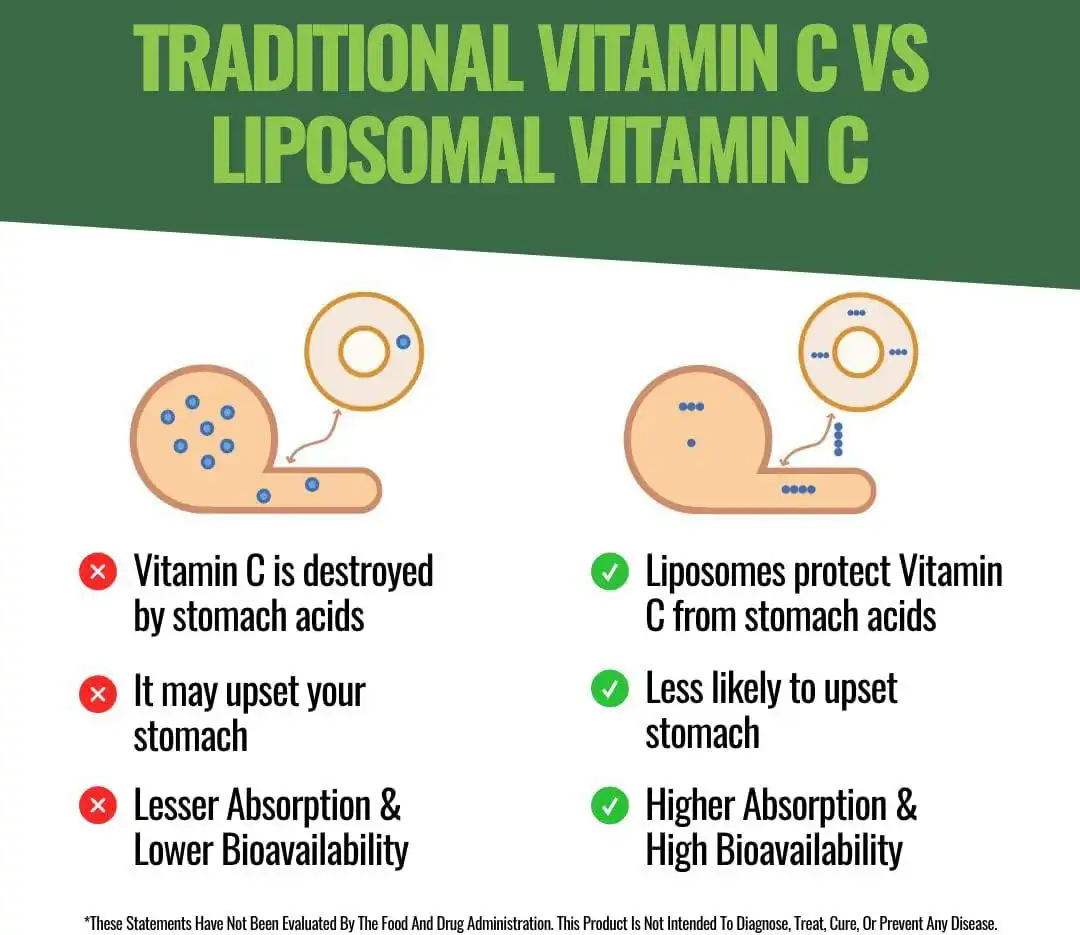
Unsubstituted ascorbic acid is water soluble and must be transported across the intestinal wall by active transport proteins (sodium-dependent vitamin C transporters). These transporters get saturated fast with ingestion of more than a few hundred milligrams. Much of it is excreted, not absorbed, above that level, so much of what’s in a conventional high-dose vitamin C pill never even gets into the circulation. Bulk liposomal vitamin C powder skips this transporter bottleneck, as the vitamin is already enclosed in a phospholipid vesicle (like a natural cell membrane). It does not wait for a limited number of channels of transport but combines directly with intestinal and tissue cells. The marketing claim is based on the change of absorption method by manufacturers of more powerful supplement combinations.[2]
Consumer Demand for Better-Absorbed, Gentler Vitamin C
Today’s supplement purchasers are much more label aware, and many actively hunt for liposomal delivery systems after reading about bioavailability on the internet or hearing about it from a nutritionist. High doses of ascorbic acid may also cause stomach discomfort and loose stools in sensitive users, although liposomal versions tend to prevent this side effect since the encapsulation buffers the acidity of the raw vitamin before it reaches the gut lining. Brands that shift iconic products in the immune or skin-health category to liposomal vitamin C powder bulk are likely to see fewer tummy complaints and improved repeat-buy behavior. Even if customers don't know the study behind it, they may feel the gentler experience. The demand for a more effective and better-tolerated solution in the market was addressed by Shaanxi Hongda Phytochemistry Co., Ltd. with the creation of liposomal vitamin C.[5]
How Does Liposomal Vitamin C Powder Bulk Close the Absorption Gap?
Independent studies of absorption have demonstrated that bulk liposomal vitamin c is absorbed at 6 to 10 times the rate of traditional ascorbic acid or sodium ascorbate. Such a difference might be so important that it could influence how businesses arrive at an effective dosage per serving. “More of the encapsulated vitamin C actually gets into circulation, so formulators who are buying liposomal ingredients in bulk can often make a stronger clinical claim at a lower raw-material dose than would be necessary for an equivalent ascorbic acid formulation,” he says. Hongda’s view of this chemical is not a one-off discovery from a laboratory but a repeatable manufacturing process. Therefore, the absorption advantage evaluated by a brand in the first formulation batch should be the same for each bulk order with Shaanxi Hongda Phytochemistry Co., Ltd.[1][2]
What Makes Hongda's Liposomal Vitamin C Powder Bulk Different?Thin-Film Hydration and Ultrasonic Nano-Shearing Manufacturing
Hongda’s liposomal vitamin c bulk is distinctive in its production technique, which is a two-step procedure starting with thin-film hydration. The raw liposomal vesicles were prepared by forming the phospholipids into a homogeneous lipid film and rehydrating with an ascorbic acid solution. Then there is ultrasonic nanoshearing, which breaks these vesicles into a narrow, constant particle size band of around 100 to 250 nanometers. This combination separates pharmaceutical-grade liposomal manufacturing from low-cost imitations that depend on simple mixing or homogenization and provide broad and irregular particle size distributions. Shaanxi Hongda Phytochemistry Co., Ltd. uses more than 10 specialized production lines in 100,000-level purification workshops to ensure uniformity of particle size and encapsulation efficiency for future bulk orders.[3][6]
Non-GMO Sunflower Lecithin and Encapsulation Efficiency
Hongda’s Liposomal Vitamin C Powder Bulk utilizes non-GMO sunflower lecithin as the phospholipid shell, rather than soy lecithin. This allows firms to avoid allergy labeling issues when marketing in soy-sensitive markets. The encapsulation efficacy in the final powder was usually superior to 90%, indicating that most of the ascorbic acid dosage was protected in the vesicle and not exposed in the powder. First of all, supporting the manufacturers is essential. Unencapsulated vitamin C has a shorter shelf life and loses its potency before the product ever gets to a client, negating the absorption claim the company is paying a premium to make in the first place.
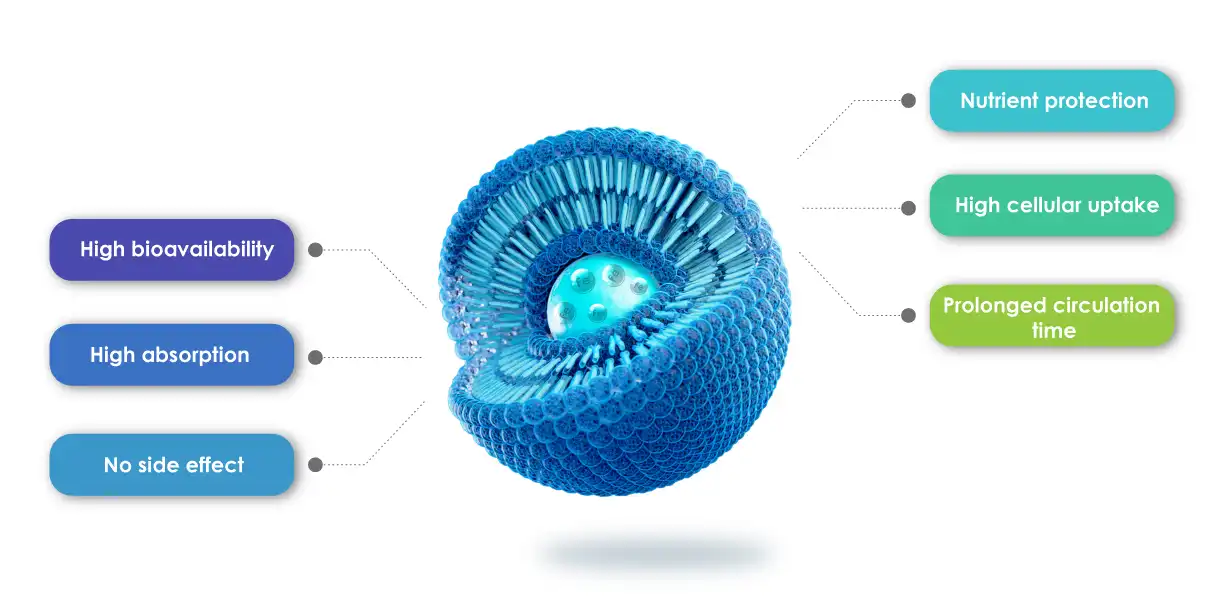
Low-Temperature Spray Drying for Shelf-Stable Bulk Powder
After encapsulation, the liposomal fluid is spray-dried at low temperature to get a dry powder. High temperature damages the phospholipid bilayer, but our technique helps protect it. The shelf life of liposomal ingredients bulk is 3 years at -20°C, making it a reliable choice for companies seeking liposomal ingredients wholesale. This is due to the additional cryoprotectants that are added at this stage. This is fantastic news for supplement firms that are dealing with inventory spanning several manufacturing cycles and seasonal demand variations. A powder that maintains its shape and potency throughout months of storage is a much greater safeguard for the finished-goods quality of a brand than a distribution method that begins to disintegrate the moment it is manufactured—a very real concern with not-so-well-constructed liposomal powders out there.
Liposomal Vitamin C Powder Bulk — Product Specifications
|
Item
|
Specification
|
Test result
|
Test Method
|
|
Vitamin C
|
50%-55%
|
53.38%
|
HPLC
|
|
Appearance
|
White to pink powder
|
Complies
|
Visual
|
|
Odor and Taste
|
Characteristic
|
Complies
|
Sensory
|
|
Loss on Drying
|
≤5%
|
1.60%
|
Ch.P2020
|
|
Residue Solvents
|
Ethanol ≤ 5000ppm
|
Complies
|
GC-HS
|
|
Heavy metal
|
Lead (Pb) ≤3ppm
|
Complies
|
ICP-MS
|
|
Arsenic (As) ≤3ppm
|
Complies
|
ICP-MS
|
|
|
Cadmium(Cd) ≤1ppm
|
Complies
|
ICP-MS
|
|
|
Mercury(Hg) ≤0.1ppm
|
Complies
|
ICP-MS
|
|
|
Total Plate Count
|
≤1000cfu/g
|
Complies
|
USP-NF 2022
|
|
Yeast&Mould
|
≤100cfu/g
|
Complies
|
USP-NF 2022
|
|
E.coli
|
Negative
|
Negative
|
USP-NF 2022
|
|
Salmonella/25g
|
Negative
|
Negative
|
USP-NF 2022
|
|
Staphylococcus Aureus
|
Negative
|
Negative
|
USP-NF 2022
|
|
Storage
|
Preserve in a well-closed, light-resistant, and protect from moisture.
|
||
|
Packing
|
20kg/drum.
|
||
|
Shelf life
|
2 years.
|
||
Where Supplement Brands Actually Use This Ingredient?
Capsules, Tablets, and Effervescent Formats
Liposomal Vitamin C Powder compresses cleanly and combines evenly with other actives, making it the choice for capsule and tablet producers. Some liposomal substances may clump or not mix uniformly. Effervescent forms also benefit from the encapsulation, which mitigates the harsh, acidic flavour of raw ascorbic acid in a dissolved tablet, meaning less effort for flavour systems trying to disguise harshness. Shaanxi Hongda Phytochemistry Co., Ltd. provides this ingredient in particle sizes that are compatible with high-speed capsule filling and tablet compression lines, allowing contract manufacturers to often include it without retooling current equipment. The format flexibility of this ingredient is frequently as important as the absorption data itself for businesses looking to establish a premium vitamin C SKU above the mass market ascorbic acid tier.
Functional Beverages and Immune-Support Blends
Liposomal Vitamin C Powder Bulk is used in ready-to-mix powders and bottled functional drinks because it disperses in hot and cold liquids without the gritty residue that regular ascorbic acid might leave at the bottom of a glass. The liposomal shell does not hinder the dissolution or function of those partner compounds, making the substance compatible with zinc, elderberry, and other popular cold-season actives, which is an advantage for immune-support mixes. This ingredient is often selected by beverage brands that are sourcing liposomal ingredients wholesale for a new immune line, specifically because it retains its potency through pasteurisation and long shelf storage better than unencapsulated vitamin C, which can degrade rapidly once dissolved in an aqueous base exposed to oxygen and light.
Multi-Ingredient Stacks: Collagen, Immunity, and Antioxidant Combos
Multi-ingredient solutions based on collagen, antioxidant, or full-spectrum immunity claims are increasingly turning to a liposomal structure for their vitamin C supply, as the improved absorption complements vitamin C’s collagen-hydroxylation and antioxidant-recycling activities throughout the body. When many actives are found on the same product label, formulators would prefer to cite a single, well-documented delivery method rather than defend a mixture of chemicals with varying absorption patterns. Shaanxi Hongda Phytochemistry Co., Ltd. provides scientific data sheets that demonstrate the performance of its liposomal vitamin C powder bulk with popular stack partners, thus accelerating the approval of a final multi-ingredient recipe by regulatory and quality teams.[4][5]
Sourcing Considerations: Certifications, Testing, and Supply Capacity
Certifications That Matter for US and EU Market Entry
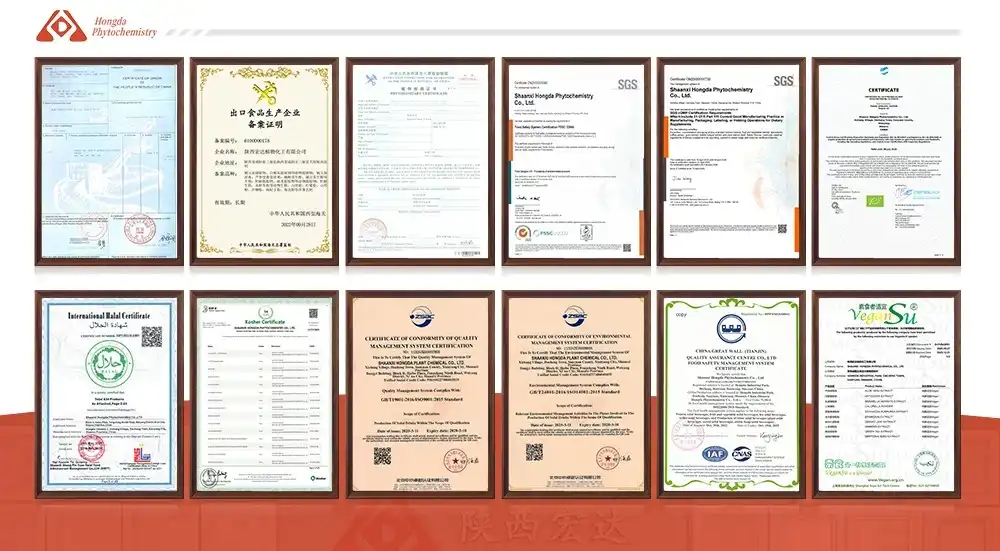
Supplement brands selling into the United States and European Union need verification that goes beyond a supplier’s word. Shaanxi Hongda Phytochemistry Co., Ltd. has constructed its certification record appropriately. Between 2001 and 2024, the firm achieved national high-tech enterprise status, food manufacturing and feed additive licences, Halal and Kosher certification, BRC, FDA registration, and organic certification. In 2025, it added cGMP, FSSC22000, SC certification, ISO22000, ISO9001, and EU and NOP organic certification, as well as other national patent technologies for its encapsulation processes. For procurement teams evaluating a new supplier of liposomal vitamin C powder bulk and liposomal ingredients bulk, this stack of certifications simplifies the compliance evaluation that frequently accompanies a first buy order, particularly for brands entering regulated retail channels.
|
Certification / Qualification
|
Status
|
|---|---|
|
National High-Tech Enterprise
|
Awarded 2010
|
|
Food Production & Feed Additive Licenses
|
Obtained 2001–2028
|
|
Halal & Kosher Certification
|
Obtained 2001–2027
|
|
BRC / FDA Registration
|
Obtained 2001–2026
|
|
cGMP
|
Newly obtained 2026
|
|
FSSC22000 / ISO22000 / ISO9001
|
Newly obtained 2026
|
|
SC Certification
|
Newly obtained 2026
|
|
Organic (EU) / Organic (NOP)
|
Newly obtained 2026
|
SGS-Standardised Testing and Batch Documentation
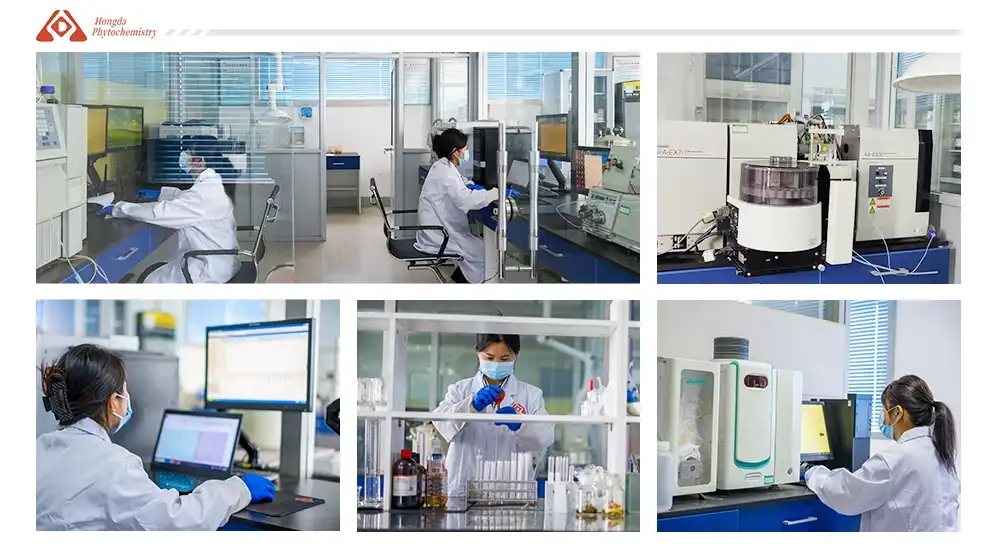
Every batch of Liposomal Vitamin C Powder Bulk is tested by a laboratory that Shaanxi Hongda Phytochemistry established with university professors to SGS standards, with more than twenty professor-level researchers and testing workers. Before it is released, the lab does high-performance liquid chromatography, gas chromatography, spectrophotometry, atomic absorption spectrophotometry, and automatic titration to verify vitamin C content, particle size, encapsulation efficiency, pesticide residues, moisture, heavy metals, and microbial counts. Brands that need a certificate of analysis for regulatory filings or retailer onboarding get comprehensive batch-specific paperwork, rather than a generic spec sheet, which significantly reduces the time for internal quality clearance on the buyer’s side.[1][6]
Production Capacity and On-Time Bulk Delivery
Shaanxi Hongda Phytochemistry has a 20,000 square metre plant that houses more than ten manufacturing lines and has an annual output capacity of over 3,000 tonnes throughout its ingredient range; thus, big recurrent orders for Liposomal Vitamin C Powder Bulk seldom strain the company’s production schedule. The 3,000-square-metre warehouse is organised into six specific storage zones, separating liposomal and vitamin goods from plant extracts, with experienced personnel monitoring sterilising methods in each zone. Standard delivery for bulk orders is three to seven working days from the Shaanxi factory, and shipping paperwork seldom delays the initial order for a new overseas customer thanks to existing export ties spanning Europe, North America and Asia.
Getting Started With Shaanxi Hongda Phytochemistry
Requesting Samples and Certificates of Analysis
Most supplement companies will want a physical sample of Liposomal Vitamin C Powder Bulk and a certificate of analysis for vitamin C content, particle size, and encapsulation efficiency before they will place a large bulk order. Generally, Shaanxi Hongda Phytochemistry Co., Ltd. can respond quickly since this documentation is produced as part of the usual batch release at the SGS-standardized lab. Brands that are new to wholesale liposomal ingredient sourcing often use this sample stage to test their own stability and compatibility with components of an existing formula before moving to a full production run, with the company's technical team on hand to offer formulation-specific advice throughout the process.
Private-Label and Custom Formulation Support
The Hongda technical team works with supplement manufacturers to create the Liposomal Vitamin C Powder Bulk for a certain capsule, tablet, or beverage base, adjusting the concentration, particle properties, and carrier ingredients other than the raw powder. A consultative sourcing methodology appeals to marketers looking to distinguish a vitamin C SKU in a crowded sector, since a somewhat tailored specification may back formulation claims that a strictly off-the-shelf ingredient can’t. Shaanxi Hongda Phytochemistry Co., Ltd. has its own liposomal encapsulation R&D facilities, allowing private-label partners to request formula changes without waiting for a third-party contract manufacturer to test feasibility first, thereby shortening the path from concept to shelf-ready product.
Factory-Direct Pricing for Wholesale Orders
Buying liposomal vitamin C powder bulk from the manufacturer saves all the markup layers of other distributors. Trading businesses add their own markup to the liposomal vitamin C powder bulk pricing. That's why Shaanxi Hongda Phytochemistry Co., Ltd. offers factory prices to qualified bulk purchasers. Standard packaging is 12 kilos per drum, 27 drums per pallet tray, and designed for effective container loading on international freight routes. The company’s annual production capacity is much higher than the demand of most single customers, allowing supplement brands to progress from a small trial order to a consistent wholesale contract without the capacity constraints smaller liposomal manufacturers can face during times of increased seasonal demand.
Conclusion
Supplement makers keep coming back to Liposomal Vitamin C Powder Bulk because it addresses a challenge plain ascorbic acid never entirely conquered: delivering vitamin C beyond the gut's absorption limit and into cells where it can truly do work, in a softer way consumers notice. The ingredient is backed by a repeatable production method, an SGS standardized laboratory, and certifications including cGMP, ISO22000, FSSC22000, Halal, Kosher, and organic status across the US and EU, said Shaanxi Hongda Phytochemistry Co., Ltd. Whether you're making a capsule, a beverage, or a multi-ingredient stack, procuring this ingredient from a documented producer takes most of the guessing out of formulation. For your next batch of parts, ask for a sample and spec sheet.[1][5][6]
FAQ
1. Why do supplement brands choose liposomal vitamin C over standard ascorbic acid?
The phospholipid encapsulation raises absorption roughly six to ten times above standard ascorbic acid while reducing the digestive discomfort common at high doses.
2. What certifications does Hongda's Liposomal Vitamin C Powder Bulk carry?
The company holds cGMP, ISO22000, FSSC22000, ISO9001, Halal, Kosher, BRC, FDA registration, and both EU and NOP organic certification.
3. What particle size and encapsulation efficiency should buyers expect?
Vesicles measure 100 to 250 nanometers with encapsulation efficiency consistently above 90 percent, verified in Hongda's SGS-standardized lab.
4. Which supplement formats work with this ingredient?
Capsules, tablets, effervescent powders, functional beverages, and multi-ingredient collagen or immunity stacks all use this liposomal vitamin C format successfully.
Source Liposomal Vitamin C Powder Bulk From liposomal vitamin c powder manufacturer|HONGDA
Ready to give your formula the absorption advantage that's pulling supplement brands away from plain ascorbic acid? Shaanxi Hongda Phytochemistry Co., Ltd. manufactures Liposomal Vitamin C Powder Bulk at pharmaceutical-grade purity, backed by cGMP, ISO22000, FSSC22000, Halal, and Kosher certification, with documented encapsulation efficiency above 90 percent and six- to ten-times bioavailability over standard ascorbic acid. Whether you need a trial sample or a recurring multi-ton contract, the technical team can match particle size, concentration, and packaging to your production line. Email duke@hongdaherb.com today with your target application and order volume to receive a certificate of analysis, current specifications, and factory-direct wholesale pricing.
References
1. Davis, J.L., et al. "Liposomal-Encapsulated Ascorbic Acid: Influence on Vitamin C Bioavailability and Capacity to Protect Against Ischemia-Reperfusion Injury." Nutrition and Metabolic Insights, 2016.
2. Padayatty, S.J., et al. "Vitamin C Pharmacokinetics: Implications for Oral and Intravenous Use." Annals of Internal Medicine, 2004.
3. Hickey, S., & Roberts, H.J. "Misleading Information on the Properties of Vitamin C." PLoS Medicine, 2004.
4. Pullar, J.M., Carr, A.C., & Vissers, M.C.M. "The Roles of Vitamin C in Skin Health." Nutrients, 2017.
5. Carr, A.C., & Maggini, S. "Vitamin C and Immune Function." Nutrients, 2017.
6. Shaanxi Hongda Phytochemistry Co., Ltd. Corporate Technical Overview and Certification Records, 2001–2025.