




Why genuine liposomal silymarin avoids the low absorption issues of regular milk thistle extract?
Milk thistle (Silybum marianum) has gained its reputation as the world's most famous liver support herb. But most of the capsules on the market have one embarrassing flaw: normal silymarin extract is not well absorbed. Because of poor water solubility, quick breakdown in the gut, and rapid clearance, a considerable fraction of each dose never enters the circulation. Liposomal encapsulation alters the game. Hongda Phytochemistry - Shaanxi Hongda Phytochemistry Co., Ltd. - has been manufacturing plant extracts since 2001, and their water-dispersible liposomal silymarin powder is designed with one objective: to offer silymarin that the body can truly absorb, in every validated batch. This tutorial will explain the science, the reality of production, and how to get the substance with confidence.[1][3]
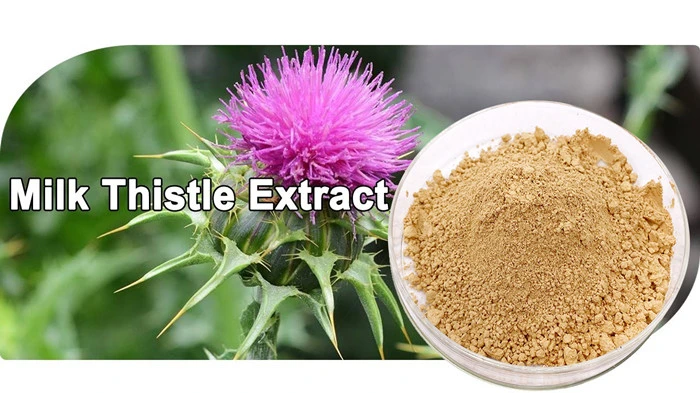
Why Regular Milk Thistle Extract Fails the Absorption Test
Poor Water Solubility: Where the Problem Begins
Silymarin is a family of flavonolignans — silybin, isosilybin, silydianin, and silychristin. Chemically, these molecules are lipophilic — meaning they do not dissolve well in water. The digestive system, however, is an aqueous medium. The regular milk thistle powder in intestinal fluid has the tendency to clump and precipitate out, instead of dissolving. A tiny proportion suspended may pass through the intestinal wall. An 80% extract is made to seem powerful on a label, not to work in the gut. Liposomal silymarin powder tackles the issue on a particle basis: every active molecule is encased in a phospholipid vesicle which quickly disperses in water and remains accessible for absorption.[3][4]
What Pharmacokinetic Studies Reveal About Plain Silybin
This is not marketing jargon; this is in blood statistics. Classic pharmacokinetic studies on silymarin reported low plasma levels of free silybin and negligible urine recovery following oral dose. Much of the absorbed material was immediately conjugated and eliminated via bile. Reviews have shown that carrier-enhanced forms, such as complexes of silybin with phosphatidylcholine, increase plasma exposure several-fold compared to pure extract. The gap between “ingested” and “absorbed” is precisely the gap liposomal silymarin powder is meant to bridge – not by inflating the milligram count on a label, but by boosting the percentage of each dosage the body can really utilize.[1][2][3]
First-Pass Metabolism: The Second Wall
Even what does get absorbed hits a second obstacle. The liver processes arriving silymarin like any other foreign chemical, swiftly conjugating and sending it back to the gut via bile, thereby reducing the time it is active in plasma. Regular users of the extract typically counter this by stacking more potent dosages, which increases expense without a commensurate increase in benefit. Liposomal silymarin powder, properly formulated, takes a wiser route: tiny vesicles may be taken up by intestinal cells and lymphatic routes, arriving in circulation with less of the dosage lost to first-pass metabolism. That term “properly” is very important, and it’s where supplier selection starts.
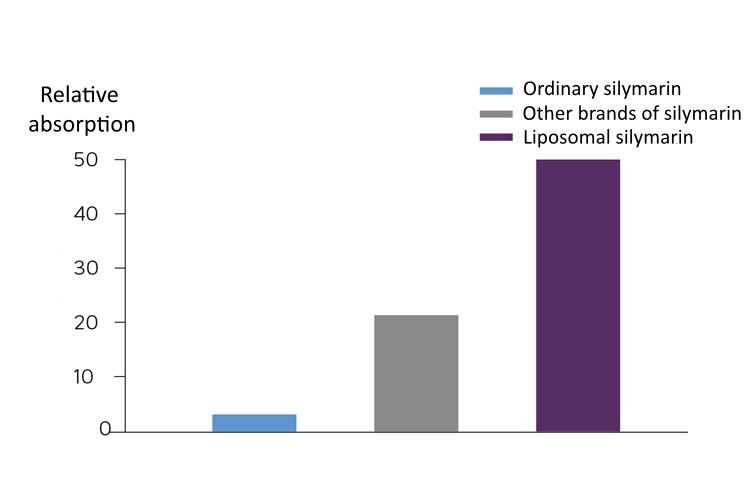
How Genuine Liposomes Rewrite the Bioavailability Story
Phospholipid Vesicles Built to Survive the Gut
A liposome is a tiny sphere made up of one or more phospholipid bilayers – the same building blocks as our own cell membranes. The lipophilic silymarin embeds itself in the bilayer, while the hydrophilic outside enables the particle to diffuse uniformly in digestive fluid. The three things that come out of this are that the active ingredient is protected from stomach acid and degradative enzymes. It is dispersed and does not precipitate. It is delivered to the intestinal wall in a familiar, membrane-like structure. The typical shell material, phosphatidylcholine, is a building block of liver cell membranes. Liposomal silymarin powder therefore provides the herb and a bio-compatible carrier in one beautiful particle.
Enhanced Uptake: Endocytosis and Lymphatic Delivery
Particle format modifies the path of uptake itself. Endocytosis is a simple way for intestinal cells to take up nanoscale vesicles, and specialist M cells situated over gut lymphoid tissue may transport whole particles into lymphatic arteries. This pathway is important since it helps to avoid the liver's first-pass filter to some degree and releases silymarin into circulation more slowly. Published studies on silybin delivery methods, from early silipide pharmacokinetics to more general phytosome reviews, always report increased plasma exposure and longer persistence of the actives as compared to free extract. The bottom line for purchasers is straightforward. Liposomal silymarin is not a stronger extract; it is a smarter delivery of the same extract.[2][3][4]
Side-by-Side: What Actually Changes for Formulators
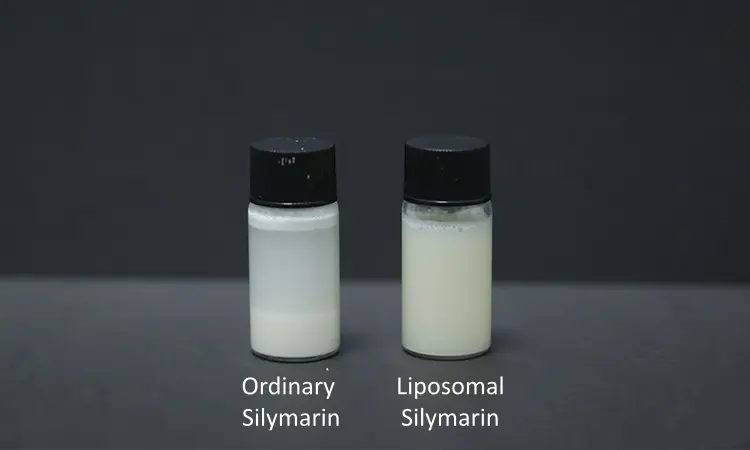
The difference is simple to notice on a technical data sheet. Regular extracts disperse poorly and cause sediment in water-based systems. Liposomal grades disperse rapidly, withstand beverage processing, and enable lower inclusion rates for similar exposure. The table below is a summary of what we tell every client the first time they are looking at liposomal silymarin powder.[2][3][4]
|
Attribute
|
Regular milk thistle extract (80% UV)
|
Genuine liposomal silymarin powder
|
|---|---|---|
|
Water dispersibility
|
Poor; tends to settle
|
Disperses rapidly and evenly
|
|
Behavior in gut fluid
|
Precipitates; low absorbed fraction
|
Vesicle-protected; higher uptake
|
|
Relative plasma exposure
|
Baseline
|
Several-fold higher (carrier studies)
|
|
Beverage compatibility
|
Cloudy; sediment risk
|
Suitable for drinks and sachets
|
|
Typical inclusion rate
|
Higher
|
Lower for equivalent exposure
|
With the mechanism clear, the practical question becomes: who can produce this consistently, at commercial scale, with documentation to prove it? If you are shortlisting a liposomal silymarin manufacturer, send your target specification and application to duke@hongdaherb.com and request the latest batch COA — a genuine producer answers within hours; a re-packer cannot.
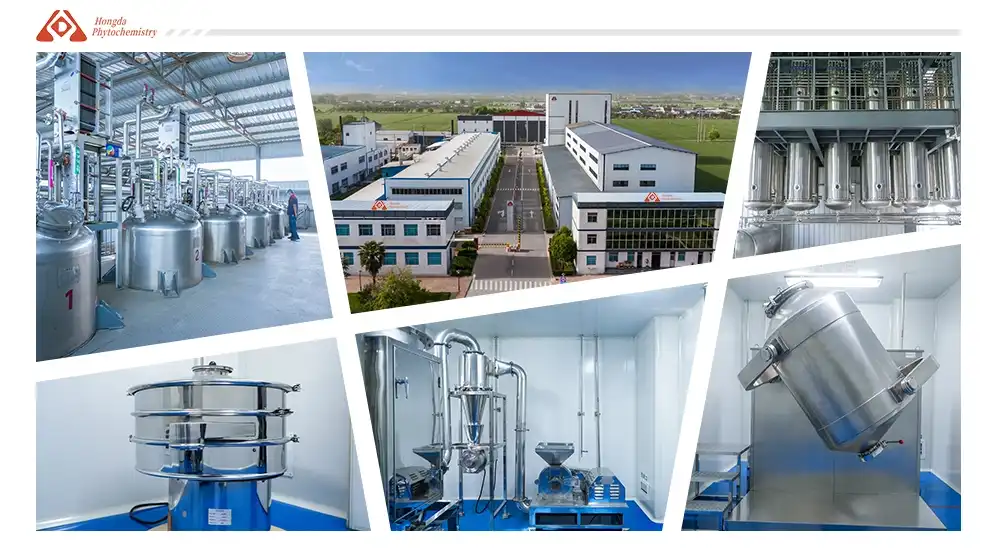
Inside Hongda: How a Genuine Liposomal Silymarin Manufacturer Builds Quality In
100,000-Class Purification Workshops and Serious Capacity
Shaanxi Hongda Phytochemistry Co., Ltd. was established in 2001, with a modern plant of around 20,000 m², more than ten manufacturing lines, 100,000-class purification workshops, and over 150 workshop personnel. Annual production is in the order of 3,000 tons – a significant number for liposomes, since there is little margin for error in encapsulation, and uniformity is achieved by focused, repeatable process control, not tiny artisanal batches. Whether you want a sample carton of liposomal silymarin powder or container-loads of wholesale silymarin powder, the same validated line and the same trained personnel are behind it. In 2010, the firm was rated as a National High-Tech Enterprise and has a number of national process patents.
Batch Quality Control in an SGS-Standardized Laboratory
With the assistance of university academics, Hongda set up a laboratory that was standardized by SGS, manned with more than 20 professor-level R&D and testing professionals and equipped with HPLC, GC, spectrophotometers, atomic absorption spectrophotometry, and automated titration equipment. And every batch of wholesale silymarin powder is tested for content, moisture, heavy metals, pesticide residues, and microbiology before it goes out the door — and the batch-specific COA travels with the products. Typical release specs are as follows:
|
Test item
|
Typical specification
|
Method
|
|---|---|---|
|
Appearance
|
Light yellow to off-white fine powder
|
Visual
|
|
Silymarin content
|
≥ 20% (customizable)
|
HPLC
|
|
Particle size
|
≥ 98% through 80 mesh
|
Sieve
|
|
Loss on drying
|
≤ 5.0%
|
USP method
|
|
Heavy metals
|
≤ 10 ppm
|
Atomic absorption
|
|
Total plate count
|
≤ 1,000 CFU/g
|
USP microbiology
|
|
Shelf life / storage
|
24 months; sealed, cool, dry
|
—
|
Typical release values; every shipment includes its own batch COA.
A Real Production Case, Documented With Real Photos
Buyers want more and more evidence, not promises.” Hongda’s team will document each step of the process during normal production, from the incoming milk thistle seed from its contracted planting bases, to the extraction, liposome formation and high-pressure homogenization, spray-drying and final drum packaging, and share these real production photos with customers during audit and qualification requests. In a recent export situation, a European supplement company started with a prototype batch of liposomal silymarin powder, tested dispersion and content in its own lab against Hongda’s COA, and then went to planned mass shipments when the findings matched. That’s what a functioning quality system looks like from the outside. Verifiable, repeatable, documented with photographs.
What to Verify Before You Buy: Specs, Certificates, TraceabilityReading a Liposomal Specification Sheet Like a Buyer
A good specification sheet for liposomal silymarin powder should include content by HPLC not only UV, should mention water dispersibility, particle size should be specified, limits for moisture, heavy metals and microorganisms should be stated with the test technique used. Storage advice: sealed, cold, dry, sheltered from light; average shelf life: 24 months; and packaging format: generally 1-kilogram foil bags in 25 kg fiber drums; round off the image. If the supplier’s document conceals the technique column or states content “by HPLC or UV, whichever is higher,” this is a red flag. Here, accuracy predicts precision elsewhere in the supply chain. ”
Certifications That Open the US and EU Markets
A solid COA normally is not sufficient for overseas customers, who require documentation that will be accepted by their local authorities and retail partners. Since 2001, Hongda’s portfolio has steadily developed – food and feed production licenses, halal and kosher certifications, BRC and FDA registration – and in 2025, we have added cGMP, FSSC 22000, SC, ISO 22000, ISO 9001 and EU/NOP organic certificates. Here's the simple version for teams obtaining liposomal silymarin powder for regulated markets:
|
Certification
|
What it supports
|
|---|---|
|
ISO 9001 / ISO 22000 / FSSC 22000
|
Quality and food-safety management
|
|
cGMP
|
Controlled, pharmaceutical-style production
|
|
Organic (EU / NOP)
|
Certified organic raw material supply
|
|
Kosher / Halal
|
Faith-based market compliance
|
|
BRC / FDA registration
|
Export readiness for UK and US retail
|
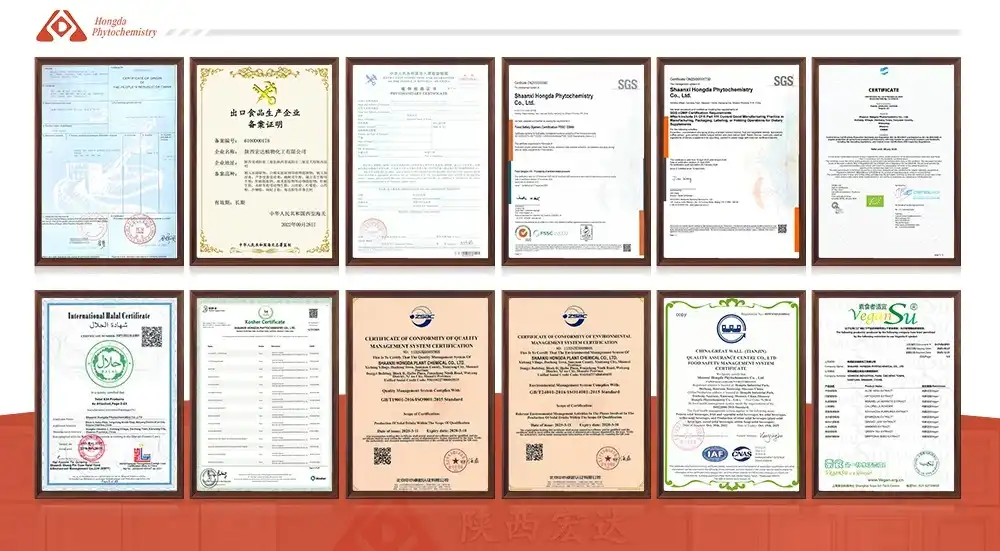
Traceability That Starts at the Planting Base
Clean raw material is the start of quality liposomes. Hongda has three planting bases, including high-mountain green tea, Sophora japonica, and a Chinese medicinal herb base covering milk thistle, which are monitored by expert agronomists from sowing to harvest. That field-level control translates directly into finished-product performance. If raw material can be traced back to the seed, every downstream test on liposomal silymarin is easier to pass, and pesticide-residue questions from European or North American customers are answered with data, not apologies. In a 3,000 m² warehouse separated into six storage zones, each with its own sterilizing crew, the chain from dirt to sealed drum is short and inspectable.
A Practical Buying Guide for Wholesale Silymarin PowderFive Questions That Separate Producers From Repackers
Ask all the candidates the same questions before you compare pricing. Who does the encapsulation step and where? What particle size and encapsulation efficiency statistics are provided with each batch? Is it possible to really get (not just be shown) a recent unredacted COA? Will the provider show you water dispersion of the liposomal silymarin manufacturer, preferably in a video or a sample that you test yourself? And if an incoming batch goes off spec, do you have a defined procedure to replace or refund? Genuine liposomal silymarin producers will answer these easily; middlemen will clam up. One email captures all five replies and avoids months of downstream frustration.
Stock, Packaging, and Lead Times That Protect Your Launch
Supply reliability is an implicit specification. Hongda's 3,000 m² warehouse is divided into six storage areas for fruit and vegetable powders, plant extracts, vitamins and amino acids, and one special sample area. Sterilization and stock rotation are carried out by the personnel of each area. That inventory depth implies standard grades comprising liposomal silymarin powder in wholesale amounts usually ship without significant manufacturing delays, while trial quantities move even quicker in foil-bag samples. For formulation teams, reliable lead times are not a luxury; a delayed ingredient delays a whole launch schedule. Ask any supplier how much finished wholesale silymarin powder is on the market now.
Free Samples, Formulation Support, and a Low-Pressure Start
A tiny, properly recorded sample is the lowest-risk technique to assess a new ingredient partner. Your own lab may test dispersibility and content before you commit to volume; Hongda offers samples of liposomal silymarin powder with the batch COA, technical data sheet, and applicable certifications. Beyond the sample, the company’s two R&D facilities, which include more than 20 researchers from universities and research institutes, help support formulation decisions on things like beverage carrier selection, capsule and gummy inclusion rates, and finished product stability recommendations. A supplier that invests in your formulation success is worth far more than one who just gives the lowest number.
Conclusion
Shaanxi Hongda Phytochemistry Co., Ltd. has developed into a national high-tech firm since 2001. It has a manufacturing area of 20,000 m², more than ten contemporary production lines, 100,000-class purification workshops, and an SGS-standardized laboratory jointly constructed with university academics. We have an annual capacity of ~3,000 tons, three traceable planting bases, and certifications: cGMP, FSSC 22000, ISO 9001/22000, organic EU/NOP, kosher and halal. One promise we keep is liposomal silymarin powder that solves the absorption problem of ordinary milk thistle extract — consistently, verifiably, and at commercial scale. The science is in favor of liposomal delivery. The only variable left is finding a factory that is constructed to honor it, batch after batch.
FAQQ1: What exactly is liposomal silymarin powder?
A: Silymarin from milk thistle encapsulated in phospholipid vesicles, making it water-dispersible and substantially easier to absorb than regular extract.
Q2: How much better is the absorption?
A: Carrier-system studies report several-fold higher plasma silybin exposure than plain extract; actual gains depend on vesicle quality and particle size.
Q3: What specifications does Hongda offer?
A: Water-dispersible powder with HPLC-verified silymarin content, 80-mesh particle size, 24-month shelf life, and a COA with every batch.
Q4: Are trial orders possible?
A: Yes — 1 kg foil-bag samples and low-MOQ trial lots, scalable to 25 kg drums and container volumes.
Q5: Which certifications support US and EU sales?
A: cGMP, ISO 9001/22000, FSSC 22000, organic (EU/NOP), kosher, halal, BRC, and FDA registration.
Get Genuine Liposomal Silymarin From HONGDA — Request Your Sample Today
If low absorption has been limiting your milk thistle products, the fix is not a bigger dose — it is better delivery. Hongda supplies water-dispersible liposomal silymarin powder backed by batch COAs, real production documentation, and certifications recognized across the US and EU. Tell us your target specification, application, and target volume; our team will return a sample proposal, pricing, and lead time, typically within one business day. Whether you need trial quantities or wholesale silymarin powder at container scale, you will deal directly with the manufacturer — not a middleman. Email duke@hongdaherb.com today and put genuine liposomal silymarin to the test in your own laboratory.
References
1. Lorenz D, Lücker PW, Mennicke WH, Wetzelsberger N. Pharmacokinetics and bioavailability of silymarin. European Journal of Drug Metabolism and Pharmacokinetics. 1984;9(1):41–48.
2. Gatti G, Perucca E. Plasma concentrations of free and conjugated silybin after oral intake of a silybin–phosphatidylcholine complex (silipide) in healthy volunteers. Journal of Natural Products. 1994;57(3):415–417.
3. Idd PM. Bioavailability and activity of phytosome complexes from botanical polyphenols: the silymarin, curcumin, green tea, and grape seed extracts. Alternative Medicine Review. 2009;14(3):226–246.
4. Akbarzadeh A, Rezaei-Sadabady R, Davaran S, et al. Liposome: classification, preparation, and applications. Nanoscale Research Letters. 2013;8(1):102.