


_1745918362135.webp)

Why Market Liposomal Silymarin Powder in Clean-Label Products?
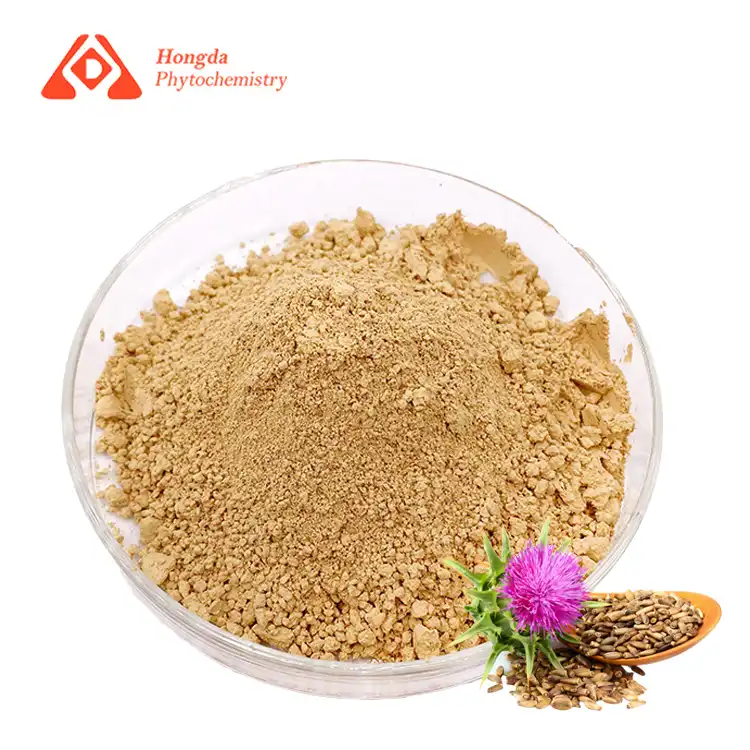
It is precisely because of this transformation that liposomal silymarin powder should be included on every liver-health roadmap this year. Clean-label formulation has transitioned from being a marketing slogan to being a buying filter. Hongda Phytochemistry, which operates under the name Shaanxi Hongda Phytochemistry Co., Ltd., has spent more than twenty years transforming botanical raw materials into chemicals that formulators can rely on. The liposomal silymarin powder that the company produces is a clear demonstration of the company's experience in this area. Instead of using synthetic absorption enhancers, the product integrates the active flavonoid complex of milk thistle into a phospholipid bilayer that mimics the human cell membrane. This allows marketers to make claims of "enhanced absorption" without violating their pledges to maintain a clean label.[2][3][5]

The Clean-Label Shift Is Rewriting the Rules for Liver-Health Ingredients
Why Consumers Are Reading Labels Before They Buy
Shoppers in the supplement aisle now act more like ingredient auditors than passive shoppers, scanning panels for anything that sounds synthetic before they even check the price. This pattern of behavior has become more common. As a result of this change in consumer behavior, marketers have been compelled to emphasize ingredients that are not only effective but also easily explained in simple language. Liposomal silymarin powder satisfies this expectation since its enhancing method, phospholipid encapsulation, is something that a brand can express in a single statement without using any chemical vocabulary that is unknown to them. Instead of adding absorption boosters that customers have never heard of, the delivery system is constructed from lecithin, which is an element that is already known in food settings. This reduces friction at the point of purchase and provides marketing teams with an honest bioavailability narrative.[6]
Where Conventional Silymarin Extracts Fall Short
The flavonolignans included in standard milk thistle extract are poorly soluble in water and are broken down before they can reach the liver in relevant amounts. This is an issue that has been extensively recognized. The use of traditional silymarin by brands often necessitated the use of large doses, which resulted in an increase in the size of the capsules, an increase in the cost of the formulation, and no improvement in the level of customer trust. The liposomal silymarin powder was specifically designed to fill this need in the market. The liposomal form addresses both the formulation challenge and the credibility challenge that is associated with liver-support products that do not perform as expected. This is accomplished by protecting the active compound from degradation in the stomach, which enables a smaller effective dose to be administered while still achieving results that conventional extracts are unable to deliver predictably.[1][2][3][5]

How Liposomal Encapsulation Meets the Clean-Label Standard
The fact that the method generates performance benefits via structure rather than additives is what makes liposomal silymarin powder appealing for use in clean-label formulation. Formulators are able to list a plant-based carrier that is transparent without raising allergy or synthetic-ingredient concerns that are typical with lecithin coming from other sources. The outer shell is composed of phospholipids generated from sunflowers. As a result of the fact that the encapsulation process itself is responsible for the enhancement of bioavailability, manufacturers avoid adding several excipients that enhance absorption to their ingredient list. This makes it simpler to certify the end product, makes it simpler to describe on the package, and brings it more in line with the transparency criteria that clean-label certification authorities and customers now anticipate from liver-support categories.[2][5]

The Market Opportunity for Formulators Right Now
As consumers begin to link long-term wellness concerns to factors such as alcohol use, processed meals, and environmental exposure, liver-health categories are rapidly developing. Formulators that strike early with a distinctive ingredient narrative have a tendency to grab disproportionate shelf attention. The combination of a botanical provenance that customers are already familiar with and a delivery technique that is advanced enough to warrant a premium price is something that is very unusual. Liposomal silymarin powder delivers this unique combination. Brands that are entering the hepatic support, detox beverages, or beauty-from-within categories can use the liposomal narrative to differentiate themselves from the crowded field of standard 80% silymarin capsules. This allows them to position their product as the technically advanced option without having to introduce an unfamiliar botanical to buyers who are already cautious.
For formulators ready to evaluate this opportunity at the ingredient level, the next step is to examine how liposomal silymarin powder is manufactured, tested, and validated for commercial use. Hongda's technical team can provide product specifications, testing documentation, and formulation support for brands assessing this ingredient. Contact duke@hongdaherb.com to request technical information or discuss your specific formulation requirements.
Inside the Science: What Makes Liposomal Silymarin Powder DifferentPhospholipid Bilayer Architecture Explained
The phospholipid bilayer, which is structured in the same manner as the membrane that surrounds every human cell, is the fundamental structural concept that underpins liposomal silymarin powder from a liposomal silymarin manufacturer. This principle was derived from the field of biology. The flavonolignan complex that is active in silymarin is located inside this bilayer, where it is protected from stomach acid and the enzymatic activity that normally breaks down unprotected botanical chemicals prior to absorption. Target tissues are able to detect and absorb the particles more quickly than they would with a free-floating extract. This is due to the fact that the surface of the vesicle is similar to a natural cell membrane. The mechanical reason why liposomal silymarin powder routinely surpasses typical milk thistle formulations in terms of bioavailability is due to the biomimetic design of the product.
Particle Size, Zeta Potential, and Why They Matter
A real liposomal product may be distinguished from a fake blended powder by two quantitative indicators: the particle size and the zeta potential characteristics. When it is adequately hydrated, high-quality liposomal silymarin powder reconstitutes into particles that are generally in the range of 50 to 200 nanometers. These particles are tiny enough to be efficiently absorbed by cells while yet maintaining their stability in suspension states. According to the zeta potential values, which range from negative 20 to negative 40 millivolts, the colloidal particles have a strong enough repulsion for one another to prevent them from clumping together. Since particle homogeneity and surface charge stability are the clearest indications of true liposomal technology rather than a mere physical combination, formulators who are involved in the evaluation of suppliers should explicitly request this data.
Encapsulation Efficiency as a Quality Benchmark
The term "encapsulation efficiency" refers to the proportion of the active ingredient that is really contained inside the phospholipid vesicle, as opposed to being left floating about in the powder at risk of being exposed to the elements. In light of the fact that every unencapsulated fraction is functionally identical to regular silymarin and will not deliver the bioavailability advantage that the finished product is marketed on, production methods that exceed 85 percent encapsulation efficiency represent a manufacturing standard that is significantly higher. This value is more important to formulators who take their work seriously than the purity % alone. This is due to the fact that a high active content combined with a low encapsulation efficiency fails to deliver on the primary promise. Transmission electron microscopy and dynamic light scattering are the two most common methods that are used in the verification process.
From High-Pressure Shearing to Spray Freeze-Drying
It is arguable that the most difficult engineering phase in the process is the transformation of liquid liposomes into a powder that is stable and flowable. Initially, homogeneous vesicles are formed around the silymarin complex by the process of high-pressure shearing encapsulation. Subsequently, spray freeze-drying nanotechnology facilitates the transformation of the suspension into a dry powder without causing the bilayer structure to collapse. This low-temperature method is far more effective than the traditional spray-drying method in maintaining the membrane's integrity. The end product is a liposomal silymarin powder that maintains its nanoparticle structure after being rehydrated. This powder behaves in a predictable manner batch after batch, rather than deteriorating before reaching a completed formulation.
|
Parameter
|
Specification
|
|---|---|
|
Appearance
|
White to light yellow powder
|
|
Silymarin Purity
|
50%–80%
|
|
Carrier
|
Sunflower-derived phospholipids
|
|
Particle Size (hydrated)
|
50–200 nm
|
|
Zeta Potential
|
-20 mV to -40 mV
|
|
Encapsulation Efficiency
|
>85%
|
|
Minimum Order Quantity
|
1 kg
|
|
Shelf Life
|
24 months
|
Formulation Advantages That Win Shelf Space
In the event that a brand is prepared to transition from the idea stage to the commercial batch stage with a wholesale silymarin manufacturer, our technical staff is able to guide them through tested, suitable carriers and stability.
Capsules, Tablets, and Functional Beverages
The fact that liposomal silymarin powder does not need a particular delivery format in order to fulfill its functions is one of the practical advantages of using this product. In addition to being able to be incorporated into regular capsule filling and tableting lines without the need for special flow additives, the powder is also able to withstand the challenges of functional beverage applications, which are often unsuccessful owing to the inability of traditional extracts to dissolve. As a result of this adaptability, a single ingredient purchase may support a full liver-health product line for a brand, from a daily pill to a ready-to-drink detox shot, without the need to source distinct raw ingredients for each format. This flexibility immediately translates into streamlined inventory and quicker formulation turnaround for contract manufacturers that are managing various customer requirements at the same time.
Water Dispersibility for Instant Drink Mixes
Traditional silymarin extract is notoriously difficult to dissolve, and it often leaves behind a gritty residue that detracts from the overall sensory experience of a beverage. When dissolved in water, liposomal silymarin powder has a distinct behavior: dispersion into a colloidal suspension that is smooth and generally transparent, rather than settling or aggregating along the surface. Because of this, it is also an excellent choice for quick drink mixes, meal-replacement formulations, and effervescent pills, all of which are products in which the mouthfeel and appearance directly influence the likelihood of repeat purchases. When it comes to selecting a liposomal source over a normal extract, companies that are manufacturing detox waters or hangover recovery drinks have expressly emphasized this dispersibility as the determining factor. This is due to the fact that customers notice textural issues instantly and seldom give a product a second try.
Stability Across Manufacturing Conditions
When it comes to commercial applications, a liposomal substance is only helpful if it is able to withstand the conditions of actual manufacturing, and not simply laboratory testing. Liposomal silymarin powder is designed to have a shelf life of twenty-four months and maintains its flowability via high-speed encapsulation equipment. This means that producers do not need to slow down manufacturing lines or add anti-caking chemicals in order to accommodate it. Additionally, the powder form provides a significant benefit over liquid liposome preparations, which often have shorter stability windows and greater transportation costs. Powder liposomes provide another significant advantage. Waste and rework are two factors that are of great importance to contract manufacturers that operate on tight production schedules across several product lines. This combination of long-term stability and manufacturing compatibility helps to decrease waste and rework.
Synergistic Pairings for Premium Liver Formulas
Liposomal silymarin powder is a component that works especially effectively when combined with complementary liposomal actives like glutathione and N-acetylcysteine. Formulators that are interested in developing a flagship liver-support product seldom depend on a single ingredient. It is becoming more vital for a brand to sell a really distinct "synergistic liposomal complex" rather than a typical capsule containing a single ingredient. This sort of combination formula makes it possible for the brand to market a hepatic-health product that is truly differentiated from the competition. Due to the fact that all three components share compatible liposomal delivery technology, they are able to be co-processed or mixed without causing any stability issues. This provides product development teams with a recipe that is practical, premium-positioned, and supported by a cohesive absorption narrative that sales teams can safely repeat.

Why Shaanxi Hongda Phytochemistry Is the Manufacturing Partner Brands Choose
Certified Infrastructure Built for Scale
In the end, choices on sourcing are determined by whether or not a supplier is capable of delivering consistent quality at commercial volume. In this regard, working with a silymarin powder manufacturer that has a well-established reputation makes a discernible difference. Approximately 20,000 square meters are comprised of Hongda's manufacturing base, which comprises more than ten contemporary production lines that are running inside 100,000-level purification workshops and are backed by more than 150 professional workshop technicians. The analytical work that is required to test particle size, encapsulation efficiency, and purity on every batch before it ships is carried out by an in-house laboratory that is standardized by SGS. This laboratory is manned by more than twenty researchers who are employed at the professor level. Formulators get documentation for their own quality teams.
Traceability From Planting Base to Powder
Hongda solves this issue for china silymarin powder by maintaining separate planting bases, which include a Chinese medicinal material growing site, which is controlled by experienced agronomists from seed to harvest. This is because ingredient traceability has become a non-negotiable necessity for businesses that are selling into regulated markets. Instead of relying simply on spot inspections of completed products, raw milk thistle that is going to be used in the manufacturing of liposomal silymarin powder is monitored from the field through extraction and encapsulation. Prior to export, testing for pesticide residue, heavy metals, and microorganisms is carried out. Regulatory filings and the increasingly prevalent retailer demand for complete supply chain openness are both supported by this end-to-end supervision, which provides purchasers with a documented chain of custody.
Global Certifications Opening US and EU Doors
When it comes to selecting suppliers for a new market launch, regulatory credentials are often the determining factor for a brand choosing between potential suppliers. This portfolio includes national high-tech firm status, licenses for food production and feed additives, Organic certification, Halal certification, Kosher certification, BRC certification, and FDA registration. cGMP, FSSC22000, SC certification, ISO22000, ISO9001, and organic certification from both the EU and NOP were all added to the company's list of certifications. This certification depth makes the due-diligence procedure, which generally slows down the onboarding of first-time suppliers, shorter for firms that are exporting liposomal silymarin powder into the United States or those that are exporting into the European Union.
|
Certifications Obtained
|
|---|
|
National High-Tech Enterprise, Food Production License, Feed Additive License, Halal, Kosher, BRC, FDA, Organic
|
|
cGMP, FSSC22000, SC Certification, ISO22000, ISO9001, EU Organic, NOP Organic, additional national patents
|

Flexible MOQ for Every Stage of Product Development
Not every brand is ready to commit to a container-sized order, and Hongda's 1kg minimum order quantity on liposomal silymarin powder reflects an understanding that product development happens in stages. Early-stage brands can secure material for pilot batches before scaling up, while established manufacturers benefit from an annual production capacity of roughly 3,000 tons across six storage zones. This lets a company move from initial sampling to full commercial fulfillment with one supplier.
Positioning Liposomal Silymarin Powder for Global BuyersSourcing From a Trusted China Silymarin Powder Manufacturer
Global demand for liver-health ingredients has made China a central sourcing hub, but ingredient quality across suppliers varies considerably. Buyers evaluating a China silymarin powder source for a liposomal product should prioritize manufacturers that provide independent particle size and encapsulation testing rather than relying on marketing claims alone. Hongda's dual R&D institutions and more than 20 university-trained researchers support exactly this kind of verification, giving international buyers confidence that documentation matches what ships. For brands new to sourcing from China, starting with a supplier already holding FDA, BRC, and EU organic certifications meaningfully reduces onboarding risk.[2][3][4]
What Wholesale Buyers Should Evaluate Before Ordering
Before placing a bulk order, wholesale buyers should request a full certificate of analysis covering silymarin content, particle size distribution, zeta potential, and microbial testing results specific to the batch being quoted, not a generic specification sheet. Working with an established wholesale silymarin manufacturer also means asking about production capacity guarantees, since liver-health demand can spike seasonally around holiday and post-celebration periods. Buyers should additionally confirm packaging options for moisture-sensitive liposomal powders, as improper packaging can compromise stability well before the stated shelf life is reached, regardless of how well the batch was manufactured initially at origin.
Applications Beyond the Supplement Aisle
While hepatic-health capsules remain the primary application, liposomal silymarin powder's antioxidant profile and superior dispersibility have opened doors into adjacent categories. Beauty-from-within formulations use it for its role in reducing oxidative stress; functional beverage brands incorporate it into wellness shots and detox drinks; and some topical formulators are exploring its deep-penetration properties for skin-focused antioxidant applications. This category flexibility gives brands room to extend a single successful formulation into multiple product lines, using the same core ingredient story across capsules, drinks, and topical concepts without needing to re-educate their supply chain or regulatory teams on an entirely new raw material.
Building Long-Term Supply Partnerships
The most successful brand-supplier relationships in this category tend to move beyond transactional ordering toward genuine formulation collaboration. Hongda's technical team regularly works directly with formulators on compatibility testing, synergistic blend design, and documentation support tailored to specific target markets. This kind of partnership matters more with liposomal ingredients than with standard extracts, since even small changes in downstream processing conditions can affect the stability of the delivery system. Brands that treat their liposomal silymarin powder supplier as a formulation partner rather than a commodity vendor typically see fewer stability issues and faster time-to-market on new product launches worldwide.
Conclusion
Liposomal silymarin powder from a silymarin powder manufacturer sits at the exact point where clean-label expectations and clinical-grade performance meet, giving brands a defensible story consumers can actually understand rather than a vague absorption claim. Backed by Shaanxi Hongda Phytochemistry's certified infrastructure, verified encapsulation science, and flexible ordering options, formulators gain a dependable path from early sampling to global market launch. Brands that lock in a proven liposomal silymarin powder manufacturer now will define the category shelf.
Frequently Asked QuestionsQ1: How is liposomal silymarin powder different from standard extract?
A1: The standard extract is poorly absorbed, while the liposomal form is encapsulated in phospholipids that improve cellular uptake.
Q2: What particle size indicates a genuine liposomal product?
A2: Quality liposomal silymarin powder typically reconstitutes into particles between 50 and 200 nanometers.
Q3: Can it be used in beverages?
A3: Yes, its water dispersibility suits instant drink mixes and effervescent formats without the grittiness of conventional extracts.
Q4: What is the minimum order quantity?
A4: Hongda offers a 1kg minimum, letting brands test the ingredient before committing to commercial-scale orders.
Partner With HONGDA for Your Next Liposomal Silymarin Powder Launch
Formulators ready to bring a differentiated liver-health product to market don't need to navigate sourcing alone. Shaanxi Hongda Phytochemistry Co., Ltd. combines certified infrastructure, verified liposomal science, and flexible order sizes to support everything from early trials to full commercial rollout. Contact duke@hongdaherb.com today and move your liposomal silymarin powder project from concept to shelf with a trusted silymarin powder manufacturer.
References
1. Federico, A., Dallio, M., & Loguercio, C. (2017). Silymarin/Silybin and Chronic Liver Disease. Molecules.
2. Kidd, P. M. (2009). Bioavailability of Phytosome Complexes. Alternative Medicine Review.
3. Kalepu, S., & Nekkanti, V. (2015). Insoluble Drug Delivery Strategies. Acta Pharmaceutica Sinica B.
4. Csupor, D., Csorba, A., & Hohmann, J. (2016). Analysis of Flavonolignans of Silybum marianum. Journal of Pharmaceutical and Biomedical Analysis.
5. Akbar, Z., et al. Liposomal Encapsulation for Poorly Water-Soluble Phytochemicals. International Journal of Pharmaceutics.
6. Innova Market Insights. Clean Label Trends in Dietary Supplements.